Archives

Kohavi: We send our soldiers only on worthy missions, vow to protect them

Kohavi: We send our soldiers only on worthy missions, vow to protect them

UDI SHAHAM


This year, the attendance at the ceremony was limited to 5,000 people, under the Green Pass

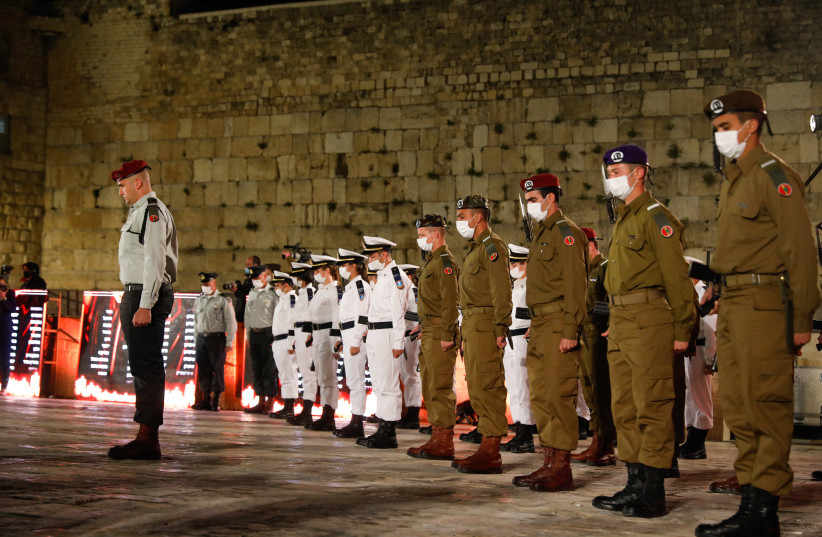
Israeli soldiers stand still during the ceremony marking Remembrance Day for Israel’s fallen soldiers and victims of terror, at the Western Wall in Jerusalem’s Old City, on April 13, 2021 / (photo credit: OLIVIER FITOUSSI/FLASH90)

Israelis stood in silence and bowed their heads for one minute Tuesday evening as the memorial siren blared across the country in commemoration of Remembrance Day.

Remembrance Day for the Fallen of Israel’s Wars and Victims of Terrorism began at 8 p.m. with the siren in memory of the fallen, followed by the official ceremony at the Western Wall with President Reuven Rivlin and IDF Chief of Staff Lt.-Gen. Aviv Kohavi.

This year, attendance at the ceremony was limited to 5,000 people with the Green Pass, meaning that only people with a vaccination certificate or a certificate of recovery were allowed to attend the main ceremony and those at the National Hall for Israel’s Fallen on Mount Herzl and at Yad LaBanim Memorial Center in Jerusalem.

The memorial torch was lit by Maayan Netanel, the daughter of Capt. Yehonatan Natanel, who was killed in Operation Cast Lead in Gaza in 2009, and by Amiad Kahlon, the son of SWO Rami Kahlon, who was killed during Operation Protective Edge in Gaza in 2014.

In a speech at the main ceremony, Kohavi said as the commander of the military, his duty is to send the soldiers only to worthy missions and to protect them.

“We will do everything in our power to send them only to worthy missions,” he said. “We will first improve the IDF’s ability to carry out the missions successfully, and at the same time [we will do what we can] to protect and defend our own soldiers.”

“Tens of thousands of soldiers are doing countless missions on a daily basis, and they come back home safely as a result of professionalism and their commanders’ care,” Kohavi said. “This care includes also taking care of those who were wounded and a supreme effort to return the captives and the MIAs to their families and their country.

“Those of you who died protected the country, and we are continuing in the path they paved,” he said.

“Sometimes, the security that the State of Israel benefits from looks like an obvious thing,” Kohavi said. “But behind every safe day stands an entire army, which collects intelligence, defends, prevents infiltrations and shooting attacks, raids, attacks, arrests perpetrators and thwarts terrorist attacks and the use of weapons [against civilians].”

It might seem like a miracle for some, but those who are working hard to maintain this security are not focused on the miracle, but on how to carry out their missions, he said.

“Being a role model is also one of the IDF’s duties: an army that unites all parts of society, which nurtures that unity behind the goal,” Kohavi said.

“The IDF’s soldiers are exercising together, fighting together, winning together,” he said. “And when a comrade dies, we bury him together.”
“The price of independence is a heavy one: 23,928 dead, tens of thousands of people wounded and those who carry wounds on their souls for the rest of their lives,” Kohavi said.

President Reuven Rivlin, who is about to end his seven-year term as president, vowed to continue his struggle to return the captives and missing soldiers, even after he leaves office.

“Seven years ago, when the country was ablaze in Operation Protective Edge, I began my term as president on behalf of the citizens of Israel,” Rivlin said.

“My first baptism by fire was visiting the families of soldiers who had fallen in action,” he said. “I stood before the families and bowed my head on behalf of the Israeli people. I wanted to be with them in their pain, to say what was in my heart. I vowed to sanctify the memories of Israel’s heroes.”

“I did my best to bring back the missing and captive soldiers – may they come back to us, and soon,” Rivlin said. “I worked here in Israel and around the world to defend our soldiers and for our inalienable right to defense and security. I hope that I did right, but I surely did not do enough.”

“I promised you families that I would be your soldier,” he said. “That is what I did, and that is what I will do. Even as I come to the end of my term in office, I am not released from service. As long as I live, I will hold it in my heart and will work on your behalf.”

On Wednesday morning, another siren will sound at 11 a.m. Wednesday night will mark the end of Remembrance Day and the beginning of Independence Day. At 8 p.m., the traditional torch-lighting ceremony will take place at Mount Herzl.


Zawartość publikowanych artykułów i materiałów nie reprezentuje poglądów ani opinii Reunion’68,
ani też webmastera Blogu Reunion’68, chyba ze jest to wyraźnie zaznaczone.
Twoje uwagi, linki, własne artykuły lub wiadomości prześlij na adres:
webmaster@reunion68.com


News From Israel- Apr. 13, 2021

News From Israel- Apr. 13, 2021

ILTV Israel News


The United States denies any involvement in the blast at the Natanz enrichment plant, as Defense Minister #Gantz​ demands an investigation into all the alleged leaks coming from Jerusalem.
–
Meanwhile, Prime Minister Benjamin #Netanyahu​ still trying to form a coalition and avoid fifth elections. But just he’s not there yet.
–
A guide to this year’s Yom #Hazikaron​, or Israeli Memorial Day – complete with some very special guests.


Zawartość publikowanych artykułów i materiałów nie reprezentuje poglądów ani opinii Reunion’68,
ani też webmastera Blogu Reunion’68, chyba ze jest to wyraźnie zaznaczone.
Twoje uwagi, linki, własne artykuły lub wiadomości prześlij na adres:
webmaster@reunion68.com


Israel needs to stop the chatter about secret operations – editorial

Israel needs to stop the chatter about secret operations – editorial

JPOST EDITORIAL


Although Israel did not officially accept responsibility, the military censor took the unusual step of imposing no censorship restrictions on local media.

Iran’s Supreme Leader Ayatollah Ali Khamenei delivers a televised speech in Tehran, Iran March 11, 2021. /  (photo credit: OFFICIAL KHAMENEI WEBSITE/HANDOUT VIA REUTERS)

Intelligence sources were quoted by many media outlets as confirming that Israel was behind a cyberattack at the Natanz nuclear facility on Sunday that knocked out power at the plant. The New York Times, for example, quoted two intelligence officials as saying it could take at least nine months to restore Natanz’s uranium enrichment production.

Although Israel did not officially accept responsibility, the military censor took the unusual step of imposing no censorship restrictions on local media, which explicitly credited the Mossad for the covert operation.

IDF Chief of Staff Lt.-Gen. Aviv Kohavi dropped more than a hint when he said in a speech honoring fallen soldiers that “the IDF’s actions throughout the Middle East are not hidden from our enemies’ vision.”

Prime Minister Benjamin Netanyahu appeared to be referring to it when he told an Independence Day toast that “the fight against Iran and its proxies and the Iranian armament is a giant mission. The situation that exists today doesn’t say anything about the situation that will exist tomorrow.”
For his part, Defense Minister Benny Gantz told visiting US Defense Secretary Lloyd Austin in Tel Aviv that Israel views Washington as a key ally against all threats, including Iran. “The Tehran of today poses a strategic threat to international security, to the entire Middle East and to the State of Israel,” Gantz said.

The attack on Natanz appears to have been designed to counter Iran’s efforts to put pressure on the US as it negotiates a return to the 2015 nuclear deal with Iran. It notably came as Austin landed in Israel for the first high-level visit by a member of the Biden administration, and a day after Iranian President Hassan Rouhani inaugurated new centrifuges at Natanz in a ceremony broadcast live on television.

It also occurred after nuclear talks in Vienna by delegates from Iran, China, France, Germany, Russia and the United Kingdom concluded what was termed a “constructive” opening week on Friday. They are scheduled to resume on Wednesday.

On the one hand, the Natanz attack is an important development, as is the message conveyed to the Iranians and the Americans. Iran’s nuclear plans must be stopped, the US should be paying attention, and international powers must not give Iran whatever it wants in the nuclear negotiations.
On the other hand, we are concerned about the blatant leaks and media reports and credit fights between the Mossad, the IDF and the political echelon. And we cannot but ask: How does all this benefit Israel?

In the past, classified operations were kept under wraps, allowing Israel to operate with impunity and carry out successful missions without claiming responsibility for them.

Dramatic strikes that “according to foreign reports” were carried out by Israel against targets such as Syria’s nuclear facility in 2007 are a good example for when officials kept silent and there were no deliberate leaks to the media.

Another example is the series of Stuxnet attacks uncovered more than a decade ago that caused substantial damage to Iran’s nuclear program. While neither Israel nor the US openly admitted responsibility, the cyber-weapon behind Stuxnet was “widely understood” to have been built jointly by both countries in a collaborative effort known as the “Olympic Games.”

In all these examples, the people who needed to know – Israel’s enemies – knew, but Israeli officials stayed mum to give the country the ability to maneuver and follow a policy of deliberate ambiguity.

Leaking reports of a cyberattack – or any other clandestine operations, for that matter – on the same day as the incidents themselves is a clear break with tradition. And if politicians talk, then it’s also difficult to separate the attack from the political mess the country is currently facing.

Of course, there is also the danger of Israel’s enemies not only pointing a finger at the Jewish state, but also threatening and carrying out retaliatory action. Iran’s Nournews website said the person who caused the electricity outage had been identified, and “necessary measures” were being taken.

Israeli officials may have gone too far this time in saying too much, too soon. We urge them to reinstate the dictum made famous by The Good, the Bad and the Ugly: “When you have to shoot… shoot! Don’t talk.”


Zawartość publikowanych artykułów i materiałów nie reprezentuje poglądów ani opinii Reunion’68,
ani też webmastera Blogu Reunion’68, chyba ze jest to wyraźnie zaznaczone.
Twoje uwagi, linki, własne artykuły lub wiadomości prześlij na adres:
webmaster@reunion68.com


Does a Third Lebanon-Israel War Lie Ahead?

Does a Third Lebanon-Israel War Lie Ahead?

Steven Emerson


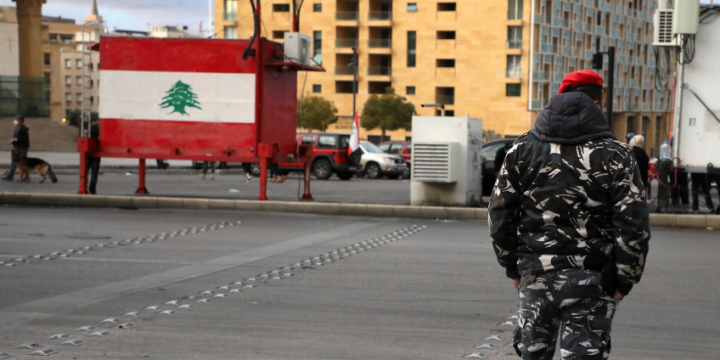
A Lebanese police officer walks in Beirut, Lebanon on March 4, 2021. REUTERS/Mohamed Azakir

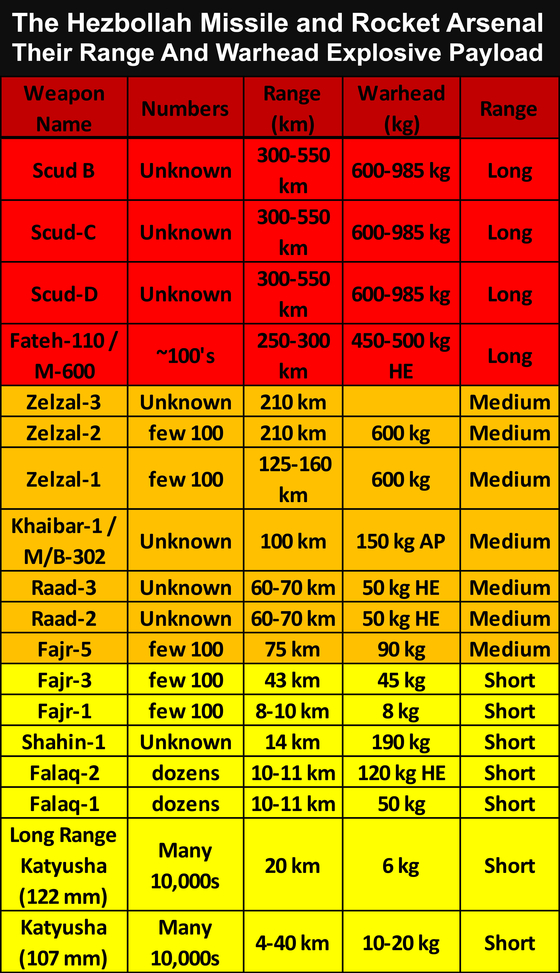
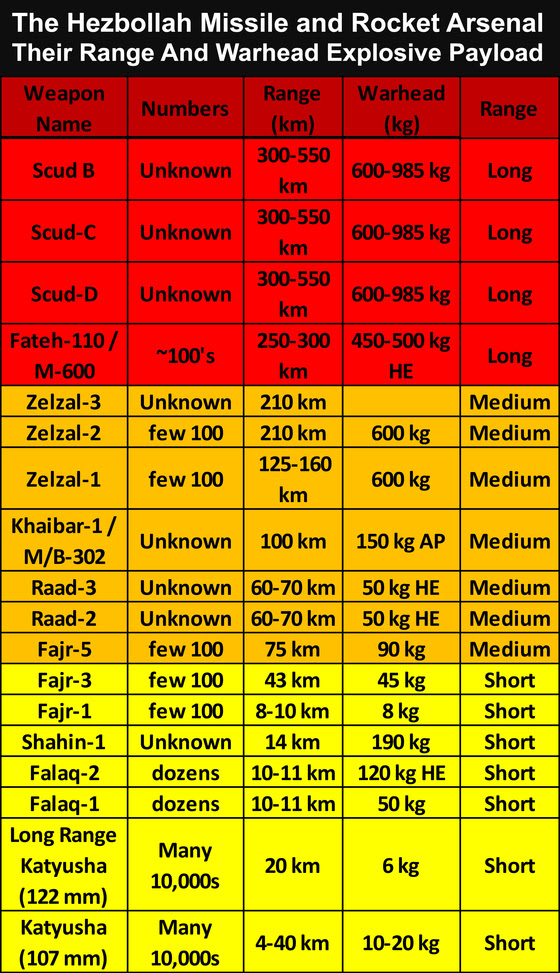
Despite a collapsing Lebanese economy and considerable political turmoil, Hezbollah continues to threaten Israel. These threats must be taken seriously, given that Hezbollah — the Iranian-backed proxy army — has an incredible stockpile of long-range, medium range, and short-range missiles that can reach every square inch of Israel.

I spoke last Friday with the Middle East Forum about the worst-case scenarios for a conflict between Israel and Hezbollah. The possibilities include a surprise attack by Hezbollah, an Israeli pre-emptive strike, an unplanned escalation, and a multi-front war against Israel. The situation is a powder keg, and one false move could set any of these scenarios in motion.

Israelis understood the surprise attack possibility in 2019, when they discovered several well-built tunnels that started more than a half mile inside of Lebanon, but crossed into Israel. Hezbollah could have used them to attack northern Israeli communities, trying to kill as well as take Israeli civilians hostage. This kind of terrorist attack would have sparked a full-blown war.

Israel already lives under constant threat from Hezbollah’s missile arsenal, much of which has been smuggled into Lebanon and retrofitted with advanced GPS guidance systems.

A multi-front war against Israel appears more possible now that Iraqi militias can use Iranian-supplied missiles, which can strike inside Israel. From the south, Yemeni Houthis now have projectiles capable of reaching Israel’s port city of Eilat along the Red Sea. In Syria, Hezbollah has battle-tested forces capable of attacking, and there are Iranian and Russian weapon systems ready to strike. Finally, Gaza is home to Hamas and Palestinian Islamic Jihad, two terrorist groups that have been firing rockets at Israeli civilian communities for years. If they all acted together, a five-prong multi-front war against Israel is the worst-case scenario.

In 2019, Hezbollah leader Hassan Nasrallah went on Hezbollah’s Al Manar television station with his list of Israeli strategic targets that he wants destroyed during the next war with Israel.

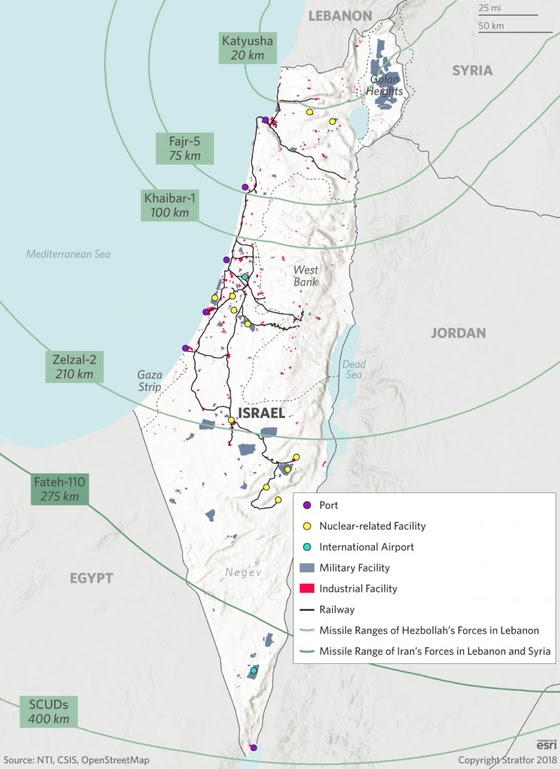
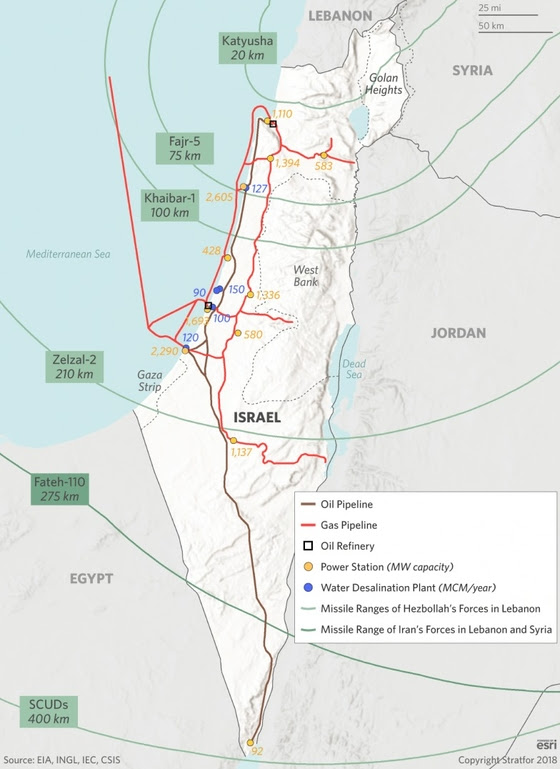
These strategic targets include Ben Gurion Airport near Tel Aviv, power plants, water desalination plants, nuclear sites, seaports, gas production facilities and natural gas rigs, petro-chemical production facilities near Haifa, IDF Headquarters/Ministry of Defense in Tel Aviv, air bases, naval bases, army bases, military industries, and important financial and commercial centers.

Source: https://worldview.stratfor.com/article/missile-arsenal-heart-israeli-iranian-rivalry

The 2006 war between Israel and Hezbollah was started after Hezbollah kidnapped two Israeli reservists and killed three others in an unprovoked cross-border raid Hezbollah. This is a perfect example of a war that neither side wanted, but still took place.

During the 34-day war, Hezbollah launched more than 100 rockets per day — for a total of about 4,000 of its estimated 10,000 total rockets and missiles at the time. In the next war, Hezbollah could launch a minimum of 2,000 rockets a day from its 150,000 estimated inventory, a senior IDF official told a Jerusalem conference on March 15.

Hezbollah’s arsenal is believed to include 130,000 short range rockets that can travel less than 70 km, about 500 medium range rockets (greater than 70 km and less than 250 km), and about 100 long range rockets (greater than 250 km) missiles. According to a 2018 report from the Jewish Institute for National Security Affairs (JINSA), “Hezbollah now possesses more firepower than 95 percent of the world’s conventional militaries, and more rockets and missiles than all European NATO members combined.”

Analysts believe that Hezbollah has between 500-1,000 precision guided munitions outfitted with enhanced GPS guidance systems that can hit every square inch of Israel, with devastating accuracy.

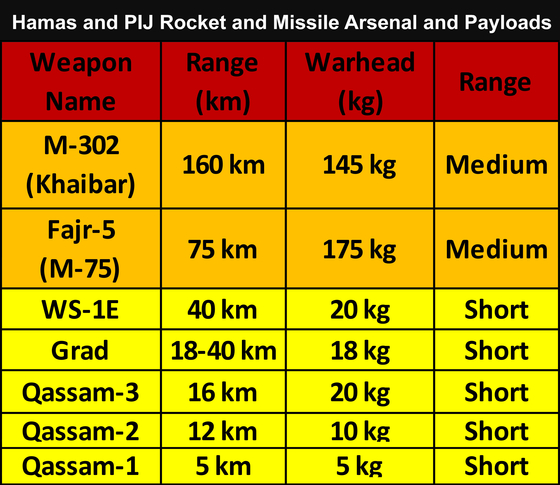
With long range advanced GPS Scud B warheads carrying as much as 2,200 pounds of high grade explosives, these missiles could easily destroy top strategic targets in Israel such as the Dimona nuclear power plant, Ben Gurion Airport, Israeli power plants, Israeli military bases, and sites that could cause massive civilian carnage — all targets that Nasrallah has personally threatened to attack in the next war with Israel. (For comparative damage assessments, the unguided Qassam rockets launched by Hamas carry a payload of only 12 pounds of explosives.)

Additionally, Hezbollah reportedly has several dozen anti-ship missiles, such as the three C-802 anti-ship missiles that they fired at the Israeli Navy ship Hanit during the 2006 war, killing four Israeli sailors.
Source: https://jinsa.org/wp-content/uploads/2018/10/Israels-Next-Northern-War_Operational-and-Legal-Challenges_web.pdf
.

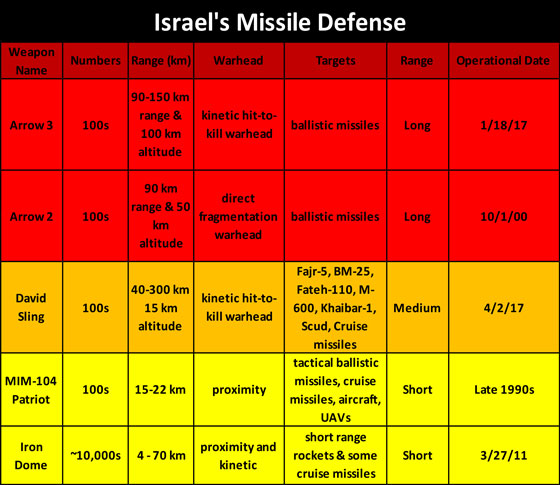
In response to the Hezbollah threat, Israel has a three-tiered system to protect its citizens and its strategic assets. These three tiers include: missile defense, bombing by Israeli Air Force (IAF) fighter aircraft, and civilian bomb shelters. The missile defense tier is a multi-layered missile defense system that includes missile intercept systems like Iron Dome, PATRIOT, David’s Sling, Arrow 2, and Arrow 3 (see graphic for estimated numbers, ranges, type of warhead, targets, range, and the date when the system became operational).

The second tier is the IAF’s fighter jets, which would attack Hezbollah missile launch and storage sites. The IAF has more than 425 fighter aircraft, which including almost 50 new F-35s, 50 F-15s, 25 F-15Es, and 300 F-16s. If war does break out, Israel believes it can hit 3,000 Hezbollah targets per day. Finally, the third layer of Israeli defense would be the civilian bunkers that are in many Israeli homes or part of local city and village infrastructures.

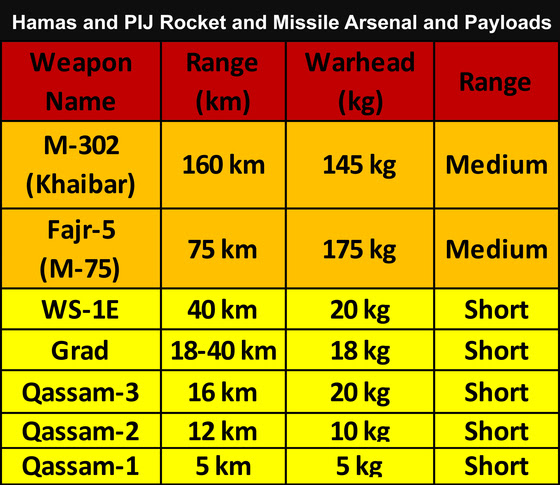
In addition to the massive Hezbollah rocket and missile threat, the Gaza-based terrorist groups Hamas and Islamic Jihad also could attack Israel with their estimated 15,000-20,000 rockets and missiles.
.
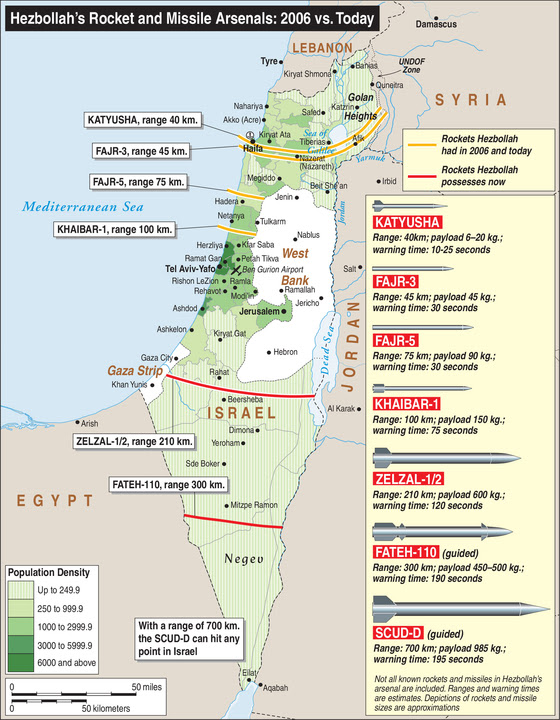
Source: https://aipacorg.app.box.com/s/u1oih9tblawwhzsu1ak6vs83znpu0hky

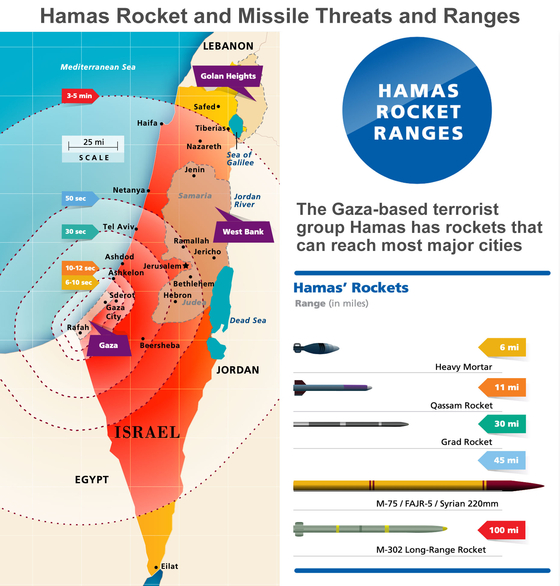
The map showing ranges and flight times from Lebanon and from Gaza provide an idea of how much time someone in Tel Aviv has to reach shelter once the alarm system detects an incoming rocket. For example, a rocket launched by Hezbollah in Lebanon takes about 75 seconds to hit Tel Aviv, whereas a rocket fired from Gaza takes only 30 seconds. People living close to the northern border of Israel and near the Gaza Strip have only 10-15 seconds to react during a rocket attack.

In response, Israel’s Iron Dome missile defense system would target those rockets heading toward population centers and strategic targets. David’s Sling, with hundreds of interceptors, would target the longer-range rockets and missiles. But, despite their sophistication, those systems would be overwhelmed in a war in which 2,000 missiles were launched into Israel each day.

In May 2019, Hamas and Islamic Jihad launched around 690 rockets and mortars at Israel, with Iron Dome shooting down approximately 240 projectiles. This means that unguided munitions launched from Gaza were about a third on target, or happened to be on target.

Using the same percentages, and assuming the same capabilities, 2,000 Hezbollah rockets per day launched from Lebanon would require about 660 Iron Dome interceptors and an unknown number of David’s Sling interceptors. In the meantime, the IAF would be destroying launchers and missile storage and assembly locations throughout Lebanon. Therefore, the rate of Hezbollah rocket and missile fire would probably decrease over time, especially those with longer ranges. This would force Hezbollah to fire more of its shorter-range rockets, with less effect on strategic targets.

With approximately one-third of all Israelis having bomb shelters in their homes or apartments, the rest would go to local city bomb shelters or to their neighbors’ shelters. In 2006, Israel did not have a missile defense system that would intercept short and medium range missiles and rockets.

The fact that the IAF can strike 3,000 targets per day offers a strong deterrent message to Hezbollah about what a preemptive attack by the IAF could do.

If Hezbollah tried to launch a surprise attack against Israel, in addition to rocket and missile fire, the Iranian-terror proxy could attempt a ground attack to kill or capture Israelis living along the border with Lebanon. Most estimates put the number of active Hezbollah combatants rising from 14,000 in 2006 to 25,000 today, with a reserve force of 20,000-30,000.

Nasrallah has said that he is not interested in a war with Israel at this time. He said that he would not have instigated the 2006 war if he knew the tremendous damage that would be done to Lebanon’s infrastructure. However, Iran could have different plans for Hezbollah.

Beyond missiles and rockets, Hezbollah’s capabilities have increased since 2006. Its fighters helped the Syrian army fight for almost a decade, growing more proficient in combat. The question is whether the new Israeli tank active protection system (called Trophy), that the US Army is purchasing, can protect tanks against the Hezbollah arsenal of a variety of approximately a thousand Russian anti-tank systems (AT-3,4, 5, 13, and 14).

Any escalating conflict would cause significant casualties and a lot of destruction on both sides. The damage from a 34-day war in 2006, when Hezbollah had a fraction of the firepower it can unleash today, makes this reality clear.

There is reason for skepticism that deterrence can work with actors like Nasrallah or Hamas. As for Hezbollah’s ultimate goal, Hezbollah’s stated goal is the same as Iran’s — the destruction of the Zionist state. The only thing stopping Hezbollah right now is that the Israelis have a more powerful military and can inflict more damage against Lebanese infrastructure, for which Hezbollah will be blamed.

Today, Lebanon is suffering the worst economic debacle in its history. The Lebanese currency has been devalued by up to 90 percent in just the last year. Hezbollah is being blamed by much of the Lebanese population for the massive corruption that has led to this unprecedented economic crisis. A war could do further damage to it.


Steven Emerson is the Executive Director of the Investigative Project on Terrorism, where a version of this article originally appeared.


Zawartość publikowanych artykułów i materiałów nie reprezentuje poglądów ani opinii Reunion’68,
ani też webmastera Blogu Reunion’68, chyba ze jest to wyraźnie zaznaczone.
Twoje uwagi, linki, własne artykuły lub wiadomości prześlij na adres:
webmaster@reunion68.com


News From Israel- Apr. 12, 2021

News From Israel- Apr. 12, 2021

ILTV Israel News


Tehran vowing revenge against the Zionists following a mysterious explosion in the Natanz nuclear enrichment facility
–
Prime Minister Netanyahu pushing back against ICC investigation
–
to vaccinate kids or not to vaccinate kids. That is the question. So, stay tuned for the answer.


Zawartość publikowanych artykułów i materiałów nie reprezentuje poglądów ani opinii Reunion’68,
ani też webmastera Blogu Reunion’68, chyba ze jest to wyraźnie zaznaczone.
Twoje uwagi, linki, własne artykuły lub wiadomości prześlij na adres:
webmaster@reunion68.com