
Archives

Biblical manuscripts dating back 2,000 years discovered in Israel

Biblical manuscripts dating back 2,000 years discovered in Israel

ROSSELLA TERCATIN


2,000-year-old biblical manuscripts discovered in Judean Desert cave in Israel • First discovery of this kind since Dead Sea Scrolls.
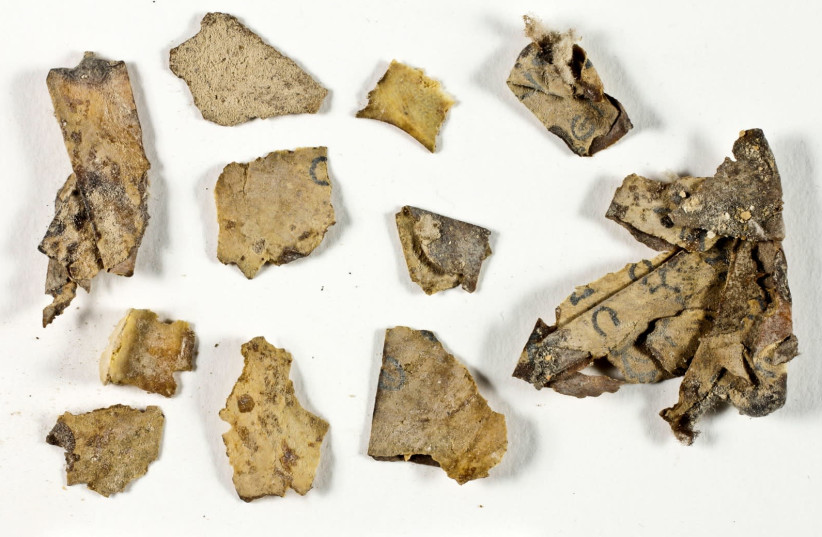
Sections of the Book of the Twelve Minor Prophets scroll discovered in the Judean Desert expedition prior to their conservation. / (photo credit: SHAI HALEVI / ISRAEL ANTIQUITIES AUTHORITY)

A 2,000 year old biblical scroll was unearthed in the Judean desert, the Israel Antiquities Authority announced Tuesday. The groundbreaking discovery marks the first time that such an artifact is uncovered in decades, since the time of the Dead Sea Scrolls.

The fragments were found in a cave in the Judean Desert, as a result of a several-year-long operation with the purpose of surveying all the caves of the area carried out by the IAA in cooperation with Staff Officer of the Archaeology Department of the Civil Administration in Judea and Samaria, and funded by the Ministry of Jerusalem Affairs and Heritage.

The excavation of the caves was conducted in difficult conditions Photo: Yoli Schwartz, Israel Antiquities Authority

“These are the things you are to do: Speak the truth to one another, render true and perfect justice in your gates. And do not contrive evil against one another, and do not love perjury, because all those are things that I hate—declares the Lord,” one of the fragments reads, featuring an excerpt of the biblical book of Zecharia.

The scroll was written in Greek, but God’s name appears in paleo-Hebrew. It contains passages from the Minor Prophets, including Nahum.

“The aim of this national initiative is to rescue these rare and important heritage assets from the robbers’ clutches,” IAA director Israel Hasson said in a press release. “The newly discovered scroll fragments are a wakeup call to the state. Resources must be allocated for the completion of this historically important operation. We must ensure that we recover all the data that has not yet been discovered in the caves, before the robbers do. Some things are beyond value.”

The cave, known as “the Cave of Horror” in the Judean Desert reserve’s Nahal Hever, stands some 80 meters below the cliff top and can be accessed only by clinging to ropes.

Rappelling to the Cave of Horror. Photo: Eitan Klein, Israel Antiquities Authorityof Horror. Photo: Eitan Klein, Israel Antiquities Authority

First discovery of this kind since the Dead Sea Scrolls

“This is definitely an exciting moment, as we present and reveal to the public an important and significant piece in the history and culture of the Land of Israel,” Hananya Hizmi, Head Staff Officer of the Archaeology Department of the Civil Administration in Judea and Samaria. “In as early as the late 1940s, we became aware of the cultural heritage remains of the ancient population of the Land of Israel with the first discoveries of the Dead Sea Scrolls. Now, in this national operation, which continues the work of previous projects, new finds and evidence have been discovered and unearthed that shed even more light on the different periods and cultures of the region. The finds attest to a rich, diverse and complex way of life, as well as to the harsh climatic conditions that prevailed in the region hundreds and thousands of years ago.”
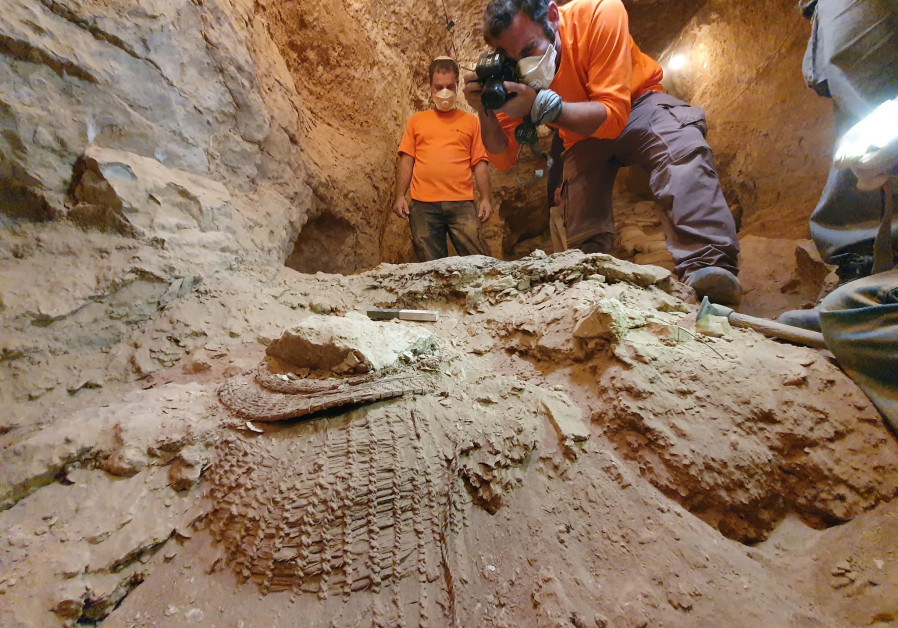
The conditions of the region remain challenging to this day. Some 80 kilometers of caves have been surveyed within the operation, including very remote and inaccessible hollows. Drones and mountain equipment were employed. About half of the area is still to be explored.

The basket as found in Muraba‘at Cave. (Yoli Schwartz, Israel Antiquities Authority)The basket as found in Muraba‘at Cave. (Yoli Schwartz, Israel Antiquities Authority) 

Besides for the manuscript, the cave harbored several other unique findings, including a trove of coins from the time of the Bar Kochba Revolt, the skeleton of a child dating back to some 6,000 years, and a 10,000 year old exceptionally preserved basket which experts say might be the earliest item of this kind ever uncovered.

A rare cache from the Bar Kokhba period. Photo: Dafna Gazit, Israel Antiquities AuthorityA rare cache from the Bar Kokhba period. Photo: Dafna Gazit, Israel Antiquities Authority

The skeleton, which probably belonged to a child aged 6-12, was wrapped into a cloth and mummified.
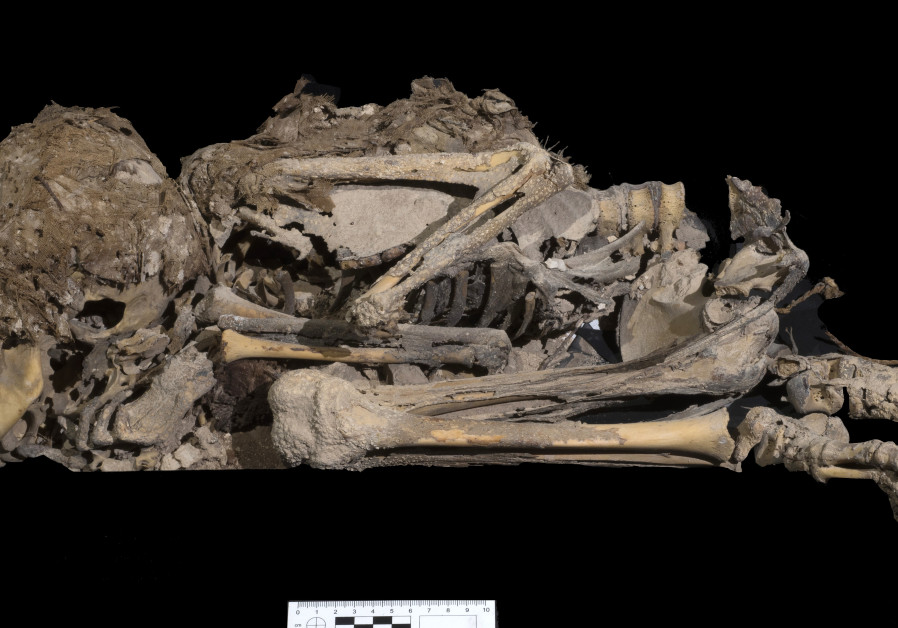
6,000-year-old skeleton of a girl or a boy who was buried wrapped in cloth. (Emil Aladjem, Israel Antiquities Authority)6,000-year-old skeleton of a girl or a boy who was buried wrapped in cloth. (Emil Aladjem, Israel Antiquities Authority)

“On moving two flat stones, we discovered a shallow pit intentionally dug beneath them, containing a skeleton of a child placed in a fetal position,” IAA prehistorian Ronit Lupu explained. “It was obvious that whoever buried the child had wrapped him up and pushed the edges of the cloth beneath him, just as a parent covers his child in a blanket. A small bundle of cloth was clutched in the child’s hands. The child’s skeleton and the cloth wrapping were remarkably well preserved and because of the climatic conditions in the cave, a process of natural mummification had taken place; the skin, tendons, and even the hair were partially preserved, despite the passage of time.”


Zawartość publikowanych artykułów i materiałów nie reprezentuje poglądów ani opinii Reunion’68,
ani też webmastera Blogu Reunion’68, chyba ze jest to wyraźnie zaznaczone.
Twoje uwagi, linki, własne artykuły lub wiadomości prześlij na adres:
webmaster@reunion68.com


Israeli researchers say spirulina algae could reduce COVID mortality rate

Israeli researchers say spirulina algae could reduce COVID mortality rate

MAAYAN JAFFE-HOFFMAN


The algae has been shown to reduce inflammation.

VAXA facilities in Iceland, where the algae are cultivated in order to change their metabolomic profile and bioactive molecules. / (photo credit: ASAF TZACHOR)

A team of scientists from Israel and Iceland have published research showing that an extract of spirulina algae has the potential to reduce the chances of COVID-19 patients developing a serious case of the disease.

The research, published in the peer-reviewed journal Marine Biotechnology, found that an extract of photosynthetically manipulated Spirulina is 70% effective in inhibiting the release of the cytokine TNF-a, a small signaling protein used by the immune system.

The research was conducted in a MIGAL laboratory in northern Israel with algae grown and cultivated by the Israeli company VAXA, which is located in Iceland. VAXA received funding from the European Union to explore and develop natural treatments for coronavirus.

Iceland’s MATIS Research Institute also participated in the study.
In a small percentage of patients, infection with the coronavirus causes the immune system to release an excessive number of TNF-a cytokines, resulting in what is known as a cytokine storm. The storm causes acute respiratory distress syndrome and damage to other organs, the leading cause of death in COVID-19 patients.

“If you control or are able to mitigate the excessive release of TNF-a, you can eventually reduce mortality,” said Asaf Tzachor, a researcher from the IDC Herzliya School of Sustainability and the lead author of the study.
During cultivation, growth conditions were adjusted to control the algae’s metabolomic profile and bioactive molecules. The result is what Tzachor refers to as “enhanced” algae.

Spirulina (Wikimedia Commons)

Tzachor said that despite the special growth mechanism, the algae are a completely natural substance and should not produce any side effects. Spirulina is approved by the US Food and Drug Administration as a dietary substance. It is administrated orally in liquid drops.

“This is natural, so it is unlikely that we would see an adverse or harmful response in patients as you sometimes see in patients that are treated with chemical or synthetic drugs,” he said.

The algae have been shown to reduce inflammation. Tzachor said that if proven effective, spirulina could also be used against other coronaviruses and influenza.

The flu also induces a cytokine storm.

“If we succeed in the next steps,” said Dr. Dorit Avni, director of the laboratory at MIGAL, “there is a range of diseases that can be treated using this innovative solution – as a preventative treatment or a supportive treatment.”

Moreover, because it is a treatment against the effect of the virus on the body, its impact should not be affected by virus mutations.

“In this study, it was exciting to discover such activity in algae that was grown under controlled conditions, using sustainable aquaculture methods,” said MATIS’s Dr. Sophie Jensen. “Although active ingredients have not yet been identified with absolute certainty, the extract opens a space for clinical trials that offer a variety of anti-inflammatory treatments, for COVID-19 and beyond.”

Tzachor said that the team now hopes to run human clinical trials.
“If clinical trials confirm the efficacy of our suggested therapy at the rates reported, the substance can become available to the general population,” he said.

“We hope this research would urge the communities of regulators and investors and pharma companies to invest more resources and give more attention to natural-based therapies. The potential is unbelievable.”


Zawartość publikowanych artykułów i materiałów nie reprezentuje poglądów ani opinii Reunion’68,
ani też webmastera Blogu Reunion’68, chyba ze jest to wyraźnie zaznaczone.
Twoje uwagi, linki, własne artykuły lub wiadomości prześlij na adres:
webmaster@reunion68.com


Netanyahu as president supported by Knesset majority – Likud source

Netanyahu as president supported by Knesset majority – Likud source

GIL HOFFMAN


PM’s departure could allow new Likud leader to build stable 73-MK coalition.

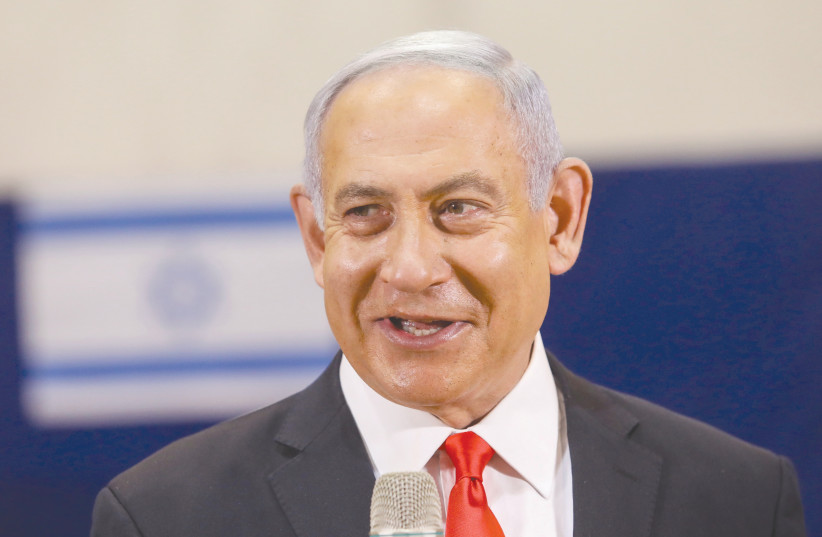
PRIME MINISTER Benjamin Netanyahu speaks after casting his vote in Jerusalem during the Knesset elections last week. / (photo credit: MARC ISRAEL SELLEM/THE JERUSALEM POST)

A majority of the MKs who will be sworn in to the Knesset on Tuesday would vote for Prime Minister Benjamin Netanyahu to be Israel’s next president, a senior Likud source close to Netanyahu told The Jerusalem Post on Sunday.
By law, elections for president must be held between April 9 and June 9, before President Reuven Rivlin’s seven-year term finishes on July 9. The politician closest to Netanyahu, Knesset Speaker Yariv Levin, will set the date for the vote in the Knesset, which must be held at least three weeks after the date is announced.

“I know for a fact that most of the MKs would vote for him, if he decides he wants to be president,” the senior Likud source said. “It’s all in Netanyahu’s hands.”

The source revealed that there is also a majority in the new Knesset to change the law and switch the vote from a secret ballot to open, which could significantly increase the chances of Netanyahu’s election.

It would also help Netanyahu’s election chances that leaving the Prime Minister’s Residence on Balfour Street for the President’s Residence three blocks away could help end the two and a half year political stalemate.
If Netanyahu is no longer leader of Likud, the party would hold a snap primary among Likud members and whoever wins could easily form a stable, right-wing coalition comprised of the 73 MKs of Likud, Shas, Blue and White, United Torah Judaism, Yamina, New Hope and the Religious Zionist Party.

New Hope leader Gideon Sa’ar has vowed to never sit under Netanyahu but said last week that he would join a government led by a new Likud leader, singling out Finance Minister Israel Katz, Health Minister Yuli Edelstein and MK Nir Barkat, who would all be candidates for Likud leader in the post-Netanyahu era.

One complication that could prevent Netanyahu from running is that it is legally unclear whether the law that prevents a president from prosecution would apply to a new president who is already under indictment and on trial for bribery, fraud and breach of trust.

A spokesman for Netanyahu said he could not confirm a Channel 12 report that Netanyahu had checked the law with legal experts or a separate report by the same channel that Netanyahu is no longer ruling out a run for president, as he did before.

Walla News, which is part of The Jerusalem Post Group, was the first to report that Netanyahu is considering seeking the presidency.
Another technical possibility is that Levin could refuse to initiate the race for president. When Rivlin’s term ends, it would be up to Attorney-General Avichai Mandelblit to determine whether Levin would then become acting president.

When Knesset Speaker Dalia Itzik served as acting president after President Moshe Katsav suspended himself to deal with rape charges, Itzik pardoned hundreds of people, including former MK Nomi Blumenthal.

Blumenthal had been convicted of election bribery and obstruction of justice for paying for hotel rooms for Likud central committee members before elections for the party’s Knesset slate and then trying to cover it up.

Levin could pardon Netanyahu if a plea agreement takes place before in which Netanyahu is convicted on criminal charges.

If Netanyahu would be elected president, he would join Shimon Peres as the only men who have served as both prime minister and president.

Other candidates are expected to include former Labor Party ministers Isaac Herzog, Amir Peretz and Shimon Sheetrit, Likud MK Yehudah Glick and perhaps Israel Prize winning educator Miriam Peretz and singer Yehoram Gaon.


Zawartość publikowanych artykułów i materiałów nie reprezentuje poglądów ani opinii Reunion’68,
ani też webmastera Blogu Reunion’68, chyba ze jest to wyraźnie zaznaczone.
Twoje uwagi, linki, własne artykuły lub wiadomości prześlij na adres:
webmaster@reunion68.com


News from Israel- Apr. 04, 2021

News from Israel- Apr. 04, 2021

ILTV Israel News


Naftali Bennett or Mansour Abbas? One of these men could decide the result of the Israeli #election​.
–
Donald #Trump​’s Abraham Accords might still bear fruit. The Saudi foreign minister thinks peace with Israel would be beneficial for the kingdom.
–
Thousands don masks and gather in Jerusalem to mark Good Friday and #Easter​ weekend in the Holy City.


Zawartość publikowanych artykułów i materiałów nie reprezentuje poglądów ani opinii Reunion’68,
ani też webmastera Blogu Reunion’68, chyba ze jest to wyraźnie zaznaczone.
Twoje uwagi, linki, własne artykuły lub wiadomości prześlij na adres:
webmaster@reunion68.com


2021 Israeli Elections: Extremists Became Stronger — and There’s Still No Alternative to Netanyahu

2021 Israeli Elections: Extremists Became Stronger — and There’s Still No Alternative to Netanyahu

Ori Wertman


Israeli Prime Minister Benjamin Netanyahu attends the first working cabinet meeting of the new government at the Chagall Hall in the Knesset, in Jerusalem, May 24, 2020. Photo: Abir Sultan / Pool via Reuters.

The 2021 Israeli election ended — once again — without a clear outcome.

Although the right-wing bloc won 59 seats (if you include Naftali Bennett), a slight strengthening of the mandate from the 2020 elections, Netanyahu once again failed to gain a majority of 61 MKs. The center-left bloc also failed to obtain a majority in the Knesset, although it received a significant strengthening from the right-wing. In fact, if it were not for the parties of Avigdor Lieberman and Gideon Sa’ar, the center-left bloc would now stand at only 38 seats, a drop of two seats from the 2020 election.

The bloc of Arab parties also suffered a severe defeat, from only 15 to 10 seats, as many Arab voters again chose not to vote, expressing a firm distrust of their authentic representatives. As a result, there are currently two options for forming a government in Israel: First, the establishment of a unity government between the Zionist parties that are closer to the center of the political spectrum (from Likud to Yesh Atid). But sadly, this scenario has little chance of succeeding in light of the fact that in Israeli politics, everything is personal and not ideological.

The second way is to form a government with the support of the Arab parties, a scenario that also seems difficult to implement because of the objection of some of the future coalition parties, both in the right-wing bloc and the anti-Netanyahu camp.

There are two main takeaways from the latest round of elections.

First, the new Knesset introduces extremist elements from both sides of the political spectrum. Indeed, we have become accustomed to seeing MKs from the Arab parties, who support Palestinian terrorism and call for the end of Israel as a Jewish and democratic state. But this year, they received a boost from right-wing extremists.

On the right side, one can find in the Religious Zionist party, led by Bezalel Smotrich, two new MKs that the Israeli legislature should not be proud of. The first is Itamar Ben-Gvir, who praised and supported the Jewish terrorist Baruch Goldstein, who murdered 29 Palestinian worshipers in the Cave of the Patriarchs in Hebron in February 1994. The second, no less notorious, is Avi Maoz, who is currently waging a despicable struggle against the rights of LGBT people and Reform Judaism.

But a radical figure has entered the Knesset from the left as well. Surprisingly, this time it is the Labor Party, which brings to the Knesset an extremist figure, Ibtisam Mara’ana, who does not honor Memorial Day for IDF casualties and even expressed support for an operative from the Islamic Jihad terrorist organization.

The second takeaway is that the center-left bloc failed to create an alternative in the form of a leader who has the appropriate skills to become prime minister.

Compared to the last few elections, in which Blue and White chairman Benny Gantz led the center-left bloc, the 2021 election illustrated that the center-left bloc is divided, as each of the leaders of the bloc’s parties thinks he is the right person to lead Israel. The center-left bloc needs to recalculate its path, especially if it wishes to return to power one day. It must find a leader with a rich security and public background, a person who will have the skills to convince the Israeli public that he or she could lead Israel in the face of the security and socio-economic challenges it faces — and not just blame Netanyahu for the evils of the world.

Although some claim that Israeli democracy is in danger, the repeated elections prove that Israeli democracy is alive and kicking. I strongly believe that Israeli society — a strong society that has already proven itself in times of crisis — will figure out how to overcome the political tangle. But in order to do so, we need real leaders who will stop boycotting each other, and form a government that will work for all the citizens of Israel.


Ori Wertman is a PhD candidate and research assistant at University of South Wales, UK, and an Adjunct Researcher at the National Security Studies Center at the University of Haifa, Israel.


Zawartość publikowanych artykułów i materiałów nie reprezentuje poglądów ani opinii Reunion’68,
ani też webmastera Blogu Reunion’68, chyba ze jest to wyraźnie zaznaczone.
Twoje uwagi, linki, własne artykuły lub wiadomości prześlij na adres:
webmaster@reunion68.com
