Archives

TV7 Israel News

TV7 Israel News

TV7 Israel News


1) French President Emmanuel Macron scolds Iran amid slow progress on nuclear talks.
2) Hezbollah urged its domestic rivals to avoid foreign actors from driving Lebanon into civil war.
3) The Iranian-backed Houthis in Yemen conduct yet another cross-border attack against Saudi Arabia


Zawartość publikowanych artykułów i materiałów nie reprezentuje poglądów ani opinii Reunion’68,
ani też webmastera Blogu Reunion’68, chyba ze jest to wyraźnie zaznaczone.
Twoje uwagi, linki, własne artykuły lub wiadomości prześlij na adres:
webmaster@reunion68.com


Biblical ‘fertility amulet’ found by 11-year-old in the Negev

Biblical ‘fertility amulet’ found by 11-year-old in the Negev

ROSSELLA TERCATIN


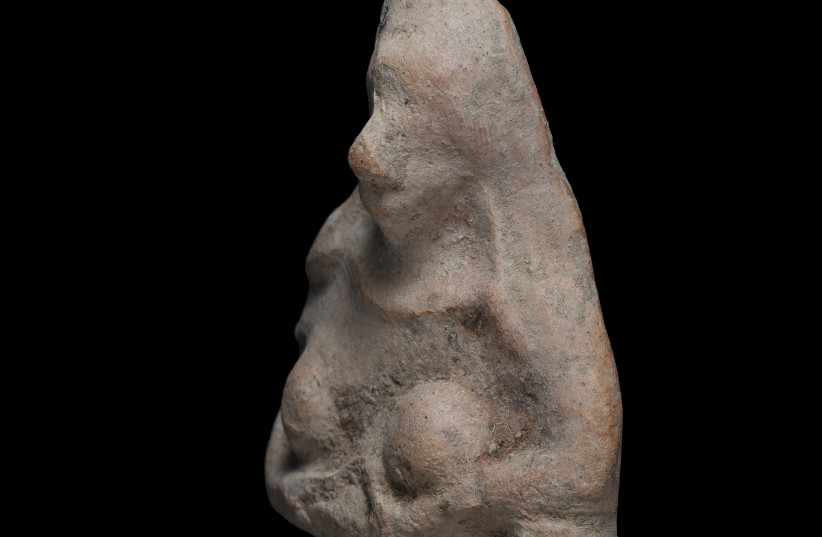
The artifact depicts a stylized bare-breasted woman wearing a scarf with her hands folded under her chest and dates back to some 2,500 years ago.

Female figuirine, probably a fertility amulet, discovered in the Negev Desert / (photo credit: YEVGENY OSTROVSKY/ISRAEL ANTIQUITIES AUTHORITY.)

A child on a family hike in the Negev found a figurine dating back to the biblical period, the Antiquities Authority announced Tuesday.

The artifact depicts a stylized bare-breasted woman wearing a scarf with her hands folded under her chest. It is about 2,500 years old and is from the late First Temple period or the beginning of the Persian period, also known as the “Return to Zion,” the IAA said in a press release. It probably served as an amulet for fertility and protection for infants, it said.

2,500 year old pottery figurine found in the northern Negev (Yevgeny Ostrovsky/Israel Antiquities Authority)

“Pottery figurines of bare-breasted women are known from various periods in Israel, including the First Temple era,” according to Oren Shmueli and Debbie Ben Ami, IAA curators of the Iron Age and Persian periods. “They were common in the home and in everyday life, like the hamsa [hand design] today, and apparently served as amulets to ensure protection, good luck and prosperity.

“We must bear in mind that in antiquity, medical understanding was rudimentary. Infant mortality was very high, and about a third of those born did not survive. There was little understanding of hygiene, and fertility treatment was naturally nonexistent. In the absence of advanced medicine, amulets provided hope and an important way of appealing for aid.”
Fertility gods were very common in ancient cultures. The Bible offers many testimonies to the influence that neighboring populations had on the Israelites.

The pottery figurine, about seven centimeters high and six cm. wide, was spotted by 11-year-old Zvi Ben-David from Beersheba while on a family trip to Nahal Habesor, a trail in the South that follows the Besor River riverbed.

The boy’s mother, a professional tour guide, understood the importance of the find and alerted the IAA.
Only one other similar figurine, also found in the northern Negev, is kept at the National Treasures collection.

“The exemplary citizenship of young Zvi Ben-David will enable us to improve our understanding of cultic practices in biblical times and man’s inherent need for material human personifications,” Shmueli and Ben-Ami were quoted as saying.


Zawartość publikowanych artykułów i materiałów nie reprezentuje poglądów ani opinii Reunion’68,
ani też webmastera Blogu Reunion’68, chyba ze jest to wyraźnie zaznaczone.
Twoje uwagi, linki, własne artykuły lub wiadomości prześlij na adres:
webmaster@reunion68.com


Are the newest Dead Sea Scrolls just the beginning?

Are the newest Dead Sea Scrolls just the beginning?

ROSSELLA TERCATIN


Some 600 Judean Desert caves surveyed so far, Israeli Antiquities Authority’s Eitan Klein tells ‘Post’ a day after discovery of first fragments in some 60 years unveiled
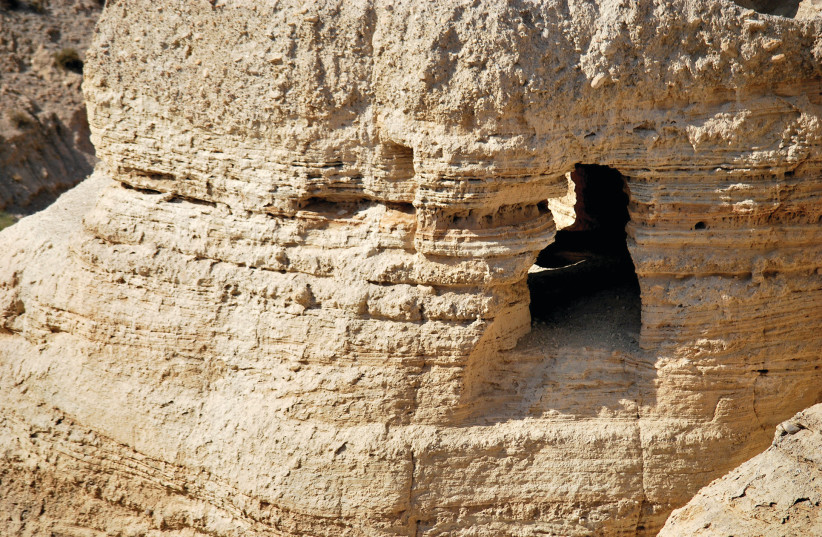
The site of the Qumran Scrolls, known as the Dead Sea Scrolls / (photo credit: HADAR YAHAV)

Hundreds of caves in the Judean Desert are still left to explore, offering a concrete possibility that new biblical texts will emerge, Israel Antiquity Authorities researchers said a day after it unveiled the first such discovery in over 60 years.

“The rescue operation is continuing,” said Dr. Eitan Klein, deputy director of the Unit for the Prevention of Antiquities Looting at the IAA. “So far we have covered some 60% or 70% of the relevant area, which means that we still have about 40 km. of desert left. I believe there is work for another two or three years.”

Conducted by the IAA in cooperation with the Civil Administration’s Archaeology Department, the initiative launched in 2017 employs drones and mountain-climbing equipment to reach remote and inaccessible hollows.
Some 600 caves have already been surveyed and hundreds more are awaiting, Klein explained.

Asked whether he believes that more scrolls will be found, he said that he truly hoped so.

“One never knows, but I hope so, I hope we will be lucky,” he said.
Klein explained that some caves clearly have more potential than others, depending on their size and conditions.

“Sometimes we find ancient artifacts on the floor, sometimes we just feel it,” the scholar revealed.

Out of all the caves surveyed, the archaeologists have proceeded to excavate some 12 so far, and Klein believes that probably another 15-20 promising caves are going to be excavated in the future.
One of the reasons behind the initiative is protecting the antiquities from looters. The archaeologists have often encountered their traces, including holes they dug, and garbage and food remains.

“I became an archaeologist because this profession connects me to my country and my nation,” said Klein. “Entering a cave to find pieces of biblical scrolls – to think that 2,000 years ago other Jews brought them there, deeply touches me.”

Tuesday marked a landmark day for archaeology in Israel and the world, as researchers presented to the public the first fruits of a rescue operation to survey the caves of the Judean Desert where the renowned Dead Sea Scrolls were found, mostly in the 1940s and 1950s.

Reporters from major international news outlets took a break from covering the unfolding of the pandemic in Israel and the election campaign to gather at the IAA laboratories in Jerusalem.

There they were able to admire artifacts dating back 10,000 years, including a perfectly preserved basket, daily objects from the Roman period, and coins testifying to the last time the Jewish people exercised sovereignty in the land before the establishment of the State of Israel. And of course, they found out about new fragments of manuscripts carrying text from the biblical books of Zechariah and Nahum, perhaps the crown jewel of all the uncovered items.

The recent discoveries also brought excitement to the IAA Dead Sea Scrolls Unit, where researchers are also eager to see if new artifacts resurface.
“It would be great to get a few more pieces of the puzzle,” said Dr. Oren Ableman. “That’s obviously the greatest dream of scholars in my field.”
According to Ableman, the chances of finding new fragments in a cave are not high, but not insignificant. He added that conservators now know how to handle the scrolls better than in the past, and how to preserve them for posterity.

At the same time, new material might emerge not from the desert at all but rather from the technological advancements that have been allowing scholars to identify and decipher texts on parchment extremely deteriorated, which were previously considered irretrievable.

“This has represented quite a revolution in the field,” Ableman explained. “In the past, the photographs that scholars had were not always so good, and there were various parts where reading the texts was very difficult. And all of a sudden thanks to the multispectral imaging it has become possible [to read] in some cases, even texts that had previously been considered irretrievable.”


Zawartość publikowanych artykułów i materiałów nie reprezentuje poglądów ani opinii Reunion’68,
ani też webmastera Blogu Reunion’68, chyba ze jest to wyraźnie zaznaczone.
Twoje uwagi, linki, własne artykuły lub wiadomości prześlij na adres:
webmaster@reunion68.com


Syria claims Israeli airstrikes target weapon shipments near Damascus

Syria claims Israeli airstrikes target weapon shipments near Damascus

TZVI JOFFRE


The last alleged Israeli attack was reported in Syria on Feb. 28, with strikes against Iranian targets near Damascus.

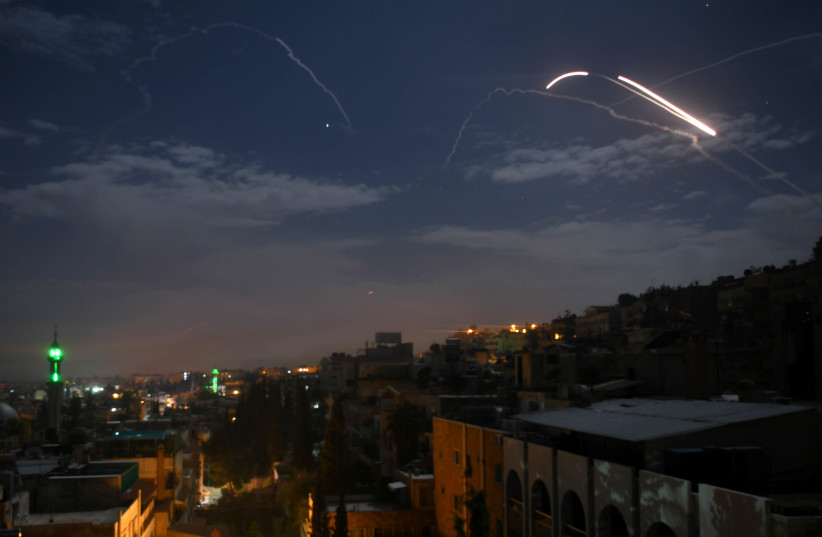
Syrian air defence batteries responding to what the Syrian state media said were Israeli missiles targeting Damascus, in a picture taken early on January 21st, 2019 / (photo credit: STR / AFP)

Syrian air defenses responded to an alleged Israeli airstrike near Damascus on Tuesday night, after a number of cargo flights between Iran and Syria were reported earlier in the day, according to Syrian media.

A Syrian military source claimed that the alleged Israeli strike targeted sites near Damascus and that most of the incoming missiles were intercepted and only material damage was caused, according to SANA.


.

The Syrian Capital Voice site reported that the strikes targeted a weapons shipment that arrived at the Damascus International Airport earlier in the day. Explosions were reported after the strikes as well, according to the news source, which stated that they were likely caused by stored ammunition exploding.

The news source added that the 1st Division of the Syrian military in Al-Kiswah also went on alert after the airstrikes.

Independent flight tracking sites reported earlier on Tuesday that a number of Iranian and Syrian flights from Qeshm Air, Mahan Air and the Syrian Air Force, which have all reportedly been used to smuggle Iranian weapons to Syria and Lebanon, traveled between Damascus and Tehran today.

The last alleged Israeli airstrike reported in Syria was reported on Feb. 28, with strikes against Iranian targets near Damascus.

The strikes in February came just days after an Israeli-owned commercial vessel was attacked by mines in the Gulf of Oman. While Israeli media reported that the strikes were an Israeli response to the attack on the ship, no official government or military statement was made on the matter. In the past, the IDF has often confirmed when it responded to specific attacks.

The strikes on Tuesday come as Iran places blame on Israel for a series of alleged attacks against Iranian vessels they claim occurred from 2019 until recent weeks.

The strikes are the eighth since January, with strikes attributed to Israel reported in eastern, southern and Western Syria in January and February.
Israel has struck a wider range of targets than usual since the start of the year, including a major attack against Iranian-linked strongholds further east near the Iraqi border.

Israeli Defense Minister Benny Gantz in February said Israel was taking action “almost weekly” to prevent Iranian entrenchment in Syria.
Tensions remain high in the region in the aftermath of the assassination of Iranian nuclear scientist Mohsen Fakhrizadeh just east of Tehran, which Iran blames on Israel, and the one-year anniversary of the US assassination of former IRGC Quds Force commander Qassem Soleimani in January. Israel’s northern border remains tense as well due to continued threats by the Lebanese Hezbollah terrorist organization to carry out a revenge attack against Israel in response to the death of a Hezbollah militant in Damascus in July in an airstrike blamed on Israel.

Concerns surrounding the Biden administration’s intent to return to the nuclear deal with Iran have also been raised in recent months, with Kochavi stating that he had ordered operational plans to strike Iran’s nuclear program to be ready if necessary.


Reuters contributed to this report.


Zawartość publikowanych artykułów i materiałów nie reprezentuje poglądów ani opinii Reunion’68,
ani też webmastera Blogu Reunion’68, chyba ze jest to wyraźnie zaznaczone.
Twoje uwagi, linki, własne artykuły lub wiadomości prześlij na adres:
webmaster@reunion68.com


Gantz bans FADC from inspecting damage to Joshua’s altar site

Gantz bans FADC from inspecting damage to Joshua’s altar site

TOVAH LAZAROFF


The Right has focused on the damage to the site, as a physical reminder of their larger concern that the PA is destroying Jewish archaeology in the West Bank.
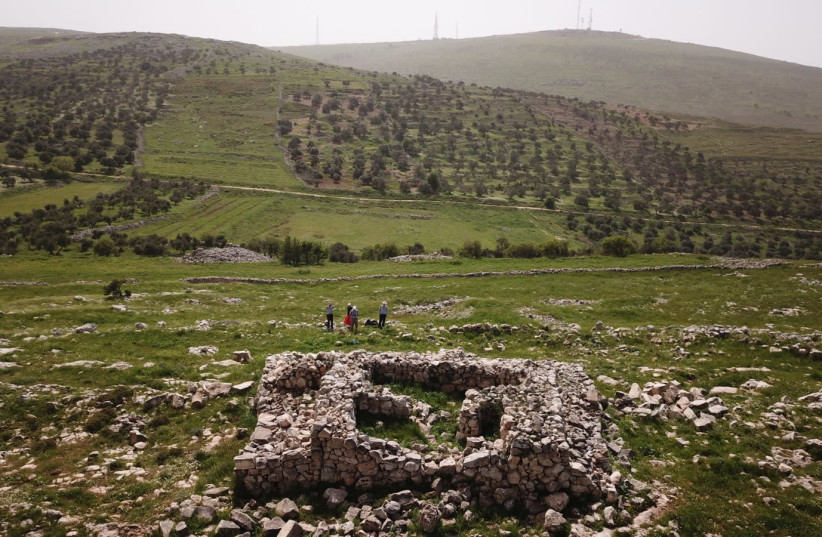
The archaeological site known as Joshua’s Altar in the West Bank.
(photo credit: AARON LIPKIN – LIPKIN TOURS AGENCY)

Defense Minister Benny Gantz rejected a request to allow the Foreign Affairs and Defense Committee to inspect the damage done to the exterior walls at the biblical site of Joshua’s altar in the West Bank.

Such a visit, Gantz told committee chairman Zvi Hauser, would be political in nature, particularly given that only the exterior wall had been damaged and that the site itself had not been harmed.

Gantz, who is also the alternate prime minister and heads the Blue and White Party, noted that the IDF had toured the site located in Area B of the West Bank. It had spoken, Gantz said, with the Asira ash-Shamaliya council, whose workers had damaged the wall, while building a new connecting road to Nablus, also known by its biblical name of Shechem.

The Asira ash-Shamaliya council had apologized for the damage, and the wall has since been repaired, Gantz wrote.

“I won’t allow IDF soldiers to be used as the backdrop for an election campaign, during a period when the IDF is busy executing real missions to preserve human life,” Gantz wrote.

Yamina Party head MK Naftali Bennett has already been to the site, which is under the auspices of the Palestinian Authority, to film a short video clip in which he compared the PA to ISIS.

Hauser, who sits in the Knesset as part of the Derech Eretz Party, has since joined the New Hope Party, which is Yamina’s right-wing rival.

The Right has focused on the damage to the site, as a physical reminder of its larger concern that the PA is destroying Jewish archaeology in the West Bank so that it can erase evidence of ancient Jewish ties to the land.
Archaeologists themselves are divided on the significance of the site, although they concur that it dates back to the Iron Age, including the exterior wall that was damaged.

Hauser wrote back to Gantz to say he was “saddened and disappointed” by his letter. Gantz’s words, Hauser said, showed a “poor understanding of the nature of universal heritage spaces” and “the principles of preservation.”
Hauser said he believes that if a public storm had not arisen over the initial damage, the entire site would have been destroyed. The harm caused to archaeological sites and the neglect of them are well-known phenomena in Judea and Samaria, he said.

The committee’s role is to investigate and debate matters of national significance, such as this one, Hauser said. Despite Gantz’s decision to ban the committee’s visit, it still plans to hold a debate on the matter, he said.

Separately, MK Uzi Dayan (Likud) plans to hold a tour of the site on Sunday.


Zawartość publikowanych artykułów i materiałów nie reprezentuje poglądów ani opinii Reunion’68,
ani też webmastera Blogu Reunion’68, chyba ze jest to wyraźnie zaznaczone.
Twoje uwagi, linki, własne artykuły lub wiadomości prześlij na adres:
webmaster@reunion68.com