Archives

E3 withdraw Iran resolution;Israel-Austria-Denmark cooperate on COVID vaccines

E3 withdraw Iran resolution;Israel-Austria-Denmark cooperate on COVID vaccines

TV7 Israel News


1) Israel, Austria and Denmark have trilaterally agreed to establish a joint fund earmarked for “innovative projects” to combat the coronavirus disease .

2) IAEA Director General Rafael Mariano Grossi reveals that a new technical agreement was reached with Iran to address concerns over undeclared nuclear materials found in the Islamic Republic.

3) Israeli Defense Minister Gantz warns, in an exclusive interview with Fox News, If the International Community fails to thwart Iran’s nuclear aspirations – Israel will be forced to act independently


Zawartość publikowanych artykułów i materiałów nie reprezentuje poglądów ani opinii Reunion’68,
ani też webmastera Blogu Reunion’68, chyba ze jest to wyraźnie zaznaczone.
Twoje uwagi, linki, własne artykuły lub wiadomości prześlij na adres:
webmaster@reunion68.com


Signs Iran’s Nuclear Weapons Program Never Halted

Signs Iran’s Nuclear Weapons Program Never Halted

Raphael Ofek


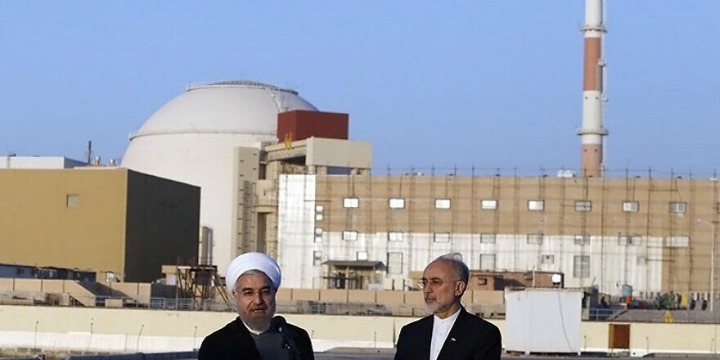
Iranian President Hassan Rouhani and Head of the Atomic Energy Organization of Iran (AEOI) Ali Akbar Salehi near Bushehr Nuclear Plant. Photo: Wikimedia Commons.

Samples collected by the International Atomic Energy Agency (IAEA) at two Iranian sites where Tehran has not reported any nuclear activity showed traces of radioactivity. Although the IAEA refrained from naming the sites in its quarterly report of June 5, 2020, they were identified last year by the Institute for Science and International Security (ISIS) in Washington. The identification was based on information extracted from the Iranian nuclear archive smuggled out of Tehran and into Israel in January 2018.

The first site visited by IAEA inspectors in August 2020 was a pilot plant for uranium conversion, with an emphasis on the production of UF6 (uranium hexafluoride, a uranium compound which, in its gaseous phase, enables the enrichment of uranium by centrifuges). This site, located about 47 miles southeast of Tehran, operated under the aegis of the Amad military nuclear program. In documents from the Iranian nuclear archive, this location is referred to as the “Tehran Site.” The facility was dismantled in 2004.

The other site was Marivan, located near the town of Abadeh in central Iran. This facility, also part of the Amad program, was designed to conduct “cold tests” of nuclear weapons (that is, to simulate activation of a nuclear explosive device using natural uranium rather than weapons-grade uranium). This included operating a multipoint explosive system for the activation of a nuclear weapon, as well as the development of its neutron initiator.

According to satellite imagery published by ISIS, Iran razed part of the Marivan facility in July 2019, more than a year before they allowed IAEA inspectors access to it. It is likely that this was done to prevent exposure of nuclear activities that had taken place there in the past. (This was not the first time the Islamic regime had razed nuclear sites: it did so at the Lavizan-Shian facility in Tehran in 2004 and the Parchin facility in 2012.) It is possible that the traces of radioactive materials found in samples taken by IAEA inspectors in August 2020 indicate renewed efforts to develop a neutron initiator for nuclear weapons previously conducted at the Marivan site.

The IAEA report of June 5, 2020 referred to a third location as well. Though its name was not revealed in the report, it was implied that it was the facility the regime had previously operated in Lavizan-Shian. This suspicion was based on the fact that between 2002 and 2003, a metallic natural uranium disc was found at the site that had been processed by drilling and hydriding (compressing hydrogen atoms inside uranium), an activity Iran neither reported to the IAEA nor provided an explanation for. This finding suggests that the regime had attempted to develop a UD3 neutron initiator at the site.

In addition to all of the above, Iran periodically intensifies its confrontation with the IAEA, causing great concern to the United States and the West. The following are examples:

  • Iran began enriching uranium to 20%, a level that can serve as a springboard to 90% (weapons-grade). The regime announced on Jan. 28 that it had accumulated 17 kg of 20% enriched uranium and intends to reach an annual production capacity of 120 kg. Note that 150-200 kg of 20% enriched uranium are required to reach 15-20 kg of 90% enriched uranium. (According to other calculations, Iran could accumulate 90% enriched uranium for its first bomb within a matter of a few months.)
  • Iran recently installed three cascades at the Natanz uranium enrichment plant, each containing 174 advanced IR-2m centrifuges. They were scheduled to go into operation as early as Jan. 30, with the aim of reaching 1,000 operational centrifuges of this type at Natanz within three months. Iran also began installing two cascades, each with about 170 of the more advanced IR-6 centrifuges, at the Fordow enrichment facility.
  • On Jan. 13, Iran informed the IAEA that it was researching the production of metallic uranium — an activity which, if true, is another violation of the 2015 Joint Comprehensive Plan of Action nuclear agreement. Britain, France, and Germany have expressed concern that the metallic uranium produced by Iran will be used for nuclear weapons development.
  • Iran has not yet provided the IAEA with a plausible explanation for the low-enriched uranium particles found by agency inspectors in 2019 in samples taken from a warehouse at the Turquzabad site in Tehran. An IAEA report from last November said the particulate compounds were similar to particulates found in Iran in the past that turned out to have been from imported centrifuge components (purchased from Pakistan, according to earlier publications). This theory was backed up by the fact that the particles included (among other things) the uranium-236 isotope, which does not exist in nature but is formed as a result of neutron capture by the uranium-235 nucleus — a process that takes place inside a nuclear reactor. As far as is known, it is unlikely that the process of manufacturing the particulates containing uranium-236 took place in Iran.

The problem of Iran’s pursuit of nuclear weapons is now largely in the hands of Joe Biden, though he is not enthusiastic about taking it on. Biden stated during his election campaign that he intends to return the United States to the JCPOA, albeit with amendments, and remove the sanctions imposed on Iran by the Trump administration, but it is doubtful that he has formulated a clear policy on this issue so far. He did, however, announce on Feb. 8 that the United States will not lift sanctions until Iran fulfills its obligations under the JCPOA.

Secretary of State Tony Blinken said on Feb. 1 that the breakout time in which Iran might ramp up enrichment of uranium to weapons-grade “has gone from beyond a year [under the deal] to about three or four months.” He also said an agreement with Iran should be “longer and stronger.” However, many of Biden’s newly appointed officials (including Blinken) are former members of Barack Obama’s administration who were deeply involved in negotiating the JCPOA. The appointment of Robert Malley as US envoy to Iran raises particular concerns. If the United States does return to a courtship of Tehran, the task of dealing with the Iranian pursuit of nuclear weapons may be left primarily to Israel.


IDF Lt. Col. (res.) Dr. Raphael Ofek, a BESA Center Research Associate, is an expert in the field of nuclear physics and technology who served as a senior analyst in the Israeli intelligence community.

This article was first published by the Begin-Sadat Center for Strategic Studies.


Zawartość publikowanych artykułów i materiałów nie reprezentuje poglądów ani opinii Reunion’68,
ani też webmastera Blogu Reunion’68, chyba ze jest to wyraźnie zaznaczone.
Twoje uwagi, linki, własne artykuły lub wiadomości prześlij na adres:
webmaster@reunion68.com


Was a Pagan couple buried in ancient Bnei Brak some 1,800 years ago?

Was a Pagan couple buried in ancient Bnei Brak some 1,800 years ago?

ROSSELLA TERCATIN


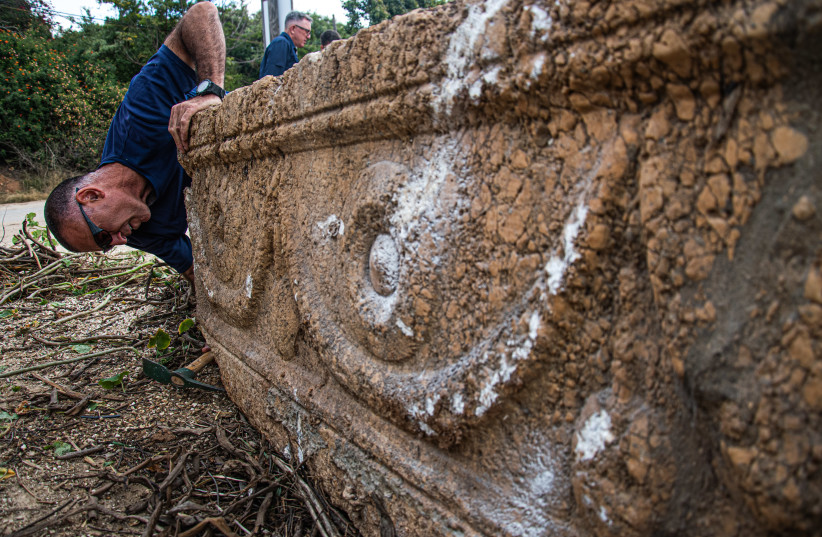
Two stone sarcophagi were uncovered at Ramat Gan Safari Park.

Ancient sarcophagi found at the Ramat Gan Safari Park. / (photo credit: YOLI SCHWARTZ/IAA)

Two stone sarcophagi dating back to the second or third century CE were uncovered at the Ramat Gan Safari Park during construction works to expand its wildlife hospital, the Israel Antiquities Authority announced on Thursday.

“We arrived at the Ramat Gan Safari Park as a result of vicissitudes that began some 25 years ago, when the park decided to build a parking lot,” Uzi Rothstein from the IAA Theft Prevention Unit commented. “The contractor cleared two stone structures and transported them to a farther area without having any idea of what he was dealing with.”

The sarcophagi were left untouched for years, covered in vegetation and dirt, until work on the new complex began, and the new contractor realized that those stones might actually be much more significant than previously thought. He alerted the safari park staff, who then got in touch with Rothstein and his colleague, Alon Klein.

The artifacts were made when the Romans ruled over the land of Israel. According to the archaeologists, the decorations featured on them were very common in Pagan burials: symbolic discs – to protect and accompany the soul on its journey to the afterlife – and floral garlands.

Because of the similarity between the sarcophagi, the experts said they may have belonged to husband and wife couple. Moreover, whoever was buried in them must have been wealthy.

While the provenance of the artifacts is unknown, the safari park is located near the area where the ancient city of Bnei Brak once stood. The city is mentioned in the Passover Haggadah as the setting of perhaps the most famous seder in Jewish history.

“It happened once [on Pesach] that Rabbi Eliezer, Rabbi Yehoshua, Rabbi Elazar ben Azariah, Rabbi Akiva and Rabbi Tarfon were reclining in Bnei Brak and were telling the story of the exodus from Egypt that whole night,” reads the text (translation Sefaria.org).


Zawartość publikowanych artykułów i materiałów nie reprezentuje poglądów ani opinii Reunion’68,
ani też webmastera Blogu Reunion’68, chyba ze jest to wyraźnie zaznaczone.
Twoje uwagi, linki, własne artykuły lub wiadomości prześlij na adres:
webmaster@reunion68.com


US outraged over Iran role in Yemen; ICC to probe alleged Israeli war-crimes

US outraged over Iran role in Yemen; ICC to probe alleged Israeli war-crimes

TV7 Israel News


1) In the face of a looming investigation by the International Criminal Court, or ICC, into alleged war-crimes which the Palestinians claim were committed by Israel; hundreds of Israeli citizens may be subject to arrests while visiting Europe, or elsewhere.

2) Israel intends to establish a “special security arrangement” with its Gulf Arab partners in light of mutual concerns regarding Iran.

3) Washington voices outrage over Tehran’s evident role in fanning the flames of conflict in Yemen.


Zawartość publikowanych artykułów i materiałów nie reprezentuje poglądów ani opinii Reunion’68,
ani też webmastera Blogu Reunion’68, chyba ze jest to wyraźnie zaznaczone.
Twoje uwagi, linki, własne artykuły lub wiadomości prześlij na adres:
webmaster@reunion68.com


Prophet Joshua’s Mount Ebal altar site harmed by Palestinian road work

Prophet Joshua’s Mount Ebal altar site harmed by Palestinian road work

TOVAH LAZAROFF


News of the destruction caused an immediate outcry among right-wing politicians.

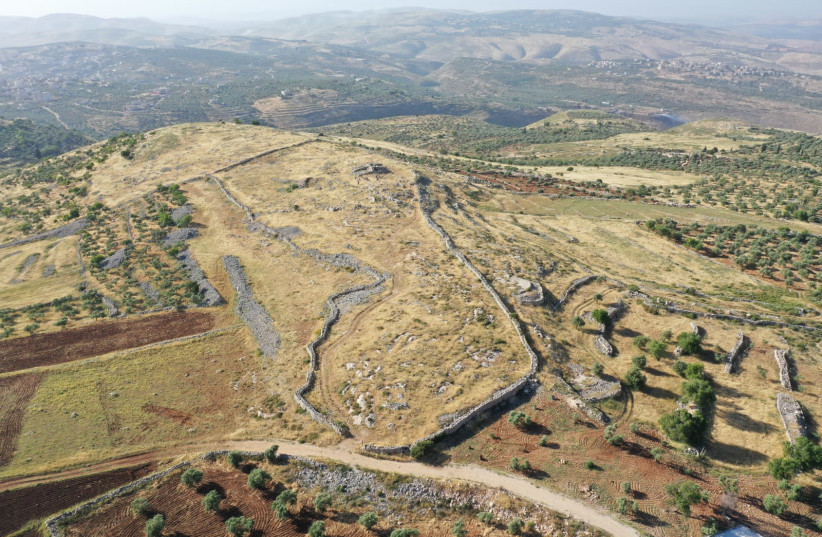
An aerial view of the biblical site of Joshua’s altar on Mount Ebal. / (photo credit: SHUKI LEVINE)

Palestinian Authority roadwork destroyed portions of a 3,200-year-old wall that belonged to the biblical site of Joshua’s altar on Mount Ebal, according to the right-wing NGO Shomrim al Hanetzach.

The area near the Palestinian city of Nablus, also known by the biblical name of Shechem, is located in Area B of the West Bank, and therefore the site falls under the auspices of the PA, and as such the Civil Administration has no oversight, its representative explained.

Shomrim al Hanetzach reported that Palestinian workers had ground ancient stone from the site’s exterior wall into gravel to pave the road as well as made use of stones from within the site itself.

The altar remains intact, but Shomrim al Hanetzach, which focuses on the preservation of Jewish archaeology said it fears additional damage to the site could still occur.

It pointed to a pledge by Strategic Affairs Minister Michael Biton (Blue and White), who is also a minister in the Defense Ministry, that no harm would come to the site as a result of the roadwork.

News of the destruction caused an immediate outcry among right-wing politicians.

Religious Zionist Party head MK Bezalel Smotrich called the destruction an “insane failure” whose “results are irreversible.”

Once in the government his party will demand the closure of the Civil Administration, which governs civilian life in Area C of the West Bank. Civilian affairs in Judea and Samaria should be dealt with directly by various ministries, he said, adding that such a move would be a form of de facto sovereignty.

MK Matan Kahana said that the destruction was “another sign of the lack of governance by the Netanyahu government which has given up our culture’s cradle.”

Former justice minister, MK Ayelet Shaked (Yamina), said, “There are relentless attempts to weaken our hold on our homeland and to obscure the Jewish people’s glorious past in the Land of Israel, both through terrorist acts and destruction of archaeology.

“The government knew that work was being done in this area and yet part of the archaeological site was destroyed,” Shaked said.

Samaria Regional Council head Yossi Dagan said the harm to the site was an unfortunate consequence of the government’s failure to preserve Jewish heritage in Judea and Samaria.

Guy Derech of Shomrim al Hanetzach said the altar was one of the more important archaeological sites, and that harming it was a violation of the Oslo Accords.

“We call on the prime minister and government ministers to stop burying their heads in the sand, to start working before no more heritage remains,” Derech said.


Zawartość publikowanych artykułów i materiałów nie reprezentuje poglądów ani opinii Reunion’68,
ani też webmastera Blogu Reunion’68, chyba ze jest to wyraźnie zaznaczone.
Twoje uwagi, linki, własne artykuły lub wiadomości prześlij na adres:
webmaster@reunion68.com