Archives

IDF intelligence: Iran at least two years from nuclear bomb

IDF intelligence: Iran at least two years from nuclear bomb

UDI SHAHAM


Officer says Tehran sees 2015 nuclear deal as only exit point from its severe situation.
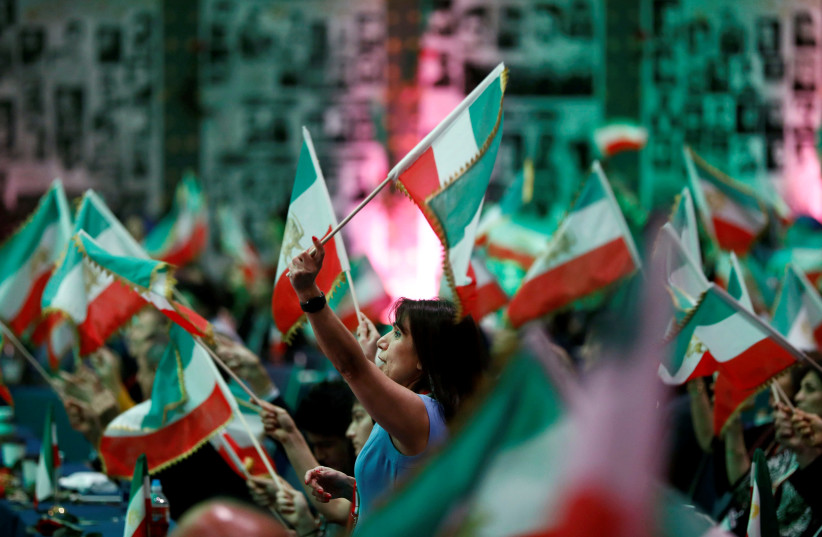
Attendees wave flags as Iranian Americans from across California converge in Los Angeles to participate in the California Convention for a Free Iran and to express support for nationwide protests in Iran from Los Angeles, California, U.S., January 11, 2020. / (photo credit: REUTERS/ PATRICK T. FALLON)

Iran is at an unprecedented “low point” due to actions carried out by Israel and the US, but it has not stopped investing in its nuclear project, OC IDF Intelligence Maj.-Gen. Tamir Heiman said this week.

“In its current situation, Iran considers a nuclear deal the only way out of the crisis, and hence it is trying to go back to the deal it signed in 2015,” he said at a press briefing.

According to IDF estimates, it would take Iran about two years to build a bomb once it decides to do so.

Israel reportedly has launched a multitude of operations against Iran to undermine its nuclear program. An explosion at the Natanz uranium enrichment facility and the assassination in November of Iran’s top nuclear scientist, Mohsen Fakhrizadeh, were attributed to Israel in recent reports.
Israel has also worked closely with the US to impose crippling sanctions on Iran’s economy.

According to Heiman, Iran starts 2021 “battered, but on its feet,” and it hopes the new US administration will change its attitude toward it.

However, the first signs of this attitude are not promising for Tehran. On Sunday, President Joe Biden said the US would not lift sanctions on Iran unless it first stops enrichment of uranium.

The White House later clarified that Biden’s “position remains exactly what it has been, which is that if Iran comes into full compliance with its obligations under the JCPOA, the United States would do the same and then use that as a platform to build a larger and stronger agreement that also addresses other areas of concern.”

Traditionally, there are two main alliances in the region: the Shi’ites, led by Iran, which includes Syria, Lebanon, Iraq and Yemen; and the radical Sunnis, which includes Turkey, Qatar, Libya and other countries that left this pact over the years.

In 2020, a new regional alliance was formed that includes Israel, Saudi Arabia, the United Arab Emirates, Bahrain, Sudan, Morocco, Jordan and Egypt. This alliance of moderate Sunni countries and Israel is closer to the US and Europe, and it raises concerns and fears in Iran regarding the potential of more sanctions and pressure in the future.

In Iran, there are two main camps with a different attitude toward a nuclear agreement.

The so-called moderate camp, which includes President Hassan Rouhani, is willing to make concessions and prefers to reach a new agreement with the US as soon as possible to ease the economic crisis.

The conservative camp believes patience will reward the Islamic Republic in the long term. It opposes concessions and maintains that only if the US backtracks first will Iran change its attitude.

Israel, as well as the US and Europe, are waiting to see the outcome of Iran’s presidential election in June. Some experts believe Supreme Leader Ali Khamenei, who is closer in his ideas to the conservative camp, prefers a victory by the moderate camp.
e most important decisions on his own. This is why, according to experts, he would like to show the world a more moderate and open face that might lure the West to ease sanctions and at the same time help Iran advance toward a bomb.


Zawartość publikowanych artykułów i materiałów nie reprezentuje poglądów ani opinii Reunion’68,
ani też webmastera Blogu Reunion’68, chyba ze jest to wyraźnie zaznaczone.
Twoje uwagi, linki, własne artykuły lub wiadomości prześlij na adres:
webmaster@reunion68.com


IHRA definition is useful – antisemitism must be fought on all forms

IHRA definition is useful – antisemitism must be fought on all forms

JPOST EDITORIAL


BDS is, by definition, discriminating against Israelis due to their national origin, and antisemitism is discrimination based on religion.

An anti-Israeli protest inspired by BDS / (photo credit: REUTERS)

“Antisemitism is a certain perception of Jews, which may be expressed as hatred toward Jews. Rhetorical and physical manifestations of antisemitism are directed toward Jewish or non-Jewish individuals and/or their property, toward Jewish community institutions and religious facilities.”

That is the International Holocaust Remembrance Alliance’s definition of antisemitism.

To date, 31 countries have adopted the definition, along with academic institutions, local governments and the English Premier League.
The definition allows those countries and institutions to identify antisemitism and to work to eradicate it, whether through the justice system, penalties, or through education.

Yet in the US a coalition of Jewish groups, which claims to be progressive but is exhibiting shockingly regressive behavior, has come out against that definition.

The Progressive Israel Network, which includes left-wing Jewish organizations such as J Street, the New Israel Fund and T’ruah (formerly Rabbis for Human Rights), came out against the adoption of the IHRA definition on Tuesday.

The PIN said it opposes “the effort to enshrine [the definition] in domestic law and institutional policy.” The network of liberal NGOs further specified that it is concerned about the examples the IHRA gave with the definition, such as saying “the existence of a State of Israel is a racist endeavor” and “requiring of [Israel] a behavior not expected or demanded of any other democratic nation.”

The Jewish groups’ reasoning is a concern that the IHRA definition would be used to “suppress legitimate free speech, criticism of Israeli government actions, and advocacy for Palestinian rights.” They cite as “a harmful overreach” US Secretary of State Mike Pompeo’s declaration that “anti-Zionism is antisemitism” and that the Boycott, Divestment and Sanctions campaign against Israel and Israelis is a form of antisemitism that the State Department will make sure not to support.

The groups also claimed that this use of the IHRA definition is “primarily aimed at shielding the present Israeli government and its occupation from all criticism.”

An examination of the above definition and of the examples provided by IHRA – which are too many to present here, but are accessible online – finds that it in no way calls to limit criticism of Israel’s government or any others.

Unless, that is, these organizations mean to say comparing Israelis to Nazis is legitimate criticism of government policies – comparisons which are a way of denying the abject horrors of the Holocaust; or, in their zeal to advocate for Palestinian self-determination, they’ve decided that Jews are uniquely unworthy of the same rights.

As journalists, we share in these organizations’ vigilance about free speech and believe open debate is important.

Yet, the full IHRA text states that it is not a legally binding document, which means that it is not codifying limits to free expression.
The US Constitution has broad protections for free speech, perhaps the broadest in the world. Hate speech is not illegal in the US, for example. But even in America, one cannot discriminate based on race, color, national origin, religion, gender, disability, age, or citizenship status in hiring practices.

BDS is, by definition, discriminating against Israelis due to their national origin, and antisemitism is discrimination based on religion. For Pompeo to ensure funds do not go to BDS-supporting groups is a reflection of existing protected categories in US law.

No one is taking away these Jewish groups’ or their Palestinian allies’ right to criticize Israel as sharply or as harshly as they wish. What governments around the world have sought to do is to combat antisemitic speech, discrimination and other behaviors by identifying them.
As such, the PIN is throwing the baby out with the bathwater by opposing a widely recognized definition of antisemitism.

The PIN statement is, as the Foreign Ministry said, a “tailwind” for “antisemitic movements that are fighting for their right to continue spreading hate speech and racism towards Jews.” It is providing “an opening for the legitimization of kinds of antisemitism.”

Organizations that rightly call out right-wing extremist antisemitism should realize that such a definition is important and useful, and should get woke to the fact that antisemitism should be fought in all its forms, on both sides of the political map.


Zawartość publikowanych artykułów i materiałów nie reprezentuje poglądów ani opinii Reunion’68,
ani też webmastera Blogu Reunion’68, chyba ze jest to wyraźnie zaznaczone.
Twoje uwagi, linki, własne artykuły lub wiadomości prześlij na adres:
webmaster@reunion68.com


The Spielberg Jewish Film Archive – Morocco Music

The Spielberg Jewish Film Archive – Morocco Music

   Hebrew University of Jerusalem


Abstract: Part of the Israel Music Heritage Project. A look at the mixture of Arab melodies with Hebrew text that forms the basis of Moroccan Jewish music.

The Spielberg Jewish Film Archive –
The 500 films, selected for the virtual cinema, reflect the vast scope of documentary material collected in the Spielberg Archive. The films range from 1911 to the present and include home movies, short films and full length features.

שם: מרוקו: המוסיקה של יהודי צפון אפריקה
שנה: 1994
אורך: 00:29:04
שפה: אנגלית

תקציר: חלק מפרויקט המוסיקה של ישראל, “עם וצליליו”. המזיגה שבין מנגינות ערביות וטקסטים עבריים העומדת בבסיס המוסיקה היהודית המרוקנית.

ארכיון הסרטים היהודיים על שם סטיבן שפילברג –
חמש מאות הסרטים שנבחרו עבור הקולנוע הווירטואלי משקפים את ההיקף הנרחב של החומר התיעודי בארכיון שפילברג. באתר ישנם סרטים משנת 1911 ועד ימינו אלה ביתיים, קצרים ובאורך מלא.

כל הזכויות שמורות לארכיון הסרטים היהודיים על שם סטיבן שפילברג ולאוניברסיטה העברית בירושלים 2010; דף הבית; www.spielbergfilmarchive.org.il


Zawartość publikowanych artykułów i materiałów nie reprezentuje poglądów ani opinii Reunion’68,
ani też webmastera Blogu Reunion’68, chyba ze jest to wyraźnie zaznaczone.
Twoje uwagi, linki, własne artykuły lub wiadomości prześlij na adres:
webmaster@reunion68.com


Hand grenade from World War I unearthed in Jerusalem

Hand grenade from World War I unearthed in Jerusalem

ROSSELLA TERCATIN


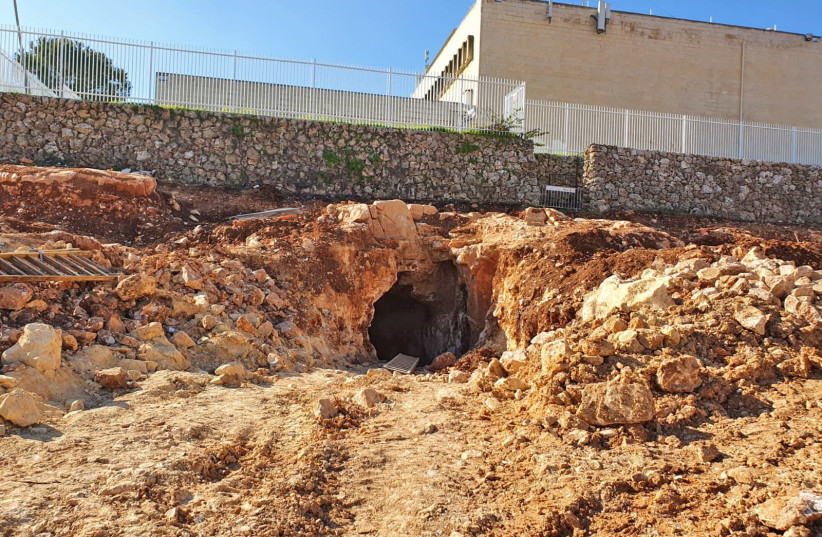
The cistern where the grenade was discovered in Jerusalem. / (photo credit: OSCAR BECHERNO/ISRAEL ANTIQUITIES AUTHORITY)

Located in the heart of the city, Sacher Park is one of Jerusalemites’ most beloved locations, offering them the opportunity to stroll, jog, barbecue and play. However, a different kind of experience was awaiting the archaeologists working on a salvage excavation during renovations in the area: an encounter with a British hand grenade dating back to World War I.

The grenade was uncovered in an ancient cistern by Oscar Becherno, director of the archaeological excavation on behalf of the Israel Antiquities Authority.

“This is a Mills 23 hand grenade, which was used by the British army in World War I,” said Assaf Peretz, an IAA weapons expert. “It seems that the grenade had already been found in the past and was thrown by a passerby into a cistern to bury it and remove the danger from the area.”

On the eve of World War I, Jerusalem was part of the Ottoman Empire. Jerusalem and the Land of Israel were conquered by the British in 1917-1918 and placed under British rule at the end of the conflict.

According to the law in Israel, a salvage excavation must be conducted prior to any construction project. The IAA, which is the body tasked with conducting these excavations, has worked in the area of Sacher Park in the past, uncovering agricultural installations, ancient burial caves and other remains.

The grenade was found during the work to improve Sacher Park, which is being carried out by the Jerusalem Development Authority and Moriah Company.

Over the past year, new playgrounds, sports fields, some 120 light poles, fountains, benches, picnic tables and trash cans were installed. Gardening and irrigation processes were improved, and 800 new trees were planted


Zawartość publikowanych artykułów i materiałów nie reprezentuje poglądów ani opinii Reunion’68,
ani też webmastera Blogu Reunion’68, chyba ze jest to wyraźnie zaznaczone.
Twoje uwagi, linki, własne artykuły lub wiadomości prześlij na adres:
webmaster@reunion68.com


Israel News – Feb. 07, 2021

Israel News – Feb. 07, 2021

ILTV Israel News


The Hague rules that it can investigate Israel and #Hamas​ for war crimes, but the prime minister says its anti -Semitic.


Zawartość publikowanych artykułów i materiałów nie reprezentuje poglądów ani opinii Reunion’68,
ani też webmastera Blogu Reunion’68, chyba ze jest to wyraźnie zaznaczone.
Twoje uwagi, linki, własne artykuły lub wiadomości prześlij na adres:
webmaster@reunion68.com