Archives

Siege ramp from Crusader era still protects Ashkelon

Siege ramp from Crusader era still protects Ashkelon

HANNAH BROWN


While this ramp may have been built originally as part of a war, its remains have served a very different and peaceful purpose: preventing sand from drifting into the city.
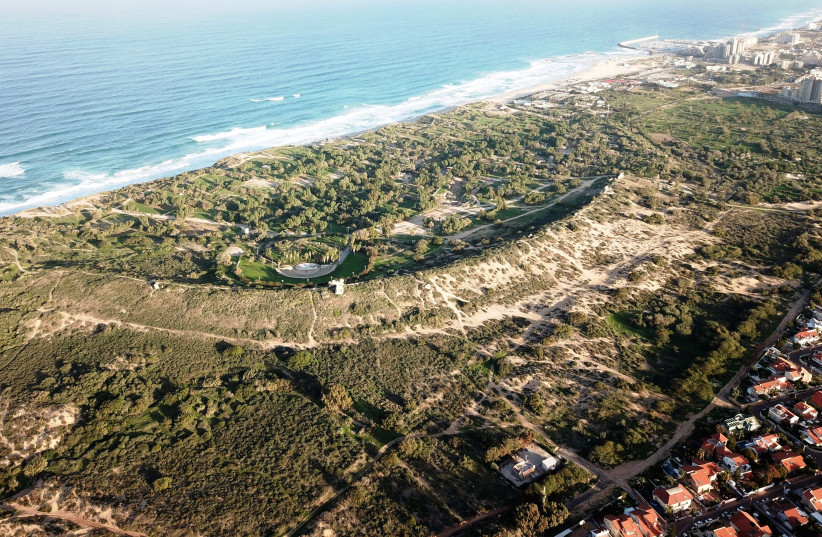
A view of the northwestern Ashkelon area. / (photo credit: DR. RAFAEL LEWIS)

For Dr. Rafael Lewis, a lecturer at Ashkelon Academic College and a researcher at the University of Haifa, looking at aerial photographs and a landscape study of Ashkelon sparked an idea.

Lewis, who studies both landscape archaeology and battlefield archaeology, identified what he is convinced are the remains of a huge siege ramp that was likely constructed in the 12th or 13th century, during one of several sieges that the area went through during the Crusader era.

But while this ramp may have been built originally as part of a war, its remains have served a very different and peaceful purpose, preventing sand from drifting into the city.

“With landscape archaeology, we study landscape to understand how humans were influenced by landscape and how they changed it; it’s about the reciprocity between humans and landscape,” he said.
Using a landscape archaeological study conducted between 2010 and 2013, as well as aerial photographs from the 1940s, Lewis formulated his theory. He wrote about it extensively in his theory about the ramp and its later uses, in a chapter in the recently published book Crusading and Archaeology, published by Routledge Press.

The city was built in the Iron Age by the Canaanites with ramparts in the shape of the letter D or like a bow with the string running along the coast. It was conquered time and again as civilizations rose and fell, and each would use and sometimes rebuild the ramparts: Philistines, Romans, Byzantines and eventually Muslims and Crusaders.

In addition to the landscape archaeological study and the photographs, he examined written, archaeological and environmental sources which “revealed a fundamental difference between the area within the city’s rampart and to the north of it, on the one hand, and the area to the south, on the other. While the area south of the tel and to the middle of it northwards along the outer part of the rampart is seen covered by sand, the area in the tel itself and north of it is intensely cultivated, with clear evidence of agricultural activity and settlement,” Lewis wrote in the chapter.

The remains of the siege ramp continue to protect the area to its north from sand, he said, noting that this natural benefit is “the result of man-made features related to siege activities inflicted on the city in the 12th century, the siege which resulted in the conquest of Ascalon [Ashkelon] in 1153 by the forces of the Kingdom of Jerusalem, or alternatively the siege imposed by Salah ad-Din 34 years later, which ended with the city’s surrender on 4 September 1187.”

He wrote that he was convinced that the siege rampart built during one of those two sieges is the feature blocking the sand movement from south to north.

However, more research needs to be done to ascertain who built the ramparts.

“It is highly likely that archaeological digs in the area east of the Jerusalem Gate will teach us more about the siege system, and may even produce findings that can be linked to this historical event, one which still resonates and echoes” in the landscape of contemporary Ashkelon, he wrote.


Zawartość publikowanych artykułów i materiałów nie reprezentuje poglądów ani opinii Reunion’68,
ani też webmastera Blogu Reunion’68, chyba ze jest to wyraźnie zaznaczone.
Twoje uwagi, linki, własne artykuły lub wiadomości prześlij na adres:
webmaster@reunion68.com


News From Israel- Jan 12, 2021

News From Israel- Jan 12, 2021

ILTV Israel News


Clashes in Ashdod as Israelis fight against #Coronavirus closures
–
Free speech under attack again in the wake of banning President #Trump from social media…
–
The internet asked, Israeli pilots answered. Stay tuned for a very special message from the Israeli Air Force.


Zawartość publikowanych artykułów i materiałów nie reprezentuje poglądów ani opinii Reunion’68,
ani też webmastera Blogu Reunion’68, chyba ze jest to wyraźnie zaznaczone.
Twoje uwagi, linki, własne artykuły lub wiadomości prześlij na adres:
webmaster@reunion68.com


Israel to be soon hit by a destructive and deadly earthquake, study shows

Israel to be soon hit by a destructive and deadly earthquake, study shows

SARAH CHEMLA


“It could be in ten years or in several decades, but it could also be next week, and we need to constantly be prepared for that,” the researchers said.

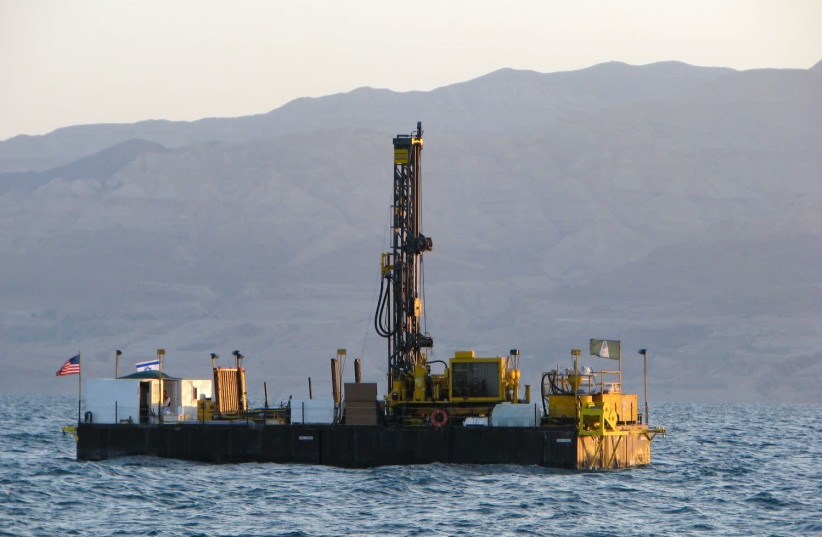
Drilling barge in the Dead Sea, 2010. / (photo credit: TEL AVIV UNIVERSITY)

A destructive earthquake measuring 6.5 on the Richter scale is expected to hit Israel and its surrounding neighbors in the coming years, causing hundreds of deaths, a new study led by researchers from Tel Aviv University has found.

For the study, carried out under the auspices of the International Continental Scientific Drilling Program (ICDP) and published in the Science Advances journal, a rig was placed in 2010 in the center of the Dead Sea, which began drilling to a depth of hundreds of meters, enabling an analysis of some 220,000 years of Dead-Sea geology by studying the seabed.

The researchers revealed a cyclical pattern, since such devastating earthquakes seem to be hitting the region every 130 to 150 years – but there have been cases in history where the period of time between one earthquake and another was only a few decades long.

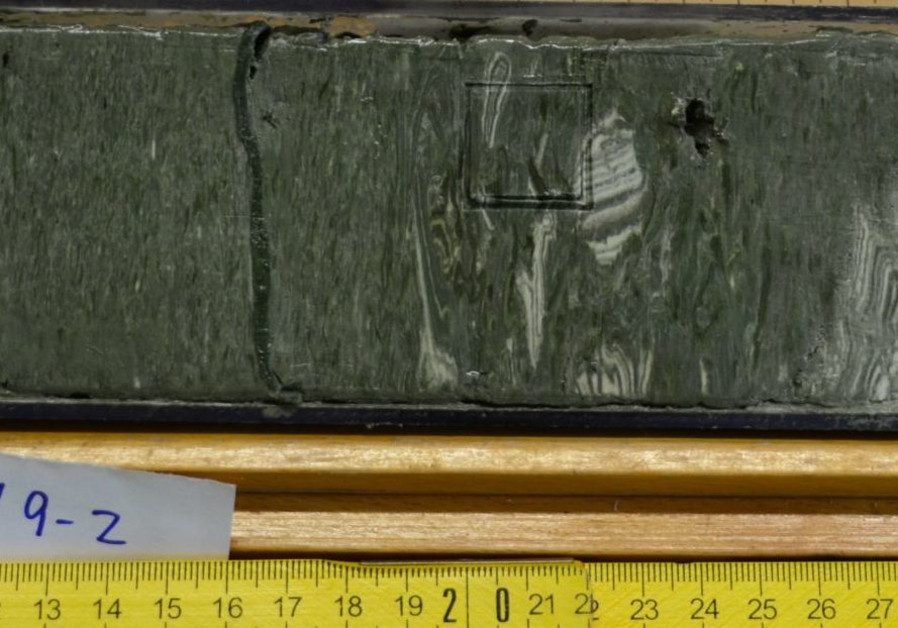
According to Prof. Shmuel Marco, head of the Porter School of Environmental and Earth Sciences at Tel Aviv University, because the Dead Sea is the lowest place on earth, the flood waters that flow into the Dead Sea every winter carry with them sediment that stratifies at the bottom of the lake into different layers, with every two layers representing a different year.

Prof. Shmuel Marco. (Credit: Tel Aviv University)

As soon as an earthquake occurs, the sediments swirl together, with the layers that had previously settled in perfect sequence blending into one another and resettling in a different arrangement.

The researchers developed specific equations and computational models to analyze these findings and were then able to both understand the physics of the process and to reconstruct from the geological record the history of earthquakes over time, highlighting that their frequency in the Dead Sea valley is not fixed over time.

Earthquake-induced disruption of Dead Sea sediments observed in the drill core. (Credit: Tel Aviv University)

In the wake of these findings – and given that the last one that hit the region was 93 years ago – the researchers predict that another earthquake should hit the region in the near future: in the coming years or decades, they said.

The last earthquake of such magnitude was felt in the Dead Sea valley in 1927, causing injuries to hundreds of people and damage to several main cities, including Jordan’s capital Amman, Jerusalem, Bethlehem and Jaffa.
“According to the latest earthquake, which is the best indicator we have, about 250 people were killed in Jerusalem, Bethlehem, Amman and Jericho,” Marco said.

“So if we compare it to the number of people inhabiting these cities today, 100 years later, the population has grown by about two to three times,” he said. “This means the number of casualties will be two to three times as much, not to mention the massive damages to infrastructure and property.
“I don’t want to cause alarm,” concluded Marco, “but we are living in a tectonically active period. The geological record does not lie – and a major earthquake in Israel will come. Of course, we have no way of predicting exactly when the earth will shake under our feet – this is a statistical projection – but unfortunately, I can say that an earthquake that will cause hundreds of casualties will hit in the coming years.

“It could be in ten years or in several decades – but it could also be next week,” he warned, “and we need to constantly be prepared for that.”
The research was carried out by an international team of researchers, including Marco and his fellow researchers Dr. Yin Lu (postdoc at TAU), Prof. Amotz Agnon (Hebrew University), Dr. Nicolas Waldmann (Haifa University), Dr. Nadav Wetzler (Israel Geological Survey) and Dr. Glenn Biasi (US Geological Survey).


Zawartość publikowanych artykułów i materiałów nie reprezentuje poglądów ani opinii Reunion’68,
ani też webmastera Blogu Reunion’68, chyba ze jest to wyraźnie zaznaczone.
Twoje uwagi, linki, własne artykuły lub wiadomości prześlij na adres:
webmaster@reunion68.com

IDF reveals it attacked 50 targets in Syria throughout 2020

IDF reveals it attacked 50 targets in Syria throughout 2020

UDI SHAHAM


176 rockets were launched from Gaza, IDF yearly report find

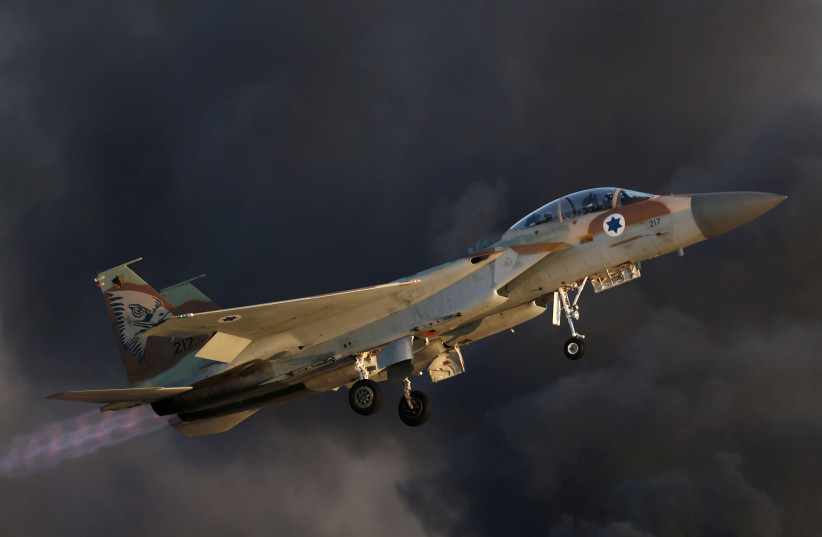
An Israeli Air Force F-15 fighter jet flies during an aerial demonstration at a graduation ceremony for Israeli airforce pilots at the Hatzerim air base in southern Israel June 30, 2016. /  (photo credit: AMIR COHEN/REUTERS)

The Israel Air Force carried out 50 strikes against targets in Syria throughout 2020, the IDF revealed in its annual statistics report released on Thursday.

The latest attack that was attributed to Israel in Syria took place on Tuesday, in which one Syrian soldier died and three others were wounded.

Also on the Syrian front, the report revealed, two IED (improvised explosive device) attacks were thwarted.

On the Lebanese border, the report mentioned, there were two attempts by Hezbollah to carry out attacks into Israel, and both were prevented by the IDF.

On the Gaza front, 176 rockets were launched by terrorist organizations toward Israel during 2020. Ninety of the rockets landed in open fields, and 80 were intercepted.

One terrorist tunnel along the Gaza border was exposed this year. The tunnel was dug by Hamas and crossed into Israel. During that time, some 300 targets in Gaza were hit by the IAF.

Also, according to the report, there were some 1,500 rock hurling incidents in the West Bank during the past year. This is a small increase in comparison to 2019, during which 1,469 incidents were reported

There were 31 cases of live-fire incidents in the West Bank during the year – 12 more than in 2019. Nine stabbing attacks were reported, three fewer than in 2019.


Zawartość publikowanych artykułów i materiałów nie reprezentuje poglądów ani opinii Reunion’68,
ani też webmastera Blogu Reunion’68, chyba ze jest to wyraźnie zaznaczone.
Twoje uwagi, linki, własne artykuły lub wiadomości prześlij na adres:
webmaster@reunion68.com


Palestinians, Jordan accuse Israel of ‘Judaizing’ Western Wall Plaza

Palestinians, Jordan accuse Israel of ‘Judaizing’ Western Wall Plaza

KHALED ABU TOAMEH


The PA Foreign Ministry called on the United Nations Security Council to “halt the crimes of the Israeli occupation forces against al-Aqsa Mosque.”

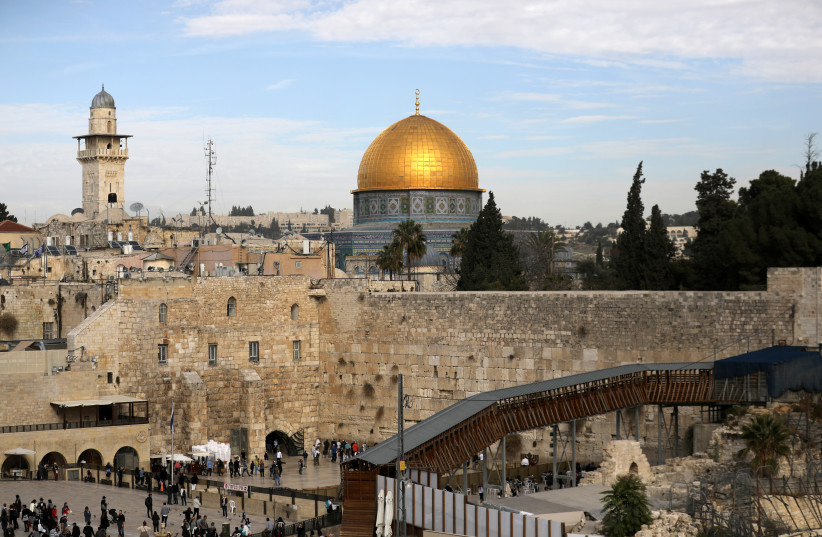
A general view of Jerusalem’s Old City shows the Western Wall, Judaism’s holiest site, in the foreground as the Dome of the Rock, located on the compound known to Muslims as Noble Sanctuary and to Jews as Temple Mount, is seen in the background. / (photo credit: REUTERS/AMMAR AWAD)

The Palestinians and Jordan have accused Israel of seeking to “Judaize” the Western Wall Plaza because of renovation work that is being carried out there.

Referring to the renovations as “excavations,” the Palestinians and Jordan called for an immediate cessation of the work at the site.

The Jordanian-controlled Wakf Department in east Jerusalem, which oversees Muslim holy sites, said that the “excavations” were “part of the [Israeli] project to complete the Judaization of the al-Buraq Plaza, southwest of the al-Aqsa Mosque.”

The Wakf claimed that the renovations contradicted international humanitarian law and decisions on this matter by the United Nations Educational, Scientific and Cultural Organization (UNESCO).

Al-Buraq is the name Muslims use to refer to the Western Wall. They believe it is the site where the prophet Mohammed tied his winged steed, al-Buraq, on his journey to Jerusalem before ascending to paradise.

The Palestinian Authority Ministry of Foreign Affairs called on the United Nations Security Council to “halt the crimes of the Israeli occupation forces against al-Aqsa Mosque.”

The ministry condemned Israeli “excavations” at the Western Wall, referring to it as the “western wall of the al-Aqsa Mosque.”

The ministry further accused Israel of working to “Judaize” the entire site, as well as the Aqsa Mosque and the nearby neighborhood of Silwan.
Sheikh Omar Kiswani, director of al-Aqsa Mosque, claimed that Israel was seeking to expand the Western Wall Plaza “so that it could receive the largest number of Jewish settlers who would storm al-Aqsa Mosque.”
Kiswani said that the work was part of an Israeli scheme to turn the Western Wall plaza into an exclusively Jewish area.

Sheikh Ikrima Sabri, chairman of the Supreme Islamic Council and former PA mufti of Jerusalem, denounced the renovations as an “assault on Muslims with the aim of changing the identity of Jerusalem and tampering with Islamic heritage and antiquities.”

Sabri said that what was happening at the Western Wall Plaza was in the context of Israel’s attempt to “create a false Jewish identity.”
“This is an unacceptable change of the reality,” he added. “It contradicts international laws.”

Jordan, meanwhile, called on Israel to immediately stop the “ongoing excavations and abide by its obligations as an occupying power in occupied east Jerusalem, and to stop violating or changing the identity of the Old City.”

The Jordanian Foreign Ministry said it condemns the Israeli “excavations at the al-Buraq Plaza, which is an integral part of al-Aqsa Mosque.”
A spokesman for the ministry reiterated Jordan’s “rejection and denouncement of all unilateral Israeli measures,” saying they were in violation of international law.


Zawartość publikowanych artykułów i materiałów nie reprezentuje poglądów ani opinii Reunion’68,
ani też webmastera Blogu Reunion’68, chyba ze jest to wyraźnie zaznaczone.
Twoje uwagi, linki, własne artykuły lub wiadomości prześlij na adres:
webmaster@reunion68.com