
Archives

Netanyahu cares about one thing and one thing only – himself

Netanyahu cares about one thing and one thing only – himself

YAAKOV KATZ


The good of the country is forsaken for the political fortunes of the few, and Bibi hasn’t helped.

Prime Minister Benjamin Netanyahu welcomes the first shipment of Pfizer’s coronavirus vaccine to Ben-Gurion Airport, Israel, December 9, 2020 / (photo credit: MARC ISRAEL SELLEM/THE JERUSALEM POST)

It was a classic Israeli split-screen moment. On one side were the images from Morocco, where an Israeli-American delegation led by National Security Council chief Meir Ben-Shabbat and White House adviser Jared Kushner were at the Royal Palace meeting with King Mohammed VI, as part of an historic trip to normalize relations.

At the same time, some 6,000 kilometers away, the screen was showing fighting in the Knesset. The clock was ticking toward its dispersal after the dysfunctional Netanyahu-Gantz government failed to pass a budget by the mandated deadline. Israel was heading to a fourth election in two years.

The two scenes were so far removed from one another, yet also so close. In Rabat, the government was making peace and planting another pillar of stability in the Middle East. Back home, it was actively and consciously doing the opposite.

This has been Israel’s story throughout the last two years of political upheaval and never-ending elections. The good of the country is forsaken for the political fortunes of the few: politics before pandemic, dysfunctionality before stability.

That the country has managed to forge peace deals during this period is a major achievement in itself, considering that everything else this government touches breaks. The cabinet rarely meets, and when it does, all the ministers accomplish is to fight. Coronavirus strategy constantly changes, sometimes by the hour, and political mudslinging rarely takes a break.

This should not really be a surprise. Prime Minister Benjamin Netanyahu excels when he works alone. The normalization deals that he reached with Bahrain, Morocco and the United Arab Emirates did not require him to work with anyone in Israel. He did them on his own, even while keeping his own defense and foreign ministers in the dark.

When he works alone, he succeeds. He got the peace deals done, and paved the way for Israel to receive large quantities of COVID vaccines and roll them out, putting the country on a path to have over a million people inoculated by the middle of January. For both of these accomplishments he deserves credit as well as our gratitude.

On the other hand, when Netanyahu needs to work with partners, he fails. That is why Israel’s management of the corona crisis looks the way it does, and why almost every other large-scale project promoted under his tenure suffers at one point or another from mismanagement (think Jerusalem-Tel Aviv fast train, Tel Aviv light rail, outsourcing ports to China, and more).

The coronavirus revealed to the public what many people who had worked with Netanyahu claimed for years: the prime minister is a bad manager. Large challenges that require a multidisciplinary approach and the integration and coordination of multiple ministries is something he is just not good at.

Part of the reason is because he is not interested in going into the detail that is needed to coordinate wide-scale processes. The other reason is that he can’t share credit – and if he were to coordinate work with someone he would have to share the credit with them, and that is something that he cannot let happen.

It is exactly for these reasons that Netanyahu tried from the beginning to undermine the unity government he established with Gantz. Having a partner in government means working together, coordinating and sharing the credit for the successes and the failures. It was never going to happen.

So even though he promised no tricks, tricks were exactly what he gave Gantz from the outset. And this has to be said: Netanyahu is the person responsible for the dispersion of the Knesset and Israel going to an election once again. He refused to bring a budget for a vote, and refused to abide by the agreement that he himself signed back in April.

I have written this before but it is important to keep repeating, because Netanyahu has no shame lying. On Tuesday night he spoke at the Knesset and claimed that it was not him but Gantz who had violated the coalition agreement, and that a “dictatorship of left-wing bureaucrats” led by Justice Minister Avi Nissenkorn was trying to overthrow him.

Not only are these lies, they are also dangerous lies. What Netanyahu is trying to do is undermine and weaken all of Israel’s democratic institutions, as part of a campaign to deter the judiciary system from doing its job to pursue justice in the three criminal cases against the prime minister.

There is also another objective: to keep the nation’s attention focused on him. Netanyahu wants people thinking about the question that has been at the core of the last three elections and seems likely to again at the end of March: are you for Bibi or are you against Bibi? Only Bibi? Or anyone but Bibi?

By keeping people focused on these questions, they are focused on him, and when they are focused on him, the thinking goes, they will vote for him. That is how Netanyahu keeps Likud at 27 and 28 seats in the latest polls, staying the largest party in an increasingly crowded field – especially on the Right.

This is important because if people are going to vote based on policy, there is a chance Netanyahu could bleed voters. His poor management of the coronavirus crisis, his pursuit of an NIS 1 million tax break in the Knesset at a time when one million Israelis are unemployed, and his ongoing bribery trial are all reasons people could use to not vote for him. By making up stories about bureaucratic dictatorships, and claiming that Naftali Bennett and Gideon Sa’ar are leftists when they are more right-wing than he, Netanyahu stays in the game and hopes to at least retain his primary constituents.

While Netanyahu would of course prefer to secure a decisive victory in the coming election, he would suffice simply denying someone else from winning, thereby staying on as interim prime minister while standing trial from his lofty and influential position.

The situation is sad. It is sad that Israel is once again entering a period of political instability; sad that we will see some of the ugliest political campaigns in our history; and sad that Netanyahu did not have the foresight to see where this all was going, and find a way to gracefully step down beforehand.

In the end, this is what the last two years have all been about: first Netanyahu trying to avoid an indictment, and now trying to avoid a criminal trial. Everything he has done and continues to do is with this in mind.

Three elections, the unity government with Gantz, the refusal to pass a budget, and the whole way he put himself at the front of the fight against coronavirus from the beginning. Everything is about political survival.
Even now, with the closure scheduled to go into effect on Sunday, there are political considerations. Netanyahu wants an immediate shutdown so that by the time Israelis go to the polls, the infection rate will have dramatically dropped. Moreover, some two million Israelis are expected to receive the coronavirus vaccines by March 23rd so the health and economic situation will have dramatically improved – as well as his chance of winning.

Does this mean that he does not deserve credit for organizing the swift delivery of vaccines? No. He does. But they are separate. We can appreciate what he did while at the same time call him out for what he really is: a politician focused today on one thing and one thing only. Himself.


Zawartość publikowanych artykułów i materiałów nie reprezentuje poglądów ani opinii Reunion’68,
ani też webmastera Blogu Reunion’68, chyba ze jest to wyraźnie zaznaczone.
Twoje uwagi, linki, własne artykuły lub wiadomości prześlij na adres:
webmaster@reunion68.com


Fifty Years After The Last Jewish Exodus from Poland

Personal Recollections, Prof. Marek Karliner


TAUVOD


Prof. Marek Karliner (Tel Aviv University)

Fifty Years After The Last Jewish Exodus from Poland
Stephen Roth Institute for the Study of Antisemitism and Racism
Tel Aviv University


Zawartość publikowanych artykułów i materiałów nie reprezentuje poglądów ani opinii Reunion’68,
ani też webmastera Blogu Reunion’68, chyba ze jest to wyraźnie zaznaczone.
Twoje uwagi, linki, własne artykuły lub wiadomości prześlij na adres:
webmaster@reunion68.com


Prof. hopes report on Jesus’s home will focus attention on cave churches

Prof. hopes report on Jesus’s home will focus attention on cave churches

HANNAH BROWN


The phenomenon of cave churches and how they influenced later Christian worship and architecture is just beginning to be studied seriously and in depth.

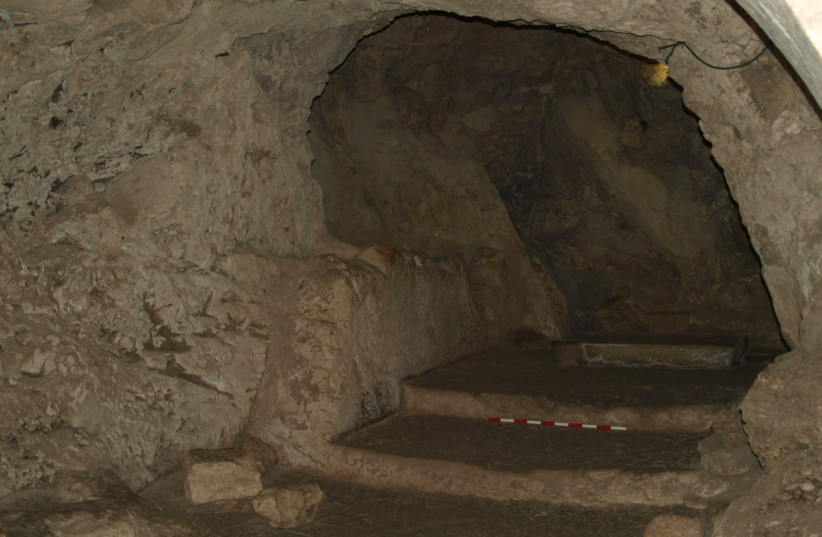
Steps are seen in a cave at the Sisters of Nazareth site. / (photo credit: COURTESY OF PROF. KEN DARK)

“Cave churches have largely been neglected in discussions of development of church architecture around the world,” said Prof. Ken Dark of the University of Reading in England.

“But some may be among the earliest known places of Christian worship.”

It is important for him to emphasize this point to put his research into context, because he recently published a book called The Sisters of Nazareth Convent: A Roman-period, Byzantine, and Crusader site in central Nazareth with Routledge Press, which made headlines around the world last week as reporters seized on one of his findings to say that he claimed to have found the site of Jesus’ boyhood home.

In his book, he wrote about how Christians in the Byzantine period believed that the dwelling underneath the Sisters of Nazareth Convent had been the home of young Jesus, which led first to the construction of a cave church in the hillside right next to it, before both the house and cave church were incorporated into a big church with a vaulted crypt.

However, what he feels was often overlooked in last week’s media frenzy was that while people in the Byzantine period probably held this belief and while they may even have been correct, it cannot be proved.

One passage in his book sets out his actual conclusion about the house: “It is, therefore, currently impossible to tell whether those who constructed the Phase 3 cave-church [the church built on the site in the fourth century CE] chose the correct location for Jesus’s house, although equally there is no reason to rule out the possibility that they did. What can be said more certainly is that Structure 1 [the first century dwelling] was probably part of the settlement where Jesus was brought up, and that the family of a tekton [craftsman] in first-century Nazareth may well have lived in a house of this form. Structure 1, therefore, has at least a contextual relevance for biblical studies… and beliefs about its identification have probably played an important part in the use of the Sisters of Nazareth site since at least the fourth century.”

Often the world press, he said, seemed to ignore that he said it was “impossible to tell” that this had been Jesus’ home and focus only on the fact that he said, “there is no reason to rule out the possibility.”

He said he hoped that “my book will also focus attention on cave churches and their part in the development of church architecture.”

While there were cave churches wherever early Christians lived in the Roman and Byzantine empires, and beyond in Ethiopia and Europe, the phenomenon of these churches and how they influenced later Christian worship and architecture is just beginning to be studied seriously and in depth, using modern archaeological tools.

There are many new directions this research can take, and Dark said that the Sisters of Nazareth site helped answer some questions about how the caves were used.

But he emphasized that he was looking for archaeological facts and not trying to prove any specific point about the life of Jesus. Dark said he is an “archaeologist of the Roman period and only an accidental biblical archaeologist. I didn’t go to Nazareth to find Jesus’ house, but to understand how the Byzantine Christian pilgrim center there emerged.”


Zawartość publikowanych artykułów i materiałów nie reprezentuje poglądów ani opinii Reunion’68,
ani też webmastera Blogu Reunion’68, chyba ze jest to wyraźnie zaznaczone.
Twoje uwagi, linki, własne artykuły lub wiadomości prześlij na adres:
webmaster@reunion68.com

Netanyahu Speaks With Morocco’s King, Invites Him to Israel

Netanyahu Speaks With Morocco’s King, Invites Him to Israel

Reuters and Algemeiner Staff


Israeli Prime Minister Benjamin Netanyahu adjusts his protective face mask after receiving a coronavirus disease (COVID-19) vaccine at Sheba Medical Center in Ramat Gan, Israel December 19, 2020. Photo: REUTERS/Amir Cohen

Israeli Prime Minister Benjamin Netanyahu spoke on Friday with Morocco’s King Mohammed VI and invited him to visit Israel, Netanyahu’s office said.

The two leaders spoke about moving forward with a US-brokered agreement announced earlier this month to normalize bilateral ties, according to the Israeli statement.

Netanyahu also thanked King Mohammed for hosting an official Israeli delegation this week.

King Mohammed underscored the close ties between the Moroccan Jewish community and the monarchy, the Royal Court said in a statement.

While welcoming the resumption of relations with Israel, the King said Morocco’s position regarding Palestine remains unchanged.

Rabat advocates the two-state solution and the unique character of Jerusalem as a city of three religions.


Zawartość publikowanych artykułów i materiałów nie reprezentuje poglądów ani opinii Reunion’68,
ani też webmastera Blogu Reunion’68, chyba ze jest to wyraźnie zaznaczone.
Twoje uwagi, linki, własne artykuły lub wiadomości prześlij na adres:
webmaster@reunion68.com


2,300-year-old Iron Age seal found in Israeli market

2,300-year-old Iron Age seal found in Israeli market

HANNAH BROWN


Researchers revealed that a seal sold in a market for a couple of shekels to a professor at Ben-Gurion University of the Negev (BGU) is in fact the earliest seal discovered in Israel.

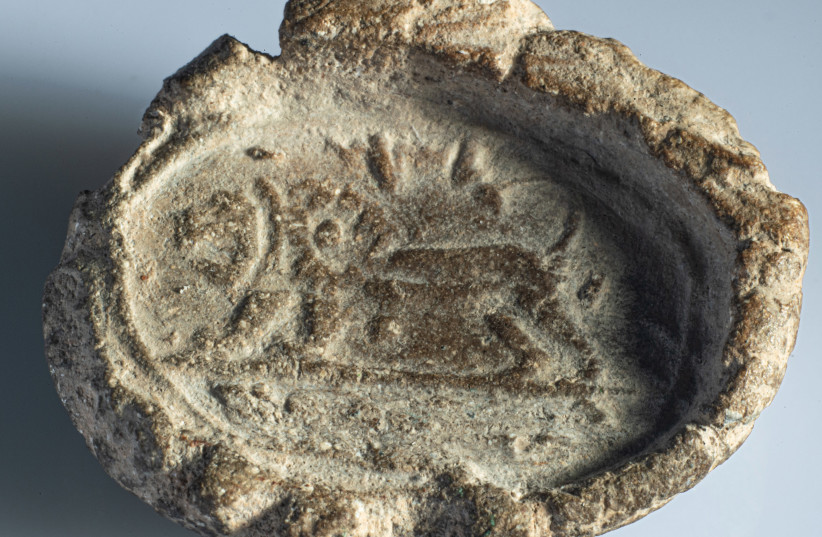
Seal imprinted with a figure of a roaring lion standing on all fours / (photo credit: DANI MACHLIS/BEN-GURION UNIVERSITY OF THE NEGEV)

Researchers have revealed that a seal sold in a market for a couple of shekels to a professor at Ben-Gurion University of the Negev (BGU) is in fact the earliest seal discovered in Israel, dating from about 2,300 years ago in the Iron Age. Also, in another first, there is compelling evidence that it was a royal seal.

About fifty years ago, BGU’s Prof. Yigal Ronen walked through the Bedouin market in Beersheba and came across a piece of oval material with a seal imprinted with a figure of a roaring lion standing on all fours. Ronen asked the merchant where the stamp came from, but the seller could not answer and agreed to sell it for only 10 old shekels. It turned out to be more of a bargain than he could have dreamed of.

Intriguingly, Ronen noticed that this seal bore, above and below the roaring fabric, the word “to hear,” and that it was oddly similar to the famous seal from Megiddo, inscribed with the words, “to hear Abed Yerba’am.” This seal was found in 1904 and aroused great interest around the world since it was the largest seal among the Hebrew seals discovered to that time.

The fact that the seal Ronen bought was from a street market and so cheap immediately aroused his suspicion that it might not be an original and ancient seal, but he decided to present it to researchers in the field to check its provenance. It was authenticated and also shown to be a royal seal, a smaller version of others used by royal officials. The tests were carried out in collaboration with researchers from BGU, the Geological Survey of Jerusalem and the Israel Antiquities Authority, including Prof. Eliezer Oren and Prof. Shmuel Ahituv of BGU, Dr. Avner Ayalon and Dr. Miryam Bar-Matthews of the Geological Survey of Jerusalem and Dr. Orit Shamir of the Antiquities Authority.

Laboratory tests showed that the bulla was formed from the soil around it, where limestone rocks are exposed in the vicinity of basalt-containing olivine, which corresponds to areas in the Lower Galilee and the Jezreel and Beit She’an valleys. It was also found that the stamp was sealed on a linen cloth when its material was in a relatively dry state and then attached at a temperature of about 750 degrees Celsius.

The article on this seal will be published in the journal, Eretz Yisrael and later in English in the Israel Exploration Journal.

Following the discovery, the Ronen family agreed to hand over the seal to the Antiquities Authority and transfer it to an exhibition at the Israel Museum.


Zawartość publikowanych artykułów i materiałów nie reprezentuje poglądów ani opinii Reunion’68,
ani też webmastera Blogu Reunion’68, chyba ze jest to wyraźnie zaznaczone.
Twoje uwagi, linki, własne artykuły lub wiadomości prześlij na adres:
webmaster@reunion68.com