Archives

Negev trash mounds reveal secrets of ancient agriculture

Negev trash mounds reveal secrets of ancient agriculture

HANNAH BROWN


The study explores how the detailed study of trash can lead to wide-ranging conclusions about the economic and agricultural life of a community.
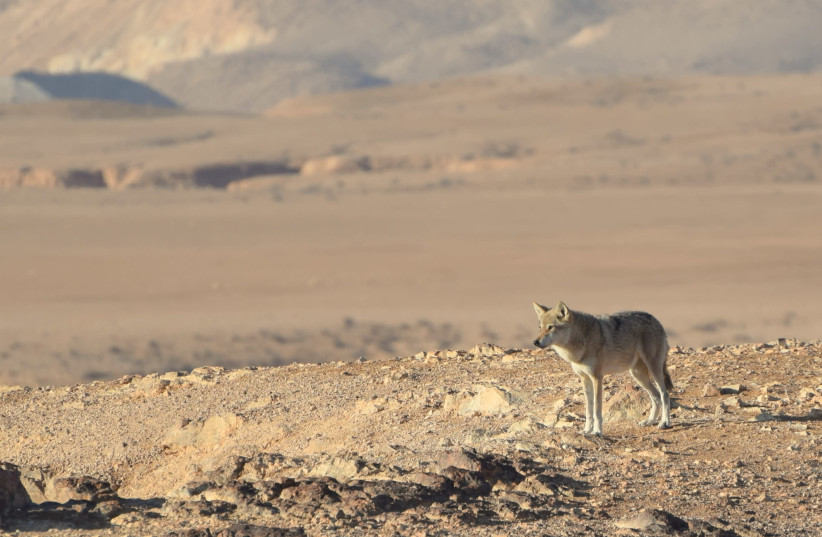
Lone wolf in the Negev
(photo credit: COURTESY HAIM BERGER)

They say one man’s trash is another man’s treasure, and that is certainly true with ancient trash mounds found in the Negev.

A new paper published last week in the PLOS ONE journal explains how trash mounds found in villages and agricultural settlements in the Negev from the Byzantine and Early Islamic periods show that there was a turning point in the management of herbivore livestock dung, a vital resource in the Negev. It also explores how the detailed study of trash can lead to wide-ranging conclusions about the economic and agricultural life of a community.

Negev trash mounds reveal secrets of ancient agriculture (PLOS ONE)

According to the article, “Byzantine—Early Islamic resource management detected through micro-geoarchaeological investigations of trash mounds (Negev, Israel),” ancient hinterland trash mound features can be important sources of evidence for community-scale resource management, economics, social and ecological trends.

The study focuses on trash mound sediments from three of the six major Negev settlements from this period: the UNESCO World Heritage Sites of Shivta and Elusa, as well as the village of Nessana. The researchers note that these sites were selected for study because their histories are well known, and because stratified trash mounds spanning the Byzantine-Early Islamic periods (c. 4th-10th century CE) were found in them.

The research characterizes the sediment deposits comprising hinterland trash mounds and classifies the types of trash and tracks changes in the use and disposal of agricultural resources through time and between villages. It also puts these findings into context within newly developing understandings of the rise and fall of Negev agropastoral systems during Late Antiquity.

“We show how changes in the management of critical dryland resources, specifically livestock dung, are registered in the sedimentary archives comprising the studied trash mounds. The work underscores the value of micro-sedimentary archives in classical studies aiming to track long-term societal change and human-environment interactions in urban settings. Our findings provide much-needed new insight into community-specific responses to social and economic transformations in the Negev during a pivotal time in its history–during the collapse of market-oriented agriculture and naturalization of the urban heartland near the end of the first millennium CE,” write the authors.

The article was written by Don H. Butler, Zachary C. Dunseth, Yotam Tepper, Tali Erickson-Gini, Guy Bar-Oz and Ruth Shahack-Gross. The research and excavations were overseen by the Israel Antiquities Authority.

The researchers discovered that dung was used as a sustainable fuel resource during both the Byzantine and Early Islamic periods and that significant amounts of raw dung were dumped and then managed by incineration outside Early Islamic Nessana. These results support the hypothesis that agropastoral change and development are reflected in the management of livestock dung.

“They highlight a previously unrecognized community-scale response to disruption within the long-standing agropastoral socio-ecological niche,” the study concludes.

Beyond this specific finding, the study further “demonstrates the high potential of archaeological trash proxies in studies aiming to detail and explain wide-ranging diversity in the processes conditioning socio-ecological transformations, as well as how communities contribute and respond to such transformations.”


Zawartość publikowanych artykułów i materiałów nie reprezentuje poglądów ani opinii Reunion’68,
ani też webmastera Blogu Reunion’68, chyba ze jest to wyraźnie zaznaczone.
Twoje uwagi, linki, własne artykuły lub wiadomości prześlij na adres:
webmaster@reunion68.com


Saving the Mediterranean Sea Turtles, One by One

Saving the Mediterranean Sea Turtles, One by One


ISRAEL21C VIDEO NETWORK


Zawartość publikowanych artykułów i materiałów nie reprezentuje poglądów ani opinii Reunion’68,
ani też webmastera Blogu Reunion’68, chyba ze jest to wyraźnie zaznaczone.
Twoje uwagi, linki, własne artykuły lub wiadomości prześlij na adres:
webmaster@reunion68.com


News From Israel- Dec. 15, 2020

News From Israel- Dec. 15, 2020

ILTV Israel News


Israeli HMO’s get into the nitty gritty of #Pfizer & Biontech’s new #vaccine.
–
Israeli technology saving the day again.
–
New friends in the region join us for the holidays.


Zawartość publikowanych artykułów i materiałów nie reprezentuje poglądów ani opinii Reunion’68,
ani też webmastera Blogu Reunion’68, chyba ze jest to wyraźnie zaznaczone.
Twoje uwagi, linki, własne artykuły lub wiadomości prześlij na adres:
webmaster@reunion68.com


UAE, Bahraini and Israeli envoys light third Hanukkah candles together

UAE, Bahraini and Israeli envoys light third Hanukkah candles together

SARAH CHEMLA


“It was the year of the pandemic, but it was also the year of peace,” said Israel Ambassador to the US Ron Dermer.

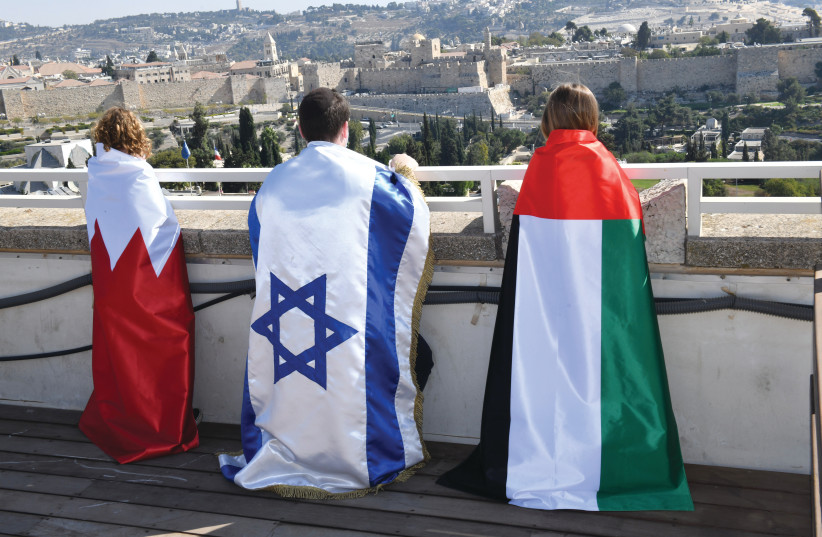
The Gulf-Israel Women’s Forum brings children draped in the flags of Bahrain, Israel and the UAE to Jerusalem’s Old City. / (photo credit: ISRAEL HADARI)

Israeli Ambassador to the US Ron Dermer held a virtual Hanukkah lighting on Saturday with Bahraini Ambassador to the US Abdulla Rashid bin Abdulla Al Khalifa and UAE Ambassador to the US Yousef Al Otaiba, to mark the holiday’s third day by lighting the candles of the hanukkiah (candelabra) together.

The candle lighting was held in the wake of the signing of the Abraham Accords between Israel, the UAE and Bahrain earlier this year.

“It was the year of the pandemic, but it was also the year of peace,” said Dermer as an opening.


“UAE Ambassador to the US Yousef Al Otaiba and Bahraini Ambassador to the US Abdulla Al Khalifa played a critical role” in the signing of the Abraham Accords, continued the Israeli ambassador, “honored” that they have joined him to celebrate the Jewish holiday of light.

“This year, I’m lighting the Hanukkah candles with you at the same time the Jewish community in the UAE are lighting their Hanukkah candles. Now that is peace,” Otaiba said. “Next year, let us hope we can celebrate this holiday together in person.”

He continued, saying “this year, may look and feel a little different, as the Covid pandemic continues to impact our daily lives. But I’m still filled with hope – that 2021 will bring a brand new start for us.”
Khalifa declared that “in a time of hardship for us all, it was that flame of desire – that desire for peace – that prevailed.

“This year, may the hope for peace that exists in each of us burn brightly enough to illuminate the desire in others,” he said. “As on the menorah, let our one candle be surrounded by others, radiating the light of hope on whatever shadows are cast by those wishing to perpetuate darkness and fear.”

Dermer also spoke to the Moroccan Ambassador to the US, Princess Lalla Joumala, agreeing to meet her soon to examine ways to promote relations between Israel and Morocco, following the recent announcement of normalization between the two countries.

Meanwhile, extraordinary scenes in Dubai including Hanukkah celebrations were part of a historic and unprecedented process of the United Arab Emirates embracing tolerance, coexistence and peace. The first weeks of December are a historic turning point on a path that was launched in 2019 as the “Year of Tolerance.”

In this region, messages are important. Publicly displaying government support for different religions and having Hanukkah celebrated in a central space, as it was last week, shows the 200 nationalities in the UAE that Jews are embraced.

In the wake of the signing of the Abraham Accords, achieved with American mediation, these celebrations are strengthening the newly-established links between these countries, and open the path for promising future cooperation.


Tobias Siegal and Seth J. Frantzman contributed to this report.


Zawartość publikowanych artykułów i materiałów nie reprezentuje poglądów ani opinii Reunion’68,
ani też webmastera Blogu Reunion’68, chyba ze jest to wyraźnie zaznaczone.
Twoje uwagi, linki, własne artykuły lub wiadomości prześlij na adres:
webmaster@reunion68.com


Rare menorah engraving dates back to Hasmonean era

Rare menorah engraving dates back to Hasmonean era

HANNAH BROWN


The menorah was discovered in the 1980s in Judea and Samaria.

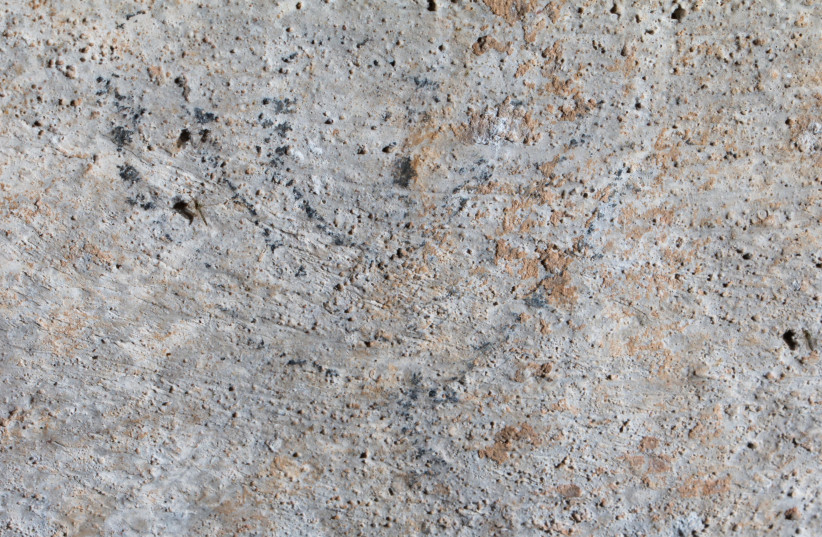
The faint marks of one of the menorahs can be seen drawn in cistern at al-Alilyat cliffs near Mukhmas / (photo credit: BOAZ LANGFORD)

A rare graffito of a seven-branched menorah found many years ago at the entrance to a tomb on the outskirts of the Arab village of Mukhmas, northeast of Jerusalem, has been highlighted by Dr. Dvir Raviv of Bar-Ilan University’s Martin (Szusz) Department of Land of Israel Studies and Archaeology, in a paper published in the archaeology and history journal In the Highland’s Depth, released just in time for Hanukkah.

The menorah was discovered in the 1980s during a survey initiated by the Staff Office for Archaeology in Judea and Samaria, and was archived more than 30 years ago.

Dr. Raviv reported that the menorah engraving found in Mukhmas dates back to the period between the Hasmonean era and the Bar-Kokhba revolt and is considered an unusual find, because decorative use of the Temple menorah was rare during this period. The most prominent examples found to date include depictions of a menorah on coins of the Hasmonean ruler Mattathias Antigonus, on objects and remnants from Jerusalem, on a stone table in Magdala north of Tiberias and on the Arch of Titus in Rome.

The Mukhmas engraving resembles paintings of two seven-branched menorahs documented in the al-‘Aliliyat caves, a group of caves nearby that served as a hiding place and refuge during the Second Temple period and the days of the Jewish revolts against Rome.

Drawing of the menorah. (Credit: Staff, Office for Archaeology in Judea and Samaria)

The use of a menorah to decorate the façades of Jewish tombs was quite common in ancient times, but this is only the second time that one has been discovered on a Jewish tomb from the period preceding the Bar-Kokhba revolt. A long-known example is Jason’s Tomb in Jerusalem from the Hasmonean period, with small, schematic carvings on the walls of the entrance vestibule, unlike the large, decorated menorah discovered on the façade of the Mukhmas tomb.

Due to the rare use of the menorah as an artistic decoration from the Second Temple period until the Bar-Kokhba revolt, and based on the contexts in which the menorahs of this period were discovered, it has been suggested that the menorah may have been a motif related to the Temple and the priests that served in it during this time.

The depictions of menorahs found on the outskirts of Mukhmas – and the mention of Mikhmas (currently the village of Mukhmas) in the Mishnah as the place from which selected semolina wheat was brought to the Temple (Mishnah Menahot 8:1) – may indicate that a priestly population lived there during the Second Temple period.

Additionally, Mikhmas is mentioned as the dwelling place of Jonathan the Hasmonean, where he began to establish his status in Judea after the death of his brother Judah Maccabee (1 Maccabees 9:73).

“Jonathan’s choice of the town as the base from which to consolidate his control of Judea may have been linked to the location of Mikhmas in a densely-populated area of Jews who supported the Hasmoneans during the years of the revolt,” said Raviv.

“Due to the difficulty in determining the exact date of the menorah’s graffito and the scarcity of explicit references to priests in Mikhmas during the Second Temple period, it is possible that a group reached the site only after the destruction of the Temple and lived there during the period between the revolts,” he said.


Zawartość publikowanych artykułów i materiałów nie reprezentuje poglądów ani opinii Reunion’68,
ani też webmastera Blogu Reunion’68, chyba ze jest to wyraźnie zaznaczone.
Twoje uwagi, linki, własne artykuły lub wiadomości prześlij na adres:
webmaster@reunion68.com