Archive | 2015/11/10

Ci dobrze wykształceni i nikczemni antysemici

Ci dobrze wykształceni i nikczemni antysemici

Giulio Meotti
Tłumaczenie: Małgorzata Koraszewska


Profesor amerykańskiego Uniwersytetu Georgetwon,
John Esposito, lubi oskarżać Izrael o masowe zabijanie
cywilów.
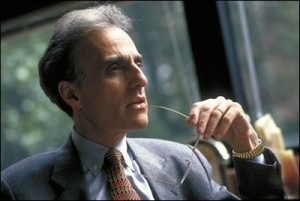
Profesor amerykańskiego Uniwersytetu Georgetwon, John Esposito, lubi oskarżać Izrael o masowe zabijanie cywilów.

Tak, mamy Scarlett Johansson i J.K. Rowling, odważną aktorkę i odważną pisarkę, które odmówiły dołączenia do ruchu bojkotu wobec państwa Izrael. Antysemici jednak mają setki luminarzy i profesorów.

“Guardian”, wiodąca brytyjska gazeta lewicowa właśnie opublikował apel o zerwanie wszystkich związków z uniwersytetami izraelskimi. Apel podpisało 350 profesorów z brytyjskiego środowiska akademickiego.

Ci zwolennicy Bojkotu, Dywestycji i Sankcji (BDS) są wnukami tych, których Max Weinreich nazywał “Profesorami Hitlera”.

We Włoszech faszyzm miał swoich filozofów, takich jak Gabriel D’Annunzio, Luigi Pirandello, Giovanni Gentile i Tommaso Marinetti; nazizm Hitlera miał jeszcze większe talenty: Martin Heidegger, Carl Schmitt, Gottfried Benn, Ernst Jünger, Mircea Eliade, Wilhelm Furtwängler, Ernst von Karajan, Knut Hamsun, Emile Cioran i Louis Ferdinand Celine.

Najlepsi w kulturze europejskiej skwapliwie opowiedzieli się za nazizmem tak samo jak dzisiaj skwapliwie opowiadają się za nowym antysemityzmem. Tchórzostwo intelektualistów, środowiska akademickiego i ludzi pióra w „kwestii żydowskiej” powtarza się dzisiaj w kwestii Izraela.

Henry Rousso nazywał to “Le Syndrome de Vichy”. Chodzi o Francję pod okupacją nazistowską, kiedy śmietanka pisarzy francuskich kontynuowała pracę, sprawiając przyjemność Niemcom, otrzymując przywileje, skazując Żydów na śmierć swoją obojętnością i hipokryzją.

Rozważ słowa i obrazy, które ci nowi antysemiccy intelektualiści zestawiają z Izraelem w gazetach, książkach na salach uniwersyteckich: “g***o”, “naziści”, “rasizm”, “apartheid”, “czystka etniczna”, “osadnik”, “przestępca wojenny”, “nielegalne”.

Ci zwolennicy BDS mają nadzieję, że przygwożdżą cały naród, naród żydowski do mrocznego losu: ich eksterminacji lub eksterminowania przez nich innych, uwiecznienia mitu „rasy”, nieuchronnie zanurzonego w krwawych tragediach, zmuszenia 7 milionów Żydów izraelskich – mniejszości w niezmierzonym morzu świata arabskiego – do wyboru między narodowym samobójstwem a rozpaczliwą wojną. Europa i świat arabski zatapiają się w zabójczej mentalności, planując raz jeszcze horrory dla narodu żydowskiego.

W kumulacyjnym efekcie konsekwencje tego nowego języka szkalowania reputacji Izraela są dewastujące. Ani Syria Assada, ani Iran mułłów, ani Korea Północna, ani najgorsze satrapie afrykańskie nie są poddane temu specjalnemu traktowaniu.

Tylko Izrael. Tylko Żydzi.

Jest ironią, że uniwersytet w Jerozolimie jest teraz celem tych, którzy chcą bojkotować państwo żydowskie – od Paryża do Londynu. Został założony 23 lata przed powstaniem Izraela. Ceremonia otwarcia na Górze Skopus, z widokiem na Jerozolimę, miała miejsce 11 kwietnia 1925 r.: nie było tam niemal żadnych budynków, niewielka liczba personelu nie mogła gwarantować ciągłości nauczania i sam akt założenia tego uniwersytetu wyglądał bardziej na akt wiary niż realizację wszechstronnego planu.

Ceremonii otwarcia przewodniczył Lord Arthur Hames Balfour, brytyjski mąż stanu, który w 1917 r. podpisał słynną deklarację z obietnicą rządu Jego Królewskiej Mości promowania „założenia siedziby narodowej dla narodu żydowskiego w Palestynie”.

W latach 1930. Uniwersytet Hebrajski, ten sam, który jest dzisiaj bojkotowany przez wiele uniwersytetów zachodnich, otrzymał linę ratunkową wraz z napływem młodych naukowców i badaczy żydowskich, którzy nie mogli prowadzić swoich studiów w Europie z powodu praw antysemickich.

Pamiętajcie “Dagens Nyheter”, najbardziej intelektualną i wyrafinowaną gazetę w Szwecji, która opublikowała jeden z najagresywniejszych antysemickich artykułów redakcyjnych kiedykolwiek napisanych pod tytułem “Nienawiść muzułmanów do Żydów jest usprawiedliwiona”. Autor, historyk religii, Jan Samuelson, oświadczył, że jak długo Izrael pozostaje „okupantem”, arabsko-islamskie odrzucenie go jest zrozumiałe.

Pamiętajcie Johanna Hari, który w świecie brytyjskiego dziennikarstwa chlubiącego się swoją wiarygodnością, dokładnością, elegancją i sprawiedliwymi komentarzami, otrzymał nagrodę “Dziennikarza Roku” od Amnesty International. Hari napisał w artykule dla lewicowej gazety „Independent”: „Kiedy tylko próbuję wymówić te słowa [uspokojenia dla Izraela], zapamiętany zapach wypełnia mi nozdrza. Jest to zapach „g***a”.

Żaden inny kraj na świecie nie jest tak często porównywany do “g***a” jak państwo Izrael przez tych wykształconych członków bohemy i nikczemnych antysemitów.
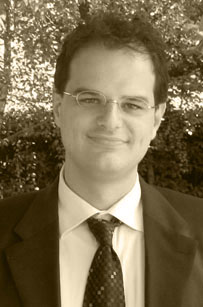

Giulio Meotti

Włoski publicysta, autor książki „A New Shoah: The Untold Story of Israel’s Victims of Terrorism”.


twoje uwagi, linki, wlasne artykuly, lub wiadomosci przeslij do: webmaster@reunion68.com


Killers Of Jews Or Saviors of Jews?

HomeKillers Of Jews Or Saviors of Jews?

Steve Lipman


New study by YU history professor sheds fresh light on Poland’s wartime anti-Nazi Resistance movement.
YU professor Joshua Zimmerman’s book on Poland’s underground fighters during World War II. Steve Lipman/JW

A third-generation American Jew who grew up in California, Joshua Zimmerman was raised with an atypical perspective about Poland. Most Jews in this country whose parents or grandparents immigrated from Poland as survivors or refugees of the Holocaust heard mostly horror stories about anti-Semitic Poles.

Zimmerman didn’t.

His great-grandparents came from the area of Poland-Russia where most of the world’s Jews had lived for centuries, in the decades before the Shoah. But they didn’t experience the type of vicious anti-Semitism that most Jews in that part of Europe did.

And when they spoke about World War II and the Holocaust, they would concentrate instead on the German role in atrocities. “Ethnic Poles did not appear in the narrative,” said Zimmerman, 48, a professor of Eastern European Jewish history and Holocaust studies at Yeshiva University.

Then, during a college course on the Shoah, a Jewish student whose grandparents were from Poland declared that the Poles were as bad “as the Germans.” During a later trip to Poland, Zimmerman met citizens who had lived through the war and told him about the heroic Resistance movement there and its Armia Krajowa (Home Army). And then he read a New York Times obituary of the wife of Nazi-hunter Simon Wiesenthal, which described how she survived in Nazi-occupied Poland “with the help of the Polish underground.”

“A book was born that day,” said Zimmerman, sitting in his Yeshiva University office, surrounded by books about the Jewish experience in Poland. He would, he says, investigate the truth about the relationship between the country’s Resistance movement and the country’s Jews during World War II. Were the members of Armia Krajowa — AK, as it is popularly known in Poland — saints or sinners?

The result is the recently published “The Polish Underground and the Jews, 1939-1945” (Cambridge University Press), a study that raises fresh questions on the eve of the commemoration of Kristallnacht. “I have to see it from both sides,” Zimmerman said.

For most Jews, this is not an arcane historical question. Poland was the pre-war home of 3.5 million Jews and the site of the greatest number of Nazi death camps. The behavior of the underground and the AK epitomizes what happened to Polish Jews under German occupation, and it has become an article of faith of most Jews outside of Poland that the Poles abetted or supported the Nazi effort to annihilate the Jewish population.

Zimmerman spent nine years researching the book, which clocks in at nearly 500 pages. He lived in Poland for a year, studied its language and culture, interviewed aging AK members and Jews who owe their lives to the underground, combing through archives that had become open to historians after Communism fell a quarter-century ago. He also did research in Israel and England.

Zimmerman’s book on some pages challenges and contradicts, and on other pages reinforces, the often prevailing belief about the Polish Resistance’s relationship with Polish Jewry during the war.

“Such a book plays a major role” in understanding Poles’ attitudes towards Jews under Nazi occupation, said Holocaust expert and author Michael Berenbaum. “The more information we get, the more we can get to a [balanced] judgment.”

Most Poles, in the view of most Jews, behaved in ways that largely ranged between cold indifference and fiery hatred. Saul Friedlander’s 2007 epic study of the Holocaust, “The Years of Extermination: Nazi Germany and the Jews 1939-1945” (Harper Perennial),” typified this Jewish perspective, that Poles were antagonistic towards Jews, that Polish patriotism and nationalism were equal to anti-Semitism.

“The anti-Semitic National Democratic Party was represented both in the [exiled] Polish government in London and in the structures of the underground within Poland,” Friedlander writes. “Precisely because Polish anti-Semitism was not tainted by any trace of collaboration with the Germans, it could prosper — not only in the street but also in the underground press, in political parties, and in the armed forces.”

While non-Jewish Poles who were hostile to Jews frequently turned Jews over to the Nazis because of monetary reward or fear of collective punishment for their families, Friedlander’s use of the term “collaboration” refers to people in other lands, like Ukraine or Croatia, who worked with the German Army in a military capacity.

Poland’s liberal-minded socialist and democratic organizations “represented a minority in relation to the anti-Semitic camp,” Friedlander writes. “German anti-Jewish propaganda was manifestly well accepted and internalized by many Poles … German anti-Jewish posters adorned the walls of the smallest villages and the populace enjoyed it.” Armia Krajowa was at first reluctant to aid Jewish partisans because holding a view that tended to dominate Polish thought, it was “suspicious of the leftist and pro-Soviet leanings of part of the ZOB,” a reference to the Jewish Combat Organization, the main underground Jewish partisan group.

Zimmerman paints a more nuanced picture. He purposefully “presented evidence,” he said, without “giving a verdict.”

He writes of Armia Krajowa units welcoming Jews into their ranks, supplying arms and money and training to Jewish partisan units, organizing an ultimately unsuccessful effort to breach the walls of the Warsaw Ghetto at the start of the 1943 Uprising, condemning Poles who blackmailed Jews and looted Jewish property, rescuing Jews at the risk of AK members’ lives, helping to found the Committee to Aid the Jews (Zegota), maintaining a sometimes-on/sometimes-off relationship with the ZOB, sending members clandestinely into ghettoes and concentration camps to ascertain the life-threatening situations, and publicizing the Jewish plight through its underground press of the government-in-exile. But he also writes of AK units that excluded Jews that killed Jews, that refused to offer aid because isolated, small-scale attacks on the German military were regarded as a “futile” waste of limited arms; he writes of right-wing parties that continued to harbor anti-Semitic views and spread anti-Semitic calumnies.

Zimmerman’s book offers a balanced perspective, personalizing the topic by presenting profiles of several righteous individuals as well as unrepentant anti-Semites.

Zimmerman is treading on perilous — for many Poles — territory. The AK, and the wider underground Resistance movement, has within most Polish circles assumed a post-war iconic position, like that of the Resistance in France.

He describes the ebbs and flows of Polish support for the country’s endangered Jews during the war — it increased when Jews stood up to the German army in the Warsaw Ghetto Uprising – and he documents how some earlier acts of Jewish armed resistance in occupied Poland also drew the admiration of Polish Resistance. Zimmerman also cites many Poles’ disgust at Nazi brutality.

Popular support for Poland’s Jews decreased after liberation when the Soviet army seemed likely to occupy the country; there was widespread fear the Soviets would impose hated communist rule, which many Poles associated with Jews.

Poland and Russia were enemies during many years of their history as neighbors; Poland, a majority Catholic society, hated atheistic Communism; Poland’s Jews, who had initially welcomed the Red Army in 1939 as a release from anti-Semitic rule and as bulwark against the Third Reich, were viewed by many non-Jews as a disloyal fifth column.

In presenting a balanced picture about the Jewish relationship with the Polish underground, Zimmerman follows in the intellectual footsteps of “some historians [who] began to challenge the prevailing assumptions in Jewish historiography in the late 1980s,” he writes.

“This study revisits the historical evidence and changes our understanding … by presenting a comprehensive treatment of different patterns of behavior toward the Jews at different times during the war and in various regions of occupied Poland,” Zimmerman writes. “I agree that because the Home Army was an umbrella organization of disparate Polish organizations numbering more than 300,000, from all regions ranging from socialists to nationalists, its attitude and behavior towards the Jews varied widely.”

“That the AK freed 398 Jews from German captivity is pretty much unknown.” Zimmerman says, as is the Jewish role as fighters in the ill-fated 1944 Warsaw Uprising — the nearby Red Army remained uninvolved while the outnumbered Poles were decimated by the Germans and the capital was flattened.

Zimmerman, who has taught at YU since 1998, said historians in Poland are now more willing to concede the underground’s wartime misdeeds, and the country’s presidents have apologized for the Poles who turned against the country’s Jews. And the stories of such heroic Poles as Jan Karski and Irena Sendler are earning greater respect in parts of the wider Jewish community.

Zimmerman says his book, by presenting both sides of the wartime picture, “has the potential of contributing to the Polish-Jewish reconciliation.”

He says his own young children, when they come of age, will also hear both sides. He will tell them of “the legacy of anti-Semitism” in Poland. And they will learn “that there were very good people in Poland … extraordinary Poles who risked their lives to save Jews.”


Joshua Zimmerman will discuss his book on Monday, Dec. 21, 3 p.m., at YIVO, 15 W. 16th St., Manhattan.

Joshua Zimmerman steve@jewishweek.org


twoje uwagi, linki, wlasne artykuly, lub wiadomosci przeslij do: webmaster@reunion68.com


Szejk Muhammad Ajed do „uchodźców”: „ZDEPCZEMY EUROPĘ”

Szejk Muhammad Ajed do „uchodźców”: „ZDEPCZEMY EUROPĘ”

Fronda.pl


W jerozolimskim meczecie Al-Aksa imam Szejk Muhammad Ajed wygłosił mowę skierowaną do tzw. uchodźców, twierdząc, że “zdepczą” oni i “podbiją” państwa Europy.

Przemówienie zostało wygłoszone 11 września 2015 r., w rocznicę terrorystycznych zamachów na World Trade Center w Nowym Jorku.

Szejk Muhammad Ajed powiedział:

Niewierni chcą nas dręczyć. Chcą nas upokorzyć. Koran mówi: “Żydzi i chrześcijanie nigdy nie będą z was zadowoleni”. Ale my nigdy nie podążymy za ich religią. Ta ciemna noc się skończy i wkrótce ich zdepczemy, zgodnie z wolą Allaha. Niemcy nie są krajem pełnym współczucia, chcącym przyjmować uchodźców z Syrii i Iraku, czy palestyńskich uchodźców z Lewantu lub innych miejsc. Europa stała się stara i niedołężna, potrzebuje nowych zasobów ludzkich. A żadna siła nie jest tak potężna jak ludzka siła nas, muzułmanów. Muzułmanie, mówią Niemcy w swoich gospodarczych raportach, potrzebują 50 tys. młodych robotników. Teraz mają 20 tys. i chcą kolejnych 30 tys. i więcej, by pracowali w ich fabrykach. Niemcy nie są powodowani współczuciem dla Lewantu, jego ludzi i uchodźców.W całej Europie serca natchnięte są nienawiścią wobec muzułmanów. Chcieliby, abyśmy byli martwi. Ale stracili płodność, więc szukają jej wśród nas. Damy im płodność! Rozmnożymy z nimi nasze potomstwo, ponieważ podbijemy ich kraje – czy chcecie tego, czy nie, Niemcy, Amerykanie, Francuzi, Włosi i wszyscy wam podobni. Przyjmijcie uchodźców! Wkrótce zgromadzimy ich w imię nadchodzącego Kalifatu. Powiemy wam: “To nasi synowie”.


twoje uwagi, linki, wlasne artykuly, lub wiadomosci przeslij do: webmaster@reunion68.com