Archive | January 2016

A Smorgasbord of Swedish Anti-Semitism

Gatestone InstituteA Smorgasbord of Swedish Anti-Semitism

Nima Gholam Ali Pour


◾Sweden is a country where using the word “mass immigration” usually gets criticized just for sounding racist. Only anti-Semitism does not get criticized. In Sweden, all other forms of racism — even things that some say could be classified as racism — are criticized, and ruthlessly.

◾TV4, one of the most important Swedish media outlets, in 2015 described anti-Semitism as simply a “different opinion.”

◾”What is history for us is not the history of others. … When we have other students who have studied other history books, there is no point in discussing facts against facts.” — The administration of an adult-education school, in a reprimand to a teacher who said the Holocaust actually took place.

◾”The Jews are campaigning against me.” — Swedish Foreign Minister Margot Wallström.

◾There are fewer than 20,000 Jews in Sweden; more than 20,000 Syrians received asylum in 2014 alone. That is why so few politicians — who are eager to win the votes of immigrants — talk about Arab anti-Semitism.


On November 9, an anti-racism demonstration was going to be held in Umeå, Sweden, in commemoration of Kristallnacht (the night in 1938 in which 400 Jews were murdered in Germany, and 30,000 Jewish men arrested and sent to concentration camps). There was just one catch: the Jews in Umeå were not invited to the demonstration. The reason given, according to one of the organizers, Jan Hägglund, was that the demonstration would be “perceived as an unwelcoming or unsafe situation for them.”

The path to this surreal situation, in which an anti-racism demonstration in Sweden in commemoration of Kristallnacht could be perceived by Jews as a threat, has long been in the making. This demonstration was of some significance. The people behind it were not extremists. Four of the Swedish Parliament’s eight parties were involved in organizing it.

This anti-racist demonstration and the strange events surrounding it represent a process that, sadly, has been going on in Sweden for a long time. A new kind of Swedish anti-Semitism has been growing strong; the city of Malmö has been its flagship.

In January 2009, a pro-Israel demonstration in Malmö was attacked by Arabs who were shouting “f-cking Jews.” The police could not protect the pro-Israel demonstrators from the eggs and the bottles being thrown at them. The event had to be temporarily stopped when the Arabs began to shoot fireworks at the pro-Israel demonstrators.

In January 2009, an Arab mob in Malmö pelted a peaceful Jewish demonstration with bottles, eggs and smoke bombs. The police pushed the Jews, who had a permit for their gathering, into an alley.

In 2010, for the first time — but not the last — the synagogue in Malmö was attacked. The same year, the Simon Wiesenthal Center began warning Jews to not visit Malmö, “due to harassment of Jewish citizens,”.

Today, Malmö is a city well known for anti-Semitism and characterized by it. Jews in Malmö cannot publicly show that they are Jews without being subjected to harassment. Many Jewish families, there for centuries, have fled. In October 2015, two members of the Swedish parliament were involved in a pro-Palestinian demonstration in Malmö, in which people shouted anti-Semitic slogans and praised the current Palestinian knife attacks against Israeli Jews.

The reason a country such as Sweden has suddenly become struck by extreme anti-Semitism is largely due to immigration from the Middle East. The Arab and Muslim world — and, since 1979, the Islamic Republic of Iran, which has repeatedly threatened genocide — continues in its state-run media to demonize the Jews. The Arab and Muslim world probably wants, in part, to justify its conflict with Israel. Also in part, many members of the establishment and citizens in those countries probably believe these anti-Semitic conspiracy theories, calumnies repeated every day in their media and mosques.

Many newcomers keep their Middle East background even after they have settled in Sweden. Many, especially in immigrant areas such as Rosengård in Malmö, regularly watch the Arabic media, which convey anti-Semitic messages non-stop.

At the same time, members of this population are welcome to vote in Swedish elections, so Swedish parties focus on the Arab vote. This courtship is merely a matter of demographics. There are fewer than 20,000 Jews in Sweden; more than 20,000 Syrians received asylum in 2014 alone.

In addition, to vote in the important municipal elections, you do not even need to be a citizen of Sweden. This peculiarity is why so few politicians in Sweden even talk about the Arab anti-Semitism, despite several Swedish reports and documentaries showing that the growing anti-Semitism in Sweden has been largely imported from the Middle East.

That is also why most anti-racism organizations in Sweden would rather discuss “Islamophobia.” Almost all Swedish anti-racism organizations are funded by taxpayers or are somehow connected to political parties — meaning there is an all-too-businesslike “understanding” between political parties and anti-racism organizations. Most of the political parties do not exactly favor anti-racism organizations that talk about Arab anti-Semitism. Such organizations will have trouble getting funds, or are defunded, or else see their board members start to resign.

Despite more Muslims coming to Sweden and more Jews fleeing Sweden — or perhaps because of it — the majority of the anti-racism activists in Sweden consider “Islamophobia” the more serious problem. The influential anti-racism organization, Expo, has done several mappings of “Islamophobia,” but, despite the bigotry, not a single mapping of anti-Semitism.

If you do a mapping of anti-Semitism in Sweden, you see, you also have to discuss immigration from the Middle East. Not many people in Sweden want to do that: those who discuss Arab anti-Semitism are called racists.

Instead of a discussion about the new Swedish anti-Semitism, you get mind-numbing op-ed columns appearing with the message that people should talk less about the Holocaust in Swedish schools, so that Arab youths will not be offended. In criticizing a government proposal to combat anti-Semitism by increasing Holocaust education, Helena Mechlaoui, a high school teacher of history, religion and philosophy, wrote:

“If we talk about students from the Middle East, it may be because many of them bear the traumatic experiences that are related to either Israeli or American policies. And the two states are often seen as one, which is not entirely wrong. They may have lost one or more siblings, cousins, parents or peers in an Israeli or American bombing. A large proportion are here in Sweden because they have been forced to leave their homes because of occupation, war or the misery in some refugee camp. They may have injured parents who cannot really cope with life, and they may still have family in conflict areas. It is likely that they have encountered hostility in Sweden. In this context, it is perhaps not desirable to start talking about the Holocaust.”

Immigration from Arab countries has thoroughly affected the way the majority of Swedes view anti-Semitism. Anti-Semitism is no longer something Swedish society condemns. Several Swedish celebrities have recently made anti-Semitic statements, and their careers have not suffered at all. The Swedish rapper Dani M spreads anti-Semitic conspiracy theories both on social media and in his songs. After several media outlets in Sweden, at the end of 2014 and the beginning of 2015, reported in detail how Dani M spreads anti-Semitic conspiracy theories, he appeared on a reality TV show in September on one of the biggest and most established Swedish channels, TV4. When TV4 was criticized, the show’s executive producer, Christer Andersson, responded:

“TV4’s core values are Zero Racism and has always been, as long as I can remember, but we cannot cut off people who do not feel the same way. TV4 is a portal where people with different opinions pass and we must have a broad level of acceptance.”

Here you have one of the most important Swedish media outlets describing anti-Semitism as simply a “different opinion.” During the same period, another of TV4’s employees used the “N-word” in a YouTube clip, and she was fired within two months. So, anti-Semitism is acceptable, but not racism against Afro-Swedes.

In another example, the Swedish TV celebrity Gina Dirawi, of Palestinian origin, wrote in her blog in 2010 that Israel’s actions could be compared to Hitler’s. Then, in 2012, she advised people, again on her blog, to read a book that questioned the Holocaust. The book’s message was that when the Nazis persecuted the Jews, they were acting in self-defense. These were just two of the many anti-Semitic statements she made on her blog. Today, Gina Dirawi hosts several shows on SVT — the Swedish public broadcasting company — and she hosted SVT’s Christmas show in 2015. As Dirawi is a Muslim, this choice has raised some eyebrows. She is also going to host the 2016 Swedish music competition Melodifestivalen, one of Sweden’s most popular music events.

It is, unfortunately, clear that in Sweden, anti-Semitism is not something that harms one’s career. The Swedish media, like the government, also is not so interested in Sweden’s problems with anti-Semitism. When the Swedish think tank Perspektiv På Israel presented evidence in May 2015 that Islamic Relief’s country director in Sweden was spreading anti-Semitic posts on Facebook, no one in the media was interested in writing about it, despite the fact that Islamic Relief is supported by Sida, the Swedish government agency responsible for Sweden’s official aid to developing countries.

The Swedish media did not even allow an opinion piece from Perspektiv På Israel to be published on the subject. Nyheter24, one of the Swedish media outlets that did not publish Perspektiv På Israel’s information about this scandal, wrote in an email to Perspektiv På Israel that their “readers are, to say the least, not interested in this particular issue.”

As a columnist for the newspaper Samtiden, I mentioned Islamic Relief’s racist statements in an op-ed, and the information was also presented in The Jewish Press. Swedish media showed no interest, even though there was evidence that an organization receiving Swedish tax funds was publishing anti-Semitic statements in social media.

It is important to note that all these incidents happened in a country where using the word “mass immigration” usually gets criticized just for sounding racist. It is only anti-Semitism that does not get criticized in Sweden. All other forms of racism — even things that some say could be classified as racism — are criticized, and ruthlessly.

Although the new anti-Semitism in Sweden has its origin in Arab or Islamic anti-Semitism, to think that anti-Semitism in Sweden today is only Middle Eastern in its nature is a simplification. Anti-Semitism in Sweden has become a smorgasbord consisting of several factors that reinforce each other. Some of these are:

◾Large-scale immigration from countries where anti-Semitism is normalized.
◾A strong pro-Palestinian engagement among Swedish politicians that has resulted in a totally surreal debate about the Israel-Palestine debate, in which Israel is unjustly demonized.
◾A desire among political parties in Sweden to win the votes of immigrants.
◾A Swedish multiculturalism that is so uncritical of foreign cultures that it cannot differentiate between culture and racism.
◾A fear of sounding critical of immigration.
◾Important Swedish institutions, such as the Church of Sweden, legitimizing anti-Semitism by endorsing Kairos Palestine document.

A combination of these factors creates a situation in which anti-Semitism can grow without meeting any real resistance or criticism. The following happened at Komvux, an education program for adults in Sweden, in the city of Helsingborg: A substitute teacher was defending facts surrounding the Holocaust during a class, after a student questioned if the Holocaust had actually happened. The school administration criticized the substitute teacher with the following arguments: “What is history for us is not the history of others. … When we have other students who have studied other history books, there is no point in discussing facts against facts.”

This is an event that occurred in February 2015, in a major Swedish city. It could have happened in any Swedish city where the new Swedish anti-Semitism is rising. A Swedish school no longer knows if the fact that Holocaust actually happened is a fact worth defending. The anti-Semitic smorgasbord normalizes anti-Semitism in Sweden.

When it was reported in mid-November that the Swedish Foreign Minister, Margot Wallström, said “the Jews are campaigning against me,” it did not become major news in Sweden. It was not the first time a famous Swedish politician made anti-Semitic statements and got away with it, and it will not be the last.

So, we return to November 9, 2015 in Umeå, and the anti-racism march for the commemoration of Kristallnacht, to which the Jews were not invited, and to this year’s Muslim Christmas hostess, who has several times expressed anti-Semitic views, and to the schools that are not sure whether to say that the Holocaust actually happened or not, and to a country where in general it is business-as-usual not to invite the Jews.

The media does not report it. The politicians do not care. And everyone knows that in Sweden, the anti-Semites get away with anything they like.


Nima Gholam Ali Pour is a member of the board of education in the Swedish city of Malmö and is engaged in several Swedish think tanks concerned with the Middle East. Gholam Ali Pour is also editor for the social conservative website Situation Malmö.


twoje uwagi, linki, wlasne artykuly, lub wiadomosci przeslij do: webmaster@reunion68.com



Comparing Amnesty’s Reports on Russian Strikes in Syria and Israeli Actions in Gaza

Comparing Amnesty’s Reports on Russian Strikes in Syria and Israeli Actions in Gaza

Elder of Ziyon’s


The logo of Amnesty International. Amnesty's recent report about Russia said they found zero evidence of any military targets among the sites hit. But it admitted that Israel did have some military targets, even according to their biased investigation. Photo: Wikimedia Commons.

The logo of Amnesty International. Amnesty’s recent report about Russia said they found zero evidence of any military targets among the sites hit. But it admitted that Israel did have some military targets, even according to their biased investigation. Photo: Wikimedia Commons.

From Amnesty International:

“Some Russian air strikes appear to have directly attacked civilians or civilian objects by striking residential areas with no evident military target and even medical facilities, resulting in deaths and injuries to civilians. Such attacks may amount to war crimes,” said Philip Luther, Director of the Middle East and North Africa Programme at Amnesty International.

Compare that language with how Philip Luther described Israeli attacks on houses in a nearly parallel report issued last November:

“Israeli forces have brazenly flouted the laws of war by carrying out a series of attacks on civilian homes, displaying callous indifference to the carnage caused,” said Philip Luther, Director of the Middle East and North Africa Programme at Amnesty International. “The report exposes a pattern of attacks on civilian homes by Israeli forces which have shown a shocking disregard for the lives of Palestinian civilians, who were given no warning and had no chance to flee.”

Amnesty uses much more graphic and loaded language to describe Israeli actions.

It gets worse. Amnesty’s report about Russia says that they found zero evidence of any military targets among the sites hit. But it admits that Israel did have some military targets even according to their biased investigation:

In several of the cases documented in the report, possible military targets were identified by Amnesty International. However the devastation to civilian lives and property caused in all cases was clearly disproportionate to the military advantages gained by launching the attacks.

As I have proven repeatedly, Amnesty was wrong about many of the targets, because I was able to document valid military targets in nearly every single case Amnesty mentioned. And Amnesty was wrong about international law (“disproportionate”) in the report on Israel.

But with Russia, where Amnesty cannot find a single military target, Philip Luther’s language is far less critical and more clinical.

The bias is obvious. As usual.


twoje uwagi, linki, wlasne artykuly, lub wiadomosci przeslij do: webmaster@reunion68.com


[ Polecam ] – Dlaczego nie chcę być polskim inteligentem

Dlaczego nie chcę być polskim inteligentem

Andrzej Koraszewski


Jerzy Klechta (ur. 14 sierpnia 1939 w Łodzi) – polski dziennikarz, publicysta, pisarz.

Życiorys[edytuj | edytuj kod]

W wieku 17 lat rozpoczął studia na Politechnice Łódzkiej, gdzie włączył się w studencką działalność polityczną Października ’56[1]. Po usunięciu z uczelni rozpoczął studia na Katolickim Uniwersytecie Lubelskim, następnie Uniwersytecie Warszawskim, gdzie ukończył wydział historii oraz Studium Dziennikarstwa. Ponadto studiował kulturę języka hiszpańskiego na Uniwersytecie w Salamance.

W 1968 roku wydał w Wydawnictwie MON zbeletryzowaną historię „Z walk AL i GL w Warszawie”, zgodną z linią propagandową ówczesnej władzy komunistycznej w Polsce[2]. Pracował w Polskiej Agencji Prasowej, miesięczniku „Sprawy Międzynarodowe” i prasie młodzieżowej. Od 1968 roku należał do PZPR[3]. W latach 70. kontynuował twórczość zgodną z linią PZPR[2]. W 1972 roku, mając 32 lata, został zastępcą redaktora naczelnego Walki Młodych[2], wtedy organu ZMS. Od 1973 roku do rozwiązania pisma w sierpniu 1987 roku[a] był redaktorem naczelnym miesięcznika pracy twórczej „Radar”.

[czytaj wiecej tu: Jerzy Klechta ]

W 1990 roku został doradcą do spraw mediów w Kancelarii Prezydenta Lecha Wałęsy. W latach 1994–2000 prowadził program autorski w TVP Katowice. W latach 1995–2006 prowadził program „Spojrzenia na Polskę” w TV Polonia. Po transformacji ustrojowej w Polsce specjalizował się w telewizji publicznej w tematyce watykańskiej; zaowocowało to kilkoma wydanymi przez niego książkami poświęconymi papieżowi Janowi Pawłowi II. W 1990 r. założył pierwszy w Pabianicach niezależny tygodnik – „Nowe Życie Pabianic”, którego był pierwszym redaktorem naczelnym. Później zrealizował kilka filmów dokumentalnych, parę z nich było nagrodzonych na XII Festiwalu w Niepokalanowie w kategorii filmu fabularnego w 1997 roku: „Matka Jasnogórska”, „Od Wadowic do Rzymu” (I nagroda), „Prymas przełomu” (III nagroda)[7]. Wykładał na Uniwersytecie im. Kardynała Stefana Wyszyńskiego. Od 1990 roku jest felietonistą paryskiego „Głosu Katolickiego”, od lat osiemdziesiątych XX wieku do rozwiązania w 2012 roku współpracował z miesięcznikiem kulturalno-społecznym – „Przeglądem Powszechnym”. W latach 1997–2007 był w TV Polonia komentatorem i redaktorem odpowiedzialnym za transmisje uroczystości religijno-patriotycznych. Po 2007 roku poświęcił się pracy literackiej. Jest autorem historii Polonii francuskiej. Z okazji 200. rocznicy urodzin Chopina napisał dwie jego biografie, jedna z nich ukazała się w Paryżu. Z okazji 195. rocznicy urodzin Stanisława Moniuszki opublikował pierwszą od pół wieku biografię tego polskiego twórcy oper narodowych. Jest autorem felietonów i esejów publikowanych w Internecie.


Sejmowi inteligenci

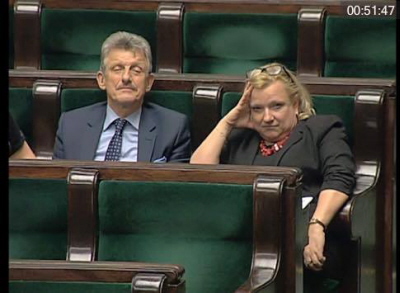
Sejmowi inteligenci[W.K. artykul jest godnym uwagi gdyz tyczy sie on wlasciwie kazdej rozumianej z definicji grupy tz. inteligencji niezaleznie od kraju, czy narodowosci ]

Mam ogromny szacunek dla Jerzego Klechty, zaglądam regularnie na jego stronę Facebooka, bo znajduję tam rzeczy mądre. Jeden z jego niedawnych wpisów budzi jednak mój protest. Jest to lament o wymieraniu polskich inteligentów, warstwy społecznej, która, jak pisze, była solą naszej ziemi. Tymczasem moim zdaniem, ta warstwa nie tylko nie wymiera, ale rozbestwia się, właśnie dorwała się do władzy i sprawuje ją zgodnie ze swoją tradycją. Oczywiście tu zaczyna się zasadniczy spór o definicję, kim jest inteligent i co będziemy uważać za tradycję tej warstwy.

Inteligencja, czy to rosyjska czy polska, poczęła się z szukającej nowej roli zubożałej i pozbawionej dawnych przywilejów szlachty, która pragnęła zachować przywilej bycia awangardą. Dobre urodzenie i rodowy herb przestał wystarczać, teraz zastąpić miał go dyplom odpowiedniej szkoły, świadectwo bycia człowiekiem dobrze wychowanym, lub, jak kto woli, człowiekiem z towarzystwa. Spierano się czy inżynier może być inteligentem, z pewnością nie było tu prawa wstępu dla przedsiębiorcy, czy nauczyciela.

Jako ciągle jeszcze nastoletni student czytałem książkę Józefa Chałasińskiego o społecznej genealogii inteligencji polskiej, ze zdumieniem odkrywając, że jestem poniekąd przypisany do tej warstwy z racji urodzenia. Chałasiński pokazywał nie tę piękną, a tę odrażającą twarz polskiej inteligencji, warstwy przepojonej niechęcią do fizycznej pracy, gardzącej „niższymi warstwami społecznymi”, przekonanej o swojej misji przewodzenia, a tym samym z gruntu antydemokratycznej.

Za wzniosłą, patriotyczną i demokratyczną retoryką kryła się pogarda dla chłopka-roztropka i absurdalne przekonanie o swojej wyższości człowieka dobrze wychowanego.

Inteligencja jako warstwa nigdy nie była skażona kultem fachowości. Zgoła przeciwnie, dominował tu romantyzm i autorytet salonu. Jerzy Klechta nie mówi nam jak definiuje warstwę inteligencji, przywołuje nazwiska: Conrada, Abramowskiego, Kotarbińskiego, Ossowskiej, Bartoszewskiego, księdza Tischnera, Giedroycia, Mazowieckiego. Podzielam jego sympatię do wszystkich tych postaci. Pomińmy tu Conrada, którego do polskiej inteligencji zaliczać trudno. Abramowski, przyjaciel Żeromskiego, od salonowych inteligentów stronił i wartości tej warstwy w żaden sposób nie wyznawał. Zgoła przeciwnie. Tadeusz Kotarbiński wyznawał kult dobrej roboty, rzetelności i fachowości, był również najdalszy od tak ważnej dla warstwy inteligenckiej pogardy dla warstw niższych. Jeszcze na pierwszym roku studiów byłem na jednym z jego wykładów i po wykładzie mogliśmy zadawać pytania. Pierwszy zabrał głos student ze wsi, zdradzał go język, niezręczność pytania wywołała wesołość studenckiej (inteligenckiej) braci. Na ułamek sekundy twarz Profesora wykrzywiła się gniewem, potem mówił już tylko do tego studenta, wyjaśniał jak bardzo istotne jest jego pytanie. Studenci byli chyba zażenowani, Profesor mówił do jednego słuchacza, tylko na nim skupiał wzrok, mówił bardzo obszernie o różnych implikacjach tego pytania, a potem bez słowa wyszedł z sali.

Ossowscy byli również pozytywistami. Stanisław Ossowski książkę Chałasińskiego studentom polecał, o samej inteligencji mówił, że jest, a raczej powinna być, szeroko pojętą warstwą nauczycielską. Nie pamiętam, czy Maria Ossowska mówiła kiedyś o inteligencji jako warstwie społecznej, mówiła pięknie o normach moralnych i wzorach osobowych. To ostatnie jest niesłychanie ważne. Ilekroć czytam pieśni pochwalne o inteligencji, zamiast definicji tego, o czym mowa, autorzy nieodmiennie prezentują wiązkę nazwisk ludzi, którzy są ich wzorami osobowymi, stosując zabawną zgoła ucieczkę od wszystkiego, co kłopotliwe. Wystarczy jednak chwila namysłu, żeby zauważyć, że to co prezentuje się jako przykłady grupowego etosu, to jednostki osamotnione i odrzucane przez ową warstwę inteligencką. Kotarbiński i Ossowscy należeli do bardzo nielubianych przeciwników ławkowego getta i należeli do zdecydowanej mniejszości wśród mocno antysemickiej przedwojennej profesury. Całkiem niedawno gwizdy, które witały profesora Bartoszewskiego, to nie była gawiedź ze wsi, ani kibole ze stadionu, to byli inteligenci. Tych gwiżdżących inteligentów nie dręczył ani kult fachowości, ani refleksje moralne. Nasz podziw dla postaci takich jak Bartoszewski, Giedroyc czy Mazowiecki zasługuje na więcej niż zupełnie nieuzasadnione zaliczanie ich do warstwy inteligenckiej. Mamy tu do czynienia z wybitnymi osobowościami, z ludźmi, którzy są dla wielu z nas wzorami w dużej mierze właśnie dlatego, że tak bardzo różnili się od tłumu inteligentów.

Tych postaci zasługujących na miano wzoru osobowego znajdziemy sporo zarówno wśród inteligencji katolickiej, jak i laickiej, wśród, socjalistów, liberałów i konserwatystów. Łączy ich humanizm, do którego docierali różnymi drogami, ale który nieodmiennie prowadził do kwestionowania kolektywizmu i grupowej lojalności wykraczającej poza ludzką przyzwoitość.

Obserwując ludzi skupionych dziś wokół Komitetu Obrony Demokracji widzę jak silnym wzorem osobowym jest dla tego środowiska postać Władysława Bartoszewskiego. Setki razy przywoływano jego hasło, że warto być przyzwoitym. Przyzwoitość nie wiąże się jednak ani z dyplomem, ani z środowiskiem, nie jest cechą charakterystyczną człowieka dobrze wychowanego, nie jest również własnością jakiejś warstwy inteligenckiej.

Jaka właściwie jest różnica miedzy inteligentem i fachowcem? Intuicyjnie możemy powiedzieć, że inteligent przenosi swój autorytet z jednego pola na drugie, więc poeta okazuje się być ekspertem od konstytucji, nie waha się przed wypowiadaniem sądów o medycynie, nieodmiennie jest ekspertem od ekonomii i zmian społecznych. Sądy inteligenta są wiążące i ostateczne. Fachowiec (przynajmniej teoretycznie) zna granice swoich kompetencji. W żaden sposób nie da się tego powiedzieć o inteligencie.

Próba odmowy statusu inteligenta Kaczyńskiemu czy Macierewiczowi, Rydzykowi, Gądeckiemu, czy innemu Hoserowi, traktowanie Legutki, czy doktora Andrzeja Dudy jako przysłowiowych chłopków-roztropków, nie tylko obraża rolnika, ale jest to niemądra i groźna zabawa.

Piotrowicz, Kempa, Ziobro, Pawłowicz to wszystko są polscy inteligenci, głęboko przekonani, że posiadają ekspertyzę i wiedzą co robią, że służą narodowi i że wszystko, co robią jest całkowicie moralne.

Wiele lat temu, kiedy Lech Kaczyński był jeszcze prezesem NIK, robiłem z nim wywiad dla BBC. Chciałem wiedzieć jak stojący na czele tej tak ważnej instytucji człowiek wyobraża sobie działanie państwa w roli nocnego stróża. Kaczyński starannie unikał technicznych szczegółów dotyczących systemu nadzoru, który tropiłby nadużycia nie krępując przedsiębiorczości. Powracał w kółko do etosu urzędnika, służby narodowi i innych tego rodzaju pojęć, tak bardzo przydatnych w rozmowach między nami inteligentami. Przypominało to nocne Polaków rozmowy z czasów, kiedy nie mieliśmy jeszcze problemów praktycznych.

Dziś nocne Polaków rozmowy przeniosły się pod sejmową strzechę i owocują nie mniej niż jedną ustawą na noc. Mówienie tym ludziom, że nie wiedzą co robią może obrażać ich uczucia. Nie mamy zatem innego wyboru jak uprawianie prakseologii pozarządowej, uciekając od mitu o wspaniałej polskiej inteligencji i korzystając z wzorów osobowych tych, którzy cenili namysł, fachowość i przyzwoitość.


twoje uwagi, linki, wlasne artykuly, lub wiadomosci przeslij do: webmaster@reunion68.com



There is a clash of civilisations

‘There is a clash of civilisations’: An interview with Benny Morris

Gabriel Noah Brahm


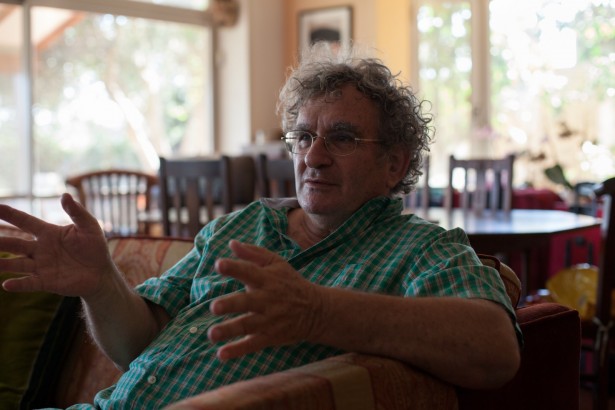
Historian Benny Morris at his home. Photo by Anna Loshkin
406875581

In this in-depth interview, Israeli historian Benny Morris speaks with Professor Gabriel Noah Brahm about his work, his critics and his regrets. He also charges Western academics with dishonesty about the Middle East, gives his prognosis for the Israeli-Palestinian conflict, and outlines his view of Israel’s place in the ‘Clash of Civilisations’.

Benny Morris hasn’t changed. One of the world’s leading chroniclers of the Arab-Israeli conflict tells the truth as he sees it, based on the facts he discerns as a historian. While some have perceived a dramatic shift from the ‘old’ (more optimistic and liberal) Morris of the Oslo period to the ‘new’ (more realistic/pessimistic) Morris of today, this is something of a myth. He hasn’t changed what he says about the reality of 1948, the Palestinian refugees, or anything else. Rather, he has added, to his knowledge of the history of Israel’s rebirth as a modern nation-state, a painful analysis of more recent history. When Yasser Arafat walked away from Israeli peace offers in 2000 and 2001, a disillusioned Morris started to examine the possibility that the Palestinians weren’t serious about wanting a two-state deal. He has since come to rate more highly the importance of Islamism and jihadism as forces driving Palestinian rejectionism.

Moreover, as a firebrand who tends to ‘call a spade a spade’, he is irked by a censorious political correctness that limits what can be talked about honestly — policing thought in line with ‘Western guilt’ over colonialism. He is equally disdainful of the romantic cult of ‘the Other’ in academia that tries to assuage that guilt. He regrets not the substance of any of the things he has said, but only the ‘intemperate’ way he expressed himself on occasion. We talked about his books and his thoughts about the future of Israel and the region at his home.

ALBERT CAMUS’S MOTHER: JUSTICE OR MORALISM?

Gabriel Noah Brahm: You’ve been both widely celebrated and also condemned by some for your work. Have you paid a price for your outspokenness and originality?

Benny Morris: I’m not sure that’s what the price is paid for. I certainly paid a price for writing things that the Israeli establishment wasn’t happy with in the late 1980s and 1990s. But The Birth of the Palestinian Refugee Problem and Israel’s Border Wars also won me a place in an Israeli university — so it cuts both ways. I was unemployed for six years — you pay a heavy economic price for that. But on the other hand, it got me a type of position that I wanted. So I’m not bitter.

GNB: Responding to critics, you once said that you respected Albert Camus’s aperçu about his mother — whom he happened to prefer, for some strange reason, to the moralising Jean-Paul Sartre’s endorsement of revolutionary violence directed at civilians in the name of a pristine concept of justice. ‘When he referred to the Algerian problem, he placed his mother ahead of morality’, you said, adding that, in your own case, by analogy, ‘Preserving my people is more important than universal moral concepts’. Haven’t morals got to be consistently applied?

BM: I’m not sure I would say ‘placed his mother before morals’. One type of moral value is wanting your mother to stay alive. And the same applies, I suppose, to the Jewish people. I think it’s a value to want to preserve your people, and that’s more important to me than some universal values which speak in terms of absolutes but don’t look concretely at what is happening.

Looking concretely is what Camus did in Algeria. He understood that the Arab struggle for independence was going to cost one and a half million colonists dearly. He thought this was going to be a tragedy and wanted some kind of rapprochement between the nationalist Arabs and the immigrants who had arrived 100 years before. It didn’t work out that way. But he thought that the Europeans in Algeria, because of the history of the place, also deserved a place in the sun.

GNB: Undiluted commitment to an abstract, theoretical idea of ‘justice’ may in fact not always be just in practice. Can it also be moral to care about one’s own?

BM: To care for your own people as well as others is not contrary to universal morality. Many people try to pose it as such, as contrary to universal ‘human values’. I think that’s mistaken. One has to look at the reality of things, and not just talk of abstract concepts which are often very difficult to apply. You may cause far more injustice by trying to apply what you call ‘justice’ than by trying to find some sort of middle way.

SEEING THE PALESTINIANS PLAIN: THE LONGEST JIHAD?

recommended by:
Leon Rozenbaum
GNB: Your work has been hugely controversial. Looking back, would you do anything differently if you could?

BM: To be completely honest, in the interview with Ari Shavit, in Haaretz in 2004, I should have said some things in a more temperate way. Not that I have a problem with what I said, but there were one or two phrases which provided ammunition to hostile critics . But I don’t think I have changed anything I have ever written. I would take nothing back regarding my views about 1948 or the conflict, because what I wrote originally and what I continue to write is always based on persuasive evidence.

Politically, the thing which has changed for me (and you can see that in my journalism), is my view of the Palestinians and their readiness to make peace with the Israelis. This is the crux. I would say that in the 1990s, while I was not persuaded by Arafat — the man was always a vicious terrorist and a liar — I thought then maybe he is changing his approach, because he now accepts the realities of power and what is possible.

But when it came to the crunch, when he was offered a two-state solution in 2000 by [Ehud] Barak, and then got an even better offer from [Bill] Clinton at the end of 2000, Arafat said ‘no’. And I think this was the defining moment for me. He was simply unable to reach a compromise with Israelis.

GNB: And that affected you how, exactly?

BM: From that point on, I lost a lot of sympathy for the Palestinians — and I came to understand that they are not willing to reach a two-state solution. And then there was Mahmoud Abbas’s rejection in 2008 of the Ehud Olmert proposals, which were fairly similar to the Clinton proposals of December 2000. Abbas was offered a state with 95 to 96 per cent of the West Bank, East Jerusalem, and the Gaza Strip, and he too said ‘no’.

I understood that it wasn’t really a question of a bit of territory here or there — it was a matter of the Palestinians non-acceptance of the legitimacy of the Jewish state. That was what lay behind Abbas’s inability to accept any Jewish state next to a Palestinian state. This is really what it has always been about: for Arafat, for Abbas, and before them for [Haj Amin] al-Husseini in the 1930s and 1940s.

Let me add that during the 1990s I was working on my book, Righteous Victims, in which I looked at the conflict from its origins until 1999. Before that, I had written about segments of the conflict, about the emergence of the Palestinian refugee problem and about the 1950s, but in the 1990s I devoted my time to writing a comprehensive history of the clash between the two peoples — between the Zionists and the Arab world. I came to the conclusion, on the basis of what I read about the conflict during that decade, that the Palestinian Arabs were not willing to reach a compromise. What happened in 2000 capped the conclusions I had more or less reached on the basis of the material that went into Righteous Victims. I understood that even if there were some Palestinians who were genuinely moderate and conciliatory, and willing to live with a two-state solution, they would always be out-flanked, or crushed, by the much larger segment of the Palestinians who would be completely rejectionist.

Abbas can’t reach a solution. Even if he were a real moderate, he would never sign on the dotted line. First, he would be shot by the Hamasnicks. Second, even if he wasn’t shot by the Hamasnicks, the deal would come unstuck because Hamas would send out suicide bombers and enrage the Israeli right. There are simply too many extremists; the moderates end up bowing to their will. This is what always happens when it comes to the crunch.

GNB: Was it then, a matter of a shift in focus — from a close-up look at the origins of the refugee problem, where you’re naturally feeling more sympathy for the Palestinian refugees, to the bigger picture, where it was not so easy to retain as much sympathy?

BM: Yes, maybe that’s true. The focus of my original work on the refugees, and then my subsequent book on the infiltration problem and the border wars, did look more narrowly at the Palestinians and the bad things that happened to them. And this, with any normal, decent person, would generate sympathy — so this is true. But when you look at the wider picture, you end up attributing to them a great deal of responsibility for what happened as well.

GNB: To return to the question of Palestinian rejectionism, Norman Finkelstein and Avi Shlaim have questioned the narrative you present, arguing that both the Palestinians and the Israelis did not accept the Clinton parameters.

BM: This is not true. The response by the PLO to the Clinton parameters, which was published and is on the internet, is essentially a complete dismissal of any compromise on the ‘right of return’, which is crucial—the Palestinians offered no conciliation.

On the matter of territories, they were vague and they certainly didn’t accept what Clinton outlined — 94 to 96 per cent of the West Bank, 100 per cent of the Gaza Strip, East Jerusalem — all of this is insufficient for them. The Temple Mount, where Clinton offered a number of different alternatives — Israeli-Palestinian condominium, the Arabs owning the Temple Mount surface, the Jews owning the interior — these are variations on a compromise. On these there was no give at all by Arafat.

Clinton in his autobiography, and Denis Ross in The Missing Peace, both insist that the Palestinian response was a total rejection of the Clinton parameters. Whereas Clinton said the Israeli response (which incidentally Israel didn’t publish, and the Americans never published, though most of it is in my book, One State Two States), was much, much closer to the details of the Clinton parameters. In other words, there were one or two things that Barak’s government wanted revised or re-discussed. They wanted more than 4-6 per cent of the West Bank — they wanted up to 8 per cent. But that was ‘up for discussion’. The same applied to the Temple Mount, and the sacred basin around the Old City. I don’t think Shlaim and Finkelstein are correct on this.

The Arafat response to the Clinton parameters, when a historian looks at it, is completely commensurate with the previous responses over many decades of Palestinian leaders to international and bilateral proposals for a compromise peace.

In 1937, the British Peel Commission put the first two-state solution on the table. Haj Amin al-Husseini and the Arab world (save for Prince Abdullah in Transjordan) all said ‘no’, and went back to rebelling against the British. They said ‘no’ to a peace proposal which actually gave them close to 80 per cent of Palestine’s land surface, and gave the Jews 17 per cent. But the Arabs said ‘no, we don’t want this compromise, they [the Jews] don’t deserve one inch of Palestine!’

In 1947, the international community put a second two-state solution on the table in the form of UN General Assembly Resolution 181, on 29 November 1947 — and the Arab world and the Palestinians again rejected it. That resolution offered the Palestinians something like 45 per cent of the country and the Jews 55 per cent.

Their problem wasn’t only in the percentages, which had now turned less favourable to the Palestinians. The problem was with the entire concept of partition and a two-state solution. They said all of Palestine belongs to us, and that is the only solution we will accept. And the Jews, some of them, can live here as a minority.

Essentially Arafat did the same thing in 1978, in response to Sadat and Begin’s proposal, at Camp David, of Palestinian autonomy. He did the same in 2000, with the Clinton parameters, and Abbas did the same thing with Olmert’s offer in 2008. The problem here, when you look at it as a historian, is the consistency one sees in the rejection of a two-state compromise. This is what should make reasonable people depressed.

OBSTACLES TO PEACE

read more: There is a clash of civilisations…


541908088Gabriel Noah Brahm is an Associate Professor of English at Northern Michigan University, where he teaches literary theory, cultural studies, and Israeli literature, a Senior Research Fellow in Israel Studies at Brandeis University, a Scholars for Peace in the Middle East (SPME) Fellow, an Israel on Campus Coalition (ICC) Center for Academic Engagement (CAE) Fellow, and a winner, in 2013, of an Israel Institute Mid-Career Faculty Development Grant. He is the co-editor (with Cary Nelson) of The Case Against Academic Boycotts of Israel . His current book project is titled Israel in Theory: The Jewish State and the Cultural Left.


twoje uwagi, linki, wlasne artykuly, lub wiadomosci przeslij do: webmaster@reunion68.com



British teenagers face trial over ‘Auschwitz theft’

British teenagers face trial over ‘Auschwitz theft’

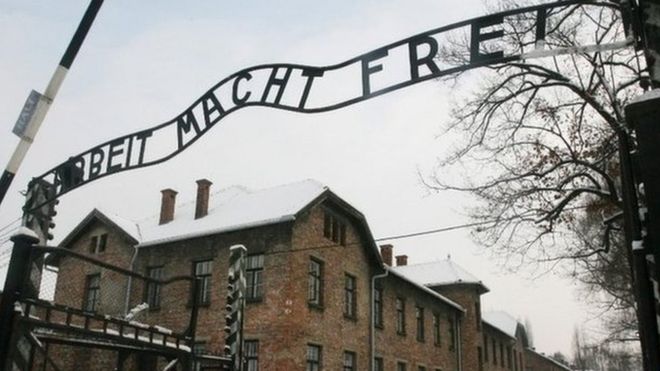
The pupils from the independent Perse School in Cambridge were on a school trip to Auschwitz
Auschwitz

Two British teenagers accused of stealing artefacts from the Auschwitz death camp during a school trip are to face a trial, prosecutors have said.

The pupils, from the independent Perse School in Cambridge, were allegedly seen by guards picking up buttons and fragments of a spoon from the ground.

In June, the school said they had been fined after admitting responsibility.

But Polish prosecutors said the boys had changed their minds and would now face a trial.

Items supposedly taken at the former Auschwitz death camp by two British schoolboys

The pair, who were aged 17 at the time of the alleged theft, have withdrawn their admission of guilt, explaining that they were not aware the items had special cultural significance.

They had originally accepted a fine and suspended probation, their school said in June.

The artefacts, which also included a rusted hair clipper and glass fragments, were allegedly picked up in an area where new arrivals at the Nazi death camp were stripped of their belongings.

Krakow Regional Prosecutor’s office spokeswoman Boguslawa Marcinkowska said the indictment had been sent on Tuesday to the Regional Court in Krakow.

She said it was likely the pupils would have to appear in court as they had changed their position and their intention to voluntarily submit to punishment.

The maximum penalty for the crime is a 10-year prison sentence.

No-one at the Perse School was available for comment.


twoje uwagi, linki, wlasne artykuly, lub wiadomosci przeslij do: webmaster@reunion68.com