Archive | October 2016

„WYSTAWĄ OBECNĄ CHCEMY PRZYBLIŻYĆ WIDZA DO SKARBNICY SZTUKI ŻYDOWSKIEJ…”

Żydowski Instytut Historyczny„WYSTAWĄ OBECNĄ CHCEMY PRZYBLIŻYĆ WIDZA DO SKARBNICY SZTUKI ŻYDOWSKIEJ…” — „HISTORIA SZTUKI W WALCE O PAMIĘĆ. JÓZEF SANDEL (1894–1962) TWÓRCA MUZEUM ŻIH”

Jakub Bendkowski i Mikołaj Getka-Kenig


Niniejsza wystawa nie jest hołdem, czy wyrazem ckliwego sentymentu. Jej celem jest ukazanie pracy Józefa Sandla jako istotnego etapu w dziejach nie tylko Żydowskiego Instytutu Historycznego jako instytucji naukowo-badawczej, ale i studiów nad kulturą Żydów polskich w ogóle. Skupiamy się przede wszystkim na dorobku tego uczonego, gdyż to właśnie dzięki niemu na stałe zapisał się w żywej pamięci ŻIH-u, a także całego środowiska badaczy polskiej kultury żydowskiej.

Tematem naszej wystawy, która wpisuje się w cykl przedsięwzięć towarzyszących obchodom siedemdziesięciolecia Żydowskiego Instytutu Historycznego, jest praca naukowa w zakresie historii sztuki, motywowana nie tylko dążeniem do prawdy, ale i pragnieniem upamiętnienia swojego przedmiotu, czyli twórczości polskich artystów pochodzenia żydowskiego. U genezy ŻIH stała potrzeba zachowania pamięci o niemal zupełnie unicestwionym narodzie i jego kulturze, a jej narzędziem miały być badania dotyczące zarówno Zagłady, jak i poprzedzającej ją bogatej historii polskich Żydów. Jedną z dziedzin, której od początku poświęcano uwagę w tej instytucji, był wkład Żydów polskich (czy Polaków żydowskiego pochodzenia) w dzieje sztuk plastycznych. Z początku była to zasługa przede wszystkim jednego wyjątkowego człowieka, byłego marszanda i społecznika, który pod wpływem wydarzeń wojennych stał się historykiem, a jego imponująca determinacja zapoczątkowała cały kierunek badawczy, który rozwija się do dziś. Tym człowiekiem był Józef Sandel.

Opierając się na zachowanych materiałach archiwalnych oraz opublikowanych rozprawach, podjęliśmy się częściowej rekonstrukcji jego autorskiej, przełomowej – bo pierwszej – kompleksowej wizji dziejów sztuki Żydów polskich. Co więcej, traktujemy ją jako fenomen historyczny sam w sobie, osadzając w kontekście epoki, w której przyszło Sandlowi pracować. Oczywiście, jego sposób patrzenia na dzieje sztuki, z naszej perspektywy tak ważny, bo wciąż inspirujący, nie był wolny od dominujących w tamtym czasie (zwłaszcza na przełomie lat 40. i 50. XX w.) paradygmatów metodologicznych o mocnym zabarwieniu politycznym i wprost propagandowym. Jego twórczość jako historyka stanowi więc nie tylko świadectwo tego, jak należało wówczas pisać o przeszłości, aby móc funkcjonować w obiegu naukowym, lecz przede wszystkim pozwala nam uświadomić sobie, jakiego rodzaju interpretacja dziejów kultury żydowskiej miała wówczas szansę na uznanie, a zatem jaka mogła spełniać swój komemoracyjny cel. Równocześnie, należy pamięć, że decyzja Sandla o podążaniu szlakiem wyznaczonym przez wówczas główny – marksistowski – nurt badań historycznych nie musiała być całkowicie koniunkturalna. Ciągnące się od wieków dyskryminacja i uprzedzenia w stosunku do Żydów w naturalny sposób kierowały wielu z nich ku ideom kontestującym dotychczasową rzeczywistość, hierarchie i wartości społeczne.

Dla Sandla, który identyfikował się z komunizmem już przed wojną i który przeżył Zagładę dzięki azylowi na terenie Związku Radzieckiego (jak wielu jego współrodaków), lewicowość i żydowskość pozostawały ze sobą w silnym związku. Twierdził więc w swoim pracach, że prawdziwie żydowska sztuka była z natury rzeczy w ten czy inny sposób lewicowa. Dotyczyła bowiem tych, którzy czekali na swoją społeczną emancypację, a tę – jak wierzył – miała im przynieść odrodzona po II wojnie światowej socjalistyczna Polska.


twoje uwagi, linki, wlasne artykuly, lub wiadomosci przeslij do: webmaster@reunion68.com


Father of Nobel physics winner fled to UK from the Nazis

The Times of IsraelFather of Nobel physics winner fled to UK from the Nazis

TIMES OF ISRAEL STAFF


J. Michael Kosterlitz, one of trio awarded the prize, is son of German Jews; his dad, biochemist Hans Walter Kosterlitz, left Berlin in 1934, then brought his mother to safety

Winner of the Nobel Prize in Physics J. Michael Kosterlitz poses at Aalto University in Espoo, on October 4, 2016. Kosterlitz works currently as a visiting professor at Aalto University. British-born scientists David J Thouless, F Duncan Haldane and Kosterlitz won the Nobel Physics Prize 2016 for revealing the secrets of exotic matter, the Nobel jury said. (AFP PHOTO / Lehtikuva / Roni Rekomaa)” title=”Winner of the Nobel Prize in Physics J. Michael Kosterlitz poses at Aalto University in Espoo, on October 4, 2016. Kosterlitz works currently as a visiting professor at Aalto University. British-born scientists David J Thouless, F Duncan Haldane and Kosterlitz won the Nobel Physics Prize 2016 for revealing the secrets of exotic matter, the Nobel jury said. (AFP PHOTO / Lehtikuva / Roni Rekomaa

SOCKHOLM, Sweden — British scientists David Thouless, Duncan Haldane and Michael Kosterlitz won the Nobel Physics Prize on Tuesday for revealing the secrets of exotic matter, the Nobel jury said. Kosterlitz is the son of German Jews who came to Britain in the 1930s to escape the Nazis.
“This year’s laureates opened the door on an unknown world where matter can assume strange states. They have used advanced mathematical methods to study unusual phases, or states, of matter, such as superconductors, superfluids or thin magnetic films,” the jury said.

“Thanks to their pioneering work, the hunt is now on for new and exotic phases of matter,” it added.

The laureates will share the eight million Swedish kronor (around $931,000 or 834,000 euros) prize sum.

Winners of the Nobel Prize in Physics (L-R) David J Thouless, F Duncan M Haldane and J Michael Kosterlitz are displayed on a screen during a press conference to announce the winner of the 2016 Nobel Prize in Physics at the Royal Swedish Academy of Sciences in Stockholm on October 4, 2016. (AFP PHOTO/JONATHAN NACKSTRAND)Winners of the Nobel Prize in Physics (L-R) David J Thouless, F Duncan M Haldane and J Michael Kosterlitz are displayed on a screen during a press conference to announce the winner of the 2016 Nobel Prize in Physics at the Royal Swedish Academy of Sciences in Stockholm on October 4, 2016. (AFP PHOTO/JONATHAN NACKSTRAND)

Thouless won one-half of the prize, while Haldane and Hosterlitz share the other half.

The jury said their pioneering work “has boosted frontline research in condensed matter physics, not least because of the hope that topological materials could be used in new generations of electronics and superconductors, or in future quantum computers.”

Kosterlitz is the son of German Jewish immigrants. His father, Hans Walter Kosterlitz, was a pioneer in biochemistry.

Hans Walter Kosterlitz fled to Scotland in 1934, after he was barred from his work at a Berlin hospital following the rise of the Nazis. He later arranged for his mother, brother and future wife Hannah to join him in Britain.

Topology, in which the three laureates specialize, is a branch of mathematics that investigates physical properties of matter and space that remain unchanged under deforming forces, including stretching.

It holds exceptional promise for quantum computing and tiny quantum devices as topological states can transport energy and information without overheating, unlike traditional quantum mechanics.

“They demonstrated that superconductivity could occur at low temperatures and also explained the mechanism, phase transition, that makes superconductivity disappear at higher temperatures,” the jury noted.
Professor Thors Hans Hansson gives a demonstration using a bagel to explain the work of the winners of the Nobel Prize in physics, at the Royal Swedish Academy of Sciences, in Stockholm, Sweden, Tuesday, Oct. 4, 2016. (Anders Wiklund /TT via AP)Professor Thors Hans Hansson gives a demonstration using a bagel to explain the work of the winners of the Nobel Prize in physics, at the Royal Swedish Academy of Sciences, in Stockholm, Sweden, Tuesday, Oct. 4, 2016. (Anders Wiklund /TT via AP)

Thors Hans Hansson, a member of the Nobel Committee for Physics, resorted to the use of pastries in attempting to explain the winners’ complex work. “The concept of topology may not be familiar to you,” he said at a press conference in Stockholm. “I have a cinnamon bun, I have a bagel and a Swedish pretzel with two holes. Now for us these things are different. One is sweet one is salty, they are different shapes. But if you are a topologist there is only one thing that is really interesting with these things. This thing (the bun) has no holes, the bagel has one holes, the pretzel has two holes.”

In the 1980s, Thouless was able to explain a previous experiment with very thin electrically conducting layers in which conductance was precisely measured as integer steps.

“He showed that these integers were topological in their nature. At around the same time, Duncan Haldane discovered how topological concepts can be used to understand the properties of chains of small magnets found in some materials.”

Kosterlitz, a dual UK-US citizen, said he got the news of the Nobel win in a parking garage while heading to lunch in Helsinki.

“I’m a little bit dazzled. I’m still trying to take it in,” he told AP.

While most people are familiar with objects in three dimensions, the Nobel laureates analyzed materials so thin they have only two dimensions, or even one.

Scientists had once been skeptical that any interesting atomic-scale behavior takes place in these settings, but the Nobel laureates proved them wrong, said Phillip Schewe, a physicist and writer at the University of Maryland in College Park.

For example, Kosterlitz and Thouless showed that, against expectations, two-dimensional materials could conduct electricity without any loss to resistance. That property is called superconductivity.

Kosterlitz said he was in his 20s at the time and that his “complete ignorance” was an advantage in challenging the established science.

“I didn’t have any preconceived ideas,” he said. “I was young and stupid enough to take it on.”

Their analysis relied on topology, which is the mathematical study of properties that don’t change when objects are distorted. A doughnut and a coffee cup are equivalent topologically because they each have exactly one hole. In topology, properties change only in whole steps; you can’t have half a hole.

Nobel committee member David Haviland said this year’s prize was more about theoretical discoveries even though they may result in practical applications.

“Topology is a very abstract branch of mathematics which isn’t used so frequently in physics,” Haviland said. “But these theoreticians have come up with a description of these materials using topological ideas, which have proven very fruitful and has led to a lot of ongoing research about material properties.”

Haldane said the award-winning research is just starting to have practical applications.

“The big hope is that some of these new materials could lead to quantum computers and other new technology,” he said.

Kosterlitz was not so sure.

“I’ve been waiting for my desktop quantum computer for years, but it’s still showing no signs of appearing,” he said. “At the risk of making a bad mistake, I would say that this quantum computation stuff is a long way from being practical.”


twoje uwagi, linki, wlasne artykuly, lub wiadomosci przeslij do: webmaster@reunion68.com


The Mutating Virus – Understanding Antisemitism

The Mutating Virus – Understanding Antisemitism

Rabbi Sacks


“The hate that begins with Jews never ends with Jews.” On 27th September 2016, Rabbi Sacks delivered a keynote address entitled ‘The Mutating Virus: Understanding Antisemitism’ in the European Parliament. The speech opened a conference on the future of Jewish communities in Europe hosted by Martin Schulz, President of the European Parliament. To read a transcript of the speech, please click here: http://bit.ly/2dCyUyq


twoje uwagi, linki, wlasne artykuly, lub wiadomosci przeslij do: webmaster@reunion68.com


Błędna lekcja historii o uchodźcach

Błędna lekcja historii o uchodźcach

Petra Marquardt-Bigman
Tłumaczenie: Małgorzata Koraszewska


Zrzut z ekranu z filmu Kindertransport Documentary
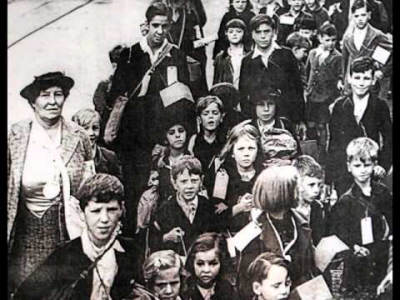
Zrzut z ekranu z filmu Kindertransport Documentary

Raz jeszcze uchodźcy żydowscy z ubiegłego stulecia posłużyli jako porównanie dzisiejszych uchodźców, głównie muzułmanów. Dokładnie rok temu Ishaan Tharoor poświęcił temu porównaniu kilka artykułów w “Washington Post” i w końcu napisał z wielką satysfakcją, że jeden z tych artykułów “należał do najczęściej czytanych artykułów na naszej stronie internetowej”.

Teraz Nick Kristof z “New York Times” (NYT) pisze, że “przywódcy światowi powinni zastanowić się” nad odmową udzielenia pomocy Żydom, którzy uciekali z Niemiec nazistowskich, kiedy dzisiaj spotykają się w Nowym Jorku, by dyskutować o trwającym obecnie problemie uchodźców. Kristof pisze: “Bez większej woli politycznej spotkanie w tym tygodniu może zostać zapamiętane jako nie lepsze niż konferencja w Evian w 1938 r., [gdzie delegaci z 32 krajów poprzestali na wyrażeniu współczucia wobec losu Żydów, bez oferowania im schronienia] i historia im tego nie wybaczy”. Tylko kilka tygodni temu Kristof oświadczył:“Anne Frank dzisiaj jest dziewczynką syryjską”.

Ta próba ożywienia tej błędnej lekcji historii, skłania do przypomnienia niektórych reakcji na zeszłoroczną debatę, a szczególnie znakomity artykuł Jamesa Kirchicka w „Tablet”: The Bad-Faith Analogy Between Syrian Refugees and Jews Fleeing Nazi Germany.

Choć takie porównania robiło także kilku ocalonych z Holocaustu i ich potomków, jak również niektórzy przywódcy żydowscy, aktywiści antyizraelscy szybko pokazali hipokryzję, która pomogła tej „lekcji historii” zyskać taką popularność. Jak pisałam na moim blogu w zeszłym roku, obserwowałam popularność tego porównania monitorując aktywność na Twitterze notorycznych izraelożerców, takich jak Ali Abunimah czy Max Blumenthal. Pisałam wówczas:

“Kiedy dyskutuje się, jak zareagować na setki tysięcy – a przewiduje się, że wkrótce będą to miliony – głównie muzułmańskich uchodźców i migrantów, uciekających przed wojną i nędzą w ich krajach, Abunimah i Blumenthal odkrywają w sobie współczucie dla uchodźców żydowskich, rozpaczliwie próbujących uciec przed nazistami w latach 1930. i 1940. Problem polega na tym, że zarówno Abunimah, jak Blumenthal normalnie zajęci są promowaniem XXI-wiecznej wersji hasła nazistowskiego ‘Żydzi są naszym nieszczęściem’, która brzmi: ‘Państwo żydowskie jest naszym nieszczęściem’.

Oczywiście, gdyby Izrael powstał zaledwie dziesięć lat wcześniej, wielu Żydów, na próżno próbujących znaleźć ucieczkę przez nazistami, miałoby dokąd pójść”.

To ostatnie wygodnie ignoruje większość ludzi, którzy bardzo chcą przenieść los Żydów, desperacko pragnących uciec przed nazistami, do „lekcji historii”, która jest użyteczna w bieżących debatach politycznych. Jeśli jednak ktoś chce używać losu nieszczęsnych uchodźców żydowskich z ubiegłego wieku na rzecz dzisiejszych uchodźców, grupą, która najbardziej tu pasuje są oczywiście mniejszości na Bliskim Wschodzie, ludzie którzy uciekają przed morderczymi prześladowaniami ze strony muzułmańskich grup i państw – szczególnie Jazydzi, jak też bliskowschodni chrześcijanie i Kurdowie.

Oczywiście, takie rozróżnienie zostałoby potępione jako antymuzułmańska bigoteria, mimo faktu, że dzisiejsi uchodźcy muzułmańscy – w odróżnieniu od uchodźców żydowskich w zeszłym stuleciu – mogą szukać schronienia w wielu krajach muzułmańskich. Ponadto, jak pisałam wcześniej: „kraje muzułmańskie są członkami Organizacji Współpracy Islamskiej (OIC) i chwalą się, że stworzyły ‘drugą co do wielkości organizację międzyrządową po Narodach Zjednoczonych’ z ‘członkowstwem 57 krajów położonych na czterech kontynentach’. Podobno OIC ‘jest wspólnym głosem świata muzułmańskiego w duchu promowania pokoju międzynarodowego i harmonii między różnymi narodami świata’”. Z pewnością można liczyć na OIC, że zapobiegnie koszmarnemu scenariuszowi Kristofa, że
„spotkanie w tym tygodniu może zostać zapamiętane jako nie lepsze niż konferencja w Evian w 1938 r.”? Nie mam żadnych wątpliwości, że gdyby w 1938 r. istniało 57 państw żydowskich na czterech kontynentach, każdy Żyd, który uciekał przed nazistami, znalazłby schronienie – włącznie z Anne Frank i jej rodziną.

Ponadto, niezależnie od pogardy liberałów takich jak Kristof, nie wszyscy ludzie, którzy sprzeciwiają się imigracji muzułmańskiej, są bigotami. Mamy tu niewygodny fakt, że większość aktów terroryzmu w krajach zachodnich dokonali muzułmanie i że każdy, kto śledzi wiadomości wie, że kraje przyjmujące, szczególnie europejskie, stoją przed poważnymi problemami z integracją muzułmanów. Wiele jest problemów we Francji, a badanie brytyjskie opublikowane zeszłej wiosny pokazało, że “bardzo wielu muzułmanów nie chce integrować się, że ich poglądy nie są nawet w przybliżeniu zgodne z wartościami demokracji i że znaczna ich część sympatyzuje z terroryzmem”. Nastała także „nowa era antysemickiej przemocy w Europie”, która, jak ujął to Jeffrey Goldberg, “różni się od poprzednich”, ponieważ “tradycyjne wzory zachodniej myśli antysemickiej zlały się obecnie z potężnym nurtem muzułmańskiej judeofobii. Przemoc przeciwko Żydom w dzisiejszej Europie zachodniej, według tych, którzy ją obserwują, wydaje się głównie pochodzić od muzułmanów”.

Być może liberałowie zachodni, którzy rugają swoich współobywateli za bigoterię wobec uchodźców muzułmańskich, byliby w stanie skuteczniej przekonywać do swojej sprawy, gdyby przyznali, że ludzie Zachodu nie mają monopolu na bigoterię – w rzeczywistości wiele wskazuje na to, że jest to jedna z niewielu dziedzin, w której zdecydowanie przoduje świat muzułmański.

Sondaż Pew, opublikowany w 2004, pokazał, że “chrześcijanie otrzymują znacznie niższą ocenę w krajach z większością muzułmańską, niż otrzymują muzułmanie w krajach z większością chrześcijańską. Większość w Maroku (73%), Pakistanie (62%) i Turcji (52%) wyraża negatywne poglądy o chrześcijanach”. W 2011 r. inny sondaż Pew dał podobne wyniki:

“Muzułmanie w krajach z większością muzułmańską częściej kojarzą negatywne cechy z ludźmi z Zachodu niż nie-muzułmanie kojarzą je z muzułmanami. Na przykład, niemal dziewięciu z dziesięciu (89%) muzułmanów jordańskich używa co najmniej trzech negatywnych przymiotników* do opisania ludzi w krajach Zachodu, podobne opinie ma też większość w Egipcie (81%), Turcji (73%), muzułmanie na terytoriach palestyńskich (71%), w Pakistanie (67%) i Indonezji (63%); tylko w Libanie tak nie jest. W odróżnieniu od tego, Hiszpania jest jedynym krajem zachodnim spośród badanych, gdzie większość (60%) nie-muzułmanów kojarzy trzy lub więcej cech negatywnych z muzułmanami. Co najmniej trzech na dziesięciu nie-muzułmanów w Wielkiej Brytanii (39%), USA (35%) i Francji (30%) nie przypisuje muzułmanom żadnej z sześciu negatywnych cech badanych”.

* tj. gwałtowny, chciwy, fanatyczny, samolubny, niemoralny, arogancki
A są jeszcze szokujące kazania kaznodziei, kipiące nienawiścią wobec “Innego” – oczywiście, Żyda, ale także chrześcijan i ogólnie Zachodu – których regularnie można wysłuchać w meczecie Al-Aksa, podobno trzecim najświętszym miejscu islamu. Czy można sobie w ogóle wyobrazić, że cokolwiek choćby odrobinę porównywalnego było wygłaszane raz za razem w dużym kościele lub katedrze na Zachodzie?

Tym jednak, co powoduje, że te próby użycia losu Żydów uciekających przed nazizmem do dzisiejszej debaty, są tak przygnębiające, jest ludobójcza nienawiść do Żydów, którą podżegają muzułmańscy kaznodzieje i przywódcy na całym świecie – czy jest to uczony z Al-Azhar w Egipcie, australijski islamista, kuwejcki uczony, palestyński szejk, jemeński duchowny, brytyjski islamista, czy też “globalny mufti” szejk Jusuf Karadawi, który kiedyś powiedział swoim około 40 milionom widzów w Al Dżazira, że ma nadzieję, iż następna „kara” Żydów w stylu Hitlera „przyjdzie z rąk wiernych”.


Dwa lata temu Kristof przyznał w artykule, że “antysemityzm siedzi dzisiaj głęboko w niektórych krajach muzułmańskich” – ale oczywiście było tam “ale”: “przez większość historii muzułmanie byli bardziej tolerancyjni wobec Żydów niż chrześcijanie”. W tym artykule Kristof bardziej się także martwił o podsycanie bigoterii antymuzułmańskiej niż o morderczą bigoterię samych muzułmanów i w zeszłym roku próbował pokazać, że – jak ujął to jeden z jego krytyków, że “Biblia jest pełna złych nakazów, podczas gdy Koran ma wiele dobrych nakazów”.

Biorąc pod uwagę troskę Kristofa o „poprawność polityczną”, można było mieć nadzieję, że będzie wahał się przed wykorzystywaniem losu uchodźców żydowskich z zeszłego stulecia na rzecz dzisiejszych uchodźców. Nie ulega wątpliwości, że reportaże, obrazy przemocy i wojny na muzułmańskim Bliskim Wschodzie łamią serce. Jest jednak tak wiele sposobów orędowania na rzecz pomocy ofiarom tych jatek w regionie bez powoływania się na okrutną obojętność okazaną Żydom uciekającym przed nazistami. W końcu, jeśli „Anne Frank jest dzisiaj dziewczynką syryjską”, to czy reżimy i grupy, które czynią z nich „Anne Frank” – Assad, Hezbollah, Iran, Rosja i dobrani islamiści walczący w Syrii i poza Syrią – są nazistami? Jestem całkiem pewna, że tego porównania Kristof zupełnie by nie lubił.

Petra Marquardt-Bigman

Mieszka w Izraelu, wychowała się w Niemczech, pochodzi z rodziny niemieckich uchodźców z terenów dzisiejszej Polski, studiowała w USA, gdzie obroniła pracę doktorską o amerykańskim wywiadzie w nazistowskich Niemczech, prowadzi blog “The Warped Mirror”.


twoje uwagi, linki, wlasne artykuly, lub wiadomosci przeslij do: webmaster@reunion68.com


I’m a Zionist so obviously I’m a racist

The Times of IsraelI’m a Zionist so obviously I’m a racist

Camie Davis


Occasionally, I am mistaken for a Jew. And sometimes I’m treated like a Jew. These occasions aren’t always, shall I say, fun. Like the time an Arab threatened to rape me because I supported the Gaza blockade or the time a neo-Nazi Skinhead threatened to find me and beat me because I advocated Israel’s right to exist. Or the time Arabs yelled “Allahu akbar!” at my children and me when we were on the Temple Mount because they thought we were Jews.

The latest occasion occurred when I commented on social media that the Jews were “the best people in the world.” I was quickly accused of being a Zionist, which I proudly am. But in many people’s estimation, being a Zionist is nothing to be proud of. According to them Zionism = racism. Therefore, it’s acceptable to be anti-Zionist, because it’s synonymous to being anti-racist. In reality, though, anti-Zionism is the new black; the fashionable, trendy way to be anti-Semitic, without appearing to overtly hate Jews.

The people on social media who accused me of being hateful because I was a Zionist were quick to make the distinction that they didn’t hate Jews. They just hated Israel because of its “occupation” and hated Zionists for believing that the Jews had the right to self-determination in Israel.

The trend of equating Zionism with racism and of labeling the Jewish state of Israel into a war mongering, occupying state, began with Yasser Arafat. Arafat’s famous or infamous (depending on whether you are a anti-Zionist or Zionist) 1974 UN speech set the tone for decades regarding how anyone who has a regard for human rights should view the existence of Israel.

In his speech, Arafat repeatedly equated Zionism to racism and systematically structured a narrative of the Arabs’ victimhood status in Israel at the hands of Jewish “oppressors.” He even had the audacity to frame the Arab wars against Israel as Israeli wars of aggression.

Here are various lines from his 1974 UN speech that highlight his spin:

Our resolve to build a new world is fortified — a world free of colonialism, imperialism, neo-colonialism and racism in each of its instances, including Zionism.

Great numbers of peoples, including those of Zimbabwe, Namibia, South Africa and Palestine, among many others, are still victims of oppression and violence. These areas of the world are gripped by armed struggles provoked by imperialism and racial discrimination, both merely forms of aggression and terror.

The Zionist entity clings tenaciously to occupied Arab territory; Zionism persists, in its aggressions against us and our territory. New military preparations are feverishly being made. These anticipate another, fifth war of aggression to be launched against us.

An old world order is crumbling before our eyes, as imperialism, colonialism, neo-colonialism and racism, the chief form of which is Zionism, ineluctably perish.

Palestine is crucial amongst those just causes fought for unstintingly by masses laboring under imperialism and aggression.

I cannot now forgo this opportunity to appeal from this rostrum directly to the American people, asking it to give its support to our heroic and fighting people. I ask it whole-heartedly to endorse right and justice, to recall George Washington to mind, heroic Washington whose purpose was his nation’s freedom and independence, Abraham Lincoln, champion of the destitute and the wretched, and also Woodrow Wilson, whose doctrine of Fourteen Points remains subscribed to and venerated by our people.

Zionism is an ideology that is imperialist, colonialist, racist; it is profoundly reactionary and discriminatory.
Thus, for instance, we can understand the close connection between Cecil Rhodes, who promoted settler colonialism in south-east Africa, and Theodor Herzl, who had settler colonialist designs upon Palestine.

Not satisfied with all this, the racist entity, founded on the imperialist-colonialist concept, turned itself into a base of imperialism and into an arsenal of weapons. This enabled it to assume its role of subjugating the Arab people and of committing aggression against them, in order to satisfy its ambitions for further expansion on Palestinian and other Arab lands. In addition to the many instances of aggression committed by this entity against the Arab States, it has launched two large-scale wars, in 1956 and 1967, thus endangering world peace and security.

Arafat, the Father of Modern Terrorism, who was molded into a “statesman” by the KBG, turned the tables on Israel with his narrative. Israel’s self-defense against Arab aggressors, who vowed to “throw the Jews into the sea,” was rebranded into oppression, occupation, and aggression. Arafat’s revisionist tale morphed David into being Goliath instead of fighting against Goliath, and has even led to anti-Zionists preposterously labeling Jews as the new Nazis bent on committing genocide against the Palestinians. Arafat knew that Israel could not be destroyed by conventional warfare, so he launched a new weapon. A war of words packaged in a humanitarian narrative.

As pointed out by David Meir-Levi in History Upside Down: The Roots of Palestinian Fascism and the Myth of Israeli Aggression, “Arafat was particularly struck by Ho Chi Minh’s success in mobilizing left-wing sympathizers in Europe and the United States, where activists on American campuses, enthusiastically following the line of North Vietnamese operatives, had succeeded in reframing the Vietnam war from a Communist assault on the south to a struggle for national liberation.”

Arafat sent one of his top men in the PLO, Abu Jihad, to North Vietnam to study the strategy and tactics of Ho Chi Minh. While in North Vietnam, it was made clear to Abu Jihad by Ho’s chief strategist, General Giap, that if Arafat wanted to gain support, he had to redefine the terms of his struggle to destroy Israel. Arafat was instructed to, “Stop talking about annihilating Israel and instead turn your terror war into a struggle for human rights. Then you will have the American people eating out of your hand.”

General Giap’s prediction has come to pass especially on American college campuses via the BDS movement and “Israel Apartheid” weeks. As Jonathan Sacks, former chief rabbi of Britain, points out, these campaigns against Israel have become “what Easter was in the Middle Ages, a time for attacks against Jews.”

College students and many liberals gravitate towards these campaigns against Israel in the name of human rights and social justice, believing the narrative that Palestinians are oppressed by Israel. In describing these campaigns against Israel, Sacks says, “Throughout history, when people have sought to justify anti-Semitism, they have done so by recourse to the highest source of authority available within the culture. In the Middle Ages, it was religion. In post-Enlightenment Europe it was science. Today it is human rights. It is why Israel—the only fully functioning democracy in the Middle East with a free press and independent judiciary—is regularly accused of the five crimes against human rights: racism, apartheid, crimes against humanity, ethnic cleansing and attempted genocide. This is the blood libel of our time.” He succinctly concludes, “Anti-Semitism is a form of cognitive failure.” And because anti-Zionism, in my estimation is a veiled form of anti-Semitism, then the same can be said of anti-Zionism. It is a form of cognitive failure.

I know the frustration I felt at being accused of hatred and racism merely because I love Jews and support their basic right to exist in their own nation is miniscule compared to the individual and collective pain and frustration Jews worldwide feel. It must be exhausting, to say the least, to continuously feel like one has to justify his or her existence.

Recently my teenage daughter had a bit of a meltdown as teenagers occasionally do. She slightly imploded under stress that had been building up in her life. One of the top things on her this-is-causing-me-stress list was Israel and the Jews. “I don’t understand why everyone doesn’t love and support Israel and the Jews. Why can’t everyone see that the Jews are the best people in the world?” she asked through tears.

So even though there are many millennials and liberals who continue Arafat’s campaign to denigrate and delegitimize Israel and the Jews’ existence, there are also many people like my daughter and me who love and support Israel so much. We see through the lies, false narratives, and propaganda.

We know that you are not the ones who started the fight for survival. But we also know you will fight disproportionately, meaning you will fight to survive and to win. For living is always a disproportionate response to dying. As Yair Lapid so poignantly wrote, “I have no desire or intention to adopt the moral standards of my enemies. I do not want to be like them. I do not live by my sword; I merely keep it under my pillow.”

By the way, Arafat received a standing ovation after he spoke at the UN General Assembly. That is as inconceivable to me as it is that people still view Israel’s defense against its enemies as anything other than an amazing will to live. But then again, I don’t suffer from cognitive failure. I see things as they truly are.


Camie DavisCamie Davis
Camie Davis is a writer and advocate for Israel.


twoje uwagi, linki, wlasne artykuly, lub wiadomosci przeslij do: webmaster@reunion68.com