Archive | 2016/10/26

“Nie ma zadań niewykonalnych”. Gdy wróg mówi po rosyjsku

INTERIA.PL“Nie ma zadań niewykonalnych”. Gdy wróg mówi po rosyjsku

Michale Bar-Zohar Nisshim Mishal


Izrael od samego początku swego istnienia musiał zmagać się z wieloma przeciwnikami, którzy przez pewien czas byli wspierani przez ZSRR. Na początku jedynie sprzętowo, a później pojawili się także radzieccy żołnierze. W kwietniu 1970 roku doszło do starcia pomiędzy izraelskim lotnictwem a radzieckimi pilotami. Piszą o tym Michael Bar-Zohar i Nissim Mishal w książce “Nie ma zadań niewykonalnych”. Poniżej fragment tego dzieła.

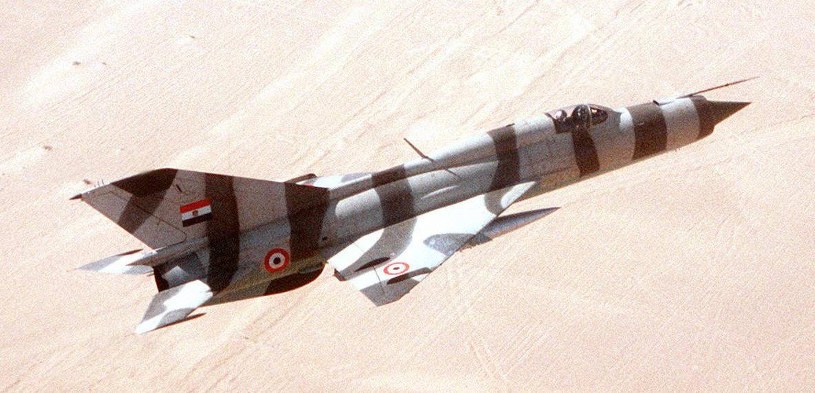
Egipski MiG-21PFM /Wikimedia Commons /INTERIA.PL/materiały prasoweEgipski MiG-21PFM /Wikimedia Commons /INTERIA.PL/materiały prasowe

18 kwietnia 1970 roku, w szczytowym okresie wojny na wyczerpanie, dwaj izraelscy piloci phantomów, Ejtan Ben Elijahu oraz Rami Harpaz, wracali z rozpoznania fotografi cznego nad Egiptem. Wojna na wyczerpanie wybuchła krótko po zakończeniu wojny sześciodniowej i początkowo walki toczyły się głównie w rejonie wokół Kanału Sueskiego, ale ich obszar stopniowo się rozszerzał i izraelskie lotnictwo przeprowadzało zuchwałe wypady w głąb terytorium egipskiego.

Tego ranka, kiedy Ben Elijahu i Harpaz lecieli w stronę Izraela, na dużej wysokości pojawiło się kilka egipskich myśliwców MiG-21. W tym spotkaniu nie było nic szczególnego, ale tym razem urządzenia nasłuchowe należącej do wywiadu wojskowego Jednostki 515 (później Jednostki 8200) zarejestrowały dziwne głosy mówiące w nieznanym języku.
Język ten jednak rozumiał, jak się okazało, młody człowiek imieniem Dawid, który służył w bazie Umm Hasziba na Synaju. Bezzwłocznie zadzwonił do swojego dowódcy, majora Tuwii Feinmana, i zameldował podekscytowany:

– Nagraliśmy rozmowy sowieckich pilotów myśliwskich. Feinman odpowiedział barwnym przekleństwem. Wiedział, że w Egipcie pracują rosyjscy technicy, instruktorzy i doradcy – ale nie piloci – i wysunął przypuszczenie, że Dawid oraz jego koledzy nagrali rozmowę między nimi.
– Nie, Tuwia – odparł Dawid. – To coś innego.

Feinman natychmiast wysłał do Umm Hasziby helikopter po taśmy z nagraniami rozmów. Ponieważ mówił biegle po rosyjsku, przesłuchał je, po czym pospieszył do szefa wywiadu wojskowego, generała Aharona Jariwa. O 20.00 Jariw odbył nie planowaną rozmowę z premier Goldą Meir, która jeszcze tej nocy przekazała nagrania prezydentowi Stanów Zjednoczonych, Richardowi Nixonowi.

Nagrania były niezbitym dowodem: Sowieci nie tylko dostarczali broń Egiptowi, ale także wysyłali tam w tajemnicy oddziały wojskowe i eskadry myśliwców. Samoloty miały znaki egipskich sił powietrznych, ale latali nimi piloci radzieccy!

Oznaczało to niebezpieczny obrót spraw. Izrael nie chciał się wplątać w konflikt z supermocarstwem. Związek Radziecki był głównym dostawcą broni do Egiptu i Syrii (a później Iraku), począwszy od połowylat pięćdziesiątych XX wieku, i ponownie po pokonaniu armii egipskiej przez Siły Obronne Izraela w 1967 roku. Moskwa na prośbę prezydenta Egiptu wysłała specjalistów wojskowych, doradców, kontrolerów ruchu powietrznego i pilotów. Utrzymywano to w tajemnicy do czasu odkrycia ich obecności przez Izrael. (…)

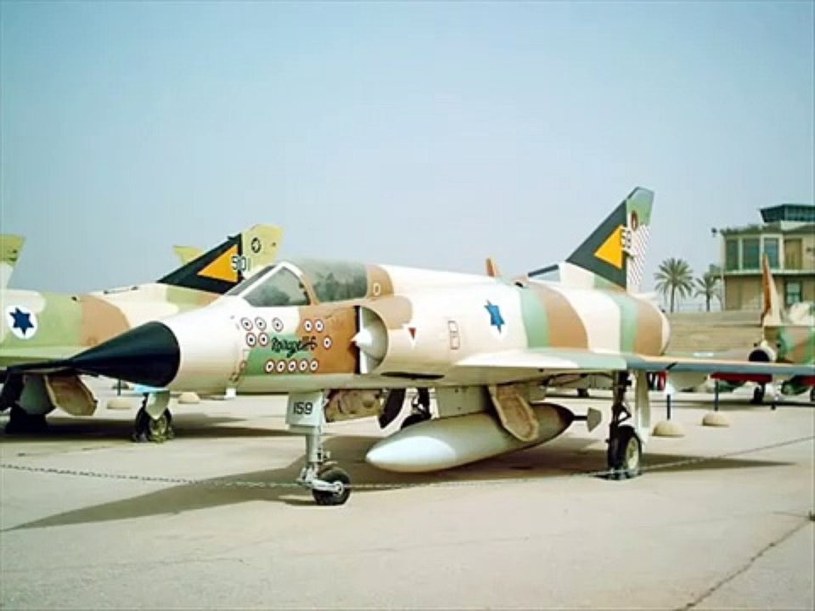
Izraelski Dassault Mirage III /Wikimedia Commons /INTERIA.PL/materiały prasoweIzraelski Dassault Mirage III /Wikimedia Commons /INTERIA.PL/materiały prasowe

Reakcja

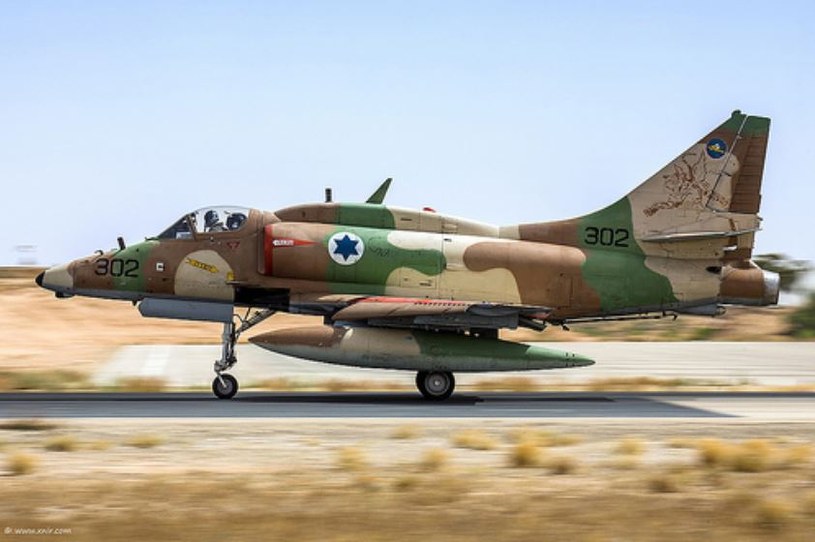
Podniosło to utajony konflikt między Izraelem a Związkiem Radzieckim na niebezpieczny poziom. Izrael starał się go jeszcze bardziej nie eskalować. Minister obrony Mosze Dajan polecił dowódcy sił powietrznych, Mordechajowi Hodowi, wstrzymanie ataków w głąb Egiptu. Amerykanie również doradzali ostrożność – w końcu, mówili, Izrael nie chce konfrontacji z supermocarstwem. Ale pewność siebie Sowietów tylko rosła: zainstalowali swoje baterie rakietowe na brzegach Kanału Sueskiego, a ich samoloty prześladowały izraelskie odrzutowce, które prowadziły rozpoznanie fotograficzne lub naloty, próbując wciągnąć je w walkę. Raz trafili nawet rakietą powietrze-powietrze w ogon skyhawka; pilot zdołał wylądować w bazie lotniczej Refidim na Synaju.

Meir i Dajan wciąż się wahali. Ale 25 lipca, kiedy izraelskie skyhawki zaatakowały egipskie pozycje przy Kanale Sueskim, na niebie pojawiły się sowieckie migi i przegoniły je nad Synaj. “Supermocarstwo supermocarstwem, ale trzeba coś zrobić”, mruknęła pod nosem Meir i rozkazała, żeby Izrael zrewanżował się Rosjanom, jak na to zasługują.

Hod postanowił opracować operację skierowaną przeciwko Rosjanom: powietrzną zasadzkę z rodzaju tych, które jego piloci zastawiali już w tym regionie wiele razy. Do zaplanowania czegoś specjalnego wybrano Dawida Porata, który przygotowywał te zasadzki w przeszłości. Ale jak można urządzić zasadzkę na przejrzystym niebie? Hod zebrał zespół najlepszych pilotów izraelskich sił powietrznych i, 30 lipca 1970 roku, rozkazał im zastawić pułapkę obmyśloną przez Porata.

Izraelski A-4 Skyhawk /Wikimedia Commons /INTERIA.PL/materiały prasoweIzraelski A-4 Skyhawk /Wikimedia Commons /INTERIA.PL/materiały prasowe

Pułapka

Obszar, który wybrano na teren bitwy, znajdował się w jednej trzeciej drogi między …..

Czytaj więcej: “Nie ma zadań niewykonalnych”


twoje uwagi, linki, wlasne artykuly, lub wiadomosci przeslij do: webmaster@reunion68.com


The German Left’s Undeclared War on Israel

The Weekly StandardThe German Left’s Undeclared War on Israel

BENJAMIN WEINTHAL


Heinz Hoffmann Photo credit: Bundesarchiv, Bild
183-1982-1217-023 / Unknown / CC-BY-SA 3.0

The historian Jeffrey Herf’s profound new book shows that German-animated left-wing terrorism targeting Israel was not a tactic but rather part of a long-war strategy to destroy the Jewish state. Academic study and journalism on the now-defunct East German Communist state and radical West German groups hitherto failed to delve into their ongoing war against Israel (and against the United States, one could argue).

Undeclared Wars with Israel: East Germany and the West German Far Left 1967-1989 is the title of Herf’s monumental study. To understand the German Democratic Republic, one must understand its opposition to the founding philosophy of the Jewish state, namely, Zionism. “The East German dictatorship was a different kind of dictatorship from its Nazi predecessor, but, albeit for different reasons, it became the second dictatorship to regard Zionism as an enemy,” writes Herf.

Herf repeatedly dissects the great irony in the empty anti-fascist rhetoric of the GDR and radical West Germans. The regime’s leaders, many of whom fought the Hitler movement, internalized the lethal anti-Semitism of the Nazis, which led inexorably to their desire to dismantle Israel. The GDR brings to mind the playwright Bertolt Brecht’s famous line—”The womb he crawled from is still going strong.”

Herf supplies exhaustive evidence of the GDR’s secret military deliveries to Israel’s enemies in the Middle East—including the bellicose Hafez al-Assad regime in Syria, which was a strategic partner for East Germany.

Take the example of the period 1970-1974, in which “East Germany delivered approximately 580,000 Kalashnikov assault weapons and machine guns to the armed forces of Egypt, and Syria, repaired and serviced about 125 of their MiG fighter jets and delivered millions of bullets, many thousands of rocket-propelled anti-tank grenades and land mines, and millions of cartridges.”

Herf burrowed deep into German archives to obtain information about the GDR’s state-sponsored terrorism. His treatment of East Germany’s powerful defense minister General Heinz Hoffmann neatly captures the alliance of GDR-style Stalinism with the Middle East dictators in the early 1970s. Hoffmann spoke to his Iraqi interlocutors of “The commonalities of our struggle against imperialism and Zionism.”

One of Herf’s many novel contributions to fathoming the GDR’s state-sponsored terrorism is his framework: He terms it “East Germany’s Eurocentric definition of counterterrorism.” One element in this definition was a quid pro quo policy with regard to Palestinian terrorist organizations. The GDR supplied weapons and sophisticated training to the Palestinians in exchange for them refraining from carrying out terrorist attacks in Western Europe. In other words, the GDR largely subcontracted its war against the Jews to the Arabs in the Middle East.

Nevertheless, the East Germans, wittingly or unwittingly, allowed the Libyans to bomb La Belle, a West Berlin discotheque, in 1986, killing three people, including two U.S. soldiers, and injuring 229 others, including 79 U.S. service personnel. A concrete link between the Palestinian Black September group and the murder of 11 Israeli sportsmen and a German police office at the Munich Olympics in 1972 cannot be established based on the archival material. However, Stasi officials and other GDR personnel destroyed great volumes of documents when the Berlin Wall collapsed in 1989.

The West German far-leftist Ulrike Meinhof—perhaps the most famous German terrorist at the time—of the Baader Meinhof terrorist group—was euphoric about the massacre of Israelis. Herf described her essay celebrating the murders of Israeli athletes as “one of the most important documents in the history of anti-Semitism in Europe after the Holocaust.” Meinhof termed the Black September attack “anti-imperialist, anti-fascist and internationalist.” The Munich attack was on “Israel’s Nazi fascism.” Meinhof and Andreas Baader still carry a kind of Bonnie and Clyde celebrity among many sections of today’s German Left.

While the GDR weapons deliveries to Palestinian terrorists and Arab states highlight the existential threat to Israel, Herf does not let the West German government off the hook. A scarcely covered topic in modern German history is Chancellor Willy Brandt’s abandonment of Israel during the 1973 Yom Kippur War. After a surprise attack by multiple Arab armies, Israel was on the ropes, desperate for arms and ammunition. To the frustration of President Richard Nixon and Secretary of State Henry Kissinger, Brandt stuck to an ironclad “neutral position toward the conflict in the Middle East.” The Nixon administration sought to use the port of Bremerhaven to deliver weapons to the Israelis. Nixon said at the time: “The Israelis must not be allowed to lose.”

Herf acutely shows the glaring rift between West German rhetoric and action, writing: “West Germany’s neutrality stance … amounted to a one-sided position in favor of the Arab states even though it was the Arabs who bore responsibility for the war.”

Brandt in his hypocrisy was summed up by Herf as “the Chancellor who famously kneeled in an act of atonement at the memorial to the Jews killed in the Warsaw Ghetto declared his country to be neutral in the most dire days in Israel’s history since 1948.”

The peculiar obsession among large swaths of German elites to mourn the mass murder of Jews during the Shoah while ignoring or playing down Iran’s genocidal threats to wipe out Israel is a continuation of Brandt’s policy. For example, the current Social Democratic foreign minister Frank-Walter Steinmeier, a zealous supporter of last year’s Iran nuclear deal, termed Israeli prime minister Benjamin Netanyahu’s criticism of the agreement as “very coarse.”

While the extreme left in West Germany was not part of the GDR state, it benefited from East Germany’s sponsorship of Palestinian terrorists. This year marked the fortieth anniversary of the hijacking of an Air France plane by a team of German and Palestinian terrorists. Israelis commandoes successfully liberated nearly all of the more than 100 hostages at Entebbe airport in 1976. The Popular Front for the Liberation of Palestine (PFLP) and the West German Revolutionary Cells members Wilfried Böse and Brigitte Kuhlmann carried out the hijacking.

Herf writes that the separation of non-Jewish passengers from Jewish passengers was the first selection process by Germans since the Holocaust. Moreover, “it was the first and only time after 1945 that Germans, East or West, pointed machine guns at unarmed Jews and threatened to kill them.” Israeli eliminated the German terrorists at Entebbe during the rescue. The book meticulously documents the left-wing violence targeting Israel and Jewish institutions in West Germany and abroad.

The origins of the Boycott, Divestment, Sanctions movement (BDS) targeting Israel that began in 2005, can be traced back roughly to 1967. The ad nauseam attacks by the GDR, the Soviet Union and West German Leftists claiming that Israel is a new manifestation of the Hitler movement begin in this period.

The book is chock full of fresh insights into the lethal anti-Semitic foreign policy of the GDR and the deadly social-psychology of West German radicals. Sadly, the lessons of Herf’s book have not penetrated the German Left. The Left Party, the successor to the GDR’s ruling Socialist Unity Party, is today the largest opposition party in the Bundestag. The Left Party continues the tradition of assaulting Israel.

Chancellor Angela Merkel’s coalition partner the Social Democratic Party has formed a “strategic partnership” with the Palestinian Fatah organization that embraces the murder of Israelis.

This groundbreaking book demands to be read, for its advances a deeper understanding of the Cold War period and the Leftist war on Israel. If Germany is serious about grappling with its past, a German publisher will swiftly translate Herf’s comprehensive study.


Benjamin Weinthal is a Berlin-based fellow at the Foundation for Defense of Democracies.


twoje uwagi, linki, wlasne artykuly, lub wiadomosci przeslij do: webmaster@reunion68.com


What could have been if Israel had prepared differently 43 years ago?

The Jerusalem Post - Israel News
What could have been if Israel had prepared differently 43 years ago?

ABRAHAM RABINOVICH


After 43 years, it is interesting to consider what could have been if Israel had prepared differently for one of the country’s most notorious wars.
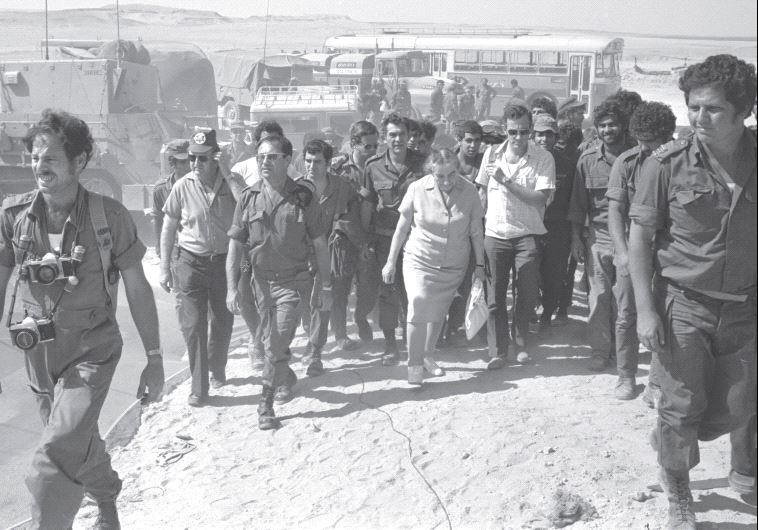
Golda MeirPrime Minister Golda Meir and chief of the Southern Command, Shmuel Gonen (‘Gorodish’), visiting an IDF outpost in the Sinai during the war Photo By: TZION YEHUDA/GPO

The Yom Kippur War has not lent itself to much speculation about how things could have been different. The sheer weight of errors by the High Command in the years before the war – errors based entirely on dismissal of the Arabs as unworthy opponents – makes every alternative scenario seem frivolous. A senior commander explained to me the cavalier attitude toward the enemy and corner cutting. It all came down to one irreducible point: “We figured we were fighting Arabs, not Germans.”

Nevertheless, after 43 years it might be worth considering how things might have been otherwise if someone had thought matters through just a bit more seriously.

Intelligence What if the Intelligence Corps (AMAN) had behaved intelligently; that is, with an open mind and without fixations? This is the part of Yom Kippur War lore that is probably best known to the public: how AMAN’s chief, Gen. Eli Zeira, and a few of his senior aides, insisted until the last moment that Egypt and Syria would not attack despite warning signs as big as Times Square billboards. They had fixated on information received by the Mossad long before from a highly placed source in Cairo. That source believed Egypt would not go to war before it received advanced aircraft and Scud missiles from the Soviets.

Less well known is the revelation by Mossad chief Zvi Zamir that the same Egyptian source, with whom he met periodically, informed him early in 1973 that president Anwar Sadat had changed his mind. Sadat would not wait for new weapons but go to war with what he had. Zamir maintains in a book that he personally informed AMAN of this far-reaching policy shift.

But AMAN ignored it and continued to issue projections until the last moments based on the outdated “conceptzia” – no new weapons meant a low probability of war.

In similar circumstances on the eve of the Six Day War, when Egyptian president Gamal Abdul Nasser began to move troops into Sinai, AMAN, led by Gen. Aharon Yariv, dismissed it as political muscle flexing. Within a few days, however, Yariv concluded that Nasser did intend to go to war. The IDF prepared itself accordingly, with spectacular results.

The Bar-Lev Line What if Gen. David Elazar had rethought the IDF’s deployment along the Suez Canal on the basis of worstcase scenarios? At his first meeting with the General Staff after taking command in January 1971, he placed the Bar-Lev Line on the agenda. The so-called “line” was in fact a string of 30 small forts, each garrisoned by only 20 to 30 men, located along the 160-kilometer-long Suez Canal. It had not been built up as a defense line but to provide protection from Egyptian artillery during the War of Attrition.

Two of the army’s most prominent generals (Ariel Sharon and Yisrael Tal) viewed the Bar-Lev Line as a death trap. It was too thin to serve as a barrier, but too thickly manned to be a disposable tripwire. Sharon, who was then commander of the southern front, called for sealing the forts and maintaining Israel’s presence in the canal zone with mobile patrols and by observation posts set well back from the waterline. Tal called for evacuating the garrisons if war broke out.

Elazar overruled them. Since the forts already existed and could interfere with any crossing in their vicinity there was no point in dismantling them, he said. In addition, flying the flag on the canal was an important political consideration. “Even if I thought the forts were worthless from the military point of view, I would be in a quandary about whether to abandon them because of the political aspect.”

But what would happen to the garrisons if the Egyptians crossed the canal in strength? AMAN assured Elazar that it would provide more than enough warning time to enable mobilization of the reserves to meet such an attack.

That assurance proved worthless.

On Yom Kippur afternoon, the 450 Israelis manning the Bar-Lev Line watched as 100,000 Egyptians began to cross the canal while mobilization in Israel was just starting.

The line would indeed prove to be a death trap, not only for the garrisons but even more for the tank crewmen who rushed to their aid. The Egyptians, who had observed Israeli exercises for years, knew that tanks would attempt to reach the forts. Hundreds of Egyptian tank hunting teams were dug into the sand waiting for them with the devastating new Sagger anti-tank missile. The Armored Corps had not yet come up with a tactical solution to the Sagger or even informed tank crews about its existence. By 2 a.m. on October 7, just 12 hours after the war began, two-thirds of the only armored division then in Sinai, some 180 tanks, had been knocked out. Hundreds of soldiers, in the forts and among tank crewmen, were dead, wounded or heading for captivity.

The Bar-Lev Line had proven a strategic albatross.

“Gorodish” What if Elazar had not appointed Gen. Shmuel Gonen commander of the southern front a few months before the war despite warnings about his unstable character? The staggering operational and psychological impact of the surprise Arab attack would be significantly amplified by Gonen’s eccentric performance. Better known as “Gorodish,” he was a genuine hero who would become a classic, and tragic, example of someone promoted beyond his capabilities.

In the Six Day War, his tank brigade broke through the Egyptian lines and was the first to reach the Suez Canal.

However, his crude personal behavior should have brought into question his suitability for high command. A senior officer who observed the way Gorodish terrorized his subordinates during a field exercise – to the point that they sought to avoid reporting to him – told Elazar “Gorodish has no place in the IDF.” He was appointed nevertheless.

On the third day of the war, after Gorodish received explicit directions from Elazar for a limited counter-attack, he contravened all that was told him and issued a series of bizarre, conflicting and constantly changing orders that left his generals in despair.

Instead of the Southern Command pulling out of the hole the Egyptians had prepared, Gorodish sank his men deeper into it.

The Friday warning During the week before the war, Elazar grew increasingly concerned about the massive buildup of Egyptian and Syrian forces along the borders despite assurances by AMAN that the Egyptians were just staging an exercise and the Syrians were bracing for an Israeli attack. Elazar was particularly concerned about why the Soviets had suddenly begun evacuating the families of their thousands of military advisers in Syria and Egypt, but were not evacuating the advisers themselves. On the eve of Yom Kippur, an hour before the Kol Nidre prayer, the intelligence duty officer at army headquarters in Tel Aviv was informed that a message had been picked up from a credible Arab source saying that Moscow’s decision to evacuate the families was because the Arabs were about to attack Israel.

Elazar was still in his office, one flight up, waiting for a report precisely like that, one that would make sense of all the military movements across the border. Instead of passing the intercept on to Elazar, the duty officer contacted his superiors in AMAN. Intelligence chief Zeira told him not to distribute the information. He wanted first to hear from Mossad chief Zvi Zamir, who had flown to London that day to meet with the Egyptian super-source.

Elazar would later say that if he had received the intercept he would have started the mobilization process immediately. It would have needed the approval of defense minister Moshe Dayan and prime minister Golda Meir.

Going by Dayan’s subsequent behavior, he would likely have opposed a broadscale mobilization, but it is unlikely that he would have totally rejected the chief of staff’s request. A minimal callup would probably have involved an armored brigade which would have been sent to the Golan, the most vulnerable front. The Syrians broke through the next night in the southern Golan and captured 40 percent of the heights. Both the Northern Front commander and Elazar would testify afterwards that if there had been an additional brigade in place the Syrians would not have broken through. The implications of the Syrian breakthrough may have affected the entire war, not just the dire situation on the Golan.

Elazar was forced to resign after the war when the Agranat Commission concluded that he had not properly prepared the armed forces and for errors in assessing the situation on the eve of the war. There is consensus, however, that he was an exceedingly able war leader who kept his head in the most extreme of circumstances and made the correct strategic decisions.

The air force Gen. Benny Peled, meeting with Dayan and the general staff when he was appointed air force commander five months before the war, told them that the air force had no electronic solution for the latest version of the Soviet surface-to-air missile, the deadly SAM 6. Neither did the Americans, who had encountered them over Vietnam where they had lost hundreds of warplanes.

The IAF, however, had come up with a plan that sought to make up with tactics what was lacking in technology.

The plan, called “Tagar,” would involve virtually the entire air force, hundreds of planes, attacking in four waves that would be unleashed over the course of a day. The highly complex choreography, based on recent surveillance photos, would be carried out at top speed and stopwatch precision. Some formations would attack from high level, some from low, some would dive, some would “toss bomb” from a distance. At the same time, helicopters would send false electronic signals from the periphery and drones would overfly the batteries to clutter the enemies’ radar screens.

The ground generals were delighted to hear that the air force had a plan, Peled would say in an interview. But before the meeting ended he told them: “You should know that these plans aren’t worth the paper they’re printed on unless we strike first.” The air force would need 36 hours to prepare the attack, he said.

It was the Arabs who struck first.

Peled and his commanders nevertheless decided to carry out Tagar the next day, even though the critical element of surprise had been lost and even though it did not have 36 hours to prepare. Tagar was their only hope of subduing the SAMs and enabling the air force to provide close support for the embattled ground forces.

Senior air force commanders whom I subsequently interviewed said the price would have been high, perhaps very high, with dozens or scores of planes and pilots lost. But all maintained that the SAMs would have been eliminated, first in Sinai, then in the Golan. Israel’s ground force deployment was built on the supposition that the overwhelming odds the tank divisions faced would be made up for by air force support.

On Sunday morning, the first Tagar wave attacked shortly after dawn.

Dayan had meanwhile helicoptered to the Northern Command to assess the situation there. He was shocked to learn that the Syrians had broken through and that senior commanders believed that the Golan might fall. Dayan had himself patched through to Gen. Peled and ordered him to call off Tagar and send the entire air force north. There would not be another chance to carry out Tagar.

In the interview, Peled acknowledged that the air force had not controlled the SAM-saturated skies over the Golan and Sinai battlefields. If Tagar had been successfully executed, giving the IAF dominance over the battlefield, it would have been an entirely different war.

But in the end the Yom Kippur War would be one of Israel’s greatest victories. The eventual turnaround on the battlefield merits its own place in military history. The painful war was won by the grit and skills of the soldiers and commanders in the field, despite the blunders of their betters.


Abraham Rabinovich is the author of The Yom Kippur War. abra@netvision.net.il


twoje uwagi, linki, wlasne artykuly, lub wiadomosci przeslij do: webmaster@reunion68.com