
Archive | 2016/10/04

Błędna lekcja historii o uchodźcach

Błędna lekcja historii o uchodźcach

Petra Marquardt-Bigman
Tłumaczenie: Małgorzata Koraszewska


Zrzut z ekranu z filmu Kindertransport Documentary
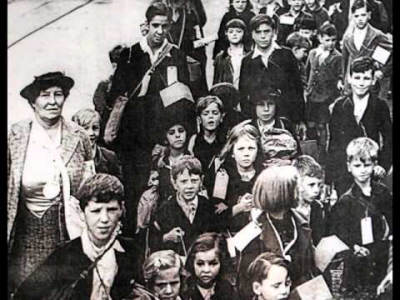
Zrzut z ekranu z filmu Kindertransport Documentary

Raz jeszcze uchodźcy żydowscy z ubiegłego stulecia posłużyli jako porównanie dzisiejszych uchodźców, głównie muzułmanów. Dokładnie rok temu Ishaan Tharoor poświęcił temu porównaniu kilka artykułów w “Washington Post” i w końcu napisał z wielką satysfakcją, że jeden z tych artykułów “należał do najczęściej czytanych artykułów na naszej stronie internetowej”.

Teraz Nick Kristof z “New York Times” (NYT) pisze, że “przywódcy światowi powinni zastanowić się” nad odmową udzielenia pomocy Żydom, którzy uciekali z Niemiec nazistowskich, kiedy dzisiaj spotykają się w Nowym Jorku, by dyskutować o trwającym obecnie problemie uchodźców. Kristof pisze: “Bez większej woli politycznej spotkanie w tym tygodniu może zostać zapamiętane jako nie lepsze niż konferencja w Evian w 1938 r., [gdzie delegaci z 32 krajów poprzestali na wyrażeniu współczucia wobec losu Żydów, bez oferowania im schronienia] i historia im tego nie wybaczy”. Tylko kilka tygodni temu Kristof oświadczył:“Anne Frank dzisiaj jest dziewczynką syryjską”.

Ta próba ożywienia tej błędnej lekcji historii, skłania do przypomnienia niektórych reakcji na zeszłoroczną debatę, a szczególnie znakomity artykuł Jamesa Kirchicka w „Tablet”: The Bad-Faith Analogy Between Syrian Refugees and Jews Fleeing Nazi Germany.

Choć takie porównania robiło także kilku ocalonych z Holocaustu i ich potomków, jak również niektórzy przywódcy żydowscy, aktywiści antyizraelscy szybko pokazali hipokryzję, która pomogła tej „lekcji historii” zyskać taką popularność. Jak pisałam na moim blogu w zeszłym roku, obserwowałam popularność tego porównania monitorując aktywność na Twitterze notorycznych izraelożerców, takich jak Ali Abunimah czy Max Blumenthal. Pisałam wówczas:

“Kiedy dyskutuje się, jak zareagować na setki tysięcy – a przewiduje się, że wkrótce będą to miliony – głównie muzułmańskich uchodźców i migrantów, uciekających przed wojną i nędzą w ich krajach, Abunimah i Blumenthal odkrywają w sobie współczucie dla uchodźców żydowskich, rozpaczliwie próbujących uciec przed nazistami w latach 1930. i 1940. Problem polega na tym, że zarówno Abunimah, jak Blumenthal normalnie zajęci są promowaniem XXI-wiecznej wersji hasła nazistowskiego ‘Żydzi są naszym nieszczęściem’, która brzmi: ‘Państwo żydowskie jest naszym nieszczęściem’.

Oczywiście, gdyby Izrael powstał zaledwie dziesięć lat wcześniej, wielu Żydów, na próżno próbujących znaleźć ucieczkę przez nazistami, miałoby dokąd pójść”.

To ostatnie wygodnie ignoruje większość ludzi, którzy bardzo chcą przenieść los Żydów, desperacko pragnących uciec przed nazistami, do „lekcji historii”, która jest użyteczna w bieżących debatach politycznych. Jeśli jednak ktoś chce używać losu nieszczęsnych uchodźców żydowskich z ubiegłego wieku na rzecz dzisiejszych uchodźców, grupą, która najbardziej tu pasuje są oczywiście mniejszości na Bliskim Wschodzie, ludzie którzy uciekają przed morderczymi prześladowaniami ze strony muzułmańskich grup i państw – szczególnie Jazydzi, jak też bliskowschodni chrześcijanie i Kurdowie.

Oczywiście, takie rozróżnienie zostałoby potępione jako antymuzułmańska bigoteria, mimo faktu, że dzisiejsi uchodźcy muzułmańscy – w odróżnieniu od uchodźców żydowskich w zeszłym stuleciu – mogą szukać schronienia w wielu krajach muzułmańskich. Ponadto, jak pisałam wcześniej: „kraje muzułmańskie są członkami Organizacji Współpracy Islamskiej (OIC) i chwalą się, że stworzyły ‘drugą co do wielkości organizację międzyrządową po Narodach Zjednoczonych’ z ‘członkowstwem 57 krajów położonych na czterech kontynentach’. Podobno OIC ‘jest wspólnym głosem świata muzułmańskiego w duchu promowania pokoju międzynarodowego i harmonii między różnymi narodami świata’”. Z pewnością można liczyć na OIC, że zapobiegnie koszmarnemu scenariuszowi Kristofa, że
„spotkanie w tym tygodniu może zostać zapamiętane jako nie lepsze niż konferencja w Evian w 1938 r.”? Nie mam żadnych wątpliwości, że gdyby w 1938 r. istniało 57 państw żydowskich na czterech kontynentach, każdy Żyd, który uciekał przed nazistami, znalazłby schronienie – włącznie z Anne Frank i jej rodziną.

Ponadto, niezależnie od pogardy liberałów takich jak Kristof, nie wszyscy ludzie, którzy sprzeciwiają się imigracji muzułmańskiej, są bigotami. Mamy tu niewygodny fakt, że większość aktów terroryzmu w krajach zachodnich dokonali muzułmanie i że każdy, kto śledzi wiadomości wie, że kraje przyjmujące, szczególnie europejskie, stoją przed poważnymi problemami z integracją muzułmanów. Wiele jest problemów we Francji, a badanie brytyjskie opublikowane zeszłej wiosny pokazało, że “bardzo wielu muzułmanów nie chce integrować się, że ich poglądy nie są nawet w przybliżeniu zgodne z wartościami demokracji i że znaczna ich część sympatyzuje z terroryzmem”. Nastała także „nowa era antysemickiej przemocy w Europie”, która, jak ujął to Jeffrey Goldberg, “różni się od poprzednich”, ponieważ “tradycyjne wzory zachodniej myśli antysemickiej zlały się obecnie z potężnym nurtem muzułmańskiej judeofobii. Przemoc przeciwko Żydom w dzisiejszej Europie zachodniej, według tych, którzy ją obserwują, wydaje się głównie pochodzić od muzułmanów”.

Być może liberałowie zachodni, którzy rugają swoich współobywateli za bigoterię wobec uchodźców muzułmańskich, byliby w stanie skuteczniej przekonywać do swojej sprawy, gdyby przyznali, że ludzie Zachodu nie mają monopolu na bigoterię – w rzeczywistości wiele wskazuje na to, że jest to jedna z niewielu dziedzin, w której zdecydowanie przoduje świat muzułmański.

Sondaż Pew, opublikowany w 2004, pokazał, że “chrześcijanie otrzymują znacznie niższą ocenę w krajach z większością muzułmańską, niż otrzymują muzułmanie w krajach z większością chrześcijańską. Większość w Maroku (73%), Pakistanie (62%) i Turcji (52%) wyraża negatywne poglądy o chrześcijanach”. W 2011 r. inny sondaż Pew dał podobne wyniki:

“Muzułmanie w krajach z większością muzułmańską częściej kojarzą negatywne cechy z ludźmi z Zachodu niż nie-muzułmanie kojarzą je z muzułmanami. Na przykład, niemal dziewięciu z dziesięciu (89%) muzułmanów jordańskich używa co najmniej trzech negatywnych przymiotników* do opisania ludzi w krajach Zachodu, podobne opinie ma też większość w Egipcie (81%), Turcji (73%), muzułmanie na terytoriach palestyńskich (71%), w Pakistanie (67%) i Indonezji (63%); tylko w Libanie tak nie jest. W odróżnieniu od tego, Hiszpania jest jedynym krajem zachodnim spośród badanych, gdzie większość (60%) nie-muzułmanów kojarzy trzy lub więcej cech negatywnych z muzułmanami. Co najmniej trzech na dziesięciu nie-muzułmanów w Wielkiej Brytanii (39%), USA (35%) i Francji (30%) nie przypisuje muzułmanom żadnej z sześciu negatywnych cech badanych”.

* tj. gwałtowny, chciwy, fanatyczny, samolubny, niemoralny, arogancki
A są jeszcze szokujące kazania kaznodziei, kipiące nienawiścią wobec “Innego” – oczywiście, Żyda, ale także chrześcijan i ogólnie Zachodu – których regularnie można wysłuchać w meczecie Al-Aksa, podobno trzecim najświętszym miejscu islamu. Czy można sobie w ogóle wyobrazić, że cokolwiek choćby odrobinę porównywalnego było wygłaszane raz za razem w dużym kościele lub katedrze na Zachodzie?

Tym jednak, co powoduje, że te próby użycia losu Żydów uciekających przed nazizmem do dzisiejszej debaty, są tak przygnębiające, jest ludobójcza nienawiść do Żydów, którą podżegają muzułmańscy kaznodzieje i przywódcy na całym świecie – czy jest to uczony z Al-Azhar w Egipcie, australijski islamista, kuwejcki uczony, palestyński szejk, jemeński duchowny, brytyjski islamista, czy też “globalny mufti” szejk Jusuf Karadawi, który kiedyś powiedział swoim około 40 milionom widzów w Al Dżazira, że ma nadzieję, iż następna „kara” Żydów w stylu Hitlera „przyjdzie z rąk wiernych”.


Dwa lata temu Kristof przyznał w artykule, że “antysemityzm siedzi dzisiaj głęboko w niektórych krajach muzułmańskich” – ale oczywiście było tam “ale”: “przez większość historii muzułmanie byli bardziej tolerancyjni wobec Żydów niż chrześcijanie”. W tym artykule Kristof bardziej się także martwił o podsycanie bigoterii antymuzułmańskiej niż o morderczą bigoterię samych muzułmanów i w zeszłym roku próbował pokazać, że – jak ujął to jeden z jego krytyków, że “Biblia jest pełna złych nakazów, podczas gdy Koran ma wiele dobrych nakazów”.

Biorąc pod uwagę troskę Kristofa o „poprawność polityczną”, można było mieć nadzieję, że będzie wahał się przed wykorzystywaniem losu uchodźców żydowskich z zeszłego stulecia na rzecz dzisiejszych uchodźców. Nie ulega wątpliwości, że reportaże, obrazy przemocy i wojny na muzułmańskim Bliskim Wschodzie łamią serce. Jest jednak tak wiele sposobów orędowania na rzecz pomocy ofiarom tych jatek w regionie bez powoływania się na okrutną obojętność okazaną Żydom uciekającym przed nazistami. W końcu, jeśli „Anne Frank jest dzisiaj dziewczynką syryjską”, to czy reżimy i grupy, które czynią z nich „Anne Frank” – Assad, Hezbollah, Iran, Rosja i dobrani islamiści walczący w Syrii i poza Syrią – są nazistami? Jestem całkiem pewna, że tego porównania Kristof zupełnie by nie lubił.

Petra Marquardt-Bigman

Mieszka w Izraelu, wychowała się w Niemczech, pochodzi z rodziny niemieckich uchodźców z terenów dzisiejszej Polski, studiowała w USA, gdzie obroniła pracę doktorską o amerykańskim wywiadzie w nazistowskich Niemczech, prowadzi blog “The Warped Mirror”.


twoje uwagi, linki, wlasne artykuly, lub wiadomosci przeslij do: webmaster@reunion68.com


I’m a Zionist so obviously I’m a racist

The Times of IsraelI’m a Zionist so obviously I’m a racist

Camie Davis


Occasionally, I am mistaken for a Jew. And sometimes I’m treated like a Jew. These occasions aren’t always, shall I say, fun. Like the time an Arab threatened to rape me because I supported the Gaza blockade or the time a neo-Nazi Skinhead threatened to find me and beat me because I advocated Israel’s right to exist. Or the time Arabs yelled “Allahu akbar!” at my children and me when we were on the Temple Mount because they thought we were Jews.

The latest occasion occurred when I commented on social media that the Jews were “the best people in the world.” I was quickly accused of being a Zionist, which I proudly am. But in many people’s estimation, being a Zionist is nothing to be proud of. According to them Zionism = racism. Therefore, it’s acceptable to be anti-Zionist, because it’s synonymous to being anti-racist. In reality, though, anti-Zionism is the new black; the fashionable, trendy way to be anti-Semitic, without appearing to overtly hate Jews.

The people on social media who accused me of being hateful because I was a Zionist were quick to make the distinction that they didn’t hate Jews. They just hated Israel because of its “occupation” and hated Zionists for believing that the Jews had the right to self-determination in Israel.

The trend of equating Zionism with racism and of labeling the Jewish state of Israel into a war mongering, occupying state, began with Yasser Arafat. Arafat’s famous or infamous (depending on whether you are a anti-Zionist or Zionist) 1974 UN speech set the tone for decades regarding how anyone who has a regard for human rights should view the existence of Israel.

In his speech, Arafat repeatedly equated Zionism to racism and systematically structured a narrative of the Arabs’ victimhood status in Israel at the hands of Jewish “oppressors.” He even had the audacity to frame the Arab wars against Israel as Israeli wars of aggression.

Here are various lines from his 1974 UN speech that highlight his spin:

Our resolve to build a new world is fortified — a world free of colonialism, imperialism, neo-colonialism and racism in each of its instances, including Zionism.

Great numbers of peoples, including those of Zimbabwe, Namibia, South Africa and Palestine, among many others, are still victims of oppression and violence. These areas of the world are gripped by armed struggles provoked by imperialism and racial discrimination, both merely forms of aggression and terror.

The Zionist entity clings tenaciously to occupied Arab territory; Zionism persists, in its aggressions against us and our territory. New military preparations are feverishly being made. These anticipate another, fifth war of aggression to be launched against us.

An old world order is crumbling before our eyes, as imperialism, colonialism, neo-colonialism and racism, the chief form of which is Zionism, ineluctably perish.

Palestine is crucial amongst those just causes fought for unstintingly by masses laboring under imperialism and aggression.

I cannot now forgo this opportunity to appeal from this rostrum directly to the American people, asking it to give its support to our heroic and fighting people. I ask it whole-heartedly to endorse right and justice, to recall George Washington to mind, heroic Washington whose purpose was his nation’s freedom and independence, Abraham Lincoln, champion of the destitute and the wretched, and also Woodrow Wilson, whose doctrine of Fourteen Points remains subscribed to and venerated by our people.

Zionism is an ideology that is imperialist, colonialist, racist; it is profoundly reactionary and discriminatory.
Thus, for instance, we can understand the close connection between Cecil Rhodes, who promoted settler colonialism in south-east Africa, and Theodor Herzl, who had settler colonialist designs upon Palestine.

Not satisfied with all this, the racist entity, founded on the imperialist-colonialist concept, turned itself into a base of imperialism and into an arsenal of weapons. This enabled it to assume its role of subjugating the Arab people and of committing aggression against them, in order to satisfy its ambitions for further expansion on Palestinian and other Arab lands. In addition to the many instances of aggression committed by this entity against the Arab States, it has launched two large-scale wars, in 1956 and 1967, thus endangering world peace and security.

Arafat, the Father of Modern Terrorism, who was molded into a “statesman” by the KBG, turned the tables on Israel with his narrative. Israel’s self-defense against Arab aggressors, who vowed to “throw the Jews into the sea,” was rebranded into oppression, occupation, and aggression. Arafat’s revisionist tale morphed David into being Goliath instead of fighting against Goliath, and has even led to anti-Zionists preposterously labeling Jews as the new Nazis bent on committing genocide against the Palestinians. Arafat knew that Israel could not be destroyed by conventional warfare, so he launched a new weapon. A war of words packaged in a humanitarian narrative.

As pointed out by David Meir-Levi in History Upside Down: The Roots of Palestinian Fascism and the Myth of Israeli Aggression, “Arafat was particularly struck by Ho Chi Minh’s success in mobilizing left-wing sympathizers in Europe and the United States, where activists on American campuses, enthusiastically following the line of North Vietnamese operatives, had succeeded in reframing the Vietnam war from a Communist assault on the south to a struggle for national liberation.”

Arafat sent one of his top men in the PLO, Abu Jihad, to North Vietnam to study the strategy and tactics of Ho Chi Minh. While in North Vietnam, it was made clear to Abu Jihad by Ho’s chief strategist, General Giap, that if Arafat wanted to gain support, he had to redefine the terms of his struggle to destroy Israel. Arafat was instructed to, “Stop talking about annihilating Israel and instead turn your terror war into a struggle for human rights. Then you will have the American people eating out of your hand.”

General Giap’s prediction has come to pass especially on American college campuses via the BDS movement and “Israel Apartheid” weeks. As Jonathan Sacks, former chief rabbi of Britain, points out, these campaigns against Israel have become “what Easter was in the Middle Ages, a time for attacks against Jews.”

College students and many liberals gravitate towards these campaigns against Israel in the name of human rights and social justice, believing the narrative that Palestinians are oppressed by Israel. In describing these campaigns against Israel, Sacks says, “Throughout history, when people have sought to justify anti-Semitism, they have done so by recourse to the highest source of authority available within the culture. In the Middle Ages, it was religion. In post-Enlightenment Europe it was science. Today it is human rights. It is why Israel—the only fully functioning democracy in the Middle East with a free press and independent judiciary—is regularly accused of the five crimes against human rights: racism, apartheid, crimes against humanity, ethnic cleansing and attempted genocide. This is the blood libel of our time.” He succinctly concludes, “Anti-Semitism is a form of cognitive failure.” And because anti-Zionism, in my estimation is a veiled form of anti-Semitism, then the same can be said of anti-Zionism. It is a form of cognitive failure.

I know the frustration I felt at being accused of hatred and racism merely because I love Jews and support their basic right to exist in their own nation is miniscule compared to the individual and collective pain and frustration Jews worldwide feel. It must be exhausting, to say the least, to continuously feel like one has to justify his or her existence.

Recently my teenage daughter had a bit of a meltdown as teenagers occasionally do. She slightly imploded under stress that had been building up in her life. One of the top things on her this-is-causing-me-stress list was Israel and the Jews. “I don’t understand why everyone doesn’t love and support Israel and the Jews. Why can’t everyone see that the Jews are the best people in the world?” she asked through tears.

So even though there are many millennials and liberals who continue Arafat’s campaign to denigrate and delegitimize Israel and the Jews’ existence, there are also many people like my daughter and me who love and support Israel so much. We see through the lies, false narratives, and propaganda.

We know that you are not the ones who started the fight for survival. But we also know you will fight disproportionately, meaning you will fight to survive and to win. For living is always a disproportionate response to dying. As Yair Lapid so poignantly wrote, “I have no desire or intention to adopt the moral standards of my enemies. I do not want to be like them. I do not live by my sword; I merely keep it under my pillow.”

By the way, Arafat received a standing ovation after he spoke at the UN General Assembly. That is as inconceivable to me as it is that people still view Israel’s defense against its enemies as anything other than an amazing will to live. But then again, I don’t suffer from cognitive failure. I see things as they truly are.


Camie DavisCamie Davis
Camie Davis is a writer and advocate for Israel.


twoje uwagi, linki, wlasne artykuly, lub wiadomosci przeslij do: webmaster@reunion68.com


About Jedwabne: We Need to Stop Screaming at Each Other

JEWISH.PL
About Jedwabne: We Need to Stop Screaming at Each Other

by Bogdan Białek
Gazeta Wyborcza daily, July 23, 2016


Kielce2016b

We, Poles, cannot bring ourselves to utter the word ‘forgiveness’. We continue to weigh and measure relative guilt and to instruct others on what they should do with their conscience.

It was this past summer, at 7/9 Planty Street in Kielce, that we of the Jan Karski Society launched a permanent exhibition devoted to the Kielce pogrom, a tragedy suffered by a local community of Holocaust survivors, for whom that city turned out not to be a place of peace and security, but rather of death, pain, suffering and deep wounds.

The location of the exhibit is an obvious one: that is where 70 years ago a mob made up of ordinary people, men and women, workers, policemen and soldiers beat, tortured and killed for hours on end. The exhibition touches and leaves a deep impression on its visitors, mostly the inhabitants of Kielce. Presenting documents, such as photographs of the victims, photocopies of their post-mortem examinations, fragments from contemporary and later testimonies and depositions from pogrom eyewitnesses and participants, it also includes videotaped testimonies of three pogrom survivors. The visitors are offered a historical review of the Jewish presence in Kielce, a chronology of the Shoah in the city. Finally, we are guided through the details of the ultimate extinction of the remnant community, which included Auschwitz camp survivors.

We opened the exhibition on the eve of the 70th anniversary of the pogrom. The town’s mayor, Wojciech Lubawski, and the bishop of Kielce, Jan Piotrowski, were in attendance. On the actual date of the pogrom’s commemoration, Poland’s president, Andrzej Duda, and his deputy prime minister, Piotr Gliński, visited the exhibition, leaving their inscriptions in the visitor book. Kielce is still the only city in Poland, (and for that matter in all of Central Europe), which speaks about its shameful past in an open way.

***

Let me describe the way we have arrived at this permanent exhibition, which is open to the public, and which operates with no armed security. 16 years ago, in 2000, a dozen or so of us met in front of the 7/9 Planty Street building, mainly people from outside Kielce, including print and TV journalists. We read out the names of all the pogrom victims, lighted 42 memorial candles and proceeded to the local Jewish cemetery, a total of 3,254 steps. A local journalist, Jerzy Daniel, noted at the time: “It was a march of remorse. There were not that many Kielce inhabitants who participated, but that was not so important. (…) What counts is that the march was held. Only a while ago, the very thought that people would walk the streets of this city to commemorate the one universally known event of its history seemed audacious in the extreme and totally unrealistic. Decades needed to pass since July 4th, 1946, before those murdered in Kielce on that day could re-join us to claim out loud their right to remembrance.”

From year to year there have been more of us; this year more than 300. Meanwhile, we have erected monuments, among them a memorial stone to the pogrom victims, with an inscription that states the manner of their death and cites all of their names. We have held numerous conferences, seminars, meetings and debates, such as the one on the occasion of the publication of Jan Tomasz Gross’s book “Fear,” about the Kielce pogrom.

We have experienced acts of honest remorse and of deep reconciliation in Kielce. These stories are related in a recent, independently produced documentary entitled “Bogdan’s Journey.” It was filmed over a ten-year period by Lawrence Loewinger, an older Jewish American from New York, and Michał Jaskulski, a young Catholic Pole from Warsaw. After a screening at the POLIN Museum in Warsaw, Zbigniew Nosowski, the editor-in-chief of Wiez (Bonds, a Catholic quarterly), wrote that “for many Jews, Kielce had become the obvious symbol of Polish hatred.

Yet, the local work on memory on the 1946 pogrom has become the single greatest Polish achievement in Polish-Jewish relations. (…) The current debate in Poland surrounding historical politics highlights the contrast between the supposed previous ‘education in shame’ [where learning about history meant acknowledging guilt] and the new ‘education in pride’ [where history is employed to reinforce a nationalist narrative, to inspire national pride and patriotism]. The effective work on memory carried out in Kielce avoids this categorization completely. Education in conscience counsels us that the crucial aspect of our reaction to such events, like the Kielce pogrom, is not what the world will think of us, but what we think of ourselves when we look truth in the eye.” Yet the film did not provoke any debate on reconciliation or forgiving. Why?

Most likely because the Polish debate surrounding Jedwabne and Kielce has been mainly about apportioning guilt: the opponents, who are conservative Catholics, take up the problem of responsibility with gusto, seeking answers to such questions as: who is guilty and who is not, and who is more guilty and who less so. Also, possibly because some of the participants have been availing themselves, all too directly, of “moral outsourcing” of sorts, they are categorical about telling others what they should do with their conscience, while calling for public atonement. That way they preserve their own conscience in an untouched state. And maybe, as a means of furthering their own agendas and pigeonholing their political opponents, politicians were quick to exploit the discussion around the heinous acts committed by Poles.

And still, it may be because reconciliation is something we cannot find in ourselves. For many of us the word ‘forgiving’ smacks of defeatism and weakness, even if it involves forgiving ourselves. And maybe because what continues to prevail over the graves of the murdered Jews, those known and unknown, is clamor and fury. Isn’t it time to stop screaming at each other?

***

In contemporary Kielce we first have to ask ourselves whether this decades-old story in any way concerns us; what it means to us; what is our attitude toward it; whether it could be a personal experience for us; and whether we can derive some personal norm from that experience and our reflections on it. Finally, what are we responsible for, and to what extent we are responsible for others: for those who lived and died decades ago and who will mostly remain anonymous to us, and for our contemporaries, those living next to us? What practical conclusion comes from all this?

In Kielce we had to accept that not everyone had to share our views or opinions, to follow the same train of thought: that we had differing opinions on the causation and the commission of the crime, and that we had the right to them. In the end, we all agreed on two counts.

First, we do not want a similar tragedy to ever happen again for any reason. We all desire that no one lose his or her life as a result of hatred or political calculation, ignorance or superstition, and that no one should be ever hurt because of their language, skin color or religion. No acts of violence informed by such motives have been registered in Kielce for years now.

In the course of one of the marches, a young man slowed down his car and shouted to the front of the group, mostly men in yarmulkes: “Don’t afraid of us. You are in your city, you have the right to be here”. And he drove away.
Compassion for the victims is our second meeting point. One of those who participated in the many marches I organized over the years was an elderly priest from Kielce, who, until his dying day, was convinced of Soviet instigation of the Kielce pogrom. He always bowed down with deep emotion at the victims’ burial site. Initially unsympathetic to him, I ultimately learned to respect him and trust his authenticity. He believed in the innocence of his Polish brothers and sisters, as truly as he was moved by the tragedy of the Jews – though he had a rather low opinion of the latter, formed by years of the Church’s teachings against the Jewish religion, which was abandoned only after the decree of the 2nd Vatican Council, Nostra aetate.

When participating in a commemoration ceremony in Jedwabne some years ago, I commented to the provincial authorities on the size of the police presence there, separating the locals from those out-of-town participants who were honoring the memory of those murdered in the Jedwabne barn. Nowadays, there is only one police squad, but is even that necessary? In that way the first step was taken. The next one requires that the inhabitants of Jedwabne receive a clear message that they are not the ones liable for the crime of 1941. This liability is solely that of the perpetrators, only them, whoever they were. The third step would require the inhabitants of Jedwabne to show respect and compassion for the victims. This is irrespective of who made the victims suffer in such a monstrous and rationally unfathomable way, this in the name of their humanity, of their Christianity and of their regard for patriotic values. That is the way to the heart. That is what we need here: heart, a living, beating heart.

Before the concert, which closed the events commemorating the 70th anniversary of the Kielce pogrom, Bishop Mieczysław Cisło, the longstanding chairman of the Committee for Dialogue with Judaism of the Polish Episcopate, said that the Kielce pogrom would not have happened had the Catholic Church promulgated Nostra aetate before 1939.

When we state the question of who should face up to the Jedwabne tragedy (or rather to all such tragedies, including Jedwabne, Gniewczyna and others), there can only be one answer: the bishops, the priests and all the people of God, not just the local community.

The crime committed in Jedwabne was an attack not only on the immediate victims, their relations and the Jewish community in Poland and throughout the world, but also on the entire (including the local) community of Poles and the entire Polish Church. I agree with Jan Tomasz Gross when he says that crimes, such as those committed in Kielce and Jedwabne, burden the “collective biography” of all Poles, including those who do not identify themselves with the Church. I feel personally responsible for the memory of those murdered in Kielce though I was not born in this city, and the same holds true for those of Jedwabne and Gniewczyna: for the memory of all our dear murdered ones.

***

In the course of debates or rather feuds over Jedwabne and Kielce, we frequently hear an appeal to tell the “whole truth”, meaning that there were also Poles who saved Jews from German oppression. I can accept this call, but only with the following caveat: whenever we mention the Polish Righteous Among the Nations at Yad Vashem, Israel’s Holocaust memorial, let us also tell the whole truth and speak of the crime of Jedwabne and the crime of Kielce.

The memory of our pride is flawed and falsified if free from the memory of our shame. As we have continually entangled the crimes of Jedwabne and Kielce in politics, so we have entangled in politics the Righteous Among the Nations, who often saved lives not in the name of any ideology, but rather from the depths of their humanity and very often Christianity.

The murderers were also rarely guided by any ideology, but rather by what degrades men the most–by their hatred, hostility, greed and readiness to take revenge for alleged wrongs. We all need to learn how to properly remember both these groups with an understanding of human nature, of ourselves, of our own limitations – and without the screaming.


twoje uwagi, linki, wlasne artykuly, lub wiadomosci przeslij do: webmaster@reunion68.com


Po dziesięcioleciach powróciła do wrocławia koszerna kawiarnia

Po dziesięcioleciach powróciła do wrocławia koszerna kawiarnia

Chidusz


Wyjątkowy sposób serwowania kawy w CIŻ Cafe na Włodkowica 9 we Wrocławiu - jedynej koszernej kawiarni na Dolnym Śląsku / fot. MBWyjątkowy sposób serwowania kawy w CIŻ Cafe na Włodkowica 9 we Wrocławiu – jedynej koszernej kawiarni na Dolnym Śląsku / fot. MB

CIZ CAFE logo

Otwarta od niedzieli do czwartku od 9 do 21
w piątki od 9 do zachodu słońca

Można by przypuszczać, że koszerność dla osób niereligijnych nie ma żadnego znaczenia. Nie do końca tak jest. W Polsce niedostępne są koszerne ulepszacze, zamienniki naturalnych składników, jednym słowem wszystko, co pomaga producentom żywności, a znacznie utrudnia życie tym, którzy chcą zdrowo jeść. Nasze ciasta, izraelskie burekasy czy humus – zgodnie z Tradycją i z największą przyjemnością – są przygotowywane z najwyższej jakości produktów, bo tylko takie są w naszym kraju koszerne.

Pomiędzy synagogą Pod Białym Bocianem a CIŻ Cafe znajduje się jedyna kuchnia we Wrocławiu, gdzie mogą być przygotowywane nasze wypieki. Nasi Goście otrzymują coś wyjątkowego, przygotowanego według specjalnych zasad i receptur. W menu nie ma ściśle określonych ciast, gdyż codziennie pieczemy coś innego. Tradycyjnie jednak w okresie jesienno – zimowym podajemy szarlotkę na mące macowej.

Najważniejsza jest jednak kawa. Przywożona z małej palarni pod Warszawą, zawsze świeżo mielona. Nie nazywamy jej w wymyślny sposób i nie opowiadamy o jej aromacie, smaku czy kolorze. Wolimy, aby Nasi Goście sami ją powąchali, obejrzeli i skosztowali.

Oprócz tradycyjnej kawy z ekspresu nasi Goście – pod czujnym okiem baristów – mogą sami zaparzyć wyjątkowe kawy przelewowe (z tzw. dripa). Parzenie kawy to prawdziwa ceremonia i dlatego postanowiliśmy włączyć Was w ten proces. Przy większych zamówieniach używamy do tego specjalnie dla nas skontruowanej kawowej menory, widocznej na zdjęciu u góry strony.

CIŻ Cafe to miejsce, gdzie na co dzień spotyka się społeczność żydowska Dolnego Śląska. „Chidusz” organizuje tam wiele spotkań, wykładów i warsztatów, na które zawsze Państwa zapraszamy. Szczegóły pojawiają się na naszych stronach i na Facebooku. ∎


twoje uwagi, linki, wlasne artykuly, lub wiadomosci przeslij do: webmaster@reunion68.com


Prezentacja książki Czesława Miłosza Traktater på vers (Traktaty wierszem)

Prezentacja książki Czesława Miłosza Traktater på vers (Traktaty wierszem)

Prezentacja książki Czesława Miłosza Traktater på vers (Traktaty wierszem)

6 października 2016 godz. 18.30
Rönnells Antikvariat
Birger Jarlsgatan 32
Stockholm

Tłumacze Jan Henrik Swahn i Jurek Hirschberg porozmawiają o Traktater på vers – nowowydanym zbiorze tłumaczeń traktatów wierszem Czesława Miłosza.

Pisana w latach 1947-2001 poezja dyskursywna (Traktat moralny, Traktat poetycki, Traktat teologiczny i Sześć wykładów wierszem) stanowi przekrój powojennej twórczości poetyckiej Czesława Miłosza. Ambicją autora jest podjęcie wszystkiego, co może poetę dotyczyć: historii, filozofii, religii, przyrody, kultury, własnych wyborów życiowych, wyzwań stojących przed bliźnimi i dylematów cywilizacji – a przede wszystkim kwestii odpowiedzialności poety jako opiekuna literatury i mowy ojczystej.

We wspólpracy z Antykwariatem Rönnells i wydawnictwem h:ström

Jurek Hirschberg jest tłumaczem przysięgłym, tłumaczy również literaturę, ostatnio Traktaty wierszem Miłosza.


Foto: Jurek Hirschberg


Sponsorzy

Institut Polski – Mosebacke torg 4, 116 46 Stockholm, Sweden
T (0046) 8 50 57 50 50, F (0046) 8 50 57 50 69, info@polskainstitutet.se


twoje uwagi, linki, wlasne artykuly, lub wiadomosci przeslij do: webmaster@reunion68.com
