
Archive | August 2023

Społeczność palestyńska w Polsce

Społeczność palestyńska w Polsce

Maged Sahly


W niedzielę odbył się Marsz Powrotu z okazji 75. rocznicy Nakby

Z okazji 75. rocznicy palestyńskiej Nakby, 14 maja br. o godz. 13.00 odbył się Marsz Powrotu organizowany przez Ambasadę Palestyny w Warszawie oraz społeczność palestyńską w Polsce.

W Marszu  udział wzięli liczni Ambasadorowie i dyplomaci, posłowie na Sejm, w tym Przewodniczący Polsko-Palestyńskiej Grupy Parlamentarnej – poseł Maciej Konieczny, społeczność arabsko-palestyńska jak również polscy przyjaciele. Marsz rozpoczął się od Nowego Światu i przeszedł do Starego Miasta, niosąc transparenty, które miały przypominać o tym, co dzieje się w Palestynie od 1948 roku.

Pod Kolumną Zygmunta, Ambasador Państwa Palestyny w Polsce – JE Mahmoud Khalisa, wygłosił przemówienie, w którym chciał zasygnalizować, iż miejsce Marszu nie zostało wybrane przypadkowo, ponieważ warszawskie Stare Miasto było świadkiem różnych okrucieństw w czasie II wojny światowej, co upodabnia je do ziem palestyńskich, które ich doświadczają od 1948 roku do dzisiaj. Ambasador wspomniał również o 71 masakrach i 531 wyburzeniach miast i wsi, których dokonywały gangi syjonistyczne, wspierane i uzbrojone przez armię brytyjską w 1947 roku, jak również o prowadzonej polityce podwójnych standardów i braku poszanowania dla rezolucji ONZ przez środowisko międzynarodowe.

Marsz Powrotu

Niedzielny Marsz miał podkreślić prawo Palestyńczyków do powrotu do swoich domów i ziem. Jego Ekscelencja przypomniał również o obecnej dyskryminacji Palestyńczyków przez władze Izraela, jednocześnie wymagając od nich wdrożenia rezolucji ONZ nr 194.

Podczas wydarzenia przemawiał również Przewodniczący Polsko-Palestyńskiej Grupy Parlamentarnej, poseł Maciej Konieczny, który mówił o prawach człowieka i ich jednakowości dla każdego. Równolegle przypomniał o ustawach uchwalonych przez Kneset, które mają wymiar dyskryminacyjny dla obywateli Palestyny oraz dla obywateli Izraela palestyńskiego pochodzenia. Poseł Konieczny zadał ważne pytanie: Czy jeśli to nie jest dyskryminacja, to co nią właściwie jest? Domagał się również prawa do niepodległości i samostanowienia Palestyny.

Marsz Powrotu

Liczna obecność obywateli polskich, arabskich i palestyńskich jednoznacznie pokazuje, że wyrażają oni sprzeciw wobec okupacji ziem, dyskryminacji rasowej oraz to, że społeczeństwo nie jest obojętne wobec tego konfliktu.

Filmy z wydarzenia oraz więcej zdjęć i informacji na profilu Ambasady Państwa Palestyny w Warszawie.


Społeczność palestyńska w Polsce

Trudno tak naprawdę powiedzieć, ilu jest dokładnie Palestyńczyków. W zależności od źródeł podaje się od 7 do 8 milionów. Jednak spieszę uspokoić: nie wszyscy oni mieszkają w Polsce. Z powodu naszej sytuacji politycznej nazywają nas Żydami krajów arabskich, gdyż podobieństwa są duże. Diaspora palestyńska rozrzucona jest w różnych krajach. Od Bliskiego Wschodu aż po Argentynę i Chile. Na dodatek większość Palestyńczyków to ludzie wykształceni i przedsiębiorczy, często zajmujący kluczowe stanowiska w krajach pobytu. Szczycimy się tym, że posiadamy największy odsetek osób z wyższym wykształceniem wśród Arabów, jesteśmy w światowej czołówce, jeśli chodzi o odsetek lekarzy i inżynierów. Na dodatek wielu Palestyńczyków piastuje bardzo wysokie stanowiska w krajach, w których się osiedlili, szczególnie w Ameryce Południowej (np. Carlos Fakos były prezydent Hondurasu; Antonio Sacca były prezydent Salwadoru; Serjio Bitar, były wiceprezydent Chile).

W Polsce jest około 800 osób pochodzenia palestyńskiego. Głównie są to lekarze (około 250), biznesmeni, inżynierowie, technicy, najczęściej skupieni w większych miastach i miastach wojewódzkich, ale są też i właściciele małych firm, barów, restauracji i urzędnicy.

Pierwszy kontakt Palestyńczyków z Polską datuje się na lata 50. ubiegłego wieku. Wtedy przyjechała delegacja studentów palestyńskich na czele z Jaserem Arafatem – późniejszym prezydentem Palestyny, żeby uczestniczyć w odbywającym się w Warszawie Międzynarodowym Kongresie Młodzieży.

W tym samym okresie w Polsce studiowało dwóch Palestyńczyków. Jednym z nich był, liczący dziś 82 lata, „nasz Senior rodu”, który ożenił się i został w Polsce do dnia dzisiejszego ze swoimi dziećmi i wnukami.

Jednakże największa liczba Palestyńczyków została w Polsce po studiach w latach 80. W samej Warszawie i okolicy jest około 200. W większości założyli tu swoje mieszane rodziny i obecnie wychowują drugie pokolenie dzieci polsko-palestyńskich.

W Polsce istnieje Społeczno-Kulturalne Stowarzyszenie Palestyńczyków Polskich (SKSPP), które zostało zarejestrowane w 2009 roku. Choć jest ono zarejestrowane w krakowskim sądzie, większość członków zarządu pochodzi z Warszawy, gdzie odbywają się zebrania i główne działania natury kulturalnej.

Społeczność palestyńska w Warszawie organizuje rocznie wiele imprez i spotkań, zarówno te z udziałem Polaków, jak i te ograniczone do swojego grona. Cyklicznie obchodzone są dwa święta muzułmańskie i dwa chrześcijańskie. Dla niektórych może to być dziwne, ale nasza społeczność w Polsce składa się z wyznawców obu religii, więc tak jak w ojczystym kraju, wszyscy obchodzimy „Id Al- Fiter”, kończący post Ramadanu, „Id Al-Adha” (ofiarowania lub pielgrzymki), upamiętniający ofiarowanie Abrahama swojego syna Ismaela Bogu i oczywiście Wielkanoc, a także Boże Narodzenia.

Głównym punktem obchodów świąt są spotkania towarzyskie zorganizowane przez SKSPP, gdzie składamy sobie życzenia i – zgodnie z naszą tradycją – objadamy się świątecznymi słodyczami, popijając je legendarną gorzką kawą Beduinów. Często też z okazji świąt odwiedzamy naszych najbliższych przyjaciół lub organizujemy wspólny posiłek w domu lub w restauracji.

Niemniej ważną rolę w życiu społeczności palestyńskiej w Warszawie odgrywa Towarzystwo Przyjaźni Polsko-Palestyńskiej (TPPP). Często przy pomocy tej instytucji są zorganizowane publiczne spotkania z Polakami w celu propagowania wiedzy o Palestynie, szczególnie przy okazji narodowych wydarzeń, takich jak Międzynarodowy Dzień Solidarności z Narodem Palestyńskim, ustanowiony przez ONZ lub z okazji Dnia „Al-Nakba” (czyli dzień katastrofy, upamiętniający utratę Palestyny w 1948 r.). Na tych spotkaniach pokazujemy część naszego dorobku kulturowego i naszego folkloru.

Palestyńczycy, jak większość narodów południowych, są otwarci i rozrywkowi, lubią śpiewać o miłości, lubią muzykę i taniec, lubią korzystać z uroku życia. W Warszawie jeden z naszych kolegów jest profesjonalnym instruktorem tańca i przekazuje chętnym swoją wiedzę o orientalnych tańcach. To m.in. dzięki jego staraniom powstaje w Warszawie grupa tańca folkloru palestyńskiego. Grupa składająca się z młodych Polaków i Palestyńczyków pokazywała swoje umiejętności taneczne 17 grudnia 2009 roku, przy okazji polskich obchodów Międzynarodowego Dnia Solidarności z Narodem Palestyńskim.

Kilka razy w roku odbywają się inne wydarzenia kulturalne związane z Palestyną. Część z nich jest organizowana przez Palestyńczyków, inna zaś przez naszych przyjaciół. Jednym z najważniejszych wydarzeń jest Dzień Kina Palestyńskiego (Cinema), do niedawna jako impreza towarzysząca Festiwalowi Filmów Izraelskich KOLNOA, w warszawskiej Kinotece. Organizatorem jest Fundacja Rozwoju Kultury Żydowskiej w Polsce przy współpracy Ambasady Palestyny w Warszawie. Zwykle w tym dniu są pokazywane najlepsze palestyńskie filmy dokumentalne i fabularne, często palestyńscy kandydaci do Oscarów („Paradise Now”, „Salt of this See”, itp.). Przy okazji można też spotkać twórców tych filmów i uczestniczyć w dyskusjach stron palestyńskiej i izraelskiej.

W latach 2008-2009 w samej tylko Warszawie odbyło się kilka prestiżowych koncertów (m.in. w Filharmonii Narodowej), wieczorów taneczno-muzycznych, wystaw malarstwa, wystaw rękodzieł, itp.
Przez naszą działalność w Warszawie pokazujemy część prawdziwej Palestyny o szczególnym wymiarze kulturalnym. Nasze piosenki, pieśni i tańce opowiadają historię narodu i jego marzenia o wolności i niepodległości.


Zawartość publikowanych artykułów i materiałów nie reprezentuje poglądów ani opinii Reunion’68,
ani też webmastera Blogu Reunion’68, chyba ze jest to wyraźnie zaznaczone.
Twoje uwagi, linki, własne artykuły lub wiadomości prześlij na adres:
webmaster@reunion68.com


Israeli Settlements Are Not Illegal

Israeli Settlements Are Not Illegal


EUGENE KONTOROVICH


A response to Nathaniel Berman
.

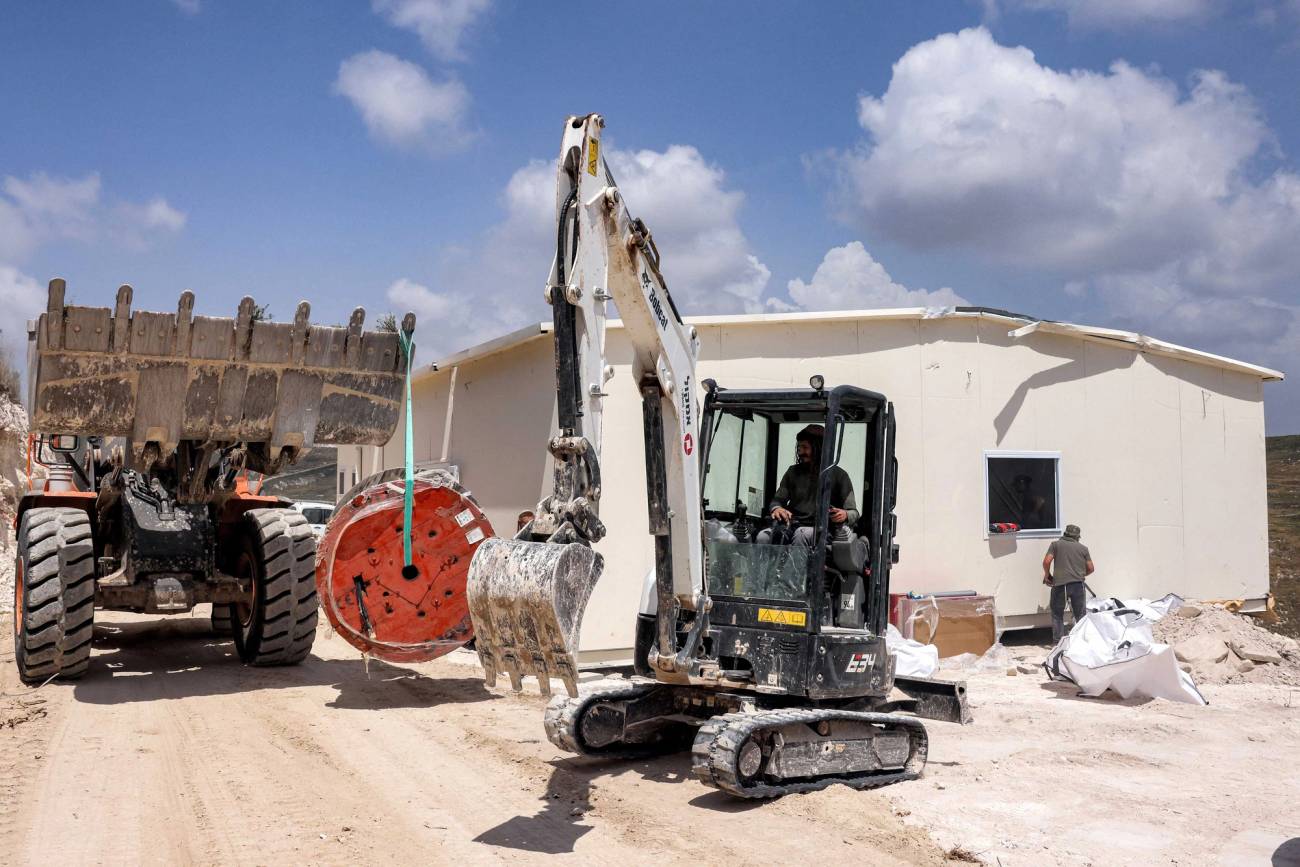
An Israeli settler operates an excavator outside a portable building under construction at the former settler outpost of Homesh in the West Bank on May 29, 2023 / MENAHEM KAHANA/AFP VIA GETTY IMAGES

Appeals to scientific or expert consensus have in recent years played a significant part of the debate on contentious issues. For laymen, even the nature of the alleged consensus may be difficult to evaluate. Is it a consensus arrived at by experts of varied prior beliefs critically and independently approaching an issue without regard for the public policy implications of their conclusions, or is it one that reflects the self-replicating and conformity-inducing tendencies of academia?

Appeals to authority and academic consensus feature prominently in professor Nathaniel Berman’s piece in these pages, “Israeli Settlements and International Law,” itself a response to Malkah Fleisher’s more personal reflections (“I Have a Right to Live in Judea and Samaria”) on the legitimacy of Jews living in the West Bank, or Judea and Samaria, to use two competing names for those areas of Mandatory Palestine ethnically cleansed of Jews by the Hashemite Kingdom of Jordan in 1948.

Everyone knows that “Israeli settlements” are controversial, and here is where international law comes in. Many take the position that even though Jewish resettlement of these lands was made possible by Israel’s taking control of them in 1967, the Jewish state must nonetheless enforce a ban—a cordon sanitaire, a Pale of Non-Settlement—on Jewish residence perfectly congruent with the zone of Jordanian ethnic cleansing, and lasting until such places might come again under the control of an Arab government committed to “not a single Israeli.” Put in such terms, the anti-settlement argument may not have a broad moral appeal, which is why authors like Berman seek to cast it as an incidental application of neutral rules, applicable around the world. Yet he fails to mention where else these rules are applied, because the answer is nowhere.

Berman appeals primarily to authority and consensus, claiming a wide variety of impressive-sounding international bodies, from the International Court of Justice to the International Criminal Court, that consider Jewish communities in the West Bank illegal. Don’t bother arguing the law, Berman suggests—the matter has been decided, with only a few kooks holding out. “The few international legal writers who depart from this consensus are primarily current or former officials of the Israeli government and a small number of right-wing Jewish writers in the diaspora. Their arguments have been soundly rejected by the rest of the international legal community,” Berman writes.

Consistent with a broader pattern of neglecting contrary evidence and attacking straw-man arguments, Berman fails to mention that the United States has formally adopted the legal view that Israeli settlements are not illegal—perhaps because this squarely contradicts his claim of a global consensus. The State Department announced its position in 2019, under President Donald Trump, but the Biden administration has not retracted it. This should not be surprising, because no U.S. government has taken the position that settlements are illegal.

Nor is the U.S. alone in this. In 2014, Australia’s attorney general announced it would no longer use the term “occupied” in reference to the West Bank, a necessary precondition for the illegality argument. Canberra was immediately threatened with dire consequences by Muslim countries. This week, a new Australian government announced it would resume using the term “Occupied Palestinian Territory,” but it is fair to learn from this episode that forces more powerful than legal analysis shape countries’ positions on these issues.

International law is not some kind of geopolitical version of reality shows like ‘Survivor.’ If it were a popularity contest, Israel, and the U.S. for the matter, would have been voted off the island a long time ago.

Moreover, Berman confuses opinion for authority in international law. International law is not some kind of geopolitical version of reality shows like Survivor. If it were a popularity contest, Israel, and the U.S. for the matter, would have been voted off the island a long time ago. Recall that in 1975, the U.N. voted for a resolution saying the entire idea of a Jewish state is illegal. Fortunately, international law can only be authoritatively interpreted by duly authorized entities, and nothing in the U.N. Charter makes it a decider of international law.

Similarly, Berman also cites the International Court of Justice, referring presumably to its Advisory Opinion in the Wall case of 2004. But that decision was explicitly not legally binding. It has no more authority than a ruling on the meaning of Romanian law by a U.S. court. It is only entitled to deference based on the quality of its analysis, of which it had none, but rather relied on citing U.N. resolutions that had said the same thing, all solely in the context of Israel. Indeed, the other supposed authorities Berman cites, such as the ICC and ECJ, all merely reiterate the political positions of U.N. resolutions, notorious for their obsessive focus on Israel. They do not even address the primary arguments for the legality of settlements, but rather engage in an endless cycle of circular citation. It is turtles all the way down.

Turning to actual sources of law, Berman cites Art. 49(6) of the Fourth Geneva Convention, a treaty that applies to situations of wartime occupation. But he completely skips most of the argument for the legality of Israeli settlements, which is that the territory was not in fact occupied in the legal sense by Israel, making Art. 49(6) irrelevant. The arguments for lack of occupation focus on the lack of Jordanian sovereignty over the territory. The Cession of Vessels and Tugs for Navigation on the Danube case held that territory that was not under the sovereignty of any state could not become occupied. That means that the West Bank, which was not under Jordanian sovereignty, could not be deemed occupiedDanube Navigation was decided before 1967, and would thus reflect the law as it was when Israel took control of the territories, unlike the ICJ and other cases cited by Berman, which were decided decades later.

Moreover one cannot occupy one’s own territory: If Ukraine retakes Crimea from Russia, it will not be an occupation just because it had long been administered by Moscow. As professor Avi Bell and I have demonstrated at great length, under general rules of international law applicable around the world, Israel would have a sovereign claim to the West Bank from 1948 (not so for the Golan Heights). That is because newly created states inherit the borders of the prior administrative units in the territory, in this case, Mandatory Palestine. Berman mocks reliance on mandatory borders, but the very existence of Jordan, as well as most of the borders of the Middle East, are based fully on mandatory borders. There is nothing lawlike about a unique rule of borders just for the Jewish state.

Finally and alternatively, even if an occupation arose in 1967, the 1994 peace treaty would end any state of occupation, as emphasized in a memorandum written in 1977 by the State Department legal adviser under Jimmy Carter.

All this makes the obscure Art. 49(6) irrelevant, but let us briefly consider it for the sake of argument. Discussions of illegal settlements, and Art. 49(6) of the Fourth Geneva Convention, invariably arise only in the context of Israel alone. Indeed, the term “illegal settlements” has become a way of discussing Jewish communities in places the international community thinks they should not be. Prior to 1967, the rule now directed against Israel had never been applied anywhere. Despite the ongoing U.S. occupation of West Berlin, no one ever suggested Americans must be barred from moving there, or that the occupation required doing something impossible—halting natural patterns of migration and preserving demography in amber for decades.

Demonstrating that Israeli settlements are illegal cannot be done simply by citing what is said about Israeli settlements. To prove the point, one needs to show that comparable conduct by other countries has been regarded as illegal. In other words, if you’re arguing in front of the Supreme Court, you can’t cite the decision of the judge under review as proof for the rule—you need to show it applied in other cases.

When we look for the alleged rule applied elsewhere, we find—nothing. The United Nations has referred to Art. 49(6) hundreds of times in relation to Israel, but no U.N. body has ever accused any other country of violating it. This is not because of a shortage of cases in which one might think it would apply. From Morocco in Western Sahara to Indonesia in East Timor, from Turkish-occupied northern Iraq to formerly Vietnamese-occupied Cambodia, prolonged occupations of territory have almost always seen migration from the territory of the occupying power. The demographic impact typically dwarfs that of Jewish settlers in the West Bank, as in Western Sahara or Northern Cyprus, where settlers constitute a majority of the population. As many Russians have moved to Crimea in the past decade as Jews to Judea in the past half-century. Unlike the case of Judea and Samaria, all these cases (except Western Sahara) involve the unambiguous occupation of the territory of a preexisting state. Yet even in those situations where the ICC has jurisdiction, it has specifically declined to find that such movement constitutes a war crime.

None of this is to say the conduct of other countries justifies illegalities by Israel: Rather, it is to demonstrate that this conduct, when analyzed without knowledge of people involved, has never been regarded as illegal. Indeed, the alleged prohibition is so Israel-specific that the word “settlements” is simply the translation of the Hebrew word yishuv, which is a neutral word referring to fledgling communities on either side of the Green Line. Moreover, the international community has never objected to Israeli Arabs moving across the Green Line, a common occurrence that should, under Berman’s view of Art. 49(6), be equally illegal.

Berman’s claim to consensus depends on dismissing alternate views as belonging to “settler publicists,” an example of the “No True Scotsman” fallacy. All that is rhetoric. What is clear is that in the late 1960s, the moment that mattered, nothing in international law demonstrated that Israel must engage in the unprecedented action not allowing its Jewish population to live in the areas from which they were expelled. Berman cites the policy of Art. 49(6) as preventing an occupying power from making major, permanent demographic changes. Apparently expulsion of all Jews from eastern Jerusalem and Judea and Samaria by Jordan happens to be the one exception.


Eugene Kontorovich is a professor at the George Mason University Scalia Law School and the director of its Center on the Middle East and International Law. He is also the head of the international law department at the Kohelet Policy Forum, a think tank in Jerusalem.


Zawartość publikowanych artykułów i materiałów nie reprezentuje poglądów ani opinii Reunion’68,
ani też webmastera Blogu Reunion’68, chyba ze jest to wyraźnie zaznaczone.
Twoje uwagi, linki, własne artykuły lub wiadomości prześlij na adres:
webmaster@reunion68.com

Dubowitz: $6b ransom to Iran will lead to more terrorism, hostages

Dubowitz: $6b ransom to Iran will lead to more terrorism, hostages


Ted Deutch, CEO of the American Jewish Committee, praised the Biden administration’s handling of negotiations with Iran over five U.S. prisoners.

.
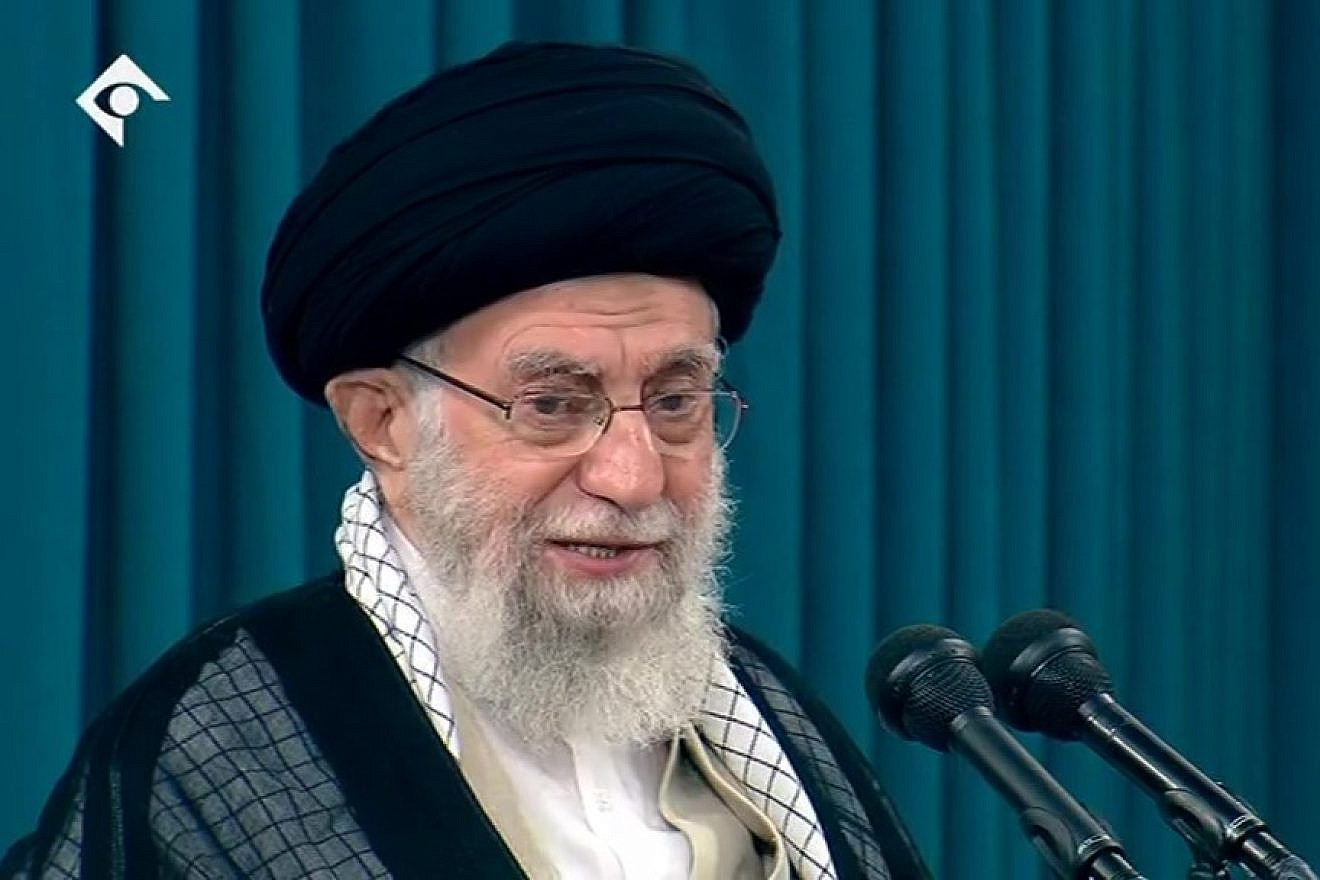
Iranian Supreme Leader Ayatollah Ali Khamenei delivers an address on Oct. 19, 2022. Source: Channel 1 (Iran) via MEMRI.

Washington reached a deal with Tehran on Thursday to release five Iranian Americans, whom the Islamic Republic detained evidently on trumped-up charges. In exchange for the five being released to house arrest, the United States freed up $6 billion worth of Iranian oil and released Iranian prisoners.

Mark Dubowitz, CEO of the Foundation for Defense of Democracies, applauded the release of the unjustly detained prisoners, though said it comes at a very high cost, which could be counterproductive.

“Paying $6 billion in ransom payments means the regime will only take more hostages. This has become a lucrative means of international extortion for Iran’s supreme leader,” Dubowitz wrote in an FDD analysis.

The Islamic Republic won’t use that $6 billion for humanitarian work, he predicted.

“In the real world, where cash is fungible, it will free up $6 billion to be used for terrorism, funding drones for Russia, domestic repression and nuclear-weapons expansion,” he wrote. “Only when the regime is severely punished for illegally seizing hostages, not rewarded with billions in ransom payments, will it put a stop to these humanitarian abuses.”

Richard Goldberg, a senior adviser at FDD, agreed. “This is not a prisoner exchange; it’s the largest hostage ransom payment in American history,” he wrote. “This money isn’t for humanitarian relief; it’s budget support to the world’s leading state sponsor of terrorism.”

Fla. Gov. Ron DeSantis, a presidential candidate, wrote on X (formerly Twitter) that “Biden is shamefully caving to Iran’s blackmail and extortion. Rewarding Iran for taking Americans hostage incentivizes more hostage-taking.”

“The $6 billion ransom payment will help Iran build nuclear weapons, support terrorism, oppress the Iranian people and assist Russia,” DeSantis added. “Biden’s appeasement and weakness emboldens Iran to attack us and our allies and facilitates Iran becoming closer than ever to nuclear weapons.”

In a statement on Thursday, Adrienne Watson, spokeswoman for the National Security Council, called it “encouraging” that Siamak Namazi, Morad Tahbaz and Emad Shargi (and two Americans who did not want to be named) were released to house arrest. She noted that the five individuals should never have been detained at all.

“We will continue to monitor their condition as closely as possible,” she stated. “We will not rest until they are all back home in the United States.”

When he was a member of Congress, Ted Deutch, CEO of the American Jewish Committee, represented Robert Levinson, whom Iran took hostage in 2007 and who is said to be the longest-held U.S. hostage. (Levinson has been presumed dead.)

Deutch stated that he is “encouraged” by the news that the five are closer to coming home.

“The administration is right in demanding that no funds made available to Iran as a result of this exchange will be used by Iran to pursue its malign activities at home or throughout the region,” he stated.

“But we are under no illusion that this will be sufficient to stop it from exploiting the arrangement to pursue its aggressive and destabilizing activities,” he added. “AJC continues to urge the world to stand against Iran’s support of terror, its human-rights violations and its illicit pursuit of nuclear weapons.”


Zawartość publikowanych artykułów i materiałów nie reprezentuje poglądów ani opinii Reunion’68,
ani też webmastera Blogu Reunion’68, chyba ze jest to wyraźnie zaznaczone.
Twoje uwagi, linki, własne artykuły lub wiadomości prześlij na adres:
webmaster@reunion68.com

What deal are the Americans and Saudis negotiating?

What deal are the Americans and Saudis negotiating?

CAROLINE GLICK


If Washington wants to maintain its position as the superpower in the region, scaling back China’s inroads and containing Russia, it needs to provide its spurned regional allies, Israel and Saudi Arabia, with certain guarantees.
.

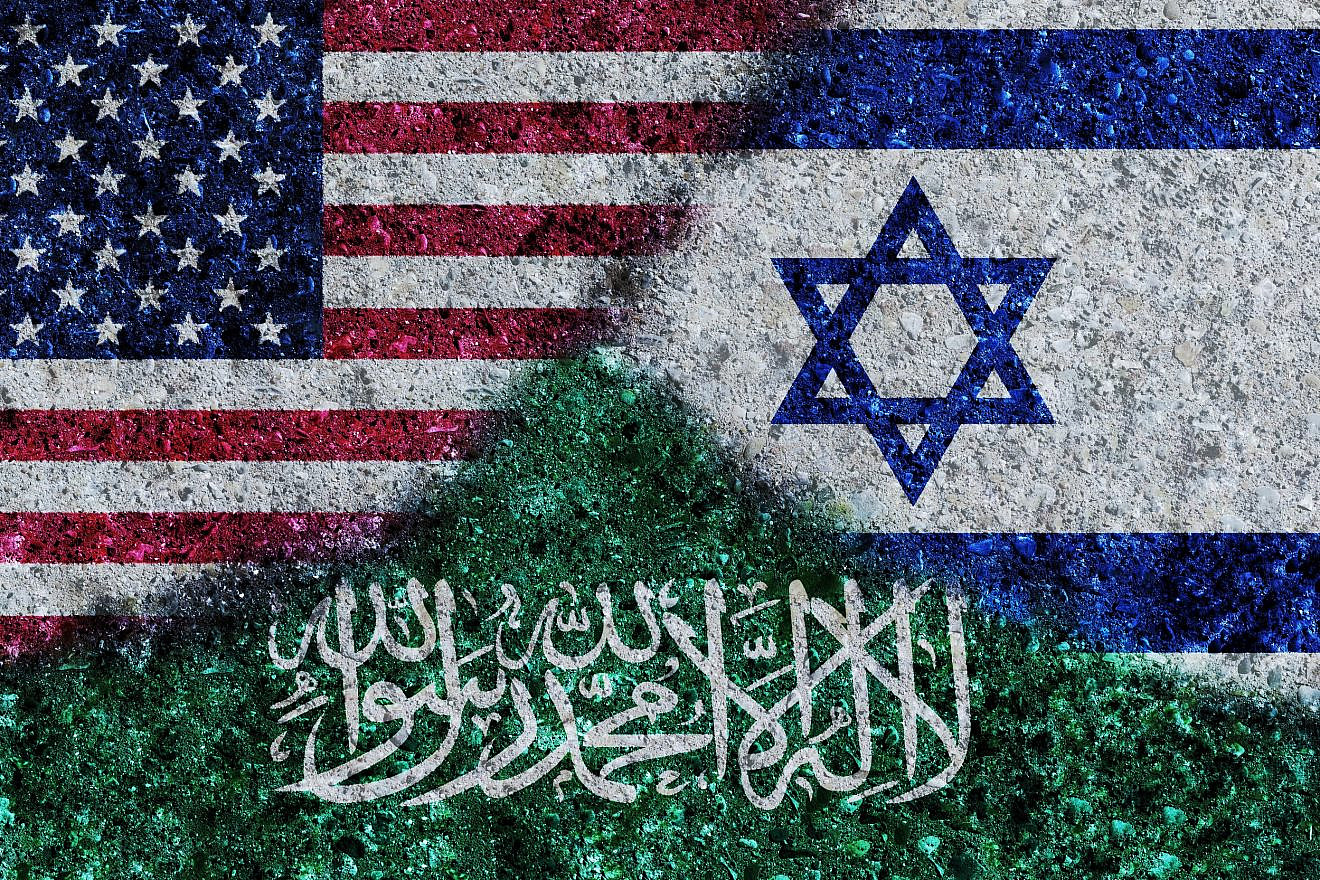
The flags of Israel, Saudi Arabia and the United States. Credit: OnePixelStudio/Shutterstock.

Under the headline, “U.S.-Saudi Deal Sets Path to Normalize Kingdom’s Ties with Israel,” on Wednesday, The Wall Street Journal published a detailed report of the content of U.S.-Saudi discussions. The headline was accurate as far as that goes. But the content of the article made clear that Israel is not the real focus of the discussions.

Although the story paid homage to the media’s favored issue: Israeli concessions to the Palestinians, it acknowledged that the Palestinians are at best a tertiary issue for Saudi officials, who “have dwindling patience for uncompromising and divided Palestinian leaders with limited popular support.”

U.S. and Saudi negotiations are centered on two main issues: China and America’s strategic alignment in the Middle East.

China is the focus of U.S. demands from the Saudis. U.S. President Joe Biden’s advisers have presented economic, technological and military demands to the Saudis relating to their burgeoning ties with China. Economically, Biden’s advisers are seeking assurances from the Saudis that they will not replace the U.S. dollar as the currency of exchange in global energy markets. Over the past year and a half, the Saudis have agreed to sell their oil to the Chinese in yuan. The problem with the U.S. position is that it was the Biden administration itself that created the opening for a parallel market for energy sales not tied to the petrodollar.

The Biden administration responded to Russia’s invasion of Ukraine 18 months ago by imposing unprecedented economic sanctions on Russia’s international trade. Among other things, it barred the purchase of Russian oil. But price increases in the global energy market as a consequence of the move made it unsustainable. Russia was quick to respond in cooperation with China, India and other key economies by setting up alternative, non-dollar-denominated energy markets. If the United States wants to restore the petrodollar’s position as the sole currency of exchange in the global energy markets, then it has to scale back its anti-Russian sanctions or massively increase its own oil production to increase supply in the international market.

Obviously, such policies require shifts both in the administration’s domestic energy policies and in its Russia policies. The likelihood of such moves on the eve of a presidential election, when Biden needs to keep progressive activists in his camp, is not high.

As for technology, the Journal reported the Biden administration is demanding that the Saudis limit their use of Chinese Huawei 5G technology.

The issue of Chinese 5G technology is similarly complicated and at least in part, driven by U.S. structural weaknesses. As Carice Witte, executive director of SIGNAL (Sino-Israel Global Network and Academic Leadership), explained on “The Caroline Glick Show” in early July, China is building Saudi Arabia’s new technology-based city, Neom. The United States, whose oil companies and contractors built Saudi Arabia’s oil industry and much of the country itself in the 20th century, is no longer in the business of building cities. As for technology, America offers its allies no real alternative to Huawei’s 5G communication infrastructure.

Israel is the only U.S. ally in the Middle East and one of just a few U.S. allies worldwide that have banned use of Huawei systems in their territories. Non-Chinese alternatives are available. In some cases, they are inferior. In some cases, they are more expensive. To convince the Saudis to embrace them, the administration will need to make significant changes in its strategic outlook and positioning in the region.

The Journal reported that the United States seeks assurances from the Saudis that they will not permit the Chinese to build and operate military bases on Saudi territory—as the United Arab Emirates has done.

This demand is eminently doable. But it draws us into the much more significant issue of credibility of the U.S.-Saudi alliance, and for that matter, the U.S.-Israel alliance.

The American demand that the Saudis not permit China to build military bases in the kingdom is directly related to the three security demands that the Saudis have presented to the United States as conditions for a U.S.-brokered peace deal with Israel. The Saudis seek U.S. cooperation in the development of peaceful nuclear-energy capabilities for the kingdom; recognition as a major non-NATO ally from the United States and an end to the limits the administration placed on weapons sales in Saudi Arabia in 2021.

Progressives in Congress are expected to oppose all three Saudi demands, and their opposition in part is aligned with the administration’s own positions. Biden and his advisers ran for office on a foreign-policy platform that was harshly critical of Saudi Crown Prince Mohammed bin Salman specifically and the Saudis more generally, and openly supportive of the Islamic regime in Iran. On the face of things, the administration can easily undo what it has done. It can end the limitations on arms sales. And it can certainly give Saudi Arabia the status of major non-NATO ally. After all, Biden gave that status to Qatar in 2021 even as Qatar sponsors Hamas, the Taliban and Al-Qaeda, and remains Iran’s top ally in the Arab world.

As for the peaceful nuclear-energy demand, the administration can render the issue moot by blocking Iran’s path to a nuclear arsenal.

All of these actions are possible. But they all require a realignment of the administration’s strategic position in the region. For the administration to satisfy the Saudis’ demands, it needs to abandon its efforts to replace Saudi Arabia and Israel with Iran as the United States’ chief partners and allies in the region. This means the administration needs to end its nuclear diplomacy with Teheran, or fundamentally change its position from supporting Iran’s nuclear-weapons program, to active backing of Israeli-Saudi efforts to prevent Iran from becoming a nuclear-armed state.

The Saudis are not blind. They understand that after America’s failed wars in Iraq and Afghanistan, there is little to no public support in the United States for a significant build-up of military forces in the region, much less for active U.S. involvement in a major military push to prevent Iran from crossing the nuclear finish line. This is why a U.S. realignment away from Iran and towards Israel and Saudi Arabia becomes critical.

If Washington wishes to both maintain its position as the preeminent superpower in the region, scaling back China’s inroads and at a minimum, containing Russia, it needs to provide its currently spurned strategic regional allies—Israel and Saudi Arabia—with certain strategic and diplomatic guarantees. It needs to stand with them diplomatically against Iran, shielding both countries from assaults at the United Nations, among other things. It needs to provide them with the military materiel and logistical support through Central Command to enable them to take the necessary actions to block Iran’s efforts to build and maintain nuclear warheads.

This demand is eminently doable. But it draws us into the much more significant issue of credibility of the U.S.-Saudi alliance, and for that matter, the U.S.-Israel alliance.

The American demand that the Saudis not permit China to build military bases in the kingdom is directly related to the three security demands that the Saudis have presented to the United States as conditions for a U.S.-brokered peace deal with Israel. The Saudis seek U.S. cooperation in the development of peaceful nuclear-energy capabilities for the kingdom; recognition as a major non-NATO ally from the United States and an end to the limits the administration placed on weapons sales in Saudi Arabia in 2021.

Progressives in Congress are expected to oppose all three Saudi demands, and their opposition in part is aligned with the administration’s own positions. Biden and his advisers ran for office on a foreign-policy platform that was harshly critical of Saudi Crown Prince Mohammed bin Salman specifically and the Saudis more generally, and openly supportive of the Islamic regime in Iran. On the face of things, the administration can easily undo what it has done. It can end the limitations on arms sales. And it can certainly give Saudi Arabia the status of major non-NATO ally. After all, Biden gave that status to Qatar in 2021 even as Qatar sponsors Hamas, the Taliban and Al-Qaeda, and remains Iran’s top ally in the Arab world.

As for the peaceful nuclear-energy demand, the administration can render the issue moot by blocking Iran’s path to a nuclear arsenal.

All of these actions are possible. But they all require a realignment of the administration’s strategic position in the region. For the administration to satisfy the Saudis’ demands, it needs to abandon its efforts to replace Saudi Arabia and Israel with Iran as the United States’ chief partners and allies in the region. This means the administration needs to end its nuclear diplomacy with Teheran, or fundamentally change its position from supporting Iran’s nuclear-weapons program, to active backing of Israeli-Saudi efforts to prevent Iran from becoming a nuclear-armed state.

The Saudis are not blind. They understand that after America’s failed wars in Iraq and Afghanistan, there is little to no public support in the United States for a significant build-up of military forces in the region, much less for active U.S. involvement in a major military push to prevent Iran from crossing the nuclear finish line. This is why a U.S. realignment away from Iran and towards Israel and Saudi Arabia becomes critical.

If Washington wishes to both maintain its position as the preeminent superpower in the region, scaling back China’s inroads and at a minimum, containing Russia, it needs to provide its currently spurned strategic regional allies—Israel and Saudi Arabia—with certain strategic and diplomatic guarantees. It needs to stand with them diplomatically against Iran, shielding both countries from assaults at the United Nations, among other things. It needs to provide them with the military materiel and logistical support through Central Command to enable them to take the necessary actions to block Iran’s efforts to build and maintain nuclear warheads.

In previous statements, Netanyahu detailed that he foresees the construction of direct rail links between the UAE and Saudi Arabia through Jordan to the Mediterranean. Goods shipped this way will augment maritime travel through the Suez Canal, which is already operating at full capacity. It will also economically and technologically integrate Israel into the region. So from a practical perspective then, the only thing required to actually “normalize” Israeli-Saudi ties is the railroad—or even expanded highways for truck-based transport.

Such an infrastructure link between Israel and Saudi Arabia move won’t diminish Chinese influence in the region. It won’t diminish Russian influence or expand U.S. influence. And that is why the deal on the table isn’t so much about Israel-Saudi peace, but rather about the future role the United States wishes to play.

If Biden seeks to secure U.S. power in the region, he will abandon Obama’s failed policy of aligning with the U.S.’s most powerful regional enemy against its most powerful regional allies and embrace them, and the formal normalization of their relations.

If Biden fails to take this deal, the current regional dynamics will continue to play out. China will continue to rise. Russia will remain powerful. The United States will continue to bleed power and influence. America’s spurned allies will continue to make the required concessions to the changing superpower dynamics. They will also continue to integrate their economies to strengthen their national positions in the face of the rising threat from Iran and the shifting superpower balance in the region.


Caroline B. Glick is the senior contributing editor of Jewish News Syndicate and host of the “Caroline Glick Show” on JNS. She is also the diplomatic commentator for Israel’s Channel 14, as well as a columnist for Newsweek. Glick is the senior fellow for Middle Eastern Affairs at the Center for Security Policy in Washington and a lecturer at Israel’s College of Statesmanship.


Zawartość publikowanych artykułów i materiałów nie reprezentuje poglądów ani opinii Reunion’68,
ani też webmastera Blogu Reunion’68, chyba ze jest to wyraźnie zaznaczone.
Twoje uwagi, linki, własne artykuły lub wiadomości prześlij na adres:
webmaster@reunion68.com


Jewish ‘Stranger Things’ Star Noah Schnapp Prays at Western Wall During Visit to Israel

Jewish ‘Stranger Things’ Star Noah Schnapp Prays at Western Wall During Visit to Israel

Shiryn Ghermezian


Noah Schnapp. Photo: Milliebobbybrownnn via Wikimedia Commons

Jewish actor Noah Schnapp from the Netflix series Stranger Things is currently touring Israel and photos shared on social media show him praying at the Western Wall in Jerusalem among his many stops across the country.

The 18-year-old New York native also shared on his Instagram Story a photo of him at the Western Wall wearing a kippah on his head and phylacteries, which is called tefillin in Hebrew, wrapped on his arms. He wrote in the caption, “learning so much about my culture. So inspiring.” In another photo posted on his Instagram story that was taken in Tel Aviv, the actor captioned the shot: “In love with this place.”

Schnapp took a tour of Jerusalem that was organized by Aish Global, and accompanying him was Israeli-American entrepreneur and blogger Moti Ankari and producer Rachel Katsner. On Wednesday, Ankari shared photos on his Instagram stories of the group visiting the Dead Sea.

Schnapp, who has Russian Jewish ancestry on his father’s side and Moroccan Jewish roots on his mother’s, said in a 2020 interview that he had his bar mitzvah in Israel. He played a young chef of Israeli and Palestinian heritage in the 2019 movie Abe and a shepherd boy who helped smuggle Jewish children out of Nazi-occupied France in the 2020 movie Waiting For Anya. His first film role was in the Steven Spielberg-directed movie Bridge of Spies, starring Tom Hanks, and he also voiced the character of Charlie Brown in The Peanuts Movie. Both films were released in 2015.


Zawartość publikowanych artykułów i materiałów nie reprezentuje poglądów ani opinii Reunion’68,
ani też webmastera Blogu Reunion’68, chyba ze jest to wyraźnie zaznaczone.
Twoje uwagi, linki, własne artykuły lub wiadomości prześlij na adres:
webmaster@reunion68.com
