Archive | August 2023

Is it racist to prioritize freedom from terror?

Is it racist to prioritize freedom from terror?

JONATHAN S. TOBIN


The U.S. State Department condemned recent comments by Itamar Ben-Gvir. But the real problem is not what the controversial cabinet member said; it’s (USA) support for a Palestinian right to terror.

.
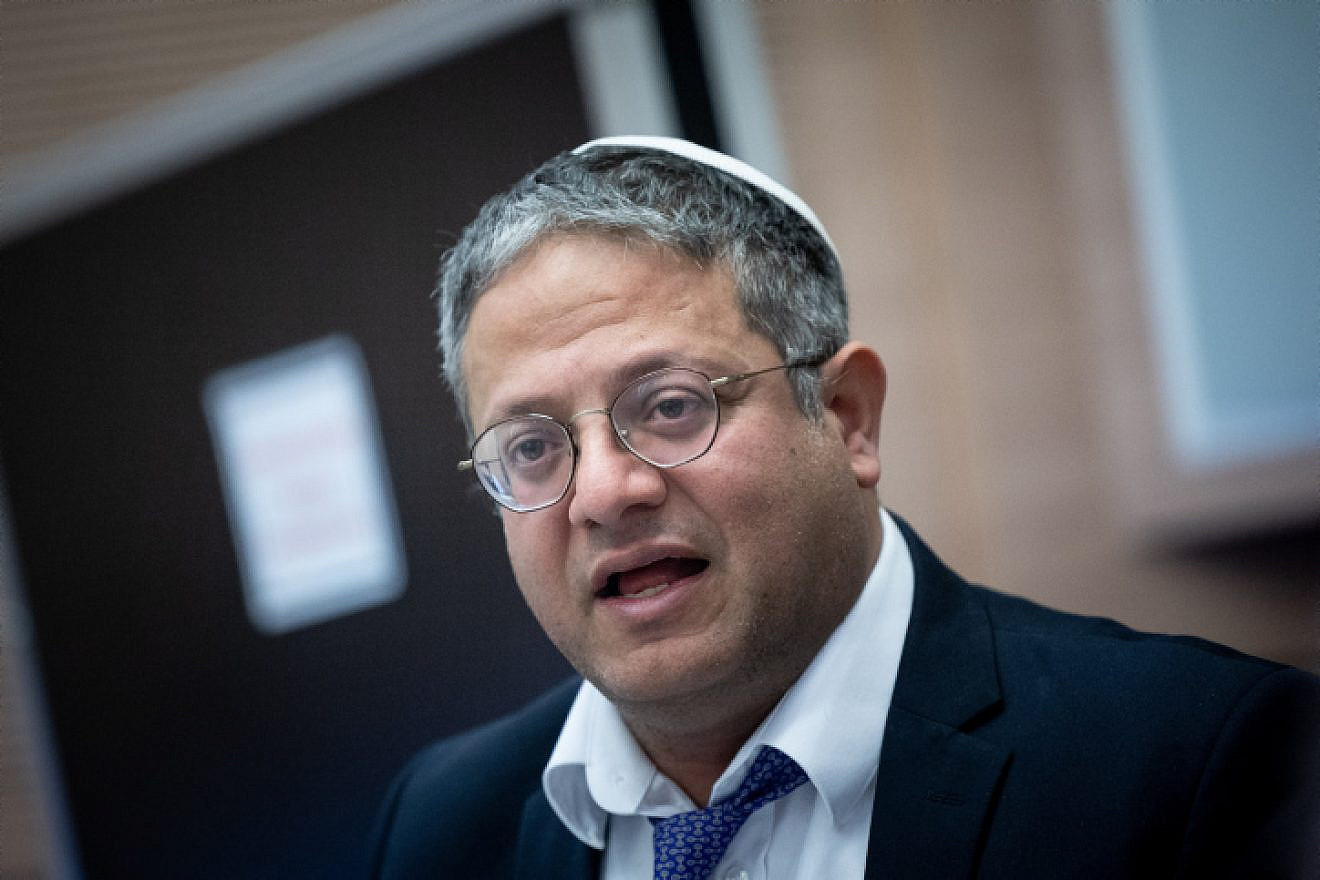
Israel’s National Security Minister Itamar Ben-Gvir speaks during a Knesset Foreign Affairs and Defense Committee meeting, Feb. 15, 2023. Photo by Yonatan Sindel/Flash90.

So much of what has been tearing Israel apart in the last several months can be traced back to public opinion about one man—and his last name isn’t Benjamin Netanyahu. The list of issues dividing Israelis since protests ostensibly against judicial reform began in January is long. But there can be no underestimating the way that attitudes towards National Security Minister Itamar Ben-Gvir have influenced the debate about the international campaign to delegitimize the government that was formed after last November’s Knesset election.

Ben-Gvir was back in the news this week when his comments during an interview on Israel’s Channel 12 made him the focus of renewed controversy. In discussing the recent surge of Arab terrorism with Israeli-Arab journalist Mohammad Magadli and whether more stringent measures should be taken to stop the bloodshed, Ben-Gvir said, “My right, the right of my wife and my children to move around Judea and Samaria is more important than freedom of movement for the Arabs. The right to life comes before freedom of movement.

Most media sources quoting Ben-Gvir didn’t include the last sentence in the quote they used. Shorn of that line and taken out of the context of a discussion of a series of murders of Jews by Palestinians who are then celebrated by their community and its leadership as heroes, the comment came across as unabashed racism. The notion that a Jewish right to free movement takes precedence over similar rights for Arabs is repugnant.

That was the way it was interpreted by numerous media outlets, as well as the U.S. State Department, which took the trouble to specifically condemn Ben-Gvir for what it described as “inflammatory comments” and “all racist rhetoric.”

The contretemps also caused a furor on social media where Palestinian-American supermodel Bella Hadid posted a video of Ben-Gvir’s statement on an Instagram story to her 60 million followers to which she appended the pious sentiment that: “In no place, no time, especially in 2023 should one life be more valuable than another’s. Especially simply because of their ethnicity, culture or pure hatred.”

Ben-Gvir pushed back at the model, calling her an “Israel-hater,” something that is easily proved by reading her own history of inflammatory and mendacious comments about the Jewish state. But in this case, Hadid’s sentiments were shared by many centrist and liberal Jews who consider Ben-Gvir to be not merely an embarrassment to Israel, but believe his rise to power is a sign of the country’s decline into right-wing extremism.

A right-wing provocateur

Throughout his career, Netanyahu has been demonized by political opponents who have shown that they are willing to do just about anything, including pursuing bogus corruption charges, to topple him. But the fact that he named Ben-Gvir as national security minister was enough to convince many in Israel and elsewhere that the current government is one that shouldn’t be merely opposed but resisted as illegitimate. Regardless of whether or not he was taken out of context, Ben-Gvir’s controversial words simply act to confirm the belief that those leading the Jewish state have abandoned the values that Jews have traditionally upheld as well as those that unite Israel with Americans.

The problem with these assumptions is that those condemning Ben-Gvir are ignoring not only the context of his comments but also why a heretofore marginal figure has risen so far in Israeli politics. What’s at stake in this discussion isn’t whether he thinks Arabs deserve to be treated with dignity or as having the same rights as Jews. Rather, it’s whether there is an intrinsic right for Palestinian Arabs to attack and murder Jews that trumps the latter’s right to live in security in their own country, let alone their freedom of movement.

There’s no mystery about why Ben-Gvir is having trouble making himself understood by anyone but those who already share his opinions. The leader of the Otzma Yehudit Party, which together with Bezalel Smotrich’s Religious Zionist Party won 13 seats in the last election, is easy to dismiss as an extremist.

As a youngster, Ben-Gvir was a disciple of the late American-born Rabbi Meir Kahane, who advocated for the “transfer” of Arabs from Israel and the territories. Ben-Gvir was labeled as an extremist and denied the right to serve in the Israel Defense Forces—something still thrown in his face today. He went on to become a lawyer, best known for defending those accused of violence against Arabs and others associated with extreme right-wing activism. He has acknowledged having a picture hanging in his home of Dr. Baruch Goldstein, who perpetrated the massacre of 29 Muslim worshippers at the Cave of the Patriarchs in Hebron (though apparently, the portrait was taken down as he advanced in politics). That picture and all it symbolizes is responsible for the fact that few are willing to give Ben-Gvir the benefit of the doubt when he stirs up controversy.

Israeli politics would be more civil and more presentable to the outside world if Ben-Gvir and Otzma Yehudit, which while not advocating for the transfer of Arabs is still seen as neo-Kahanist, had not risen to prominence. But the reason why Netanyahu felt obliged to include him in his cabinet is that Ben-Gvir’s support is too great to ignore. And the reason for that is not due to the rabble-rouser’s personal appeal. Instead, it is the anger among voters about Palestinian support for terrorism and the belief that the security establishment doesn’t take that threat seriously enough.

Stopping terror shouldn’t be controversial

Were Ben-Gvir actually advocating for a position in which one people’s right to free movement should be protected and another’s denied irrespective of terrorist threats, the accusations of racism would be correct. But that’s not what he was saying. His position was that if the right of Jews to live in Judea and Samaria was to be preserved, then they had to be protected against terrorism by means that would inevitably inconvenience the population that both produced and supported the terrorists.

This is not an extreme position. Support in Israel for the checkpoints and security fence that helped to prevent terrorist attacks and essentially ended the horror of the Second Intifada in the early 2000s is a matter of national consensus. Actions taken by all governments to curtail terrorism inevitably involve some impingement if not abrogation of rights.

But in the case of the Jews who do live in Judea and Samaria, the position taken by most Palestinians and their foreign cheerleaders is that Jews have no right to be in the “West Bank” and are therefore legitimate targets for attacks, be they civilians or soldiers.

In most discussions of the situation in the territories, the onus is on the violence allegedly committed by Jews, coupled with the notion that the presence of Jews in Judea and Samaria is illegal. That is what the international community thinks, but that position is itself mistaken. Jews were guaranteed the right to live in the land that is now called the West Bank by the United Nations’ predecessor, the League of Nations, dating back to the 1920s and the San Remo agreement. No other country has a recognized legal title to the land and, at best, Palestinian ambitions for statehood make it disputed rather than “occupied.”

Even if you think it’s unwise for Israel to build communities in what is the heart of the ancient Jewish homeland, the idea that the hundreds of thousands of Jews who live there should be treated as legitimate targets for terrorism is both legally untenable and immoral.

Yet that is exactly the position that Palestinians assert.

It is demonstrated by celebrations held by Palestinians on the streets of their cities—handing candy to children to encourage them—as well as on social media every time there is a terrorist attack on Jews. Were terror against Jews not such a routine occurrence—and if they were treated as the act of deranged outliers by the Arabs—then measures like checkpoints or fences would be unnecessary. Yet not only are they commonplace, they are widely supported by the Palestinian street and financially rewarded by the Palestinian Authority.

So, when Ben-Gvir says that the right of Jews “to life” takes precedence over the right of Arabs to freedom of movement, he’s not making a theoretical racist statement. If Palestinians think that it’s open season on Jews—something clearly shown by the unending string of lethal terror attacks and the applause they generate—then the authorities are obligated to take measures that limit their ability to carry out those murders.

Whatever one may think about Ben-Gvir, he was doing no more than stating the obvious about an intolerable situation that is in no small measure responsible for the support he has among Israelis. At stake in this debate is not the right of Palestinians to freedom of movement or even the right of Jews to settle in Judea and Samaria. Rather, it is whether there is a right to commit terrorism against Jews.

Unless you support such an immoral “right” (and those who believe Palestinians are justified in murdering Jews who have the temerity to live in the one Jewish state on the planet do just that), then what Ben-Gvir said is not only not racist, it’s entirely reasonable. More than that, it’s also not a question of him being, in the State Department’s words, “inflammatory,” he’s actually shining a light on an issue that can’t be ignored. While Ben-Gvir’s presence in the government and the things he says are always bound to be controversial, it is imperative that this debate not be about him, but instead, about the belief of Israel’s enemies that every Jew on either side of the “Green Line” is fair game.


Jonathan S. Tobin is editor-in-chief of JNS (Jewish News Syndicate). He is also a senior contributor to The Federalist and a columnist for Newsweek, as well as a writer for other publications. Follow him on Twitter: @jonathans_tobin.


Zawartość publikowanych artykułów i materiałów nie reprezentuje poglądów ani opinii Reunion’68,
ani też webmastera Blogu Reunion’68, chyba ze jest to wyraźnie zaznaczone.
Twoje uwagi, linki, własne artykuły lub wiadomości prześlij na adres:
webmaster@reunion68.com

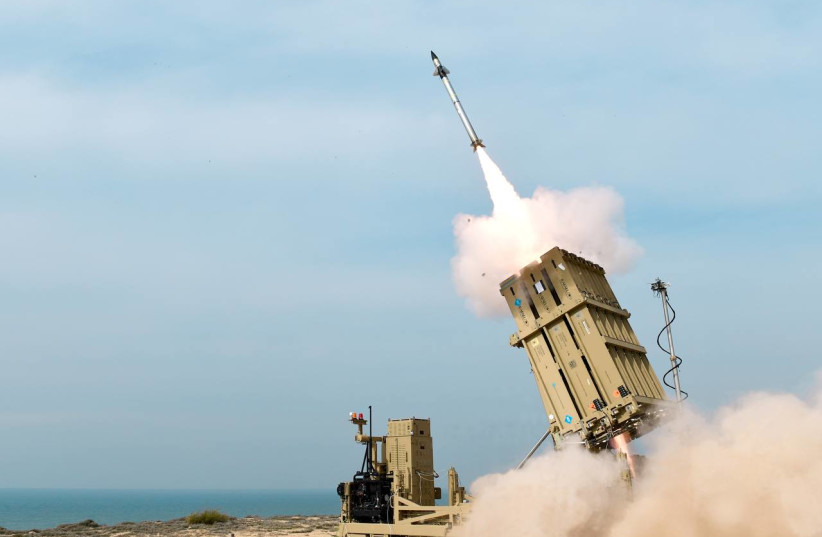
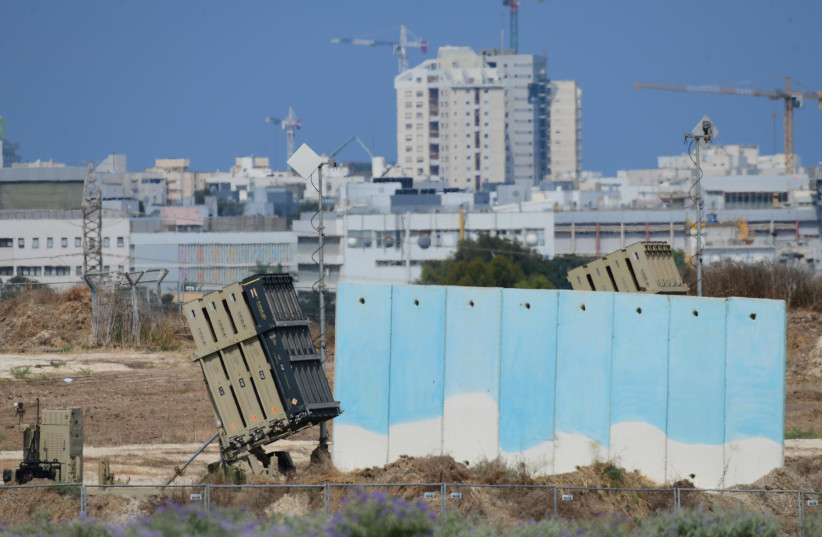
US Marine Corps moves forward with purchase of Israel’s Iron Dome

US Marine Corps moves forward with purchase of Israel’s Iron Dome

JERUSALEM POST STAFF


As part of the deal, the Marine Corps will purchase 44 Iron Dome launchers and 1,840 Tamir interceptors.
.

The Iron Dome air defense missile systems is seen during operational trials conducted following the conclusion Operation Shield and Arrow on May 14, 2023 / (photo credit: DEFENSE MINISTRY)

The United States Marine Corps (USMC) plans to purchase dozens of Iron Dome launchers and thousands of interceptor missiles in a deal that could be worth hundreds of millions of dollars, the War Zone reported on Saturday citing a procurement notice of intent publicly available online.

The deal, which would see the USMC purchase some three batteries’ worth of the Iron Dome system, would be conducted with Raytheon, which has a deal with Israeli manufacturer Rafael Advanced Defense Systems to distribute the system to the United States.

The prime contractor for the development and production of the Iron Dome is Rafael, who adapted the system to USMC requirements and assisted with testing support.

As part of the deal, the USMC will purchase 44 launchers and 1,840 Tamir interceptors.

View of Iron Dome Missile Defense battery deployed near the southern Israeli city of Ashdod, August 5, 2022. (credit: TOMER NEUBERG/FLASH90)

Marine Corps’ Iron Dome deal has been in the works

Last year, the Jerusalem Post reported that completed a series of interception tests on an air defense system using Israel’s Tamir Interceptor.

The experiment included a series of three tests carried out over the course of several months. The system successfully intercepted a variety of targets. 


Zawartość publikowanych artykułów i materiałów nie reprezentuje poglądów ani opinii Reunion’68,
ani też webmastera Blogu Reunion’68, chyba ze jest to wyraźnie zaznaczone.
Twoje uwagi, linki, własne artykuły lub wiadomości prześlij na adres:
webmaster@reunion68.com


ONZ: Przemoc na Bliskim Wschodzie największa od lat

Członek zespołu Zaka Rescue and Recovery pracuje na miejscu strzelaniny w pobliżu miasta Hebron na Zachodnim Brzegu, 21 sierpnia 2023 r.


ONZ: Przemoc na Bliskim Wschodzie największa od lat

Marta Urzędowska


Rada Bezpieczeństwa ONZ alarmuje, że od początku roku w wyniku przemocy na Bliskim Wschodzie zginęło już ponad 200 Palestyńczyków i ok. 30 Izraelczyków. To największa liczba ofiar od blisko dwóch dekad.
Wyliczenia przedstawił specjalny koordynator ONZ ds. procesu pokojowego na Bliskim Wschodzie Tor Wennesland. Na spotkaniu Rady Bezpieczeństwa w ostatni poniedziałek alarmował, że liczba ofiar konfliktu bliskowschodniego od początku roku jest najwyższa od 2005 r.

ONZ: Brak politycznego rozwiązania tworzy niebezpieczną próżnię. Rozkręca się spirala przemocy

Z wyliczeń Wenneslanda wynika, że

od początku stycznia w Izraelu i na Zachodnim Brzegu Jordanu zginęło ponad 200 Palestyńczyków i blisko 30 Izraelczyków. Tym samym liczba ofiar już przekroczyła cały ubiegłoroczny bilans i jest najwyższa od czasu, kiedy w 2005 r. zakończyła się druga intifada, czyli powstanie Palestyńczyków przeciwko izraelskiej okupacji.

Wennesland tłumaczył członkom Rady Bezpieczeństwa, że trwająca od miesięcy eskalacja przemocy w regionie wynika z rosnącej frustracji Palestyńczyków, którzy tracą nadzieję na pokój i własne państwo.

Żałobnicy niosą ciało 17-letniego Palestyńczyka Othmana Abu Kharja; jego pogrzeb odbył się w mieście Dżenin na Zachodnim Brzegu Jordanu. Bliski Wschód, 22 sierpnia 2023 r. Fot. Nasser Nasser / AP Photo

– Palestyńczycy i Izraelczycy są zabijani i ranieni w aktach przemocy, do których dochodzi niemal każdego dnia, nawet kilka godzin przed naszym spotkaniem – przekonywał. – Brak postępów w kwestii politycznego rozwiązania pozostawił niebezpieczną próżnię, którą wypełniają ekstremiści ze wszystkich stron.

Choć przyznał, że zarówno izraelskie, jak i palestyńskie władze podejmują działania, by ustabilizować obecną niespokojną sytuację, liczba aktów przemocy nie spada z powodu „jednostronnych akcji” prowadzących do eskalacji. Wśród takich działań wymienił m.in. „aktywność bojową” Palestyńczyków, „kruchość” sytuacji finansowej palestyńskich władz, rozbudowę izraelskich osiedli na terenach okupowanych, operacje izraelskiej armii na Zachodnim Brzegu i ataki izraelskich osadników na Palestyńczyków.

Przypomniał też o coraz trudniejszej sytuacji finansowej UNRWA, czyli agendy ONZ pomagającej palestyńskim uchodźcom.

– Choć dziś musimy skupić się głównie na deeskalacji, nie możemy jednocześnie ignorować potrzeby przywrócenia procesu politycznego – tłumaczył Wennesland, po czym wezwał do „natychmiastowego wstrzymania przemocy i uspokojenia sytuacji”. „Ta spirala prowadzi nas wyłącznie do dalszego rozlewu krwi” – napisał na Twitterze.**************************************************

UK to launch investigation into two concentration camps on British soil

UK to launch investigation into two concentration camps on British soil

DANIELLE GREYMAN-KENNARD


To date, there has never been a formal investigation into the number of deaths that occurred on Alderney during the Holocaust.

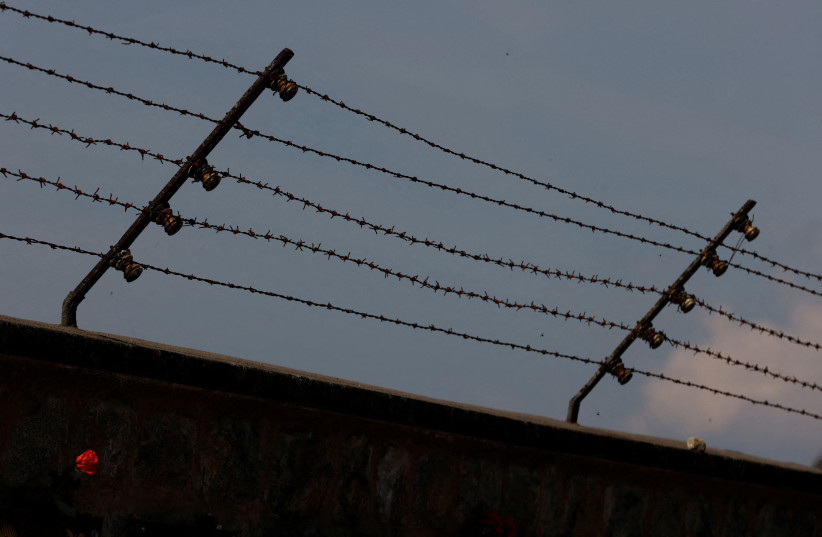
A red flower is seen on a wall during a commemoration of the liberation of the former concentration camp KZ Mauthausen, at the memorial site in Mauthausen, Austria, May 7, 2023. /  (photo credit: Leonhard Foeger/Reuters)

Britain will begin investigating the number of deaths that occurred in two concentration camps that existed on British soil eighty years ago, according to media reports from July 22.

The camps had existed on the Channel Island Alderney, which was occupied during the war by German forces.

While the camp has been known about for some time, there has never been an investigation into the exact number of deaths that occurred at the camp or the size and magnitude of the SS-run operations there.

Some historians have estimated that anywhere between 700 and thousands of Jews, and other groups that were deemed undesirable by the Nazis, were killed in the camps and the bodies are buried in mass graves on the island. Officially, only eight Jews were recorded to have been murdered on the island.

“I would be surprised if the numbers killed by the Nazis either in Alderney or transported from Alderney on to extermination camps in Europe did not run into thousands,” Professor Anthony Glees told The Observer.

“It is evident from the wide range of testimonies available and from the surveys we did of the camps in which Jews were housed that they were treated appallingly, and more Jews likely died than we know of,” Caroline Sturdy Colls, professor of conflict archaeology at Staffordshire University, told the magazine Index on Censorship. The conditions in which Jews were housed were an extension of those that they were kept in elsewhere in Europe. The camps on Alderney were part of a network of sites that housed Jews and harsh punishments, terrible working and living conditions, and torture characterised their lives on Alderney.”

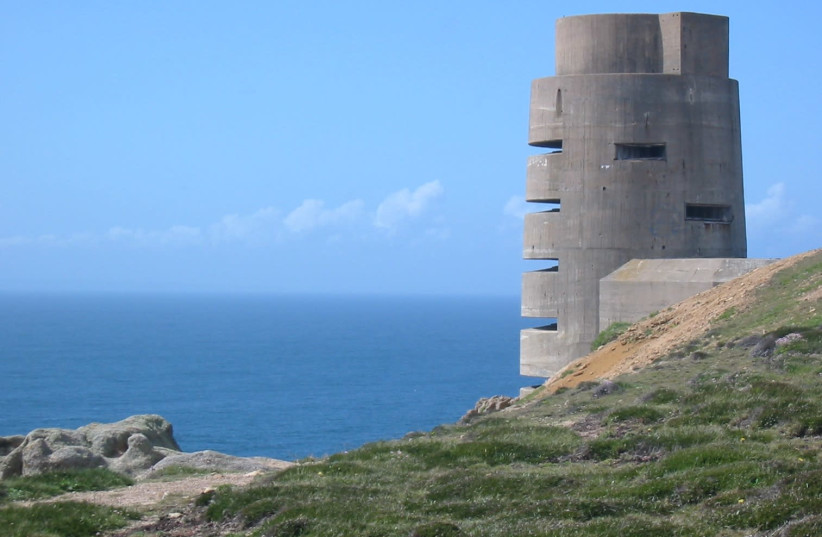
As part of the Atlantic Wall, between 1940 and 1945 the occupying German forces and the Organisation Todt constructed fortifications around the coasts of the Channel Islands such as this observation tower at Battery Moltke, Jersey (credit: WIKIMEDIA COMMONS/MAN VYI)

The investigation will be formally announced this summer by Lord Pickles, the United Kingdom’s Holocaust Envoy.

“The difference between the estimates is so large, I thought it sensible for everyone to put the facts on the table, for it all to be transparent and for the deliberations to be in the open. It seemed pointless people shouting across at each other. It would be better to have a proper discussion and to bring together a panel of international experts,” Pickles told The Observer. 

“It is time for the British government and Alderney authorities to finally face up to the horror of what happened on British soil. There can be no more lies and no more cover-up,” Dame Margaret Hodge, the Labour MP whose father fled Nazi persecution in Germany, told The Guardian.

The decision to investigate the camps has been applauded by international experts

“This inquiry is a significant step toward telling this important history. Dealing openly and accurately with the Holocaust and the history of the Nazi persecution of other groups in all its dimensions is crucial and we expect the results to go a long way in protecting the facts, no matter how uncomfortable they may be,” Dr. Kathrin Meyer, secretary general of the IHRA, said to The Guardian.

Gary Mond, chairman of the National Jewish Assembly (NJA) in the UK, told The Jerusalem Post that “Lord Pickles is right. It is important, as far as is possible, to obtain as much accurate information as we can about Nazi atrocities in Alderney during the war and publicise it. If by doing so we can increase knowledge about the Holocaust for future generations, then this is helpful.”

Mond continued “It is important that incidents of Jew hatred in our country are always publicised and never covered up. I do think that, in recent years, there has been a greater tendency to do this, with good recent examples ranging from acknowledgement of Roald Dahl’s antisemitism to the condemnation of the sadly all-too-frequent inappropriate comparisons of modern events to the Nazis and the Holocaust. “

It is important that incidents of Jew hatred in our country are always publicised and never covered up.

Gary Mond, chairman of the National Jewish Assembly

Nazi occupation of the island of Channel Islands

In 1940, the British prime minister at the time, Winston Churchill, decided that the islands could no longer be defended against the Nazis. The residents were evacuated and the Nazis used the island to house imprisoned slaves. 

The Guardian reported that many of the imprisoned were killed by “Vernichtung durch Arbeit” or “extermination through labour,” although it is known that others had been shot, given a lethal injection, or shipped to an extermination camp in Europe.

To date, it has been confirmed that at least one transit of hundreds of French Jews to the island had taken place. 

The rough seas surrounding the island meant that prisoners on the island suffered from greater shortages than at other camps, National Geographic reported in 2020. In one witness testimony, it was said that a man’s body had been left hung for 4 days with a sign attached that read “for stealing bread”.


Zawartość publikowanych artykułów i materiałów nie reprezentuje poglądów ani opinii Reunion’68,
ani też webmastera Blogu Reunion’68, chyba ze jest to wyraźnie zaznaczone.
Twoje uwagi, linki, własne artykuły lub wiadomości prześlij na adres:
webmaster@reunion68.com


Leonard Bernstein’s Children Defend Hollywood Star Bradley Cooper Over ‘Antisemitic’ Prosthetic Nose in Biopic

Leonard Bernstein’s Children Defend Hollywood Star Bradley Cooper Over ‘Antisemitic’ Prosthetic Nose in Biopic

Algemeiner Staff


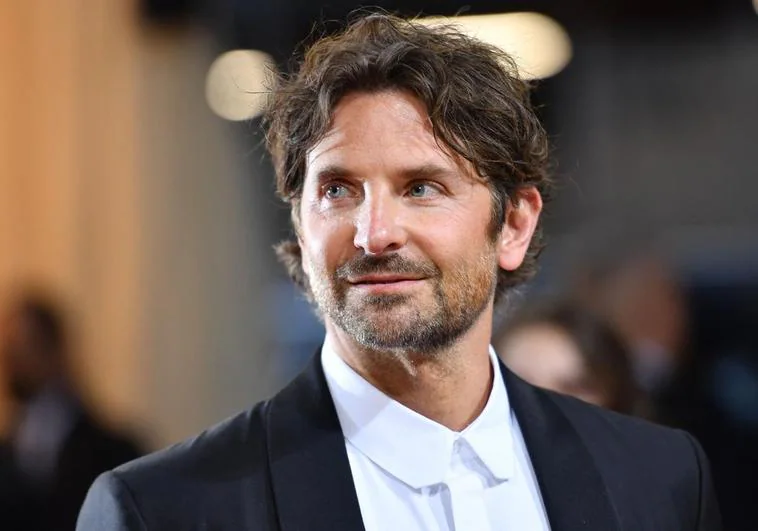
Bradley Cooper / AFP

The children of the American Jewish composer Leonard Bernstein have risen to the defense of Bradley Cooper, the actor and director whose portrait of the late Bernstein in his new biopic has been criticized in some quarters as antisemitic.

The charge emerged after the trailer for the film — titled “Maestro” — was released showing Cooper, who directs and stars in the movie, wearing a prosthetic nose.

Critics on social media charged that the nose enhancement played with the antisemitic stereotype that Jews have noticeably larger noses. One user posted photographs of Bernstein next to Cooper, commenting, “This feels especially sinister because Bradley Cooper’s nose is already the same shape and size, if not slightly larger, than Leonard Bernstein’s was.”

Nevertheless, Bernstein’s offspring issued a statement defending Cooper, who is not Jewish.

“It happens to be true that Leonard Bernstein had a nice, big nose,” his children said. “Bradley chose to use makeup to amplify his resemblance, and we’re perfectly fine with that. We’re also certain that our dad would have been fine with it as well. Any strident complaints around this issue strike us above all as disingenuous attempts to bring a successful person down a notch — a practice we observed all too often perpetrated on our own father.”

They added that at “all times during the making of this film, we could feel the profound respect and yes, the love that Bradley brought to his portrait of Leonard Bernstein and his wife, our mother Felicia. We feel so fortunate to have had this experience with Bradley, and we can’t wait for the world to see his creation.”


Zawartość publikowanych artykułów i materiałów nie reprezentuje poglądów ani opinii Reunion’68,
ani też webmastera Blogu Reunion’68, chyba ze jest to wyraźnie zaznaczone.
Twoje uwagi, linki, własne artykuły lub wiadomości prześlij na adres:
webmaster@reunion68.com