
Archive | 2025/05/30

Nadieżda Mandelsztam – “Wspomnienia”

Nadieżda Mandelsztam – “Wspomnienia”

Helena Kapri


Wspomnienia Tom III Nadieżdy Mandelsztam to historia ostatnich lat życia jednego z największych poetów Rosji XX wieku Osipa Mandelsztama. Jest to również surowa ocena stalinizmu jaki zapanował po rosyjskiej rewolucji.. Wielka czystka zaowocowała przepełnionymi więzieniami i łagrami, śmiercią milionów ludzi, głodem, upadkiem wartości moralnych, utratą wolności słowa, a nawet myśli. Homo sovieticus opanował kraj; wszechobecny staje się strach, podsycany opowieściami tych, którym udało się przejść ‘drogę przez mękę’. Przerażenie wzbudzają wielogodzinne przesłuchania, kiedy nawet nie wiadomo o co pytają. Anna Achmatowa pisze:

A za kolczastymi drutami
Mój sobowtór człapiąc butami,
Od lat idzie na przesłuchanie.

Majową nocą do mieszkania Osipa i Nadieżdy Mandelsztamów zapukali agenci z Łubianki. Mogło to oznaczać, rewizję, aresztowanie, zesłanie. Tym razem pretekstem do rewizji i aresztowania był wiersz Mandelsztama zaczynający się od słów: Żyjemy tu, nie czując pod stopami ziemi

W czwartym wersie:

Tolko słyszno kriemlowskogo gorca,
Duszegubca i mużykoborca

(słychać tylko kremlowskiego górala, mordercę walczącego z chłopami)

Na osobisty rozkaz Stalina w mieszkaniu Mandelsztamów przeprowadzono całonocną rewizję, po czym skazano poetę na trzy lata zesłania, najpierw do Czerdynia, później Woroneżą. Na zesłaniu mogła przebywać z nim żona, przeciwko której na razie nic obciążającego nie znaleźli. Dzień wcześniej, jakby przeczuwając, Nadieżda wyniosła większość rękopisów męża i ukryła wśród zaufanych ludzi.

Mandelsztam się bał, wyobraźnia podsuwała mu okrutne sceny przesłuchań, bicie, tortury… Chciał uciec od życia w niebyt, miejsce gdzie nie widziałby i nie słyszał niczego, nic nie czuł. I uległ tej pokusie, rzucając się przez okno; w rękach Nadieżdy została tylko marynarka... Ale oprócz zwichnięcia barku i psychiki nic mu się nie stało. Został jeszcze kila dni w szpitalu z etykietką obłąkanego.

W Woroneżu było zimno, biednie i głodno; czasem mieli jedno jajko na dwoje, malutki pokój w większym mieszkaniu, koślawe łóżko i poezję. Mandelsztam pisał, częściej układał strofy w myślach, potem je recytował, a Nadieżda uczyła się wierszy na pamięć. Krążyły w odpisach, trafiały nawet do Moskwy, podobały się; Mandelsztam stawał się popularny, niektórzy pamiętali go sprzed rewolucji. Ale to wszystko było tajne, skrywane. Tymczasem trzeba było żyć, zdobywać pieniądze, pożyczać od takich samych biedaków jak oni. Ludzie jak mogli, ratowali się wzajemnie. Mandelsztamowie żyli na skraju nędzy. Nadieżda pisze:

O.M. nigdy nie cieszył się posiadaniem dodatkowej pary spodni. Zawsze znajdował się ktoś, kto nie miał ani jednej pary.

Ostre woroneskie zimy domagały się noszenia kożuchów. Poeta chodził w żółtym, skórzanym płaszczu, twardym i szorstkim. Potem ktoś podarował mu kurtkę podbitą psim futrem; nie chciał jej nosić, ale mróz zwyciężył.

Nie mógł znieść kolejnych przesłuchań, krzyczał, płakał, mówił bez sensu; został oskarżony o działalność kontrrewolucyjną, co równało się z długimi latami tułaczki po Rosji, pobytami w więzieniach, głodem

Ale bywały dni i noce spokojne, wtedy czytał (niezmiennie Dantego) pisał, recytował, uczył żonę swoich wierszy na pamięć, aby przetrwały zawieruchę, żartował… Po trzech latach wrócili do Moskwy, chociaż akuratnie tam nie wolno im było… Przez rok tułali się w wynajmowanych pokojach, szukali pomocy organizacjach wspierających poetów, nadal żyli skromnie, ale mieli przyjaciół, którzy dzielili się z nimi tym co mieli. Po roku przyszło niespodziewanie drugie aresztowanie i zesłanie na Kołymę. W tę podróż wyruszył samotnie…

Na Kołymę nie dotarł, zmarł po drodze „na serce”, w łagrze Wtoraja Rieczka, pod Władywostokiem. Pochowany został w zbiorowym grobie, nikt nie wie gdzie… Nadieżda długo szukała dokumentów potwierdzających jego śmierć, były niejasne, jakby podrobione. Uwierzyła, kiedy wróciły wysłane wcześniej pieniądze – z powodu uśmierci adresata. Od tego czasu celem jej życia było ocalenie spuścizny literackiej męża, doprowadzenie do druku jego wierszy, uznanie go przez świat za wybitnego twórcę rosyjskiej poezji. I tak się stało. Czterdzieści dwa lata wdowieństwa poświęciła na to, by uchronić od zapomnienia jego poezję.

Wstęp do paryskiego (1970) wydania Wspomnień napisał Josif Brodski, rosyjsko – amerykański poeta, noblista, który do końca życia Nadieżdy był jej sojusznikiem i przyjacielem w walce o miejsce Mandelsztama w gronie najwybitniejszych twórców..

W latach osiemdziesiątych XX w. Jacek Kaczmarski stworzył piosenkę pt. Zmartwychwstanie Mandelsztama – w kilku strofach charakterystyka tamtych czasów.

Po Archipelagu krąży dziwna fama
Że mają wydawać Ośkę Mandelsztama.
Dziwi się bezmiernie urzędnik nalany,
Po co go wydawać, on dawno wydany.

Tłumaczy sekretarz nowy ciężar słowa,
Dziś wydawać znaczy, tyle co drukować.
Powstał mały zamęt w pamięci strażników,
Którego Mandelsztama, mamy ich bez liku.

Jeden szyje worki, drugi miesza beton
Trzeci drzewo rąbie, każdy jest poetą.
W oczach urzędników rośnie płomień grozy,
Bo w szwach od poetów pękają obozy.

Przeglądają druki, wyroki, nic nie ma
Każda kartoteka zmienia się w poemat.
A w tym poemacie ludzi jak drzew w tajdze,
Choćbyś szczezł, to tego jednego nie znajdziesz.

Stary Zek wspomina, że on dawno umarł,
Lecz po latach Zekom miesza się w rozumach.
Bo jak to być może, że ziemia go kryje,
Gdy w gazetach piszą, że Mandelsztam żyje.

Skądże mają wiedzieć w syberyjskich borach,
Że to życie to tylko taka metafora.
Patrzy z góry Osip na te wyspy krwawe
I gorzko smakuje swą spóźnioną sławę.

Po ukazaniu się Wspomnień drukiem (Nadieżda zaczęła pisać mając sześćdziesiąt pięć lat) pojawiło się wiele osób zarzucających autorce nieprawdę, obrzucanie błotem inteligencji rosyjskiej, oskarżanie systemu za samo zło, które sprowadził na ludzi. W wyniku czego posiadanie książek Nadieżdy Mandelsztam zostało uznane za ścigane prawem przestępstwo.


Zawartość publikowanych artykułów i materiałów nie reprezentuje poglądów ani opinii Reunion’68,
ani też webmastera Blogu Reunion’68, chyba ze jest to wyraźnie zaznaczone.
Twoje uwagi, linki, własne artykuły lub wiadomości prześlij na adres:
webmaster@reunion68.com


Global intifada makes the Haganah necessary again

Global intifada makes the Haganah necessary again

David Garrett


To suppose that this spiral of hatred and violence can be stopped by keeping everything as it is and relying on third parties is absurd.

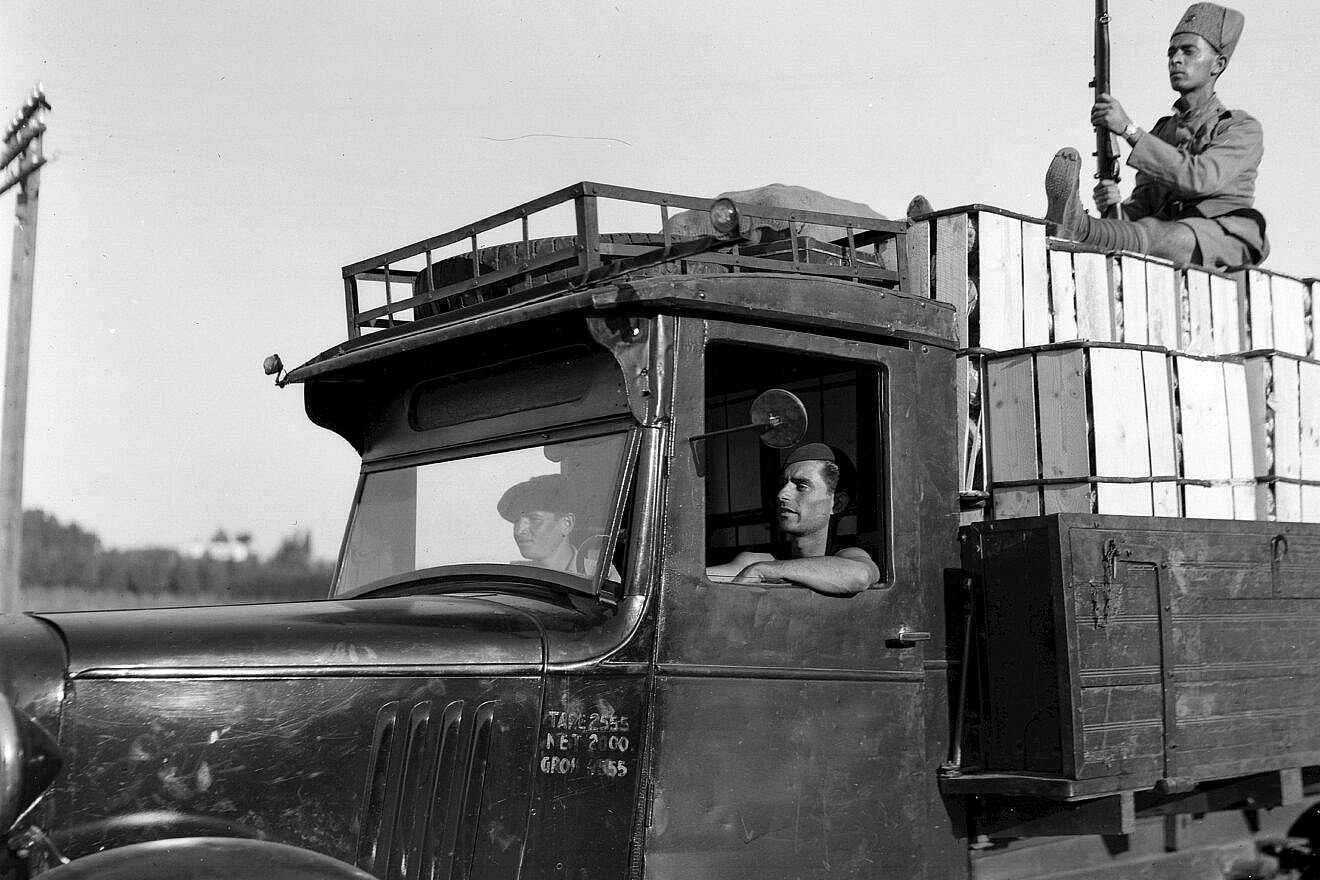
A guard from the Hagana accompanies a truck carrying oranges in pre-state Israel on Oct. 24, 1938. Credit: Zoltan Kluger and Israel National Photo Collection via Wikimedia Commons.

Shot in front of the Capital Jewish Museum in Washington, D.C., a young couple who were to get engaged in Jerusalem saw their dreams shattered—theirs and their families—at the hands of a murderer who once belonged to the Party for Socialism and Liberation, which has expressed support for Hamas and organized marches against Israel.

Yet the group’s actions don’t seem to have done much to shake local authorities or the media out of their comfortable torpor. This recurring pattern of negligence in the West, despite having been called out by the World Zionist Organization and others on multiple occasions, once again failed to avoid the terrible consequences that were foreseen.

In many countries, the perceived happiness, security and integration of Jewish communities is no longer a barometer of democracy. Their isolation is increasingly evident, and they dread reading the daily news, in which fierce criticism and increasingly offensive public statements against Israel from politicians, journalists, influencers and ideological agitators practically compete to see who can generate the most hatred on the street. It is sad to see such wretchedness in individuals who should be an example of morality and generosity of spirit, but are instead a hub of demoralization and baseness.

Like the repeater mechanism in clocks, everyone continually claims that “the Jews have nothing to do with this, that it’s the Israeli Prime Minister Benjamin Netanyahu government’s fault,” while at the same time being hostile to everything of significance in Jewish life. Judaism is considered anachronistic. In parts of Europe, mohels and shochets are investigated as suspects. Jewish museums and communal sites are left to their own devices and self-protection.

The promotion of Jewish history is becoming an increasingly uncomfortable topic, and it is often silenced because it chronicles persecutions against the Jews everywhere, as it must. The Holocaust is presented as having arisen out of nowhere and from the mind of an individual who hated the values of the political left. And, of course, the Jewish state is defined as an oppressor of Palestinians, who are falsely confused with the ancient Philistines, and the terrorist movement that governs them by force.

The age-old antisemitic myths of Jewish selfishness and causing harm to others are thrown against Israel, cloaked in the seductive trappings of “international law” violations. The desire of Israeli citizens to exist in safety is constantly falsified and confused with a supposed “bad Jew,” Netanyahu. As was the case in the Soviet Union, the bad Jew/good Jew technique is used everywhere to destroy the most productive leaders of the Jewish cause. Neither the moral, intellectual or cultural quality of those targeted is given the slightest consideration; quite the contrary. It is no small achievement to spend a few hours each day without being taunted with insults.

The dissemination of antisemitic hatred by elites instigates others into action, committing acts of Jew-hatred, thinking that they will not be stopped or challenged.

What we are witnessing is nothing more than a global intifada that mixes ideals of radical Islam with ideological currents of the political left. Yet many Jewish organizations, instead of tackling this way of hate head-on, are surfing the political waves of the moment so as not to become pariahs in the eyes of the non-Jewish elites.

We could take the extensive catalogue of our disappointments and disillusionment so much further. The question that arises is: What to do now? To suppose that this spiral of hatred and violence can be stopped by keeping everything as it is and relying on third parties is absurd. One only needs to have the slightest notion of history to conclude that more violence will occur and at an increasing rate.

A century after its creation to protect Jews, there is a need to build a new Haganah and to ensure its presence, adapted to the circumstances of time and place, wherever there is a Jewish Diaspora. The operational model must comply with the laws of each country and work in coordination with local security authorities, similar to other Jewish institutions like the life-saving first-responders in Hatzalah. The goal would be to anticipate and stop those who believe they are now free to act as they please and who benefit from an impunity that has no end.


David Garrett – is a defense lawyer and board member of the Jewish Community of Oporto, Portugal.


Zawartość publikowanych artykułów i materiałów nie reprezentuje poglądów ani opinii Reunion’68,
ani też webmastera Blogu Reunion’68, chyba ze jest to wyraźnie zaznaczone.
Twoje uwagi, linki, własne artykuły lub wiadomości prześlij na adres:
webmaster@reunion68.com


Israeli Baby Delivered After Pregnant Mother’s Murder in Terror Attack Dies Following Two Weeks in Intensive Care

Israeli Baby Delivered After Pregnant Mother’s Murder in Terror Attack Dies Following Two Weeks in Intensive Care

Ailin Vilches Arguello


On the left: Tzeela Gez, who was shot dead while in a car with her husband in the West Bank, as they were driving to hospital to give birth in May 2025. On the right: Hananel Gez holding his son, Ravid Chaim, who died two weeks after the terrorist attack. Photo: Screenshot

The infant son of Tzeela Gez, an Israeli mother of three who was fatally shot in a terrorist attack in the West Bank while on her way to give birth, died Thursday morning after two weeks in intensive care.

On May 15, Gez and her husband, Hananel, were on their way to the hospital to deliver their baby when a Palestinian terrorist opened fire on Israeli vehicles, critically wounding the pregnant mother and injuring her husband.

After the attack, the 30-year-old woman was quickly transported to Petah Tikva’s Rabin Medical Center in critical condition. Despite doctors’ efforts to save her, she was pronounced dead the next morning.

According to the hospital, Gez’s husband, who was driving the car, sustained minor injuries after his condition was initially reported as serious.

Doctors managed to deliver the baby, Ravid Chaim — a name Tzeela had chosen before the attack — via emergency C-section, but he had already suffered severe oxygen deprivation.

Despite intensive medical care, his condition remained critical, and he never regained full consciousness. After fighting for his life for more than two weeks, Ravid was pronounced dead Thursday morning at Schneider Children’s Medical Center. He was buried on Thursday evening next to his mother at Jerusalem’s Har HaMenuchot Cemetery.

Last week, Hananel described his son’s condition as being “between life and death” in an interview with Israel Hayom.

Shortly after the attack, the Israel Defense Forces (IDF) announced an intensive search for the terrorist who fired on multiple vehicles, with Chief of Staff Lt. Gen. Eyal Zamir vowing to bring the perpetrators to justice.

About a week after Tzeela was murdered, the IDF confirmed that it had eliminated the killer, Nael Samara, during a counter-terrorism operation near the Jewish community of Bruchin in the northern West Bank.

In a post on X, Israeli Foreign Minister Gideon Saar shared the tragic news of Ravid’s death, while criticizing the international community for ignoring the terror attacks against Israeli settlers.

“Jews living in Judea and Samaria [the West Bank] are the most attacked population in the world by terrorism. Despite this, too many in the international community prefer to speak about ‘settler violence,’ instead of the terror against settlers,” the top Israeli diplomat said.

Israeli Prime Minister Benjamin Netanyahu expressed “great sorrow and pain” upon hearing the tragic news.

“There are no words that can comfort the murder of a newborn baby along with his mother,” the Israeli leader said in a post on X. “The heroism of the pioneers of settlement in Judea and Samaria, and their dedication is what will defeat all our enemies. Earth does not cover their blood.

Israeli President Isaac Herzog said he spoke with Hananel, whom he praised as “a true Israeli hero,” to offer his support and solidarity.

“The entire people of Israel embrace him in his difficult time and pray that he finds comfort and solace together with his children and the entire family. May their memory be blessed,” Herzog said in a post on X.


Zawartość publikowanych artykułów i materiałów nie reprezentuje poglądów ani opinii Reunion’68,
ani też webmastera Blogu Reunion’68, chyba ze jest to wyraźnie zaznaczone.
Twoje uwagi, linki, własne artykuły lub wiadomości prześlij na adres:
webmaster@reunion68.com