
Archive | 2026/03/06

W Bykowni polska delegacja oddała hołd ofiarom zbrodni katyńskiej (wideo)


W Bykowni polska delegacja oddała hołd ofiarom zbrodni katyńskiej (wideo)

akr/ ksi/ dki/
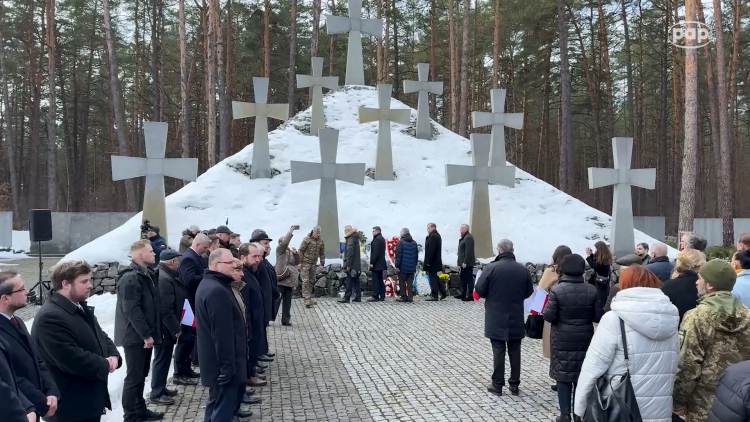

Cmentarz w kijowskiej Bykowni. W jego polskiej części spoczywają szczątki 3435 polskich obywateli z tzw. ukraińskiej listy katyńskiej. Fot. screen/PAP Media/Vladyslav Musiienko

Polska delegacja oddała hołd zamordowanym przez NKWD polskim jeńcom wojennym spoczywającym na Polskim Cmentarzu Wojennym w Bykowni pod Kijowem. Cmentarne uroczysko w Bykowni to wstrząsające świadectwo drogi, którą kroczył sowiecki komunizm – powiedział szef UdsKiOR Lech Parell.

5 marca 1940 r. Biuro Polityczne KC WKP(b) podjęło decyzję o rozstrzelaniu polskich jeńców przebywających w obozach w Kozielsku, Starobielsku i Ostaszkowie oraz polskich więźniów przetrzymywanych przez NKWD na obszarze przedwojennych wschodnich województw Rzeczypospolitej. Konsekwencją tej decyzji była zbrodnia katyńska – zamordowanie ponad 22 tys. polskich jeńców.

W 86. rocznicę tej decyzji polska delegacja rządowa na czele z szefem Urzędu do spraw Kombatantów i Osób Represjonowanych Lechem Parellem i podsekretarzem stanu w MKiDN Markiem Krawczykiem w Bykowni pod Kijowem wraz z przedstawicielami Ukrainy oddała cześć ofiarom sowieckiej zbrodni.

– Obecnie to jedyny cmentarz, na którym możemy oddać hołd ofiarom zbrodni katyńskiej – jednej z najstraszniejszych zbrodni popełnionych na narodzie polskim. Spoczywają tu ludzie różnych wyznań i zawodów: wojskowi i cywile, generałowie i szeregowcy, policjanci i funkcjonariusze Służby Więziennej, prawnicy i urzędnicy, posłowie i senatorowie, handlowcy, robotnicy i rolnicy – katolicy, prawosławni, wyznawcy judaizmu i islamu. Obok Polaków spoczywają tu również zamordowani Ukraińcy, Żydzi, Tatarzy, Białorusini – reprezentanci mozaiki narodowościowej II Rzeczypospolitej – podkreślił podczas uroczystości Marek Krawczyk.

– Po raz kolejny stoimy na polskim cmentarzu wojennym w Bykowni – miejscu szczególnym, naznaczonym bólem, ale i pamięcią. To tutaj, na tej wielkiej nekropolii, spoczywają ofiary zbrodni katyńskiej wśród tysięcy innych ofiar terroru bolszewickiego. Cmentarne uroczysko w Bykowni skrywa zbiorowe mogiły ponad stu tysięcy ludzi – Polaków i przedstawicieli innych narodów – zamordowanych przez sowiecki aparat represji. To wstrząsające świadectwo drogi, którą kroczył sowiecki komunizm i którą próbował narzucić całej naszej części Europy – mówił z kolei  Lech Parell.

Podkreślił również, że uroczystość odbywa się nieprzypadkowo w dniu 5 marca. – To właśnie tego dnia, 86 lat temu, Biuro Polityczne sowieckiej partii komunistycznej podjęło decyzję o wymordowaniu polskich jeńców wojennych – oficerów Wojska Polskiego, policjantów, urzędników, profesorów, lekarzy, nauczycieli, artystów – elity naszego narodu. Ludzi, którzy po 17 września 1939 roku trafili do sowieckiej niewoli – powiedział.

Przypomniał, że wiosną 1940 r. blisko 22 tysiące z nich zostało zamordowanych strzałem w tył głowy w Katyniu, Charkowie, Kalininie, Kijowie, Smoleńsku i w innych miejscach na terytorium Związku Radzieckiego. – Część ofiar spoczęła tutaj, w Bykowni – w miejscu, gdzie wcześniej grzebano także Polaków zamordowanych w ramach tzw. Operacji Polskiej NKWD z lat 1937–1938 – podkreślił. Jak zaznaczył, zbrodnia katyńska nie była aktem odosobnionym. – Była elementem szerszego planu zniszczenia polskiego państwa i wyniszczenia jego elit.

Zwrócił także uwagę, że ze zbrodnią katyńską wiąże się jeszcze jedna – nie mniej bolesna – próba zabicia prawdy. – Przez dziesięciolecia czyniono wszystko, aby zakłamać los zamordowanych. Trzeba tu jednak pamiętać, że prawda była niewygodna nie tylko dla Sowietów. Także wielu światowych przywódców wolało milczeć – aby nie drażnić wielkiego partnera. Dla Polaków była to lekcja realizmu politycznego i doświadczenie osamotnienia – powiedział.

Prawda – jak przypomniał – jednak przetrwała w rodzinnych wspomnieniach, w przekazach z ust do ust, w działalności polskiej emigracji i w drugim obiegu wydawniczym. – Choć na początku lat dziewięćdziesiątych podjęto próbę ujawnienia części dokumentów i wyjaśnienia okoliczności zbrodni, proces ten nie został w pełni doprowadzony do końca. Tym bardziej naszym obowiązkiem jest strzec pamięci i domagać się pełnej prawdy – zaznaczył.

Podkreślił, że „stojąc na tej ziemi, oddajemy cześć nie tylko polskim oficerom i przedstawicielom naszej elity, ale wszystkim ofiarom sowieckiego barbarzyństwa pochowanym w Bykowni”. – Pamięć o nich jest dla nas zobowiązaniem. Jest przestrogą przed totalitaryzmem i pogardą dla ludzkiego życia. Ale jest także źródłem siły i nadziei – bo pokazuje, że nawet najstaranniej ukrywana prawda w końcu zwycięża – powiedział.

– Wierzymy, że tak jak my zdołaliśmy upomnieć się o prawdę i wolność, tak i inne narody doświadczające dziś agresji i przemocy będą mogły cieszyć się zwycięstwem nad imperium zła – podsumował Lech Parell.

Wiceminister kultury Marek Krawczyk ocenił, że „w obliczu trwającej już ponad 4 lata agresji rosyjskiej na Ukrainę, Polski Cmentarz Wojenny w Bykowni jest szczególnym miejscem”. Jak mówił, „wszystkie cmentarze wojenne są nieustającym wołaniem o pokój”. – Naocznie uświadamiają nam, jak straszliwa jest wojna i ile ludzkich istnień pochłania. Dlatego nie ma zgody na wymazywanie pamięci o bestialstwie sprawców z NKWD. Naszą powinnością jest uświadamiać całemu światu o konsekwencjach rosyjskiego imperializmu – zaapelował Krawczyk.

Cmentarz w Bykowni jest jednym z dwóch – obok charkowskich Piatichatek – cmentarzy katyńskich na Ukrainie. W Bykowni w zbiorowych mogiłach pogrzebano około 150 tys. ofiar komunizmu różnych narodowości, w tym ok. 3,5 tys. Polaków z listy katyńskiej, zabitych przez Sowietów w 1940 r.

Do zbrodni katyńskiej doszło po sowieckiej agresji na Polskę, 17 września 1939 r., kiedy do niewoli w ZSRR dostało się ok. 15 tys. oficerów. Decyzja o ich wymordowaniu – jako wrogów komunizmu i Związku Radzieckiego – zapadła na najwyższym szczeblu. Zgodnie z dekretem władz ZSRR, podpisanym przez Józefa Stalina 5 marca 1940 r., NKWD zamordowało ok. 22 tys. obywateli polskich, w tym oficerów Wojska Polskiego, policjantów, funkcjonariuszy straży granicznej i służby więziennej oraz osoby cywilne należące do elit II Rzeczypospolitej Polskiej.

Zbrodnia wyszła na jaw 13 kwietnia 1943 r. Przez wiele lat władze sowieckiej Rosji wypierały się odpowiedzialności za to ludobójstwo, przerzucając winę na III Rzeszę Niemiecką. Na oficjalne przyznanie się Moskwy do odpowiedzialności za zbrodnię katyńską trzeba było czekać prawie do końca istnienia Związku Radzieckiego. 13 kwietnia 1990 r. władze ZSRR przyznały się do zbrodni katyńskiej, określając ją jako „jedną z cięższych zbrodni stalinizmu”. (PAP)


Zawartość publikowanych artykułów i materiałów nie reprezentuje poglądów ani opinii Reunion’68,
ani też webmastera Blogu Reunion’68, chyba ze jest to wyraźnie zaznaczone.
Twoje uwagi, linki, własne artykuły lub wiadomości prześlij na adres:
webmaster@reunion68.com

Trump’s critics have a lot riding on the Iran conflict


Trump’s critics have a lot riding on the Iran conflict

Jonathan S. Tobin


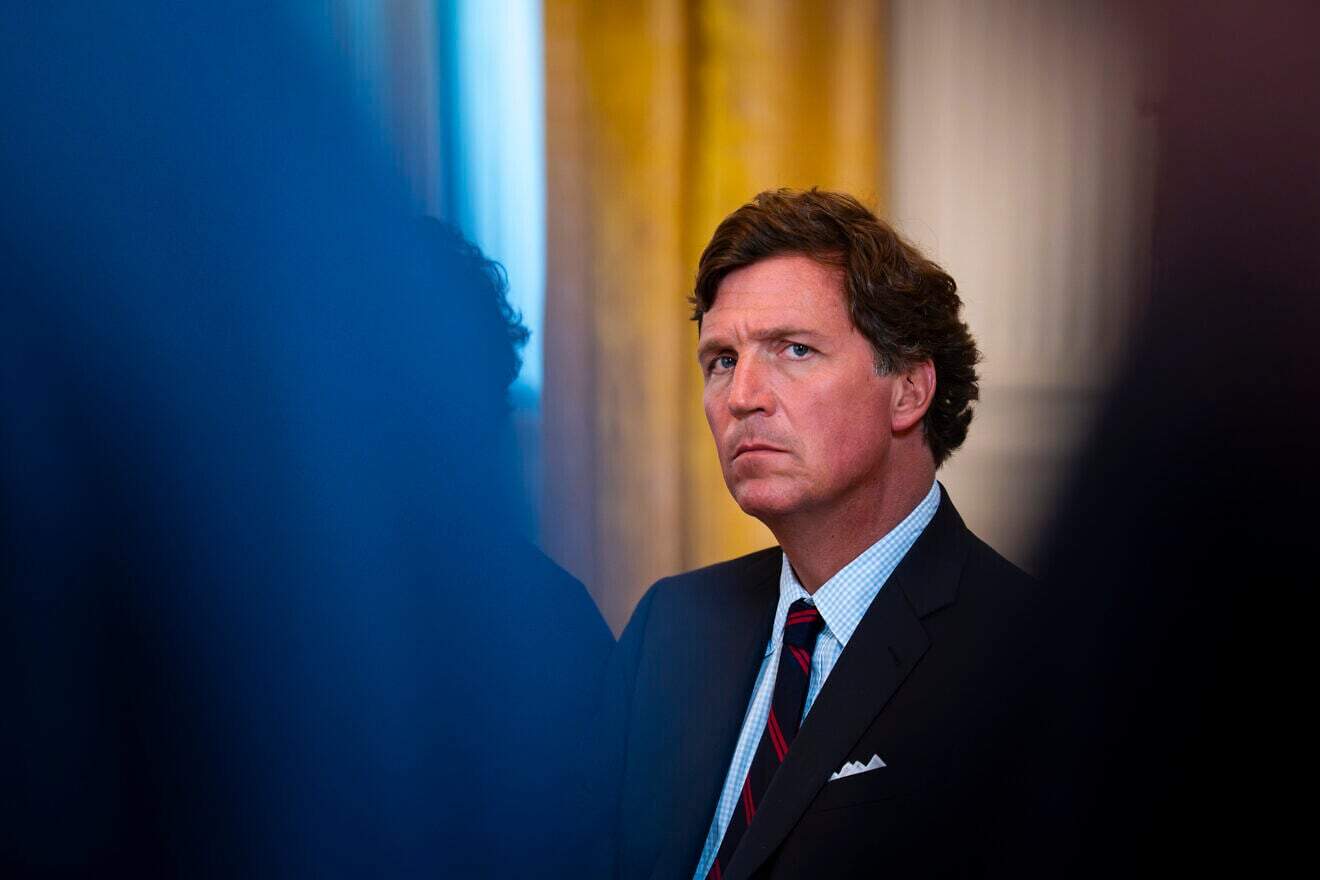
Tucker Carlson, former “Fox News” host and current host of “The Tucker Carlson Show,” attends a meeting with oil executives in the East Room of the White House in Washington, D.C., on Jan. 9, 2026. Photo by Al Drago/Getty Images.

Whether they admit it or not, a lot of people are rooting for disaster for the United States and Israel in the conflict that began on Feb. 28, with the two allies attacking the Islamic Republic’s leadership and military targets. And it’s not overstating the matter to acknowledge that the diverse coalition of opponents of President Donald Trump and the Jewish state has a lot riding on whether their Cassandra-like predictions of doom for the administration turn out to be right.

If they are, then the extreme right wing of the Republican Party, led by antisemitic podcasters like former Fox News host Tucker Carlson, has an opening that they would hope to use to take over the GOP. A disaster in Iran will also put even more wind in the sails of the intersectional left-wing base of the Democratic Party. If that happens, its leading figures, like New York City Mayor Zohran Mamdani and Rep. Alexandria Ocasio-Cortez, will hope it means that their faction will be in a position to name their party’s 2028 presidential nominee.

Meanwhile, the somewhat less ideological veterans of the Obama and Biden presidencies, of whom the most prominent figure today remains former Vice President Kamala Harris, and their liberal press corps rooting section will also assert that their belief in appeasement of Tehran has been vindicated.

Betting on the regime’s survival

Such a result will be a political landscape that will not only look bleak for conservatives and Trump supporters. It might also be a body blow to the last vestiges of what was once a bipartisan consensus in support of Israel that stretched across the American political spectrum. That’s because the one thing that links various elements of the loose, anti-Iran war coalition is hostility to, if not outright hatred for, the State of Israel.

Their assumptions about the attack on Iran are based on a belief in the resilience of an evil terrorist regime, coupled with a conviction that Trump’s belief in the importance of the U.S.-Israel alliance is inherently wrong. They are sure that either the Islamist Republic will survive or that its ouster will lead to chaos that will harm U.S. interests. Many of them are also convinced that, despite Trump’s clear intentions to avoid such a scenario, the United States is likely to be bogged down in an endless and unsuccessful conflict in the Middle East. Indeed, some are counting on it resembling those in Afghanistan, and even more so Iraq, which Trump critics on both the left and right are citing as a likely precedent for his decision. And that’s not even taking into account the way some in the Democratic base tend to sympathize with anyone who is at war with the West.

Disillusionment over those wars led to the success of anti-war factions and played a significant role in the rise of President Barack Obama and then Trump. If that scenario is repeated, it could result in the capture of both major political parties by extremists who have nothing in common but their desire to abandon Israel to its fate in a region still dominated by genocidal Islamists. It could also impact the flow of and price of oil. And that could lead to higher gas prices in the United States and hurt Republicans in the midterms, leading to two years of Democratic congressional control that would hamstring what was left of the Trump presidency.

Of course, there’s a chance that they are right and that the Iranian government—or what’s left of it after strike after strike has decapitated its leadership—will ultimately prevail in one way or another. If so, it would be just another example of a second presidential term that was undone by a foreign-policy misjudgment.

Thinking like Khamenei and Sinwar

But it’s also very possible, if not likely, that they are citing the wrong precedent when they talk about another Iraq. They could be making the same mistake others have made when they underestimated Trump’s savvy and leadership. They could also be channeling the same catastrophic mistake as those who assumed that Israel was ripe for a defeat that could lead to a collapse in 2023.

The late Ayatollah Ali Khamenei and Hamas senior leader Yahya Sinwar never imagined that the war they launched on Oct. 7 with unspeakable atrocities and the largest mass slaughter of Jews since the Holocaust would turn out the way it has. Not only are they, in addition to many of their associates and followers, dead; the Islamist movement has suffered major defeats in Gaza and Lebanon, in Syria with the fall of longtime dictator Bashar Assad, and now, in Iran. Israel was shaken by that surprise invasion and attack, but it rebounded and is in a much stronger strategic position than it was 29 months ago.

The impact on American politics of success in Iran, which could entail the fall of the Islamist regime as well as the further weakening of its allies in the region, could be just as significant.

Since the fighting may go on, as Trump has indicated, for weeks, predictions as to how it will turn out are, at best, premature.

Given that Trump is mindful of the Afghanistan and Iraq precedents, he will never agree to a U.S. land invasion; what follows these strikes will depend on the actions of the Iranian people as much as on the American and Israeli militaries. We don’t know yet if Iranian dissidents—either from within the regime or those who have demonstrated in the streets against the tyrannical theocrats—can seize the opportunity Trump has given them.

Even if they can’t, a few weeks of pounding from these two potent militaries will not be without effect. While the Islamists may not fall, Washington will be able to ensure the flow of oil from the Persian Gulf, no matter what happens in Tehran. That would likely leave the regime in a position where its ability to inflict harm on the region would be severely diminished.

That, in turn, will make their allies in Gaza, Lebanon and Yemen much weaker. And it would give Trump the room to maneuver that could also lead to better outcomes in Gaza, where Hamas is hanging on, as well as the further weakening of Hezbollah in Lebanon. The latter terrorist organization fired on Israel during the war’s second day, but the reaction from the Lebanese government to the prospect of being dragged into a war to defend the Iranian regime indicated that the era in which Hezbollah dominates that country may be about to end. Far from the war expanding, a weakened Tehran with no ability to inflict further mayhem would only strengthen U.S. allies like Israel and Saudi Arabia, and open the possibility of expanding Trump’s 2020 Abraham Accords.

While U.S. elections are determined by economic issues far more than anything that happens abroad, the scenarios in which Trump benefits from his Iran decision seem more realistic than those that predict disaster.

Exposing Carlson and Vance

Indeed, anything short of disaster in Iran will significantly damage Trump’s right-wing critics. Carlson and other extremist podcasters who have been trafficking in antisemitic tropes about Israel dragging America into war, and smearing the Jewish state and its supporters, have been speaking as if this is their moment.

Carlson has ignored Trump’s demands that he desist from this antisemitic campaign and has instead doubled down on it again. His description of the president’s decision as “absolutely disgusting and evil,” predicting that it “will shuffle the deck in a significant way”—presumably, in his favor—presages a full break with Trump.

Simply put, after this, Carlson can’t pretend that he is merely trying to push Trump in a different direction. He has now joined the anti-Trump resistance.

He has plenty of company there. More than that, his assumption that he speaks for the GOP grassroots may be about to be exposed as a big lie. To date, there is no evidence that Carlson—and the rest of the anti-Israel and antisemitic right-wing podcaster corps, including the likes of the ever more fanatical Candace Owens, neo-Nazi groyper Nick Fuentes and their once mainstream ally, media personality Megyn Kelly—speak for a genuine political movement.

These political commentators may have a lot of viewers and listeners, but how many of them are bots, as opposed to Republican primary voters? Unlike the left, there is no indication that in 2027, there will be a right-wing “Squad” of antisemites to make common cause with the dozens of Israel-hating “progressives” caucusing with the Democrats.

Anything short of the sort of Iraq-style fiasco in Iran that Trump is deliberately refusing to allow to happen will expose this segment of the MAGA movement as a politically marginal faction in a way that is not true of the left.

That could also undermine the prospects of Vice President JD Vance, whose huge lead for the 2028 GOP presidential nomination could diminish if he doesn’t soon disassociate himself from Carlson. It could open up the possibility of U.S. Secretary of State Marco Rubio getting into a race that he now says he won’t enter. Rubio has become far more visible and seemingly close to Trump in the past few months as foreign-policy issues relating to Venezuela, relations with America’s European allies, the president’s Board of Peace to help reconstruct Gaza and the conflict with Iran have dominated the news. A good outcome—or at least one that is not another Iraq—makes him the most important figure in the administration not named Trump.

The left’s stake in regime survival

The strengthening of Israel as a result of events in Iran could also impact the Democrats.

Nothing—not even the collapse of a terror regime in Iran—will convince the Trump-haters that the president is right about anything. They are ideologically and temperamentally committed to “resisting” the president, rather than being a loyal opposition. The Democrats’ left-wing base is also wedded to toxic, left-wing, neo-Marxist ideas that have convinced them of the truth of the big lies about Israel—and its Jewish supporters—as being “white” oppressors. It also leads some to sympathize with or at least oppose action against Islamist terrorists like the Iranian regime and Hamas.

What they aren’t counting on is a transformation of the Middle East in which anti-Israel Islamists and other extremists are no longer able to bolster the Palestinians’ century-old futile war against the Jewish state. That won’t silence the Israel-haters that proliferate throughout the liberal mainstream media and elsewhere in society. But it will make it easier for a counter-force of moderates who, at the very least, don’t want to support a genocidal war against Israel to further tarnish the Democrats’ brand to emerge as a force in 2028. If the war in Iran makes future conflict less likely, that exposes and undermines left-wingers who have gone all-in on Israel-bashing and helps those who want to talk about other issues.

Such a faction won’t agree with Trump on the Middle East in the manner of a Sen. John Fetterman (D-Pa.) or likely nominate an ardent supporter of Jerusalem. But it will further diminish the influence of the Obama administration alumni and liberal critics of Israel, who have been wrong about everything in the Middle East for the past four decades.

A good outcome opens up the possibility of a future in which both parties move in a more reasonable direction on Israel and the Middle East, and harm the prospects of extremists who share a predilection for antisemitism.

There may be much to fear in the coming days and weeks as the wounded regime seeks to lash out and, as it has already done, kill Americans, Israelis, residents of the Gulf States and wherever else it might reach with its missiles.

Still, what those who are betting on disaster in Iran aren’t taking into account is the possibility that Trump’s keen instincts for when to strike and his instinctual good judgment when it comes to defending American interests against its enemies will actually be a political success for him—and a defeat for both his left-wing and right-wing opponents.


Jonathan S. Tobin – is editor-in-chief of the Jewish News Syndicate, a senior contributor for The Federalist, a columnist for Newsweek and a contributor to many other publications. He covers the American political scene, foreign policy, the U.S.-Israel relationship, Middle East diplomacy, the Jewish world and the arts. He hosts the JNS “Think Twice” podcast, both the weekly video program and the “Jonathan Tobin Daily” program, which are available on all major audio platforms and YouTube. Previously, he was executive editor, then senior online editor and chief political blogger, for Commentary magazine. Before that, he was editor-in-chief of The Jewish Exponent in Philadelphia and editor of the Connecticut Jewish Ledger. He has won more than 60 awards for commentary, art criticism and other writing. He appears regularly on television, commenting on politics and foreign policy. Born in New York City, he studied history at Columbia University.


Zawartość publikowanych artykułów i materiałów nie reprezentuje poglądów ani opinii Reunion’68,
ani też webmastera Blogu Reunion’68, chyba ze jest to wyraźnie zaznaczone.
Twoje uwagi, linki, własne artykuły lub wiadomości prześlij na adres:
webmaster@reunion68.com


Family of Former FBI Agent Robert Levinson Demands Iran Be Held ‘Accountable,’ Return His Remains


Family of Former FBI Agent Robert Levinson Demands Iran Be Held ‘Accountable,’ Return His Remains

Shiryn Ghermezian


People walk near a mural featuring images of Iran’s Supreme Leader Ayatollah Ali Khamenei and leader of Iran’s 1979 Islamic Revolution Ayatollah Ruhollah Khomeini, on a street in Tehran, Iran, Feb. 17, 2026. Photo: Majid Asgaripour/WANA (West Asia News Agency) via REUTERS

The family of former FBI agent Robert Levinson, who disappeared in Iran in 2007 and is believed to have died while in Iranian custody, is calling on the Trump administration to make sure Tehran returns his remains and is held “accountable” for its actions following this weekend’s US-Israel airstrikes on the Islamic Republic.

Washington has maintained that Levinson, a retired FBI special agent, was taken by Iranian officials on March 9, 2007, while working as a private contractor for the CIA on the Iranian island of Kish, where he had traveled to meet a source. His family was never informed of what officially happened to the American citizen, but in 2020, the US government officially concluded he had died while in Iran’s custody. The details and circumstances surrounding his death remain unknown. Levinson was a father of seven children.

Levinson’s family issued a statement, shared on social media, following Saturday’s killing of Iranian Supreme Leader Ayatollah Ali Khamenei in the US-Israel airstrikes.

“For nearly 19 years, Iran has lied, obstructed, and refused to answer for the kidnapping, detention, and death of our father, Robert Levinson,” the family said in its statement. “Ayatollah Ali Khamenei led the regime responsible for these crimes. His death does not erase what Iran did to our father, and it does not end our fight for accountability. But it is a significant moment for our family and for every family that has suffered at the hands of this regime’s hostage-taking and wrongful detention.”

“Now Iran must do what it has refused to do for nearly two decades: provide full accountability for what happened to our father, return his remains to our family, and disclose the truth about his kidnapping, imprisonment, and death,” they added. “Our family will not stop demanding the truth. And we will not stop demanding justice.”

The family also expressed gratitude to US President Donald Trump and Secretary of State Marco Rubio “for using the power of the United States to confront Iran and to hold it accountable, including by recognizing and addressing Iran’s long-standing practice of wrongful detention.”

Levinson’s son, Dan Levinson, talked to “Fox & Friends” over the weekend about the need for the Trump administration to pressure Iran to take accountability.

“We’re just looking for answers. We still don’t know what exactly happened to him,” the younger Levinson said of his father. “There was no person more responsible for my father’s fate than Ayatollah Khamenei. At any time he could have waved his hand and had my dad released. He chose not to. We begged and pleaded. We sent so many letters. I went over there twice asking for a meeting and his people rebuffed us. Ignored us.”

Levinson said there is still a $25 million reward for information leading to the recovery and return of his father’s remains.

In March 2025, the United States imposed sanctions on three Iranian intelligence officers for their alleged involvement in Levinson’s disappearance.

In December 2020, the US Treasury Department’s Office of Foreign Assets Control sanctioned two other Iranian officials who are accused of authorizing Levinson’s 2007 abduction. The FBI released posters seeking information about them last year.


Zawartość publikowanych artykułów i materiałów nie reprezentuje poglądów ani opinii Reunion’68,
ani też webmastera Blogu Reunion’68, chyba ze jest to wyraźnie zaznaczone.
Twoje uwagi, linki, własne artykuły lub wiadomości prześlij na adres:
webmaster@reunion68.com