Archive | 2026/03/27

Izraelczycy zabili dowódcę floty Gwardii Rewolucyjnej. Był zwolennikiem zamknięcia Cieśniny Ormuz

Teheran (Fot. REUTERS/Majid Asgaripour)


Izraelczycy zabili dowódcę floty Gwardii Rewolucyjnej. Był zwolennikiem zamknięcia Cieśniny Ormuz

Marta Urzędowska


Izraelska armia zabiła Alirezę Tangsiriego, dowódcę floty irańskiej Gwardii Rewolucyjnej – podają izraelskie media. Jednocześnie Izraelczycy obiecali, że pozwolą żyć irańskiemu szefowi dyplomacji i przewodniczącemu parlamentu.

Informację o śmierci dowódcy floty Gwardii Rewolucyjnej jako pierwszy podał „Times of Israel”, powołując się na źródła w izraelskim rządzie. W południe doniesienia gazety potwierdził izraelski minister obrony, Israel Katz. – Tahgsiri był bezpośrednio odpowiedzialny za akt terrorystyczny, jakim jest bombardowanie i blokowanie Cieśniny Ormuz – oświadczył dodając, że wraz z nim zginęło też wielu innych „wysokiej rangi oficerów marynarki”.

Alireza Tangsiri zginął w izraelskim nalocie na Bandar Abbas w południowym Iranie, niedaleko Cieśniny Ormuz. Jak informują izraelskie źródła cytowane przez „New York Times”, Izraelczycy dopadli go w mieszkaniu, gdzie ukrywał się z innymi oficerami Gwardii.

Irańczycy na razie nie komentują informacji o śmierci Tangsiriego. 

Tangsiri pomógł zamknąć Cieśninę Ormuz. Chwalił się jej blokowaniem

Tangsiri był ważnym dowódcą. Osobiście nadzorował testowanie przez gwardzistów dronów i pocisków, za co Amerykanie już dwa razy nałożyli na niego sankcje – ostatnio w 2023 r. Od początku obecnej wojny był zwolennikiem zamknięcia Cieśniny Ormuz i regularnie chwalił się w sieciach społecznościowych skutecznością, z jaką Irańczycy blokują kluczowy przesmyk.

Dlatego też znalazł się na liście  ważnych irańskich oficjeli i wojskowych, których chcą wyeliminować Izraelczycy. W czasie wojny, którą rozpoczęli wraz z USA 28 lutego, atakując cele w Iranie, Izrael koncentruje się właśnie na zabijaniu irańskich przywódców, w przeciwieństwie do Amerykanów, którzy skupiają się na niszczeniu irańskiego potencjału obronnego.

Izrael po kolei eliminuje ważnych Irańczyków

W pierwszym dniu ataków zginął ajatollah Ali Chamenei, sprawujący władzę polityczną, wojskową i duchową, którego Irańczycy szybko zastąpili jego synem Modżtabą. W tym samym dniu zginął szef sztabu armii Abdolrahim Musawi, minister obrony Aziz Nasirzadeh, dowódca Gwardii Rewolucyjnej Mohammed Pakpour i Ali Szamkani – bliski doradca ajatollaha i ważna postać w aparacie bezpieczeństwa Iranu.

Z kolei 17 marca w izraelskim nalocie zginął Ali Laridżani – drugi najważniejszy Irańczyk, szef Rady Bezpieczeństwa Narodowego, który faktycznie sprawował władzę w kraju w sytuacji, kiedy Modżtaba – najpewniej ranny na początku wojny – dowodzi Iranem wyłącznie na papierze, nie pokazując się publicznie i nie wygłaszając oświadczeń.

Sami Izraelczycy chwalili się, że zabijając Laridżaniego, wyeliminowali „faktycznego lidera” Iranu. W tym samym dniu zginął też Gholamreza Solejmani, dowódca paramilitarnych bojówek basidżi, podlegających Gwardii Rewolucyjnej i słynących z brutalnego tłumienia antyrządowych protestów.

18 marca w kolejnych izraelskich atakach zginął Esmail Chatib, minister wywiadu, twardogłowy duchowny i polityk, który latami blisko współpracował z Chameneim seniorem, a od 2021 r. stał na czele potężnego aparatu wywiadu.

Izrael oszczędzi szefa MSZ i przewodniczącego parlamentu

Jednocześnie pojawiają się doniesienia, że Izrael zrezygnuje z zabicia dwóch ważnych irańskich polityków – ministra spraw zagranicznych Abbasa Aragcziego, i przewodniczącego parlamentu, Muhammada Bagera Galibafa.

Decyzja o wykreśleniu ich z izraelskiej listy osób do wyeliminowania ma wynikać z nacisków Pakistanu, który pośredniczy między Amerykanami i Irańczykami w nieformalnych dyskusjach na temat ewentualnego rozejmu.

Zabezpieczenie losu dwóch ważnych oficjeli ma być jednym z warunków stawianych przez Teheran. Informację jako pierwszy podał Reuters, powołując się na źródła w Islamabadzie. 

Izraelczycy mieli ich już namierzonych i chcieli ich wyeliminować, ale powiedzieliśmy USA, że jeśli ich też wyeliminują, nie będzie już z kim rozmawiać, i Amerykanie kazali Izraelczykom odpuścić

– przekonuje źródło agencji.

Informację o zdjęciu Irańczyków z listy podawał też „Wall Street Journal”, jednak bez wspominania o udziale Pakistańczyków.

USA i Iran od kilku dni przerzucają się sprzecznymi doniesieniami w sprawie ewentualnych rozmów na temat rozejmu. Donald Trump zapewnia, że prowadzi z Irańczykami „bardzo dobre rozmowy”, irańscy urzędnicy publicznie zaprzeczają. Amerykanie domagają się od Teheranu pełnej rezygnacji z programu nuklearnego i balistycznego. Iran odpowiada, że skończy wojnę „na własnych warunkach”, a amerykańskie odrzuca.


Redagowała Ludmiła Anannikova


Zawartość publikowanych artykułów i materiałów nie reprezentuje poglądów ani opinii Reunion’68,
ani też webmastera Blogu Reunion’68, chyba ze jest to wyraźnie zaznaczone.
Twoje uwagi, linki, własne artykuły lub wiadomości prześlij na adres:
webmaster@reunion68.com

NYC Council approves buffer zones around houses of worships, schools as part of legislative package against Jew-hatred


NYC Council approves buffer zones around houses of worships, schools as part of legislative package against Jew-hatred

Jessica Russak-Hoffman


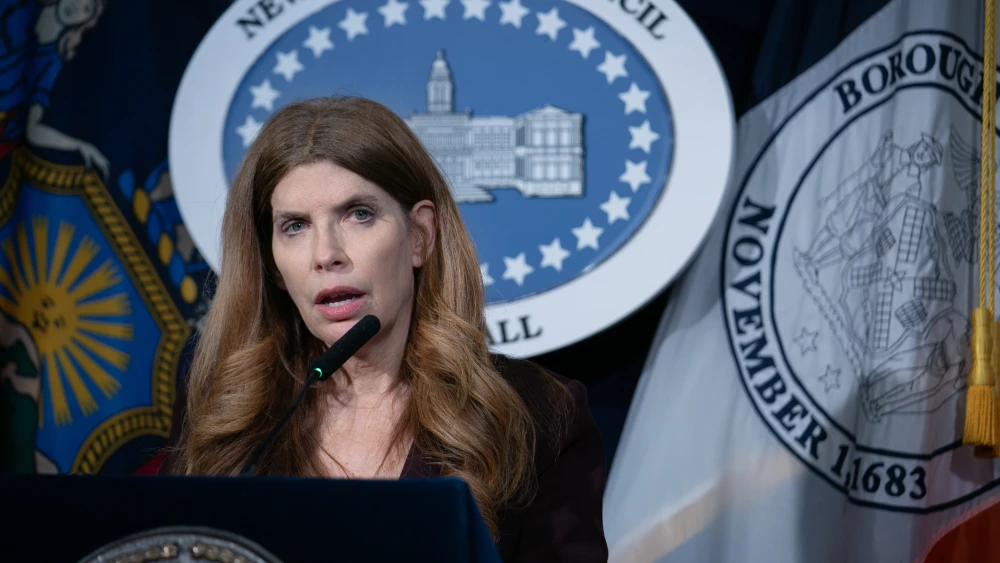
Julie Menin, speaker of the New York City Council, speaks at a press conference at City Hall ahead of a vote on a package of bills that fight hate, including antisemitism, March 26, 2026. Credit: Will Alatriste/NYC Council.William Alatriste

The New York City Council passed legislation on Thursday that creates protective perimeters around houses of worship and schools during protests, part of a package designed to combat Jew-hatred and hate crimes across New York City following an uptick of antisemitism and a series of demonstrations outside Jewish institutions.

“I am immensely proud of the legislative package the council passed today to combat hate, including my legislation to help protect safe access to houses of worship,” stated Julie Menin, the first Jewish speaker of the New York City Council. “This is an urgently needed and carefully crafted bill that will ensure transparency, accountability and community engagement in NYPD plans to respond to protests—three pillars to protecting both public safety and free speech rights alike.”

Measures 1-B and 175-B, which Menin advanced, empower the New York City Police Department to set limits on how close demonstrators can gather near entrances to synagogues, religious schools and similar institutions to ensure unobstructed and safe access.

1-B passed with a veto-proof majority of 44 out of 51 members, but 175-B, which addresses educational institutions, passed with 30 to 19, making it subject to a veto by the mayor. Members who voted in favor of the package of bills but voted no on 175-B expressed concerns over legal issues and how it would affect student protests on campuses. Zohran Mamdani, the New York City mayor who has been a harsh critic of Israel and who has said, via a spokeswoman, that synagogues violated international law when they host pro-Israel events, has suggested he could be reluctant to sign the bill.

Before the vote, Menin said that there was a 182% increase in antisemitic incidents in the city in January, and that churches had been vandalized and that there was a 69% increase in anti-Muslim hate crimes in 2024. “The increase in hateful acts across the city is absolutely abhorrent and we have to do something about it,” she said in a press conference.

Left-wing groups, including the New York chapter of the Democratic Socialists of America, opposed the measure, encouraging their members to contact city council representatives to “hold the line against this crackdown on our right to protest.” During the vote, the New York Civil Liberties Union and a coalition of anti-Israel advocacy groups protested outside City Hall.

Rabbi Josh Joseph, executive vice president and chief operating officer of the Orthodox Union, told JNS that “with record incidents of antisemitic violence and last week’s targeted attack on preschool children at a temple in Michigan, the threats faced by synagogues and schools are not theoretical.”

.
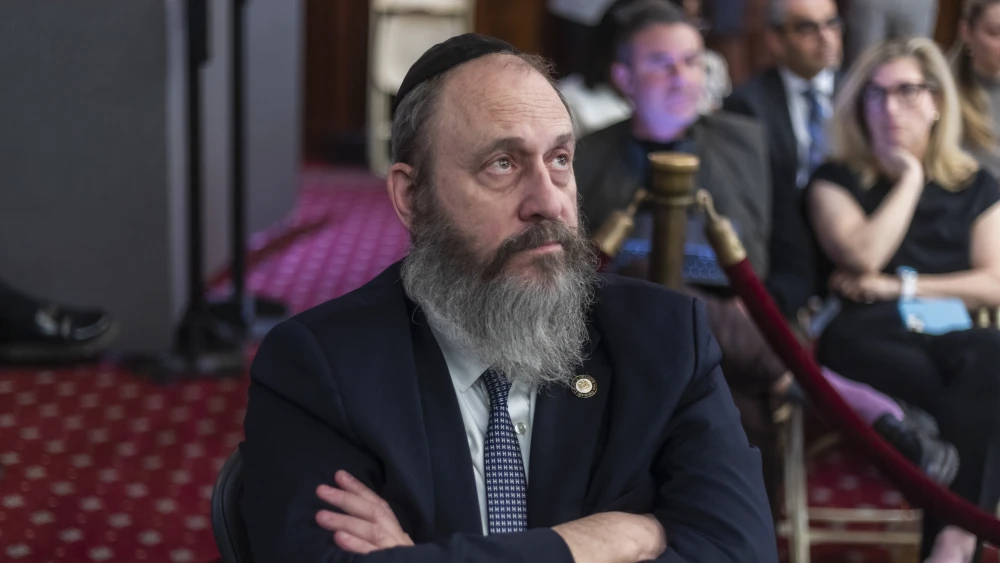
Simcha Felder, a member of the New York City Council and of its Jewish Caucus, at a council meeting, March 26, 2026. Credit: Emil Cohen/NYC Council.

Law enforcement needs the appropriate resources and laws to protect our community and our constitutionally guaranteed right to worship God according to our faith,” he said.

Sydney Altfield, CEO of Teach Coalition, part of the OU that advocated for the legislation, told JNS it has been “inspiring to see faith communities unite in support of this critically needed legislative package.”

“This legislative package reflects the reality that our institutions, synagogues, schools and houses of worship all require protection, ensuring safe access during protests without limiting the fundamental right to peaceful protest,” Altfield said.

Mark Goldfeder, director and CEO of the National Jewish Advocacy Center, told JNS that “religious liberty means more than the theoretical right to pray.”

“It means the practical ability to walk into your synagogue, church, mosque or temple in peace,” he said. “No New Yorker should have to run a gauntlet of intimidation just to enter a house of worship.”

Avi Posnick, executive director StandWithUs Northeast and New England, was present at the council meeting. “These are common sense pieces of legislation, rooted in law, that help protect the Jewish community and all communities while at the same time ensuring First Amendment rights,” Posnick said.

The buffer-zone bill “is another step forward in protecting house of worship and ensuring our community is safe,” he said.

Rabbi Marc Schneier, president of the Foundation for Ethnic Understanding, said that he presented a buffer zone plan to Mamdani shortly after the latter’s election.

.

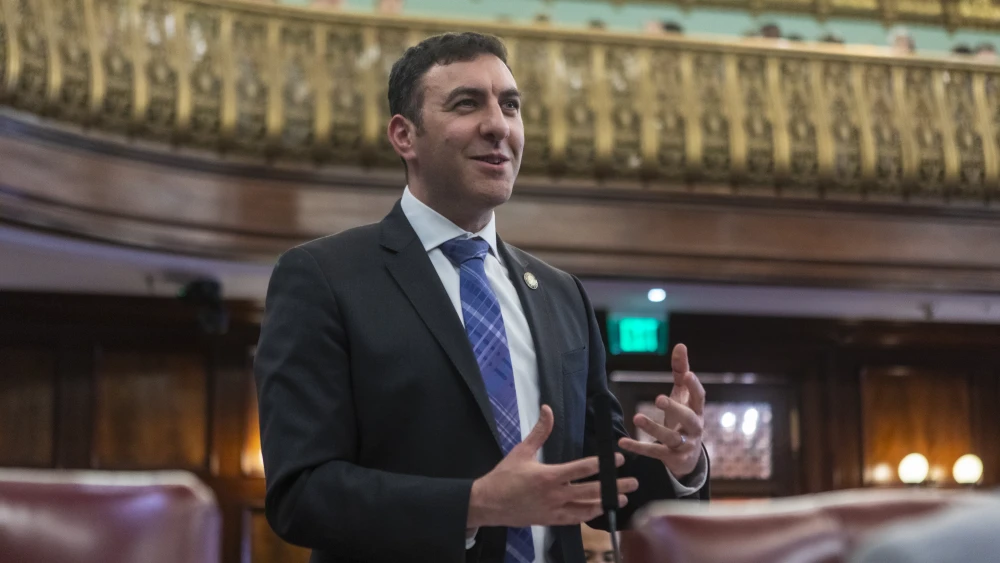
Eric Dinowitz, a member of the New York City Council and chair of its Jewish Caucus, at a council meeting, March 26, 2026. Credit: Emil Cohen/NYC Council.

When I first told mayor-elect Mamdani at the time about this idea, he was completely on board,” Schneier told JNS.

The rabbi added that he is proud of Menin “for taking action so quickly, especially as it was clear the mayor once again flip-flopped when it comes to protecting New York’s Jewish community and New Yorkers of all faiths.”

“No one should have to be worried about protesters harassing them when entering a house of worship,” Schneier told JNS.

Rabbi Mark Wildes, founder and director of the Manhattan Jewish Experience on the Upper West Side, said that the measure means houses of worship “can remain safe spaces for people to gather and practice their religion.”

“The fundamental right to free speech must be balanced with the right to exercise one’s religion,” he told JNS. “Both are core constitutional values that deserve protection. Establishing an appropriate buffer zone is the one way to ensure that both rights are respected, allowing worshipers safe access to their places of worship while preserving the ability to protest.”

Legal advocates say protests have crossed from protected speech into targeted intimidation.

Jayne Zirkle, director of communications at the Lawfare Project, told JNS that “what we are seeing outside synagogues, Jewish schools and community spaces is not peaceful protest” and that “it is targeted harassment fueled by dangerous anti-Israel and anti-Jewish rhetoric.”

Stu Smith, an investigative analyst at the Manhattan Institute, called the passage of the legislation “a massive win on so many levels for religious Americans, for constitutional order and for simple human decency.”

“George Washington said the American government should give ‘to bigotry no sanction, to persecution no assistance,’” Smith told JNS. “Thomas Jefferson wrote that no one should be ‘restrained, molested or burthened’ on account of religion.”

“Protecting people from harassment as they worship is squarely in that American tradition,” he said.

The package of measures passed today also included 22-A, which requires the city’s education department to distribute materials to students about the risks of social media and online hate; 297-A, which requires the mayor to establish an agency to provide religious and nonprofit institutions with support in establishing emergency plans; and 388-A, which establishes a hot line for reporting discrimination.


Jessica Russak-Hoffman
Jessica Russak-Hoffman is a writer in Seattle.

Zawartość publikowanych artykułów i materiałów nie reprezentuje poglądów ani opinii Reunion’68,
ani też webmastera Blogu Reunion’68, chyba ze jest to wyraźnie zaznaczone.
Twoje uwagi, linki, własne artykuły lub wiadomości prześlij na adres:
webmaster@reunion68.com

British Gov’t Replaces Hatzalah Ambulances Destroyed in Arson Attack as Millions in Donations Pour In


British Gov’t Replaces Hatzalah Ambulances Destroyed in Arson Attack as Millions in Donations Pour In

Shiryn Ghermezian


Charred remains of ambulances belonging to Hatzola, a Jewish community organization, which were set on fire in an incident that the police say is being treated as an antisemitic hate crime, in northwest London, Britain, March 23, 2026. Photo: REUTERS/Hannah McKay

The British government has loaned four ambulances to the Jewish volunteer emergency service Hatzalah to replace its four vehicles that were destroyed in an arson attack in the north London area of Golders Green early Monday morning.

The Department of Health and Social Care said on Tuesday it supplied Hatzalah with four substitute ambulances from the London Ambulance Service following the incident, which is being investigated as an antisemitic hate crime. The department will also cover the cost of permanent replacements for the vehicles destroyed in the attack because “the Jewish community should not bear the cost of this hatred,” Health and Social Care Secretary Wes Streeting said in a released statement. He further called the attack a “shocking, cowardly, and despicable act of evil,” and said he has “no doubt” that the fire was carried out to “strike fear” in the Jewish community in Golders Green and across the UK.

“The aim of these attackers is clear – they want Jewish people in this country to live smaller lives, to live less Jewish lives, to be less visible as Jewish people, and to fear going about Jewish life – whether that’s attending school or providing the services and support that makes the Jewish community one of the most resilient, strong, and proud communities in the country,” he added. “Hatzola’s volunteers represent the very best of public service, providing rapid, life-saving care to anyone in need, and it is appalling that such a service has been targeted in this way.”

Streeting continued, “The Jewish community will not stand alone – the government and this entire country stand with them … The answer cannot simply be higher walls, thicker doors, more CCTV. We also have to deal with this hatred at its source. We have to confront and beat the evil ideas that are permeating in our society.”

Hatzalah provides free medical transportation and emergency response to all, not just the Jewish community. As of Thursday morning, £1.8 million ($2.4 million) has been donated to the Jewish charity through a Charity Extra fundraising page, while a separate GoFundMe campaign has raised a little over £134,000 (close to $179,000) to help Hatzalah replace destroyed vehicles and life-saving medical equipment.

The four Hatzalah ambulances were parked in a lot belonging to the Machzikei Hadath synagogue when they were set on fire. Two British nationals, ages 47 and 45, were arrested on Wednesday in connection to the attack but have since been released on bail, according to the Metropolitan Police.


Zawartość publikowanych artykułów i materiałów nie reprezentuje poglądów ani opinii Reunion’68,
ani też webmastera Blogu Reunion’68, chyba ze jest to wyraźnie zaznaczone.
Twoje uwagi, linki, własne artykuły lub wiadomości prześlij na adres:
webmaster@reunion68.com