Archive | 2026/03/12

Jak umiera lewica (prawie spleen)

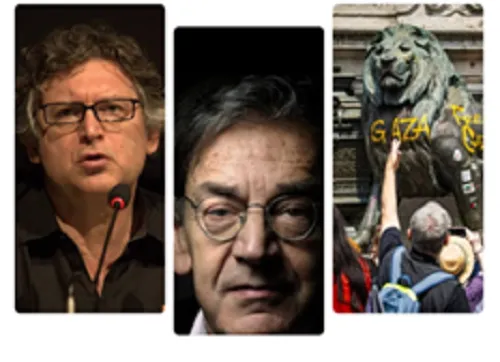
Photo: 1 – Le Monde, 2, 3 – Wikipedia


Jak umiera lewica (prawie spleen)

Anna Grabowska (Anne Goldschmid)


Pomimo, ale też przede wszystkim wobec nowych gorących wydarzeń na Bliskim Wschodzie, ponownie wracam do 7 października, bo to nie był tylko początek kolejnej wojny w regionie ale moment, w którym nagle coś pękło również w Europie. I to coś ma swoją nazwę: sumienie. Kiedy oglądało się obrazy z południa Izraela, i kiedy docierały relacje o ludziach zabijanych w swoich domach, o całych rodzinach z dziećmi i o festiwalu zamienionym w rzeź, w wielu miejscach Zachodu wcale nie pojawiło się współczucie, tylko kalkulacja. To ona właśnie odsłoniła stan ducha współczesnej lewicy.

Filozof Michel Onfray powiedział jasno, że to, co nastąpiło później, jest odpowiedzią na 7 października. Izrael, zaatakowany z brutalnością, której nie da się zrelatywizować żadnym komentarzem socjologicznym, odpowiedział tak, jak odpowiada państwo przekonane, że chodzi o jego istnienie. Onfray przypomina przy tym, że europejskie dyskusje wolą często milczeć, albo sprowadzić dyskusję do frazy : tak, ale. Kiedy w 2005 r., Izrael wycofał się ze Strefy Gazy, pozostawiając ją bez swojej armii i bez osiedli, pojawiła się realna możliwość stworzenia struktury państwowej, bo ziemia była w rękach Palestyńczyków. Płynęły ogromne środki finansowe z Europy i z całego świata. Można było więc budować instytucje, gospodarkę i administrację. Można było, a przynajmniej w teorii, wybrać drogę do powolnej normalizacji i stopniowego uznania państwowości. Według Onfraya ten wybór nigdy nie został podjęty, bo zamiast instytucji powstała infrastruktura wojny. Gospodarkę cywilną zastąpiono gospodarką podziemną z siecią kilometrowych tuneli ciągnących się pod domami, szpitalami i szkołami. A w miejsce projektu politycznego wdrożono logikę permanentnej konfrontacji. Nad tym wszystkim, mówi filozof, od dawna unosi się cień Teheranu. Hezbollah w południowym Libanie, wspierany przez Iran, regularnie ostrzeliwuje północ Izraela, a retoryka o zniszczeniu państwa żydowskiego powraca tam jak mantra z monotonną regularnością.

Można oczywiście dyskutować z tą diagnozą, można ją niuansować, a nawet wskazywać na inne przyczyny konfliktu. Ale jedno pozostaje faktem: atak z 7 października postawił Europę przed bardzo prostym pytaniem moralnym. I to właśnie odpowiedź na to jedno pytanie okazała się najbardziej niepokojąca.

Bo w tym samym czasie drugi wielki francuski filozof, Alain Finkielkraut, zrobił coś więcej swoim osobistym wyznaniem, jednocześnie oskarżając własny obóz polityczny: “to dlatego, że jestem człowiekiem lewicy, nie jestem już lewicą”. Proszę zwrocic uwagę, że nie powiedział tego konserwatysta, ani dajmy na to ideolog prawicy. Powiedział to intelektualista, który sam przez dziesięciolecia należał do tej republikańskiej tradycji francuskiej lewicy, dla której laickość państwa, szkoła publiczna i solidarność społeczna były fundamentami. Finkielkraut twierdzi, że to właśnie te fundamenty zostały porzucone. Laickość, która miała przecież być zasadą wspólnej przestrzeni obywatelskiej, jest dziś, jego zdaniem, przywoływana głównie wtedy, gdy chodzi o usunięcie symboli chrześcijańskich z przestrzeni publicznej. Jednak kiedy pojawia się kwestia religijnego nacisku ze strony islamu, nagle zaczyna się mówić o islamofobii i krzyczy o rasizmie. Reasumując, szkoła republikańska, która miała wyrównywać szanse i otwierać drogę do awansu społecznego dzieciom z rodzin robotniczych została osłabiona przez ideologię egalitaryzmu, w której obniżanie wszelkich wymagań przedstawia teraz się jako akt sprawiedliwości. Jeszcze bardziej dramatyczna jest, według Finkielkrauta, zmiana w stosunku do ludzi, którzy kiedyś sami stanowili jej naturalne zaplecze. Dawna lewica była głosem klas robotniczych, tymczasem dziś mobilizacja polityczna kierowana jest przede wszystkim do młodzieży i do tzw. banlieues – imigranckich przedmieść wielkich miast, podczas gdy dawni wyborcy robotniczy zostali w ogóle wypchnięci poza centrum tej debaty. Tu filozof przywołuje analizę geografa Christopha Guilluyego, który opisał zjawisko “Francji peryferyjnej” jako kraju ludzi żyjących poza wielkimi metropoliami, coraz bardziej niewidzialnych dla elit politycznych i medialnych. Najostrzejsze zdanie Finkielkrauta dotyczy jednak czegoś jeszcze poważniejszego. Stwierdza, że część współczesnej lewicy, zwłaszcza środowiska skupione wokół Jean-Luc Mélenchon i ruchu La France Insoumise, przyjęła wobec Izraela retorykę, która nie wynika już z analizy konfliktu, lecz z czystej kalkulacji wyborczej. Dlatego właśnie mówi, że jest dziś “w żałobie po lewicy”. Jakże go rozumiem.

I w tym miejscu muszę pozwolić sobie na osobistą dygresję. To właśnie z tych powodów lewica była mi kiedyś bliska, bo broniła tych zasad, o których mówią dziś Onfray i Finkielkraut – laickości państwa, szkoły jako narzędzia emancypacji oraz równości szans i przede wszystkim solidarności społecznej. Zawsze patrzyłam na te kwestie z pozycji ateistki, czyli z perspektywy raczej socjologicznej i filozoficznej niż religijnej. Być może właśnie dlatego tak łatwo odnajduję się dziś w słowach tych dwóch filozofów, bo diagnoza nie jest dla mnie manifestem ideologicznym, lecz raczej gorzkim opisem rzeczywistości, która zmieniła się szybciej, niż wielu z nas chciało to zauważyć.

Słowa Onfraya i Finkielkrauta przybierają bardzo różny ton, ale prowadzą w gruncie rzeczy do tej samej konkluzji. Obaj są ateistami i wywodzą się z tej francuskiej tradycji intelektualnej, która przez lata uważała się za spadkobierczynię oświecenia i republikańskiego uniwersalizmu. I obaj mówią dziś z rosnącym niepokojem o przemianie lewicy w coś, czego sami już nie rozpoznają, i z czym nie mają już nic wspólnego. Trzeba przy tym pamiętać o jednej rzeczy: we Francji nie istnieje tylko jedna lewica. Istnieje tradycja socjaldemokratyczna, republikańska i intelektualna, która wciąż odwołuje się do dziedzictwa takich postaci jak Jean Jaurès. Istnieją także środowiska radykalne, dla których polityka staje się coraz częściej spektaklem moralnej indygancji i permanentnego konfliktu. I to właśnie ta druga lewica coraz częściej narzuca ton całej debacie.

Dlatego powrót do diagnozy Onfraya nabiera dziś zupełnie innego znaczenia. Kiedy mówi on o permanentnym konflikcie z ideologiami, które celebrują męczeństwo i śmierć jako drogę do zbawienia, nie mówi wyłącznie o Bliskim Wschodzie. W pewnym sensie mówi także o Europie, która coraz częściej traci zdolność nazwania rzeczy po imieniu zastępując ją co najwyżej milczeniem.

7 października był więc nie tylko tragedią, a momentem prawdy, w którym okazało się, że część europejskiej lewicy nie potrafi już rozpoznać własnych wartości, a jej dawni filozofowie patrzą na to z mieszaniną gniewu i smutku, jak na coś, co jeszcze niedawno było ich politycznym domem, a dziś przypomina ruinę.


Przypisy:

1.Michel Onfray – program CNews (”Face à Michel Onfray”)

2. Michel Onfray – materiał wideo na stronie CNews (”Cette guerre est la suite du 7 octobre”)

https://www.cnews.fr/videos/monde/2026-03-07/les-frappes-iraniennes-sont-la-suite-du-7-octobre-lance-michel-onfray⁠

3.Michel Onfray – pełny fragment programu (wideo)

https://www.dailymotion.com/video/xa1ggba⁠

4. Alain Finkielkraut – wywiad w programie LCI (fragment z cytatem o lewicy) https://www.facebook.com/24hPujadas/videos/1820062778706075/⁠

Alain Finkielkraut – rozmowa o kryzysie lewicy (telewizja francuska)


Zawartość publikowanych artykułów i materiałów nie reprezentuje poglądów ani opinii Reunion’68,
ani też webmastera Blogu Reunion’68, chyba ze jest to wyraźnie zaznaczone.
Twoje uwagi, linki, własne artykuły lub wiadomości prześlij na adres:
webmaster@reunion68.com


The Mamdani victimhood narrative and the American future


The Mamdani victimhood narrative and the American future

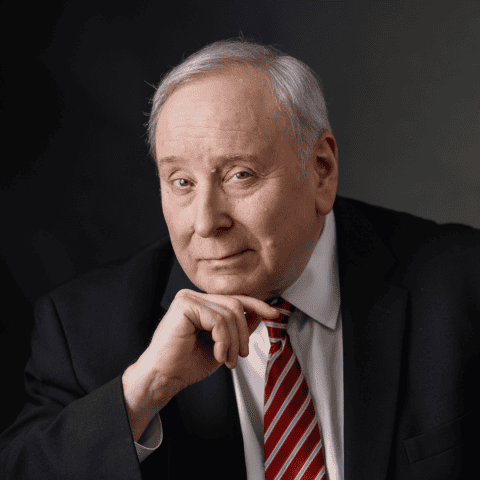
Jonathan S. Tobin


The embrace of terror supporters by the mayor and his wife, coupled with the media’s efforts to confuse the public about an Islamist terror attack, is a tipping point in American society.

New York City Mayor Zohran Mamdani and his wife, Rama Duwaji, arrive at City Hall for his Inauguration on Jan. 1, 2026. Credit: Michael Appleton/Mayoral Photography Office

Last week was a tumultuous one for New York City, its mayor and its Jewish population. Over the course of several days, the city was confronted with events that in any other era might have been considered not only deeply shocking but would have resulted in immediate and serious consequences. 

Reporting about the fact that Rama Duwaji, the wife of Mayor Zohran Mamdani, had liked social-media posts celebrating the Hamas-led terrorist attacks in Israel on Oct. 7, 2023, and denying the rape of Israeli women, was followed by the news that the city’s first couple had hosted two well-known terror supporters at their Gracie Mansion official residence. But before the public had a chance to absorb any of that, the mayor and most of his liberal-media cheering section sought to downplay and then confuse the public about the fact that Islamist terrorists, apparently inspired by ISIS, had attempted to bomb an anti-Mamdani demonstration. 

Taken as a whole, it painted a dismal picture of how the mayor and his supporters were not only doubling down on support for terrorism against Israelis and Jews, but also seeking to treat domestic Islamist terror as a minor issue. The fact that these events, like so much else about Mamdani, were generally treated as not that big of a deal says volumes about where Americans are as a society. And that, as much as anything else, is something that ought to be sounding alarm bells for Jews and everyone who cares about the consequences of cultural decline, as well as tolerance for antisemitism and violence. 

The mayor’s popularity

Mamdani’s ability to shrug off these incidents while being proclaimed by The New York Times as “one of America’s most popular politicians” is an indication not only of how left-wing media and the Democratic Party have his back. Like his election victory in November, it’s also a sign that American society may be at a tipping point when it comes to tolerance for antisemitism. And anyone who thinks that won’t have an impact on Jewish life and the country as a whole hasn’t been paying attention to what has been happening in recent years. 


Jonathan S. Tobin is editor-in-chief of the Jewish News Syndicate, a senior contributor for The Federalist, a columnist for Newsweek and a contributor to many other publications. He covers the American political scene, foreign policy, the U.S.-Israel relationship, Middle East diplomacy, the Jewish world and the arts. He hosts the JNS “Think Twice” podcast, both the weekly video program and the “Jonathan Tobin Daily” program, which are available on all major audio platforms and YouTube. Previously, he was executive editor, then senior online editor and chief political blogger, for Commentary magazine. Before that, he was editor-in-chief of The Jewish Exponent in Philadelphia and editor of the Connecticut Jewish Ledger. He has won more than 60 awards for commentary, art criticism and other writing. He appears regularly on television, commenting on politics and foreign policy. Born in New York City, he studied history at Columbia University.


Zawartość publikowanych artykułów i materiałów nie reprezentuje poglądów ani opinii Reunion’68,
ani też webmastera Blogu Reunion’68, chyba ze jest to wyraźnie zaznaczone.
Twoje uwagi, linki, własne artykuły lub wiadomości prześlij na adres:
webmaster@reunion68.com


Trump Seeks Kurdish Allies Against Tehran, but Analysts Say Plan Is Risky, Could Take Years


Trump Seeks Kurdish Allies Against Tehran, but Analysts Say Plan Is Risky, Could Take Years

Debbie Weiss


Iranian Kurdish fighters from the Kurdistan Freedom Party (PAK) take part in a training session at a base on the outskirts of Erbil, Iraq, Feb. 12, 2026. Photo: REUTERS/Thaier Al-Sudani

The Trump administration, weighing whether the war with Iran could eventually require US troops on the ground, has begun reaching out to Kurdish opposition leaders in Iran with an offer of “extensive US aircover” as it looks for ways to destabilize the regime while the American-Israeli campaign intensifies, an idea one analyst told The Algemeiner would be very difficult to translate into action.

The outreach comes amid reports from Iran that it had preemptively attacked Kurdish forces in Iraqi Kurdistan, claiming the strikes caused heavy losses.

According to The Washington Post, which cited people familiar with the matter, US President Donald Trump held calls with Kurdish minority leaders in Iraq, including Masoud Barzani and Bafel Talabani, as well as anti-regime Iranian Kurdish groups about taking control of areas in western Iran.

A senior official from the Patriotic Union of Kurdistan said Washington asked Iraqi Kurdish authorities to “open the way and not obstruct” and to “provid[e] logistical support” to Iranian Kurdish groups mobilizing in Iraq.

“He told us the Kurds must choose a side in this battle — either with America and Israel or with Iran,” the anonymous official told the paper.

Trump himself on Thursday encouraged Iranian Kurdish forces to go on the offensive but did not indicate whether the US has been coordinating with them.

“I think it’s wonderful that they want to do that; I’d be all for it,” the president told Reuters in an interview.

When asked if the US would provide air cover, Trump responded, “I can’t tell you that,” but noted that the Kurds’ objective would be “to win.”

“If they’re going to do that, that’s good,” he added.

Iran’s intelligence ministry said it had information that “separatist groups” intended to breach its western borders for an attack.

“We targeted the headquarters of Kurdish groups opposed to the revolution in Iraqi Kurdistan with three missiles,” the ministry said, according to a statement published by the state-run IRNA news agency.

Accounts diverged Wednesday night over whether an Iranian Kurdish ground invasion had begun. Fox News said Kurdish militias based in Iraq had crossed into Iran, but Tasnim, Iran’s semi-official outlet, reported via Reuters that its journalists in three border provinces found no evidence of an incursion. Israeli journalist Barak Ravid, who initially cited a US official as confirming the operation, later said reports were “conflicting,” adding that a senior official in one Iranian Kurdish faction also denied that any offensive was underway.

Peshawar Hawramani, a spokesperson for the government in the federated Kurdistan region of Iraq, known as the Kurdistan Region of Northern Iraq, has released a statement denying involvement in any incursions or armament.

“[A]llegations claiming that we are part of a plan to arm and send Kurdish opposition parties into Iranian territory are completely unfounded,” Hawramani said, calling the reports “malicious.”

.

.
The London-based Asharq Al-Awsat outlet reported that Iranian Foreign Minister Abbas Araghchi and Ali Bagheri Kani, deputy secretary of Iran’s Supreme National Security Council, have pressed Iraqi officials for details about the phone calls between Trump, Barzani, and Talabani.

Iran also told Iraq’s federal authorities in Baghdad that it “must provide sufficient guarantees and take the necessary measures” to prevent Iraqi Kurdish groups from aiding Iranian opposition groups, the report said, citing unnamed sources.

Iran’s Kurdish population — estimated at roughly 8 million to 12 million people — lives largely in mountainous western provinces along the Iraqi border, where several armed opposition factions have long operated and where some Iranian Kurdish groups maintain bases across the frontier in northern Iraq.

The country’s Kurdish minority has a long history of political activism based on decades of rebellion against central rule, a dynamic that predates the Islamic Republic. Kurdish forces briefly established their own state in northwestern Iran, the Republic of Mahabad in 1946, before it was crushed, and Kurdish groups have periodically clashed with successive governments in Tehran ever since.

A day earlier, CNN reported that the CIA has been working for months with Iranian Kurdish groups to foment an uprising.

US Defense Secretary Pete Hegseth told reporters Wednesday: “None of our objectives are premised on the support or the arming of any particular force. So, what other entities may be doing, we’re aware of, but our objectives aren’t centered on that.”

Northern Iraq’s Kurdistan region has long served as a rear base for Iranian Kurdish dissident groups, but only so long as local leaders kept them from launching attacks into Iran. That delicate arrangement could unravel if fighters mobilize across the border as part of the wider war effort, said Seth Frantzman, a regional analyst who has studied Kurdish militant groups.

If Iranian Kurdish factions begin operating from Iraqi territory and the broader US-Israeli campaign fails to decisively weaken Tehran, Kurdish authorities in Erbil and Sulaymaniyah could find themselves exposed to retaliation from Iran, Frantzman said. Leaders in Iraqi Kurdistan “have tried for years to keep the balance” hosting Iranian Kurdish opposition groups while maintaining a working relationship with Tehran, he said.

Even if Washington were prepared to support Kurdish factions, turning them into an effective anti-regime force would take far longer than the current conflict timeline suggests.

Frantzman said any outside backing would take time to put in place, requiring logistics channels and training. “These types of programs, advising and assisting groups, or arming them, takes time,” he said, pointing to past US experiences from Afghanistan to Syria as examples.

Frantzman said Kurdish factions would be looking for assurances that outside support would last, wary of being pulled into an uprising only to be left exposed if backing fades and Tehran reasserts control.

“They would be very wary and skeptical of taking chances today, having already lost lives and lost territory,” he told The Algemeiner.

He pointed to several examples, most notably the US-backed Kurdish campaign against the Islamic State terrorist group in Syria, when Washington trained and equipped Kurdish fighters to form the backbone of the Syrian Democratic Forces in 2015. The campaign, which took more than four years, required sustained support and came at a heavy cost, with about 11,000 fighters killed.

Even that effort, he noted, which targeted a terrorist group in a limited area rather than an established state, took over four years to complete. Any comparable attempt inside Iran — a country of roughly 90 million people with a far larger military and security apparatus — would be far more difficult.


Zawartość publikowanych artykułów i materiałów nie reprezentuje poglądów ani opinii Reunion’68,
ani też webmastera Blogu Reunion’68, chyba ze jest to wyraźnie zaznaczone.
Twoje uwagi, linki, własne artykuły lub wiadomości prześlij na adres:
webmaster@reunion68.com