Archive | 2026/10/27

Wojny zastępcze Chin: czy III wojna światowa już się zaczęła?

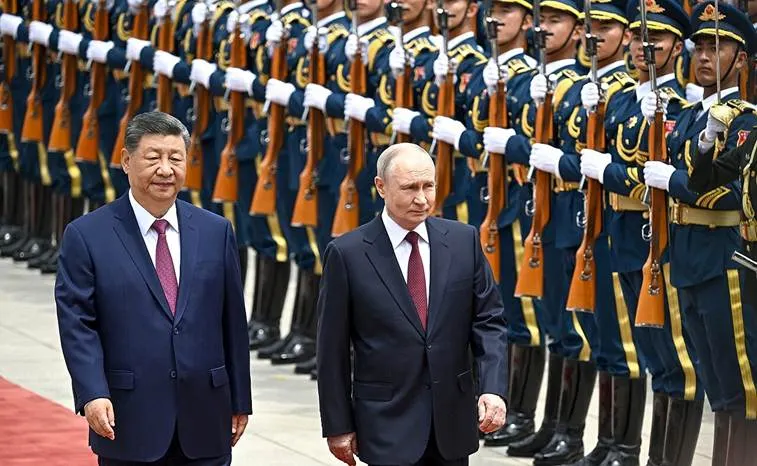
Przewodniczący Komunistycznej Partii Chin Xi Jinping intensywnie działa na rzecz destabilizacji świata. „Wielki chaos pod Niebem prowadzi do wielkiego ładu pod Niebem” – napisał Mao Zedong w 1966 roku w liście do swojej żony Jiang Qing, odnosząc się do swojego celu, jakim było ustanowienie chińskich rządów nad całym światem. Xi przez cały obecny wiek nawiązuje do wywodzącej się z epoki cesarskiej koncepcji, zgodnie z którą chińscy przywódcy nie tylko mieli prawo rządzić tianxia – „wszystkim pod Niebem” – ale wręcz mieli obowiązek to czynić. Na zdjęciu: Xi oraz Władimir Putin podczas powitalnej uroczystości w Pekinie 20 maja 2026 r. (Źródło: Wikipedia)


Wojny zastępcze Chin: czy III wojna światowa już się zaczęła?

Gordon G. Chang


„Nie, nie stoimy w przededniu III wojny światowej” – pisze Leon Hadar w „Asia Times”.

„To, co naprawdę dzieje się w 2026 roku, nie jest powolnym rozpalaniem jednej globalnej wojny” — dodaje. „Jest to powolny rozpad powojennego porządku pod przewodnictwem Ameryki, rozgrywający się jednocześnie na pół tuzina teatrów działań, które jak dotąd nie złożyły się w jeden konflikt”.

Niezależnie od tego, czy Hadar ma rację, czy nie, mój znajomy stwierdził w czerwcu, że „świat całkowicie wymknął się spod kontroli”.

W tym naszym świecie, który wymknął się spod kontroli, tempo zmian przyspiesza. Jak miał powiedzieć Włodzimierz Lenin: „Są dekady, podczas których nic się nie dzieje, i są tygodnie, podczas których dzieją się całe dekady”.

W tym okresie gwałtownych zmian Hadar przyznaje, że trwają wojny regionalne, lecz uważa je za „objaw nieporządku, a nie krok w kierunku wojny globalnej”.

„Niebezpieczeństwo związane z nadmiernie pochopnym stawianiem diagnozy »III wojny światowej« nie polega jedynie na braku trafności” – argumentuje Hadar. „Problem w tym, że takie ujęcie zazwyczaj prowadzi właśnie do tych działań politycznych – maksymalistycznych zobowiązań, odruchowego prężenia militarnych muskułów, traktowania każdego regionalnego sporu jako egzystencjalnego sprawdzianu determinacji – które utrudniają ugaszenie mniejszych pożarów”.

Ten rozsądnie brzmiący pogląd pomija jednak ważniejszą kwestię. Nie przyjmując zdecydowanego podejścia, Stany Zjednoczone i ich partnerzy pozwolili wrogim aktorom przybliżyć świat do globalnego konfliktu.

Na przykład prezydent Rosji Władimir Putin niemal na pewno uznał niezdecydowanie Ameryki i Zachodu na początku 2022 roku – prezydent Joe Biden powiedział, że być może tolerowałby „niewielkie wtargnięcie” na Ukrainę – za zielone światło dla inwazji na pełną skalę.

Gdyby Biden uczynił z inwazji „egzystencjalny sprawdzian determinacji”, prawdopodobnie zmusiłby rosyjskiego przywódcę do ustąpienia. Zamiast tego jego słabe podejście otworzyło drogę do długotrwałej wojny.

Ukraina ma znaczenie – znacznie większe, niż większość ludzi zdaje sobie sprawę. Jak Gregory Copley, prezes International Strategic Studies Association, powiedział Gatestone w grudniu 2023 roku, nie ma już „wojen regionalnych”, ponieważ „we wszystkie z nich w jakimś stopniu zaangażowane są wielkie mocarstwa”.

Na Ukrainie, na przykład, Chiny udzielają Rosji wszechstronnego wsparcia.

Xi Jinping w pełni poparł Putina, ponieważ chiński przywódca najwyraźniej zaczerpnął dwie idee z maoistowskiego podręcznika „ruchu chłopskiego”.

Po pierwsze, Xi najwyraźniej próbuje „okrążyć miasta ze wsi”. Dziś chiński przywódca uważa miejsca takie jak Ukraina za wieś, a Amerykę za najważniejsze miasto. Mao zwyciężył w 1949 roku nad silniejszymi wojskami nacjonalistów Czang Kaj-szeka właśnie dzięki tej strategii wsi i miast.

Po drugie, Xi intensywnie działa na rzecz destabilizacji świata. „Wielki chaos pod Niebem prowadzi do wielkiego ładu pod Niebem” – napisał Mao Zedong w 1966 roku w liście do swojej żony Jiang Qing, odnosząc się do swojego celu, jakim było ustanowienie chińskich rządów nad całym światem. Xi przez cały obecny wiek nawiązuje do wywodzącej się z epoki cesarskiej koncepcji, zgodnie z którą chińscy przywódcy nie tylko mieli prawo rządzić tianxia – „wszystkim pod Niebem” – ale wręcz mieli obowiązek to czynić.

Ameryka musi przeciwstawiać się państwu chińskiemu wszędzie tam, gdzie państwo chińskie rzuca wyzwanie światu. Każda walka – Xi Jinping prowadzi obecnie wojny zastępcze na trzech kontynentach – stała się więc krytycznie ważna, jeśli wręcz nie jest częścią egzystencjalnego starcia.

„Prawdziwa wojna światowa wymaga, aby wielkie mocarstwa zdecydowały się na bezpośrednią konfrontację ze sobą” – pisze Hadar. „Tymczasem mamy do czynienia z kilkoma wielkimi i średnimi mocarstwami, z których każde realizuje węższe, bardziej transakcyjne cele; od czasu do czasu dochodzi między nimi do kolizji, zazwyczaj niezamierzonej”.

To prawda, że Chiny i Rosja od czasu wojny koreańskiej nie zdecydowały się na bezpośrednią walkę ze Stanami Zjednoczonymi, lecz są coraz bliżej tego zarówno na Ukrainie, jak i w Iranie. Oba konflikty są obecnie starciami zastępczymi.

„Wojny światowe często można z całą pewnością rozpoznać dopiero wtedy, gdy wzajemnie powiązane kryzysy przekształciły się już w jeden konflikt” – napisał do mnie w tym miesiącu David Maxwell, wiceprezes Center for Asia Pacific Strategy. „Odrębne wojny nie muszą zaczynać się jako skoordynowane globalne starcie”.

Maxwell ma rację: pod koniec lat 30. XX wieku odrębne wojny połączyły się w konflikt, który dziś nazywamy II wojną światową.

Jak zauważa: „Pytanie może więc nie brzmieć, czy III wojna światowa jest nieuchronna, lecz ile regionalnych wojen może toczyć się jednocześnie, zanim rozróżnienie między konfliktem regionalnym a wojną światową utraci strategiczne znaczenie”.

Dziś zarówno Rosja, jak i Chiny mają powody, by walczyć do samego końca: Rosja dlatego, że ponosi dotkliwe porażki na Ukrainie, a Chiny dlatego, że zmagają się z wewnętrznymi kryzysami, które mogą doprowadzić do końca rządów Partii Komunistycznej.

Obecne ryzyko polega na tym, że zdesperowany Putin lub niepewny swojej pozycji Xi może użyć swojej najpotężniejszej broni, prowadząc wojnę, która stanie się ostatnią wojną w historii.


Link do oryginału: https://www.gatestoneinstitute.org/22858/china-proxy-conflicts

Gatestone Institute, 15 września 2026

Gordon G. Chang jest autorem książki Plan Red: China’s Project to Destroy America („Plan Czerwony: chiński projekt zniszczenia.


Zawartość publikowanych artykułów i materiałów nie reprezentuje poglądów ani opinii Reunion’68,
ani też webmastera Blogu Reunion’68, chyba ze jest to wyraźnie zaznaczone.
Twoje uwagi, linki, własne artykuły lub wiadomości prześlij na adres:
webmaster@reunion68.com


Election Day: Polls open as Israelis cast ballots for 26th Knesset


Election Day: Polls open as Israelis cast ballots for 26th Knesset

JNS Staff


More than 7.3 million Israelis are eligible to vote at 12,018 regular polling stations nationwide.

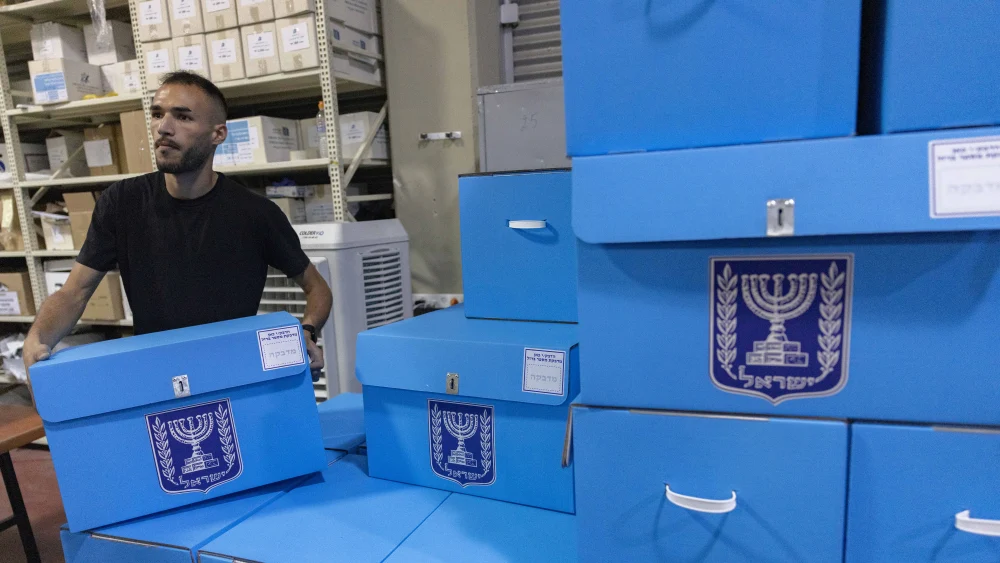
Workers prepare ballot boxes for Israel’s upcoming general elections at the Central Elections Committee warehouse in Shoham, ahead of their distribution to polling stations across the country, Oct. 14, 2026. Photo by Yonatan Sindel/Flash90.

Most polling stations in Israel opened at 7 a.m. on Tuesday, Oct. 27, for the election for the 26th Knesset, with voting scheduled to continue until 10 p.m. Some stations will operate on shorter schedules.

Some 7.33 million Israelis are eligible to vote, according to Israeli Central Elections Committee figures dated Sept. 6, an increase of 543,177 since the previous election four years ago. The committee listed 12,018 regular polling stations nationwide, including 6,208 accessible stations.

It will be the country’s first general election since the Hamas-led massacre on Oct. 7, 2023.

.

Election Day in Israel is a national holiday, with schools, kindergartens and most workplaces expected to close. Voters choose party lists rather than directly electing a prime minister. Lists must receive at least 3.25% of valid votes to enter the Knesset.

Military voting began on Oct. 21 at Israel Defense Forces bases and outposts across operational arenas, including in Gaza, Lebanon and Syria. More than 850 polling stations, many of them mobile, were deployed, according to the IDF, with voting continuing through Election Day subject to operational requirements.

Eligible Israeli diplomats serving abroad and their family members began voting on Oct. 15. President Isaac Herzog attended the opening of voting at Israel’s embassy in Baku, Azerbaijan, calling the election “a celebration of democracy” and urging citizens to vote.

Proportional representation

Israeli democracy is based on a parliamentary system of proportional representation. This means that Israeli citizens do no vote directly for a prime minister or district representatives. They vote for a party that runs in a single, nationwide constituency, where the legislative body—the Knesset—has 120 seats.

A vote for a party is a vote for a list of Knesset candidates. The 120 Knesset seats are divided proportionally to the number of votes that each party wins. Thus, if a single party won 50% of the valid votes, it would secure 60 Knesset seats.

No party has ever won a majority of the votes, so every government has been formed by a coalition of parties.

In addition, parties must receive at least 3.25% of the valid votes to enter the Knesset; votes cast for parties that fail to reach this electoral threshold are discarded. 
.

Choosing a prime minister

Although typically the leader of the largest party becomes prime minister, this is not always the case. The law stipulates that the Israeli president designates the member of the Knesset who has the best chance of forming a coalition with the task of forming a government.

The designated member of Knesset must present the proposed government and its policy guidelines to the Knesset and win its approval before taking office as prime minister.

If the designated member of Knesset is unable to do this, the president designates another member of Knesset to try.

The prime minister must moreover hold a Knesset seat while serving as the head of the government. Other ministers are not required to be lawmakers.

The Israeli president is elected by the Knesset for a seven-year tenure. Israel’s current president, Isaac Herzog, is scheduled to end his term in July 2028.

More than a century of democracy

A World Economic Forum ranking from 2019 places Israel among the world’s 20 oldest continuous democracies.

Although since its inception Israel has faced “wars, terrorism, security threats, political upheavals and profound social change,” it has always maintained its commitment to parliamentary democracy, the Foreign Ministry states.

“Israel’s democracy was born in adversity. Its endurance is one of the country’s greatest achievements,” it adds.

“Jewish, Muslim, Christian and Druze citizens, from cities and countryside, religious and secular, from every background and community, will participate [on Oct. 27] in the same democratic process. They may disagree profoundly about Israel’s future, but each has an equal vote in determining it,” the ministry says.


Zawartość publikowanych artykułów i materiałów nie reprezentuje poglądów ani opinii Reunion’68,
ani też webmastera Blogu Reunion’68, chyba ze jest to wyraźnie zaznaczone.
Twoje uwagi, linki, własne artykuły lub wiadomości prześlij na adres:
webmaster@reunion68.com


Trump Again Endorses Netanyahu, Who Touts Backing Ahead of First Israeli Election Since Oct. 7 Attack


Trump Again Endorses Netanyahu, Who Touts Backing Ahead of First Israeli Election Since Oct. 7 Attack

Corey Walker


US President Donald Trump greets Israeli Prime Minister Benjamin Netanyahu at the White House in Washington, DC, US, Sept. 29, 2025. Photo: REUTERS/Kevin Lamarque

US President Donald Trump has reiterated his public endorsement of Israeli Prime Minister Benjamin Netanyahu’s reelection bid as Israelis prepare to head to the polls on Tuesday for the first time since Hamas’s Oct. 7, 2023, invasion and massacre.

In a Truth Social post published on Sunday evening, Trump praised Netanyahu’s leadership and urged Israeli voters to support him in the election, pointing to their cooperation in confronting shared security threats.

“When you go to the Polls please remember that Bibi [Netanyahu] has been an outstanding Warrior Prime Minister!” Trump wrote, adding that the two leaders had worked together successfully on major military operations.

“Vote for Bibi Netanyahu for Prime Minister,” Trump added.

The US president concluded his message with a call to continue their joint military efforts against Iran, writing that the two countries needed to “finish the job that we started.”

The endorsement came one week after Trump first threw his support publicly behind Netanyahu in an unusually direct intervention in Israeli politics, warning that choosing another leader could leave Washington to confront Iran without an Israeli partner willing to do the same.

Trump’s latest message of support comes as Israel heads into an election dominated by the wars in Gaza, Iran, and Lebanon that followed the Oct. 7 massacre; demands for accountability over the security failures that led to the attack; disputes over ultra-Orthodox military service; and the rising cost of living.

The future of American-Israeli cooperation is also another major issue looming large over the election.

Trump’s latest statement reinforces his administration’s close relationship with Netanyahu, whose government has made countering Iran’s regional influence and military capabilities a top security priority.

Netanyahu has touted Trump’s endorsement in the final days of the campaign.

“US President Donald Trump has come with a friendship that has never existed before between an Israeli prime minister and an American president. And it is doubtful we will ever have such a friendly president again,” Netanyahu said in a televised appearance late on Sunday night. “He has another two years, and he says he is calling on you to vote for me.”

Netanyahu added that Trump was willing prepared to help “finally, finally, remove the Iranian threat,” but only with Netanyahu as prime minister.

“And I have already instructed the Mossad [intelligence service] and the IDF [Israel Defense Forces] to bring down this regime, to bring down this regime because that is the only way to put an end to this threat,” Netanyahu said.

Netanyahu’s principal challenger, Gadi Eisenkot, a former IDF chief of staff who leads the centrist Yashar party, praised Trump as “a true friend of Israel” in his own social media post.

“I value his efforts and his commitment to Israel’s security, and I am confident that he will work in full cooperation with any leader chosen by the people,” he added.

Trump’s endorsement followed reports that Netanyahu and his allies had stepped up efforts to secure additional public support from the American president in the final stretch of the campaign.

Both Trump and Netanyahu have denied such reports.

“I never spoke about it,” Trump said when asked by reporters later on Monday whether Netanyahu had requested the second endorsement

“I put out both endorsements. I put out both … I think he’s done a very good job as prime minister under very trying conditions,” Trump added.

In recent days, Netanyahu has suggested that Israel will likely continue to undergo diplomatic isolation amid simmering international outrage over the war in Gaza. The Israeli premier has argued that the state will likely need to accelerate weapons manufacturing and implement measures to circumvent financial sanctions.

On Sunday, Netanyahu put Iran at the center of his final campaign push, warning that Tehran and its proxies could launch attacks to disrupt the election, hours after sharing an AI-generated image of a nuclear explosion over Tel Aviv.

The image was accompanied by a post by political commentator Yuval Bloomberg arguing that Iran’s nuclear ambitions overshadowed every other issue facing Israeli voters.

“If two atomic bombs fell in central Israel, who would care about all these pointless controversies?” the post read, citing other disputes and characterizing them as unimportant by comparison.

Eisenkot accused the prime minister of resorting to “hysterics.”

“As in every election campaign, it’s the same methodology of lies and scare tactics. This time, threatening Israeli citizens with mass destruction,” he wrote on X.

The final polls released Friday by Israel’s three main television news networks showed Eisenkot’s Yashar ahead of Netanyahu’s right-wing Likud, but neither political camp securing the 61 seats needed for a majority in the 120-member Knesset.

In Israel’s parliamentary system, voters choose party lists rather than a prime minister directly. Parties must receive at least 3.25% of the national vote to enter parliament, and the president subsequently tasks the lawmaker considered best positioned to assemble a governing coalition with doing so.

“It looks like an indecisive outcome is the most likely outcome,” Yohanan Plesner, president of the Israel Democracy Institute, said in a statement based on the latest polling.


Zawartość publikowanych artykułów i materiałów nie reprezentuje poglądów ani opinii Reunion’68,
ani też webmastera Blogu Reunion’68, chyba ze jest to wyraźnie zaznaczone.
Twoje uwagi, linki, własne artykuły lub wiadomości prześlij na adres:
webmaster@reunion68.com