Can Israel End Iran’s Nuclear Program?

Can Israel End Iran’s Nuclear Program?


Armin Rosen


A conversation with leading American physicist and nuclear weapons expert David Albright about what Israel’s campaign has achieved so far and whether U.S. military assistance is needed

Smoke rises from locations targeted in Tehran amid the third day of Israel’s waves of strikes against Iran, on Sunday, June 15, 2025
Khoshiran/Middle East Images/AFP via Getty Images

The United States is the only country in the world with the ability to destroy the Fordow nuclear facility quickly from the air, something we could accomplish by dropping a couple 15-ton Massive Ordnance Penetrator bombs on the most important and heavily protected piece of Iran’s nuclear infrastructure. Such a strike would potentially reset the entirety of international arms control.

Since the early 1970s, the world has depended on the Nuclear Non-Proliferation Treaty (NPT) regime, the International Atomic Energy Agency (IAEA), and the U.N. Security Council to maintain a global system that regulates the spread and development of nuclear weapons technology, placing American adversaries like China and Russia at the apex of the arms control system and creating layers of bureaucracy and diplomacy that would-be proliferators have learned to exploit. Pakistan, India, and North Korea have all built nuclear arsenals in defiance of the NPT. Until this week, Iran was very close to joining them.

The global arms control regime never considered Fordow—or, for that matter, Yongbyon, the site of North Korea’s nuclear breakthroughs in the mid-’90s—to be sufficiently serious a threat to global peace to warrant military action. Interestingly enough, the three most recent instances of a country using force to stop an in-progress nuclear program—namely, the Israeli attacks on Iraq, Syria, and Iran—were launched by a state that isn’t a signatory to the NPT. So far the United States has declined to attack North Korean and Iranian nuclear sites. If Donald Trump were to reverse course and bomb Fordow, he would reorient all of global nonproliferation around American strategic judgment and leadership. A successful U.S. attack on Fordow would establish a precedent that a would-be atomic scofflaw couldn’t ignore, with Washington acting as the final bulwark against the spread of nuclear weapons in cases where the NPT regime failed.

But what if Trump decides stanching the tide of nuclear weapons is a job better left to the Chinas and Russias of the world? What if the Israelis are really on their own here? One of the big unknowns of Operation Rising Lion is the extent of the damage Israel has been able to inflict on the Iranian nuclear program so far. Clarifying the issue requires both scientific expertise and deep knowledge of the entire Iranian nuclear-industrial complex.

Almost no one on earth is more qualified to talk about Israel’s progress against the Iranian bomb than the physicist and former IAEA inspector David Albright, founder and president of the Institute for Science and International Security (ISIS). The institute has already published a detailed summary of the likely impact of Israeli strikes on Iranian nuclear facilities. I spoke to Albright on Monday afternoon to get an update on where things stand. The conversation has been edited for length and clarity.

Let’s say, hypothetically, that Israel stopped bombing Iran right now. How far back have they set the nuclear program? Do we even know?

I think it’s been set back significantly, but it’s hard for me to quantify that. The elephant in the tent is Fordow, where if Iran continues to operate, they can break out and make weapon-grade uranium very quickly. I think on the weaponization side, the time to make the bomb has probably been extended by several months.

I think it would be very dangerous for Israel to stop right now. Iran has a big program. There are a lot of parts to it, and it just takes a significant amount of time to really set it back sufficiently to feel like the job is done. Now, if Iran agrees to negotiations and says, we’ll dismantle our program and we’ll come clean with the IAEA then that’s another way to establish the endpoint you want. But if it’s just Israel walking away and then Iran leaves the NPT or just refuses to cooperate with the inspectors, we’re in a worse situation because Iran would certainly be incentivized to move toward the bomb.

Fordow is the workhorse, and putting that out of operation is really important.

It would still be very hard for Iran to move to build a bomb right now. In the long run Iran can replace the nuclear scientists killed this week, but in the short run they can’t. It’s a real shock to the system that makes the nuclear weapon itself.

You also have this destruction at the Isfahan enriched uranium metal production line. So you have just a chunk taken out of the line of things that have to be done to make the weapon-grade uranium core component … I think that Israel is deliberately trying to increase the time frame, I would say by at least a half a year or more, for Iran to be able to make even a non-missile-deliverable nuclear weapon, while also making Iran more scared to start that process.

On the fissile material, it really all hinges on Fordow and how many more centrifuges Iran has made that it hasn’t deployed.

On Friday Israel destroyed the power station supplying the Natanz nuclear facility. I’ve read, including in the ISIS report, that if the centrifuges inside Natanz are left without power long enough they will become permanently disabled. How does that work?

A centrifuge has a rotor that spins at a very high speed. If you cut off electricity, it’ll spin more slowly and finally stop. But as it traverses down from around 450 meters per second, sort of the speed of a bullet fired from a handgun, it’ll hit resonances and will start to shake violently. And then it’ll hit the wall and break. A centrifuge operator has to have a strategy to get through the resonances … but in an uncontrolled shutdown, gradually speed goes down through the resonances and that maximizes the chance of a vibration that leads to the rotor crashing against the wall of the centrifuge’s outer case.

During one of the first deals with Iran, in 2003, Iran agreed to shut down 164 centrifuges, its first cascade. But they weren’t that experienced. One-third broke when they shut them down, and that was a controlled shutdown.

When I read that Israel had destroyed the power source for Natanz without necessarily destroying the underground centrifuge halls, the next obvious question in my mind was: Could something similar be done at Fordow? Is it possible to disable Fordow by attacking the power supply and thus avoiding the issue of having to bomb so deep underground?

They could do that. I’m actually wondering why they haven’t yet. Fordow is much more deeply buried than Natanz. It’s 80 meters or so underground. Israel could take out the ventilation system at Fordow and make it impossible to really work in that environment. I don’t understand why they haven’t yet. They could make it inoperative and if Iran moves to fix it, they can bomb it again. So as long as Israel is active over the skies of Iran, they can keep Fordow and Natanz inoperable.

Can Israel destroy Fordow without American help?

Yeah, I think so. They could mine it during a commando raid. They could potentially crack the ceiling or undermine the support structure of the halls. They can make it very difficult to get into. Effectively that’s destroying it, if you can’t get in without months and months of work. Then when you get in, it’s more than likely most of the centrifuges are going to be broken.

So Fordow’s power supply is above ground?

Yeah. There are no generators underground as far as I know.

What do you make of Israel’s strategy with Fordow so far? It was reported yesterday that there was a small earthquake in Fordow, and there’s been video online of columns of smoke coming from the area of the facility, but it doesn’t seem as if Israel’s made it the primary target of what they’re doing so far.

I can only speculate. I mean, it’s possible they’re trying to leverage the United States to destroy it because the U.S. could drop a couple of bunker-busters and the ceiling and the main halls would collapse and it’s the end of the story. Iran could never rebuild it. The rock would be too unstable. They’d have to go someplace else and start anew.

It’s possible the Israelis aren’t that worried about Fordow and have some information that says, no, Iran’s not making weapon-grade uranium at Fordow, and it’s on a list, and they’ll eventually get to [attacking it]. But it is a mystery to me.

Can Israel disable Fordow without destroying it, and without the use of large bunker-busters?

They could take out the electricity. They could destroy the ventilation system. They can easily destroy the pedestrian entrance. They can destroy the main entrances. There’s two, and they can even use more powerful armaments to work their way back to the tunnel entrances. They can’t get to the [centrifuge] hall perhaps, but they can get a good way there. It would be inaccessible for months. And then they can always go back if there’s some sign of the Iranians trying to dig out new tunnel entrances, but I think it would be tough for them.

Can Israel destroy Fordow without American help? Yeah, I think so.

Israel destroyed an advanced centrifuge manufacturing facility in Iran in 2020. After that Iran said, okay, now we’re going to put that underground, under this mountain near Natanz, and it’ll be done in a year or two. It’s now been four or five years and it’s still not done. So it does take them a long time to recover from these kinds of actions. I think Fordow could be kept inoperable for quite a while. And then you can go back. It’s not an ideal solution to always have to go back, but it is a solution.

What that doesn’t help you with, and this is something that the Israelis don’t have an answer for, is what if Iran just says, okay, we don’t care about Fordow. We’ve abandoned it. Now we’re going to take the 2,000 or 3,000 centrifuges that we’ve built [at Fordow] and put them someplace you don’t know and then enrich to 60 percent. So Israel has to address that problem in some way. They can’t just walk away and leave the world with Iran having a pathway to weapon-grade uranium production.

How can they cut off that pathway?

You need time to find out where the centrifuges are, where the [uranium] stocks are. You need to be collecting intelligence on the ground. You need to encourage sources inside the program to see the futility of continuing to resist. Iran doesn’t get much from the centrifuge program other than a bomb program. The centrifuges don’t provide any real economic benefit that Iran couldn’t get from buying enriched uranium from overseas [at a much lower than weapons-grade level of enrichment to fuel civilian reactors]. It is ridiculous what they’re doing. I would imagine that many of the scientists and engineers could start to think, why are we doing this? And then they may have insight into secret stocks of centrifuges and weaponization production equipment that’s hidden away. But it takes time.

Tell me about what Israelis hit in Isfahan this week.

Isfahan is where the Iranians convert uranium. If you want to enrich uranium, you need to take it from a mine and then convert it through a chemical process into uranium hexafluoride. The main purpose of Isfahan is to produce natural uranium hexafluoride that then could be enriched. Once you have it enriched you convert it back into an oxide form that could be made into fuel. Iran was building that kind of capability, but stopped … Instead they created a line to start making enriched uranium metal, particularly playing around with 20 percent enriched uranium. They want to create a three-step line to go from 20 percent enriched uranium hexafluoride to 20 percent enriched uranium metal. They claim it’s for fuel, but they have no reactor to put it in.

The three parts of this conversion facility aren’t all done. Only one part was done and Israel bombed it. It really looked like a line to take weapon-grade uranium hexafluoride and turn it into weapon-grade uranium metal.

So this metal would form the hemispheres of the uranium core of a nuclear bomb?

The metal comes out looking like a large hockey puck. Then you would have to melt it in what’s called a vacuum induction furnace, and then pour it into a mold to make the hemispheres. Then you’d have to machine it and do all kinds of other things, like polish it and then coat it—the metal reacts to oxygen and rusts faster than a bicycle handle or a nail. You would have to coat it to protect it, and then it could be used in a bomb. There’s several steps, but it’s a linear process. If you knock out one step, you’ve disrupted the ability to make the weapon-grade uranium component needed for a weapon. Now the question is, does Iran have other capabilities to do that same thing to go from the hexafluoride to the metal? The IAEA thinks possibly, though it’s probably not fully operational or even assembled. You can start to get a sense that Israel is delaying Iran’s ability to make the bomb itself.

[Albright noted that there is an ongoing question of whether Iran has offline vacuum induction furnaces at sites other than Isfahan. Even in light of this lingering ambiguity, he assesses that it would take “months” for Iran to rebuild the Isfahan facility.]

Back to Natanz. How important is this enrichment site, which Israel fully disabled and partly destroyed?

There are over 12,000 advanced centrifuges in the underground hall at Natanz along with 5,000 IR1s [an older Iranian centrifuge model]. And remember, 70 percent of the enrichment effort goes towards getting the uranium to five percent. In Fordow and the Natanz pilot plant [which Israel fully destroyed], Iran can go from five to 60 percent, or from 20 to 60 percent, and it involves many fewer centrifuges, so it can be done in smaller facilities. [Albright said that when Israel hit the Natanz pilot plant, “there were definitely kilograms of 60 percent enriched uranium there.” The facility produced “a few kilograms” of the stuff each month. Around 42 kilograms of 60 percent enriched uranium are needed to produce enough 90 percent enriched uranium for a single warhead, according to the Arms Control Association.]

Fordow is the workhorse, and putting that out of operation is really important. If Iran had to start with natural uranium at Fordow [uranium at zero percent enrichment], breakout timelines would be months to get enough enriched uranium for one bomb. But if they had all the 60 percent enriched uranium at Fordow that’s suspected to be there, just using the advanced centrifuges there, they could have enough for nine bombs in three weeks.

Even now?

Even now. If it’s operational and they have all the 60 percent, they still have a tremendous breakout capability. And that’s why I think Israel needs more time or help.

There’s this line that’s been floating around among some of your colleagues in the disarmament world that an Israeli attack, or really any pressure on Iran, is bad because if you don’t take out the entire program, they’re just going to sprint to a nuclear weapon. Thus, by trying to end the program through military means, you’ll have advanced the creation of an Iranian nuke. Do you think that’s been disproven this week, or is there still the possibility that this whole thing ends with Iran getting what they’ve been working toward for 30 years?

I think those comments are inaccurate. And even before this event, I felt they were inaccurate and politically driven. Their fundamental belief is, We’ve got to stop a war. And it’s ironic that it’s people who in many cases advocate for the abolition of nuclear weapons—but when push comes to shove, when there’s really a challenge and an opportunity to end nuclear weapons, they fold and go, Oh, we don’t want a war. And so in that sense, they’re not very credible. These attacks certainly incentivize Iran to build nuclear weapons. But I think what you’re seeing as this plays out is that Israel is building in many disincentives for Iran to make that decision, along with many roadblocks. But it needs to finish the job. It needs time or it needs help.

What do you think is the most important single thing that the Israelis have done to the nuclear program since their campaign began on Friday?

I think it is collective. They’re significantly setting back Iran’s ability to build nuclear weapons. And they’re doing it in many ways that weren’t expected. And more is to come.


Armin Rosen is a staff writer for Tablet Magazine.


Zawartość publikowanych artykułów i materiałów nie reprezentuje poglądów ani opinii Reunion’68,
ani też webmastera Blogu Reunion’68, chyba ze jest to wyraźnie zaznaczone.
Twoje uwagi, linki, własne artykuły lub wiadomości prześlij na adres:
webmaster@reunion68.com


Iran Strikes Haifa Mosque With Missile, Injures Muslim Clerics While ‘Firing Indiscriminately at Civilians’

Iran Strikes Haifa Mosque With Missile, Injures Muslim Clerics While ‘Firing Indiscriminately at Civilians’

Shiryn Ghermezian


A man walks near broken windows at a mosque that was damaged following Iran’s missile strike on Israel, amid the Iran-Israel conflict, in Haifa, Israel, June 20, 2025. Photo: REUTERS/Rami Shlush

A mosque in the Israeli city of Haifa was hit by a ballistic missile launched by Iran on Friday morning, and Muslim clerics were among those injured in the attack.

Israel’s Minister of Foreign Affairs Gideon Sa’ar said Iran’s barrage of missiles targeting Haifa struck the Al-Jarina Mosque in the Wadi Nisnas neighborhood and clerics inside the mosque sustained injuries. Haifa is a port city in the north that has a mixed Arab and Israeli population.

“The Iranian regime is targeting Muslim, Christian, and Jewish civilians, as well as civilian sites. These are war crimes,” said Sa’ar in a post on X. He also shared a video of the mosque that was hit in the missile attack.

Sa’ar later arrived at the scene of the strike and gave a statement to the press.

“We see here once again the results of the Iranian strategy. The Iranian regime is deliberately targeting civilian population centers. Therefore, you can see that a pure civilian area was hit here. Specifically, in that case, a mosque,” he said.

“It’s a war crime. This is clear, because according to international law, you cannot target civilian population centers,” the top Israeli diplomat continued. “But it is also a mistake because the root of it is a lack of understanding of the Israeli society. The Israeli society is strong. It strongly supports our operation in Iran. They all want to remove the double existential threat – the nuclear threat and the missile threat. Therefore, we will continue our operation and will not stop for even one minute before we will achieve our goals.”

Photos shared on social media show the mosque’s broken windows and other damage to the religious site, all as a result of the Iranian strike.

“The Iranian regime is firing indiscriminately at civilians — with zero regard for who they hit,” read a post on Israel’s official X account about the missile attack in Haifa.

Iran launched around 20 to 25 ballistic missiles at Israel on Friday and at least 19 people were wounded from the strikes in Haifa, local authorities said.

A spokesperson for Israel’s national emergency response service, Magen David Adom (MDA), said its teams treated and evacuated injuries civilians that include a roughly 40-year-old man in serious condition, a 16-year-old boy in serious condition with shrapnel in his upper body, and a 54-year-old man in moderate condition with shrapnel in his lower limbs.

Friday marks one week since the start of the Israel-Iran war, which began with the Jewish state launching pre-emptive strikes on Iranian nuclear and military targets in a campaign known as Operation Rising Lion. MDA said that since the war began on June 13, its paramedics and EMTs have treated at least 1,007 people, including 23 who have died.


Zawartość publikowanych artykułów i materiałów nie reprezentuje poglądów ani opinii Reunion’68,
ani też webmastera Blogu Reunion’68, chyba ze jest to wyraźnie zaznaczone.
Twoje uwagi, linki, własne artykuły lub wiadomości prześlij na adres:
webmaster@reunion68.com


Myśli o dziennikarstwie zależnym

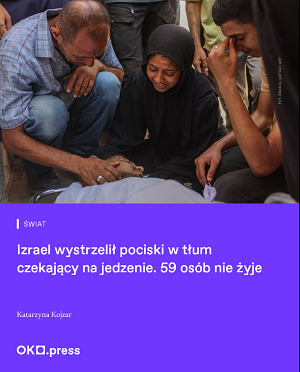
Izrael wystrzelił pociski w tłum czekających na jedzenie. 59 osób nie żyje

Zaloguj się, aby zapisać na później / Katarzyna Kojzar

To jeden z najbardziej krwawych ataków w Strefie Gazy – informuje Reuters.

Co się wydarzyło?

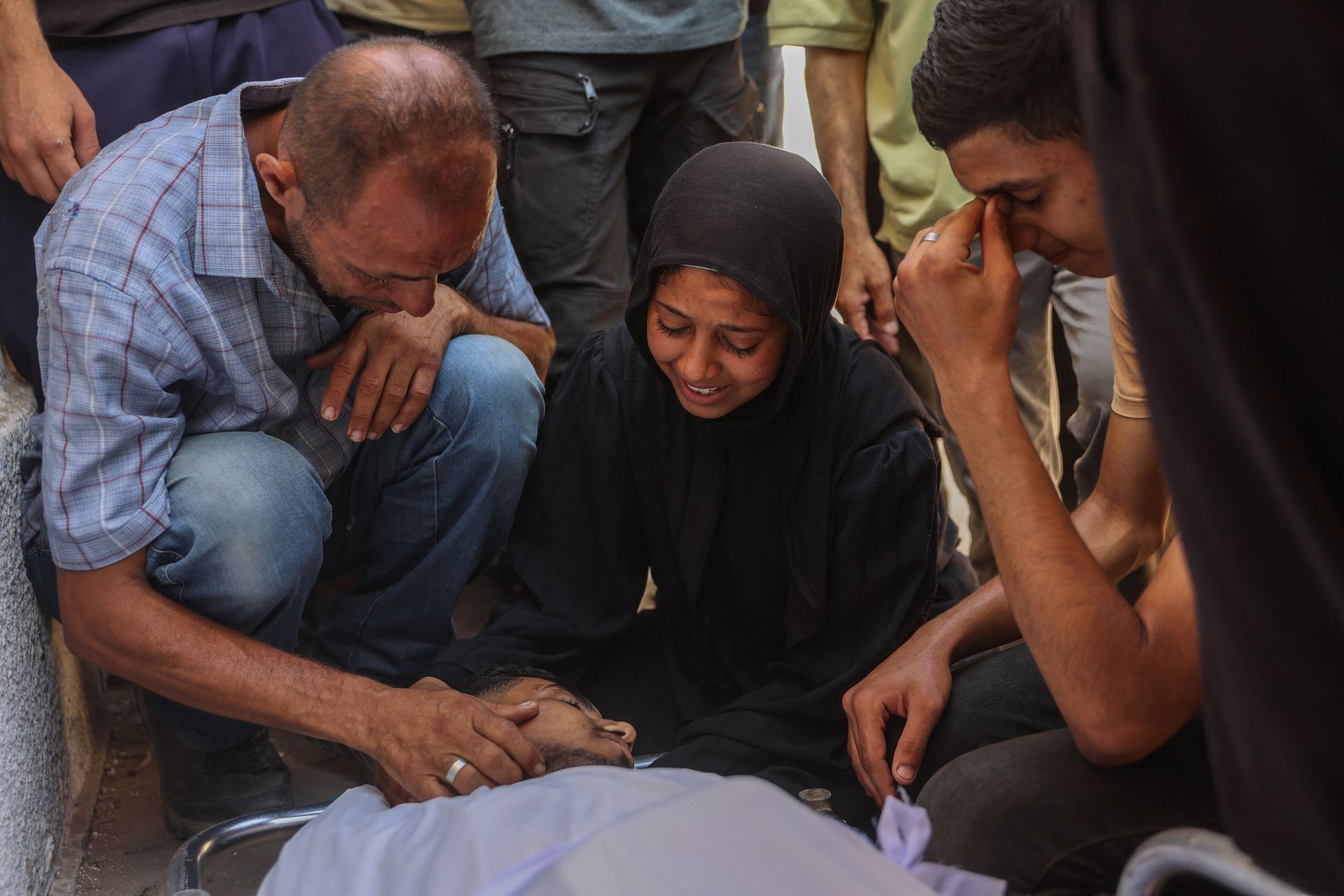
Palestyńscy lekarze informują, że 59 osób nie żyje, a 221 zostało rannych (w tym około 20 jest w stanie ciężkim) po wtorkowym ataku Izraela. Wojsko wystrzeliło pociski w tłum osób, które czekały na jedzenie na ulicy Khan Younis. Tysiące mieszkańców Strefy Gazy ustawiło się w kolejce do ciężarówek, z których miało być rozdawane pożywienie.

Według świadków Izrael wystrzelił przynajmniej dwa pociski. „Nagle kazali nam się przesunąć do przodu, tłum się ścieśnił i wtedy wystrzelono pociski” – mówił Agencji Reuters jeden ze świadków. Ranni zostali umieszczeni w szpitalu Nasser, gdzie leżą na ziemi i w korytarzach, bo brakuje już miejsc na łóżkach.

Reuters podaje, że to jeden z najkrwawszych i najbrutalniejsztch ataków przeprowadzonych w Strefie Gazy. Tego samego dnia w innych atakach zginęło jeszcze 14 osób.

Strona izraelska oświadczyła, że „szczegóły incydentu są analizowane” oraz że „żałuje wszelkich szkód” wyrządzonych cywilom.

Jaki jest kontekst?

Palestyńskie ministerstwo zdrowia poinformowało, że od końca maja zginęło 397 Palestyńczyków, którzy próbowali uzyskać pomoc żywnościową. Ponad 3000 zostało rannych. Reuters podaje, że do ataków na osoby zgłaszające się po pomoc, w tym żywnościową, dochodzi niemal codziennie od trzech tygodni – od momentu, kiedy Izrael zniósł częściowo trzymiesięczną blokadę terytorium.

Znaczna część pomocy humanitarnej, którą Izrael dopuszcza do Strefy Gazy, dostarczana jest za pośrednictwem nowej organizacji Gaza Humanitarian Foundation (GHF). Fundacja zarządza kilkoma punktami dystrybucji na terenach strzeżonych przez siły izraelskie, jest wspierana zarówno przez Izrael, jak i przez USA. Organizacja Narodów Zjednoczonych uważą system dostaw GHF za niewystarczający, niebezpieczny i naruszający zasady bezstronności humanitarnej.

Władze Strefy Gazy twierdzą, że setki Palestyńczyków zginęło próbując dotrzeć do baz GHF.

Wojna w Strefie Gazy trwa od października 2023 r. Palestyńscy bojownicy Hamasu zaatakowali wtedy Izrael, zabijając 1200 osób i biorąc 251 zakładników. Od początku konfliktu zginęło 55 000 Palestyńczyków. Atak Izraela doprowadził także do przesiedlenia prawie całej populacji liczącej ok. 2,3 miliona osób i kryzysu humanitarnego.


Myśli o dziennikarstwie zależnym

Andrzej Koraszewski


Co to takiego dziennikarz niezależny, zastanawia się mój przyjaciel i mogłem mu to wyjaśnić na przykładzie „Listów z naszego sadu.” Mam doświadczenie pracy w BBC, bardzo poważnie traktuję to, co BBC pisze w swoich poradnikach dla swoich pracowników. Nasza strona jest utrzymywana przez BBC, bo pewnie bez mojej emerytury z tej firmy mielibyśmy trudności, ale nie mam nic wspólnego z tymi, którzy cenzorują pracowników w BBC. W Stanach Zjednoczonych i w wielu krajach europejskich o niezależności w dużej redakcji nie ma mowy. My publikujemy głosy dysydentów z krajów muzułmańskich, którzy na ogół nie mają szans na publikację w swoim kraju, a na emigracji szukają możliwości publikowania tego, o czym wiedzą w mediach niszowych, bo w głównym nurcie na uczciwość nie ma dziś miejsca. Mój rozmówca przekonywał mnie, że dziennikarze naszych dużych redakcji muszą wierzyć w to, co wypisują. Zgodziłem się, zwracając uwagę na słowo „muszą”, bowiem zarówno przy naborze jak i w życiu codziennym zgodność z linią generalną aparatu agitacji i propagandy jest warunkiem  możliwości zarabiana na chleb „informowaniem”.  Tak więc dziennikarz niezależny musi być wolny od zależności między łajdactwem i zarobkami. Przywołany przykład dziennikarzy „Oko-Press” skłonił mnie do przypomnienia, że pewien gatunek ludzi bardzo dba o jednolitość swojego środowiska.

Rozmawialiśmy potem o kawiarni „My, naród” znajdującej się ma rogu Alei Pseudo i ulicy „Solidarność”, kawiarni, której bywalcy strzegą swojej towarzyskiej jedności jak oka w głowie, więc wierność i lojalność nie musi być udawana. Tym ludziom naprawdę trudno pojąć, że można kwestionować informacje Hamasu, nawet jeśli zyskały imprimatur ONZ, skleconego przez ONZ trybunału, czy niegdyś cudownej, a dziś łajdackiej Amnesty Internatinal.

Jeśli 22 państwa arabskie zgodnie potępiają „izraelską agresję” na Iran, a niezależny arabski dziennikarz pisze, że kraje arabskie winne są Izraelowi wdzięczność za tą „agresję”, a na dodatek trudno o wątpliwości że społeczeństwo irańskie patrzy na izraelskie samoloty z najwyższą nadzieją, to oni naprawdę wolą z pełnym przekonaniem pisać, że izraelscy żołnierze strzelają do ludzi czekających na chleb. Lżej im z tym na świecie i radośniej się odbiera wypłatę za pracę twórczą. Mało tu pomaga opowiadanie o tym, że byłem dziennikarzem  jeszcze w czasach komunistycznych, chociaż wtedy nawet jeśli niezależność była wykluczona, to można się było schować w jakiejś „Gromadzie-Rolniku Polskim” i nie mieć konieczności wypierania się swojej wiedzy dla dziennikarskiego chleba.   

Oko-Press wierzy w izraelskie ludobójstwo i cierpi, że Izrael może dążyć do zmiany reżimu w Iranie, z czego jedyny wnioskiem jest to, że albo świadomie popierają nazizm, albo zwierzęca nienawiść do Żydów, która skłania ich do ignorowania ideologii i praktyki władzy ajatollahów.  

Czytam o coraz szerszym wsparciu irańskiej opozycji, bez pomocy której izraelski wywiad nie miałby tak znakomitych osiągnięć, a to również pomaga redukować liczbę ofiar wśród nie związanej z reżimem ludności.    

Wojna weszła w nową fazę. Izrael przeprowadza ataki w głębi terytorium Iranu, co historyków wojskowości napawa zdumieniem i podziwem, w szczególności, że są to niezwykle skomplikowane operacje militarne na wielu odległych frontach i blisko, ale z wrogiem ufortyfikowanym wśród cywilnej ludności. Żurnaliści koncentrują się na tym, co zwiększy poczytność, a nic tak nie zwiększa poczytności jak podżeganie do nienawiści i udawanie świętoszków. Efektem jest oczywiści systematyczne i świadome wprowadzanie społeczeństwa w błąd, chociaż intryguje fakt , że nawet mając dostęp do lepszej informacji większość odbiorców medialnej strawy wybiera wszystko , co umacnia odwieczne uprzedzenia. (Pewien profesor fizyki całkowicie świadom natury irańskiej bestii, połyka wszystko co złego czyta o państwie żydowskim, bo widać tak musi. To miły człowiek, prawdziwy europejski inteligent i nie jest to żadna ironia.)

Irańczycy (prawdopodobnie większość), popierają Izrael znając naturę swoich władców, a jest ona po stokroć gorsza od naszego „realnego socjalizmu.” Ale nasi „dziennikarze” z różnych „Oko-Press” wolą tego nie widzieć. Osobnym problemem są potwornie dyskryminowane irańskie mniejszości, którymi nie warto się interesować, bo to psuje interes.

Przypominanie przyjaznych stosunków Iranu z Izraelem też byłoby nietaktem dla szanującego się dziennikarza „Oko-Press”.     

Islamska Republika Iranu próbowała wymazać bardzo długą  historię zarówno żydowskiej diaspory w Iranie jak i całkiem niedawną współpracę międzynarodową przed czterdziestoma latami.  

W dzisiejszym Iranie słowo wolność to nie tylko hasło wielkomiejskiej inteligencji, chociaż w różnych środowiskach może być różnie rozumiane. Jedno wydaje się pewne, w miarę osłabienia reżimu przez izraelskie ataki rośnie nadzieja na zrzucenie jarzma.   

Dla mieszkańców Iranu zmiana reżimu w Iranie nie jest kwestią polityki zagranicznej, a odzyskanie prawa do normalnego życia.  Irańska czterdziestoletnia wojna z Żydami milionom ludzi na Zachodzie przypadła do gustu, więc ignorowanie pragnień irańskiego społeczeństwa posiadania takich wolności  jakie ma Zachód wyraźnie należy do służbowych obowiązków naszych zależnych dziennikarzy. I nic tu nie pomogą zapewnienia irańskiej opozycji, że przecież oni podzielają wartości Zachodu. (Wygląda na to, że nie wszyscy mieszkańcy Zachodu je podzielają.) Trudno o wątpliwości, że to właśnie irańska opozycja, podobnie jak Izrael są sojusznikami Zachodu, Tego jednak zależnemu dziennikarzowi mówić nie wolno.

Islamska Republika Iranu jest odpowiedzialna za śmierć milionów muzułmanów. Nasi pseudodziennikarze walczą z islamofobią, czyli występują w bohaterskiej obronie islamonazizmu,  znienawidzonego przez terroryzowanych liberalnych muzułmanów i morderczo dyskryminowanych innowierców.

Znajomość irańskiej konstytucji, znajomość kazań ajatollahów wiedza o tym, że silniejszy od armii Korpus Strażników Rewolucji Islamskiej był utworzony na wzór SS, to wszystko jest dla zależnego dziennikarza wiedza zakazana.

Ci rzekomo informujący społeczeństwo dziennikarze na ogół nie zajmują się politycznymi, gospodarczymi i militarnymi powiązaniami  Iranu z Chinami i Rosją, bo mogłoby to skomplikować potępianie izraelskiej agresji.    

Czy naprawdę decyzja o napaści na Izrael 7 października 2023 roku związana była z przerażeniem przed perspektywą pokoju między Izraelem i Arabią Saudyjska? Bardzo wiele na to wskazuje (włącznie z dokumentami znalezionymi w Gazie.) Pokój nigdy nie był ambicją Islamskiej Republiki Iranu, co możemy wyczytać z jej konstytucji.  

Iran przez dziesięciolecia budował imperium terroru, podbił Irak, Jemen, Syrię, Liban i zmienił Gazę w nazistowską twierdzę. A jak to przedstawiają nasi zależni dziennikarze? To wszystko doskonale daje się  przerobić na zbrodnie żydowskiego państwa To nie jest tylko jakaś nadzwyczajna przebiegłość i skuteczność hamasowskiej propagandy, uległość wobec wdzięku tego, co płynie z rozgłośni Al Dżaziry, To jest zapotrzebowane właśnie na ten towar, a nie na inny.

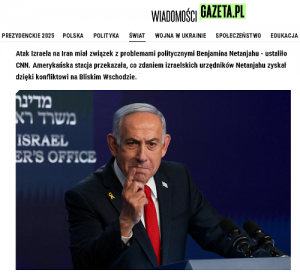
Poniższy zrzut z ekranu doskonale pokazuje umysł zależnego dziennikarza, Patryka Rutkowskiego z „Wiadomości Agory”. Nasz zależny dziennikarz „informuje” jak naczelny każe, a swoje astronomiczne brednie podpiera CNN. CNN „ustaliło”, Patryk „Informuje”. Wszystkie zależności  zależnego dziennikarza wyłożone już we wstępie.


Zawartość publikowanych artykułów i materiałów nie reprezentuje poglądów ani opinii Reunion’68,
ani też webmastera Blogu Reunion’68, chyba ze jest to wyraźnie zaznaczone.
Twoje uwagi, linki, własne artykuły lub wiadomości prześlij na adres:
webmaster@reunion68.com


Iran użył w Izraelu broni kasetowej? “Co najmniej 10 miejsc”

Iran użył w Izraelu broni kasetowej? “Co najmniej 10 miejsc”

Jakub Jessa


Policjant ogląda szczątki rakiety w Beer Shewa. 20.06.2025. (Fot. REUTERS/Amir Cohen)

To pierwsza taka informacja od początku wojny na Bliskim Wschodzie.

Jak poinformowały izraelskie siły zbrojne, w nocy z czwartku na piątek (19/20.05) nad Teheran poleciało około 60 myśliwców. W ataku na irańską stolicę użyły około 120 rakiet, czego efektem miało być zbombardowanie kilku zakładów przemysłowych produkujących pociski rakietowe w okolicy Teheranu.

Wieści z Iranu są szczątkowe. W kraju trwa „największa blokada internetu w historii kraju”. Tak sytuację określa Amir Rashidi, reprezentujący organizację walczącą o prawa człowieka z Iranie: Miaan Group.

Państwo zdecydowało o nałożeniu blokady informacyjnej na własnych obywateli, tłumacząc to “zagrożeniem zewnętrznym”. – Sytuacja jest gorsza niż w listopadzie 2019 r. Wtedy ruch internetowy wchodzący do Iranu nie był całkowicie zablokowany. Jednak nawet on został odcięty – dodał Rashidi.

W piątkowy (20.06) poranek syreny alarmowe zawyły też w południowym Izraelu. Irańskie pociski nadleciały ponownie w okolice miasta Beer Szewa, gdzie wcześniej Iran zniszczył szpital Soroka.

Jak ocenia BBC: „Wygląda na to, że Iran ponownie zaatakował park zaawansowanych technologii Gav-Yam, który według irańskich urzędników był celem wczorajszego porannego ataku, kiedy to uderzono w pobliski szpital Soroka”. Zdjęcia opublikowane na mediach społecznościowych sugerują, że kolejna irańska rakieta uderzyła w bezpośrednim otoczeniu lokalnej siedziby amerykańskiej firmy Microsoft.

W mieście tymczasowo zamknięto stację kolejową. Władze Beer Szewy zwróciły się do mieszkańców z apelem o omijanie miejsca ataku.

Wojna Izraela z Iranem. Teheran użył broni kasetowej?

Według informacji przekazanych przez rzecznika izraelskich sił zbrojnych Nadava Shoshaniego w czwartek Iran wystrzelił rakietę z głowicą kasetową w kierunku zaludnionego obszaru w środkowej części Izraela. W wyniku uderzenia w Or Jehuda nikt nie zginął, niewiadoma pozostaje natomiast liczba rannych.

Izraelskie Dowództwo Frontu Wewnętrznego poinformowało o odnalezieniu co najmniej 10 miejsc w środkowej części Izraela, które mogły zostać trafione ładunkami z broni kasetowej.

Amunicja kasetowa posiada głowice, które w odpowiednim momencie wybuchają rozrzucając mniejsze ładunki na dużym obszarze. W 2008 roku w Dublinie podpisano Konwencję o zakazie użycia amunicji kasetowej. Jej stronami jest ponad 100 krajów. Na tej liście nie ma natomiast zarówno Izrael i Iranu. Konwencji nie przyjęły też największe światowe mocarstwa, w tym Stany Zjednoczone, Rosja, Chiny i Indie. Polska również nie jest sygnatariuszem konwencji.

Jak ocenia „New York Times”: „Jest to pierwsze doniesienie o użyciu tego typu broni w obecnej wojnie”. Amerykański dziennik dodaje, że „Misja Iranu przy ONZ odmówiła komentarza w sprawie izraelskich zarzutów”. Uderzenia w terytorium Izraela z wykorzystaniem amunicji kasetowej potwierdził też premier kraju Benjamin Netanjahu.

– Amunicja kasetowa nie rozróżnia żołnierzy od cywilów, ponieważ rozrzuca pociski na dużym obszarze i pozostawia po sobie niewybuchy, które przez miesiące lub lata stanowią zagrożenie dla ludności cywilnej, podobnie jak miny lądowe – przekazuje starsza doradczyni ds. uzbrojenia w organizacji Human Rights Watch Bonnie Docherty, cytowana przez „New York Times”.

Donald Trump o udziale USA w wojnie na Bliskim Wschodzie. Dwa tygodnie namysłu

W czwartek (19.06) głos w sprawie konfliktu izraelsko-irańskiego zabrał też Donald Trump.

Prezydent USA przekazał pośrednictwem Rzeczniczki Białego Domu Karoline Leavitt: „Biorąc pod uwagę fakt, że istnieje znacząca szansa na negocjacje z Iranem, które mogą się odbyć w niedalekiej przyszłości, podejmę decyzję, czy wchodzić [do wojny przeciwko Iranowi] w ciągu najbliższych dwóch tygodni”.

Do sytuacji na Bliskim Wschodzie odniósł się też niemiecki Minister Spraw Zagranicznych Johann Wadephul. Polityk podkreślił znaczenie jednoznacznej rezygnacji Teheranu z programu jądrowego w przyszłej deeskalacji konfliktu.
.

Eksplozje w Iranie. 18.06.2025. Fot. REUTERS/Majid Asgaripour

Wadephul w rozmowie z niemieckim nadawcą MDR zauważył: „dotychczas nie dostrzegliśmy poważnego podejścia ze strony Iranu, a zamiast tego widzimy program wzbogacania uranu, który znacznie wykracza poza rozsądne zastosowania cywilne”.

Dodał też, że jeśli po stronie Teheranu „istnieje poważna i klarowna gotowość do wyrzeczenia się programu” to istnieje droga do powstrzymania dalszej eskalacji wojny.

W wywiadzie Wadephul podkreślił znaczenie piątkowych rozmów na linii UE-Iran. Szef niemieckiej dyplomacji zaznaczył, że mają one poparcie USA a „Iran powinien teraz zrozumieć, że musi podejść do tych rozmów z nową powagą i wiarygodnością”.

Jeszcze w środę (18.06) niemiecki MSZ zwrócił się w środę do przywódców Iranu, zapewniając, że „nigdy nie jest za późno, aby zasiąść do stołu negocjacyjnego”.

W piątek (20.06) w Genewie odbędzie się spotkanie pomiędzy UE i Wielką Brytanią a ministrem sprawa zagranicznych Iranu Abbasem Araghchim. W rozmowach udział mają wziąć między innymi wysoka przedstawiciel Unii do spraw zagranicznych i polityki bezpieczeństwa Kaja Kallasas oraz ministrowie spraw Zagranicznych Francji, Wielkiej Brytanii i Niemiec.

Piątkowe rozmowy będą pierwszym bezpośrednim spotkaniem na linii UE-Iran.

Jak ocenia „The New York Times”: „Europejczycy odegrali kluczową rolę w zawarciu porozumienia nuklearnego z Iranem w 2015 r., z którego Trump wycofał się w 2018 r., ale zostali skutecznie odsunięci na bok – najpierw przez dwustronne rozmowy między Stanami Zjednoczonymi a Iranem, a następnie przez wojnę”.

Jak podaje BBC, spotkanie ministrów spraw zagranicznych w Genewie będzie „najistotniejszym dowodem na zaangażowanie Europy w ten kryzys” od czasu wybuchu wojny w poprzednim tygodniu. Może też okazać się szansą na przywrócenie dawnej pozycji kontynentu w rozmowach z Teheranem, szczególnie w obliczu czasu, jaki dał sobie na zastanowienie Donald Trump.

Izraelskie siły zbrojne poinformowały w piątek o skutecznym ataku na „trzy platformy rakietowe gotowe do wystrzelenia z Iranu w kierunku Izraela”. W uderzeniu zginać miał też „dowódca wojskowego, który przygotowywał się do ich wystrzelenia”. Strona irańska do tej pory nie potwierdziła tej informacji.


red. Michał Olszewski


Zawartość publikowanych artykułów i materiałów nie reprezentuje poglądów ani opinii Reunion’68,
ani też webmastera Blogu Reunion’68, chyba ze jest to wyraźnie zaznaczone.
Twoje uwagi, linki, własne artykuły lub wiadomości prześlij na adres:
webmaster@reunion68.com


Arab Town in Israel Weeps for Four Family Members Killed in Iranian Strike

Arab Town in Israel Weeps for Four Family Members Killed in Iranian Strike

Reuters and Algemeiner Staff


Relatives and friends attend the funeral of four members of a family who were killed during a missile attack from Iran on Israel, in Tamra, north Israel, June 17, 2025. Photo: REUTERS/Ammar Awad

When a phone alert sounded on Saturday night to warn of Iranian missiles flying towards his town of Tamra in northern Israel, Nidal Abu Al Heija called his sister to tell her to take shelter with her daughters, but no one answered.

After the alert, he rushed to the area where she lived. The street was full of people and littered with debris.

“I was asking people what happened, and someone, he just said to me ‘oh, Nidal.’ He didn’t know what to say. And then the other one says, ‘it’s your own sister’s house,’” Abu Al Heija said, speaking to Reuters four days after the strike.

The house had taken a direct hit. Part of the roof had collapsed, crushing the top floor. Windows and walls were blasted out and rubble tumbled down the side of the house.

“Darkness, dust, smell of bomb, something I don’t want to remember,” said Abu Al Heija.

“I was just going there shouting ‘Noura! Noura! Shada! Hala!’ And then unfortunately I saw her coming, people holding her, with no breath.”

Known to her family as Noura, Manar Abu Al Heija Katib, 45, and two of her daughters, Shada, 20, and Hala, 13, were killed, along with Manar’s sister-in-law, Manar Diab Katib, 41.

The only survivors were Manar Abu Al Heija Katib’s husband, Raja Katib, and their third daughter, Razan.

The dead were among those killed in the conflict with Iran since Israel launched air and missile attacks on Iran a week ago that have wiped out the top echelon of Iran’s military command, damaged nuclear capabilities, and killed hundreds of Iranians.

Iran has aimed hundreds of retaliatory missiles at Israel and killed at least two dozen people.

‘BURNING FIRE INSIDE’

In Tamra, a small Arab town about 25 km (16 miles) east of the port city of Haifa, relatives and the wider community are in shock.

“If I would have gone [died] with my wife and my two girls, it would have been easier because I have a burning fire inside,” Manar’s husband told reporters on Wednesday.

The sisters-in-law were both teachers. Their husbands, Raja Katib and his brother Ihab Katib, have described them to local media as wonderful women. Pictures of the two daughters showed them smiling warmly.

Nidal Abu Al Heija recalled telling people previously that the chances of being killed in the war with Iran were tiny. Now he said he was dealing with an unfathomable loss.

“Noura was the thing that we loved. Noura was the thing that united the family,” he said.

The four had run to a protected room on the top level of the house, he said, but it could not withstand the Iranian missile.

Tamra has been hit by rockets before, but smaller ones fired by terrorist group Hezbollah from southern Lebanon.

Since Saturday’s strike, many residents of Tamra have begun spending the night in public shelters inside schools.

On Tuesday, four simple wooden coffins with wreaths of red and white flowers were carried through the narrow streets of Tamra, with crowds of men chanting as they walked alongside and people watching from every window and doorstep.

At the town‘s cemetery, Muslim prayers rang out from a loudspeaker and a large number of men, mostly dressed in black, surrounded the gravediggers and relatives as the four were laid to rest.

Afterwards, a group of women and girls paid their respects by the graves. They wept and embraced each other as they walked away.


Zawartość publikowanych artykułów i materiałów nie reprezentuje poglądów ani opinii Reunion’68,
ani też webmastera Blogu Reunion’68, chyba ze jest to wyraźnie zaznaczone.
Twoje uwagi, linki, własne artykuły lub wiadomości prześlij na adres:
webmaster@reunion68.com