What Is Hezbollah? Even After Three Tries, the New York Times Is Stumped

What Is Hezbollah? Even After Three Tries, the New York Times Is Stumped

Ira Stoll


The New York Times building in New York City. Photo: Wikimedia Commons

How many tries, by how many reporters, will it take the New York Times to explain accurately what Hezbollah is?

The newspaper has been fumbling and bumbling its way toward an answer in a way that illuminates some of the challenges the Times has faced in covering the wars of Iranian aggression.

Our story begins in the aftermath of the Oct. 7, 2023 terrorist attack on Israel by Hamas. “What Is Hezbollah, the Group That Poses a Threat to Israel From the North?” a Times article published on Oct. 19 tried to explain. That article, by a Beirut-based British freelancer for the Times, Euan Ward, and a staff writer for the New York Times magazine, Nicholas Casey, did not use the word “terrorist” or describe the US government’s designation of Hezbollah as a foreign terrorist organization. Instead the newspaper described the group as having “an expansive security apparatus and social services network.”

Then the Times Cairo bureau chief, Vivian Yee, took a fresh attempt at answering the question, for a piece published on Sept. 17, 2024. That article appeared under the headline, “A Look at Hezbollah and What a Wider War Would Mean for Lebanon.” What a wider war would mean “for Lebanon” seems a somewhat narrow framework for analysis in a war with wide international consequences on everything from oil prices to the US-Iran conflict and the American presidential election. For our purposes, though, the Yee piece was a modest improvement over the October 2023 Times effort. This time around, at least, the Times acknowledged that Hezbollah is “considered a terrorist group by the United States and other countries.” It also noted that “many Lebanese see the group as an obstacle to progress that keeps threatening to drag the country into an unwanted war” and that the group uses “authoritarian tactics” to “quell any dissent.”

Perhaps concern about those “authoritarian tactics” helps to explain why the Beirut-based Ward was reticent about using the term “terrorist.”

On Sept. 18, 2024, the Times tried yet again, with a piece by an Israeli-born reporter fluent in Hebrew, Ephrat Livni. That one appeared under the “Jeopardy”-game-show-style headline “What Is Hezbollah, the Militant Group Based in Lebanon?”

Livni’s article calls the group an “Iran-backed militia — which the United States designated as a foreign terrorist organization decades ago.” The “decades ago” makes it sound like Hezbollah’s terrorism is a thing of the past rather than an ongoing problem. Later, the Times offers some more detail: “Hezbollah was involved in the suicide bombing of the American embassy in Beirut in 1983, drawing the enmity of the United States. The United States designated Hezbollah as a terrorist organization in 1997, and has long sanctioned people and companies with ties to the group to try to cut off its funding.”

Livni’s piece also credits Neil MacFarquhar and Ben Hubbard as having “contributed reporting,” bringing to a whopping six the grand total of Times journalists — Ward, Casey, Yee, Livni, MacFarquhar, Hubbard — mustered into action to attempt to answer the “What is Hezbollah?” puzzler.

Even on the third try, even after having rustled up a half dozen bodies to tackle the issue, the Times can’t quite seem to get a grip on the facts of the situation.

Neither Yee’s article nor Livni’s, for example, makes any mention of Hezbollah having killed a dozen Druze, mostly children, in July 2024 in an attack on a soccer field in Majdal Shams in northern Israel.

Livni’s article, after a subhead asking “Why are Hezbollah and Israel fighting now?” reports, “Hezbollah’s military wing has been targeting northern Israel for nearly a year in solidarity with Hamas and its war with Israel in Gaza.” Yet the Hamas war with Israel hasn’t been only “in Gaza” but included rocket attacks and deadly raids into Israel. The same article describes Hezbollah as having been “formed in the 1980s from the chaos of Lebanon’s long civil war to fight the Israeli occupation of southern Lebanon, which ended in 2000.” The Lebanon civil war began not to fight the Israeli occupation but rather Palestinian domination. The Council on Foreign Relations explains, “Hezbollah emerged during Lebanon’s civil war, which broke out in 1975 when long-simmering discontent over the large, armed Palestinian presence in the country reached a boiling point.” The Times, because of its anti-Israel tilt, can’t bring itself to talk about armed Palestinians in Lebanon. Instead it has to frame everything as a response to Israeli “occupation,” even if that’s inaccurate.

The idea that Hezbollah is mainly a response to “the Israeli occupation of southern Lebanon” or to the Hamas “war with Israel in Gaza” is a misunderstanding. Like revolutionary Iran, Hezbollah has a goal of imposing its version of militant Islam worldwide and wiping Israel off the map. Its leader, Hassan Nasrallah, has stated that if Jews “all gather in Israel, it will save us the trouble of going after them world-wide.”

Maybe by the fourth or fifth or sixth try, the Times might work its way up to including that Nasrallah quotation in its explanation to its readers of what Hezbollah is. Maybe the seventh or eighth or ninth Times reporter assigned to the job will figure it out. Until then, readers will be better off looking elsewhere, to more trustworthy sources than the Times, for an explanation of the terrorist organization and its goals.


Ira Stoll was managing editor of The Forward and North American editor of The Jerusalem Post. His media critique, a regular Algemeiner feature, can be found here.


Zawartość publikowanych artykułów i materiałów nie reprezentuje poglądów ani opinii Reunion’68,
ani też webmastera Blogu Reunion’68, chyba ze jest to wyraźnie zaznaczone.
Twoje uwagi, linki, własne artykuły lub wiadomości prześlij na adres:
webmaster@reunion68.com

Efekt Oslo: Zakładnicy jako broń do wykonywania brudnej roboty dla Hamasu

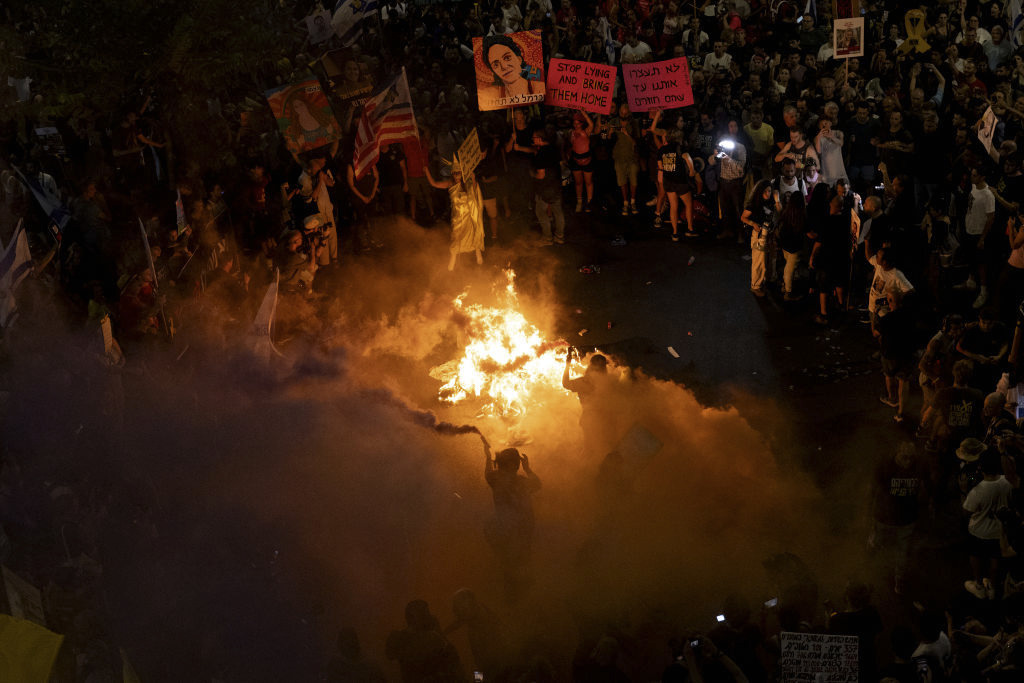
Demonstrantów w Izraelu wspierają różne typy wojskowe i wywiadowcze w zdradzieckiej próbie wyrzucenia Netanjahu z urzędu przez tworzenie podziałów i zniechęcenia, podczas gdy Izrael walczy o życie. Ich głównym twierdzeniem jest to, że Netanjahu przedłuża wojnę i skazuje zakładników na śmierć wyłącznie po to, aby uspokoić ekstremistów w swojej koalicji i w ten sposób utrzymać się u władzy. Na zdjęciu: Antyrządowi protestujący podpalają i używają pochodni dymnych 7 września 2024 r. w Tel Awiwie w Izraelu. (Zdjęcie: Amir Levy/Getty Images)


Efekt Oslo: Zakładnicy jako broń do wykonywania brudnej roboty dla Hamasu

Melanie Phillips
Tłumaczenie: Małgorzata Koraszewska


Ogromne demonstracje w Izraelu przeciwko premierowi Benjaminowi Netanjahu mogą na ludziach poza granicami kraju robić wrażenie, że społeczeństwo Izraela jest mu ogólnie przeciwne z powodu jego sposobu prowadzenia wojny i że dni jego urzędowania są policzone.

Bardziej prawdopodobne jest to, że izraelska lewica jest w trakcie procesu samozniszczenia raz na zawsze.

Izraelczycy są coraz bardziej oszalali z żalu i przerażenia nad nieludzkim losem zakładników uwięzionych w piekielnych otchłaniach Gazy. Niedawne zamordowanie z zimną krwią sześciu z tych porwanych przez dzicz z Hamasu doprowadziło wielu Izraelczyków do ostateczności.

Żądanie demonstrantów, aby natychmiast zawrzeć zawieszenie broni i uwolnić zakładników, jest nie tylko absurdalne do granic szaleństwa, ale stanowi również bezpośrednie zagrożenie dla bezpieczeństwa Izraela, a nawet jego istnienia — a to jest dokładnie wynik, jaki zamierza osiągnąć Hamas poprzez diaboliczną manipulację losem zakładników.

Demonstrantów w Izraelu wspierają różne typy z armii i wywiadu w zdradzieckiej próbie wyrzucenia Netanjahu z urzędu przez tworzenie podziałów i zniechęcenia, podczas gdy Izrael walczy o przetrwanie. Ich głównym twierdzeniem jest to, że Netanjahu przedłuża wojnę i skazuje zakładników na śmierć wyłącznie po to, aby uspokoić ekstremistów w swojej koalicji i w ten sposób utrzymać się u władzy.

Przeciwnicy Netanjahu nie potrafią zrozumieć, że nawet jeśli premier jest tak oportunistyczny, jak go przedstawiają, jego sposób prowadzenia wojny ma zdecydowane poparcie społeczne.

Większość Izraelczyków chce definitywnego pokonania Hamasu, raz na zawsze. Po atakach terrorystycznych i okrucieństwach z 7 października mieszkańcy południowych społeczności żydowskich domagali się, by Izrael nigdy więcej nie zadowalał się wielokrotnym zadawaniem “poważnych ciosów” Hamasowi, tylko po to, by za kilka miesięcy mógł wznowić swoje mordercze napaści.

Oczywiście, wszyscy rozpaczliwie chcą, aby zakładnicy wrócili do domu. Ale pomysł, że da się to osiągnąć przez zawieszenie broni, jest czystą fantazją.

W pierwszej fazie ma zostać uwolnionych tylko kilku zakładników. Hamas wykorzystałby następnie zawieszenie broni do przegrupowania się i ponownego uzbrojenia, przedłużając farsę negocjacji, aby utrzymać resztę zakładników w pułapce i w ten sposób zachować kontrolę nad Strefą Gazy.

Uwolniliby wszystkich zakładników (jeśli w ogóle) dopiero po całkowitym poddaniu się Izraela. To właśnie promują ci, którzy wzywają do natychmiastowego zawieszenia broni.

Jedynym sposobem na uratowanie zakładników jest presja militarna. To jeden z powodów, dla których Izrael musi koniecznie zachować kontrolę nad korytarzem Filadelfijskim, obszarem Gazy graniczącym z Egiptem.

Nie daje się przecenić znaczenia tego korytarza. Zdobycie go przez Izrael odsłoniło głęboko pod jego powierzchnią rozległą infrastrukturę gigantycznych tuneli do Egiptu — ujawniając w ten sposób główną trasę, którą Hamas importował swoje rakiety, broń i amunicję.

Hamas musi kontrolować korytarz Filadelfijski, aby się zaopatrzyć. Bez tego będzie skończony. Dlatego upiera się, że nie będzie żadnego porozumienia, dopóki Izrael będzie sprawował tam kontrolę.

Ogromna większość wysokich oficerów w armii i funkcjonariuszy służb bezpieczeństwa należących do autorytatywnego Forum Obrony i Bezpieczeństwa Izraela twierdzi nieugięcie, że Izrael nie może oddać kontroli nad korytarzem. Przewodniczący forum, generał brygady Amir Avivi, powiedział w zeszłym tygodniu, że dziesiątki tysięcy rakiet i tysiące terrorystów z odziałów Nukhbah Hamasu czeka na egipskim Synaju, żeby przejść do Gazy przez korytarz Filadelfijski.

Nawet jeśli Izrael wycofa się tylko na krótko, ludzi i sprzęt można sprowadzić w ciągu tygodnia. Egipt zarobił miliardy dolarów na przemycie do Gazy i chce to kontynuować.

Co więcej, powiedział Avivi, tylko 30 z ponad 100 zakładników ma zostać uwolnionych w pierwszej fazie porozumienia, a Hamas podobno planuje przetransportowanie reszty tunelami na Synaj, a następnie do Iranu.

Jednak ten korytarz stał się nagle bronią przeciwko Netanjahu, oskarżanemu o wyolbrzymianie jego znaczenia, żeby zniweczyć porozumienie o zawieszeniu broni i uwolnieniu zakładników.

Podczas kłótni w gabinecie bezpieczeństwa minister obrony Joav Gallant podobno nazwał sprawę korytarza Filadelfijskiego “niepotrzebnym ograniczeniem, które sami nałożyliśmy na siebie”. Gadi Eizenkot, były szef sztabu Sił Obronnych Izraela, powiedział, że korytarz nie ma strategicznego znaczenia. Były minister obrony Benny Gantz powiedział, że Izrael może powrócić do korytarza, jeśli uzna to za konieczne, gdy zakładnicy wrócą do domu.

Wysuwano także argumenty o nakłonieniu Egiptu do ochrony korytarza Filadelfijskiego przed Hamasem i wykorzystaniu czujników elektronicznych do monitorowania tego miejsca.

To wszystko są kompletne urojenia. Przez dwadzieścia lat Egipt był współwinny budowy i użytkowania tuneli pod granicą; powierzenie mu bezpieczeństwa Izraela oznaczałoby powierzenie lisowi kontroli nad kurnikiem. Izraelskie poleganie na czujnikach elektronicznych było jednym z powodów, dla których doszło do pogromu 7 października.

Jeśli chodzi o powrót Sił Obronnych Izraela do korytarza po wycofaniu się, tego samego argumentu użył premier Izraela Ariel Szaron przy wycofaniu się z Gazy w 2005 r., kiedy wycofał Izrael również z granicy między Gazą a Egiptem — kwestia, z powodu której Netanjahu zrezygnował z jego rządu. Podobnie jak międzynarodowa presja sprawiła, że Siły Obronne Izraela nigdy nie wróciły, pomimo późniejszych ataków rakietowych z Gazy, tak przyszły powrót do korytarza Filadelfijskiego po wycofaniu się teraz byłby dla świata całkowicie nie do przyjęcia.

Mimo tysięcy ludzi na ulicach, większość Izraelczyków to rozumie. W jednym z sondaży opinii publicznej 79% zgodziło się, że Izrael musi na stałe kontrolować korytarz Filadelfijski, aby zapobiec przemytowi broni z Egiptu do Gazy. Na bardziej emocjonalne pytanie, czy Izrael powinien kontrolować korytarz Filadelfijski “nawet kosztem umowy o zakładników”, więcej respondentów odpowiedziało, że tak, niż tych, którzy sprzeciwiali się zapobieganiu umowie.

Gantz, Eizenkot i Gallant są częścią establishmentu wojskowego i bezpieczeństwa, którego moralnie i intelektualnie zbankrutowana “koncepcja” była przyczyną katastrofy 7 października.

Również Netanjahu był częścią tego samego establishmentu i w odpowiednim czasie będzie musiał być rozliczony w związku z odpowiedzialnością, jaka na nim ciąży.

Jednak ci, których nie zaślepia patologiczna nienawiść do Netanjahu, widzą, że powstrzymuje on intensywną presję ze strony Ameryki, by armia wycofała się z korytarza Filadelfijskiego, tak jak widzą, że sama Ameryka ponosi znaczną część odpowiedzialności za los zakładników.

Administracja Bidena zmusiła Izrael do działań w Gazie znacznie powolniejszych, niż IDF uważało za konieczne, by pokonać Hamas i w ten sposób uratować zakładników. Co gorsza, przez trzy miesiące administracja nie pozwalała Izraelowi wejść do Rafah — pod którym w tunelach zamordowano w tym miesiącu sześciu zakładników. Gdyby Izrael mógł działać we własnym tempie, tych sześciu jeńców i wielu innych prawdopodobnie można było uratować.

Cokolwiek stanie się z Netanjahu, lewica niemal z pewnością odkryje, że po raz drugi popełniła straszny błąd strategiczny.

Pierwszym takim błędem było Porozumienie z Oslo z 1993 r., które przyznało Palestyńczykom władzę polityczną i status (Amerykanie szkolili nawet ich siły bezpieczeństwa), zakładając, że zamierzają żyć w pokoju u boku Izraela.

Było to zwycięstwo ułudy nad rzeczywistością. Ostatecznym rezultatem było ponad 1000 zamordowanych Izraelczyków w pięcioletniej intifadzie od 2000 do 2005 r. oraz trwała kultura indoktrynacji i podżegania, która dziś zamieniła Judeę i Samarię w kolejny front ludobójczych planów Iranu.

Katastrofalna “koncepcja” Oslo spowodowała, że izraelskie elity zignorowały wyraźne dowody islamskiej świętej wojny prowadzonej przez Palestyńczyków i uwierzyły, że Izrael może utrzymać w ryzach potencjalne “niepokoje”. Wierzyli, że ich wrogiem nie jest ludobójczy palestynizm. Ich wrogiem był Netanjahu.

Dlatego też spędzili większość zeszłego roku walcząc z reformą sądownictwa. A teraz ci sami ludzie w odrażający sposób używają zakładników jako broni w tym samym celu — odsunięcia Netanjahu od władzy. Nie trzeba być fanem Netanjahu, aby czuć złość, przerażenie i wściekłość.

Koszmar Oslo zniszczył szanse izraelskiej lewicy na zdobycie władzy politycznej. Obrzydzenie i gniew opinii publicznej, że ci sami ludzie wykonują pracę dla Hamasu, promując kapitulację Izraela, oznacza, że ta straszna zdrada nie zostanie zapomniana ani wybaczona. Będzie to efekt Oslo na sterydach.


Melanie Phillips jest znaną brytyjską publicystką.


Zawartość publikowanych artykułów i materiałów nie reprezentuje poglądów ani opinii Reunion’68,
ani też webmastera Blogu Reunion’68, chyba ze jest to wyraźnie zaznaczone.
Twoje uwagi, linki, własne artykuły lub wiadomości prześlij na adres:
webmaster@reunion68.com


The New Rules of Western Journalism

The New Rules of Western Journalism

Eitan Fischberger


Anti-Israel terrorist propaganda gets an Emmy nomination

.
Artist Anna Dittman and her mural of Gazan journalist Bisan Owda in Edinburgh /  Jane Barlow/PA Images via Getty Image

There’s an increasingly vague line between journalism and terrorist propaganda coming out of the Gaza Strip, where terrorists often masquerade as journalists. This is a distinction that you’d hope and expect would be easily discernible to seasoned media professionals like the heads of the National Academy of Television Arts and Sciences (NATAS) or the editors, if that’s still a thing that meaningfully exists, of Time magazine, which was once the flagship of objective weekly news reporting. But unfortunately, the distinction between news reporting and simple-minded propaganda is no longer a meaningful one to America’s self-appointed political commissars who think that they know better than the facts.

In late July, NATAS nominated a Gazan journalist and apparent member of a terror group, Bisan Owda, for a news and documentary Emmy Award for her AJ+-produced It’s Bisan from Gaza and I’m Still Alive. The docu-short, which has already clinched Peabody and Edward R. Murrow awards, is up in the “outstanding hard news feature story: short form” category. The documentary presents the harsh realities experienced by the people of Gaza in the early days of the Israel-Hamas War, which was initiated when Hamas massacred 1,200 people 11 months ago in southern Israel and took 250 others hostage.

Remarkably, Bisan’s eight-minute documentary makes no mention of the medieval horrors inflicted upon innocent Israelis that terrible Oct. 7 day that started the war. Instead, Bisan presents her unsuspecting Western audience with a sanitized version of history in which Hamas and Gaza’s other terror groups are nonexistent, even inside the Hamas stronghold of Shifa Hospital, and in which she is somehow an objective journalist caught up in horrors being inflicted on innocents by Israeli “occupiers,” rather than an apparent adherent of a terror organization that deliberately murders innocent people, and helped bring about the events she depicts.

The distinction between news reporting and propaganda is no longer a meaningful one to America’s self-appointed political commissars.

Even more troubling than the bizarre absence of Hamas in Bisan’s documentary and the subsequent episodes released by AJ+ from the standpoint of basic journalistic ethics and practice, is what she does choose to show. Interspersed throughout the footage of the immense and genuine human suffering in Gaza is propaganda straight from the Hamas media office. By deliberately mixing truth with lies, such as the assertion that “women, children, and the elderly make up 73% of the dead in Gaza,” numbers that several experts have referred to as “statistically impossible,” Bisan’s content is purposefully designed to sway the hearts and minds of millions of viewers who don’t know better toward the terrorists.

Bisan takes an even less nuanced approach, however, when uploading short videos to her Instagram account for her 4.7 million followers. There, she veers into outlandish antisemitic territory, such as the grotesque allegation that Israel is stealing the organs of dead Palestinian children of Gaza—which comes straight out the pages of age-old antisemitic blood libels. In a video from Oct. 18, the day after an explosion infamously rocked Gaza’s Al Ahli Hospital, Bisan filmed herself in tears over the “800 people killed” by Israel (300 more than Hamas’ number). In a now-infamous twist, the explosion turned out to be caused by an errant rocket fired by the Islamic Jihad terror group. European intelligence later placed the likely death toll at 50—or 93.75% less than the total Bisan claimed.

The fact that this propaganda is only thinly veiled as journalism is less surprising once you take a deeper look at Bisan’s background. Bisan appears to be a member of the Popular Front for the Liberation of Palestine (PFLP), a U.S.-designated terrorist organization that has American blood on its hands and openly gloated about its participation in the mass slaughter in southern Israel on Oct. 7. In 2018, the PFLP confirmed Bisan’s membership in the organization when it referred to her as part of the Progressive Youth Union, which the PFLP explicitly acknowledges is its “youth framework.” Two years prior, Bisan hosted a PFLP event honoring Palestinian terrorists injured or killed in confrontations with Israeli soldiers, which included Sami Shawqi Madi, who was the head of the PFLP’s media committee at the time of his death. In 2015, Bisan was one of the speakers at a rally celebrating the 48th anniversary of the founding of the PFLP, where she addressed the crowd while wearing a full PFLP military uniform and stated that “the people of Gaza, the people in the West Bank, and in Jerusalem … will not back down at all from their cause and their revolution.” Bisan also served as the “master of ceremonies” the following year at the 49th-anniversary rally. In a since-deleted article published in Al-Hadaf, the PFLP’s official newspaper, Bisan is lauded as “a symbol of resistance journalism.”

Despite Bisan’s open affiliation with a terrorist organization, and reporting that violates every norm of ethical journalism, NATAS has defended the nomination. Bizarrely, NATAS President & CEO Adam Sharp stated that “NATAS has been unable to corroborate these reports, nor has it been able, to date, to surface any evidence of more contemporary or active involvement by Owda with the PFLP” and that the “content submitted for award consideration was consistent with competition rules and NATAS policies.” Sharp’s response completely ignores the ample evidence of Bisan’s terror ties (including her own confirmation that she participated in the PFLP rallies) and her propensity for spreading antisemitism and openly lying in the service of terrorist propaganda campaigns. In reality, multiple Gazan journalists working for Al Jazeera (which owns AJ+) have been linked to terror groups, while the PFLP and Hamas have been openly training journalists in the Strip for over a decade—some of whom participated in the Oct. 7 terror attack as combatants and even held Israeli hostages in their homes.

Sharp, NATAS, and the other journalistic institutions who honored Bisan are virtue-signaling, yes, But they are also displaying complete ignorance as to the nature of journalism in the Gaza Strip and a callous indifference to the lives of Jews and Americans who have been murdered by Hamas and by the PFLP. Moreover, Bisan’s manipulation of journalistic standards, and journalistic cover, mirrors the practices of her broadcaster AJ+, a U.S.-based subsidiary of Al Jazeera, which is funded by the government of Qatar, a longtime Hamas funder that provides safe haven for its leaders. In 2019, the media platform released a video questioning the Holocaust, and more recently, has repeatedly justified the Oct. 7 massacre.

AJ+’s content and ties to Qatar spurred the Department of Justice to mandate that it register as a foreign agent of the Gulf monarchy in September 2020. Nearly four years later, it has refused to do so, yet has faced no repercussions from the Biden DOJ. Does the academy not find Bisan and AJ+’s propaganda and terror support objectionable?

One of the more outrageous consequences of Oct. 7 in the journalistic universe is the refusal to reevaluate commonly held shibboleths like the idea that Israel was being too paranoid about Hamas, when in fact it wasn’t being nearly cautious enough about the intentions of the foe on its border—whose statements about slaughtering Jews should in fact have been taken quite literally. What has happened instead is the widespread embrace of the terrorists’ own reality, which is then used to “fact-check” all Israelis, whether women and men who were raped, or parents whose children were stabbed, shot or set on fire.

Because Jews are such villains, Oct. 7 has apparently canceled normal journalistic requirements to even bother matching up quotes with transcripts of what the speaker actually said—a courtesy that is especially applicable to heads of state, unless they are Israeli. In a recent cover story for Time magazine, correspondent Eric Cortellessa quoted Israeli Prime Minister Benjamin Netanyahu as stating that “Anyone who wants to thwart the establishment of a Palestinian state has to support bolstering Hamas and transferring money to Hamas.” Yet while Netanyahu is one of the most quoted and aggressively fact-checked political leaders in the world, it is impossible to find a single quote in any public transcript or record, including Cortellessa’s interview, in which Netanyahu ever said anything remotely to that effect. In reality, Netanyahu led large-scale military operations against Hamas in 2012, 2014 and 2021. While one might criticize Netanyahu for not killing enough Hamas members in those prior campaigns, that hardly seemed to be the thrust of the Time correspondent’s conspiratorial criticism, whose point instead seemed to be that Israel had somehow sponsored the Hamas attack.

Time’s own “fact-check” of Netanyahu’s statement that Israeli security agencies agreed before Oct. 7 that Hamas was deterred is also demonstrably false. Right up to Oct. 7, no Israeli security agency ever assessed that Hamas was seeking war—an assessment that was enthusiastically backed by Israel’s supposed Western allies, including the United States, who repeatedly pressed Israel to allow more Gazan workers into the country, to relax controls at the border, and to accommodate the terrorist group’s demands for more heavy construction materials. Time’s accusation that Netanyahu has prolonged the Gaza war in order to avoid legal proceedings for personal corruption is also obviously false, as Netanyahu’s trials are continuing, and political leaders in Israel have no immunity from prosecution or legal procedures while in office.

What NATAS, the sponsors of the Peabody and Edward R. Murrow awards, and the editors of Time magazine have apparently agreed on is that there should be two sets of journalistic standards: one for them, and one for Jews. It’s hard to think of a more shameful development in the annals of modern journalism.


Eitan Fischberger is an international relations and Middle East analyst. Find him @EFischberger.


Zawartość publikowanych artykułów i materiałów nie reprezentuje poglądów ani opinii Reunion’68,
ani też webmastera Blogu Reunion’68, chyba ze jest to wyraźnie zaznaczone.
Twoje uwagi, linki, własne artykuły lub wiadomości prześlij na adres:
webmaster@reunion68.com


Khamenei Reaffirms Iran’s Ban on Competing Against Israeli Athletes, Offers Compensation as Incentive for Compliance

Khamenei Reaffirms Iran’s Ban on Competing Against Israeli Athletes, Offers Compensation as Incentive for Compliance

Shiryn Ghermezian


Iran’s Supreme Leader Ayatollah Ali Khamenei speaking to members of Iran’s 2024 Olympic and Paralympic delegations. Photo: Screenshot

Iran’s Supreme Leader Ayatollah Ali Khamenei restated the country’s long-established ban on competing against Israelis while on Tuesday addressing Iranian athletes who competed in the 2024 Olympic and Paralympic competitions in Paris.

Khamenei also called on Iranian officials to compensate athletes who withdraw from matches to avoid facing an opponent from Israel, Iran International reported. He said Iranian athletes are making a “sacrifice” by pulling out of competitions against Israelis because of their national and religious beliefs, and they need to be recognized and supported by Iranian officials, according to the Tehran Times.

The Iranian leader further accused the governing body of the Olympics and Paralympics of displaying a “double standard” by banning Russia from both international competitions, because of the ongoing Russia-Ukraine war, while allowing Israel to still compete despite the raging war between the Jewish state and the Hamas terrorist organization that orchestrated the Oct. 7 deadly terrorist attacks across southern Israel. The Iranian regime backs Hamas and has for years provided the terrorist organization with arms, funding, and training.

Khamenei then accused Israel of killing 41,000 people in the Gaza Strip, a death toll announced by the Hamas-run Gaza Ministry of Health that cannot be independently verified and does not distinguish between civilians and terrorists. Even the United Nations, a vocal critic of Israel’s war effort, has cited erroneous figures in the health ministry’s reported deaths.

The Israeli military said last month that it had killed 17,000 terrorists in Gaza since the beginning of the war against Hamas on Oct. 7.

“Something else that was noticeable this year in the Olympic Games was the double standard of the countries that decide on issues concerning international sports. They truly demonstrated that duel, biased policies govern what they do,” Khamenei claimed during his speech on Tuesday. “They ban a certain government or country from participating because it started a war somewhere. But with regard to the Zionist regime, which has killed thousands of children and over 41,000 people in less than a single year, they don’t ban it from the Games. This is a double standard. They are being biased.”

“They say sports shouldn’t be mixed with politics, yet they are the ones who exhibit and demonstrate the most politically biased behavior in sports,” he added.

Iran’s policy against competing head-to-head with Israeli athletes goes back to 1979. Iranian athletes are often pressured by their coaches and Iranian sports federations to either pull out of matches or intentionally lose to avoid competing against an opponent from Israel.

“Our athlete refuses to compete or play against a Zionist opponent, and because of this, they pay a price. We must not neglect the well-being of this athlete,” Khamenei said on Tuesday. He then stressed that the Iranian government has an obligation to assist with the financial needs of these athletes.

Ahead of the Olympic Games in Paris this summer, Israel’s foreign minister warned France of an Iranian-backed terrorist plot to attack Israeli athletes competing in the Olympics. Some athletes in Israel’s Olympic delegation also had their personal information hacked and published online, and Israel’s National Cyber Directorate concluded that Iranian hackers were responsible for the leak.

Last year, Iran’s Weightlifting Federation imposed a lifetime ban on Iranian professional weightlifter Mostafa Rajaei for shaking hands with an Israeli athlete at the World Masters Championships in Poland. The head of Iran’s weightlifting federation described his actions as “unacceptable and unforgivable.”


Zawartość publikowanych artykułów i materiałów nie reprezentuje poglądów ani opinii Reunion’68,
ani też webmastera Blogu Reunion’68, chyba ze jest to wyraźnie zaznaczone.
Twoje uwagi, linki, własne artykuły lub wiadomości prześlij na adres:
webmaster@reunion68.com

Trzeba nam więcej gniewu na terroryzm islamistyczny, a nie mniej

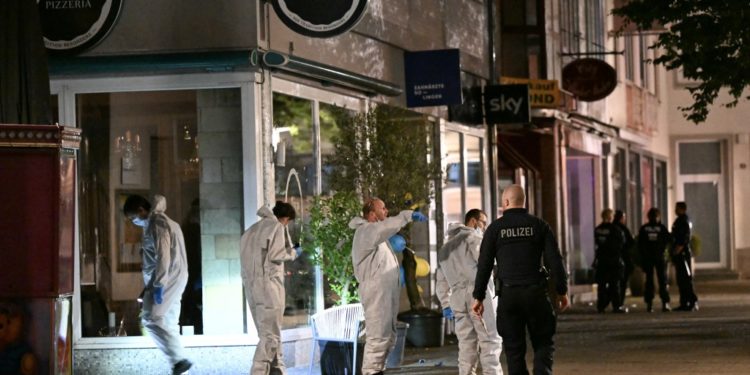
Miejsce zamachu w Solingen.


Trzeba nam więcej gniewu na terroryzm islamistyczny, a nie mniej

Brendan O’Neill
Tłumaczenie: Małgorzata Koraszewska


Po Solingen nadszedł czas na walkę zarówno z islamo-faszystami, jak i naszymi pełnymi samozadowolenia elitami.

.

Mądrość zmarłego Norma Macdonalda rzadko kiedy była tak prorocza. „Tym, co mnie przeraża – napisał kiedyś na Twitterze ten kanadyjski komik – to sytuacja, w której ISIS detonuje ładunek nuklearny i zabija 50 milionów Amerykanów. Wyobrażam sobie obawy przed reakcją przeciwko pokojowym muzułmanom”. Był to idealnie wymierzony cios w tych, którzy bardziej boją się reakcji ludzi na terroryzm niż samego terroryzmu. Uderzenie w tych lewicowych telewizyjnych mędrców i fałszywych liberałów, którzy na widok ludzi w Manchesterze, Paryżu lub Brukseli rozrywanych na kawałki przez radykalnych islamistów, natychmiast reagują: „Och nie, to wywoła straszną islamofobię”. Ci bojaźliwi tchórze raz jeszcze wystąpili tłumnie po okrutnym ataku nożowniczym dokonanym przez ISIS w Solingen.

Ledwo zdążyły ostygnąć ciała zabitych przez islamistycznego fanatyka, a część mediów zaczęła martwić się, jak zareaguje „skrajna prawica”. W piątkowy wieczór, podczas imprezy z okazji 650. rocznicy założenia zachodnioniemieckiego miasta, pewien mężczyzna wpadł w szał i zaczął atakować ludzi nożem. Trzy osoby zginęły, a osiem zostało rannych, cztery poważnie. Podejrzanym jest 26-latek z Syrii, który według niemieckich prokuratorów wyznaje ideologię Państwa Islamskiego i nożem demonstrował tę swoją tyrańską i ekstremistyczną wiarę. Przybył do Niemiec w 2022 roku i złożył podanie o azyl, ale chociaż jego wniosek został odrzucony, władze nie deportowały go. ISIS wzięło na siebie odpowiedzialność za rzeź, opisując ją jako celowe zabójstwo europejskich chrześcijan „by pomścić muzułmanów w Palestynie i na całym świecie”.

Był to więc akt wojny. Ograniczonej, dokonanej przez „samotnego wilka”, ale jednak akt wojny. Był to brutalny atak nie tylko na obywateli Solingen, ale także na same Niemcy, a w szczególności na ich chrześcijańskie dziedzictwo. I usankcjonowali ten akt zaprzysięgli wrogowie zachodniej cywilizacji: bigoteryjni, religijni histerycy z ISIS. Powinno to być dzwonkiem alarmowym, przypomnieniem, że chociaż ISIS mogło utracić swój kalifat, zachowało żarliwą żądzę mordowania „niewiernych”. Wydaje się, że „widzimy pierwsze oznaki nowej fali ataków terrorystycznych”, mówi Peter Neumann z King’s College London. Podejrzewa on, że ISIS próbuje „wykorzystać ogromną mobilizację w wyniku ofensywy terrorystycznej Hamasu z 7 października” i chce „zainspirować” swoich wielbicieli do „atakowania niewiernych”. Mówiąc najkrócej: to poważna sprawa.

Czy zostanie potraktowana z powagą, na jaką zasługuje? Czy barbarzyństwo w Solingen doprowadzi w końcu do szczerej dyskusji na temat radykalnego islamu, jakiej tak bardzo brakowało w Europie w ostatnich latach? Oznaki nie są dobre. Już teraz publiczny żal wydaje się ustępować miejsca instynktowi „przejścia nad tym do porządku dziennego”. Wzorem jest scenariusz postterrorystyczny. Złożono kwiaty na miejscu zamachu, w mediach społecznościowych opublikowano emotikony z modlitwą, a teraz możemy wrócić do codzienności. Niemcy nie skandowali jeszcze tchórzliwego hasła „Nie patrz wstecz z gniewem”, jak to robili niektórzy Brytyjczycy po islamistycznej masakrze 22 fanów popu na Manchester Arena w 2017 roku. Ale wydaje się, że przynajmniej w niektórych kręgach istnieje niechęć do krytycznego spojrzenia na rzeź w Solingen i na trudne pytania, jakie podnosi ona w sprawie kryzysu migracyjnego, niepowodzenia integracji i trucizny islamizmu.

Czy jest możliwe, że już wkracza do akcji zestaw terror-amnezja? Jest to tak bezwzględne zniechęcanie do otwartej dyskusji przez elity, że akty islamistycznego terroru zostają wyparte. Kto jeszcze pamięta zamachy bombowe w Brukseli w 2016 r., w których zginęło 32 ludzi? Albo ataki nożownicze w Reading w Anglii w 2020 r., w których ekstremistyczny libijski uchodźca zamordował trzech gejów? Albo atak furgonetką w Barcelonie w 2017 r., w którym islamiści rozjechali 13 ludzi na La Ramblas? To wydarzyło się zaledwie kilka dni po wiecu skrajnej prawicy w Charlottesville w USA, na którym neofaszysta wjechał samochodem w tłum protestujących, zabijając młodą kobietę. Jest znamienne, że ten ostatni faszystowski atak samochodowy jest mocniej utrwalony w głowach lewicy niż o wiele krwawszy faszystowski atak samochodowy przeprowadzony przez ISIS w Barcelonie niecały tydzień później.

Instynktownym działaniem władzy po aktach islamistycznego barbarzyństwa jest ścisłe kontrolowanie publicznej dyskusji, a nawet publicznych uczuć. Są pewne emocje, które wolno ci odczuwać – szok, smutek – i inne, których nie wolno ci odczuwać: udręka, gniew. Jeśli odbiegniesz zbyt daleko od listy akceptowanych emocji, możesz zostać oskarżony o podsycanie „islamofobii”. Orwellowskie monitorowanie nastrojów społecznych sugeruje, że elity boją się myśli i emocji własnych obywateli tak samo – jeśli nie bardziej – jak brutalnych działań wyznawców niebezpiecznej obcej ideologii. Widmo „islamofobicznej reakcji”, którą podnoszą po każdym ataku islamistów, jest w rzeczywistości kodem ich własnego strachu przed opinią publiczną. Widzą nas jako potencjalną tłuszczę. Boją się naszej hipotetycznej przemocy bardziej niż rzeczywistej przemocy ISIS. „Bójcie się siebie, nie terrorystów” – to niewypowiedziane przesłanie ich postterrorystycznej udręki.

Obawiam się, że to samo wydarzy się po masakrze w Solingen. W europejskich mediach już pojawiło się wiele obaw, że złe elementy będą chciały wykorzystać ten straszny czyn. Istnieje ryzyko, że ten horror „podsyci narrację skrajnej prawicy” – pisze Politico. „Financial Times” uderza w panikarski ton, że atak nożowniczy umieścił „imigrację i terroryzm islamistyczny na szczycie listy programów politycznych” tuż przed kluczowymi wyborami regionalnymi w Saksonii i Turyngii na wschodzie Niemiec. Zamartwia się, że niektórzy „wykorzystali atak nożowniczy, by wbić do głów antyimigracyjne hasła”.

BBC informuje, że „atak może podsycić i tak już napiętą debatę na temat imigracji i azylu w Niemczech”. Czy jednak nie powinien? Fakt, że obcokrajowiec zamordował trzy osoby w imieniu fanatycznego ruchu, powinien z pewnością wywołać pytania o niemiecką politykę azylową i środki bezpieczeństwa. „[Skrajna] prawica patrzy na zyski”, mówi BBC, niemal tak, jakby była to najgorsza rzecz, jaka wydarzyła się w Niemczech w zeszłym tygodniu. Szaleństwo lęku przed reakcją na terroryzm najlepiej podsumowuje surrealistyczna dyskusja w Sky News, w której jeden z uczestników powiedział o ataku nożowniczym: „Kiedy patrzysz na coś takiego, naprawdę martwisz się, jak może to zostać wykorzystane przez osoby ze skrajnej prawicy do wzniecania nienawiści”.

I oto dotarliśmy: tweet Norma Macdonalda stał się rzeczywistością. Urojona przemoc po ataku terrorystycznym wydaje się bardziej niepokoić niektórych influencerów niż rzeczywista przemoc samego ISIS. Prawda jest taka, że to ISIS wzbudziło nienawiść w Niemczech. To ISIS sprowadziło skrajnie prawicowy terror na zwykłych ludzi tego narodu. Jest po prostu czymś dziwacznym, że ludzie mogą być świadkami aktu faszystowskiej przemocy, przeprowadzonego z błogosławieństwem jednego z najbardziej nietolerancyjnych, bigoteryjnych i rasistowskich ruchów na Ziemi, i myśleć sobie: „O nie, możemy teraz zobaczyć jakieś faszystowskie czyny”. Faszystowski czyn już miał miejsce. I nie jest bigoterią odczuwanie gniewu z tego powodu. Ci, którzy reagują na rzeź mężczyzn, kobiet i dzieci w całej Europie przez suprematystów słowami: „Wszyscy muszą się uspokoić”, przerażają mnie o wiele bardziej niż ci, którzy reagują otwartymi, dociekliwymi pytaniami. Ci ostatni, przynajmniej są wyraźnie wstrząśnięci gwałtownym rozszarpywaniem na kawałki ich cywilizacji przez islamistów.

Czasami wydaje się, że jesteśmy ściśnięci między dwiema bigoteriami. Bigoterią radykalnych islamistów, którzy tak bardzo nas nienawidzą, że są gotowi nas zadźgać na śmierć, i bigoterię klasy rządzącej, która tak bardzo się nas boi, że jej pierwszym odruchem po każdym islamo-faszystowskim czynie jest stłumienie naszych emocji i uciszenie naszej furii. Nasze społeczeństwa są atakowane, a następnie nasze uczucia są dławione. Podwójny cios elitarnej pogardy, pierwszy brutalny, drugi cenzurujący. Jesteśmy świadkami dławienia moralności  obywateli Europy. Naszą rolą jest udział w postterrorystycznym pokazie namiastki żałoby i niczego więcej. Nie myśl, nie pytaj i na pewno nie wpadaj w gniew. Ironią jest to, że jeśli cokolwiek może nas rozgniewać, to jest to kneblowanie naszych ust, podczas gdy nasi współobywatele są mordowani przez nazistów. Zacznijmy o tym mówić.


Brendan O’Neill znany brytyjski publicysta i komentator polityczny, wieloletni naczelny redaktor „Spiked” publikujący często w „The Spectator”. W młodości zapalony trockista, członek Rewolucyjnej Partii Komunistycznej i autor artykułów w „Living Marxism”. (Jak się wydaje, z tamtych poglądów została mu wiedza o tym, jak ideologia może odczłowieczać.)


Zawartość publikowanych artykułów i materiałów nie reprezentuje poglądów ani opinii Reunion’68,
ani też webmastera Blogu Reunion’68, chyba ze jest to wyraźnie zaznaczone.
Twoje uwagi, linki, własne artykuły lub wiadomości prześlij na adres:
webmaster@reunion68.com