
Archives

UAE and Israel – a partnership that can help the world

UAE and Israel – a partnership that can help the world

SABAH AL-BINALI


Israel can help the UAE expose its tech startups to partners and investors in the West, while the UAE can be Israel’s gateway to Asia and the East.

The flags of the United Arab Emirates, Israel, Bahrain and the United States are screened on the walls of Jerusalem’s Old City, on September 15, 2020. Photo by Yonatan Sindel/Flash90

News of the Abraham Accords normalizing diplomatic relations between the UAE and Israel has been greeted with enthusiasm across Emirati society.
The positive attitude is being led from the top. One striking example is the website of the Abu Dhabi Investment Office, which appears in Hebrew if you click on it from Israel. They are also running Hebrew promotions across social media and have announced that they will open an office in Israel.

News of the Abraham Accords normalizing diplomatic relations between the UAE and Israel has been greeted with enthusiasm across Emirati society.

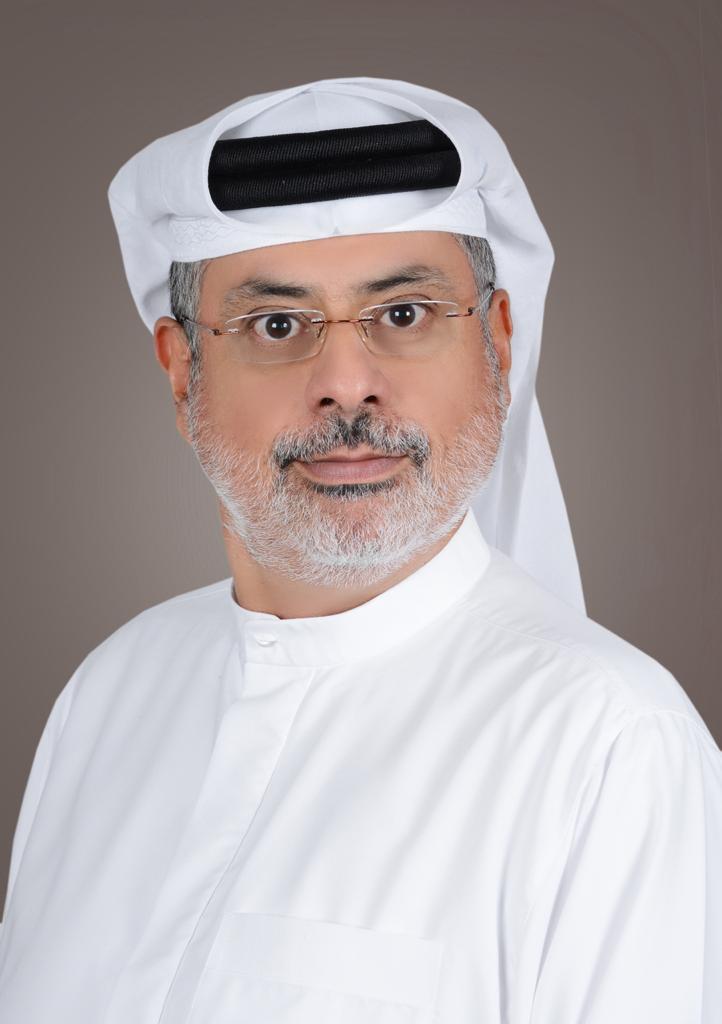
Dr. Sabah Al-Binali, GCC VC Partner and Head of the Gulf Region at OurCrowd. Photo: courtesy

The positive attitude is being led from the top. One striking example is the website of the Abu Dhabi Investment Office, which appears in Hebrew if you click on it from Israel. They are also running Hebrew promotions across social media and have announced that they will open an office in Israel 

Many business executives in the Gulf already have friends and even business relationships with their Israeli counterparts. Many of us have spent time studying or working in the United States, Europe and elsewhere, and established connections with Jewish and Israeli colleagues that in some cases go back decades.

The normalization of diplomatic relations now allows us to build commercial ties on existing social ties and new ones are already flourishing.

The initial response to the Abraham Accords from Israel’s business community was to welcome the opportunity to access funds in the UAE and Bahrain for investment in Israeli startups. While that is certainly one facet of the new relationship, it is by no means the only one – nor the most significant.

.

While Israel has been building its Startup Nation on the western shores of the Middle East, the UAE has been developing its own high-tech sector over in the east.

Just like Israel, the UAE has been opening up to the world with its technology and entrepreneurship. In the space of a few short years, the UAE has become a world leader in logistics, finance, sustainable energy, smart transportation and smart cities.

DP World, Dubai’s global ports company, has become the global trading gateway to Asia. The UAE has become a global financial, business, medical, hospitality and trading center.

We have the world’s largest solar power installations and through our commitment to zero emissions and zero waste we are developing the world’s most water- and energy-efficient cities.

Investments in both directions

While much of this technology is imported, our commitment to world-class education, healthcare and technology has inspired our home-grown entrepreneurs to develop their own startup ecosystem.

Our ride-hailing startup Careem was acquired for more than $3 billion by Uber, and Souq, our first unicorn, was acquired by Amazon. We have even produced a world-class supercar that sells for millions of dollars, is rated among the very best, and starred in a Hollywood movie.

Having ties with Israel helps the UAE to expose its technology startups to partners and investors in Israel, the US and the rest of the world.

We are already seeing a wave of interest in funding startups here in the UAE, and discussions on how Emirati and Israeli innovators can build better technology by pooling their different approaches and experiences.
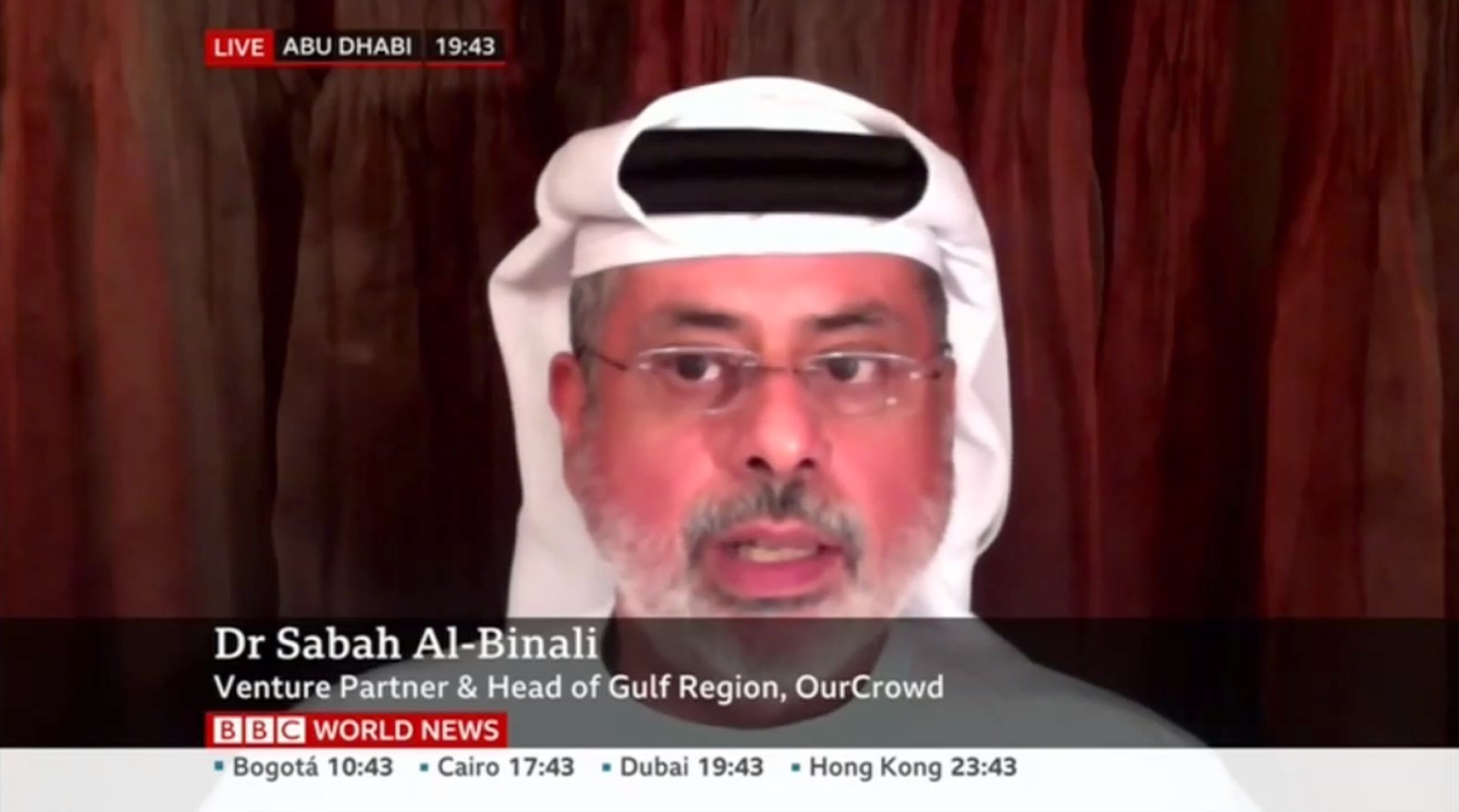
Screenshot of Sabah Al-Binali speaking on BBC World News

Complementary skillsets

The similar size of the Emirati and Israeli economies, and their complementary skillsets, make them extremely compatible for joint business ventures. The entrepreneurial and business mentality is strong in both countries.

Once the political normalization occurred, we saw how fast things can happen when both sides are experienced at striking cross-border deals. The two countries have the same working week from Sunday to Thursday, they are just three hours’ flight time from each other and the time difference is only an hour, which makes doing business much easier than with the US or some Asian markets.

Everyone knew that the opportunity for cooperation existed, and now that the opportunity from a legal perspective has presented itself, people are moving.

Already, there are serious talks underway between entrepreneurs and investors on both sides across a wide range of sectors: Medical, agriculture, national security, cyber, financial technology, drones, artificial intelligence and much more.

As the UAE develops into one of the world’s finance hubs, fintech will become increasingly important. The same is true of logistics. At the same time, DP World, which runs the global shipping hub in Dubai, can bring expertise and knowledge in logistics to Israeli ports like Haifa and Ashdod.

Israel has traditionally looked West toward Europe and the US. The UAE is the gateway to Asia and the East. We can also help Israeli businesses enter new markets in the Muslim world, including the huge opportunities in Malaysia, Indonesia and Pakistan.

The Israel-UAE normalization can create a network that will connect the world’s two hemispheres. This will benefit the economies of both countries, and the region. But if we think about the global markets that each party can help open for the other, this becomes a partnership that will benefit the entire world.


Dr. Sabah al-Binali is GCC VC Partner and Head of the Gulf Region at OurCrowd, the Jerusalem-based global investment platform.


Zawartość publikowanych artykułów i materiałów nie reprezentuje poglądów ani opinii Reunion’68,
ani też webmastera Blogu Reunion’68, chyba ze jest to wyraźnie zaznaczone.
Twoje uwagi, linki, własne artykuły lub wiadomości prześlij na adres:
webmaster@reunion68.com

The long path to Israeli-Saudi normalization

The long path to Israeli-Saudi normalization

Kenneth Jacobson


Considering Saudi importance in the Arab world and the nation’s centrality in standing up for the Palestinians, even the possibility of ties with Israel is a radical shift indeed

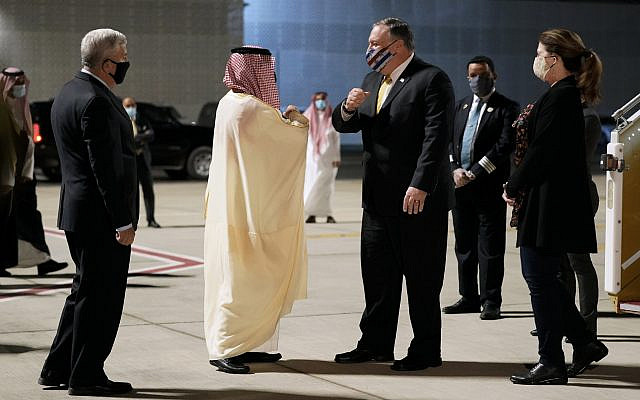
US Ambassador to Saudi Arabia John Abizaid, left, and Saudi Arabia’s Foreign Minister Faisal bin Farhan, second from left, greet Secretary of State Mike Pompeo and his wife Susan as they arrive at Neom Bay Airport in Neom, Saudi Arabia, November 22, 2020. (AP Photo/Patrick Semansky, Pool)


Even if Prime Minister Benjamin Netanyahu’s secret visit to Saudi Arabia with Secretary of State Mike Pompeo does not lead in the short-term to official Israeli-Saudi relations, it is impossible to minimize the historic significance of such an event.

From Israel’s founding, Saudi Arabia has represented the fundamental Arab worldview of Israel as a pariah state. You name the anti-Israel campaign — the Arab economic boycott, disallowing Israel to participate in international events, anti-Semitic rhetoric at the United Nations — and the Saudis were often at the top of the list. And in religious terms, with Saudi Arabia the site of the holiest place in Islam, Mecca, its edicts about a non-Islamic state in the heart of the Muslim Middle East had additional power.

And, of course, when Saudi Arabia did these things, with the influence of its immense oil wealth, it sent a signal to other Arab countries as well as the rest of the world, that in its mind, Israel was not only not illegitimate, but not here to stay.

And yet, like most breakthroughs in patterns of relations, it also didn’t happen overnight. In this regard, one has to go back to the Saudi Arab Peace Initiative of 2002, where the kingdom took a significant step away from the unbroken line that the Jewish state was a fundamentally illegitimate entity in the Muslim Middle East.

The plan may have been seen by some Israelis as a non-starter because of its specific demands about territory, refugees, and Jerusalem. However, from a long-term historical perspective, it is clear that the ideological objection even to consider the legitimacy of a Zionist presence in the region had taken a beating. The language of the plan was clear: if Israel would agree to its terms, there would be normalized relations with the Jewish state.

This occurred before the arrival on the scene of the Crown Prince Mohammed bin Salman (known as MBS), whose aspirations for a modern Saudi Arabia are viewed as central to a host of changes in the kingdom, including the attitude toward Israel. And it occurred prior to the full-blown explosion of fears among the Gulf states of Iranian expansionism in the region.

As has been repeatedly noted, what has been most significant about the UAE, Bahrain and Sudan breakthroughs is that they took place even without any progress on the Palestinian issue. In many circles, that was deemed an impossibility. And, as analysis emerges on the Netanyahu visit, the question is whether the Saudis would be ready to go that way as well, considering their importance in the Arab world and their centrality in standing up for the Palestinians.

And while the Saudi Arab Peace Plan of 2002 represented the most official expression of the idea that change toward Israel depended on resolution of the Palestinian problem, the more interesting historical development as seen from the current process of normalization is how it had come to pass already, then, that normalization was even being considered.

In that regard, one must return to basics which first manifested themselves in the still most historic breakthrough in the Middle East, the 1979 Egyptian peace agreement with Israel.

While it is easy to cite all the differences that that deal embodied, the factors that made this Israel-Egypt peace possible — and which overturned so many assumptions about Israel’s place in the region — should be recalled.

First and foremost, it was Israel’s military strength. After the Six Day War and then the Yom Kippur war, it was clear to Anwar Sadat that Israel was too powerful militarily to believe there was any hope of eliminating it from the Middle East.

Secondly, there was American support for the Jewish state, not only diplomatically but economically, militarily, and most significantly, culturally. It wasn’t going to change and therefore Israel’s strength was not going to dissipate.

Thirdly, there was the realization that focusing on Israel as the enemy diverted attention from the true needs of Egyptian society and, in any case, was fruitless in that its desired goal of Israel’s disappearance was an illusion.

While Egypt’s peace with Israel did not immediately spread through the region, these factors over time could not be ignored by other states.

In sum, the long-term recognition of Israeli realities together with the more immediate concern about the Iranian threat have all come together in the present exciting developments.

It is too early to predict where the reported Netanyahu-MBS meeting will lead. What is clear, however, even as certain elements elevate efforts to try to delegitimize the Jewish state, is that Israel’s legitimacy in the Middle East is more secure than ever and is growing by leaps and bounds every day.


Zawartość publikowanych artykułów i materiałów nie reprezentuje poglądów ani opinii Reunion’68,
ani też webmastera Blogu Reunion’68, chyba ze jest to wyraźnie zaznaczone.
Twoje uwagi, linki, własne artykuły lub wiadomości prześlij na adres:
webmaster@reunion68.com


Joe Biden has underestimated Iran – opinion

Joe Biden has underestimated Iran – opinion

MILY SCHRADER


Iran is still the sinister player in the Middle East

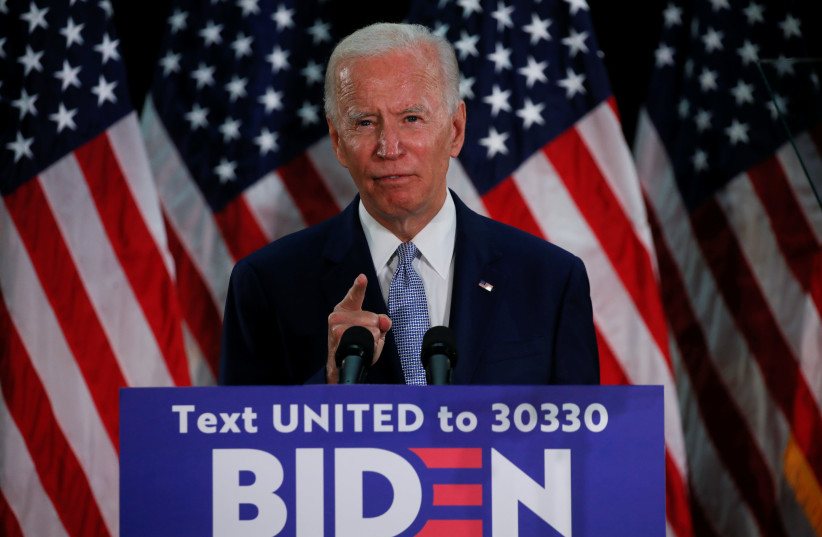
U.S. Democratic presidential candidate and former Vice President Joe Biden speaks during a campaign event about the U.S. economy at Delaware State University in Dover, Delaware, U.S., June 5, 2020. / (photo credit: REUTERS/JIM BOURG)

As the United States begins to transition away from the Trump administration, there is already great concern when it comes to the future Biden administration and Iran. Whether or not one supports President-elect Joe Biden, every American – and Israeli – should be concerned at the idea of a US president who is unwilling to see Iran for the sinister player in the Middle East it is.

For years, Iran has been meddling in Syria (and the rest of the Middle East) and serving as a destabilizing and violent force – by funding and aiding terrorist organizations such as Hezbollah, training Syrian forces to carry out their strategic operations, and setting up military bases. Thanks to Iran, dozens of military sites controlled by Hezbollah are located on the Golan Heights border.

Understandably, the IDF’s response has been to repeatedly strike Iranian targets in Syria that were established since 2011 to carry out espionage and military activities against Israel. This month, tensions escalated after the IDF discovered three bombs on the Syria-Israel border that were placed by Syrians at the behest of Iran in a failed attack. The IDF retaliated by heavily striking, “warehouses, command posts and military complexes, as well as batteries of surface-to-air missiles” in Syria that were controlled by Iran. Fourteen Iranian or pro-Iranian forces were reported killed in the attack.

Iran (as has been its policy for years) flatly denies building a military presence in the region, and in an almost comical facade, claims its presence in Syria is merely “advisory.” Following the recent IDF airstrikes, Iran both restated its role is advisory and not military, while simultaneously threatening Israel with a “crushing response” to its actions. Anyone who cannot read between the lines and see Iran’s malicious intent is either ignorant or willfully blind.

But Iran’s military “exports” (or should we say “advisory roles”?) aren’t limited to Syria. Iran has nearly destroyed Lebanon by emboldening Hezbollah; it has decimated Yemen with an ongoing bloody conflict and military and fiscal support for an Iranian proxy group; it has escalated a desperate situation in Iraq by setting up proxy militias there; and it has sent Shia militias to fight in Libya on behalf of Turkey as well. All this while it continues to develop its nuclear program far beyond the limits specified in the Iran nuclear deal, and systematically violates the most basic of human rights for its own citizens.

You would think the US president-elect, no matter party he represented, would know better than to believe a regime hell-bent on war in five countries (and counting). Sadly, Mr. Biden has expressed his commitment to the completely defunct Iran nuclear deal in what is likely an overreaction to Trump’s policies – even the good ones.

Instead of taking a stand against the bloodthirsty Iranian regime, President-elect Biden would like to lift sanctions on Iran imposed by President Trump in 2015, enabling them to even more effectively fund terrorism and violence throughout the region. A return to the Iran deal would also be a hugely unpopular decision with Gulf states, including key US allies such as Saudi Arabia, which has expanded cooperation and ties with the United States throughout Trump’s presidency. Appealing to, or rather appeasing Iran, is sending the wrong message to Iran and the wrong message to American allies.

Proponents of the Iran deal, which includes some of Biden’s supporters, argue that the Iran deal is the “best we can get” and that Iranian President Hassan Rouhani is more “moderate” than other Iranian hardliners. But these proponents are missing a critical point: You don’t give in to bullies, and you don’t appease genocidal dictatorships. Returning to the Iran deal would mean just that.

Regardless of Trump’s and Biden’s starkly contrasting policies on domestic issues in America, both men should absolutely agree on one thing: Iran is a violent, human-rights abusing, terrorist-supporting regime that acts without any regard for international law and puts American lives at risk. The threat of Iran should be perceived as bipartisan because it is bipartisan. After all, intercontinental ballistic missiles don’t discriminate between Democrats and Republicans. It would be a historic mistake of the incoming Biden administration to throw out Trump’s policy on Iran.


The writer is CEO of Social Lite Creative LLC.


Zawartość publikowanych artykułów i materiałów nie reprezentuje poglądów ani opinii Reunion’68,
ani też webmastera Blogu Reunion’68, chyba ze jest to wyraźnie zaznaczone.
Twoje uwagi, linki, własne artykuły lub wiadomości prześlij na adres:
webmaster@reunion68.com


Pollard is no hero, but I welcome him to Israel regardless

Pollard is no hero, but I welcome him to Israel regardless

Emanuel Miller


He may have pulled off an intel breach that far exceeded assisting Israel, yet after the steep price he paid, it’s time for him to come home

Jonathan Pollard holding his recently cut electronic monitor bracelet on November 20, 2020. (Adi Ginzburg/Justice for Jonathan Pollard)

Pollard didn’t act out of selfless regard for Israel. According to the unclassified version of the damage assessment published by the CIA, he aimed to maximize his profits, seeking to peddle his services to other nations, including apartheid South Africa. And as M. E. “Spike” Bowman, a former top FBI and National Counterintelligence Directorate official, said in a 2010 interview: “No other spy in the history of the United States stole so many secrets, so highly classified, in such a short period of time.”

According to Bowman and other U.S. intelligence officials, Pollard sold documents to “Pakistan, South Africa and two other [unidentified] countries.” And the NCIS investigator in the case, Ron Olive, stated that so prolific was Pollard, that hard copies of the documents he stole over a year and a half could “fill a room that is six feet by six feet by ten.”

But that’s only part of the story. On the other hand, many claim that Pollard should never have been kept in prison so long. He wasn’t convicted of treason; in fact, he wasn’t even so much as indicted on treason charges. Pollard served 30 years, when the standard punishment is a 2-4 year sentence. Pollard struck a plea bargain in which he spared the US the embarrassment of a lengthy public trial, in return for a promise by the government not to seek a life sentence – a promise that was reneged upon. As Judge Steven Williams noted, this was “a fundamental miscarriage of justice.”

And then again, the issue of Pollard’s early release was repeatedly met with notably fierce opposition from within the American establishment, including from figures friendly to Israel. Donald Rumsfeld, in conjunction with no fewer than six other former US Secretaries of Defense, sent a letter to President Bill Clinton in 1998 to insist that Pollard not be granted clemency. Rumsfeld issued a similar letter in 2001 in his capacity as Secretary of Defense, urging President George W. Bush not to release Pollard.

While the full extent of the intelligence leak may never be known, it seems clear that the American intelligence community was genuinely deeply shocked and intent on seeing him pay the price for the unprecedented breach of trust.

From another perspective, though, Pollard didn’t just pay the price: America made an example of him, sending a message to Israel specifically and its allies in general that spying on a friend is something America will not tolerate. He was even prevented from attending his father’s funeral in the late 1990s. Perhaps in part because of his treatment, Israelis and Jews made a hero of Pollard, portraying him as selflessly serving the interests of the Jewish state.

In reality, Pollard seems a flawed, reckless human who caught America hiding information and who himself got caught passing on that intelligence. It is entirely possible that he also genuinely believed that he was doing a service to Israel by passing on some of the information, but it is also clear that he went above and beyond what Israel needed for security purposes. (According to some reports, passing on information about Russian nuclear codes, for example.) In many ways, his behavior was that of an addict, which is consistent with the results of a CIA polygraph test which suggested an excessive drug use problem.

Regardless, as a Jew, I welcome Pollard home. One of the commandments in Judaism is Pidyon Shvuyim, meaning “redemption of captives.” It’s a religious duty in Judaism to secure the release of a fellow Jew captured by slave traders or imprisoned unjustly by the authorities. Indeed, Maimonides wrote, “there is no mitzvah greater than the redeeming of captives.”

Moreover, the national project of rebuilding the Jewish homeland is still incomplete, and seeing more Jews join the millions already here is genuinely heartwarming.

Finally, the time has come to put this chapter to bed. It has long strained relations between the two countries. Pollard deserves to move on, just as Israel and America need to move on.

So, Mr. Pollard, you may not be the hero so many proclaim you to be, but you deserve to move forward with your life, and to be with your people in our ancestral homeland.

It’s time to come home.


Please note that the posts on The Blogs are contributed by third parties. The opinions, facts and any media content in them are presented solely by the authors, and neither The Times of Israel nor its partners assume any responsibility for them. Please contact us in case of abuse. In case of abuse,


Zawartość publikowanych artykułów i materiałów nie reprezentuje poglądów ani opinii Reunion’68,
ani też webmastera Blogu Reunion’68, chyba ze jest to wyraźnie zaznaczone.
Twoje uwagi, linki, własne artykuły lub wiadomości prześlij na adres:
webmaster@reunion68.com


News from Israel – Nov. 30, 2020

News from Israel – Nov. 30, 2020

ILTV Israel News


Iranian top nuclear scientist Mohsen #Fakhrizadeh is laid to rest.
–
#Gyms and pools try to get in on the reopening action.
–
In spite of rising rates of #coronavirus worldwide, Israeli athletes are still competing, kicking butt and taking names.


Zawartość publikowanych artykułów i materiałów nie reprezentuje poglądów ani opinii Reunion’68,
ani też webmastera Blogu Reunion’68, chyba ze jest to wyraźnie zaznaczone.
Twoje uwagi, linki, własne artykuły lub wiadomości prześlij na adres:
webmaster@reunion68.com