Archives

IRGC ballistic-program to impose will on foes

IRGC ballistic-program to impose will on foes

TV7 Israel News


1) Iran’s Islamic Revolutionary Guards Corps unveiled a new missile system, which according to IRGC Commander Major General Hossein Salami ‘is capable of consecutively launching multiple long-range ballistic missiles.

2) Austrian Interior Minister Karl Nehammer confessed to an intelligence failure, while separately confirming that fourteen individuals have been arrested in connection with Islamist terrorism.

3) In light of the repeated Islamist attacks on the European mainland; the United Kingdom – which has a large Muslim community – announced its decision to raise its terrorism threat level to “severe” – meaning “an attack is now seen as highly likely.”


Zawartość publikowanych artykułów i materiałów nie reprezentuje poglądów ani opinii Reunion’68,
ani też webmastera Blogu Reunion’68, chyba ze jest to wyraźnie zaznaczone.
Twoje uwagi, linki, własne artykuły lub wiadomości prześlij na adres:
webmaster@reunion68.com


Tel Aviv home to world’s most beautiful people says Travelers Digest

Tel Aviv home to world’s most beautiful people says Travelers Digest

21see


Tel Aviv has been getting lots of attention lately as a party city, a startup city and a gay-friendly city. Now all eyes are on Israel’s second-largest municipality because of the beautiful people who inhabit it.

Travelers Digest readers ranked Tel Aviv No. 10 on its 2012 list of Cities with the Best-Looking Men (http://www.travelersdigest.com/267-be…) and No. 7 on its companion list of Cities with the Best-Looking Women (http://www.travelersdigest.com/228-be…).

“Tel Aviv has become a hot spot for trendsetters worldwide. Local cuties flaunt their fit bodies — made all the better by their year-round tans — at any of the numerous beaches and cafés found on the 10-mile seaside strip,” wrote journalist Jessica Benavides Canepa.

Reporting, Producing by Viva Sarah Press for ISRAEL21c
Music by TripL Pres. Eliad.


Zawartość publikowanych artykułów i materiałów nie reprezentuje poglądów ani opinii Reunion’68,
ani też webmastera Blogu Reunion’68, chyba ze jest to wyraźnie zaznaczone.
Twoje uwagi, linki, własne artykuły lub wiadomości prześlij na adres:
webmaster@reunion68.com


6,500-year-old ‘furnace’ discovered in Beersheba

6,500-year-old ‘furnace’ discovered in Beersheba

HANNAH BROWN


“It’s important to understand that the refining of copper was the high tech of that period.”

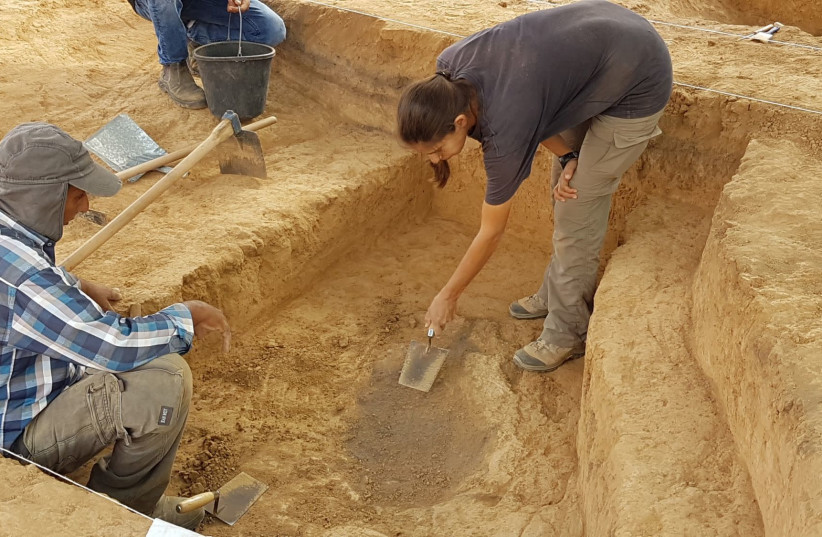
Archaeologists dig at the site in Beersheba. / (photo credit: ANAT RASYUK / ISRAEL ANTIQUITIES AUTHORITY)

Beersheba may have been the true birthplace of Start Up Nation, since according to a new study by Tel Aviv University and the Israel Antiquities Authority, the capital of the Negev could have been the home of the world’s first furnace 6,500 years ago.

The results of the study have just been published in the prestigious Journal of Archaeological Science.

It details how a 6,500-year-old workshop for smelting copper ore once operated in the Neveh Noy neighborhood of Beersheba.

This study sheds light both on the level of technical advancement in that era and region and the hierarchy in the society, giving evidence for a theory that there was a clearly defined elite that possessed expertise and knew professional secrets, which preserved its power, because its members were the only ones who knew how to create shiny copper.

The study, which was conducted over several years, began in 2017 in the capital of the Negev when the workshop was first uncovered during an Israel Antiquities Authority emergency archaeological excavation to safeguard antiquities.

The study was conducted by Prof. Erez Ben-Yosef, Dana Ackerfeld and Omri Yagel of the Jacob M. Alkow Department of Archeology and Ancient Near Eastern Civilizations at Tel Aviv University, in conjunction with Dr. Yael Abadi-Reiss, Talia Abulafia, and Dmitry Yegorov of the Israel Antiquities Authority and Dr. Yehudit Harlavan of the Geological Survey of Israel.

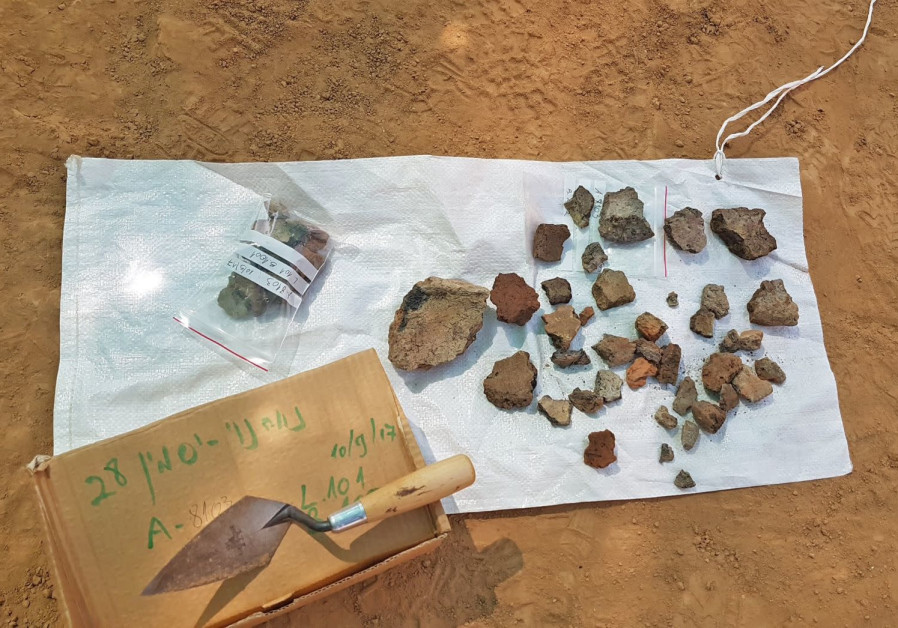
According to Abulafia, director of the excavation on behalf of the Israel Antiquities Authority, “The excavation revealed evidence for domestic production from the Chalcolithic period, about 6,500 years ago. The surprising finds include a small workshop for smelting copper with shards of a furnace – a small installation made of tin in which copper ore was smelted – as well as a lot of copper slag.”

Objects on white cloth shows copper slag found at the Neveh Noy excavation. (Anat Rasyuk, Israel Antiquities Authority)

The Chalcolithic period (the word “chalcolithic” is made up of the Greek words for “copper” and “stone”) got this name because although metalworking was already in evidence, the tools used were still made of stone. An analysis of the isotopes of ore remnants in the furnace shards show that the raw ore was brought to Neveh Noy neighborhood from Wadi Faynan, located in present-day Jordan, more than 100 km. from Beersheba.

During the Chalcolithic period, when copper was first refined, the process took place far from the mines, unlike the prevalent historical model in which furnaces were built near the mines for both practical and economic reasons. Researchers theorize that the copper was refined so far from the mines to preserve the technological secret.

“It’s important to understand that the refining of copper was the high tech of that period. There was no technology more sophisticated than that in the whole of the ancient world,” Erez Ben-Yosef said. “Tossing lumps of ore into a fire will get you nowhere. You need certain knowledge for building special furnaces that can reach very high temperatures while maintaining low levels of oxygen.”

The study provides new evidence on the extent to which this society, which was not yet urbanized, was hierarchical. The scientists feel that the findings from Neveh Noy could show that the elite who knew how to use the technology held a privileged position. The copper objects were not made to be used, but rather served some ritual purpose and had a symbolic value. They were probably used in rituals while the everyday objects in use continued to be of stone.

Ben-Yosef said that the archaeology of the land of Israel shows evidence of the influence of the Ghassulian culture, named for the archaeological site in Jordan, Tulaylât al-Ghassûl, where the culture was first recognized. This culture, which spanned the region from the Beersheba Valley to present-day southern Lebanon, was unusual for its artistic achievements and ritual objects, as evidenced by the copper objects discovered at Nahal Mishmar and now on display at the Israel Museum in Jerusalem.

According to Ben-Yosef, the people who lived in the area of the copper mines traded with members of the Ghassulian culture from Beersheba and sold them the ore, but they were incapable of creating the shiny refined copper objects. Even among the Ghassulian settlements along Wadi Beersheba, copper was refined by experts in special workshops.

A chemical analysis of remnants indicates that every workshop had its own special formula which it did not share with its competitors. He said that it would seem that, in that period, Wadi Beersheba was filled with water year-round, making the location convenient for smelting copper where the furnaces and other apparatus were made of clay.

“At the first stage of humankind’s copper production, crucibles rather than furnaces were used,” Ben-Yosef explained. “This small pottery vessel, which looks like a flower pot, is made of clay. It was a type of charcoal-based mobile furnace. Here, at the Neveh Noy workshop that the Israel Antiquities Authority uncovered, we show that the technology was based on real furnaces.

“This provides very early evidence for the use of furnaces in metallurgy and it raises the possibility that the furnace was invented in this region. It’s also possible the furnace was invented elsewhere, directly from crucible-based metallurgy, because some scientists view early furnaces as no more than large crucibles buried in the ground,” Ben-Yosef added.

“The debate will only be settled by future discoveries, but there is no doubt that ancient Beersheba played an important role in advancing the global metal revolution and that in the fifth millennium BCE the city was a technological powerhouse for this whole region.”


Zawartość publikowanych artykułów i materiałów nie reprezentuje poglądów ani opinii Reunion’68,
ani też webmastera Blogu Reunion’68, chyba ze jest to wyraźnie zaznaczone.
Twoje uwagi, linki, własne artykuły lub wiadomości prześlij na adres:
webmaster@reunion68.com


Israel offers Greece-Turkey aid; Dominican Republic ponders Jerusalem embassy

Israel offers Greece-Turkey aid; Dominican Republic ponders Jerusalem embassy

TV7 Israel News


1) The Ministry of Foreign Affairs of the Dominican Republic issued a statement in which it reported that it is examining the possibility of relocating its embassy in Israel from Tel Aviv to Jerusalem.

2) Jerusalem has conveyed its sympathies to both Turkey and Greece respectively, after both nations were impacted by a number of earthquakes in the Aegean Sea that consequently claimed dozens of lives and caused severe damage in its aftermath.

3) Another attack was reported in France; despite extensive efforts by Paris to protect its churches and schools throughout the country.


Zawartość publikowanych artykułów i materiałów nie reprezentuje poglądów ani opinii Reunion’68,
ani też webmastera Blogu Reunion’68, chyba ze jest to wyraźnie zaznaczone.
Twoje uwagi, linki, własne artykuły lub wiadomości prześlij na adres:
webmaster@reunion68.com


Does the ICC war crimes investigation threaten Israel?

Does the ICC war crimes investigation threaten Israel?

ALAN ROSENBAUM


Shurat HaDin has been very active in attempting to counter the potential investigation by the ICC.
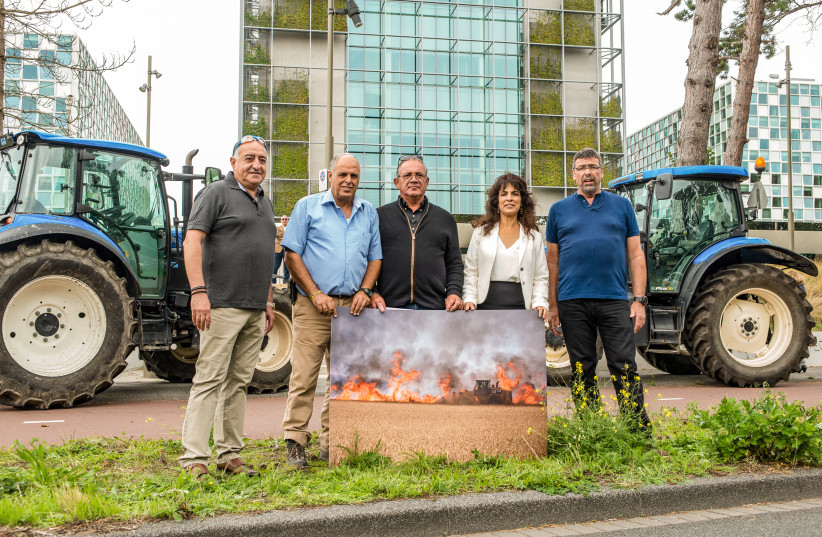
Shurat Hadin President Nitsana Darshan-Leitner with farmers from the Gaza border communities whose fields were damaged by incendiary balloons, protesting at the ICC at the Hague.
(photo credit: SHURAT HADIN)

Will the International Criminal Court (ICC) at The Hague launch a criminal investigation into the State of Israel for war crimes violations? What are the possible ramifications of the court’s decision?

On October 18, Shurat HaDin, the Tel Aviv-based human rights organization that specializes in the legal and economic struggle against terrorist organizations, hosted a webinar on the subject with guests Joseph Lieberman, former US senator from Connecticut, Luis Moreno Ocampo, former chief prosecutor of the ICC, and Danny Danon, former Israeli permanent representative to the UN. The webinar was moderated by Adv. Nitsana Darshan-Leitner, president of Shurat HaDin.

Darshan-Leitner provided background to the creation of the court and its rulings on Israel. The ICC was created by the Rome Statute, which established the court in 1998. Some 128 countries have signed on as member countries of the ICC, which meets in The Hague in the Netherlands. The court has jurisdiction to prosecute individuals for crimes of genocide, crimes against humanity, war crimes and the crime of aggression. Darshan-Leitner explained that while Israel initially supported the idea of an international court, it was concerned that it could become an instrument that could be used against it. Israel, the United States, and numerous other countries have not signed nor agreed to the Statute and have no legal obligations to abide by the ICC’s decisions.

After Operation Cast Lead, the three-week IDF operation in Gaza that began in late December 2008 and concluded in January 2009 in response to a prolonged period of terrorism and missile attacks on Israeli towns, the Palestinian Authority approached the ICC, accusing Israel of targeting civilians in the campaign. Additionally, they claimed that Israel’s building homes in communities in Judea and Samaria violated the Geneva Convention and constituted a war crime.

Luis Moreno Ocampo, Chief Prosecutor of the ICC at the time, responded that the PA could not bring their complaint to the court since it was not considered a state. The issue was discussed for an additional three years, and in 2012, the United Nations upgraded the Palestinian Authority to an observer state. In 2015, the Palestinian Authority signed the Rome Treaty and was accepted as an ICC member. In 2019, the court’s chief prosecutor, Fatou Bensouda, opened investigations of Israel for alleged violations in Operation Cast Lead and of the United States for possible violations in Afghanistan, even though both countries are not ICC members and have their own independent judicial systems.

During the webinar, former Senator Lieberman pointed out that both Israel and the United States are societies that uphold the rule of law.
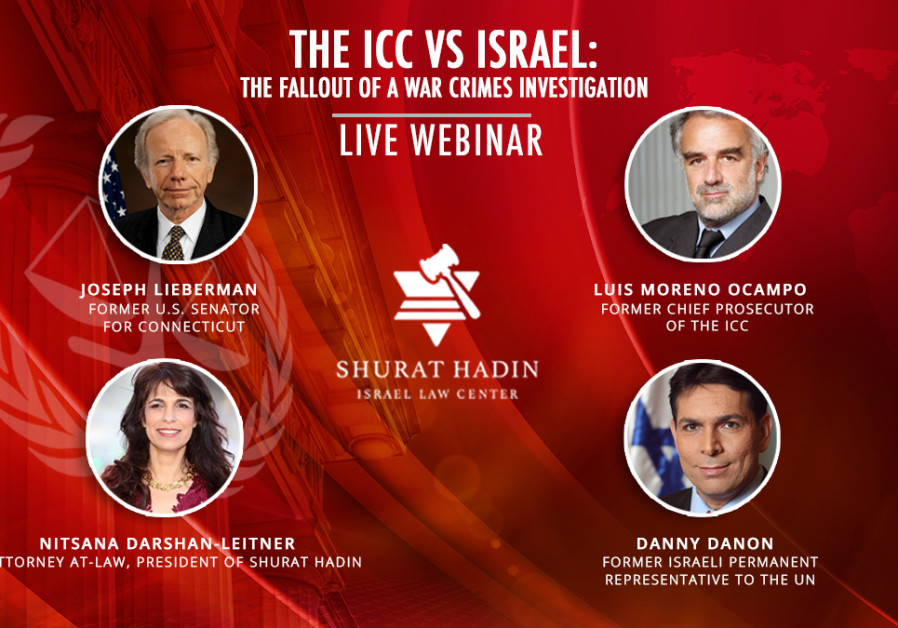
Shurat Hadin’s webinar on ‘The ICC vs Israel’ was held on Oct. 18.

“On the face of it,” he said, “the ICC would appear to be something that ‘rule of law countries’ would support.” Nevertheless, he said, the ICC has become intensely politicized, has discriminated against countries that support the rule of law and has operated in an unlawful way

Darshan-Leitner added that part of the court’s charter is that it will not become involved in legal issues with countries that have their own independent legal systems. The United States prosecutes US soldiers who have committed war crimes, as does Israel. Therefore, the court cannot intervene in any war crimes case regarding these two countries.

Darshan Leitner explained that though Israel is not a signatory to the Rome Statute, and is therefore not bound by any ruling of the court, most of the European and Scandinavian countries are members of the court and are legally obligated to honor the court’s rulings. Therefore, if the ICC rules that IDF soldiers committed war crimes, any Israeli who served in the IDF in Operation Cast Lead who would be traveling in countries that are members of the court, such as Canada, Australia and New Zealand, for example, could be subject to arrest. Additionally, El Al would not be permitted to land in any countries that are signatories to the court.

Shurat HaDin, said Darshan-Leitner, has been very active in attempting to counter the potential investigation by the ICC.

“In 2015,” she said, “we filed complaints against Hamas leaders Khaled Mashal, Ismail Haniyeh, Yahya Sinwar, detailing their personal war crimes. We filed complaints against PA President Mahmoud Abbas, in his capacity as PLO head, for firing rockets from Gaza into Israel in the past.”

The organization also brought testimony of victims of Palestinian terror attacks illustrating the Palestinian Authority’s “pay to slay” policy that pays bounties to families of terrorists who have murdered Israelis.

“‘Pay to slay’ is a gross violation of international law, yet not on the ICC’s agenda,” said Darshan-Leitner. “I think that the court is biased against Israel. Despite the fact that we raised severe crimes that had been committed, all of our communications were ignored.”

With regard to the court’s possible decision on Israeli settlements, Darshan-Leitner said that these issues are parts of a political conflict and are for the countries to negotiate, not for the courts to decide. She is skeptical of the court’s impartiality, saying, “There is no way to control a court to be non-political. The judges can’t put ideology aside.”
ALSO PARTICIPATING in the webinar was Luis Moreno Ocampo, who served as the ICC’s first prosecutor from 2003 to 2012. Ocampo traced the development of the concept of an international court, explaining that the Nuremberg Trials of the Nazi leadership, held in 1945-46, was the first modern international tribunal. He suggested that the court’s position provides opportunities for Israel to think creatively and invent a solution that could remove the court’s need to rule in the case. Darshan-Leitner was skeptical about the prospect of renewing negotiations with the PA, saying that Israel had been trying this since the 1993 Oslo Accords with little success.

Danny Danon, who recently completed his term as Israel’s permanent representative to the UN, was equally skeptical that the ICC prosecutor would bother investigating war crimes in the wars that have been raging in Syria and Yemen.

“It will never happen because no one is pushing for it. In our case, the Palestinians and some European countries are pushing it. We have to be more vocal. We cannot be silent,” he said. Danon mentioned that the United States has imposed sanctions on Bensouda, denying visas to the US to the judges and prosecutors, and while Danon acknowledged that Israel does not have the same power as the US, he said, “I am asking our friends in the United States to apply the same pressure on the ICC when it comes to Israel.”

Summarizing the position of Shurat HaDin, Darshan-Leitner said, “Almost as soon as the ICC opened its doors in 2003, the enemies of Israel and the United States used the court as a tool for political confrontation and settling disputes through prosecution while harassing political and military leaders. Our position is that the ICC is not the one to decide what the borders of the Jewish state should be, whether the Palestinian Authority can be a state, or any of the political issues that are negotiable between Israel and its enemies, allies and neighbors.”


This article was written in cooperation with Shurat HaDin – Israel Law Center.


Zawartość publikowanych artykułów i materiałów nie reprezentuje poglądów ani opinii Reunion’68,
ani też webmastera Blogu Reunion’68, chyba ze jest to wyraźnie zaznaczone.
Twoje uwagi, linki, własne artykuły lub wiadomości prześlij na adres:
webmaster@reunion68.com