Archives

Why liberal Jews didn’t support their cause in the World Zionist Congress

Why liberal Jews didn’t support their cause in the World Zionist Congress

DAVID ELIEZRIE


The deeper issue is what the US Zionist election can tell us about current and relevant challenges facing the Jewish people.

Birthright Israel members attend the Celebrate Israel Parade in New York City, 2019. / (photo credit: HALEY COHEN)

The 38th World Zionist Congress convenes on October 20. This congress will be different than its predecessors. For the first time since the original 1897 convention in Basel led by Theodor Herzl, the coalition majority will be made up of religious and right-wing parties.

In the last two decades, the congress has been dominated by the growth of delegates from the liberal American Jewish movements. From the 525 international representatives, 155 come from the US. In previous elections, the Reform and Conservative movements won most of the seats, and with it the influence and control of significant budgets of the organizations controlled by the congress. They parlayed their US electoral victory, via Israeli-style coalition agreements, into power over the central Zionist institutions: the Jewish Agency, Keren Kayemeth LeIsrael-Jewish National Fund, the Zionist Organization of America, and Keren Hayesod.

But this year, things are very different. The religious-Zionist Mizrachi Party upped its game and increased its votes significantly. Eretz Hakodesh, a new traditional Orthodox-Zionist party, emerged to become the third-largest US party at the WZC. Other traditional and right-wing parties such as ZOA also won many seats.

While many will focus on this historic power shift, the deeper issue is what the US Zionist election can tell us about current and relevant challenges facing the Jewish people.

Despite impressive campaigns and a major expenditure of financial and human resources, the liberal movements were unable to motivate more than 3% of their members to participate in the election. And if you count the number of Jews who identify with these movements – not just formal members – then that percentage is even lower. That means that 97% of Reform and Conservative Jews were not motivated enough by the calls and emails they received, the daily Facebook ads on their feeds, and the pleas from their rabbis and leaders at the pulpit, to take five minutes, go online and cast a vote for their community.

Here’s why: The liberal American Jewish campaign was based on advocating for what they labeled “religious freedom” in Israel. This refers to the effort to change Israel’s religious status quo and increase funding to their movements. To motivate their base, they created a major controversy over the space for women at the Western Wall.

Who can forget the painful headlines of Jew vs. Jew at our holiest site? The Conservative campaign featured a video urging their members to “stand strong in the face of religious zealots.” Time and again, liberal Jewish leaders declared that relations between Israel and Diaspora Jewry were in a crisis, that if Israelis didn’t change policies at the Wall or the Chief Rabbinate, or toward the Palestinians, we would see a historic split between US Jewry and Israel.

If this was the issue that US liberal Jews see as paramount, one would expect their members to have flocked to their computers, spend the few moments needed, pay the minimal $7.50 fee and propel that agenda forward in Israel. But they did not.

That is because the conflict over the Western Wall and the religious status of the liberal movements in Israel are not the real reason for the division. It’s deeper and much more fundamental.

THE REAL crisis in US Jewry is that Jews are becoming less and less educated about Judaism and Israel. Birthright tour leaders tell me that 10 years ago, students arrived with at least a modicum of knowledge about Judaism and Israel. Today, many come knowing nothing. This is echoed by campus rabbis across the US who report that freshmen students lack the basics about their heritage. And it’s because of that lack of knowledge that Judaism is so much less important to them. And that means Israel as the Jewish homeland is also less important to them.

They also don’t recognize the importance of Israel and don’t fear antisemitism as experienced by Jews in some European countries. The Holocaust is a distant memory. So they feel safe and secure and Israel is not significant to them. Couple that with the fact that many Reform and Conservative rabbis use their once-a-year opportunity of the High Holy Day sermons to point at the flaws of modern Israel. Instead of bolstering the connection to Israel, the liberal leadership weakens it by highlighting its criticisms. The result is, due to a lack of knowledge or interest, American Jews just don’t care.

This isn’t happening in other countries where the liberal Jewish movements aren’t as active. Compare US Jewry with the UK and Australia. No one there speaks about a crisis between their communities and Israel. In fact, 90% of British Jews have visited Israel, while 69% of US Jews have not. 69% of Australians say they are Zionists.

A variety of reasons have caused this. Foremost, 69% of Jewish youths in the UK and 85% in Australia attend Jewish day schools. In the US, outside of the Orthodox community, the number is in the single digits. Also, their rabbis are predominantly Orthodox, even if the congregations aren’t fully observant, and while these rabbis may disapprove of some Israeli policies, they tend to focus on the positive aspects of Israel. Finally, these counties have a stronger Zionist tradition.

So, clearly, the crisis is not about the policies at the Western Wall. If it was, why did 97% of liberal Jews not vote in an election that would help advance their agenda? The real problem is the lack of Jewish education in the US.

I urge my liberal friends, who are passionate about their views on issues such as the Chief Rabbinate, to focus on the true challenges we face as people. There is a theological divide between the Reform and Conservative movements and the Orthodox. And let’s not fool ourselves, these deep differences are not going away. However, that is not our top priority.

Let’s put our time and resources into building a strong bond between every Jew and Israel. Let’s educate kids and adults to know that since the days of Abraham, Israel has been the homeland for the Jewish people. Let’s inspire them with the remarkable accomplishments of modern Israel as a great center of innovation and technology with an extraordinary robust – if imperfect – democracy. Most importantly, let’s expose American Jews to the great depth of Jewish learning that tells the story of the unique spiritual qualities of a land divinely given to the Jewish people.


Rabbi David Eliezrie is the president of the Rabbinical Council of Orange County, California. His email is rabbi@ocjewish.com.


Zawartość publikowanych artykułów i materiałów nie reprezentuje poglądów ani opinii Reunion’68,
ani też webmastera Blogu Reunion’68, chyba ze jest to wyraźnie zaznaczone.
Twoje uwagi, linki, własne artykuły lub wiadomości prześlij na adres:
webmaster@reunion68.com


Israeli developers are working on electric vehicles.

Israeli developers in Tel Aviv are working on their version of electric vehicles, with the goal of becoming a lead in the electric automotive industry’s market within the next decade.

ILTV Israel News


Zawartość publikowanych artykułów i materiałów nie reprezentuje poglądów ani opinii Reunion’68,
ani też webmastera Blogu Reunion’68, chyba ze jest to wyraźnie zaznaczone.
Twoje uwagi, linki, własne artykuły lub wiadomości prześlij na adres:
webmaster@reunion68.com


Palestinians condemn ‘shameful’ Israel-Sudan accord

Palestinians condemn ‘shameful’ Israel-Sudan accord

KHALED ABU TOAMEH, CELIA JEAN


Sudan will be the third Arab nation to normalize ties with Israel.

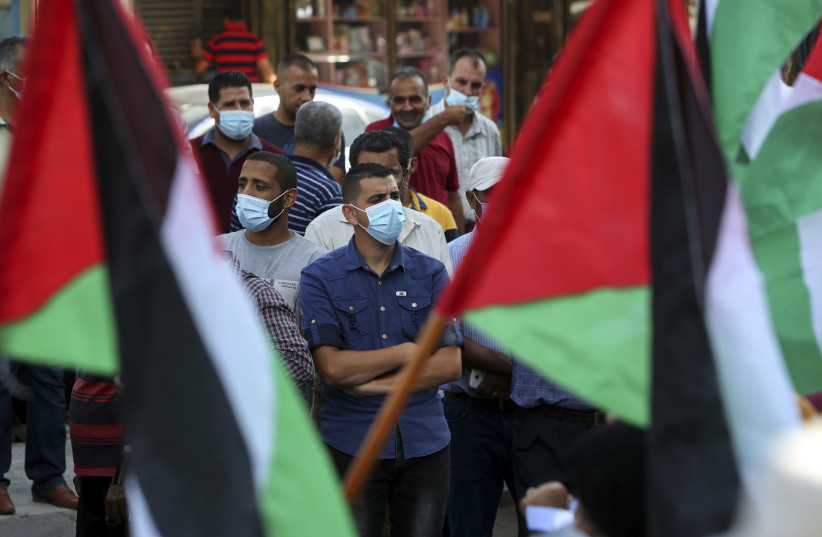
Palestinians attend a protest against the reduction of the food basket provided by the United Nations for Palestinian Refugees in Khan Yunis on October 18, 2020. / (photo credit: ABED RAHIM KHATIB/FLASH90)

The Palestinian Authority said on Friday that it “condemns and rejects” the normalization of relations between Arab countries and Israel.

A statement by the PA presidency in Ramallah said that normalization with Israel is in violation of the Arab summit resolutions and the 2002 Arab Peace Initiative.

The statement was published hours after the announcement that Sudan and Israel have agreed to normalize their relations.

Previous statements by the PA condemned the United Arab Emirates and Bahrain for agreeing to establish relations with Israel, drawing sharp criticism from the two Gulf states.

Friday’s statement by the PA, however, did not accuse Sudan of betraying the Palestinians or stabbing the Palestinian people in the back, as was the case with the UAE and Bahrain.

“No one has the right to speak on behalf of the Palestinian people and the Palestinian issue,” the statement added. “The path to a just and comprehensive peace should be based on international law and legitimacy so as to end the Israeli occupation of the land of the State of Palestine and achieve independence for the Palestinian people in their state, with East Jerusalem as its capital, on the 1967 borders. The Palestinian. Leadership will take the necessary decisions to protect the legitimate rights of the Palestinian people.”

While not in the official PA statement, Wasel Abu Youssef from the Palestinian Liberation Front, a small faction in the Palestinian Liberation Organization, said that Sudan joining “others who normalized ties with the state of the Israeli occupation represents a new stab in the back of the Palestinian people and a betrayal of the just Palestinian cause.”

Abbas Zaki, a senior official of the ruling Fatah faction, said that Sudan would not gain anything from the normalization accord with Israel.
Hamas and Palestinian Islamic Jihad (PIJ) also condemned the Israel-Sudan normalization agreement.

“We express our condemnation and outrage over the despicable and humiliating normalization that does not suit Sudan’s people and history,” Hamas said in a statement. “We call on the heroic people of Sudan to reject the shameful agreement and the establishment of any ties with the criminal enemy.”

Hamas spokesman Sami Abu Zuhri said that the agreement was “not compatible with Sudan’s record of supporting the Palestinians.”

PIJ spokesman Daoud Shehab accused Sudan of presenting Israel with a “free gift” in order to appease the US.

“This is a black day in the history of Sudan,” Shehab added. “The agreement jeopardizes Sudan’s future and identity and is a betrayal of the Arabs and Muslims.”

The PIJ official expressed confidence that the Sudanese people would not accept this “betrayal.”

In Israel’s Knesset, Joint List MK Aida Touma-Sliman from the Arab Joint List slammed the agreement, and accused US President Donald Trump and Israeli Prime Minister Benjamin Netanyahu of running a criminal organization in the region.

“Either they sell weapons or they blackmail countries into achieving normalization – as is happening now with Sudan. All of it is for the goal of helping them electorally,” he said in a statement.

In Sudan, the Sudanese RT news agency reported that two political factions, the Popular Congress Party and the Sudanese Ba’ath Party, issued a statement condemning the Sudanese government’s decision to normalize relations with the Jewish State, Ynet reported.

At the same time however, the statement welcomed Sudan’s removal from the United State’s US list of state sponsors of terrorism.

The Sudanese Ba’ath Party announced that it would “begin political and social talks to form a national front against normalizing relations with Israel.”

The Sudanese Ba’ath Party said it was “beginning to hold political and social talks to form a national front against normalizing relations with Israel.”

Commending the agreement from the Arab world was Egypt’s President Abdel Fattah al-Sisi, who tweeted that he welcomed the joint efforts of all three states involved in the agreement.

He added that he also values “all efforts aimed at achieving regional stability and peace.

Sudan’s acting foreign minister that the normalization agreement will depend on approval from its yet-to-be formed legislative council.
“Agreement on normalization with Israel will be decided after completion of the constitutional institutions through the formation of the legislative council,” Omar Gamareldin said on state TV.


Reuters contributed to this report.


Zawartość publikowanych artykułów i materiałów nie reprezentuje poglądów ani opinii Reunion’68,
ani też webmastera Blogu Reunion’68, chyba ze jest to wyraźnie zaznaczone.
Twoje uwagi, linki, własne artykuły lub wiadomości prześlij na adres:
webmaster@reunion68.com


News From Israel- Oct. 22, 2020

News From Israel- Oct. 22, 2020

ILTV Israel News


Is a secret Israeli delegation in Sudan to talk peace? Trump’s last minute push for another country to join the Abraham Accords.
–
After violence this week leaves two women dead at the hands of their husbands… Israelis are wondering when will enough be enough?
–
The oldest Jewish museum in Germany is reopening after 5 years and 50 million euros. We’ll hear more from the mayor of Frankfurt.


Zawartość publikowanych artykułów i materiałów nie reprezentuje poglądów ani opinii Reunion’68,
ani też webmastera Blogu Reunion’68, chyba ze jest to wyraźnie zaznaczone.
Twoje uwagi, linki, własne artykuły lub wiadomości prześlij na adres:
webmaster@reunion68.com


UN makes mockery of its Human Rights Council

UN makes mockery of its Human Rights Council

JPOST EDITORIAL


“It’s logically absurd and morally obscene that the UN is about to elect to its top human rights body a regime that herded 1 million Uighurs into camps.”

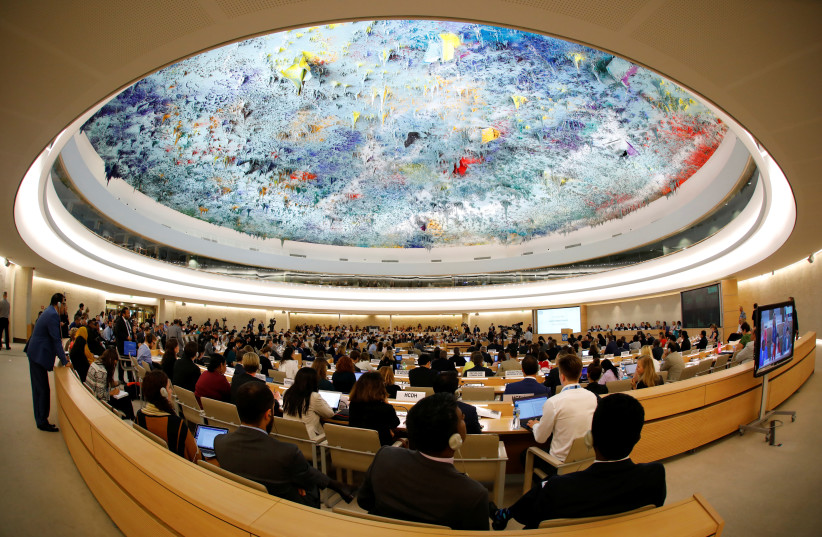
Overview of the Human Rights Council one day after the U.S. announced their withdraw at the United Nations in Geneva, / (photo credit: DENIS BALIBOUSE/REUTERS)

The shameful charade of the Geneva-based United Nations Human Rights Council is continuing. Tomorrow, the UN is scheduled to hold elections for the 47-state membership of the UNHRC and the list of countries running for a place on the body supposedly dedicated to fighting human rights abuses includes some states better known as abusers than defenders of freedom and justice. Among those likely to be elected are China, Cuba, Russia, Saudi Arabia and Pakistan.

This makes a mockery of the whole purpose of the UNHRC.

UN Watch, an NGO dedicated to monitoring the work of the United Nations and promoting human rights, distributed material ahead of the vote and has pointed out the absurdities. It also held a webinar with human rights dissidents persecuted by these very regimes to call on governments everywhere to oppose the election of the states with a record of abuse.
“Electing these dictatorships as UN judges on human rights is like making a gang of arsonists into the fire brigade,” said Hillel Neuer, the executive director of UN Watch.

Disconcertingly, despite the valiant efforts of UN Watch and other groups dedicated to fighting human rights abuses, the report shows how Cuba and Russia, which are the only candidates in their respective regional groups, are almost certain to be elected.

In the Asian regional group, where there are five candidates vying for four spots, the election of China, Pakistan and Saudi Arabia is almost assured, according to Neuer.

“It’s logically absurd and morally obscene that the UN is about to elect to its top human rights body a regime that herded 1 million Uighurs into camps, arrested, crushed and disappeared those who tried to sound the alarm about the coronavirus, and suffocated freedom in Hong Kong,” said Neuer.

He also noted that Saudi Arabia carried out a record 184 executions in 2019; Russia has a record of assassinating and attempting to assassinate dissenters including journalists and politicians; while Cuba is a police state.

A report by Amnesty International on Pakistan showed that last year the government continued to crack down on freedom of expression, arrest and “disappear” dissidents, fail to protect women and children (including child brides) and used its “blasphemy laws” to prosecute (i.e. persecute) religious minorities, including Christians.

Neuer called on the European Union’s High Commissioner, Josep Borrell, and EU member states to lead the move against the automatic election of proven human rights abusers to the council.

The United States, under President Donald Trump, pulled out from the body in June 2018 and Israel withdrew after being subjected to ongoing systematic bullying by the council.

Israel is subjected to a special agenda at the UNHRC called Agenda Item 7 – “The human rights situation in Palestine and other occupied Arab territories.” This is the only country-specific standing agenda item which ensures that Israel, and only Israel, is singled out for condemnation at every sitting. Syria can massacre its own citizens, Iran can foster terrorism and persecute human rights defenders, China and Russia can suppress protests and basic human rights, but only Israel will be subject to a mandatory review and condemnation. This does nothing to foster peace. On the contrary, it is used as a weapon by the Palestinians.

The UNHRC is part of a continuing farce. The record of its predecessor, the Commission for Human Rights, was so poor that it was disbanded. The current council, formed in 2006, is no better.

Today, UNHRC spends more time reviewing and condemning Israel than it does looking at the actions of totalitarian regimes such as North Korea.

The composition of the UNHRC serves to emphasize that much of the world is still not free. Even worse, it is these non-democratic countries that are judging the rest of the world via an official United Nations body. It’s time this sham came to an end. For the United Nations Human Rights Council to be worthy of its name, its membership must reflect those countries who believe in and abide by human rights. The UN Human Rights Council has lost all credibility and cannot perform the task for which it was created. It must either be reformed or disbanded. In its current form, the UNHRC is guaranteed to ignore gross human rights abuses among its own members.


Zawartość publikowanych artykułów i materiałów nie reprezentuje poglądów ani opinii Reunion’68,
ani też webmastera Blogu Reunion’68, chyba ze jest to wyraźnie zaznaczone.
Twoje uwagi, linki, własne artykuły lub wiadomości prześlij na adres:
webmaster@reunion68.com