Archives

6-in-10 Arab News Poll

More Than 6-in-10 Arab News Poll Respondents Think Gal Gadot a Good Choice to Play Cleopatra

i24 News


Gal Gadot. Photo: Wikimedia Commons.

 – Gal Gadot’s casting as ancient Egyptian queen Cleopatra created a Twitter storm last week, but the announcement left a surprising population largely unmoved.

More than 70 percent of respondents to an Arab News Twitter poll said they had “no problem” with the idea of Gadot – an Israeli star, who was the third-highest paid actress in Hollywood in 2020 – playing the role.

Many of the Twitterati complained bitterly that it was an affront to select an Israeli actress to play the Egyptian queen, who famously had a torrid marriage with Roman general and politician Mark Antony.

However, the idea that Cleopatra was an Arab was quickly debunked, she was in fact of Greek descent – and a clear majority – 61 percent of respondents – said “Yes” to the question: “Do you think Israeli actress Gal Gadot is suitable for the rule of Cleopatra.”

A further 12 percent said to wait and see before deciding, while 27 percent firmly answered,”No.”

The news site’s editors seemed caught out by the results of the poll, headlining the article, “Shockingly, most Arab News readers in favor of Israeli actress Gal Gadot as Cleopatra,” according to The Jerusalem Post.

While some on Twitter debated ancient geopolitics, others turned to more present-day commentary, arguing that the casting and timing of the movie were announced in the wake of the Abraham Accords between Israel and the two Gulf neighbors United Arab Emirates and Bahrain.


Zawartość publikowanych artykułów i materiałów nie reprezentuje poglądów ani opinii Reunion’68,
ani też webmastera Blogu Reunion’68, chyba ze jest to wyraźnie zaznaczone.
Twoje uwagi, linki, własne artykuły lub wiadomości prześlij na adres:
webmaster@reunion68.com


Combatting antisemitism: Why the world needs to adopt the IHRA definition

Combatting antisemitism: Why the world needs to adopt the IHRA definition

IRA FORMAN


The virus that is antisemitism has mutated into a particular form where antisemitism is employed in discourse around Israel.

Emmanuel Macron looks at a grave defaced with a swastika during a visit to the Jewish cemetery in Quatzenheim on February 19. / (photo credit: FREDERICK FLORIN/POOL/VIA REUTERS)

Antisemitism is a complex, shape-shifting phenomenon. There are no easy solutions, no silver bullets that can counter all of today’s manifestations of antisemitism. However, the International Holocaust Alliance’s (IHRA) working definition of antisemitism is one critical tool that should be employed against some types of this persistent evil.

Certain forms of Jew-hatred have existed for thousands of years. But in the aftermath of the Holocaust it became more problematic to directly voice hatred toward “Jews” and “Judaism.” Thus, the virus that is antisemitism has mutated into a particular form where antisemitism is employed in discourse around Israel, targeting Israel as an alternative for Jews or by employing classic antisemitic tropes and substituting the word “Israel” for the word “Jew.” The need to recognize this mutation becomes obvious when a German court rules that firebombing a synagogue is not antisemitic but merely a protest against Israel.

However, one of the main difficulties in fighting this Israel-centric antisemitism is how to distinguish legitimate criticism of Israel – criticism of the type that is employed against other countries – from the bigotry that is disguised as mere objective analysis. The IHRA definition, if not distorted by ideological lenses, is an effective means to educate governments and civil society of the significant problem of Israel-related Jew-hatred and as a resource to educate about the differences between antisemitic hate speech and sincere criticism of the State of Israel, whether you agree with it or not.

The IHRA working definition of antisemitism was formally adopted by the IHRA in 2016 as a means of identifying all forms of antisemitism. The IHRA is an intergovernmental organization founded in 1998 and today it includes 34 nations, including the United States and most of its democratic allies.

The working definition consists of just two sentences: “Antisemitism is a certain perception of Jews, which may be expressed as hatred toward Jews. Rhetorical and physical manifestations of antisemitism are directed toward Jewish or non-Jewish individuals and/or their property, toward Jewish community institutions and religious facilities.”

Most importantly, accompanying the definition are 11 examples that the IHRA asserts may serve as illustrations of antisemitism. They include denying the Holocaust, accusing Jewish citizens of being more loyal to Israel, denying the Jewish people their right to self-determination, applying a double standard toward Israel, and drawing comparisons of Israeli policy to that of the Nazis. It is these examples that are central to the IHRA working definition’s efficacy, as well as drawing undeserved criticism.

The IHRA definition along with its examples is a nuanced document. It makes clear that “criticism of Israel similar to that leveled against any other country cannot be regarded by itself as antisemitism.” Moreover, it states that its examples “could, taking into account the overall context,” be antisemitic. It strengthens one of civil society’s most powerful weapons against bigotry: the ability to call out and shame individuals who are engaging in hate speech or acts of hate.

THE WORKING definition is not a legally binding definition. It does not criminalize any behavior that is not already illegal. It does not support government censorship. It does not say that all criticism of Israel is antisemitic. It does not draw exact bright lines between what can be called out and what is honest criticism.

Unfortunately, in a polarized society, the IHRA definition has been misread and misinterpreted. Some on the political Left claim the working definition defines all criticism of Israel as antisemitic, ignoring IHRA’s explicit disclaimer to the contrary. There are those who complain that it is just a means for governments to annul First Amendment rights and censor speech of Palestinian activists, despite IHRA’s declaration that it is not legally binding.

On the political Right there are voices that claim to support the IHRA definition when by all appearances they have not even read the document. They use the 11 examples but fail to acknowledge that in any given incident, context must be considered before leveling charges of antisemitism. They make claims for the scope of the document that are not supportable by the text.

In the face of rising antisemitism, the European Parliament and the European Council have recommended EU states adopt the IHRA definition. Nearly 30 countries, primarily European democracies, have adopted the working definition as one means to counter rising antisemitism. German and Austrian prosecutors use it for education and training purposes. Others use it to help classify and collect hate crime/incident data.

The US State Department was a leader in employing the IHRA tool in identifying antisemitism overseas. It is time for us to catch up with our European allies by advocating that Congress, state legislatures and local governments, including judicial and law enforcement institutions, also adopt the IHRA working definition as a domestic, educational tool. Judicious use of the IHRA working definition of antisemitism is an essential means for pushing back against one form of today’s virulent, antisemitism

The writer is the former US special envoy for monitoring and combating antisemitism. He is currently the visiting professor of contemporary antisemitism at Georgetown University and senior fellow at Georgetown’s Center for Jewish Civilization. He also serves as senior adviser for combating antisemitism at Human Rights First and as a senior fellow at the Moment Institute.


Zawartość publikowanych artykułów i materiałów nie reprezentuje poglądów ani opinii Reunion’68,
ani też webmastera Blogu Reunion’68, chyba ze jest to wyraźnie zaznaczone.
Twoje uwagi, linki, własne artykuły lub wiadomości prześlij na adres:
webmaster@reunion68.com


Bahrain-Israel sign peace

Bahrain-Israel sign peace

TV7 Israel News


1) Israel and the Gulf Kingdom of Bahrain sign a joint communique, officially formalizing bilateral intensions to establish full-diplomatic relations between Jerusalem and Manama.

2) Palestinian Islamists launch a rocket toward Israel’s southern communities – forcing thousands of Israel into bomb shelters.

3) Prime Minister Benjamin Netanyahu announced Israel’s gradual exit from a nation-wide closure; after morbidity rates throughout most of the country indicated a positive downward trend.


Zawartość publikowanych artykułów i materiałów nie reprezentuje poglądów ani opinii Reunion’68,
ani też webmastera Blogu Reunion’68, chyba ze jest to wyraźnie zaznaczone.
Twoje uwagi, linki, własne artykuły lub wiadomości prześlij na adres:
webmaster@reunion68.com


Israel-Hamas seek long-term ceasefire

Israel-Hamas seek long-term ceasefire

TV7 Israel News


1) Israel’s security establishment is reportedly pushing for a long-term arrangement with the Islamist Hamas organization in the Gaza Strip.

2) Leaders of the European Union 27-member states concluded a two-day summit, today; during which a debate on foreign issues – including EU-Turkey relations – was discussed.

3) Greece calls on Turkey to return to the negotiating table – as tensions continue to simmer.


Zawartość publikowanych artykułów i materiałów nie reprezentuje poglądów ani opinii Reunion’68,
ani też webmastera Blogu Reunion’68, chyba ze jest to wyraźnie zaznaczone.
Twoje uwagi, linki, własne artykuły lub wiadomości prześlij na adres:
webmaster@reunion68.com


New breath test sniffs out Covid-19 in 30 seconds

New breath test sniffs out Covid-19 in 30 seconds

Brian Blum


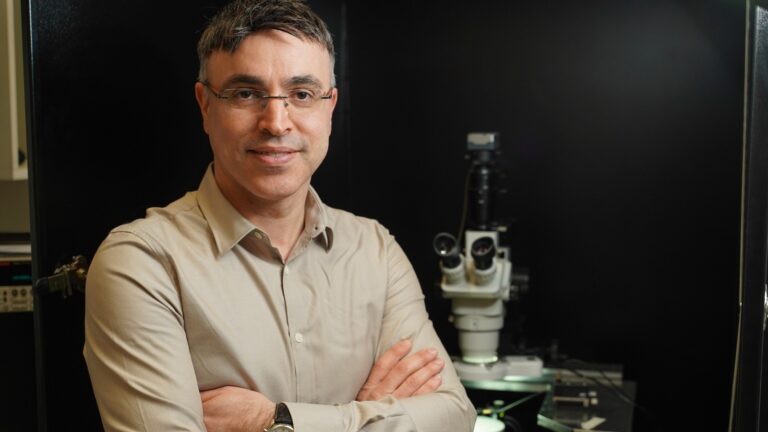
Prof. Hossam Haick, inventor of a breath test for diseases. Photo courtesy of Technion Spokesperson’s Office

Could uncomfortable nasal swabs be swapped for a contactless two-second breathalyzer puff to check for Covid-19 infection? Prof. Hossam Haick thinks so.

Haick, a professor of chemical engineering and nanotechnology at the Technion – Israel Institute of Technology, first came to our attention in 2011 for his invention of “NaNose,” which can sniff out cancer, Parkinson’s and Alzheimer’s disease, gastric ailments and more. (Na-Nose is currently being assessed by medical regulators.)

When Covid-19 broke out earlier this year, Haick, together with Technion colleague Dr. Yoav Broza, together with researchers from Wuhan, China, began adapting Haick’s “breathalyzer” technology for the novel coronavirus.

The preliminary results look promising.

In a new peer-reviewed study published in the scientific journal ACS Nano, Haick’s sniffer tech correctly identified all positive patients in a clinical trial in Wuhan. The test detects disease-specific biomarkers in the breath with 92% accuracy, 100% sensitivity and 84% specificity, the researchers reported.

The new device, like the original, uses nanotechnology to identify specific volatile organic compounds (VOCs) from the lung that are in the exhaled breath of coronavirus patients.

The Covid-19 breathalyzer could revolutionize testing for the virus – you just need to blow into the device for a couple of seconds from a distance of 2 centimeters and the results come back within 30 seconds.

Fast identification of Covid-positive patients is crucial for contact tracing and is considered the best way, short of a vaccine, to stem community transmission of the virus that has killed more than 800,000 people around the world.

A less invasive system would also make Covid testing more widespread, enabling health departments to identify pre-symptomatic or asymptomatic carriers.

The tests should cost around $2 to $3 a person, Haick added. The self-contained device does not require any additional accessories.

The clinical trial examined 140 people, of whom 49 had previously tested positive for Covid-19. The test identified all the coronavirus carriers. However, it also told seven healthy people they had the virus.

That may sound like a failure, but up to a quarter of current state-of-the-art PCR tests for Covid-19 return false positives as well. From the perspective of doctors tackling the pandemic, false positives are inconvenient but less concerning than false negatives, which can lead to people to assume they are virus-free and as a result spread the virus by mistake.

Like NaNose Medical’s main cancer testing device, its Covid-19 test will also need to be approved by regulators, but Haick expects that to happen faster given the urgency of Covid-19 testing – perhaps as early as six months from now, he says. Still, a larger cohort study will be needed to validate the results.

Haick’s innovation is not the only Israeli test in emergency development today for Covid-19 testing. A “gargle and spit” method is being evaluated on hundreds of patients at Tel Aviv’s Sheba Hospital and has an even higher accuracy rate than Haick’s – up to 95% – which would make it suitable for mass screening at airports, nursing homes and even screening at home, says Prof. Eli Schwartz, head of the trial for Sheba.

Like the breathalyzer, the “gargle and spit” test would be inexpensive and fast – with results analyzed within just one second.

Haick serves as chief technology officer for NaNose Medical in addition to his position at the Technion.


Zawartość publikowanych artykułów i materiałów nie reprezentuje poglądów ani opinii Reunion’68,
ani też webmastera Blogu Reunion’68, chyba ze jest to wyraźnie zaznaczone.
Twoje uwagi, linki, własne artykuły lub wiadomości prześlij na adres:
webmaster@reunion68.com