Archives

A Yom Kippur Guide for the Perplexed, 2016

A Yom Kippur Guide for the Perplexed

by Yoram Ettinger


Yom Kippur painting circa 1900 by Isidor Kaufmann. Photo: Wikipedia.Yom Kippur painting circa 1900 by Isidor Kaufmann. Photo: Wikipedia

1. Yom Kippur is a day of hope and optimism, in addition to a solemn day of soul-searching. The Day of Atonement provides a unique awareness of one’s own character and track record, as well as the opportunity to upgrade relationships with relatives, friends, associates and the community at-large.

2. Yom Kippur’s focus on forgiveness highlights humility, fallibility, soul-searching faith, compassion, thoughtfulness, being considerate, accepting responsibility and magnanimity.

3. The first human being, Adam, was created on the first day of the Hebrew month of Tishrei. Human-beings are accorded an opportunity to recreate themselves spiritually, each year, on Yom Kippur — the 10th day of Tishrei, which is an Acadian word for forgiveness and Genesis.

Yom Kippur culminates 10 days of genuine, heart-driven atonement and repentance, which begin on Rosh Hashanah. Ten has special significance in Judaism: God’s abbreviation is the 10th Hebrew letter (Yod – י); there are 10 attributes of God — Divine perfection — that were highlighted during the Creation; the Ten Commandments; the Ten Plagues; there are 10 reasons for blowing the Shofar; individuals are commanded to extend a 10 percent gift to God (tithe); Ten Martyrs (Jewish leaders) were tortured/murdered by the Roman Empire; there were 10 generations between Adam and Noah and between Noah and Abraham; a 10-person-quorum (minyan in Hebrew) is required for a collective Jewish prayer; etc.

4. Yom Kippur is observed on the 10th day of the Jewish month of Tishrei, whose astrological sign is Libra. Libra symbolizes key themes of Yom Kippur: scales, justice, balance, truth, symmetry, sensitivity and optimism. Libra is ruled by the planet Venus (Noga, נגה, in Hebrew), which reflects divine light and love of other people.

5. Yom Kippur is a day of forgiveness for sins committed against God. It is customary to dedicate the eve of Yom Kippur to apologies for sins committed against fellow human-beings. However, apology and/or compensation are not sufficient if they do not elicit expressed forgiveness by the injured person.

6. Yom Kippur commemorates God’s covenant with the Jewish people, and God’s forgiveness for the sin of the Golden Calf.

7. Yom Kippur and the Jubilee both highlight liberty and subordination to God. The Jubilee — sanctifying each 50th year by proclaiming liberty, as inscribed on the Liberty Bell — is announced by blowing the shofar (a ritual ram’s horn) on Yom Kippur. The Jubilee liberates people physically and spiritually. The word “jubilee” (יובל) is a Hebrew synonym for shofar.

8. The Hebrew word Kippur, כיפור (atonement/repentance), is a derivative of the Biblical word Kaporet כפורת (the cover of the Holy Ark in the Sanctuary), and Kopher, כופר (the cover of Noah’s Ark and the Holy Altar in the Temple). Yom Kippur resembles a spiritual cover (dome), which separates the holy and the mundane, and spiritualism and materialism. The Kippah, כיפה (skullcap), which covers one’s head during prayers, reflects a spiritual dome.

9. Yom Kippur calls for repentance — Teshuvah (תשובה in Hebrew). The root of Teshuvah is similar to the root of the Hebrew word for return, שובה, and שביתה, the cessation of mundane thoughts, actions and eating. It is also similar to the root of Shabbat, שבת. Yom Kippur is also called Shabbat Shabbaton — the supreme Sabbath.

10. The Hebrew spelling of “fast” (צם/צום) reflects the substance of Yom Kippur. It is also the root of the Hebrew word for “reduction” and “shrinking” (צמצום) of one’s wrong-doing, and the root of the Hebrew words for “slave” (צמית) and “eternity” (צמיתות).
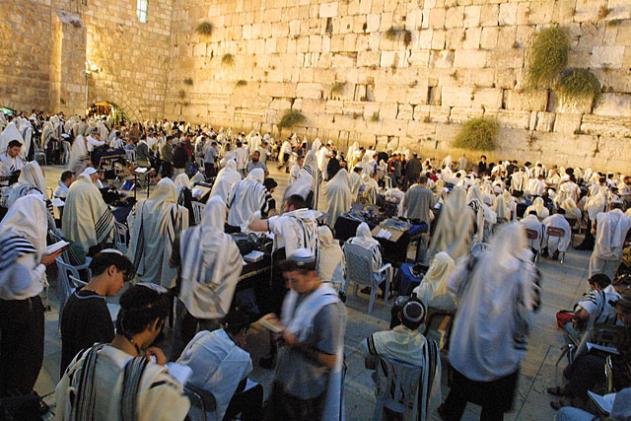
Image result for symbol of yom kippur


Zawartość publikowanych artykułów i materiałów nie reprezentuje poglądów ani opinii Reunion’68,
ani też webmastera Blogu Reunion’68, chyba ze jest to wyraźnie zaznaczone.
Twoje uwagi, linki, własne artykuły lub wiadomości prześlij na adres:
webmaster@reunion68.com



HOW THE BEATLES INSPIRED A YOM KIPPUR WAR SONG OF HOPE

HOW THE BEATLES INSPIRED A YOM KIPPUR WAR SONG OF HOPE

LAHAV HARKOV


Naomi Shemer set out to write a Hebrew cover of “Let It Be,” and ended up with a poignant song on the Yom Kippur War.

Naomi Shemer. (photo credit: Wikimedia Commons)

In the summer of 1973, Israeli songwriter Naomi Shemer, best known for writing “Jerusalem of Gold,” set out to write a Hebrew cover of the Beatles’ classic “Let it Be,” which frequently played on Israeli radio.

But when the Yom Kippur War broke out that October, the Beatles’ hit became what Shemer later called “a jumping-off point for an entirely new song.”

Shemer changed the lyrics to a prayer expressing hope for the battles to end and for IDF soldiers to return home peacefully.
The lyrics express longing for a better future, even when everything looks dark: “There is still a white sail on the horizon, facing a heavy black cloud.”

Shemer wrote the song for singer Chava Alberstein, who had wanted to perform it at an event for pilots’ wives.
“The Hebrew version that I prepared for her had no connection to the original, but was about the concerns and fears of the war that had broken out a day or two earlier,” Shemer later wrote of the songwriting process.

At first, she kept the Beatles’ tune, but her husband, Mordechai Horowitz, on a reprieve from fighting in the war said: “I won’t let you waste this song on a foreign tune. This is a Jewish war, and you should give it a Jewish tune.”

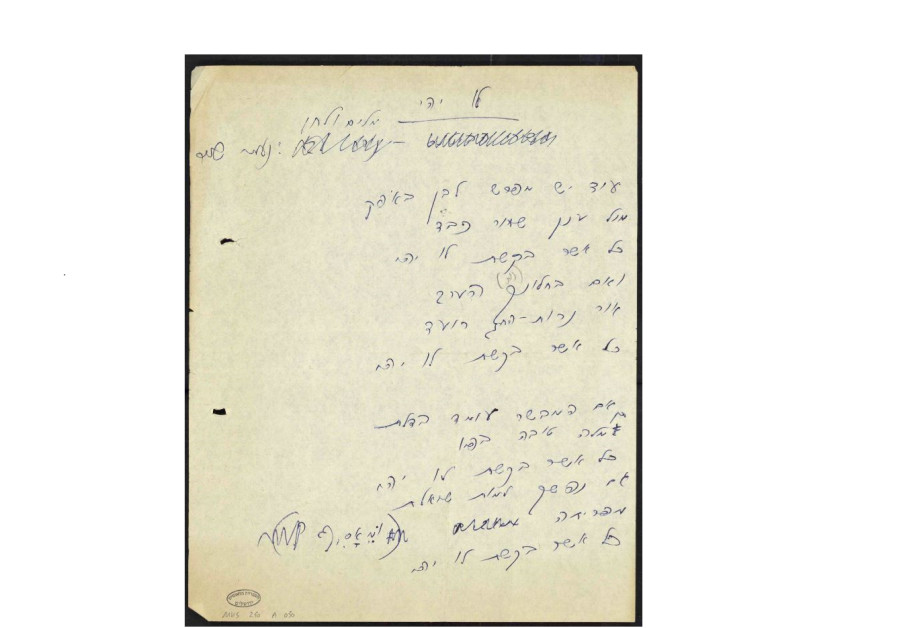
A handwritten draft of the lyrics in the National Library of Israel shows that Shemer originally wrote at the top of the page: “From the songs of the Beatles – A Hebrew version,” but changed it to “Music and Lyrics: Naomi Shemer.”

The draft includes a verse about someone “bringing news standing at the door” to tell a family about their loved one’s death, which she later removed, because it was too sad, her daughter Lely Shemer wrote in an email Sunday.

That day, Shemer was asked to perform on television, and she came up with an original tune for the song in the car on the way to the studio, a tune that she described as “the sigh and distress of the war.” The song was broadcast the next day, and a day after that, Alberstein performed it on Army Radio.

Shemer’s “Let It Be” (Lu Yihi) became the unofficial song of the Yom Kippur War, played and sung by soldiers on duty.

Shemer received many letters from Israelis who were touched by the song, which can be found in her archive at the National Library of Israel, and she told a story that when IDF chief of staff David Elazar first heard the song after the war ended it made him cry.


Zawartość publikowanych artykułów i materiałów nie reprezentuje poglądów ani opinii Reunion’68,
ani też webmastera Blogu Reunion’68, chyba ze jest to wyraźnie zaznaczone.
Twoje uwagi, linki, własne artykuły lub wiadomości prześlij na adres:
webmaster@reunion68.com


Iran in shadow of peace deal: Missile fire on Israel from Gaza – analysis

Iran in shadow of peace deal: Missile fire on Israel from Gaza – analysis

SETH J. FRANTZMAN


Iran backs Hamas and Palestinian Islamic Jihad in Gaza and coordinates closely with them.

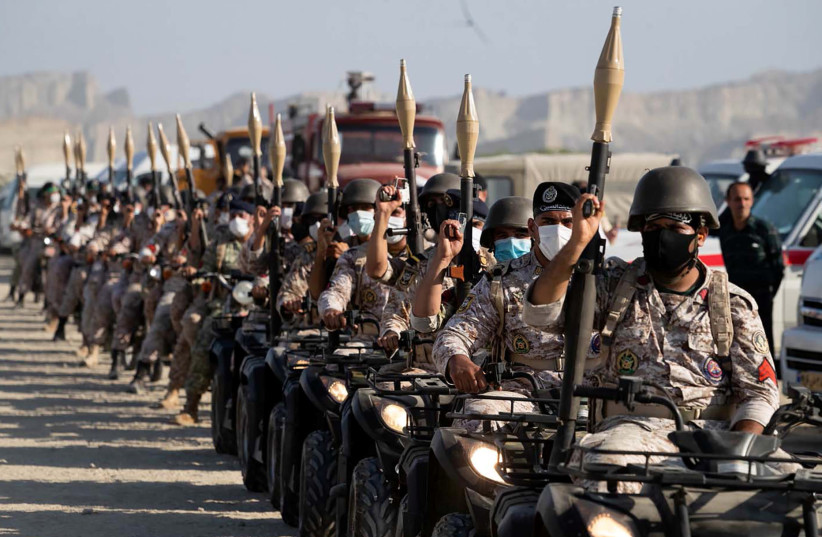
Members of the Iranian Army take part in the annual military drill, dubbed “Zolphaghar 99”, in the Gulf of Oman, Iran on September 7, 2020 / (photo credit: WANA NEWS AGENCY/REUTERS)

Iranian media stressed that rockets were fired at Israel from Gaza during the signing of the peace deals with the UAE and Bahrain. Fars News said that the rocket sirens were heard in Ashkelon and Ashdod “at the same time as Arab, American and Zionists officials gathered at the White House.”

Fars News put the details up quickly on its site online, indicating it was either paying close attention or had advance knowledge of the strikes.

Iran’s media sought to highlight the rocket fire immediately to distract from the signing ceremony. Iran backs Hamas and Palestinian Islamic Jihad in Gaza and coordinates closely with them. Fars News said the rockets were fired at the “Zionist settlements of Ashkelon and Ashdod.”

Fars News appeared to claim it had relied on a Reuters and Yediot Ahronot account, but its photos and explanatory text indicated it had done more work on this issue. The Iranian media was interested in the “size of the rocket” used and also Israel’s air defense systems being activated.

Fars News claims that Israel’s assertions that it intercepted the rockets were “not true” and it showed images of a shop allegedly damaged, “two people were injured.” The Iranian media, which is close to the Islamic Revolutionary Guard Corps, stressed that this rocket fire came during the signing of the agreement with the UAE and Bahrain.

This was obvious, and others have drawn the conclusions that the Palestinian armed factions in Gaza did this on purpose directly timed to the speeches of the signing.

However, what is of interest here is that the Iranian media generally tried to ignore the signing. In the past Iran has led the charge in condemnation of the new agreements. It has accused the Gulf states of “betraying” the Palestinians. Iran’s regime has opposed US President Donald Trump’s “Deal of the Century.”

Iran has increased its rhetoric in recent weeks, slamming Bahrain for joining the agreements and hinting that it could try to undermine Bahrain’s leaders or strike at the country. Last September Iran used drones and cruise missiles to attack Saudi Arabia. It has also sent drones and missiles to the Houthi rebels in Yemen.

The Houthis have been increasing attacks on Saudi Arabia. Recent reports in Gulf and Austrian media have accused Qatar of being linked to the Houthis. Qatar also has warm relations with Iran, helps pay salaries in Gaza, has hosted Hamas and is close to Turkey. Turkey, like Iran, has slammed the Israel deals with the Gulf and Turkey’s current leadership has vowed to “liberate Al-Aqsa” in Jerusalem.

In contrast to Fars News, Tasnim news in Iran stressed that Trump might be open to a new Iran Deal, a story based on US media reports. It also stressed pro-Iranian groups support for attacks on US troops in Iraq. It also highlighted Hamas in Gaza condemning the Israeli deal and other issues.

Overall the Iranian coverage indicates that Tehran is paying close attention to the rocket fire on Israel and the deal with the Gulf. It wants to emphasize the role of Hamas. Hamas leaders recently also met Turkey’s President Recep Tayyip Erdogan and Hamas is seeking to increase its clout in Lebanon with a high level delegation staying in Lebanon for weeks. Hamas has also met with Hezbollah. Iran appears to seek to highlight the Hamas role in order to counteract the agreements between Israel and the Gulf.

Al-Mayadeen media, which tends to support Iran and its proxies, also has highlighted the increasing role of Hamas. In general the narrative seems to be that if Israel and the UAE and Bahrain are increasing their connections, then Iran will at least pretend that its friends and allies, such as Hezbollah and Hamas, are increasing their role.


Zawartość publikowanych artykułów i materiałów nie reprezentuje poglądów ani opinii Reunion’68,
ani też webmastera Blogu Reunion’68, chyba ze jest to wyraźnie zaznaczone.
Twoje uwagi, linki, własne artykuły lub wiadomości prześlij na adres:
webmaster@reunion68.com


News From Israel – Sep. 24, 2020

News From Israel – Sep. 24, 2020

ILTV Israel News


Full, private and public sector closures beginning tomorrow following all-night ministerial meetings.
The international #Chabad organization gets set to receive the Hollywood treatment with an all new TV show.
The annual Jewish day of #atonement approaches. Find out how to celebrate under #lockdown.


Zawartość publikowanych artykułów i materiałów nie reprezentuje poglądów ani opinii Reunion’68,
ani też webmastera Blogu Reunion’68, chyba ze jest to wyraźnie zaznaczone.
Twoje uwagi, linki, własne artykuły lub wiadomości prześlij na adres:
webmaster@reunion68.com



It will take 6-7 years for UAE to get F-35 jets

US ambassador: It will take 6-7 years for UAE to get F-35 jets

JUDAH ARI GROSS


Friedman appears to denounce critics of planned sale, which Israeli defense officials fear could harm Israel’s military edge, saying matter is being addressed by ‘professionals’

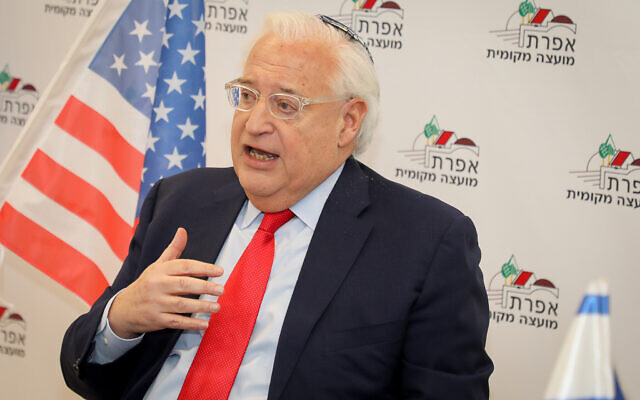
US ambassador to Israel David Friedman during a visit in the Jewish settlement of Efrat, in Gush Etzion, February 20, 2020. (Gershon Elinson/Flash90)

US Ambassador to Israel David Friedman on Wednesday said it would likely take six to seven years before the United Arab Emirates receives the F-35 stealth fighter jet, under a contentious proposed arms sale that has raised concerns in Israel over its potential to damage the country’s military edge in the region.

“The Emiratis have been trying to get the F-35 for six or seven years. The delivery time is probably another six or seven years from now, if they got [approval to purchase the aircraft],” Friedman said in an interview during the Jerusalem Post newspaper’s conference.

Though not formally a part of a recently signed US-brokered normalization agreement between Israel and the UAE, the sale of the F-35s is widely seen as having been contingent upon Abu Dhabi’s acceptance of the deal with Jerusalem.

Under a 2008 law and a decades-older policy, the United States is prohibited from making arms sales to countries in the Middle East if the Pentagon determines that doing so would damage Israel’s so-called “Qualitative Military Edge.”

The US ambassador seemed to criticize Israeli officials who initially spoke out against or expressed hesitations about the proposed sale of the fifth-generation aircraft, a linchpin in Israel’s aerial superiority strategy. Though he was not explicitly named, this appeared to include Defense Minister Benny Gantz, who said last month that the proliferation of the advanced stealth fighter jet through the region was “not good for Israel.”

“It’s not in Israel’s interest to discuss what they’re afraid of or what they want or what they should get,” Friedman said.

Though Prime Minister Benjamin Netanyahu has repeatedly denied giving his approval for the F-35 sale, he appears to have at least been made aware of it in advance and not informed the Defense Ministry and military that the sale — until then regarded as indefinitely on hold — appeared to be going through.

Friedman criticized efforts to make the sale into a “political issue” and said the matter would be resolved by defense officials from both countries.

“Israel has dealt with the QME behind the scenes, professionally, outside of politics, successfully for more than a decade. It’s going to continue to work that way,” he said.

On Tuesday, Gantz — who was kept out of the loop about the UAE normalization deal and the F-35 sale — met with his American counterpart Mark Esper and other defense officials to discuss ways of maintaining Israel’s advantage in the region.

“The professionals are engaged right now. Let them engage, let them continue to engage, and we’ll get to the right outcome,” Friedman said.

In some cases, weapons sales that would have threatened Israel’s QME were eventually allowed to go through provided the United States offset the potential harm by limiting the way the equipment could be used by the other country or by selling yet more powerful military technology to Israel. For example, under president Barack Obama, F-16 fighter jets were sold to Saudi Arabia under the condition that they could not be based within immediate range of Israel.

Friedman appeared to indicate such a deal would be reached in this case as well.

“There are so many ways to skin this cat,” he said.

According to a Reuters report Tuesday, the US is hoping to ink a deal to sell the stealth fighters to the UAE by December, but is also looking for ways to assuage Israel’s concerns that its security could be jeopardized by the sale of the advanced jets.

The report claimed one measure under review was supplying Israel with technology to identify the Emirati jets, so the stealth craft cannot evade its radars.

Gantz met with Esper and other senior US officials during his visit to Washington on Tuesday, a week after Israel normalized relations with the UAE and Bahrain at a White House ceremony. Gantz did not travel to the US for the signing of the accords.

“The defense relationship between the United States and Israel has never been stronger: We intend to keep it that way,” Esper told Gantz, according to the Pentagon.

He added that “a cornerstone of our defense relationship is preserving Israel’s qualitative military edge in the region.”

Gantz and Esper “discussed the importance of ensuring Israel’s military edge and the avenues to maintain it and reviewed additional regional opportunities and potential defense collaborations,” the Israeli Defense Ministry said in a statement.

The defense minister also discussed the sale of the planes with senior US presidential adviser Jared Kushner, a key architect of the normalization deals with the UAE and Bahrain.

Gantz and Kushner discussed “furthering additional accords as an instrument for ensuring regional stability and protecting Israel’s security, while maintaining Israel’s qualitative edge throughout the process,” the Defense Ministry said in a statement.

There was no comment on the meeting from the White House.


Times of Israel staff contributed to this report


Zawartość publikowanych artykułów i materiałów nie reprezentuje poglądów ani opinii Reunion’68,
ani też webmastera Blogu Reunion’68, chyba ze jest to wyraźnie zaznaczone.
Twoje uwagi, linki, własne artykuły lub wiadomości prześlij na adres:
webmaster@reunion68.com