Archives

Syrian air defenses thwart Israeli attack on Aleppo

Syrian air defenses thwart Israeli attack on Aleppo

REUTERS


Later, the broadcaster said the army downed several Israeli missiles before they reached their targets in the latest attack Syria said was conducted by Israel.

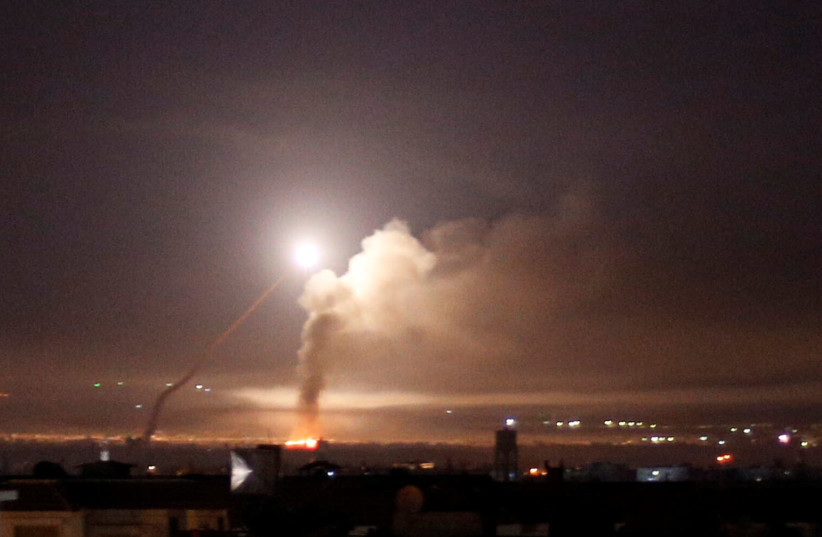
Missile fire is seen from Damascus, Syria / (photo credit: OMAR SANADIKI/REUTERS)

Syrian air defenses thwarted an Israeli attack on Aleppo city, Syrian state television said on Friday.

Later, the broadcaster said the army downed several Israeli missiles before they reached their targets in the latest attack Syria said was conducted by Israel.

Israeli defense officials have said in recent months Israel would step up its campaign against Iran in Syria where, with the help of its proxy militias, Tehran has expanded its presence.

A regional intelligence source said Israel was stepping up raids in Syria at a time when world attention and the region, including Syria, were distracted by the coronavirus pandemic.

Israel has acknowledged conducting many raids inside Syria since the start of the civil war in 2011.


Zawartość publikowanych artykułów i materiałów nie reprezentuje poglądów ani opinii Reunion’68,
ani też webmastera Blogu Reunion’68, chyba ze jest to wyraźnie zaznaczone.
Twoje uwagi, linki, własne artykuły lub wiadomości prześlij na adres:
webmaster@reunion68.com


Israel imposes nightly curfews on 40 towns

Israel imposes nightly curfews on 40 towns; Turkey ups rhetoric vs Greece


TV7 Israel News


1) Jerusalem imposes a week-long nightly curfew on 40 communities throughout the Jewish State as part of a bid to curb an unrelenting spread of the corona contagion.
2) President Hasim Thaci stressed that his country’s decision to normalize relations with Israel would not harm its relation with Turkey after the latter voiced its disappointment over the move.
3) Tensions between Turkey and Greece are evidently on the rise.


Zawartość publikowanych artykułów i materiałów nie reprezentuje poglądów ani opinii Reunion’68,
ani też webmastera Blogu Reunion’68, chyba ze jest to wyraźnie zaznaczone.
Twoje uwagi, linki, własne artykuły lub wiadomości prześlij na adres:
webmaster@reunion68.com


Israel-UAE Normalization Deal Said to Be ‘Judo-Inspired’

Israel-UAE Normalization Deal Said to Be ‘Judo-Inspired’

Shiryn Ghermezian


Israeli judoka Peter Paltchik is pictured with UAE judo officials the Abu Dhabi Grand Slam in October 2018. Photo: Peter Palchick.

The International Judo Federation (IJF) and three Israeli judokas agree that the sport played a role in the historic normalization agreement announced by the Jewish state and the UAE last week.

IJF published a story on its website that celebrated the accord, saying, “What if we also told you that it is a judo-inspired agreement? Many would not believe us, although they should.”

“When we address the topic of the pioneers, those who encouraged this rapprochement, those who inspired and promoted an agreement that, at that time, seemed if not impossible, at least extremely complicated, it is necessary to talk about judo,” the IJF added.

In 2015 and 2017, Israeli judokas competed in the Abu Dhabi Grand Slam but were not permitted to showcase any national identification on their uniforms, and they were told that Israel’s anthem and flag would not be presented.

Twelve Israeli judokas brought home five medals from the Abu Dhabi Grand Slam in 2017 and they were all forced to compete under the banner of the IJF. When Israeli judoka Tal Flicker was awarded a gold medal, the IJF flag was raised, and he quietly sang “Hatikvah” to himself as the IJF’s anthem played in the background.

The IJF subsequently suspended the Abu Dhabi Grand Slam tournament in an effort to take a “firm and constructive stance in the fight against discrimination in sport.”

Tournament organizers then agreed to abide by the IJF rules and the tournament was reinstated.

In its story last week, the IJF recalled the sporting breakthrough between Israel and the UAE in October 2018 at the Abu Dhabi Glam Slam when Israeli judokas Sagi Muki and Peter Paltchik individually won gold medals, which led to the raising of the Israeli flag and the playing of “Hatikvah” for the first time in the history of the competition.

Israel’s sports minister at the time, Miri Regev, was also invited to award the medal to Muki.

The IJF said:

Judo smashed down the walls of misunderstanding and anger and for that we want to congratulate the signatories of the agreement from here. If Donald Trump wishes to appropriate the success and paternity of the gestation of the pact, it seems great to us because, after all, Trump himself organized an international judo tournament in Florida a few years ago, before he was ever a candidate for the White House. Maybe he drew on memories, maybe our values were a source of inspiration. In any case, his mediation has been decisive. But, if you allow us an ephemeral exercise of false modesty, we claim our share in this historic development.”

Muki told The Algemeiner this week that judo had in fact served as “a bridge” for normalization between UAE and Israel, starting in 2015, when Israeli judokas first competed in the Abu Dhabi Glam Slam, and especially with the accomplishments Israel achieved at the 2018 competition in terms of the country’s flag being displayed and “Hatikvah” being played.

The gold medalist, 28, even recalled Israeli Prime Minister Benjamin Netanyahu calling him after his 2018 victory in Abu Dhabi and thanking him for helping the national efforts to create peace between the two countries.

Israeli Olympic judoka Ori Sasson similarly told The Algemeiner that the accomplishment of having “Hatikvah” played at the 2018 Abu Dhabi Glam Slam helped “pave the road for an open, strong and lasting peace” between the two countries.

“Many times we [athletes] see ourselves as the ambassadors of Israel,” the 30-year-old said. “We reach places like the UAE in which we don’t have diplomatic relationships and then they play ‘Hatikvah’ for the first time. These are people-to-people relationships on a grassroots level that many times pave the road for an open, strong and lasting peace…I do believe that our judo team had a contribution, even if a small one, to this wonderful peace deal with the UAE.”

Paltchik, 28, explained it differently, telling The Algemeiner, “Was the agreement signed because of us? No. Have we shown that we can live in peace with each other? Yes.”

“I believe that this peace agreement is the result and combination of quite a few events and interests in the Middle East,” he said. “I believe that sports in general and judo events, in particular, have been a catalyst for understanding that in the end we are all people and working together well can help us build a better Middle East for our child’s future.”

“Our reality in the Middle East consists of over 100 years of conflict, but the sports competitions that give everyone a chance to compete show that it is possible otherwise,” Paltchik added. “I was excited and happy about the opportunity to come to Abu Dhabi and compete, and I was even happier to do so when I represent the State of Israel and not the World Judo Association.”

Now, following the normalization deal, Paltchik hopes that Israel and the UAE can cooperate and train their athletes together.

He said, “I know we will be happy to host them here and will be very happy to fly there as ambassadors of goodwill representing a message of peace and brotherhood. I hope the walls that separate us fall.”


Zawartość publikowanych artykułów i materiałów nie reprezentuje poglądów ani opinii Reunion’68,
ani też webmastera Blogu Reunion’68, chyba ze jest to wyraźnie zaznaczone.
Twoje uwagi, linki, własne artykuły lub wiadomości prześlij na adres:
webmaster@reunion68.com


Can Arabs and Israelis prosper together?

Can Arabs and Israelis prosper together?

AHMED CHARAI


US President Donald Trump’s Middle East adviser Jared Kushner hailed the UAE-Israel pact as an “icebreaker.” He is right.

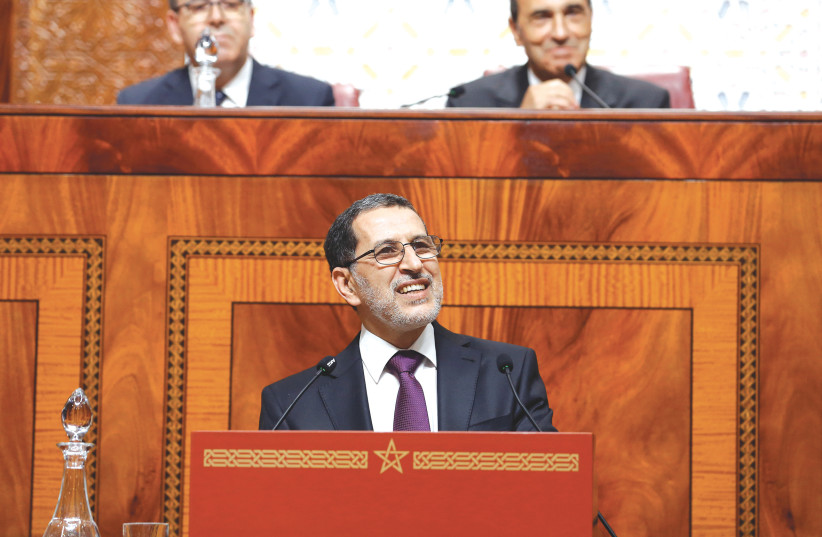
MOROCCAN PRIME MINISTER Saad Eddine El Othmani criticized the UAE-Israel peace deal, but days later walked back his remarks, saying he was speaking in his personal capacity, not as a government official. (photo credit: YOUSSEF BOUDLAL / REUTERS)

The Arab world was strangely quiet in the wake of the United Arab Emirates’ announcement of peace with Israel. The “Arab street” did not explode.

It is a strategic victory for both Israel and the UAE. Israel has started on a path toward normalization with an Arab government for only the third time in its history, and, for the first time, with a Gulf Arab state. For the UAE, it demonstrates a rare willingness to take risks for peace. The Emirates has positioned itself as a beacon of religious tolerance.

It also strengthens security for the whole Middle East, as it increases the pressure on Iran and its Lebanese proxy forces. Tehran’s public announcements certainly tried to provoke the proverbial “Arab street” into protests and demonstrations. So far, those efforts have failed.

US President Donald Trump’s Middle East adviser Jared Kushner hailed the UAE-Israel pact as an “icebreaker.” He is right.

Far from the region, Morocco’s Prime Minister Saad Eddine El Othmani criticized the peace deal. What happened next is significant. Days later, he walked back his remarks, saying he was speaking in his personal capacity, not as a government official. This “clarification” is telling.

Remember, Othmani is also leader of Morocco’s Islamist party, the Justice and Development Party, known by its French-language initials PJD. Last week, PJD invited Hamas leader Khaled Mashaal to address the party’s young leaders. This invitation aroused massive criticism from the Moroccan media and political decision-makers.

What’s more, Othmani does not speak for Morocco on foreign policy. Under Morocco’s constitution, which was ratified by voters in 2011, foreign policy, diplomacy and national security are the exclusive province of the king.

Many Arabs and Jews remember Morocco’s uniquely positive history with Israel. Morocco’s former king, Hassan II, worked tirelessly to foster rapprochement between Israel and its Arab neighbors, including the Palestinians. He did so privately as well as publicly.

He facilitated every major initiative from Camp David in the 1970s to the Oslo Accords in the 1990s. Behind the scenes, King Hassan II was considered a driving force for the first peace agreement between Arabs and Israel. In the years before the 1967 war between Israel and its Arab neighbors, just as pan-Arab calls to annihilate Israel were reaching a fever pitch, Hassan II publicly called for Israel’s integration in the Arab League.

Decades of tragedy and squandered opportunities later, Morocco’s current king, Mohammed VI, maintains the same commitment to advancing Israeli-Arab rapprochement. The king personally provides funds for humanitarian and medical aid to the Palestinians. In these and other efforts, he is affirming that the Palestinian people’s human needs and rights should be met. But he is also signaling that their future lies not in the triumphs or failings of any official leadership – certainly not the Arab League – but in the development of their own peaceful civil society.

There are also family ties between Israel and Morocco. One million Israelis were either natives of Morocco or have a Moroccan-born parent or grandparent. The legal rights of Jews, and other religious minorities, are guaranteed in Morocco’s 2011 constitution. Jewish schools still dot Morocco’s major cities and Jews worship freely here. Above all, the king has made his personal affinity for Jews into formal domestic policy and won over a large swath of the population to the values of religious tolerance that he espouses.

Let’s hope that Kushner’s three years of behind-the-scenes diplomacy is now paying off. Many Arabs, myself included, are hoping for the day when Arabs and Israelis can peacefully prosper together through tolerance, trade, tourism and cultural exchange.


The writer is a Moroccan publisher. He is on the board of directors of the Atlantic Council and an international counselor of the Center for a Strategic and International Studies in Washington.


Zawartość publikowanych artykułów i materiałów nie reprezentuje poglądów ani opinii Reunion’68,
ani też webmastera Blogu Reunion’68, chyba ze jest to wyraźnie zaznaczone.
Twoje uwagi, linki, własne artykuły lub wiadomości prześlij na adres:
webmaster@reunion68.com


Netanyahu gave Israel a place among the nations in a new Middle East

Netanyahu gave Israel a place among the nations in a new Middle East

LAHAV HARKOV


DIPLOMATIC AFFAIRS: And as of August 13, that vision began coming to fruition in the Middle East as well, when Israel and the United Arab Emirates announced normalization.
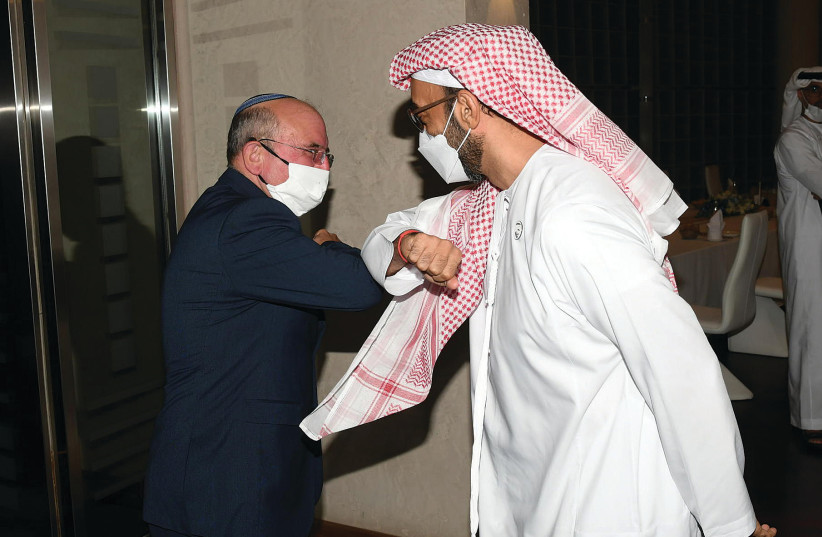
NATIONAL SECURITY Adviser Meir Ben-Shabbat meets with his Emirati counterpart, Tahnoun bin Zayed Al Nahyan, in Abu Dhabi this week. / (photo credit: AMOS BEN-GERSHOM/GPO)

Two major books envisioning a better future for Israel were published in 1993: The New Middle East, by Shimon Peres, foreign minister at the time, and A Place Among the Nations, by then-opposition leader Benjamin Netanyahu.

Both saw a future in which Israel had relations with many more of the world’s nations than it had at the time, just as the Oslo peace process began, but they had a core disagreement on how they thought this would happen.

Peres wrote his book after the high of the Oslo Accords, which he believed would reshape the region for better, while Netanyahu named his chapter on the accords “Trojan Horse,” believing that it was a danger to Israel.
“At the heart of the conflict that has been going on for some 100 years,” Peres wrote, “a conflict that escalated with the founding of the State of Israel 45 years ago, stands the Palestinian matter.”

If Israel makes peace with the Palestinians, then the rest of the Arab world will follow, and “open the way for a fundamental transformation,” creating the titular new Middle East, he posited.

Peres held this position for the rest of his life, even negotiating with Palestinian Authority President Mahmoud Abbas when he was president of Israel and Netanyahu was prime minister. It was a view that made him an international superstar. He had a lot of support behind it, from politicians around the world and the experts in their think tanks. The 2002 Arab Peace Plan was predicated on that very idea, that the Arab League states would have official relations with Israel only if there is a two-state solution to their liking.

Netanyahu, however, had and still has a fundamentally different view of what would make Israel a country with which it would be worth making peace. His last speech as opposition leader, in 1996, summed up his view on how he thinks the “new Middle East” will come to be, as delineated in his book.

“We can realize a glorious future for the State of Israel…. We have very sophisticated industries and very sophisticated people. People coming from the army, air force, intelligence, can operate in new media systems, in computer communications, information security, all those elements of the new industry of knowledge. We are about to become one of the truly successful economies, if we carry out the liberalization we believe in. If we take those steps, the economic power of the State of Israel will be among the 15 top economies of the world,” Netanyahu said.

The way for Israel to make those strides in “the real Middle East,” as opposed to The New Middle East, he said, “is not tearing down the walls, our walls of defense… [but] to fortify it – economically, socially, in terms of aliyah, in terms of settlement.”

Over the 27 years since those books were published, Israel repeatedly entered into negotiations with the Palestinians and offered major concessions, which the Palestinians always rejected. The Palestinian leadership has refused to negotiate with Israel at all in recent years.
But for 14 of those 27 years, Netanyahu was prime minister, so it is no surprise that Israel has pursued the Place Among the Nations vision.

Israel’s economic development and fostering of its innovative spirit have brought on strong partnerships with countries around the world, especially in the past decade.

And as of August 13, that vision began coming to fruition in the Middle East as well, when Israel and the United Arab Emirates announced normalization.

IN ABU DHABI – with the large Israeli delegation meeting with Emirati officials, which arrived on the first-ever Israeli commercial airline flight to the UAE, which was also the first-ever Israeli flight over Saudi Arabia – it felt like something momentous was taking place.

It clearly was not just Israelis who were excited about this new development. The Emiratis pulled out all the stops. They literally rolled out the red carpet for the El Al plane that landed at the airport in Abu Dhabi. They held a banquet with steaks and caviar for the officials of both governments.

The journalists were given a private tour of the futuristic-looking Louvre Abu Dhabi and served a four-course dinner, including camel meat, a delicacy. (There was an elegant kosher option, from the newly OU-certified local kosher caterer, as well.) The local attendees included prominent figures such as the culture minister, the manager of UAE’s Mars mission and an MP who heads an anti-extremism effort, as well as Emirati journalists.
The group was obviously carefully selected to make a certain impression on the reporters who would then bring back the messages from the UAE to Israel. But there was still plenty to be gleaned from unscripted, candid conversations with people whose expertise was not necessarily foreign relations.

We heard from people who had Israeli friends from studies in the US and Europe. We answered questions about tourist sites to visit when they eventually come to Israel. People were interested in cooperation in technology and other research. One official compared the Israelis’ and Emiratis’ ambitious spirits.

Don’t compare this peace to that Israel has with Jordan and Egypt, one official said. This is peace between two peoples who want to get to know one another.

That the younger generation in the Middle East has much to gain from abandoning extremism and fostering ties with Israel was a theme that came up repeatedly.

At no point on the trip did the Palestinians come up, unless an Israeli brought them up. On the record, the response was that “one of the prerequisites of the commencing of bilateral relations was the halting of annexation,” and the UAE has “assurances from key leaders in the US and Israel” on the matter, as Foreign Ministry director of policy planning Jamal al-Musharakh said in a briefing on Tuesday, just before the flight back to Israel.

The UAE “remains with the Arab consensus and resolutions pertaining to [the Palestinians]. We have not backed out even an inch from our position,” he said.

But when asked if the normalization process would stop were Israel to move forward with sovereignty plans, Musharakh said “it does not.”

Off the record, other officials were very unsatisfied with the Palestinians’ reaction to the UAE’s normalization with Israel. One at the dinner said the UAE needs to do things in its own interest and not listen to others’ diktats. Ties with Israel are not about the Palestinians, and had been in the works for years, she pointed out.

NPR’s Daniel Estrin had a similar impression, writing that “Emiratis were offended by what they perceived as Palestinian insults to their leader. Several Emiratis in recent weeks have privately expressed to NPR their disdain for the Palestinian leadership.”

IT WOULD be naive to say that everything is perfect and exactly how Israel would like things to be now.

The hotel in which the Israeli delegation stayed in Abu Dhabi was crawling with Israeli and Emirati security, and coronavirus was not the only reason Israelis were strongly discouraged from exploring the city on their own. Emiratis may seem to be excited about peace with Israel, but they make up only about 15% of the UAE’s population; better to be safe than sorry.

The normalized ties are not going to include visa-free access anytime soon, because of Israeli security concerns. A senior Israeli official on the trip did say that Emiratis seeking to come to Jerusalem and pray at al-Aqsa will likely have a shorter wait than Egyptians and Jordanians – who can wait six months or more if they’re even allowed in – because the risks are not as great. The Israeli Embassy in the UAE is also less likely to be in a big, fancy stand-alone building like some of the other countries’, because a unit in an office building is easier and cheaper to secure.

And, of course, the UAE is just one country, as advanced and influential as it may be. The response of the rest of the region is decidedly mixed.

No one was expecting anything different from Iranian leader Ayatollah Ali Khamenei, who called normalization with Israel a “betrayal” and said “the Emiratis will be disgraced forever.”

But the response was tepid even from Sunni states that have warmed to Israel behind the scenes.

White House senior adviser Jared Kushner, who took the historic Tel Aviv-Abu Dhabi flight, continued to Bahrain and Saudi Arabia after the UAE.

In Manama, King Hamad bin Isa Al Khalifa told Kushner that regional stability relies on Saudi Arabia, the official Bahrain News Agency said. That was a signal that the Bahrainis are not about to make ties with Israel official until the Saudis do. He also highlighted “endeavors to reach a just and comprehensive solution that guarantees the Palestinian people their legitimate rights and lasting peace in the region.”

In Neom in northwestern Saudi Arabia on Tuesday, Saudi Crown Prince Mohammed bin Salman and Kushner talked about “the need to resume negotiations between the Palestinian and Israeli sides to achieve a just and lasting peace.”

But the following day, Saudi Arabia announced that it was “allowing the passage of the kingdom’s airspace for flights coming to, and departing from, the United Arab Emirates to all countries,” as its Foreign Minister Faisal bin Farhan wrote, though he also clarified that this did not mark a change in its position toward the Palestinians.

This was, as Netanyahu said in a statement soon after, a “tremendous breakthrough.”

“These are the benefits of a peace that is genuine,” he said. “There will be a great deal more good news to come.”

Netanyahu also spoke with Egyptian President Abdel Fatah al-Sisi on Wednesday. Sisi notably not only praised the development of open ties between Israel and the UAE and called to “preserve the legitimate rights of the Palestinian people,” he said that moves toward peace in the region should “provide security for Israel,” according to the Egyptian readout.

The conversation with Sisi is also a reminder of how far things have come since Israel had its first peace treaty with an Arab state, Egypt, in 1977. Unlike Egypt, the UAE is not a pariah. Saudi Arabia is even, in a way, facilitating Israel-UAE peace by letting the flights between the countries take about half as long as they would have otherwise.

It took 17 years between Israel’s first two peace treaties with Arab countries, the second being Jordan, and another 26 until the UAE became the third.

It may take a long time for Israel to be recognized by all 22 Arab states, as Kushner forecasted this week. History is not evenly paced; it progresses in unpredictable spurts and stops.

But we can say with certainty that what we’ve seen in recent weeks was not The New Middle East, with the Palestinians holding the keys to Israel’s future. It is a new Middle East in which Israel has A Place Among the Nations. This was Israel making peace mostly because of what Israel has to offer, and what Israel will keep offering to countries that genuinely want relations.


Zawartość publikowanych artykułów i materiałów nie reprezentuje poglądów ani opinii Reunion’68,
ani też webmastera Blogu Reunion’68, chyba ze jest to wyraźnie zaznaczone.
Twoje uwagi, linki, własne artykuły lub wiadomości prześlij na adres:
webmaster@reunion68.com