Archives

Your News From Israel – Aug. 30

Your News From Israel – Aug. 30


ILTV Israel News


Anti-#Netanyahu protests are building momentum, growing in numbers and conviction, now there are some unexpected participants.

As Israel’s Health Ministry scrambles to set new regulations, lab workers go on strike and the 48 hour countdown begins until the start of a new school year.

Stuck at home and got the #COVID-19 travel bug? Take this virtual tour of #Jerusalem, it’s almost like the real thing.


Zawartość publikowanych artykułów i materiałów nie reprezentuje poglądów ani opinii Reunion’68,
ani też webmastera Blogu Reunion’68, chyba ze jest to wyraźnie zaznaczone.
Twoje uwagi, linki, własne artykuły lub wiadomości prześlij na adres:
webmaster@reunion68.com


2,500-year-old pottery shows close ties between ancient Israel and Turkey

2,500-year-old pottery shows close ties between ancient Israel and Turkey

ROSSELLA TERCATIN


A group of Israeli and German archaeologists have recently shed new light on the following chapter of the history of the area and its commercial development.

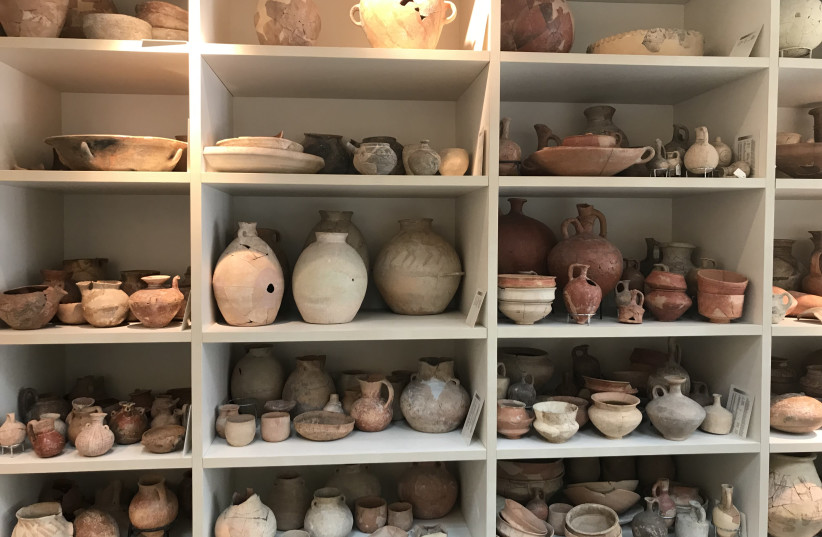
Ancient pottery at the Institute of Archaeology at the Tel Aviv University.
(photo credit: ROSSELLA TERCATIN)

In the 7th century BCE, Greek pottery and tableware were a must of sophisticated houses around the Levant, including ancient Israel. Shortly after, the Babylonian expansion brought destruction and change around the region, creating major disruption also in its trade and customs.

A group of Israeli and German archaeologists have recently shed new light on the following chapter of the history of the area and its commercial development: in the 5th century BCE trade routes in Eastern Mediterranean experienced a revival as did Greek style pottery. In a paper recently published in the journal Levant said there was one difference: the popular band-painted bowls, plates, jugs and table amphorae all came from a specific location, Kelenderis in Cilicia (modern Turkey).

“In the case of the Late Iron Age, stylistic and fabric analyses have shown that pottery in ‘true’ East Greek styles was manufactured at various sites in Ionia,” wrote the authors of the paper, who, along with others, include Gunnar Lehmann from Ben-Gurion University, Yiftah Shalev from the Israel Antiquities Authority and University of Haifa, David Ben-Shlomo from Ariel University and Ayelet Gilboa from the University of Haifa. “The abundance of East Greek pottery in the Levant, however, came to an abrupt end at the beginning of the 6th century BCE, after which such pottery becomes extremely rare in the northern Levant and does not occur at all in the southern Levant.”

“This rather abrupt end is the result of the Babylonian destruction. Most of the consumer sites, both in the northern and southern Levant, such as Al Mina, Tell Keisan, Ashkelon, and many more, were destroyed and abandoned, causing a near-total collapse of demographic and economic structures for many decades,” they added.

When the situation improved again around 500 to 480 BCE, the products that were traded had changed.

“Firstly, the new ceramics present an altogether different typological vista and decorative schemes,” the scholars explained. “Secondly, they appear about a century after the true East Greek pottery had disappeared. Third, and above all, our study showed that the great majority of this band-decorated tableware was not produced in the Aegean at all.”

The researchers studied about 1500 potsherds, mostly uncovered in archaeological sites in Israel, Syria, Turkey and to a lesser extent in Cyprus and Egypt. They carried out several types of analysis of the style and materials, including petrographic analysis. Petrography aims at studying and identifying rocks and minerals and allows to ascertain their geological source, which helps archaeologists to collect important insights on ancient pottery and its manufacturing.

The vessels resulted “compositionally very homogenous and appear to stem from one location,” the paper reads. The findings therefore supported the hypothesis that the pottery was all produced in Kelenderis workshops, a Greek colony at the time.

The 5th century increased maritime exchanges, fueled by the Greek dependence on Egypt’s grain, making the export of ceramics feasible again. At the time, pottery was usually not considered valuable enough on its own to justify the financial risk of a sea shipment, but was traded along with more expensive goods, often valuable metals.

However, as the archaeologists write, “all inhabitants of the Levantine littoral in the 5th century BCE drank or ate from Kelenderis and Attic bowls and plates, because there were hardly any local vessels that could serve these functions.”

“The difference between this, and the situation in the Iron Age in this region cannot be overstated,” they added. “This Persian period ‘globalization’ would continue and assume new modes in the Hellenistic period.”


Zawartość publikowanych artykułów i materiałów nie reprezentuje poglądów ani opinii Reunion’68,
ani też webmastera Blogu Reunion’68, chyba ze jest to wyraźnie zaznaczone.
Twoje uwagi, linki, własne artykuły lub wiadomości prześlij na adres:
webmaster@reunion68.com


What’s it like to be blind? Israeli program shows by experience

What’s it like to be blind? Israeli program shows by experience

Abigail Klein Leichman


In unique workshop, blind young adults lead participants in walking with a white cane, reading braille and doing tasks while unable to see.
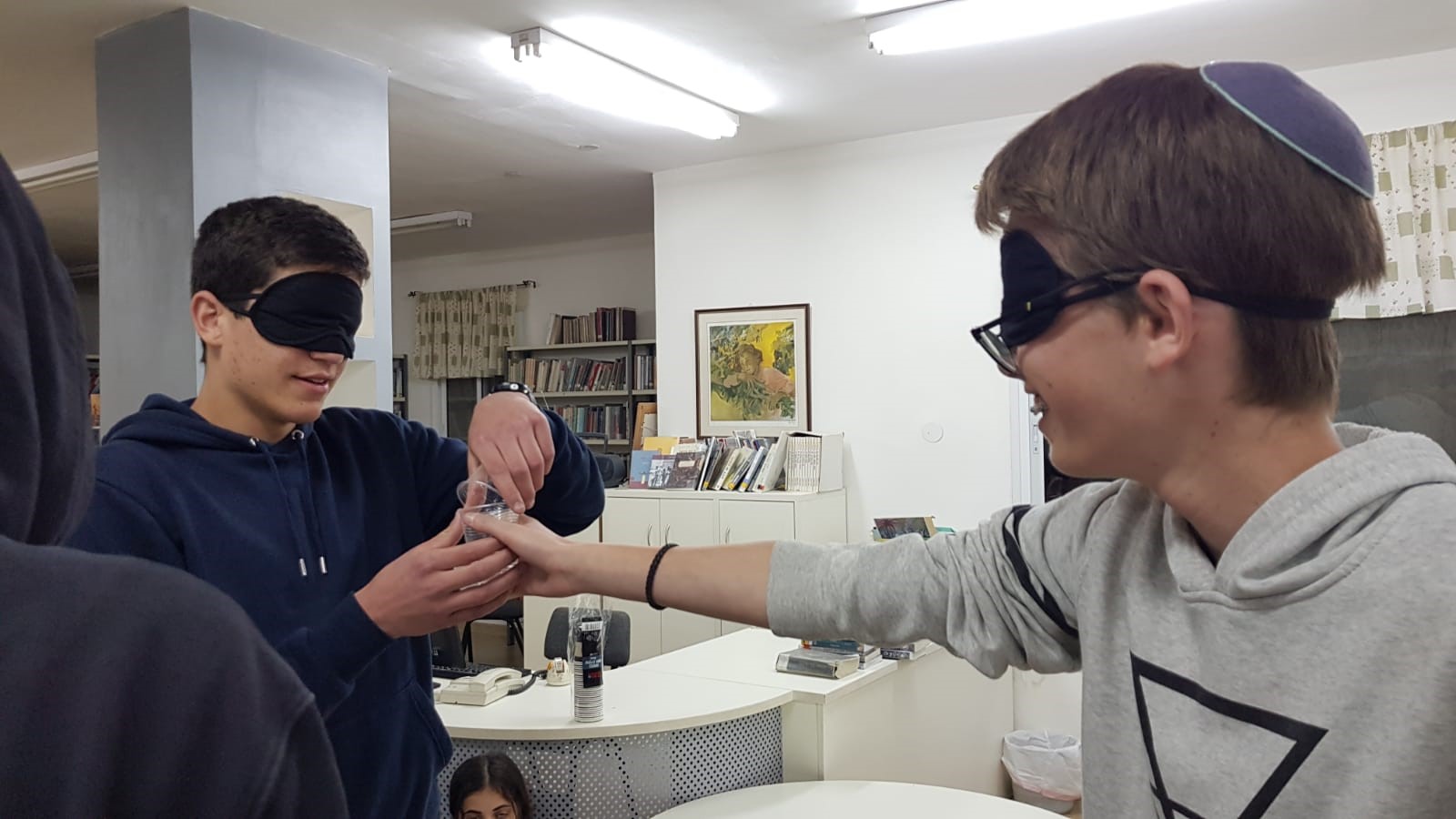
Children in a Seeing Differently workshop try to pour water while blindfolded. Photo courtesy of Ofek Liyladenu

“Hello, my name is Guy, and I am legally blind. I am here today to facilitate this workshop with you on visual impairments. Before I tell you my story, I will give you a blindfold to put on your eyes. Please keep it on while you listen to my story.”

This is how Guy Maman begins interactive workshops in Israeli schools and workplaces through the program Roim Acheret (Seeing Differently).

One blind and one visually impaired workshop leader invite participants to try walking with a white cane, reading braille or small print, using a smartphone, locating one another, or pouring water from one cup to another — all while blindfolded or wearing special glasses to simulate degrees and forms of visual impairment.

“In Ofek Liyladenu we believe in the power of the children. From an early age we give them a toolbox of emotional and physical skills and knowledge, equipping them with self-confidence and support,” says Ofek Liyladenu Executive Director Yael Weisz-Rind.

“When they are young, the parents represent them but when the children grow up they want to represent themselves. They want to change minds and hearts about how people perceive people with visual impairment or blindness.”
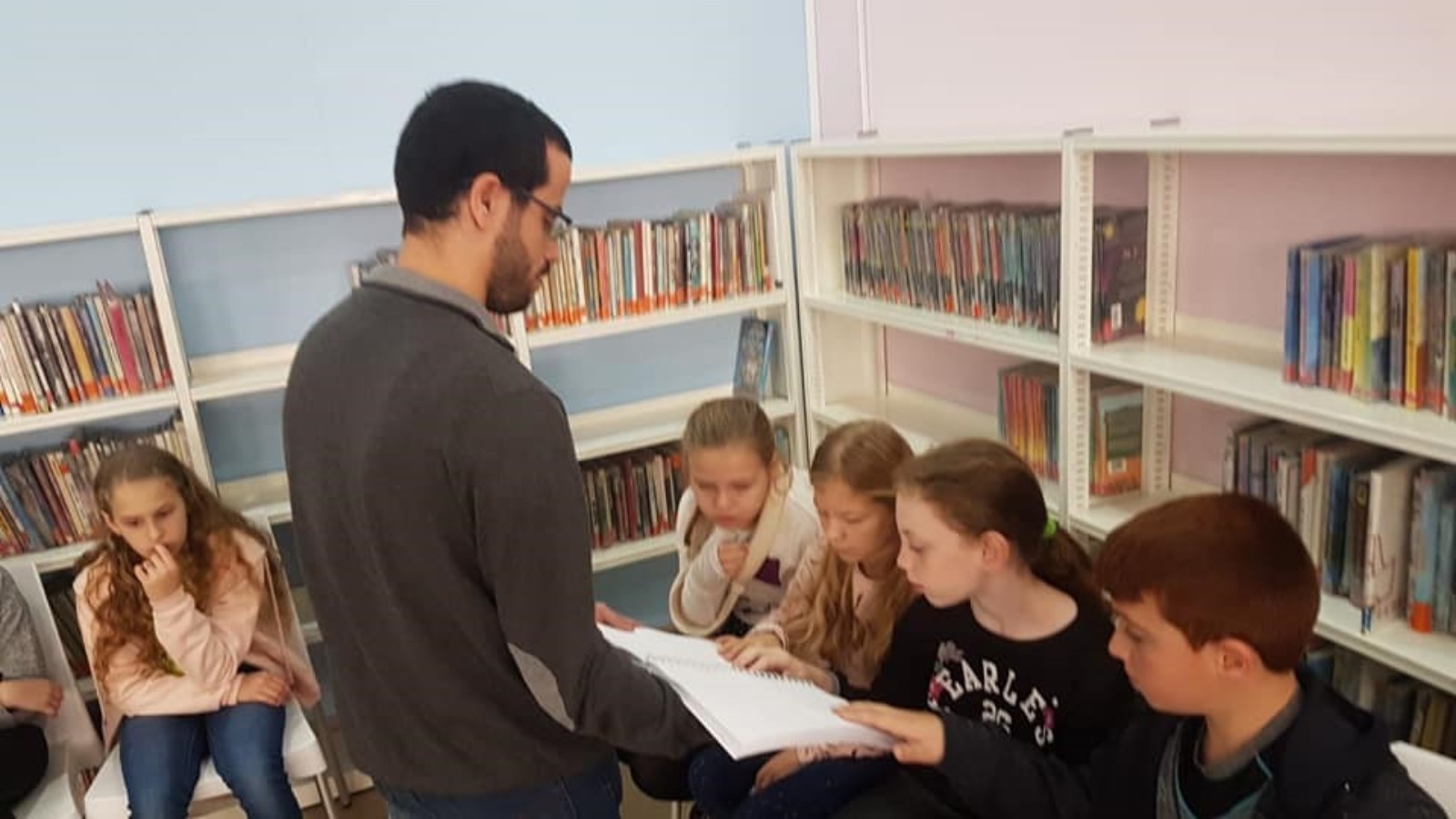
Seeing Different workshop participants feeling a braille book. Photo courtesy of Ofek Liyladenu

.

Based on conversations at meetings of the International Council for Education of People with Visual Impairment (ICEVI), Weisz-Rind believes Seeing Differently is unique.

She was invited to present a paper about Seeing Differently at a June 10 joint conference of the ICEVI and the World Blind Union. Because of the pandemic, the conference was postponed to next year.

“We hope to inspire organizations in other countries to adopt our [Seeing Differently] model. We’ve already had informal conversations with other organizations about it,” Weisz-Rind tells ISRAEL21c.

From bullied child to accomplished musician

One of about a dozen active volunteers in Seeing Differently, Guy Maman is a vocalist and keyboardist with the Shalva Band, a group of talented musicians with disabilities.

The band captured hearts worldwide in the leadup to the 2019 Eurovision Song Contest in Tel Aviv.

During his childhood, Maman was bullied because of his visual impairment, says Weisz-Rind. When he was a teen, his family got involved with Ofek Liyladenu and life started to change for the better.

Dreaming of being a musician, Maman took the entrance exam for the Jerusalem Academy of Music and Dance. He failed but didn’t give up.

“One of our graduates, singer and pianist Nili Seidel, has an MA in music and is completely blind. She prepared Guy to take the entrance exam again and he passed it,” says Weisz-Rind. “Today, he is very active in our Musical Dreams program.”

Seeing Differently volunteers also include university students, a social worker, translator and lawyer in training, among others.

Under the guidance of an Ofek Liyladenu social worker, the volunteers practice presenting their workshop with humor and polish.
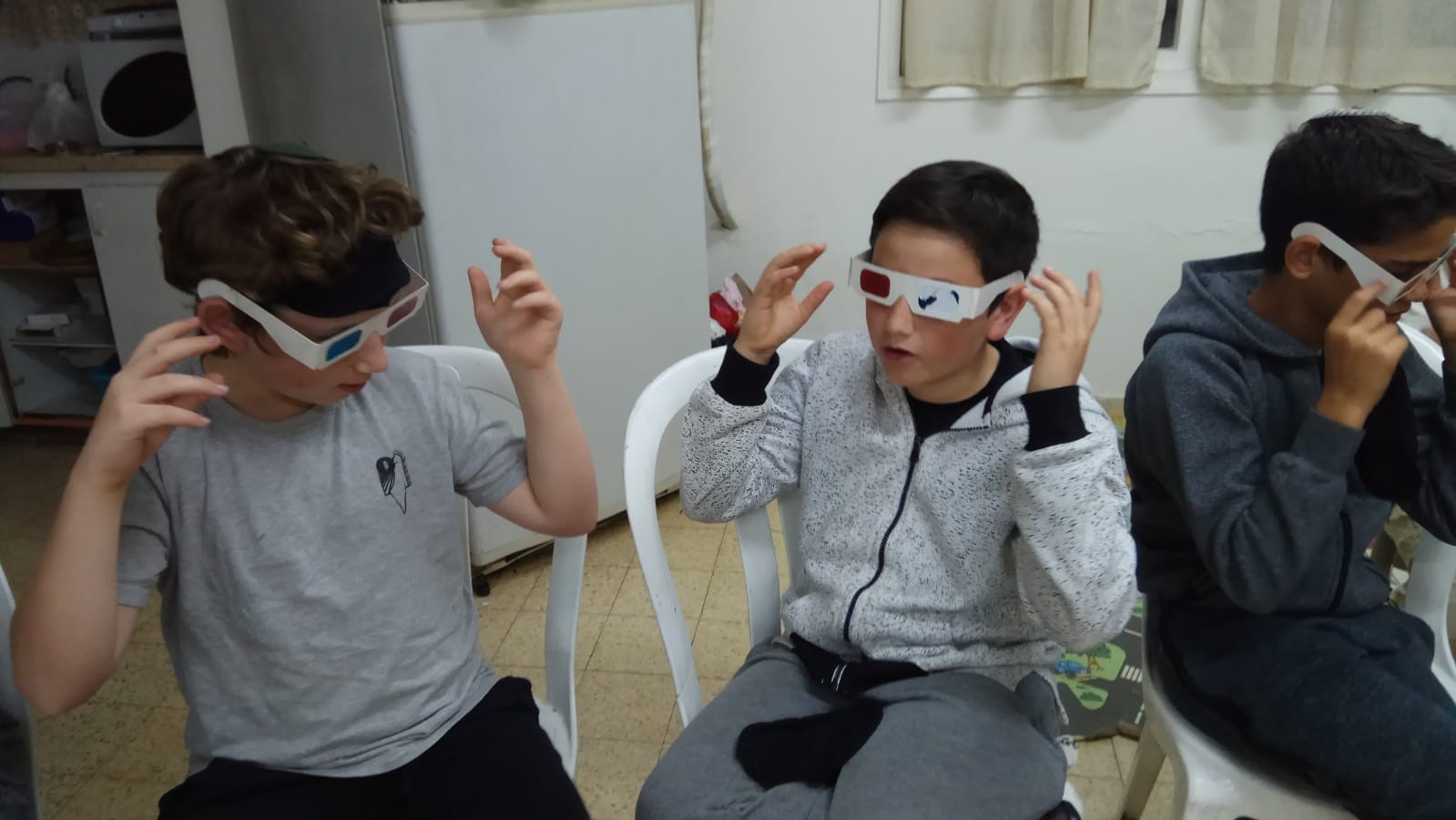
Children in a Seeing Differently workshop experience different kinds of vision impairment. Photo courtesy of Ofek Liyladenu

“The motive was to do outreach in the wider society, but in the process they realized they need more training and better skills,” says Weisz-Rind.

“This led us to invest resources in developing, with the group, a training program including CV writing, public speaking, body language and appearance, how to plan and moderate workshops, how to market and publicize the program on social media. All those skills help them in the workplace too.”

Each new member undergoes training and mentoring for the first couple of months with regular peer evaluation and support.

Transforming schools and workplaces

Weisz-Rind says that since 2007, Seeing Differently has touched the lives of almost 10,000 Israelis from all walks of life. The team adapts each workshop to the specific audience: children, teachers, corporate employees, youth movement members, soldiers, medical students and even prisoners.

Judging by feedback forms, Seeing Differently has a powerful impact on audiences that translates into positive changes.
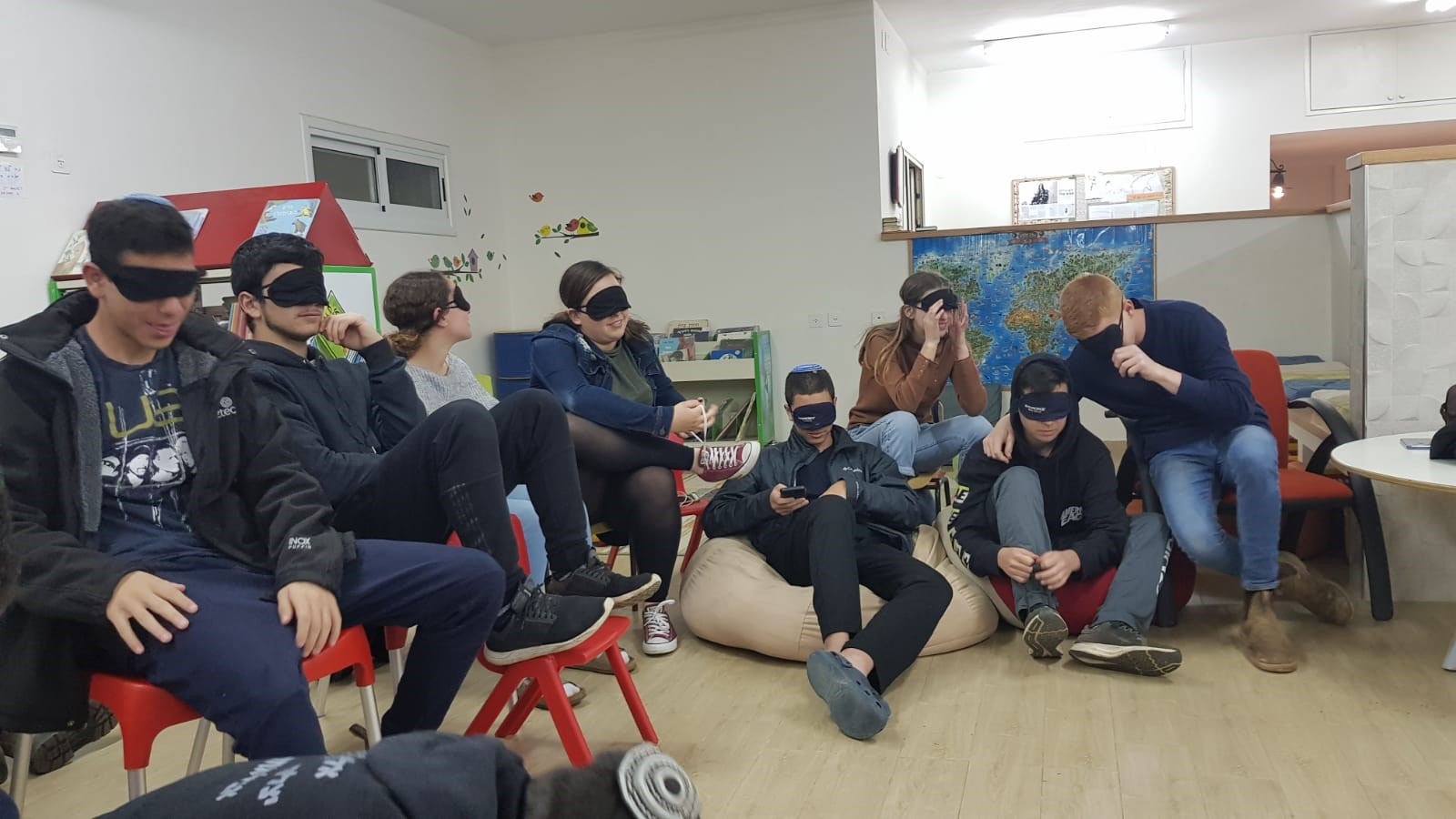
Teens in a community center experiencing a Seeing Differently workshop. Photo courtesy of Ofek Liyladenu

“Every year we encourage parents of children in Ofek Liyladenu to organize workshops in their children’s school. We find that the whole attitude of the school changes,” reports Weisz-Rind. “The program triggers immense improvements even in social relationships.”

The father of a legally blind nine-year-old son said the workshop had “an amazing impact” on his son’s school. “He told me that for the first time he feels that the other children understand him and the teachers make an effort to include him in activities.”

A 10-year-old sighted pupil commented, “The workshop was friendly and interesting, and we could ask any question. It was not frightening at all. If I see a blind person now, I will never make fun of him because I truly understand now what it’s like to be blind.”

One teacher commented after a Seeing Differently workshop, “The personal stories and the way the facilitators presented the subject made me realize that visual impairment is an integral part of life. It doesn’t ‘disable’ the aptitude to become functioning adults and much more!”

Often, after Seeing Differently corporate workshops, Ofek Liyladenu is asked to help the host companies make their space and culture more accessible to employees with visual disabilities.

Those requests are handled by consultants at Migdal Or (Lighthouse), a multi-service center dedicated to advancing people with blindness or visual impairment towards independent functioning and inclusion in the workplace.

“The unique model of Roim Acheret started as modest initiative. A group of youngsters with visual impairments who wanted to make a contribution to the association that supported them in earlier years while outreaching to the wider society,” says Weisz-Rind.

“In the process, they became proactive ambassadors of their community, social activists who change minds and hearts, empowered, self-confident and with a sense of pride.”

The non-profit Ofek Liyladenu depends on donations for its programs supporting 4,000 Jewish, Muslim and Christian children and their families. Click here for more information.


Zawartość publikowanych artykułów i materiałów nie reprezentuje poglądów ani opinii Reunion’68,
ani też webmastera Blogu Reunion’68, chyba ze jest to wyraźnie zaznaczone.
Twoje uwagi, linki, własne artykuły lub wiadomości prześlij na adres:
webmaster@reunion68.com


New outdoor exhibit showcases rich history of ancient Ashkelon

New outdoor exhibit showcases rich history of ancient Ashkelon

ROSSELLA TERCATIN


Ashkelon has over 3,800 years of history.

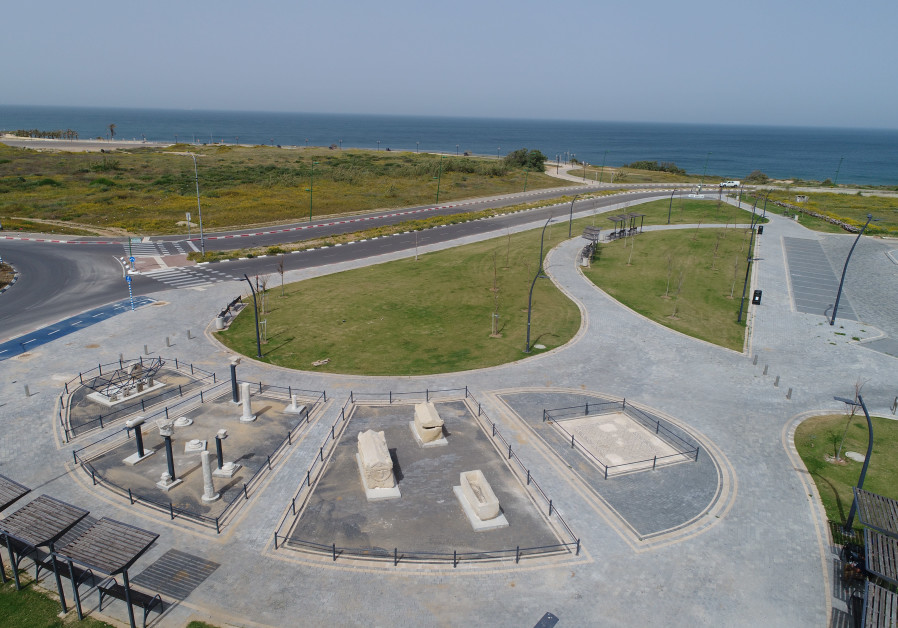
Outdoor exhibition “Ashkelon – The city and the sea” / (photo credit: VLAD LIPSCHITZ/ISRAEL ANTIQUITIES AUTHORITY)

A new outdoor archaeological exhibition has been inaugurated on the beachfront of Ashkelon, the Israel Antiquities Authority announced Sunday.

The city, located in the southern coastal plain, has more than 3,800 years of history, IAA district archaeologist Sa’ar Ganor told The Jerusalem Post.

“Because of its position, in antiquity, Ashkelon was always an important harbor,” he said. “Like Jerusalem, the city presents remains of its rich history everywhere.”

Already settled during the Neolithic era, around 1,800 BCE, Ashkelon was established as a Canaanite center, whose massive fortifications are still visible at the National Park of Tel Ashkelon. Prominently featured in the Bible as one of the five main Philistine cities, the area continued to function during the Persian and Hellenistic periods, becoming an important port during the Roman period.

“The Romans redesigned it according to their canons, for example, creating a cardo and a decuman street,” Ganor said. “The wine from the area was exported all over the empire. We found its jars in more than 45 sites in Europe and Africa.”

The city continued to live during the Byzantine and early Islamic periods and was an important Crusader center, later destroyed by Muslim and Mamluk troops.

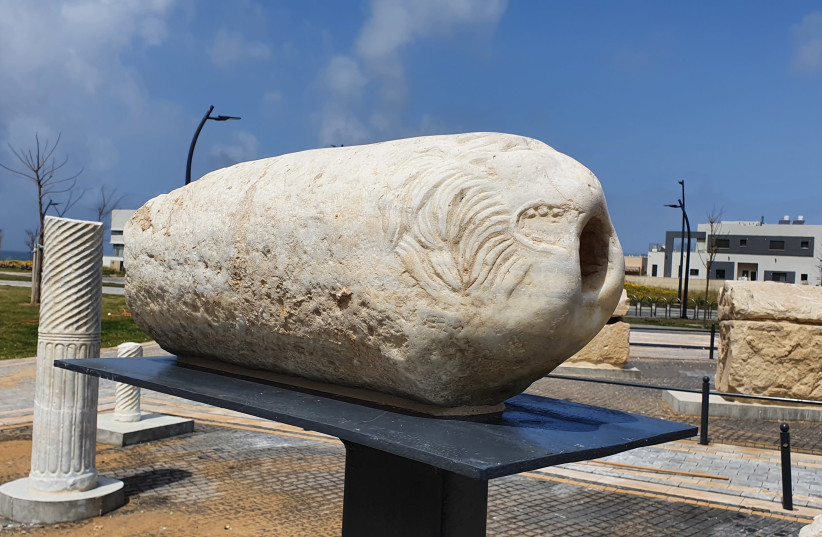
The new exhibition, “Ashkelon – The city and the sea,” features remains dating back to the Roman and Byzantine periods. It is organized by the IAA, the Ashkelon Municipality and the Ashkelon Economic Company.

“Visitors to the exhibition can enjoy very impressive archaeological finds, collected and unearthed in excavations in a city with a glorious past,” IAA curator Ayelet Gruber said in a press release. “This is a direct glimpse into the city of Ashkelon in the Roman and Byzantine periods and the wealth of its inhabitants, its connection to the sea and the cultures behind it.”
The display includes remains of columns, buildings and ships, richly decorated stone sarcophagi and copies of colorful byzantine mosaics.

“We have worked hard to enable the exhibition to present the public with rare and unique items,” Mayor Tomer Glam said. “I invite our residents and everyone else to visit this special exhibition and get to know the fascinating past of Ashkelon.”


Zawartość publikowanych artykułów i materiałów nie reprezentuje poglądów ani opinii Reunion’68,
ani też webmastera Blogu Reunion’68, chyba ze jest to wyraźnie zaznaczone.
Twoje uwagi, linki, własne artykuły lub wiadomości prześlij na adres:
webmaster@reunion68.com


News From Israel- Aug 27, 2020

News From Israel- Aug 27, 2020

ILTV Israel News


  1. A terror attack in Petach Tikvah.. The stabbing that broke the calm. Well speak to the Israel police spokesperson to see where the investigation stands.
  2. Then… we’ll dive into a unique story about a paraplegic who made it his mission to keep Israel’s coastlines clean.
  3. and
    We’ll introduce some very important members of the ILTV team and tell you why Tel Aviv is one of the most dog friendly cities in the world.

Zawartość publikowanych artykułów i materiałów nie reprezentuje poglądów ani opinii Reunion’68,
ani też webmastera Blogu Reunion’68, chyba ze jest to wyraźnie zaznaczone.
Twoje uwagi, linki, własne artykuły lub wiadomości prześlij na adres:
webmaster@reunion68.com