Archives

Scientists develop way to find tumors from blood tests 98% faster

Scientists develop way to find tumors from blood tests 98% faster

ISRAEL21c Staff


Researchers at the Technion-Israel Institute of Technology have developed a new method for rapid, inexpensive analysis of blood samples.

photo by Rebecca Zeffert/Flash90

Researchers at the Technion-Israel Institute of Technology have developed a new method for rapid, inexpensive analysis of blood samples. Its first application to be tested will be early detection of cancerous tumors.

The innovative technology, described in Nature Communications, was developed by Prof. Tomer Shlomi and doctoral students Shoval Lagziel and Boris Sarvin based on a unique combination of mass spectrometry and computational methods.

A mass spectrometer determines the concentrations of molecules in biological samples. Usually, this requires a preliminary, time-consuming and expensive process called chromatography that separates the materials in the sample according to chemical properties.

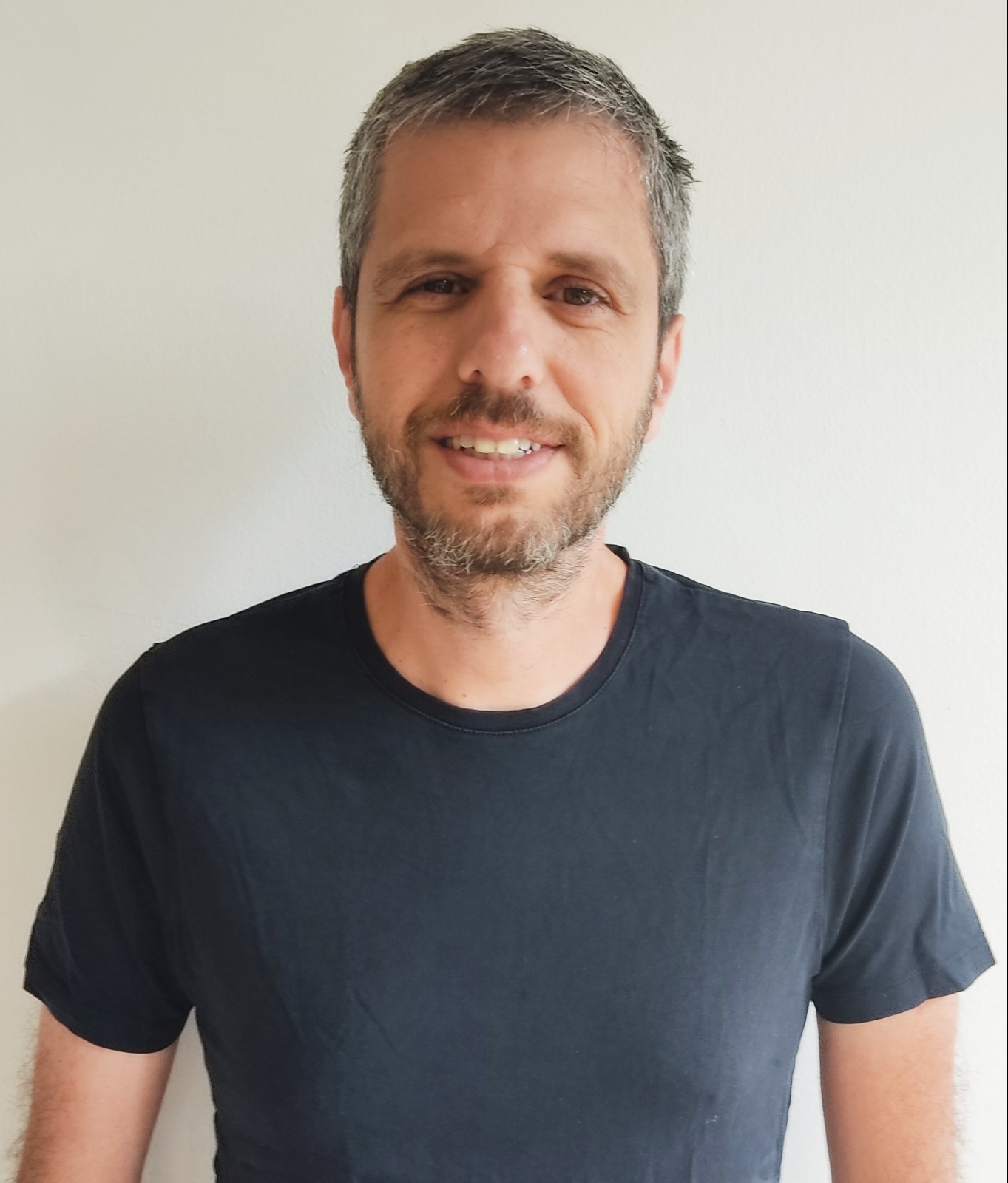
Prof. Tomer Shlomi. Photo courtesy of Technion Spokesperson Department

Shlomi’s research group devised a method that skips the chromatography step without significantly impairing the quality of the mass spectrometry analysis.

The test is completed in just 30 seconds, thus shortening the process by about 98% and reducing its cost by a similar rate.

According to Shlomi, the novelty lies in a computational method developed by the research group. This method identifies optimal working configurations in the mass spectrometer, which allows for a high-sensitivity analysis for specific types of biological samples.

The computational analysis also corrects the measured raw information and accurately quantifies concentrations of thousands of molecules in blood samples.

Shlomi is a faculty member in the Faculties of Computer Science and Biology and a member of the Lorry I. Lokey Center for Life Sciences and Engineering. The research was funded by an ERC grant and by the Israel Science Foundation.


Zawartość publikowanych artykułów i materiałów nie reprezentuje poglądów ani opinii Reunion’68,
ani też webmastera Blogu Reunion’68, chyba ze jest to wyraźnie zaznaczone.
Twoje uwagi, linki, własne artykuły lub wiadomości prześlij na adres:
webmaster@reunion68.com


Trump expects Saudi-Israel peace

Trump expects Saudi-Israel peace

TV7 Israel News


  1. Despite repeated warnings over a possible military escalation; Dozens of balloons strapped with incendiary and explosive devices are sent sailing from the Hamas-controlled Gaza Strip toward Israeli territory.
  2. U.S. President Donald Trump acknowledged that he expects Saudi Arabia to soon follow in the footsteps of its closest regional-ally, the United Arab Emirates – to normalize relations with the state of Israel.
  3. The Islamic Revolutionary Guards unveiled new locally designed and manufactured ballistic and cruise missile systems; named after the assassinated commanders of the IRGC’s Quds Force and Kataib Hezbollah.

Zawartość publikowanych artykułów i materiałów nie reprezentuje poglądów ani opinii Reunion’68,
ani też webmastera Blogu Reunion’68, chyba ze jest to wyraźnie zaznaczone.
Twoje uwagi, linki, własne artykuły lub wiadomości prześlij na adres:
webmaster@reunion68.com


Israel warns Hamas of looming war

Israel warns Hamas of looming war

TV7 Israel News


  1. Palestinian Islamists launch a rocket toward Israel’s southern communities – prompting retaliatory strikes against Hamas’ militant installations.
  2. Israeli President Reuven Rivlin warns the Islamist Hamas – ‘If they desire war with Israel, they will get war.’
  3. IDF Chief of Staff Lieutenant General Aviv Kochavi warned that Hezbollah is rapidly growing into a terror army which effectively renders the Lebanese government hollow of any influence across its own sovereign territory.

Zawartość publikowanych artykułów i materiałów nie reprezentuje poglądów ani opinii Reunion’68,
ani też webmastera Blogu Reunion’68, chyba ze jest to wyraźnie zaznaczone.
Twoje uwagi, linki, własne artykuły lub wiadomości prześlij na adres:
webmaster@reunion68.com


Israel working on direct flights to Dubai over Saudi Arabia – Netanyahu

Israel working on direct flights to Dubai over Saudi Arabia – Netanyahu

LAHAV HARKOV


Netanyahu pointed out that direct flights to the Emirates will make flying to and from Israel easier for many people

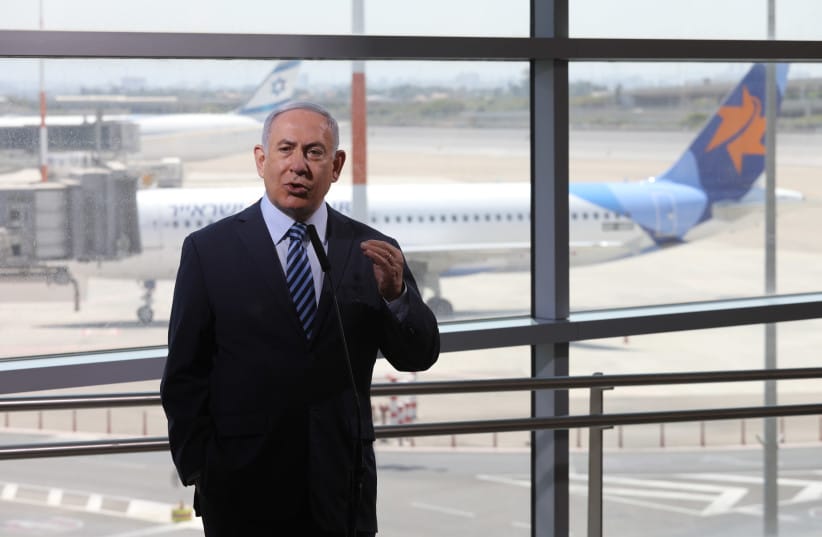
Prime Minister Benjamin visits Ben-Gurion Airport to oversee the reopening of the skies, August 17, 2020 / (photo credit: EMIL SALMAN/POOL)

Israel is in talks to have direct flights to the United Arab Emirates fly over Saudi airspace, Prime Minister Benjamin Netanyahu said on a visit to Ben-Gurion Airport on Monday.

“It is a short flight of three hours, like to Rome, but it will greatly change Israeli aviation and the economy, with a great number of tourists on both sides and a great number of investments,” Netanyahu said.

Israir has already put in a request to begin direct flights to Dubai and Abu Dhabi, he said.

The prime minister said Emiratis are interested in “massive investment” in Israeli technology, and that free trade zones in the Emirates will allow for inexpensive goods to be imported into Israel.

“It is a boost to the Israeli economy and good for every citizen,” he added.

Netanyahu pointed out that direct flights to the Emirates will make flying to and from Israel easier for many people. They would shorten travel time from Israel to East Asia and Oceania.

The Foreign Ministry confirmed that they have staff on the ground searching for a site in Abu Dhabi for the Israeli Embassy.

Also Monday, UAE Minister of State for Foreign Affairs Anwar Gargash said that his country’s newly open ties with Israel are not targeting Iran.

The comment came after a speech by Iranian President Hassan Rouhani, who called the agreement a betrayal. The UAE summoned Iran’s charge d’affaires in Abu Dhabi on Sunday.

“The UAE-Israeli peace treaty is a sovereign decision that is not directed at Iran,” Gargash tweeted. “We do not accept interference in our decisions, just as we reject threats and threats…Strategic decisions are transformative and have their impact and our decision on our future enhances our position and our competitiveness.”


Zawartość publikowanych artykułów i materiałów nie reprezentuje poglądów ani opinii Reunion’68,
ani też webmastera Blogu Reunion’68, chyba ze jest to wyraźnie zaznaczone.
Twoje uwagi, linki, własne artykuły lub wiadomości prześlij na adres:
webmaster@reunion68.com


Jewish mysticism meets the Sabbath

Jewish mysticism meets the Sabbath

ALAN ROSENBAUM


Author Eduard Shyfrin discusses how the ideas of the Jewish mystics have influenced and affected the customs, rituals and ideas surrounding the Sabbath and its observance.

Eduard Shyfrin: I realized that I had to answer certain questions for myself about life and death and God / (photo credit: Courtesy)

“We can connect to God every day, but the Sabbath is a special opportunity to connect to God,” says Eduard Shyfrin, author, businessman, and student of Jewish mysticism. “It is a great privilege that was given to the Jewish people.”

Shyfrin, the author of From Infinity to Man: The Fundamental Ideas of Kabbalah Within the Framework of Information Theory and Quantum Physics, spoke with The Jerusalem Post from his Moscow home, and discussed how the ideas of the Jewish mystics have influenced and affected the customs, rituals and ideas surrounding the Sabbath and its observance.

Shyfrin, who holds a PhD in metallurgy and who was a star physics student in his youth, has termed the Kabbalistic belief that God created the world using the 22 letters of the Hebrew alphabet together with the 10 sefirot – the 10 attributes and emanations of God – as a type of information code. Shyfrin explains that modern science is gradually coming to the conclusion that the basis of our perceived reality is not matter and energy but information.

Utilizing this understanding of the sefirot and letters as God’s information code, and Nahmanides’s concept that God created primordial matter at the beginning and nothing else and gave it shape and form, Shyfrin explains that the meaning of the verse in Genesis (2:2) “On the seventh day God finished the work that He had been doing, and He rested on the seventh day from all the work that He had done” can be understood in the sense of God not generating any new information but, rather, sustaining the world as it was.

“The purpose of the prohibition of work on the Sabbath,” says Shyfrin, “is to limit as much as possible the generation of any kind of new information. For example, we can light a candle before the Sabbath, and we can have it on during the Sabbath, because it is no longer considered new information.”

Shyfrin next considers the diagram of the sefirot, of God’s attributes and emanations. The sefira known as Malchut (Kingdom) represents the feminine, harmonious Shabbat, representing the state of being. In mystical terms, he explains, it is the final receiver of information from the world above and, at the same time, the first provider of information to the world below, acting as a form of mystical connector between the worlds and sefirot.

When we connect to God and fulfill the commandments, it is called in Kabbalah “raising female waters.” The “female waters” travel upward and meet the “male waters,” thus reconnecting the Divine attributes. By observing the prohibition of doing labor on the Sabbath, as well as the positive commandment to connect with God, says Shyfrin, we reconnect with God and repair the connections between the sefirot, replicating the perfect state of the world before the sin of Adam and Eve.

Shyfrin explains that it is for this reason that “Lecha Dodi,” the traditional liturgical song recited at Friday night services, is a combination of both the male sefira known as Yesod meeting his bride, the Sabbath queen (the sefira of Malchut), thus coupling and connecting the masculine with the feminine.

Shyfrin next explains the meaning of the verse in Genesis (2:3) “And God blessed the seventh day and declared it holy, because on it God ceased from all the work of creation that He had done.”

“The Hebrew word for blessing is ‘bracha,’” notes Shyfrin, “which comes from the same Hebrew root as the word ‘bereicha’ or water channel. If a person is blessed, he can receive abundant godliness. God’s blessing of the Sabbath means that all of the spiritual channels are open at that time.”

Shyfrin says that there are two ways to fulfill the commandments. One way is to fulfill the laws of the Torah without understanding their deeper meaning and significance. The preferred method is to follow the laws with understanding.

The Kabbalistic explanations of the Sabbath, he says, provide us with the reasons why and how we should observe the Sabbath. “We are obliged to observe the Sabbath commandments, but at the same time, we should remember that it is a great privilege given to us.”


This article is part of a collaboration for the Kabbalat Shabbat Project with Eduard Shyfrin.


Zawartość publikowanych artykułów i materiałów nie reprezentuje poglądów ani opinii Reunion’68,
ani też webmastera Blogu Reunion’68, chyba ze jest to wyraźnie zaznaczone.
Twoje uwagi, linki, własne artykuły lub wiadomości prześlij na adres:
webmaster@reunion68.com