ALAN ROSENBAUM
Tel Aviv and Jerusalem high-tech hubs propel Israel’s global standing
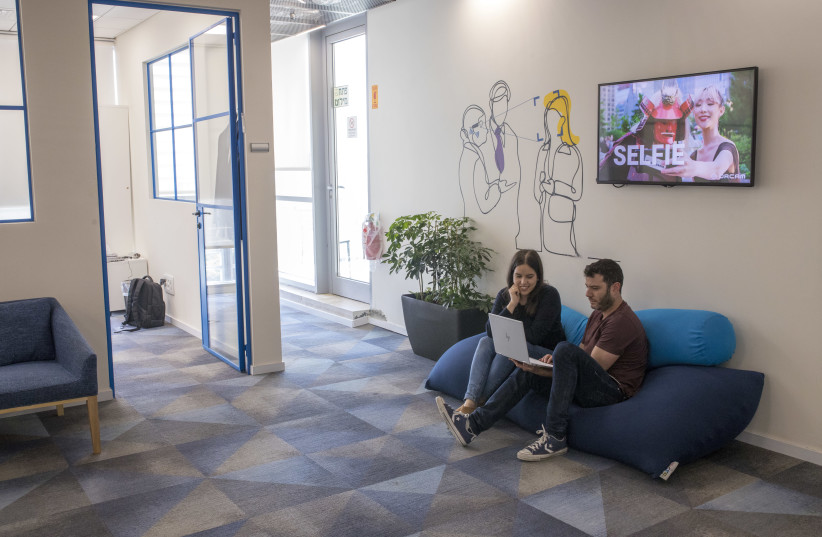 Workers at Jerusalem high-tech companies / (photo credit: RICKY RACHMAN)
A comprehensive global survey that maps the global startup industry in over 150 cities worldwide has ranked Tel Aviv and Jerusalem together as the sixth most attractive ecosystem in the world for startups and innovation. For the first time, Tel Aviv and Jerusalem have been ranked together due to their geographical proximity.
The Startup Genome Ecosystem report, which is published annually since 2012, is the most comprehensive research of the global startup scene. California’s Silicon Valley ranks first in this year’s report, followed by New York City and London in the 2nd and 3rd places. Beijing and Boston rank fourth and fifth, respectively. The top ten list concludes with Los Angeles, Shanghai, Seattle, and Stockholm.
The section devoted to Tel-Aviv – Jaffa points out that the city continues to lead the global and Israel high tech and innovation industry. Tel Aviv’s main strengths include AI, Big Data, and cloud technologies, which account for over 40% of the startup companies. The report highlights recent successful acquisitions such as Habana Labs’ acquisition by Intel for $2 billion.
Cybersecurity is another jewel in Tel Aviv’s crown, with $3.4 billion in cumulative value in 2019. The report points out that over 100 multinationals chose to open their development and innovation centers in Tel Aviv due to human resources considerations. The report also features Tel Aviv as the city with the highest number of growth companies with approximately 100 scale-ups. These companies grew up in Tel Aviv, made it the home of their campus, and are employing hundreds of employees today.
The city of Tel Aviv operates municipal entrepreneurship and innovation centers that provide accelerator programs, support, and mentoring from the earliest stages, as well as opportunities to implement their developments in the City Hall or municipal companies.
The Jerusalem section of the report highlights the life science, biotech, and AI strengths of Israel’s capital. Some 150 life science companies in Jerusalem benefit from an extensive municipal support net. Jerusalem also boasts some 80 AI companies, including Mobileye and Lightricks.
Jerusalem’s technological edge in general and biotech and AI, in particular, relies heavily on its world-class academic institutes, such as the Hebrew University and the Bezalel Academy of Arts and Design, as well as a growing local community and significant State and municipal support.
Recent years have seen the Jerusalem high-tech scene developing at an unprecedented pace. Within a few years, Israel’s capital has become a startup and innovation incubator. The growth is credited to the joint efforts of the Jerusalem Development Authority, the Ministry of Jerusalem and Heritage, and the Municipality of Jerusalem. Approximately 500 technology companies are headquartered in Jerusalem today, including some of Israel’s outstanding success stories.
The Minister of Jerusalem and Heritage, Mr. Rafi Peretz, said: “It is no coincidence that Jerusalem is evolving into a life-science and startup superpower. Extensive government investment in high-tech, biotech, the academy, AI, tourism, and more has placed the city on a par with the world’s most innovative cities. The Ministry, the City of Jerusalem, and the Jerusalem Development authority continue to nurture the high tech industry to sustain the ongoing progress of Jerusalem’s global rating and provide high-quality employments to the Capital’s citizens. I congratulate our partners on this significant accomplishment. I am confident Jerusalem’s future will be as glorious as its remarkable history. We are here to make it happen.”
Jerusalem Mayor, Mr. Moshe Lion, commented: “Jerusalem has been making big strides in the high-tech industry and will soon claim its status as the capital of the technology industry too. Over the next five years, we will invest NIS 300 million in the City’s knowledge industry with new offices and related industries. With a population of scientists, intellectuals, and determined entrepreneurs, Jerusalem has what it takes to succeed.”
The Mayor of Tel Aviv – Jaffa, Mr. Ron Huldai, said: “Tel Aviv is the Startup City of the Startup Nation with the world’s largest concentration of startups per capita and square kilometer. The technology ecosystem helps not only the local economy but also the city’s international appeal. The strength of the technology companies is even more fundamental today, with one of every ten employees in Tel Aviv in 2019 worked in the technology industry. Thousands of other businesses provide services to this sector. We will persist in helping our entrepreneurial ecosystem emerge strongly from the tough times to protect Tel Aviv’s status as a global technology hub.”
 Microsoft Is on the Move, Will Relocate Development Center to New WeWork Offices in Tel Aviv
 Silhouettes of laptop and mobile device users are seen next to a screen projection of Microsoft logo. Photo: Reuters / Dado Ruvic / Illustration.
 TV7 Israel News
 21SEE VIDEO NETWORK