Archives

What is the story with Lebanon, and why are they attacking us? – opinion

What is the story with Lebanon, and why are they attacking us? – opinion

A.Y. KATSOF


I can’t answer all the questions on one foot, but just to put down here, I gave in a paper two Fridays ago ending with “history repeats itself the attack of Hezbollah is near.” Why did I write that?
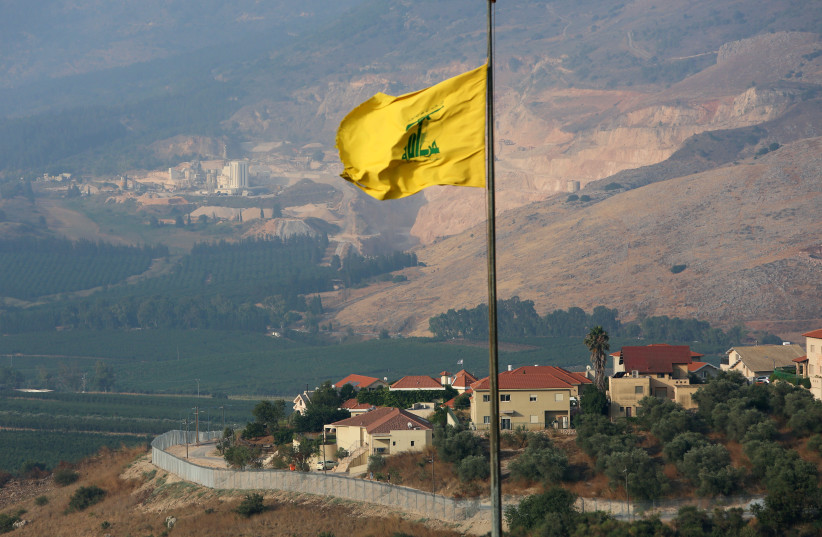
A Hezbollah flag flutters in the southern Lebanese village of Khiam, near the border with Israel, Lebanon July 28, 2020 / (photo credit: REUTERS/AZIZ TAHER)

Many have been asking me “what is the story with Lebanon, and why are they attacking us?”

I can’t answer all the questions on one foot, but just to put down here, I gave in a paper two Fridays ago ending with “history repeats itself the attack of Hezbollah is near.”

So why did I write that? well…

1989: Taif Agreement – All of Lebanon’s militias will disarm with one exception: Hezbollah.

The militia retains its arms in order to remain a “resistance force” against Israel on the southern border.

2005: After Syria leaves Lebanon, the Lebanese parliament is pressured to finally disarm Hezbollah.

For Hezbollah, disarming means not just political suicide but their likely death at the hands of those that they had ruled for 30 years.
Hezbollah begins committing small-scale raids on Israeli forces in order to highlight the organization’s necessity.

2006: A Hezbollah raid goes too far and deteriorates into all-out war. Although Hezbollah Secretary-General Hassan Nasrallah comes out with an official statement regretting the attack (the only Arab leader that ever officially regretted something), Hezbollah emerges from the war stronger than ever before. The idea of disarming Hezbollah is shelved.

2008: The Lebanese cabinet announces decisions designed to weaken Hezbollah after it was caught spying on the opposition’s Alliance.

Consequence: Hezbollah fighters seized control of several West Beirut neighborhoods, including Beirut’s international airport. Hezbollah also demonstrates its ability to pull-off a complete military takeover, as Lebanon’s tiny “police force” military is no match for the heavily armed and experienced Hezbollah militia. The question of Hezbollah’s weapons was postponed, again.

2020: Germany outlaws Hezbollah and calls on other European countries to do so as well.

Lebanon understands that the Trump administration might be coming to an end and is trying to stop their internal threat that is Hezbollah before it is too late.

During the Obama administration, Hezbollah received an estimated $1 billion annually from Iran. Since Trump took office, sanctions on Iran cut the aid in half amid Lebanon’s escalating political instability. Hezbollah had to turn to drug smuggling in order to maintain its ability to pay salaries.

Like in 2006 and 2008, Hezbollah now needs to prove its necessity. This puts them in a corner in what Israelis call “Let me die with the Philistines,” or a slogan meaning “If I go down, I might as well take them down with me.”

Will history repeat itself? Only time will tell.

July 27: Hezbollah attacks Israel but unlike in previous instances, it does not take responsibility and claims that only the enemy (Israel) attacked civilians in their homes and wounded them. Notably, Hezbollah chose to attack in the Sha’ba Farms, a region bordering Syria that Lebanon claims as its own.

Part of Hezbollah’s official response: “The Islamic Resistance affirms that there has been no attack or shooting on its part. Rather, it was only one party, which was the fearful, anxious and tense enemy” and then added that the enemy shelled and wounded civilians in their homes in the village of Al-Habaria, something that will not be tolerated. Victory is from Allah.
Hezbollah appears to be desperately fighting to continue retaining its arms, even at the expense of its own soldiers.

Another interesting point is that unlike in the past, Hezbollah has realized that Lebanese public opinion opposes another war with Israel. Lebanese citizens are more interested in trying to survive their corrupt government bankrupt financial state and the second wave of COVID-19. With Hezbollah’s popularity plummeting, it needs the support of the locals to such an extent that it is denying its attacks on its historic enemy (Israel).

Will they attack again?

Hezbollah is taking to consideration that it is more worthwhile to attack under a Biden Administration then a Trump one, so likely they will wait until then. On the other hand, they have just learnt that Israel will defend itself with wearing silk gloves, which makes these small attacks more worthwhile and will probably do a couple more “light” attacks just to bring justification of their arms to use them in the protecting of Lebanon.


Zawartość publikowanych artykułów i materiałów nie reprezentuje poglądów ani opinii Reunion’68,
ani też webmastera Blogu Reunion’68, chyba ze jest to wyraźnie zaznaczone.
Twoje uwagi, linki, własne artykuły lub wiadomości prześlij na adres:
webmaster@reunion68.com


Israeli invents self-healing artificial electronic skin

Israeli invents self-healing artificial electronic skin

Abigail Klein Leichman


The new polymeric elastic and waterproof and can heal itself, just like human skin does after an injury.

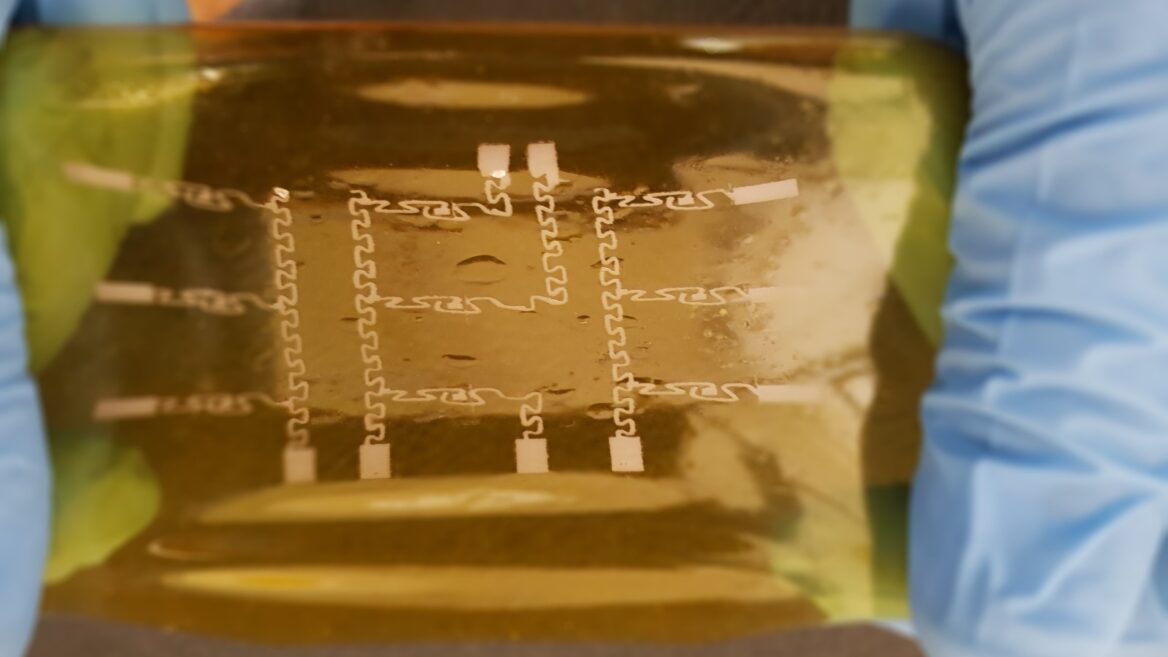
Self-healing high-tech “skin” developed by Technion doctoral student Muhammad Khatib. Photo: courtesy

A doctoral student at the Technion – Israel Institute of Technology in Haifa has invented a soft polymer that could be used as a self-healing high-tech “skin.”

Muhammad Khatib’s polymer is elastic and waterproof. It can heal itself if scratched, cut or twisted, or in the event of a disruption to its electrical conductivity and chemical sensing capabilities.

This “e-skin” could be used in a range of applications in the fields of robotics, prosthetics and wearable devices.

Khatib, who conducts his research at the Wolfson Faculty of Chemical Engineering at the Technion under the guidance of Prof. Hossam Haick, presented his innovative inventions in two papers in the journals Advanced Materials and Advanced Functional Materials.

Muhammad Khatib, inventor of e-skin, at the Technion-Israel Institute of Technology. Photo: courtesy

“The e‐skin is empowered with a novel self‐repair capability that consists of an intrinsic mechanism for efficient self‐healing of small‐scale damages as well as an extrinsic mechanism for damage mapping and on‐demand self‐healing of big‐scale damages in designated locations,” writes Khatib.

“The electronic platform lays down the foundation for the development of a new subcategory of self‐healing devices in which electronic circuit design is used for self‐monitoring, healing, and restoring proper device function.”

Inspired by natural mammal skin, scientists have put a great deal of effort into developing artificial electronic materials and devices with similar properties. These types of systems require soft materials whose functioning is not permanently harmed by distortions or tears. This is the problem that motivated Khatib to invent polymers that can heal themselves, just like human skin does after an injury.

Khatib’s self‐healing stretchable conductive pathways were made by embedding silver nanowires or carbon nanotubes into the surface of the polymer.

Self-healing even under water

Khatib’s first project, presented in Advanced Functional Materials, describes the planning, building and implementation of elastomer – elastic and resilient polymer – that is water resistant, strong and capable of stretching to 1,100 percent of its original length without tearing.

It can heal itself, even when soaked in tapwater, seawater, and water with varying levels of acidity. If mechanical damage to the polymer occurs when it is submerged in water, it knows how to heal itself and prevent electrical leakages from the device to the water.

The second project, presented in Advanced Materials, is an e-skin containing a sensory system composed of nanometric materials that selectively and simultaneously monitor environmental variables such as pressure, temperature, and acidity.

Inspired by the healing process of human skin, Khatib included an innovative autonomous self-healing system in the artificial skin. This system consists of neuron-like components that monitor damage to the system’s electronic parts, and other components that accelerate the self-healing process in the damaged places.

This mechanism of self-healing enables the smart electronic systems to self-monitor their activities and repair functional problems caused by mechanical damage.

“The new sensory platform is a universal system that displays stable functioning in both dry and wet environments, and it is capable of containing additional types of chemical and physical (electronic) sensors,” Khatib explained.

“Both projects that were now published pave the way for new paths and new strategies in the development of skin-inspired electronic sensing platforms that can be integrated into wearable devices and electronic skins for advanced robots and artificial organs.”

Khatib’s partners in the research are lab director Walaa Saliba; researcher Orr Zohar, who worked on developing the sensors and their attributes; and Prof. Simcha Srebnik, who worked on molecular simulations that clarify the capabilities of the new polymer.

The research was carried out with the support of the Bill and Melinda Gates Foundation and a grant from the A-Patch project, part of the EU Horizon 2020 program.


Zawartość publikowanych artykułów i materiałów nie reprezentuje poglądów ani opinii Reunion’68,
ani też webmastera Blogu Reunion’68, chyba ze jest to wyraźnie zaznaczone.
Twoje uwagi, linki, własne artykuły lub wiadomości prześlij na adres:
webmaster@reunion68.com

Rivlin warns: Murder of Netanyahu or protestor no longer imaginary

Rivlin warns: Murder of Netanyahu or protestor no longer imaginary

TAMAR BEERI, GREER FAY CASHMAN


Caution comes after protesters attacked in Tel Aviv; Lapid: Protesters’ blood is on Netanyahu’s hands

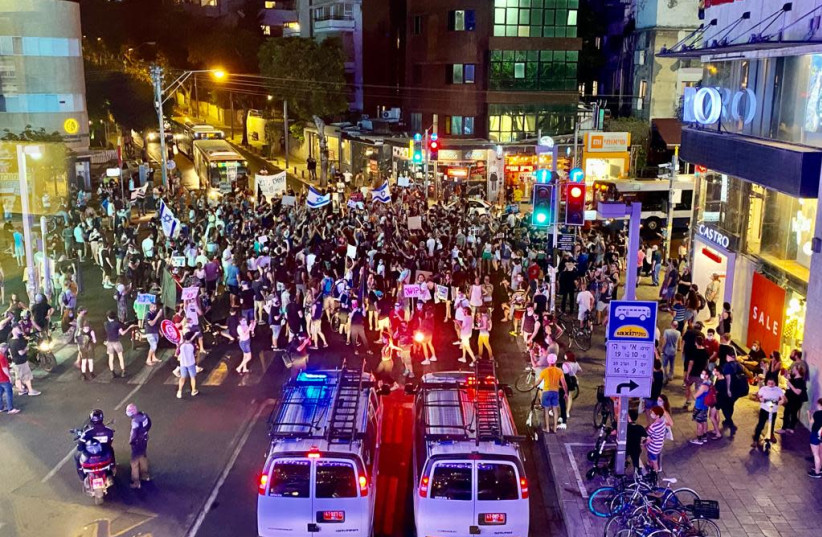
Hundreds of protesters gather in Tel Aviv to protest against police brutality and Amir Ohana, July 28. /  (photo credit: AVSHALOM SASSONI/ MAARIV)

The assassination of a prime minister and the killing of a demonstrator at a protest are no longer imaginary, President Reuven Rivlin warned on Wednesday, after protesters were violently attacked in Tel Aviv the night before by far-right activists.

“I want to say clearly, given the violent developments over the last day: The murder of a demonstrator who goes to protest in the State of Israel, or the murder of an Israeli prime minister, are not imaginary scenarios,” said Rivlin. “God help our democracy if people start to kill each other.”

The protesters who were attacked had gathered Tuesday night across the street from the residence of Public Security Minister Amir Ohana, who has in recent days attempted to stop the almost daily demonstrations in front of the Prime Minister’s Residence in Jerusalem. Their signs read, “Ohana – We have the right to protest!” and “I won’t stay silent as my country changes.”

Afterward, protesters moved toward the center of town. As they passed Dizengoff Center and moved east toward the Tel Aviv Cinematheque, a group of far-right protesters ran through the crowd, attacking demonstrators in varying manners.

Jonah Clarfield, a protester and eye witness to the attack on Tuesday night, told The Jerusalem Post: “I saw an attack with a chair, and later on, I saw someone being hit in the head with a stone: not thrown, but rammed into his head.

“He fell, began bleeding. Some of the protesters chased after the attackers; other protesters came to provide medical assistance to the people who were injured,” he said.

PEACE NOW, an NGO promoting a two-state solution for the Israeli-Palestinian conflict, shared a post on Twitter, claiming that the attackers were part of the far-right group La Familia, which has been known to be violent in past conflicts due to political differences.

In the Twitter post, Peace Now shared a photograph of Transportation Minister Miri Regev (Likud) with her arms around members of La Familia, suggesting her involvement with the group and therefore with the people who attacked protesters on Tuesday night.

Profile photo, opens profile page on Twitter in a new tab Peace Now  @peacenowisrael

Last night pro-Likud thugs from the La Famiglia group attacked a protesters in Tel Aviv with glass bottles and pepper spray. The picture below shows longtime Likud Minister Miri Regev posing with such racists. See footage of the attack here: facebook.com/asaf.shafir.3/

@PeaceNowIL
אם יגידו לכם שאלו עשבים שוטים תזכרו שהליכוד זאת הערוגה.

Image

La Familia announced in a Facebook group to its members that they will be gathering after the end of Tisha Be’av on Thursday evening at the First Station in Jerusalem, sending a message to protesters: “Leftist rags, pay attention: The rules of the game are changing from now on.”
In response, opposition leader Yair Lapid said that the violence and blood spilled in Tel Aviv is on the hands of Prime Minister Benjamin Netanyahu and his emissaries.

“Whoever sows incitement will receive blood,” he said. “Calling protesters to spread disease, and inciting against civilians protesting, is leading Israel into a civil war.”

Netanyahu said in response that Lapid, much like former prime minister Ehud Barak, “encourages groups of anarchists whose goal is to violate public order and undermine the foundations of Israeli society.” While he condemned the attacks in Tel Aviv, Netanyahu said that there was insufficient condemnation of violence from left-wing protesters and of threats made against him.

Justice Minister Avi Nissenkorn (Blue and White) tweeted that “those who attacked the protesters [on Tuesday] are the real anarchists.”
“Divisive hatred has crumbled and continues to crumble the people of Israel, whose true strength is in its unity,” said Alternate Prime Minister Benny Gantz. “No one will silence protests in Israel as long as we are here.”

IN ADDITION to his warning, Rivlin called for a cooling of passions among civilians on all sides of the political divide as well as by police, who in some instances have been dangerously brutal in their dealings with demonstrators.

Rivlin issued the call just a few hours prior to the onset of Tisha Be’av, which commemorates the destruction of the First and Second Temples, which is said to be the punishment imposed for lack of civility between Jews.

While reiterating the democratic right to oppose and to demonstrate, Rivlin decried all forms of violence, and urged the police to take a very serious attitude to any threats against the prime minister or against any demonstrator.

No threat, regardless of where it originates, should be taken lightly, he warned. “Our very existence depends on this.”

Ohana praised the police for their actions against the attackers at the protests in a Twitter post, despite eye witness accounts claiming that they did not intervene. “Despite all the controversies, there is and will be no permission for violence and each case will be dealt with in full severity,” he said. “The safety, security and liberty of all Israeli citizens, regardless of political views, is a top priority – and will be strictly maintained by the Israel Police. Enough violence, no exceptions!”

CLARFIELD, the protester, explained that the police – who were stationed on the sidelines and prepared to intervene if there would be “public disorder and disturbances” – did not act when the attackers came barging through the crowd.

“No police officer came to help,” Clarfield said. “Some of the people went to the police officers and said: ‘Look at what is happening – protesters are being attacked.’ They were told to dial 100” – the police hotline.

“Police are investigating the local incident that happened in Tel Aviv during the protest when there was a fight between two groups,” the Police Spokesperson’s Unit told the Post. The spokesperson referred to the alleged attack as a fight that broke out between the protesters and those who came and attacked, saying that “police detained one man at the scene.”

On Wednesday evening, one of the people arrested under suspicion of attacking the Tel Aviv protesters was released by police “under restrictive conditions,” according to Walla! News. The other two suspects will be brought before the Tel Aviv Magistrate Court on Thursday in a hearing intended to extend their arrest.

“We are not changing our direction,” former IDF Brig.-Gen. and Ein Matsav activist Asaf Agmon told the Post following the attack on Tel Aviv demonstrators. “We are doing a respectful, legal protest. We will continue and intensify the pressure for what we believe.

“There are organizations like La Familia… that call on people to beat us and scare us,” Agmon continued. “They will not succeed. We call on the police to do their jobs. They must protect us like they protect the prime minister. They must stop whoever wants to hurt us from doing so.”

“There is no room for violence for any reason,” Netanyahu said in response to the attack. “There is also no room for incitement and threats of murder, explicit and implicit, against me and my family, including the shameful threat of crucifixion today in Tel Aviv.”

The prime minister then abruptly changed topics, speaking instead about acts of violence by protesters. “When a police officer is severely beaten by protesters in front of the Prime Minister’s Residence and is in need of surgery, or when threats of murder are published against me and my family daily… the media and many public figures choose to ignore it.”

On Wednesday evening, protesters came to Balfour Street once more, this time to read the megillah for Tisha Be’av. The streets were silent as hundreds sat on the ground and listened in rapture.


Tobias Siegal and Daniel Nisinman contributed to this report.


Zawartość publikowanych artykułów i materiałów nie reprezentuje poglądów ani opinii Reunion’68,
ani też webmastera Blogu Reunion’68, chyba ze jest to wyraźnie zaznaczone.
Twoje uwagi, linki, własne artykuły lub wiadomości prześlij na adres:
webmaster@reunion68.com


A most peculiar attack: Will Hezbollah deem border fracas adequate vengeance?

Hezbollah deem border fracas adequate vengeance?

JUDAH ARI GROSS


Though the Shiite terror group has previously accepted failed operations as sufficient, it is indicating this time that its retaliation for a fallen fighter has yet to come

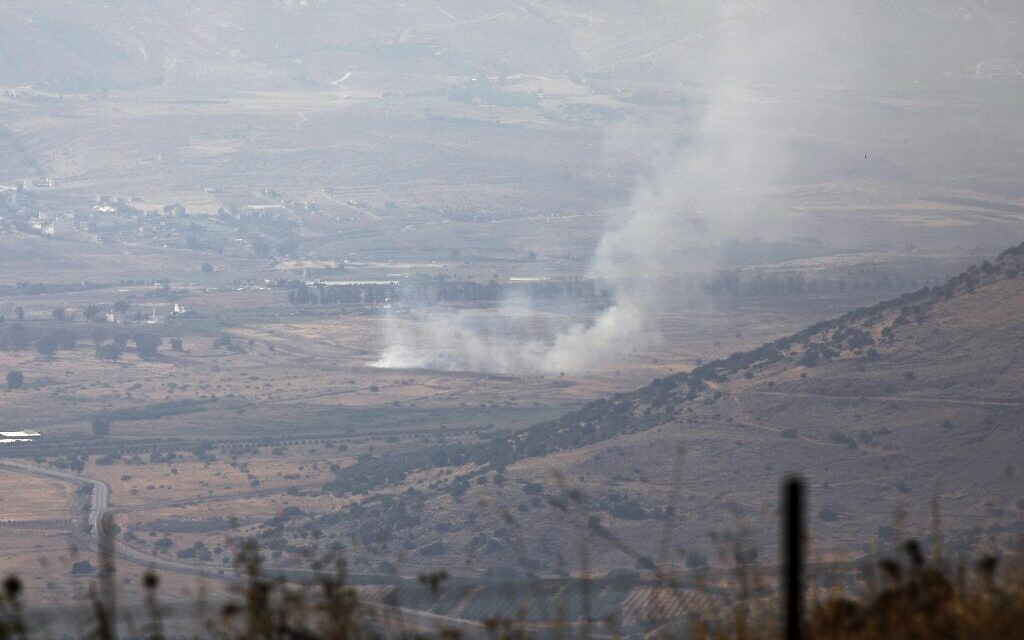
A picture taken from the Israeli side of the Blue Line that separates Israel and Lebanon shows smoke billowing above the Shebaa Farms sector after clashes in the border area, on July 27, 2020. (Jalaa MAREY / AFP)

Over the years, as the Hezbollah terror group has worked to build up its military capabilities and the Israel Defense Forces has sought to foil those efforts, the two sides have developed and maintained certain red lines and understandings. For Hezbollah, which relies heavily on popular support at home, this includes retaliating to any deaths of its fighters, a strategy of tit-for-tat that has been playing out along the northern border over the past week.

Last Tuesday night, Hezbollah announced that one of its members — Ali Kamel Mohsen Jawad — was killed in an Israeli airstrike on an Iran-linked facility in Damascus International Airport. Though the explicit threats came later, past experience made it clear to Israel that some kind of response was a matter of time — likely an anti-tank guided missile (ATGM) strike on an Israeli military vehicle, though a sniper attack or improvised explosive device planted on the border were not out of the question.

On Monday afternoon, it appeared as though Hezbollah had made its move to get revenge for its fallen operative in Syria. According to the IDF, a group of armed Hezbollah operatives crossed into Israeli-controlled territory from Lebanon shortly after 3 p.m., moving toward an IDF post on the contested Mount Dov, also known as Shebaa Farms, before Israeli troops opened fire toward them, forcing them to flee back across the border.

This alleged attempted attack was somewhat peculiar, occurring in the middle of the afternoon when visibility is highest and in an area that — even when border tensions aren’t running high — is under constant surveillance as it has regularly been the site of Hezbollah attacks on Israeli troops. Under those conditions, success would be unlikely. According to the military, the Hezbollah operatives never fired a shot during their infiltration. Lebanese news outlets speculated the group may have been performing reconnaissance rather than attempting to conduct an attack.


IDF Spokesperson Hidai Zilberman said Monday the military was not yet sure what type of attack the Hezbollah cell had been planning, but said it was confident that they were up to something nefarious.

“A cell sneaking into Israel in the middle of the day, they probably weren’t going to have a barbecue,” Zilberman told .

Somewhat conspicuously, despite the IDF having infantry troops, tanks and artillery cannons on the ground, as well as drones, helicopters and centerplanes in the sky all along the border, Hezbollah-affiliated media said none of the group’s fighters were killed or wounded. This led to speculation that the Israeli military deliberately did not try to hit them, as doing so may have only led to additional calls for retaliation and threats of violence by Hezbollah.

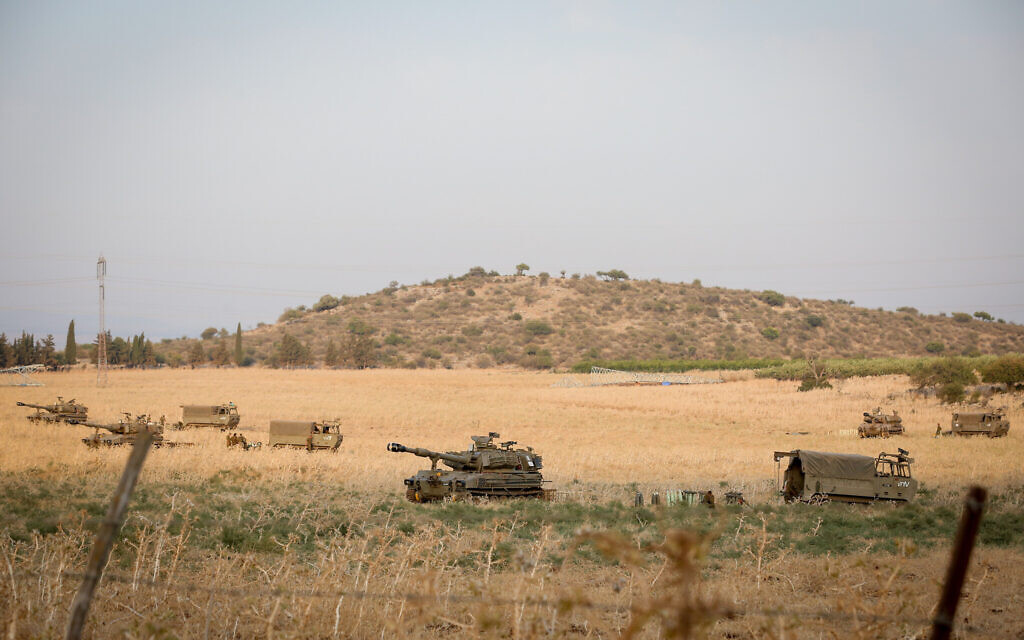
Israeli army forces seen stationed near the border between Israel and Lebanon in the Golan Heights on July 27, 2020. (David Cohen/Flash90)

This round with the terror group could end there, with no casualties on either side. Israel and Hezbollah could then return to what Israeli officials refer to as the “campaign between campaigns,” known in Hebrew as the Mabam, the conflict simmering just below the surface in which Israeli security forces look to prevent Iran and its proxies, including Hezbollah, from acquiring more and better weapons and establishing a permanent military presence on Israel’s border with Syria.

During the campaign between campaigns, Israel does not consider killing low-level operatives to be its goal, preferring instead to disrupt larger plots and operations. Somewhat counterintuitively, Israel often attempts to avoid killing Hezbollah fighters in these missions if possible, to prevent the fallout and headaches that go along with their deaths, potentially distracting from the larger objective.

At the same time, Israel does not shy away from Iranian, Syrian and Hezbollah casualties when it sees an imperative for action. “We acted against the entrenchment of Iran in Syria. If someone involved in Iran’s activities in Syria — which we will continue to act against — this is liable to happen. We take that into account,” Defense Minister Benny Gantz said about the matter on Sunday.

Accepting failure
The understanding among defense analysts in Israel and elsewhere in the Middle East is that neither Hezbollah nor Jerusalem are interested in war at this time.

For Israel, delaying an all-out conflict — however inevitable — is generally seen as a value in itself, giving the country’s citizens longer stretches of calm and the economy more time to thrive.

Meanwhile, Hezbollah is facing growing pressure at home, which could worsen if a devastating war with Israel broke out. Since October, Lebanon has been in the throes of a crushing financial crisis, one which has only been exacerbated by the coronavirus pandemic.

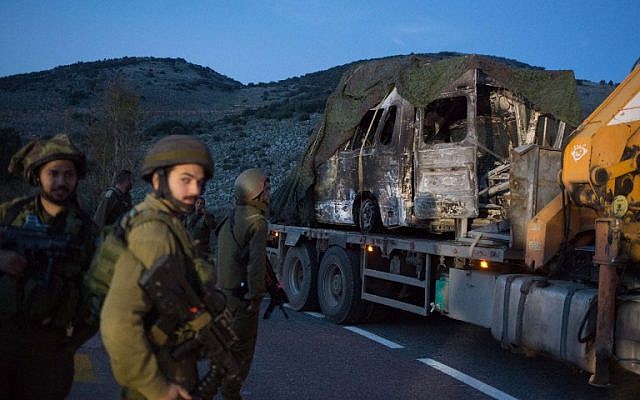
Israeli soldiers look at a burned-out vehicle loaded onto the back of a truck near Ghajar after it was removed from the seen of a Hezbollah missile attack along the Israel-Lebanon border on January 28, 2015. (AFP/MENAHEM KAHANA)

In the past, the very act of attempting to attack Israeli troops was sufficient to bring a round such as the current one to a close, regardless of the actual outcome. This was true both if IDF soldiers were killed — as in 2015, when Hezbollah fired an ATGM at an Israeli jeep, killing two soldiers, in response to the deaths of six Hezbollah members and an Iranian general in a strike attributed to Israel — and if the Israeli soldiers emerged unscathed — as occurred last September when three missiles were fired at an Israeli military position and an armored ambulance, all missing their target, albeit narrowly in the case of the vehicle.

Yet on Monday evening, instead of lauding the operatives’ infiltration or finding some other way to turn the alleged failed attack into a victory — as it did last September — Hezbollah officially denied that its fighters had attempted an operation of any kind and said that the retaliation for Jawad’s death was “definitely coming.”

Israel, for some reason, has not sought to disprove Hezbollah’s denial by releasing its security camera footage of the Hezbollah operatives, which would at least prove if armed men indeed infiltrated into Israeli territory from Lebanon.


Zawartość publikowanych artykułów i materiałów nie reprezentuje poglądów ani opinii Reunion’68,
ani też webmastera Blogu Reunion’68, chyba ze jest to wyraźnie zaznaczone.
Twoje uwagi, linki, własne artykuły lub wiadomości prześlij na adres:
webmaster@reunion68.com


News From Israel – July 27, 2020

News From Israel – July 27, 2020

ILTV Israel News


  • #IDF reports infiltration attempt via #Lebanon-Israel border.
    What’s going on behind closed doors in Israel’s response to #COVID-19 as the country cuts its #coronavirus cabinet by six.
  • No safe space for Jew hate – a look inside the 48 hour twitter silence trying to pressure social media giants to take anti-Semitism seriously.
  • Israel braces for another heatwave set to scorch the Holy Land for at least a week.

Zawartość publikowanych artykułów i materiałów nie reprezentuje poglądów ani opinii Reunion’68,
ani też webmastera Blogu Reunion’68, chyba ze jest to wyraźnie zaznaczone.
Twoje uwagi, linki, własne artykuły lub wiadomości prześlij na adres:
webmaster@reunion68.com