Archives

Dlaczego jestem kulturowym judeo-chrześcijaninem?

Połączone siły młodych amerykańskich (głównie) ateistów i fanatycznie wierzących młodych muzułmanów.


Dlaczego jestem kulturowym judeo-chrześcijaninem?

Andrzej Koraszewski


Richard Dawkins wywołał burzę wśród ateistów pisząc, że jest kulturowym chrześcijaninem. Wyjaśniał to swoim przywiązaniem do pięknej architektury katedr, do sakralnej muzyki, do tradycji świąt. Odrzucenie idei Boga nie zmusza go do odrzucenia wszystkiego.

Dla mnie te wyjaśnienia były daleko niewystarczające. Wielokrotnie pisałem, że ateizm nie jest światopoglądem, jest zaledwie wnioskiem z nauki, że istnienie jakiejś niematerialnej, wszechmocnej inteligencji jest tak mało prawdopodobne, iż jest niemożliwe do zaakceptowania. Ateizm jednak jest zaledwie bramą, za którą jest wiele dróg. Zazwyczaj splata się z jakąś ideologią, niestety bardzo często zbrodniczą. W młodości nie miałem nic wspólnego z ateistami w czerwonych krawatach, dziś nie mam nic wspólnego z ateistami paradującymi w kefijach i nie tylko z tymi.

Religia związana jest z ewolucją człowieka. Ślady myślenia mistycznego znajdujemy w artefaktach od zarania istnienia Homo sapiens. Innymi słowy odkąd „naga małpa”, czy jak kto woli „trzeci szympans” zaczął pochówki, pozostawiając przy zmarłych różne wartościowe przedmioty, wiemy, że jego umysł stawiał trudniejsze pytania, niż tylko o to, czy w cieniu kryje się żywność, czy śmiertelne zagrożenie. Nie ma ludzkich społeczeństw bez religii, a laicyzacja oznacza zaledwie zamianę wojen religijnych na ideologiczne, które nadal noszą wszystkie znamiona wojen religijnych.

Sama historia i ewolucja religii jest filarem naszej wiedzy o budowaniu ładu społecznego i kodeksów moralności. Kiedy mówię o sobie, że jestem humanistą odwołuję się do setek autorów, którzy byli ludźmi wierzącymi, często heretykami własnej religii, odrzucanymi przez kapłanów i wpływającymi na umysły kolejnych pokoleń. Zarówno język, przechowujący prawa i normy obyczajowe jak i kodeksy moralne wpisane w prawo stanowione, mają w każdym kraju swoje religijne DNA.

Historyk gospodarki mówi studentom, że są tylko trzy kultury: kultura zboża, ryżu i kukurydzy, ale religie są starsze od rolnictwa o wiele dziesiątków tysięcy lat. Zwierzęta śnią, ale dopiero język pozwolił na dzielenie się snami, na pytania o ruchy słońca, księżyca i gwiazd, na dzielenie się lękiem nie tylko mową ciała. Tak, na początku było Słowo. Dopiero język pozwolił nam dzielić się snami i opowiadać o spotkaniach w naszych snach ze zmarłymi.

Co znaczy, , że jestem kulturowym judeo-chrześcijaninem. Pionier brytyjskiego konserwatyzmu Edmund Burke dążył do polityki, która zachowuje z tradycji, to co najlepsze i nie waha się odrzucić tego, co złe. Być może dziś powinniśmy to nazwać tradycjonalizmem ewolucyjnym, przeciwieństwem rewolucjonizmu, pragnącego budować nowy świat na gruzach starego.  

Judeo-chrześcijaństwo to dziwaczne określenie. Trudno powiedzieć, czy chrześcijaństwo to odnoga judaizmu, czy może jego zreformowana kontynuacja, czy może plagiat? To ostanie słowo mogłoby w części tłumaczyć zdumiewającą nienawiść kościołów chrześcijańskich do judaizmu i jego wyznawców. Złodzieje rzadko darzą ciepłymi uczuciami tych, których okradli, lubią również dorabiać gębę okradzionym. Wyprzeć się jednak nie można, więc mówimy czasem, że ta nasza europejska cywilizacja jest judeo-chrześcijańska.

Richard Dawkins ma rację, odrywając się na siłę od całej religijnej tradycji przestalibyśmy rozumieć literaturę, sposób myślenia naszych przodków, okaleczylibyśmy język.

Jest tu znacznie więcej, rewolucyjna ateizacja prowadzi do zaburzenia tożsamości, utrudnia komunikację, tworzy platformę nowych waśni religijnych, niszczy kulturę. Jakkolwiek byśmy na to nie patrzyli, ewolucja moralności i systemów prawnych była sprzężona z ewolucją wierzeń, które zmieniały się opornie wraz z postępem nauki. Ateizm nie ma swojego katechizmu, i podobnie jak w przeszłości czerpie z zapożyczeń, raz lepiej, raz gorzej.

Nic nowego, religie również przenikały się, a my często gubimy ślad nie wiedząc już, co skąd i którą drogą. Kiedy pytasz, skąd wzięła się zasada „ząb za ząb, oko za oko” większość chrześcijan powie, że to z Tory lub Talmudu. Fakt, że dotarła tam z kodeksu Hamurabiego, że nie symbolizuje mściwości, ale zasadę równowagi, by zemsta nie przekraczała rozmiarów szkody, znają i rozumieją nieliczni.

David S. Landes (ojciec Richarda Landesa), znakomity amerykański historyk i ekonomista, zastanawiał się dlaczego początki rolnictwa narodziły się w regionie żyznego półksiężyca, a nie w Ameryce, czy w innym miejscu. Zadecydowała o tym obecność najłatwiejszych do udomowienia roślin i zwierząt. Konsekwencje tego, że tam właśnie zaczęło się rolnictwo były wielorakie. Rolnictwo pozwalało na tworzenie nadwyżek żywności i podziału pracy, uczyniło niewolnictwo opłacalnym, prowadziło do klasowego rozwarstwienia, podziału na zawodowych i uzbrojonych obrońców oraz rolników i rzemieślników. To z kolei pozwalało na tworzenie organizmów społecznych większych niż klan poszukujących żywności nomadów.

To wszystko tworzyło nowe ramy dla wyobraźni i nowych wierzeń.

Możemy to uważać za komiczne, ale w Biblii już synowie Adama i Ewy zakładają miasta. Pamiętam doskonale napisane satyryczne opowiadanie o tym jak Sumerowie zarykiwali się ze śmiechu patrząc jak żydowski Bóg tworzy świat. Nasza racjonalność jest limitowana, ograniczona przez czas i miejsce urodzenia oraz kilka innych czynników. Pojawienie się rolnictwa prowadziło do jednoczenia wędrownych klanów w państwa, a na kolejnym etapie do próby połączenia tłumu plemiennych bogów w jedno, wszechmocne bóstwo.  

Droga do odkrycia ewolucyjnego pochodzenia gatunków, powstania genetyki, neurologii i innych dziedzin nauki prowadziła do lepszego zrozumienia zjawisk, które wcześniej w zupełnie zrozumiały sposób popychały ludzi do wiary w istoty nadprzyrodzone, ale musiała być długa, zaś odkrycia burzące struktury dotychczasowego myślenia, na których opierał się cały ład społeczny musiały wywoływać zaniepokojenie.

Dziś ponownie dotarliśmy do wzmożenia irracjonalizmu wywołanego frustracjami wynikającymi z rozchwiania naszej tożsamości. Tożsamość narodowa i tożsamość religijna znalazły się w ogniu gwałtownej krytyki i (często nadgorliwego) odrzucenia (bądź desperackiej obrony).

Gdyby nie był tragiczny w skutkach, zgoła zabawny byłby w tym wszystkim fakt, że po raz kolejny, reakcją na zaburzenia tożsamości jest wściekły antysemityzm.    

Szukając kompromisu między zmianą i kontynuacją, wielu wpada w gniew graniczący z paranoją. Jedni, jak fanatyczni muzułmanie, są gotowi do mordu w obawie przed ateizmem i zepsuciem. (Religijny fanatyzm popycha do absurdalnego konserwatyzmu.) Inni wpadają w rewolucyjny szał, który często ma podobne efekty i skłania do płytkich ale tak stanowczych sądów, że otwierają drogę, do nienawiści wobec myślących inaczej.

Nasilające się napięcia społeczne nie wróżą dobrze. To nie jest wyłącznie polski problem. Raczej przeciwnie, ogólnoświatowy trend, który do nas dotarł.

Nie jesteśmy w stanie tego zmienić, możemy zaledwie próbować powiększać obszar umiarkowania, ale przede wszystkim budować naszą własną świadomość, że jesteśmy maleńkim ogniwem w łańcuchu pokoleń, a działając porywczo możemy zaszkodzić, tym którzy przyjdą po nas.

Tak, jestem niewierzącym, kulturowym judeo-chrześcijaninem, dziedzicem, zarówno ciemnych kart przeszłości, jak i spadkobiercą heretyków, którzy uparcie próbowali robić wyłomy w „niezmiennych naukach”. Byli odrzucani jak Kopernik i Galileusz, jak Darwin i tak wielu innych. W ostatecznym rachunku to oni umożliwiali kontynuację.

Egipski filozof Murad Wahba gniewa się, na określenie „zderzenie cywilizacji”, twierdzi, że cywilizacja jest jedna, że jest przeciwieństwem barbarzyństwa, że zachowanie jej ciągłości jest trudem, który może być sensem życia. (On sam poświęcił swoje najlepsze lata badaniom nad życiem i twórczością Awerroesa, który ocalił spuściznę Arystotelesa przed chrześcijańską barbarią).

A jak być kulturowym judeo-chrześcijaninem? To ciekawe pytanie, na które szukam odpowiedzi.


Zawartość publikowanych artykułów i materiałów nie reprezentuje poglądów ani opinii Reunion’68,
ani też webmastera Blogu Reunion’68, chyba ze jest to wyraźnie zaznaczone.
Twoje uwagi, linki, własne artykuły lub wiadomości prześlij na adres:
webmaster@reunion68.com

There’s no room for neutrality when it comes to antisemitism


There’s no room for neutrality when it comes to antisemitism

Jonathan S. Tobin


Jews for Mamdani are blind and shameful. Jewish leaders who won’t take a stand about an antisemite becoming mayor of New York City may be worse.

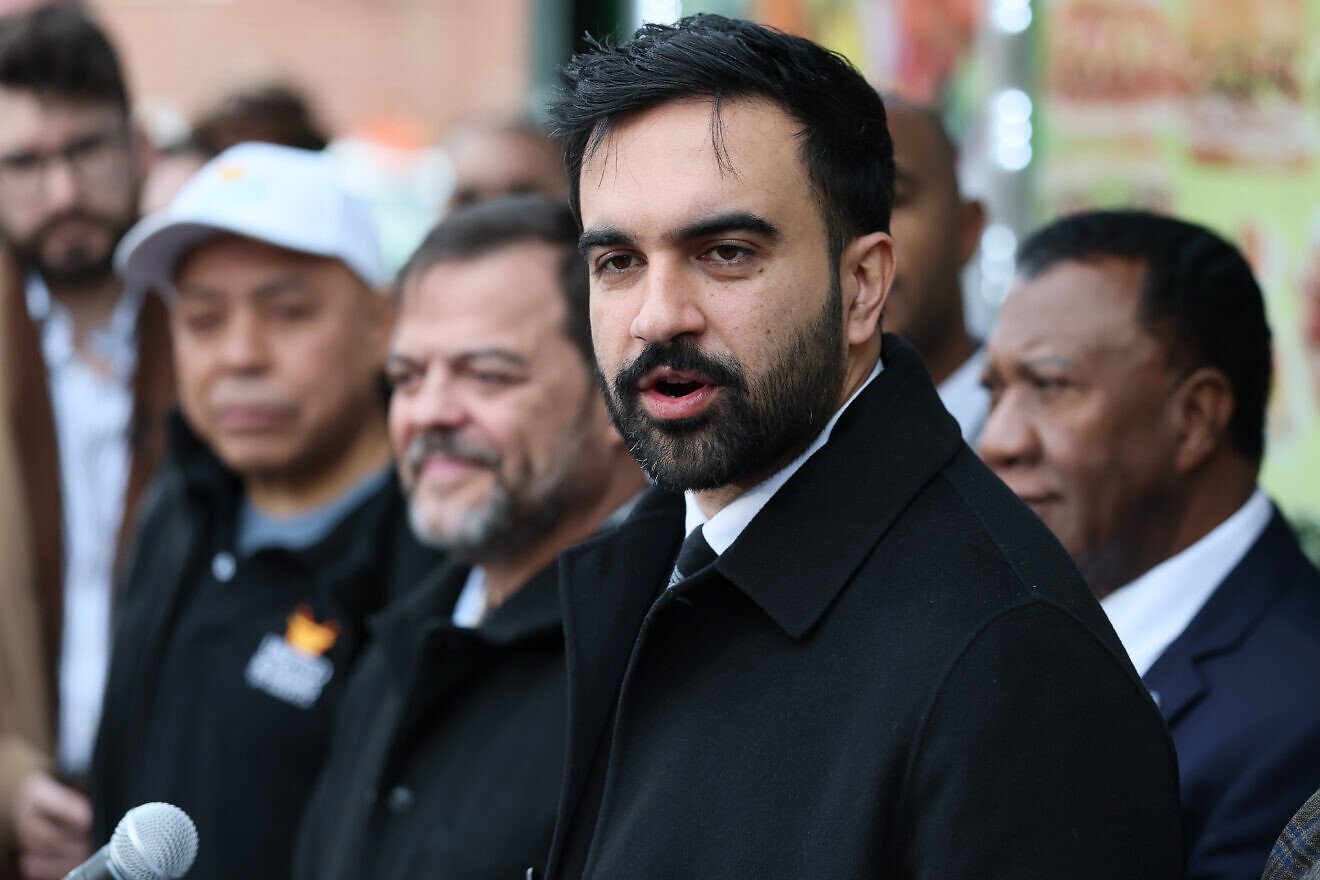
Zohran Mamdani, a New York state assemblyman and the Democratic mayoral candidate in New York City, speaks during a press conference in the Belmont neighborhood of the Bronx, N.Y., on Oct. 29, 2025. Photo by Michael M. Santiago/Getty Images.

The latest poll about the race for mayor of New York City revealed something that everybody already knew. According to the survey published by Quinnipiac University this week, a not insignificant percentage of Jewish respondents—16%—say they are voting for Democratic Socialist Zohran Mamdani.

Given the state assemblyman’s record of support for the openly antisemitic Students for Justice in Palestine and Council on American Islamic Relations, his refusal to condemn calls for genocide (“From the river to the sea”) and terrorism against Jews (“Globalize the intifada”), coupled with his invocation of traditional tropes of Jew-hatred in which Israel is depicted as the source of the world’s problems, it is shocking that any Jews at all would be in favor of such a person becoming the mayor of the largest Jewish city in the world outside of the State of Israel.

Who is voting for Mamdani?

Yet anyone who is surprised that one out of six New York Jews will likely vote for Mamdani hasn’t been paying attention to what has been happening not only in the Jewish community but in the United States as a whole. This result demonstrates how much of the American Jewish left has abandoned Israel. But it also shows how toxic ideas like critical race theory, intersectionality and settler-colonialism have caused some people to identify with those who have been supporting Palestinians who murder Jews.

Yet as the campaign goes into its final days, the most troubling aspect of the increasingly bitter debate about Mamdani does not concern the candidate’s open Jewish backers. Rather, it is the fact that so many Jewish leaders, including rabbis, have chosen silence or neutrality on a race with potential life-and-death consequences for the community. At a time of genuine crisis, a great many of those tasked with guiding their fellow Jews are hiding behind their pulpits rather than using them to help mobilize people to avert a potential catastrophe.

Under the circumstances, the failure to stand up against antisemitism may actually be far worse than the stances of those who are making no secret about taking sides with Mamdani.

The Quinnipiac poll show that Mamdani, the Democratic Party candidate, still holds a double-digit lead over former Gov. Andrew Cuomo, who is running as an Independent, and Republican Curtis Sliwa, founder of the Guardian Angels. It did show that his advantage has been cut down to 10 points after leading by far bigger margins since he won his party’s June primary, with Mamdani getting 43%, Cuomo 33% and Sliwa 14%. That’s encouraging those clinging to hope that Cuomo can come from behind and pull out a victory, even though Sliwa stubbornly refuses to get out of the race, a move most observers have long believed is necessary for those opposed to Mamdani to prevail.

A deeper dive into the numbers, which reveals the religious affiliations of those responding, gives a clear insight into where the candidates are getting support and who constitutes the current electorate of the nation’s largest city. Cuomo leads among Protestants, Catholics and Jews. But he is still trailing by a significant margin because 50% of those who define themselves as “other” when it comes to faith are for Mamdani. This, along with the even more significant fact that he is leading among those under 50, is one of the main reasons why Mamdani remains the overwhelming favorite to win.

Do Muslims outnumber Jews?

If accurate, these results raise questions about whether the growth of the Muslim population has been underestimated. Most demographers have claimed that Muslims constitute anywhere from 8% to 10% of the total of city residents, while Jews make up about 12%. It will be interesting to see if, as some have speculated, we are approaching the point where the growth of the Muslim and Arab community, combined with the decline in the number of Jews (other than among the Orthodox), is contributing to a change in the balance of political power in New York.

As for the Jewish vote, according to Quinnipiac, Cuomo has an overwhelming lead with 60% while Mamdani gets 16%, Sliwa 12% and another 12% either voting for a minor candidate or undecided.

On the one hand, that gives the lie to those among leftist Jewish groups like J Street, as well as openly anti-Zionist and antisemitic organizations like Jewish Voice for Peace and IfNotNow, that the majority of Jews are now against Israel.

Cuomo is despised by many due to his well-deserved reputation for political thuggery during his time as governor and even long before that, as well as for his dictatorial and disastrous policies during the COVID-19 pandemic. Not to mention the fact that he was driven from office during his third gubernatorial term over accusations of sexual harassment and bullying.

Still, Cuomo has a long record of solid support for Israel and remains the most viable of the alternatives to Mamdani in large measure because he is clearly opposed to his Marxist policies, as well as his antisemitism.

The likelihood of Mamdani winning the mayoralty has set off a fierce debate among Jews, especially among rabbis.

More than 1,100 rabbis around the nation have signed a letter opposing Mamdani titled “A Rabbinic Call to Action: Defending the Jewish Future.” The document quoted Rabbi Ammiel Hirsch of the Reform movement’s Stephen Wise Free Synagogue’s statement that “when public figures like New York mayoral candidate Zohran Mamdani refuse to condemn violent slogans, deny Israel’s legitimacy, and accuse the Jewish state of genocide, they ‘delegitimize the Jewish community, and encourage and exacerbate hostility toward Judaism and Jews.’”

It also quoted Conservative Rabbi Elliot Cosgrove’s speech from the pulpit of the Park Avenue Synagogue, when he said, “Zionism, Israel, Jewish self-determination—these are not political preferences or partisan talking points. They are constituent building blocks and inseparable strands of my Jewish identity. To accept me as a Jew but to ask me to check my concern for the people and State of Israel at the door is a nonsensical proposition and an offensive one, no different than asking me to reject God, Torah, mitzvot or any other pillar of my faith.”

The letter called upon Jews to unite against Mamdani.

Solidarity with antisemitism

It was answered by a competing rabbinic letter that said Mamdani’s “Support for Palestinian self-determination stems not from hate, but from his deep moral convictions.” That is utterly disingenuous since Mamdani has made it clear that he supports the elimination of the one Jewish state on the planet, rather than merely advocating for a Palestinian one beside it. The letter also went on to equate the mythical threat of Islamophobia with the documented surge of Jew-hatred in the United States since the Hamas-led Palestinian Arab attack on Israeli communities on Oct. 7, 2023.

Another letter from Jewish Voice for Peace reiterated Mamdani’s blood libels about Israel committing “genocide” and claiming the Jewish majority that supports Israel is trying to suppress anti-Zionist voices. It also claimed that “Palestinian and Jewish liberation are interconnected.” But since the majority of Palestinians have—as the most recent poll of those living in Gaza as well as Judea and Samaria made clear—shown that they still support Hamas’s goals for the destruction of Israel and the genocide of its people, that is a rather bizarre idea about what would constitute “Jewish liberation.”

Those two letters opposing the call to mobilize against Mamdani make it obvious that some Jews who will vote for him are either ignorant about what he and others in the “pro-Palestinian” camp believe or actually share his hateful opposition to Jewish rights and survival.

That was certainly the case with a much-publicized effort to promote a “Jews for Zohran” campaign led by a group of four hard-left female rabbis. One of them, Abby Stein, is a trans person and a vitriolic advocate for a ceasefire in Gaza in order to let Hamas survive the conflict. She also provided Jewish cover to an event sponsored by the Islamist regime in Iran. But she is best known for getting herself thrown out of the White House’s “Pride Month” celebration lsat year for disrupting former first lady Jill Biden’s speech because she thought that the administration was too supportive of Israel. 

Some of this is the result of the shift in American culture in which toxic leftist ideologies have branded Israel and Jews as “white” oppressors of “people of color” as part of a distorted vision of the conflict in the Middle East as a rerun of the struggle for civil rights during America’s past. In this way, some Jewish liberals have come to accept the false characterization of Zionism—the Jewish national liberation movement—as somehow being racist while seeing nothing wrong with Palestinian nationalism, even though it is inextricably tied to intolerance for the presence of Jews in the country where they are indigenous.

It is hardly surprising, therefore, when Jewish celebrities like actor Mandy Patinkin, who also supports “Palestinian liberation,” have spread blood libels about Israel committing “genocide” and opposed the post-Oct. 7 war against Hamas would endorse Mamdani.

It’s equally true that some young Jews have been seduced by Mamdani’s socialism—something that also reflects their ignorance about the way Marxism has failed every time it has been tried and the way it empowers tyrannical minorities. As author Batya Ungar-Sargon put it: “Zohran Mamdani, the Pied Piper of Bushwick, offers trust-fund socialism to over-credentialed, downwardly mobile 20-30-somethings who can’t become adults due to the job/housing markets. A nepo baby, he legitimizes living off your parents in a rent-stabilized apartment into your 30s.”

All of these pro-Mamdani Jews are under the mistaken impression that a city run by someone hostile to Jewish life in Israel wouldn’t impact their existence. They’re wrong about that. New York has experienced a steady decline over the past decade due to the blunders of leftist former Mayor Bill de Blasio, and the incompetence and corruption of incumbent Mayor Eric Adams (who dropped out of the race and endorsed Cuomo when it was clear his independent run would fail). But putting City Hall in the hands of a Democratic Socialist would marginalize Jewish security, especially when you consider Mamdani’s support for the pro-Hamas mobs that targeted Jews on the city’s college campuses.

As discouraging as the blindness or malevolence of those who will vote for Mamdani may be, what is truly alarming is the apathy of leaders who prefer to be silent about this threat at a moment of genuine crisis for the Jewish community. While some may deplore the arguments between rabbis opposed to and in favor of Mamdani, the real puzzle concerns the large numbers of Jewish leaders, both rabbis and communal leaders, who are simply standing on the sidelines and doing nothing to avert an impending disaster.

In strong contrast to the leadership exhibited by Hirsch and Cosgrove, both of whom have been critical of Israel’s government but rightly understand what the mainstreaming of Mamdani’s antisemitism will mean, are those like Reform’s Rabbi Angela Buchdahl of Manhattan’s Central Synagogue, who told her congregation that she would honor the political “pluralism” of her congregation by not taking a public stand on the election.

Some might defend this stance in keeping with the tradition of religious leaders avoiding partisanship. But with the Trump administration gutting the Johnson Amendment, which threatened to strip religious institutions of their nonprofit status, that excuse is gone. Moreover, we all know that many religious leaders and congregations, especially those in the African-American community, have long been active participants in electoral politics.

It’s true that virtually all synagogues, even in deep-blue New York City, have congregants that sit on both sides of the political aisle, and that avoiding endorsements or condemnations of candidates can be safer than taking a stand on them.

But this is no ordinary election for New York Jews.

Disgraceful neutrality

So, while the support for Mamdani from those Jews who are his ideological bedmates is tragically wrongheaded and dangerous, I can at least understand it.

What is hard to comprehend is how anyone, even those like Buchdahl, who have been harshly critical of Israel while still supporting its existence, can think the election of an openly antisemitic and anti-Zionist mayor is something Jews must agree to disagree about.

To stand aside and proclaim neutrality while a man who believes that Israel is at the center of a conspiracy to destroy the world—a standard trope of antisemitism, whether you’re on the right or the left—is not merely indefensible. It is a contradiction of every notion of Jewish ethics, in addition to the obligation for all Jews to be responsible for one another’s well-being and safety. And when sent out from a bastion of Manhattan elites, it’s a signal to the rest of New York Jewry and the people of Israel that they are on their own. And that, perhaps even more than the stands of those deluded Jews who share Mamdani’s ideological obsessions or don’t realize how dangerous his victory would be for their community, is truly disgraceful.


Jonathan S. Tobin is editor-in-chief of the Jewish News Syndicate, a senior contributor for The Federalist, a columnist for Newsweek and a contributor to many other publications. He covers the American political scene, foreign policy, the U.S.-Israel relationship, Middle East diplomacy, the Jewish world and the arts. He hosts the JNS “Think Twice” podcast, both the weekly video program and the “Jonathan Tobin Daily” program, which are available on all major audio platforms and YouTube. Previously, he was executive editor, then senior online editor and chief political blogger, for Commentary magazine. Before that, he was editor-in-chief of The Jewish Exponent in Philadelphia and editor of the Connecticut Jewish Ledger. He has won more than 60 awards for commentary, art criticism and other writing. He appears regularly on television, commenting on politics and foreign policy. Born in New York City, he studied history at Columbia University.


Zawartość publikowanych artykułów i materiałów nie reprezentuje poglądów ani opinii Reunion’68,
ani też webmastera Blogu Reunion’68, chyba ze jest to wyraźnie zaznaczone.
Twoje uwagi, linki, własne artykuły lub wiadomości prześlij na adres:
webmaster@reunion68.com


Hezbollah Rejects Israel-Lebanon Talks, Reaffirms Refusal to Disarm as Tensions Escalate Along Border


Hezbollah Rejects Israel-Lebanon Talks, Reaffirms Refusal to Disarm as Tensions Escalate Along Border

Ailin Vilches Arguello


Smoke rises after Israeli strikes following Israeli military’s evacuation orders, in Tayr Debba, southern Lebanon, Nov. 6, 2025. Photo: REUTERS/Ali Hankir

Hezbollah has rejected any talks with Israel and reaffirmed its refusal to disarm, even as the Jewish state ramps up military operations in southern Lebanon amid rising border tensions.

On Thursday, the Iran-backed Lebanese terrorist group condemned the prospect of negotiations between Lebanon and Israel, while reaffirming its refusal to disarm and claiming it has “a legitimate right to resist [Israeli] occupation.”

In an open letter to Lebanese President Joseph Aoun, Prime Minister Nawaf Salam, and Parliament Speaker Nabih Berri, Hezbollah called for prioritizing efforts to pressure Israel into complying with the US-brokered ceasefire negotiated by the countries last year rather than “being drawn into political negotiations with the Zionist enemy.”

“Any attempt at political negotiations with Israel does not serve Lebanon’s national interest,” the letter read. 

“The weapons that defended Lebanon will not be up for negotiation and will remain an integral part of the country’s national defense strategy,” it continued, with Hezbollah seemingly depicting itself as the protector of Lebanese sovereignty.

US and Israel officials have been pressuring the Lebanese government to enter direct negotiations with the Jewish state, with Egypt offering to mediate as fears of renewed conflict in the region intensify.

Hezbollah’s warning came as the Israel Defense Forces (IDF) carried out its latest airstrikes against the terrorist group, describing it as a response to ceasefire violations.

In a press release, the Israeli military confirmed it carried out a strike in southern Lebanon, targeting operatives at a Hezbollah site, which the IDF said was used to “produce equipment used by the organization to restore terror infrastructure.”

Under last year’s ceasefire agreement, the Lebanese government committed to disarm Hezbollah, which for years has wielded significant political and military influence across the country while maintaining significant terrorist infrastructure in southern Lebanon, which borders northern Israel. The deal was reached after Israel decimated much of Hezbollah’s leadership and military capabilities with an air and ground offensive following the Islamist group’s attacks on northern Israeli communities — which Hezbollah claimed were a show of solidarity with the Palestinian terrorist group Hamas amid the war in Gaza.

Hezbollah claimed in its letter on Thursday that “the government’s hasty decision regarding the monopoly of arms” enabled Israel to exploit the situation, making disarmament a prerequisite for halting what the group alleges are Israeli violations of the ceasefire.

“Disarmament should be discussed within a national framework and not as a response to a foreign demand or Israeli blackmail,” the letter read. 

“We affirm our legitimate right to resist occupation and aggression, and to stand with our army and our people in defending our country’s sovereignty against an enemy that wages war on us, continues its attacks, and seeks to subjugate our state,” it continued. 

New reports indicate that Hezbollah has been actively rebuilding its military capabilities, in violation of the ceasefire agreement with the Jewish state.

With support from Iran, the terrorist group has been intensifying efforts to bolster its military power, including the production and repair of weapons, smuggling of arms and cash through seaports and Syrian routes, recruitment and training, and the use of civilian infrastructure as a base and cover for its operations.

In recent weeks, Israel has conducted strikes targeting Hezbollah’s rearmament efforts, particularly south of the Litani River, where the group’s operatives have historically been most active against the Jewish state.

For years, Israel has demanded that Hezbollah be barred from carrying out activities south of the Litani, located roughly 15 miles from the Israeli border.

Earlier this year, Lebanese officials agreed to a US-backed disarmament plan, which called for the terrorist group to be fully disarmed within four months — by November — in exchange for Israel halting airstrikes and withdrawing troops from the five occupied positions in the country’s southern region.

The Lebanese government is now facing mounting pressure from Israeli and US officials to disarm Hezbollah and establish a state monopoly on weapons.

Meanwhile, the Iran-backed terrorist group has repeatedly defied international calls to disarm, even threatening protests and civil unrest if the government tries to enforce control over its weapons.

Since the Lebanese government has so far been unable to successfully implement the US-backed disarmament plan, Israeli Defense Minister Israel Katz last week accused Aoun of “dragging his feet” on this issue.

“The Lebanese government’s commitment to disarm Hezbollah and remove it from southern Lebanon must be implemented,” Katz said. “Maximum enforcement will continue and even intensify — we will not allow any threat to the residents of the north.”

Israeli Prime Minister Benjamin Netanyahu also warned that Israel would exercise its right to self-defense under the ceasefire agreement if Lebanon failed to disarm the terrorist group.

“We expect the Lebanese government to uphold its commitments, namely, to disarm Hezbollah. But it’s clear that we’ll exercise our right to self-defense as stipulated in the ceasefire terms,” the Israeli leader said. “We won’t let Lebanon become a renewed front against us, and we’ll do what’s necessary.”

For his part, Aoun criticized Israel for escalating strikes after he expressed willingness to negotiate, accusing it of hindering prospects for negotiations while also directing the Lebanese army to confront IDF incursions along the southern border.


Zawartość publikowanych artykułów i materiałów nie reprezentuje poglądów ani opinii Reunion’68,
ani też webmastera Blogu Reunion’68, chyba ze jest to wyraźnie zaznaczone.
Twoje uwagi, linki, własne artykuły lub wiadomości prześlij na adres:
webmaster@reunion68.com


Kraj, którego miała nienawidzić

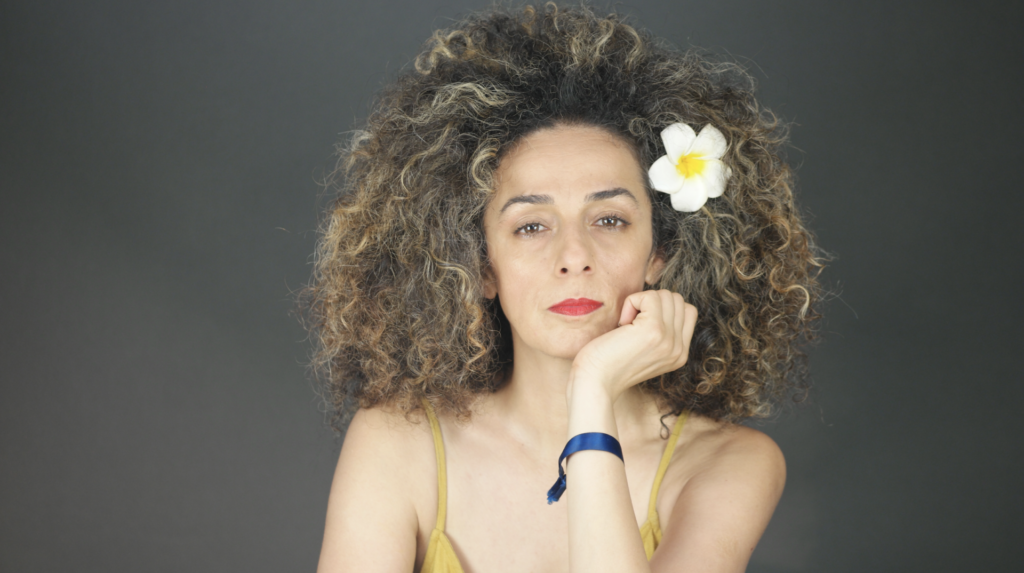
Irańsko-amerykańska dziennikarka, autorka i działaczka na rzecz praw kobiet Masih Alinejad


Kraj, którego miała nienawidzić

Andrzej Koraszewski


Masih Alinejad to nazwisko doskonale znane tym, których interesują dysydenci. Iranka mieszkająca w USA, prawdziwa feministka, walcząca o prawa prawdziwie dyskryminowanych kobiet. Wspaniała i szalona dziennikarka, której cały czas grozi śmierć ze strony irańskich zbirów bądź ludzi wynajętych przez Islamską Republikę Iranu.

Trzydziestego października 2025 r. amerykański sąd skazał na 25 lat więzienia dwóch członków rosyjskiej mafii za próbę zabójstwa Masih Alinejad na zlecenie rządu Iranu. Jak informuje Biuro do Spraw Komunikacji Społecznej: „W marcu 2025 r. Amirow i Omarow zostali uznani za winnych zarzutom usiłowania zabójstwa na zlecenie, usiłowania morderstwa w ramach działalności przestępczej oraz innych powiązanych przestępstw. Proces odbywał się przed sędzią federalną Colleen McMahon, która wymierzyła wyroki. Rosyjskim bandytom Irańczycy obiecali pół miliona dolarów za zabicie irańskiej dysydentki.”

„Teheran od dawna próbuje uciszyć panią Alinejad, a po nieudanych próbach porwania zwrócił się do Omarowa i Amirowa oraz ich organizacji, by śledzili ją i zamordowali. Ta sprawa wpisuje się w dobrze udokumentowany i niepokojący trend wykorzystywania przez Iran siatek przestępczych do eliminowania dysydentów w USA i na całym świecie. Naszym celem jest pociągnięcie do odpowiedzialności wszystkich, którzy współpracują z tym podłym reżimem, naruszając naszą suwerenność i zagrażając obywatelom USA” – powiedział zastępca Prokuratora Generalnego ds. Bezpieczeństwa Narodowego John A. Eisenberg.

Dzień przed ogłoszeniem tego wyroku Masih Alinejad opublikowała na łamach Quillette  artykuł pod tytułem: Kraj, którego miałam nienawidzić, uratował mi życie. Jej opowieść wykracza poza wyobraźnię artystów wypasioną na medialnej strawie.

„Dorastając w maleńkiej wiosce w północnym Iranie, nauczyłam się razem ze wszystkimi innymi uczniami skandować ‘śmierć Ameryce’ w wieku siedmiu lat. W ideologii Islamskiej Republiki Ameryka to potwór, Wielki Szatan, Inny. Każdego ranka wrzeszczeliśmy te słowa aż do ochrypnięcia – nie z przekonania, lecz dlatego, że odmowa udziału była niebezpieczna.”

Masih opisuje wszechobecne pranie mózgów dzieciom i dorosłym – wbijane do głów opowieści o wiecznym piekle za wymknięcie się kosmyka włosów spod hidżabu i religijną policję bijącą na ulicach kobiety za niedostatecznie skromny wygląd. Ona sama jeszcze jako nastolatka została pobita na ulicy za nie dość starannie założoną chustę.

Jako początkująca dziennikarka w 2005 roku zagrożono jej w irańskim „parlamencie” pobiciem za wygląd – i uratowali ją przed tym tylko koledzy dziennikarze.

Próby pisania o powszechnej w Iranie korupcji skończyły się zwolnieniem z pracy. Przed wyborami w 2009 roku irańska bezpieka zmusiła ją do zobowiązania się, że nie będzie relacjonować przebiegu głosowania. Kiedy zignorowała ten nakaz, jej samochód został zniszczony, a na jego klamce znalazła kajdanki. Uciekła – dostała azyl w USA.

„Jak tysiące innych przede mną, zmuszonych do emigracji, czułam, że opuszczenie ojczyzny było jak wyrwanie części duszy. Ale emigracja dała mi wolność. Tutaj, w Ameryce, wreszcie mogłam oddychać. Mogłam mówić bez strachu przed pukaniem do drzwi o północy. Z czasem nauczyłam się, że nie muszę już oglądać się za siebie. Ta świadomość – choć brzmi banalnie – była rewolucyjna.”

Indoktrynacja nie znika jak za dotknięciem czarodziejskiej różdżki. Masih przez długi czas automatycznie zakładała coś na głowę – odrzucenie nakrycia głowy było ostatecznym wyzwoleniem. Początkowo trudnością było siadanie na wolnym miejscu obok obcego mężczyzny w metrze czy autobusie, publiczne słuchanie muzyki, aż wreszcie odkryła, że tu wolno jej jechać przez miasto na rowerze z rozwianymi włosami i śpiewać na całe gardło.

Jej gromki krzyk o wyzwolenie irańskich kobiet od teokratycznej tyranii najwyraźniej przerażał dumną republikę Allaha.

„W 2021 roku FBI poinformowało mnie, że jestem celem planu porwania. Irańscy agenci wywiadu wynajęli prywatnych detektywów, by mnie śledzili na Brooklynie. Sterczeli pod moim domem, śledzili moje ruchy, planowali porwanie i przewiezienie mnie do Wenezueli – bliskiego sojusznika Teheranu. Brzmiało to absurdalnie, jak scenariusz filmu szpiegowskiego.

Ale to była prawda. FBI w porę udaremniło ten plan.

Potem przyszło coś jeszcze mroczniejszego. W 2022 roku zamachowiec o imieniu Khalid Mehdiyev czaił się przed jej domem na Brooklynie, obserwując ją, gdy podlewała ogródek – mały kawałek zieleni, który sama stworzyła. Każda roślina niosła wspomnienie: bazylia i mięta z kuchni jej dzieciństwa, kwiat wiśni dla matki, drzewko brzoskwiniowe dla ojca. Z jego zeznań sądowych dowiedziała się, że widział swoją szansę tamtego dnia, gdy była na werandzie – ale przez przypadek jego broń została w samochodzie. Zanim ją przyniósł, była już w środku, nieświadoma zagrożenia.

Gdy wrócił następnego dnia – FBI go aresztowało.

Masih Alinejad była na tym procesie, składała zeznania, patrzyła w oczy gangsterowi, który nie zdążył jej zamordować. Ten wyrok, to – jak pisze:

„… coś więcej niż osobiste zwycięstwo. To przypomnienie, dlaczego przyjechałam do Ameryki: że Stany Zjednoczone dały mi miejsce, które mogę nazwać domem, wolność wyrażania siebie i ochronę przed tymi, którzy chcą mnie skrzywdzić. Moje życie w Ameryce to dowód, że dyktatorzy nie respektują granic. Nawet tutaj, we własnym domu, wciąż zerkam przez ramię. Ale wierzyłam, że Ameryka może być azylem dla tych, którzy stają przeciw tyranii – i wciąż w to wierzę.

To ironia losu, że dziecko, które kiedyś skandowało „śmierć Ameryce”, jako dorosła kobieta otrzymało drugie życie w tym samym kraju, którego miało nienawidzić. Gdy mówi, że Ameryka oznacza wolność, nie ma na myśli prawa do bogactwa czy władzy. Ma na myśli prawo do zwyczajnego życia: prawo do siedzenia, śpiewania, pływania, tańczenia, poruszania się, istnienia – bez konieczności proszenia o pozwolenie.

Kiedy ja byłem dzieckiem kazano mi się zachwycać opowieścią o chłopcu, który złożył donos na własnego ojca. Do dziś pamiętam tę opowiastkę o dzielnym chłopcu, który kochał Stalina i doniósł o spisku chłopów ukrywających zboże na siew. Wielu artystów opiewało chwałę Pawlika Morozowa na różne sposoby. Powstała nawet opera. W szkolnym podręczniku było to tylko jedno z opowiadań o licznych bohaterach, którzy mieli być dla nas wzorami.

Byli również nauczyciele, którzy ostrzegali nas przed tymi wzorami. Byli nieliczni i z konieczności ostrożni – zrozumienie tego, co mówią, wymagało wsparcia rodziny. Nie wszyscy mieli ten przywilej. Dziś czasem mam wrażenie, że wnuki tych, którzy dali się oszukać, pozostają nadal wierne tamtym wzorom.


Zawartość publikowanych artykułów i materiałów nie reprezentuje poglądów ani opinii Reunion’68,
ani też webmastera Blogu Reunion’68, chyba ze jest to wyraźnie zaznaczone.
Twoje uwagi, linki, własne artykuły lub wiadomości prześlij na adres:
webmaster@reunion68.com

Is Tucker Carlson normalizing antisemitism on the right?


Is Tucker Carlson normalizing antisemitism on the right?

Jonathan S. Tobin


If the White House and conservative thought leaders don’t condemn the former “Fox News” host’s platforming of Jew-hatred, a tipping point may soon be reached.

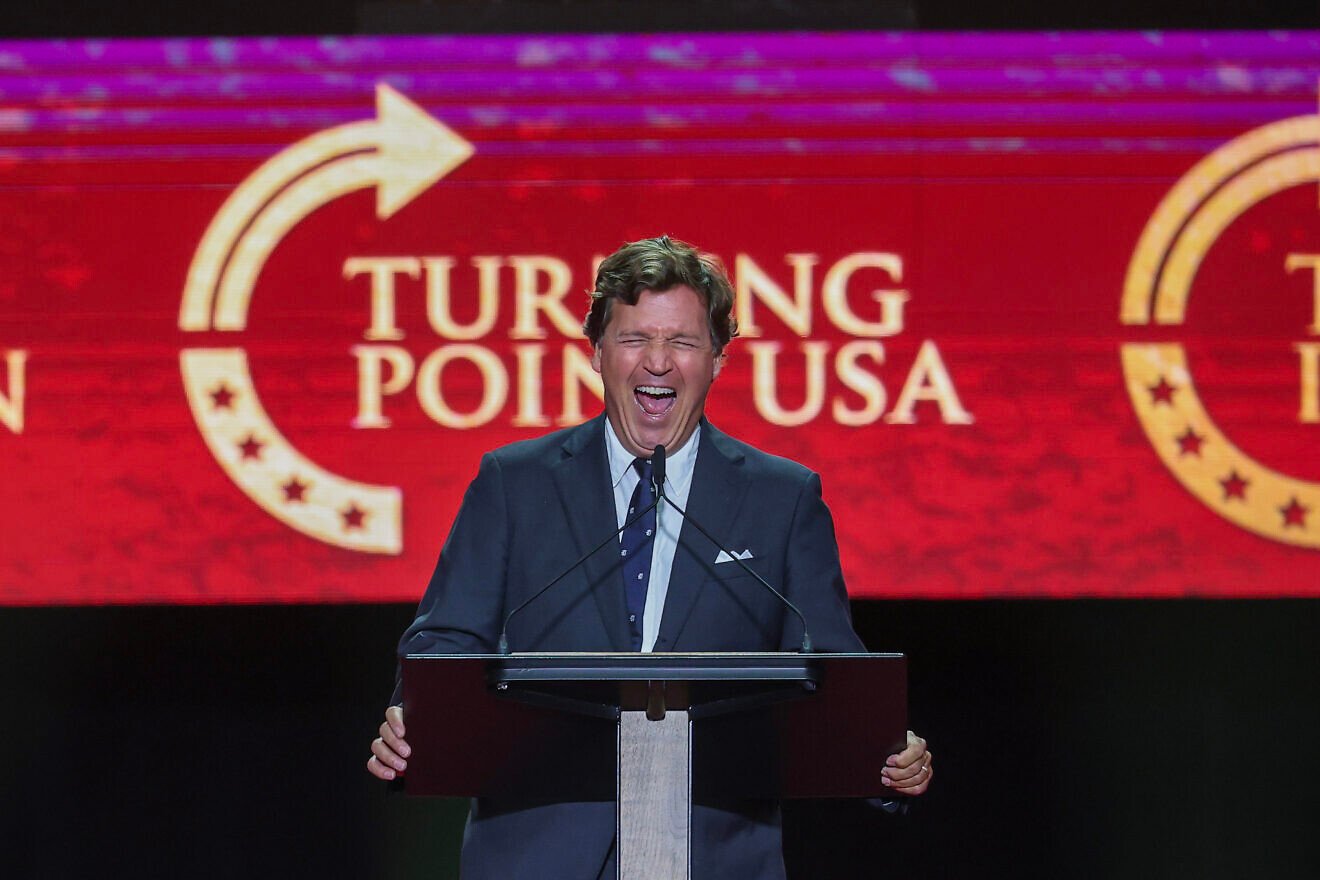
Conservative political commentator Tucker Carlson speaks during the memorial service for Charlie Kirk, the founder of Turning Point USA who was shot and killed while speaking at Utah Valley University on Sept. 10, at State Farm Stadium in Glendale, Ariz., on Sept. 21, 2025. Photo by Eric Thayer/Getty Images.

Extremists always pose a dilemma for mainstream politicians and journalists. Ideally, the best way of dealing with them is to ignore them. Hate-mongers thrive when they are able to seize the spotlight and hold onto it. Deprived of attention, they wither on the vine when they are confined to the fever swamps of the far right or left, where most people don’t seem to notice or care about them.

However, if their audiences are sufficiently large and they are treated by people who matter, whether national figures or opinion leaders, as falling within the proverbial Overton Window of acceptable discourse, ignoring them isn’t really an option.

And that is the problem with Tucker Carlson.

The former Fox News host turned podcaster doesn’t just have a massive audience of viewers of his program and followers on social media. He’s also still treated as someone who not only matters but is acceptable company to keep for the president and vice president of the United States, as well as lesser figures in the conservative ecosphere of politicians, pundits, podcasters and journalists.

That is how the ideas he promotes—whether in his own voice or by platforming them on his podcast—are, by extension, also treated as something that normal people should consider as worth debating, if not acceptable in their own right.

Platforming hate

So, when Carlson hosts an open antisemite like Nick Fuentes, who speaks of his desire to drive “Zionist Jews” out of American public life, in the course of what can only be described as a friendly conversation in which they debate how far to go in their opposition to Israel and its Jewish supporters, it’s not only deplorable. It’s an obvious sign of how antisemitism on the right is not a problem that can be dismissed as unimportant or uncommon. Rather, it’s a moment when a tipping point may be about to be reached, when it will no longer be possible to describe conservative Jew-hatred as insignificant.

That’s long been the position of most Jewish conservatives, and they weren’t wrong to think that way. In recent decades, antisemitism has been mainstreamed on the political left while remaining marginal on the right.

The intersectional left-wing base of the Democratic Party has largely adopted the mindset of fashionable academic ideology that conceives of Israel and Jews as “white” oppressors of people of color. They falsely view Israel as a product of “settler-colonialism,” instead of an expression of self-determination of the Jewish people in their ancient homeland, where they are indigenous.

That is the basis for the willingness of so many on the political left to accept the blood libels about the Jewish state committing “genocide” in the Gaza Strip that have flooded the liberal media since the Hamas-led Palestinian Arab attacks in southern Israel on Oct. 7, 2023. And it’s why Democrats are now overwhelmingly an anti-Israel party, as polls now show and as has been demonstrated in congressional votes, where most of the members of their caucuses have supported banning weapons sales to Israel. Even those Democrats who long claimed to be strong backers of the Jewish state, like Senate Minority Leader Chuck Schumer (D-N.Y.), have started to largely abandon it.

Extremists are going mainstream

The most prominent manifestation of the rising tide of Jew-hatred that has swept the globe in the last two years has emanated from the red-green alliance of Marxists and Islamists. The best American example of this is the way that New York state assemblyman Zohran Mamdani, a veteran Israel-hater and member of the Democratic Socialists of America, is on the verge of becoming the next mayor of New York City with support from mainstream Democrats.

This has stood in strong contrast to Republicans, who have become largely a lockstep pro-Israel party in the last few decades. Conservative Christians and others on the right have been ardent supporters of Israel, even eclipsing most Jewish groups in their willingness to stick with it in the face of the vilification that has rained down on it since the terrorist atrocities of Oct. 7. While the left and its leading publications have continued to mainstream and normalized antisemitism as well as the demonization of Israel, the right has stood firm with few exceptions, backing President Donald Trump’s historic pro-Israel policies.

In this way, critics of the left could argue that while antisemitism remained alive on the far right, it was marginal and contradicted by the stands of anyone who counted in the Republican Party and mainstream conservative thought.

But the tsunami of post-Oct. 7 Jew-hatred, driven by animus for Israel, has also made itself felt on the right.

Various figures who might have been characterized as part of the lunatic fringe have in recent years been gaining a toehold in the public square. Fuentes and Daryl Cooper are two such examples. And the person who is giving them a leg up is Carlson, who had them on his podcast.

Cooper is the amateur historian, Holocaust denier and antisemite hosted by Carlson last fall. Carlson praised him as the “most important popular historian of our time” and allowed him to float his bizarre theories about Winston Churchill being the villain of the Second World War, as opposed to Adolf Hitler, and that the deaths of the Jewish victims of the Holocaust were the result of logistical problems caused by the war rather than a deliberate campaign of extermination by the Nazis and their collaborators.

He was widely criticized after that episode for platforming and endorsing lies about history. Though this was far from the first time that Carlson had made clear his animus for Israel and the Jews—something that had become a staple of his program since Oct. 7—he continued to be treated as a member of the Trump family inner circle and a friend of Vice President JD Vance, as well as embraced by most of the mainstream conservative pundits as a legitimate public figure.

Demonizing Jews

But his latest show with Fuentes, in which he plays the same “I’m just asking questions” role while giving a boost to a hate-monger, makes his comfort with open antisemitism even more obvious.

The 27-year-old Fuentes is a notorious white nationalist, antisemite and Holocaust denier who has a wide following on the far right. He and his supporters are known as groypers and, as is typical of such extremists, have long been more focused on opposing mainstream and even deeply conservative Republicans because they are supporters of Israel than in opposing the left.

His opinions are unvarnished neo-Nazism, replete with dark warnings about slaughtering Jewish “devil-worshippers” once he and his followers take power. He has said “I love Hitler” and attacked “Talmudic Jews” (i.e., Jews of all denominations who practice post-biblical Judaism) as a threat to the world. He blames the Jews for everything, even alleging that Israel was responsible for the fact that he accidentally live-streamed LGBTQ pornography on his website.

He was an avowed opponent of the late conservative activist Charlie Kirk because he was a Christian Zionist. Kirk, who has taken on the reputation of a secular saint since his assassination last month, went so far as to deride the hate-monger as “vermin” and vowed never to have anything to do with him. But in an odd twist, Fuentes has seemed to gain prominence since Kirk was murdered. And that was apparently the cue for Carlson to invite him onto his program, where the two engaged in an amicable exchange for more than two hours during the course of which Fuentes vented his hate for Jews.

It is true that at one point in the conversation, Carlson contrasted his own brand of hate with that of Fuentes, saying that he liked Jews who shared his opposition to Israel, like journalist Glenn Greenwald. He claimed that his Christian beliefs led him not to seek to target Jews per se, though he regarded Israel and its supporters as a threat to America and claimed that he hated Christian Zionists like Sen. Ted Cruz (R-Texas) and Mike Huckabee, the U.S. ambassador to Israel, “more than anybody” because they are practitioners of “Christian heresy.”

That’s an astonishing confession for someone who was allowed to speak at the Kirk memorial service, where he engaged in traditional tropes of antisemitism without rebuke from the organizers or other speakers.

That is also a position that he often mentions in his newsletter, claiming that Israel and AIPAC control U.S. foreign policy while defending Qatar’s far more extensive information and influencing buying operations as exemplary—something that has fed suspicions that his efforts are being financed, either directly or indirectly, by Doha.

By treating Fuentes as a legitimate figure whose opinions ought to be known, Carlson did exactly what he attempted to do with Cooper. In platforming Fuente’s rants, replete with standard antisemitic tropes about Jews being a “stateless people and unassimilable,” as well as a unique threat to the United States that must be ended, Carlson was going beyond his previous dalliances with Jew-hatred that were mostly focused on bashing the State of Israel.

The far left and far right agree

Listen closely to their exchanges, and it becomes clear that there is little difference between that and the positions of Mamdani. While the New York mayoral candidate’s opposition to Israel and the Jews is dressed up in different language, Fuentes, Carlson and Mamdani all believe that Israel is at the center of a conspiracy against their vision of justice. 

Jew-hatred isn’t just being unkind to Jews or prejudiced against them. It’s an idea rooted in politics which alleges that the Jews are the obstacle to all that is good, in much the same way that some religions depict Satan.

For Mamdani and others among the intersectional left, Israel is the lynchpin of international settler-colonialism and racism, such as when—in the course of supporting the defunding of police in 2023—he said “that when the boot of the NYPD is on your neck, it’s been laced by the IDF.”

For Carlson and Fuentes, Israel is the obstacle to a true “America First,” or rather, “America only” foreign policy in which the United States will achieve freedom from the foreign influences that they think are dragging it under and suborning white Christian dominance.

Whether you lean left or right, if your guiding principle is that all of the evil in the world always leads back to Jews and/or Israel, then you are a textbook example of antisemitism.

Barring a turnabout in the next few days, Mamdani is about to become mayor of New York, and his allies are entrenched as the leaders of the Democratic Party with a real chance of attaining power in the coming years, while Carlson, Fuentes and fellow antisemite Candace Owens are merely prattling away on podcasts.

But that is no reason for conservatives to dismiss Carlson as insignificant.

Just as the intersectional left slowly gained traction during the “progressives” long march through educational, cultural and political institutions, so, too, could right-wing antisemites do the same—or at least make major inroads among conservatives if left unchecked.

A line must be drawn 

More to the point, so long as Carlson is welcome at the White House and other conservative pundits like Megyn Kelly not only won’t condemn him, but take umbrage at the suggestion that they are morally obligated to do so, his attitude toward antisemitism will become normalized on the right.

Trump blundered back in 2022 when he publicly dined with rapper/antisemite Kanye West and Fuentes at his Mar-a-Lago resort in Florida. He subsequently disavowed the former’s hate and said he had no idea who Fuentes was. And he characteristically refused to apologize.

Since then, he’s stayed away from that pair, but he also set an example by which others on the right have been able to continue associating with people like Carlson. In opposing calls to isolate or condemn him, some conservatives have said that they are supporting free speech and don’t want to mimic the left’s attempts to “cancel” people whose views they don’t like.

Nevertheless, unless a line in the sand is drawn between the Trump administration and other leading conservatives and such open antisemites, it isn’t going to be possible to go on pretending that there is a tangible difference between the attitudes of the right and the left when it comes to antisemitism. Anyone who isn’t willing to do that, no matter where they are on the political spectrum, must stand accused of complicity in the normalization of Jew-hatred.


Jonathan S. Tobin is editor-in-chief of the Jewish News Syndicate, a senior contributor for The Federalist, a columnist for Newsweek and a contributor to many other publications. He covers the American political scene, foreign policy, the U.S.-Israel relationship, Middle East diplomacy, the Jewish world and the arts. He hosts the JNS “Think Twice” podcast, both the weekly video program and the “Jonathan Tobin Daily” program, which are available on all major audio platforms and YouTube. Previously, he was executive editor, then senior online editor and chief political blogger, for Commentary magazine. Before that, he was editor-in-chief of The Jewish Exponent in Philadelphia and editor of the Connecticut Jewish Ledger. He has won more than 60 awards for commentary, art criticism and other writing. He appears regularly on television, commenting on politics and foreign policy. Born in New York City, he studied history at Columbia University.


Zawartość publikowanych artykułów i materiałów nie reprezentuje poglądów ani opinii Reunion’68,
ani też webmastera Blogu Reunion’68, chyba ze jest to wyraźnie zaznaczone.
Twoje uwagi, linki, własne artykuły lub wiadomości prześlij na adres:
webmaster@reunion68.com