Archives

Hamas Expands Terror Operations Across Europe Amid Gaza War, Exploiting Criminal Networks and Weapons Caches


Hamas Expands Terror Operations Across Europe Amid Gaza War, Exploiting Criminal Networks and Weapons Caches

Ailin Vilches Arguello


Palestinian Hamas terrorists stand guard on the day of the handover of hostages held in Gaza since the deadly Oct. 7, 2023, attack, as part of a ceasefire and a hostages-prisoners swap deal between Hamas and Israel, in Rafah in the southern Gaza Strip, Feb. 22, 2025. Photo: REUTERS/Hatem Khaled

Hamas has expanded its terrorist operations beyond the Middle East, exploiting a long-established network of weapons caches, criminal alliances, and covert infrastructure that has been quietly built across Europe for years, according to a new report.

Earlier this month, West Point’s Combating Terrorism Center released a study detailing how Hamas leaders in Lebanon have directed operatives to establish “foreign operator” cells across Europe, collaborating with organized crime networks to acquire weapons and target Jewish communities abroad.

“Hamas has never carried out a successful terrorist attack outside of Israel, the West Bank, or Gaza — but not for lack of plotting,” Matthew Levitt, a senior fellow and counterterrorism expert at the Washington Institute for Near East Policy, wrote in the report.

“European and Israeli officials fear that Hamas has taken the decision to go global and carry out plots abroad, marking a significant departure from the group’s prior modus operandi,” he continued.

For example, the study cited a failed Hamas plot in which an alleged operative in Germany traveled to Lebanon to “receive orders from the Qassam Brigades [Hamas’s military wing] to set up an arms depot for Hamas in Bulgaria,” part of a broader, multi-year effort to cache weapons across Europe.

However, German authorities foiled the plot, detaining four Hamas members in late 2023 on suspicion of planning attacks.

Earlier this year, the four suspects went on trial in Berlin in what prosecutors described as Germany’s first-ever case against members of the Palestinian terrorist group.

According to German officials, the weapons “were intended to expand Hamas’s activities in Europe.”

During the investigation, German authorities also found evidence on a defendant’s USB device showing that the Hamas operatives were planning attacks on specific sites in Germany, including the Israeli embassy in Berlin.

Similar weapons depots were established in Denmark, Poland, and other European countries, with Hamas members repeatedly trying to retrieve them to support their operations and plan potential attacks.

The newly released report identified Hamas’s operational headquarters in Lebanon as the command center for its activities abroad, with senior leaders directly managing plots across Europe.

“Even before Oct. 7, Hamas leaders periodically threatened to carry out attacks abroad,” Levitt explained in his report, referring to the Iran-backed Islamist group’s invasion of and massacre across southern Israel in 2023.

“The increased Hamas terrorist activity abroad correlates to the establishment of a Hamas operational component in Lebanon driven by senior Hamas leaders,” he said, noting that such network “developed over time, as senior Hamas leaders left Turkey and Qatar and later made their way to Lebanon.”

The study also reported that Hamas operatives established alliances with European organized crime networks to secure weapons and logistical support for their operations.

For example, another major plot was foiled earlier this year, when a member of the Danish, banned Loyal to Familia (LtF) gang was indicted for purchasing Chinese drones intended for attacks in Denmark or Sweden. Local authorities later revealed that the gang had been working with Hamas, which has ruled Gaza for nearly two decades.

This month, German authorities foiled another planned terrorist attack, arresting three suspects on the eve of Yom Kippur who were preparing to target Jewish institutions.

According to the report, analysts remain uncertain whether these plots signal a permanent strategic shift or reflect a short-term tactical adjustment in response to the Gaza war.

“It remains unclear how decisions about such operations are made and if this includes input and approval from a broad range of Hamas leadership or just a select few,” Levitt said.

Given the loss of Hamas’s leadership and the resulting decentralized decision-making, the report noted that external operations may now be possible where they were previously constrained by internal disagreements.

“With Hamas operational capabilities in Gaza severely degraded, and the group under pressure from both Israeli and Palestinian Authority security forces in the West Bank, the group’s military commanders may find that acts of international terrorism carried out by small cells … may be a more central component of Hamas’s attack strategy,” Levitt concluded.


Zawartość publikowanych artykułów i materiałów nie reprezentuje poglądów ani opinii Reunion’68,
ani też webmastera Blogu Reunion’68, chyba ze jest to wyraźnie zaznaczone.
Twoje uwagi, linki, własne artykuły lub wiadomości prześlij na adres:
webmaster@reunion68.com


Izrael zbombardował Gazę. Obie strony oskarżają się nawzajem o złamanie rozejmu. Co dalej?

Palestyńczyk płacze obok ciała mężczyzny, który – według medyków – został zabity podczas izraelskiego ataku z 28 października. (Fot. REUTERS/Stringer)


Izrael zbombardował Gazę. Obie strony oskarżają się nawzajem o złamanie rozejmu. Co dalej?

Maciej Czarnecki


Według kontrolowanej przez Hamas agencji obrony cywilnej wtorkowe uderzenia Izraela zabiły co najmniej 33 osoby.

Seria ataków powietrznych na miasto Gaza i inne cele w enklawie zdaniem amerykańskiego wiceprezydenta J.D. Vance’a nie przekreśla wynegocjowanego przez Amerykanów rozejmu.

– Zawieszenie broni się utrzymuje. To nie oznacza, że tu czy tam nie będzie niewielkich starć

– oświadczył Vance.

– Wiemy, że Hamas albo ktoś inny w Gazie zaatakował [izraelskiego] żołnierza. Spodziewamy się, że Izraelczycy będą w takich sytuacjach odpowiadać, ale mimo to pokój [wypracowany przez] prezydenta będzie się utrzymywał – przekonywał.

Pomimo rozejmu w Gazie giną cywile

Odkąd rozejm wszedł w życie (11.10), w Gazie faktycznie dochodzi czasem do ograniczonych starć. Poprzednie uderzenie z powietrza Izrael przeprowadził 19 października w odwecie za śmierć dwóch izraelskich żołnierzy w Rafah, o którą obwinił Hamasowców. Według kontrolowanych przez Hamas władz w Gazie podczas ataku zginęło wówczas 45 osób.

Z kolei na skutek wtorkowych ataków (28 października) – wg władz w Gazie — zginęły 33 osoby, w tym kobiety i dzieci. Grupa od dawna wykorzystuje cywili jako żywe tarcze, umieszczając wśród nich swoich uzbrojonych ludzi i sprzęt wojskowy.

Doniesienia o zabitych przynajmniej częściowo potwierdzają źródła w szpitalach. Rzecznik agencji obrony cywilnej w Gazie referuje BBC, że pod gruzami uwięzione są kolejne osoby, co sprawia, że liczba ofiar może jeszcze wzrosnąć. Ratownicy starają się je wydobyć.

Reporterzy agencji Associated Press i świadkowie słyszeli odgłosy eksplozji w różnych częściach strefy, nie tylko samym mieście Gazy, o którym najpierw doniosły światowe media. Izraelskie bomby spadły na budynki mieszkalne także w Beit Lahia, al-Bureij, Nuserat i Chan Junis.

Dlaczego Izrael zaatakował w Gazie? Hamas oskarża Izrael o złamanie rozejmu

Izraelski minister obrony Israel Katz wytłumaczył, że bombardowania były odpowiedzią na zaatakowanie we wtorek przez Hamasowców izraelskich żołnierzy oraz złamanie warunków rozejmu, jeśli chodzi o zwracanie ciał zabitych zakładników. Ostrzegł, że Hamas zapłaci za to “wielokrotnie”.

Według izraelskich mediów żołnierze w Rafah przy granicy z Egiptem mieli zostać ostrzelani we wtorkowe popołudnie pociskami przeciwpancernymi i przez snajperów. Hamas twierdzi, że nie ma z tym nic wspólnego.

Jeśli chodzi o zwrot ciał, palestyńska grupa miała dostarczyć w poniedziałek wieczorem szczątki mężczyzny, który nie był jednym z 13 zabitych zakładników, na których oczekuje Izrael (konkretnie Ofira Tzarfatiego, którego fragment zwłok Izrael odzyskał już w listopadzie 2023 roku). Przedtem urządziła “fejkowe wydobycie” jego szczątków na wschodzie miasta Gaza, na które zaproszono pracowników Czerwonego Krzyża. Organizacja później potępiła w oświadczeniu działania Hamasu. Izraelskie wojsko opublikowało nagranie z drona, które ma pokazywać całą tę maskaradę.

Strefa Gazy po ataku Izraela. 29 października 2025 roku. Fot. REUTERS/Dawoud Abu Alkas

Hamas zapewnił w oświadczeniu, że nadal chce przestrzegać rozejmu i oskarżył Izrael o jego złamanie. Jednak wojskowe skrzydło grupy zapowiedziało, że opóźni przekazanie wydobytego we wtorek ciała jednego z zakładników w odpowiedzi na “naruszenia” ze strony Izraela.

Dlaczego Hamas nie oddaje ciał zakładników?

Porozumienie o zawieszeniu broni zakładało, że Hamas przekaże 48 żywych i martwych zakładników w ciągu pierwszych 72 godzin.

Hamasowcy przekazali wszystkich 20 żywych w zamian za 250 palestyńskich więźniów i 1718 zatrzymanych w Gazie. Dotąd dostarczyli też 15 ciał zakładników (13 Izraelczyków, a także porwanych Nepalczyka i Tajlandczyka), a od Izraela dostali ciała 195 Palestyńczyków. Twierdzą, że mają trudności ze zlokalizowaniem i wydobyciem pozostałych ciał po zmasowanych izraelskich bombardowaniach, i że potrzebują na to więcej czasu. Izraelczycy przekonują natomiast, że tak naprawdę Hamas dobrze wie, gdzie znajdują się ciała.

“Do niektórych z tych ciał trudno dotrzeć, ale inne mogliby zwrócić teraz i z jakiegoś powodu tego nie robią”, zawyrokował w sobotę na swojej platformie Truth Social Donald Trump, zapewniając, że “przygląda się bardzo uważnie” temu procesowi.

Nawet jeśli ostatnie ataki Izraela i poczynania Hamasu w sprawie ciał zakładników nie przeszkodzą w utrzymaniu generalnego zawieszenia broni, do zakończenia konfliktu i realizacji kolejnych punktów planu pokojowego Trumpa jest jeszcze daleko.


Redagowała Ludmiła Anannikova


Zawartość publikowanych artykułów i materiałów nie reprezentuje poglądów ani opinii Reunion’68,
ani też webmastera Blogu Reunion’68, chyba ze jest to wyraźnie zaznaczone.
Twoje uwagi, linki, własne artykuły lub wiadomości prześlij na adres:
webmaster@reunion68.com


Mossad names IRGC terrorist behind global plots targeting Jews, Israelis


Mossad names IRGC terrorist behind global plots targeting Jews, Israelis

JNS Staff


Sardar Amar was said to have been responsible for attempted terror plots that were thwarted in Greece, Australia and Germany during 2024 and 2025.

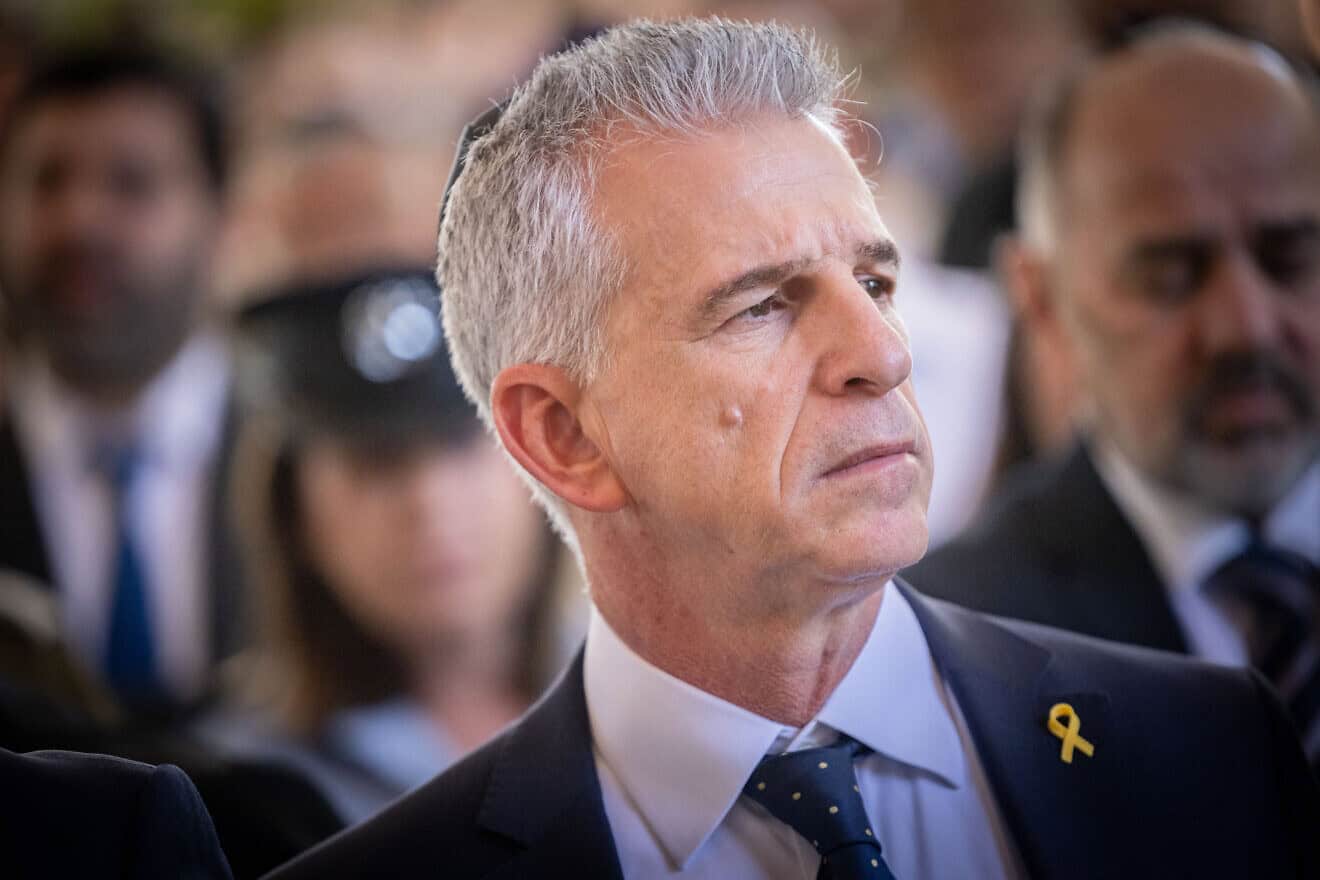
Mossad Director David Barnea attends a state ceremony at the Mount Herzl Military Cemetery in Jerusalem marking the Hebrew calendar anniversary of Oct. 7, 2023, attacks, on Oct. 27, 2024. Photo by Chaim Goldberg/Flash90.

Israel’s Mossad spy agency on Sunday revealed the name of an Iranian commander it said was responsible for coordinating attempted terrorist attacks targeting Jews and Israelis across the globe over the past 24 months.

Sardar Amar, a top commander in Iran’s Islamic Revolutionary Guard Corps (IRGC), working directly under Quds Force chief Esmail Ghaani, was said to have been responsible for attempted terror plots that were thwarted in Greece, Australia and Germany during 2024 and 2025.

“Since the events of Oct. 7, Iran has expanded its efforts to harm Israeli and Jewish targets worldwide,” Israel’s Prime Minister’s Office said in a statement on behalf of the intelligence agency, referencing the Oct. 7, 2023 Hamas-led attacks that ignited a seven-front war in the region.

“Thanks to intensive activity by the Mossad, together with intelligence and security agencies in Israel and abroad, dozens of terrorist plots advanced by Iran were thwarted,” according to the statement.

Under Amar’s leadership, “a significant mechanism was established to promote attacks against Israeli and Jewish targets in Israel and abroad,” according to the PMO. However, “the first-ever exposure of the terror network as responsible for the attempted attacks in Greece, Germany and Australia demonstrates the mechanism’s failed efforts, as well as undermines Iran’s attempts to operate secretly under the radar.”

Describing the network’s modus operandi as “terror without Iranian fingerprints,” it said that Amar’s work was highly compartmentalized and employed foreign operatives, including criminal organizations.

In response to the Mossad’s work with counterparts around the world, Australia expelled the Iranian ambassador to Canberra, while Germany moved to reprimand Tehran’s diplomatic envoy to Berlin, the statement noted.

These “unprecedented measures” intended to convey a “clear message of zero tolerance for terrorist activity on their soil,” according to the statement.

“For years, the Iranian regime has viewed terrorism as a tool to exact a price from Israel by harming innocent people around the globe, without paying military, diplomatic, or economic costs. Operating under this logic, the terror organizations work to maintain plausible deniability and disconnect between their violent activity and Iran,” it added.

“The Mossad for Intelligence and Special Duties, together with its partners in Israel and around the world, will continue to act resolutely to thwart terror threats from Iran and its proxies and to protect the citizens of Israel and Jewish communities worldwide,” the statement concluded.

The Islamic Republic remains the No. 1 source of terrorism against Israelis and Jews worldwide, directly and through its proxies, Israel’s National Security Council said in a travel warning issued on Sept. 14.

“Iranian motivation is growing in light of the severe blows it suffered in the framework of ‘Operation Rising Lion’ and the growing desire for revenge,” it reported, referring to the 12-day Israel-Iran war in June.

The statement noted that dozens of Iranian-directed plots were foiled over the past year, some of which had targeted Israeli missions abroad, former senior Israeli officials and various Israeli and Jewish targets.


Zawartość publikowanych artykułów i materiałów nie reprezentuje poglądów ani opinii Reunion’68,
ani też webmastera Blogu Reunion’68, chyba ze jest to wyraźnie zaznaczone.
Twoje uwagi, linki, własne artykuły lub wiadomości prześlij na adres:
webmaster@reunion68.com


12-Year-Old Jewish Boy Brutally Attacked in Vienna, Mother Says School Ignored Pattern of Antisemitic Harassment


12-Year-Old Jewish Boy Brutally Attacked in Vienna, Mother Says School Ignored Pattern of Antisemitic Harassment

Ailin Vilches Arguello


A pro-Hamas demonstration in Vienna. Photo: Reuters/Andreas Stroh

Austrian police have launched an investigation after a 12-year-old Jewish boy was brutally attacked by a group of classmates on his way home from school in Vienna, sparking outrage within the country’s Jewish community and renewed calls for swift action against rising antisemitism.

On Tuesday, the boy reportedly had a dispute with a classmate earlier at school. As he was heading home, a group of students followed and harassed him.

According to the boy’s mother, he was repeatedly kicked and punched by his classmates, who also shouted antisemitic slurs and threats during the attack.

“You Jew, if you say anything, I’ll tell everyone you’re Jewish – then you’ll see what happens to you,” one of the assailants reportedly told him, according to the Austrian outlet oe24

The victim was later taken to a hospital with bruises and other injuries across his body.

Shortly after the incident, the boy’s mother filed a police report, prompting Vienna authorities to launch an investigation. As of Friday afternoon, no arrests had been made.

The boy’s mother said this was not the first time her son had been targeted in an antisemitic attack, accusing the school of repeatedly covering up such incidents.

Now, she is urging authorities to transfer her son if the school continues to “sweep under the rug” what she describes as a persistent pattern of antisemitic harassment.

According to her testimony, her son was also physically attacked earlier this year when a female classmate choked him and tried to push him down the stairs, leaving him with a neck injury that required a brace for several days.

The boy has also been subjected to sexualized insults, threats, and blackmail after photos of him were posted on TikTok without his consent.

Despite repeated complaints, the boy’s mother said the school took no effective action, even allowing chants of “from the river to the sea” to echo through the halls without any teacher intervention.

“From the river to the sea, Palestine shall be free” is a popular slogan among anti-Israel activists that has been widely interpreted as a genocidal call for the destruction of the Jewish state, which is located between the Jordan River and the Mediterranean Sea.

“The school failed to protect him,” the mother said. “Only after things escalated did we decide to file a complaint with the police.”

Austria’s Jewish community has faced a troubling surge in antisemitic incidents and anti-Israel sentiment since the Hamas-led invasion of and massacre across southern Israel on Oct. 7, 2023.

Jewish leaders have consistently called on authorities to take swift action against the rising wave of targeted attacks and anti-Jewish hate crimes they continue to face.


Zawartość publikowanych artykułów i materiałów nie reprezentuje poglądów ani opinii Reunion’68,
ani też webmastera Blogu Reunion’68, chyba ze jest to wyraźnie zaznaczone.
Twoje uwagi, linki, własne artykuły lub wiadomości prześlij na adres:
webmaster@reunion68.com


‘If I capitulated, there’d be no Israel,’ Netanyahu says


‘If I capitulated, there’d be no Israel,’ Netanyahu says

Gabe Groisman


In a one-on-one interview in his office, the Israeli prime minister puts Hamas on notice, saying the Jewish state can do things the easy or hard way.
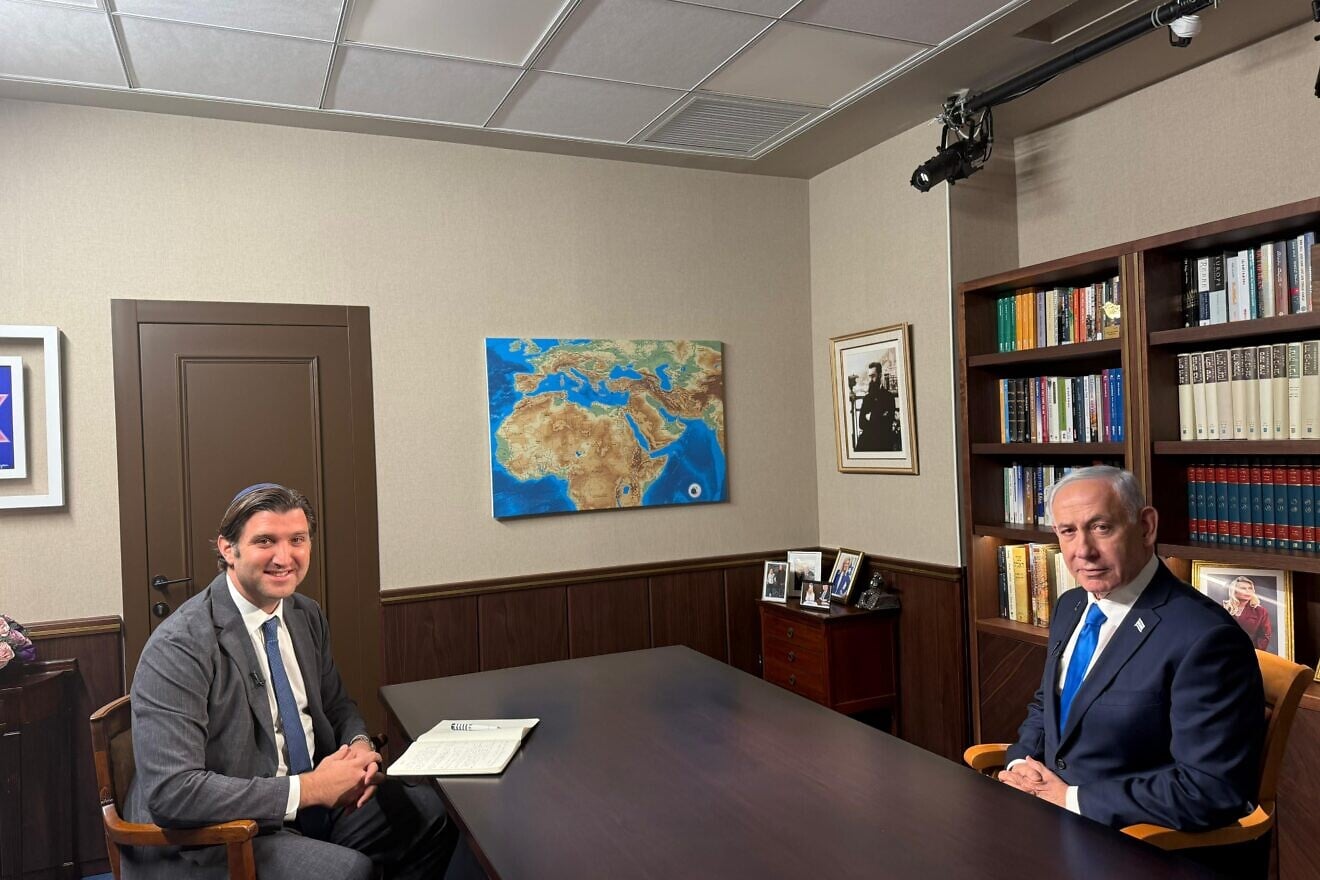
Israeli Prime Minister Benjamin Netanyahu speaks with Gabe Groisman in the Prime Minister’s Office in Jerusalem, Oct. 26, 2025. Photo by Yona Groisman.

If he had not withstood intense international and domestic pressure during the seven-front war against Iran and its proxies, particularly Hamas, “there would be no Israel,” Israeli Prime Minister Benjamin Netanyahu said on the Standpoint With Gabe Groisman podcast produced by JNS in his first in-depth interview since the Oct.10 Gaza ceasefire.

The Israeli premier said that the Jewish state, with U.S. help, “smashed the Iran axis,” reshaped the Middle East and paved the way to “finish off” Hamas.

“When you’re in the eye of the storm, you have to decide if you’re going to be swept by the storm or you’re going to be a rock in the storm,” the Israeli premier told me on Sunday in his Jerusalem office. Had Israel been “swept in the storm,” he added, it “would have suffered an enormous defeat, and America would have suffered an enormous defeat.”

“It would have been a triumph for the Iran axis if we accepted all the pressures that were put on us, both from abroad and from inside, domestic pressure by the deep state, by the left and others, to stand still,” Netanyahu said, “basically surrender to Hamas demands.”

Had the Jewish state yielded, Hamas leader Yahya Sinwar and Hezbollah chief Hassan Nasrallah would still be alive, Bashar Assad would still run Syria, and the Iranians would still “lord it” over the region, “thinking that they’re going to have, in two seconds or in two minutes, atomic bombs to annihilate everyone inside,” according to Netanyahu.

“The reason I could withstand the storm is that I knew that if I capitulated to it, there would be no Israel,” he said. “It’s as simple as that, and when you’re in a leadership position, you have to do what is not only what is right but what is absolutely necessary. So I had no qualms about that.”

The Trump plan

Addressing the proposed international force slated to oversee Gaza’s stabilization as part of U.S. President Donald Trump’s plan, Netanyahu put Hamas on notice.

“We’re willing to give it a try, but if not, as President Trump has said, it’s going to be done one of two ways,” he said. “Either the easy way, with the international force, or the hard way, with Israel, and it’ll be done.”

Netanyahu said that Jerusalem would only accept participants in the international stabilization mission that are “acceptable to Israel,” suggesting that he refuses to repeat what he calls the “failure of the U.N. forces that were put into place in Lebanon after 1978.”

.


Israeli Prime Minister Benjamin Netanyahu talks tome Gabe Groisman on Oct. 26. 2025.

.

Netanyahu declined to name the nations that might be part of the acceptable list.

“We’re talking to them right now, and I think it’s better that we talk to them confidentially,” he said. “I think you can also guess which nations are not going to be there.”

The Israeli premier insisted that Israel emerged “a lot stronger” as a result of the Oct. 7 war, now officially called the War of Redemption.

“Not on Oct. 7, when we had this horrible massacre,” he said. “But if you look at where Israel was before the Oct. 7 attack and where it is today, we’re actually stronger.”

“We are rightly considered the strongest power in the Middle East,” he said. “We’ve smashed the Iran axis. We’ve exposed Iran for not being the superpower and the overbearing power that intimidated the entire region and beyond.”

Asked why the Trump initiative to end the Gaza war was “the right deal at the right time,” Netanyahu said that Israel had two goals.

“We wanted first to get all our live hostages back,” he said. “Nobody believed we could. We did, but everybody assumed that we would only get them on Hamas’s terms, which means get out of Gaza, allow them to reorganize, allow them to rearm, allow them to make Gaza an enormous threat to Israel again. And I wouldn’t do that.”

Instead, the 20 living hostages held in Gaza were released on Oct. 13 “in one swoop and with Israel staying in, so that we can enforce, if necessary, disarmament and demilitarization,” Netanyahu said.

Hammered out with Netanyahu’s close confidant and top negotiator, Ron Dermer, the Israeli strategic affairs minister, the agreement was a product of intense military pressure and high-stakes diplomacy, Netanyahu said.

“We went into Gaza City and put the knife—the military knife—to Hamas’s throat in their last stronghold, Gaza City, and President Trump and his team, along with Ron Dermer, put together a 20-point plan, which effectively isolates Hamas,” he said. “Hamas wanted to isolate us. We isolated them and got the deal.”

“If we don’t finish off Hamas, it’ll cast a shadow for sure,” he said. “So we intend to finish them off.”

Expanding the Abraham Accords

Netanyahu said that the war strengthened both Israel’s regional standing and the 2020 Abraham Accords, noting that Arab states “stuck with Israel” throughout the war and that new normalization efforts are advancing quietly.

He recalled that one of the reported reasons that Hamas launched the Oct. 7 massacre was to block Saudi Arabia from signing on to the Abraham Accords. “Are we going to see Saudi Arabia back at the table soon with Israel? Well, I hope so,” he said.

“I’d rather not engage in public proclamations. I don’t think that does any useful thing,” he said. “I think either there is a mutual interest or there isn’t, and I think there is, actually, stronger than ever.”

Far from being derailed by the Gaza war, the Abraham Accords were reinforced by it, according to Netanyahu. “We have an opportunity to expand them to other countries,” he said, cautioning skeptics to avoid the distraction of “surface noise.”

“I’m telling you from below the surface that there are important advances that we’re making. I hope they succeed,” he said. “But I think they have a chance to succeed because of the emergence and predominance of Israeli power.”

Netanyahu said that Turkey and Qatar must be confronted with the question, “Are you on our side or are you not on our side?”

“You shouldn’t be swept away by naivete. If you can get them on your side, completely good. If not, recognize who you’re dealing with and don’t be swept away with rose-colored glasses,” he said.

Netanyahu described Turkey as “very hostile to Israel and to Zionism in recent years” and said that Qatar is “involved on U.S. campuses” and its channel Al Jazeera is “poisoning the minds of billions.”

Still, he credited Doha for its role in the Trump deal.

“I’ve said this to the Qataris. I said, ‘I appreciate your help in getting the hostages out, but I also recognize the things that we are very concerned with, and we’d like you to move away from those and become a positive partner,’” he said.
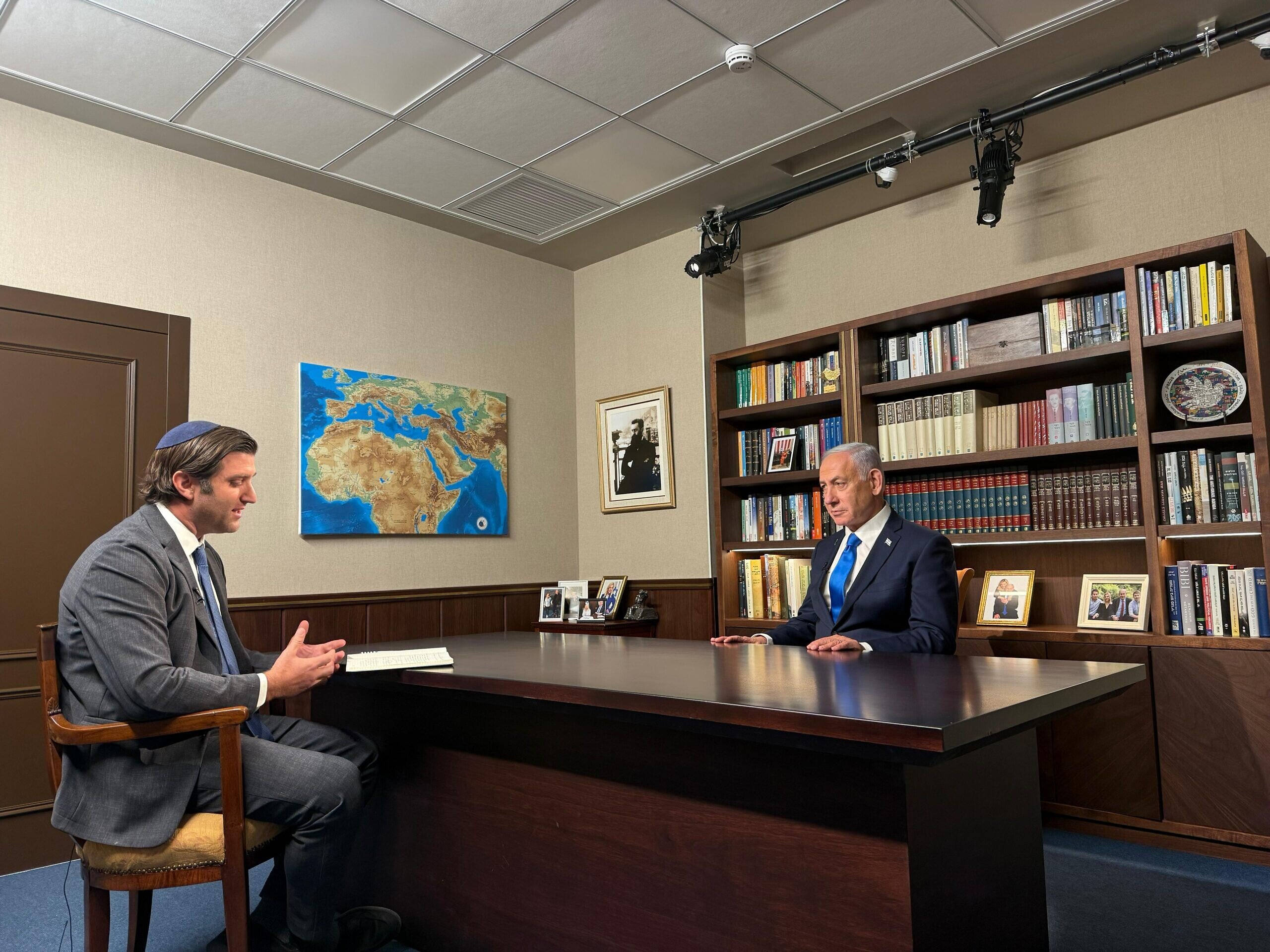
Israeli Prime Minister Benjamin Netanyahu speaks with Gabe Groisman in the Prime Minister’s Office in Jerusalem, Oct. 26, 2025. Photo by Yona Groisman.

U.S.-Israel alliance

The prime minister credited Trump with being “a full partner” and giving Israel the strategic space to finish what it started.

The U.S. president’s recent visit to the Knesset “swept all Israelis and many around the world,” Netanyahu said. He described Trump’s speech as “a fusion of two things that was absolutely remarkable and unforgettable.”

It communicated both “the depth of the alliance” between Israel and the United States and the “strength of America under President Trump coming back to the world scene, becoming a dominant power, shaping events and helping change the Middle East together.”

For Netanyahu, Trump’s address carried a personal message too.

“He told me he was surprised by the strength of the support for me, because he’s reading these fake polls that are coming out in our so-called mainstream media,” the prime minister said. “He told me this. ‘What I saw in the Knesset was massive support for you, Bibi.’”

The Israeli premier also addressed the complicated texture of U.S.–Israel relations and the periodic tensions that arise between even close allies. He pushed back against claims that one side dominates the other.

“We have a great alliance of partners,” he said. “I was in Washington a few weeks ago, and they said, ‘Netanyahu controls America and America’s defense policy.’ And then it flipped. ‘America controls Netanyahu, and it controls Israel’s defense policy.’ Neither argument, neither statement, is true.”

“Israel is an independent country,” he said. “The United States is definitely an independent country, and we are partners. We’re not a proxy. We’re not a subservient power.”

“We’re an independent state, and we fashion our own security policy and follow it,” he said. “We defend ourselves by ourselves, we decide what is dangerous for us, and we act accordingly.”

Netanyahu stressed that Israel does not seek permission for preemptive strikes.

“If you attack us, we attack you immediately back. But if you prepare an attack, we go and wipe you out. We just did in Gaza, as we do in Lebanon,” he said. “We’re not asking permission from our American friends. We just tell them that’s what we’re doing, and that’s fine.”

“That’s the way it should be,” he added.

For Netanyahu, Israeli independence reinforces rather than undermines the alliance. “What’s good for America,” he told me, is “a strong and independent Israel, because that’s the anchor of security in the Middle East.”

“If Israel weren’t here—a stronger Israel wasn’t here—there wouldn’t be a Middle East,” he said. “It would collapse under Iran in two seconds, and they know that.”
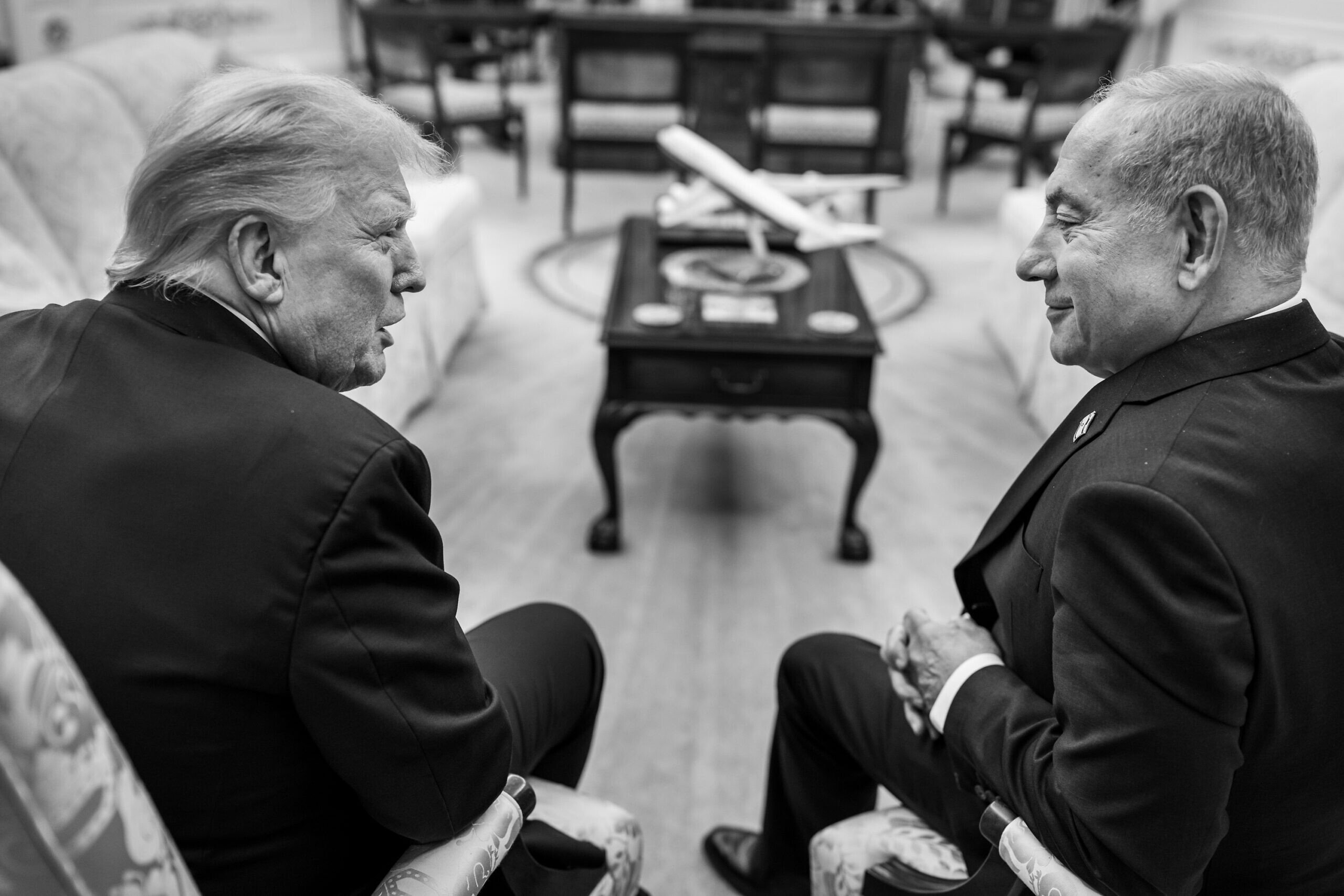
President Donald Trump speaks with Israeli Prime Minister Benjamin Netanyahu in the Oval Office after a joint press conference announcing the U.S. peace plan for Gaza, Sept. 29, 2025. Photo by Daniel Torok/White House.

Support from home

Asked what toll two years of war, political strife and unrelenting international pressure have taken on him, Netanyahu said, “I had great support first from my family, first and foremost from my wife, who’s been my rock through thick and thin.”

He added that “equally,” he has received support from “the soldiers of Israel and the people of Israel.”

The “vast majority of the people and almost every single soldier I met during the war,” told him, “Prime Minister, keep going. Don’t stop. Don’t surrender,” Netanyahu said.

“You’re serving a larger cause and a larger purpose. It goes back to the millennium dream of not only establishing a Jewish state, an independent Jewish state in our ancient homeland, here in Israel, in Judea, Samaria and the rest of the land of Israel,” he said.

“It goes back to the fact that our generation now is charged with preserving that dream, keeping it going, assuring its vitality,” Netanyahu said.

“I think I had great support,” he said. “You may have thought that I was isolated, but I didn’t feel that way. I felt that I had the best support that any leader can hope for.”


Steve Linde contributed to this report.


Zawartość publikowanych artykułów i materiałów nie reprezentuje poglądów ani opinii Reunion’68,
ani też webmastera Blogu Reunion’68, chyba ze jest to wyraźnie zaznaczone.
Twoje uwagi, linki, własne artykuły lub wiadomości prześlij na adres:
webmaster@reunion68.com