Iyad Abu Shakra
Following the wave of terrorist attacks on Friday, June 26 in France, Kuwait, and Tunisia, Lebanese journalist Iyad Abu Shakra wrote in the London-based Saudi daily Al-Sharq Al-Awsat that crimes have been repeatedly carried out by Muslims for years while Muslims stand idly by doing nothing. He criticized Muslims who supposedly condemn extremism and the targeting of innocents but who in reality do not recognize that extremism is alive and well in their midst. Abu Shakra called on Muslims to acknowledge the problem and to find a fundamental solution for it, and not to ignore its existence or make excuses for it.
In his article, Abu Shakra quoted from a January 2015 article titled “We Are All ISIS” by Lebanese journalist Nadim Koteich following the attack on the satirical French magazine Charlie Hebdo. Like Abu Shakra, Koteich, a Shi’ite known for his opposition to Hizbullah, criticized those who excuse attacks by ISIS and alsop those who claim that the perpetrators do not represent the true Islam. He argued that Muslims should acknowledge that extremist Muslims who carry out murderous attacks are relying on sacred Islamic texts.
The following are excerpts from the articles by Abu Shakra and Koteich:[1]
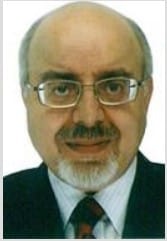
Iyad Abu Shakra (image: aawsat.net)
Iyad Abu Shakra: For Years, Crimes Have Been Carried Out In The Name Of Islam As Muslims Stand Idly By
“Last Friday was a sorrowful and sad day in the month of Ramadan. But making do with expressions of sadness, condemnation, and statements calling to preserve national unity will no longer suffice. All this does no good and is meaningless, when time and again mosques are attacked and [the perpetrators] allow themselves to murder innocents.
“Some of us could explain the blasts at the Imam Ja’far Al-Sadiq mosque in Kuwait [by pointing to] the escalation of sectarian tensions in the Gulf, after the Khomeinist revolution [in Iran] sowed the spirit of extremism, and therefore all of us [today] reap the ideology of Al-Qaeda and the horrors of ISIS. What happened in Tunisia could be attributed to exaggerated bitterness that has built up among devout Tunisian circles in response to the secularization era of [Tunisian president] Bourguiba [1957-1987]… As for the newest criminal action in France – those who defend [the perpetrators] in vain will insist that this is a natural response to the cultural foreignness [felt by Muslims in France] and to the racial and religious discrimination [they experience]…
“Undoubtedly, each of the three crimes, that occurred on the same day on three [separate] continents, have unique local characteristics. However, the common thread among all three is greater and more serious, and is actually the root of the matter, while all the rest is secondary. Muslims, especially the Arabs among them, now have a choice: Either ignore the bitter truth and enable the disease to spread until it kills, or choose to acknowledge its existence in preparation for fundamentally dealing with it.
“The three crimes are part of one comprehensive whole: They are part of a series of criminal acts that have been taking place in the name of ‘the true Islam’ throughout the world for the past several years, and that until now have not met with decisive responses – even though they involve Muslims in a real war with the entire world…
“The murder of innocents in Kuwait, on the beaches of Tunisia, and in France is no different [from the crimes] that were and are still being committed by organizations like ISIS, Al-Qaeda, [Jabhat] Al-Nusra, Boko Haram, Al-Hashd Al-Sha’abi [Shi’ite militias in Iraq], Hizbullah, the Abu Fadl Al-‘Abbas Brigades, Al-Shabab in Somalia, the Taliban, and all manner of armed Islamic groups, whether Sunni or Shi’ite, in the name of ‘the true Islam.’
“This reminds me that in January, following the murderous attack on the satirical French magazine Charlie Hebdo, and the stream of Arab and Muslim condemnations claiming that it ‘does not represent true Islam,’ my colleague [Lebanese journalist] Nadim Koteich published a spot-on analysis… He asked in his piece: ‘So what is this true Islam that those who condemn crimes committed in the name of Islam are supposed to be bestowing upon us?…’ After providing several examples of crimes committed by Sunni and Shi’ite extremists, he said that the perpetrators ‘all belong to the true Islam…’
“[He added:] ‘It doesn’t matter which Islamic text, whether it is a Koranic or jurisprudential text, or a text recounting the sayings of the Prophet Muhammad; the killers do not kill for nothing, they kill in the name of books, fatwas, ayahs, and age-old tradition. All of these things are inseparable parts of true Islam. They will remain Muslims as long as they pronounce the shahada and as long as the religious institution doesn’t dare to modernize the criteria for being a Muslim. ‘These killers are us. They are our religion at its most extreme. They are our true Islam taken to its furthest extent and they are not beyond the scripture.’
“There is a true crisis in the way we think, which is the cause of our evil acts and the fact that we move from one defeat to another, and to destruction. This crisis has contributed in one way or another to the negative international attitude towards our problems. This is because the international community does not have to accept our perceptions if they contradict its own.
“How can we demand that the international community stand with us in the name of respecting human rights and defending citizens when we produce people and groups [who claim] a monopoly on faith, religion, good deeds, legitimacy, and nationalism? What gives us the right to call on the countries of the world to intervene for our interests and ease our suffering if we not only act against [those countries], but also act against our own peoples… when we kill each other, and accuse each other of being infidels and traitors[?] By what logic do we believe that our extremism is attractive to others and that our tendency to marginalize and reject the other can leave [others] neutral?
“I reject the attitude that tries to understand ‘circumstances’ – that is, [as an] action [that sparked] a reaction… The time for excuses and apologies is over. It is time for a fundamental solution.”
Nadim Koteich: The ISIS Murderers Belong To Islam, Rely On Islam’s Texts
The following are excerpts from an English version of Nadim Koteich’s article, published January 13, 2015 on the “Now Lebanon” website:[2]
“These killers are us. They are our religion at its most extreme. Condemnations are no longer sufficient. They were never enough in the first place, and they never bore any weight except as an entry point to more advanced steps.
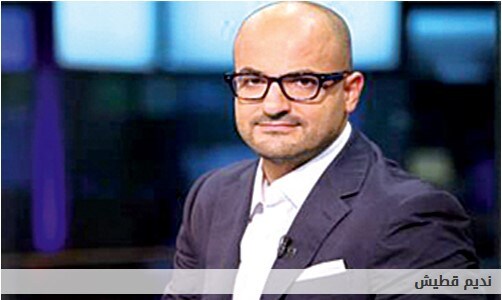
Nadim Koteich (image: Aljazeera.com)
“They are not enough, especially when what follows them amounts to no more than idiotic expressions suggesting that a crime like the Charlie Hebdo massacre is not an expression of ‘the true Islam.’ In an effort to divorce Islam from responsibility for other crimes, some have said that the Islamic State (ISIS), Jabhat al-Nusra, Asa’ib Ahl Al-Haqq, Hizbullah, Boko Haram, Somalia’s Al-Shabab, the Taliban, and hundreds of other armed groups also do not represent true Islam.
“So what is this true Islam that those who condemn crimes committed in the name of Islam are supposed to be bestowing upon us? Beyond condemnation, what confrontation with the criminals have the proponents of true Islam been engaged in since the defeat of the Mu’tazila – the defeat of rationality in Islam 1,100 years ago?
“Condemnation alone is not enough. The people from the Sunni camp of contemporary Islam who carried out the Charlie Hebdo massacre, the Pakistani school massacre before it, the massacres by ISIS in Syria and Iraq, the 9/11 attacks, and other atrocities all belong to the true Islam. The same applies to the people in the Shiite camp of contemporary Islam who kidnapped and killed foreign journalists in Beirut, and issued and renewed the fatwa that said the blood of British writer Salman Rushdie could be spilled. They are a central part of the true Islam and its many schools of jurisprudence.
“It doesn’t matter which Islamic text, whether it is Koranic or jurisprudential, or a text recounting the sayings of the Prophet Muhammad; the killers do not kill for nothing, they kill in the name of books, fatwas, ayahs, and age-old tradition. All of these things are inseparable parts of true Islam. They will remain Muslims as long as they pronounce the shahada and as long as the religious institution doesn’t dare to modernize the criteria for being a Muslim.
“These killers are us. They are our religion at its most extreme. They are our true Islam taken to its furthest extent, and they are not beyond the scripture. If the West says in one united voice ‘we are Charlie’ we should say ‘we are ISIS.’
“As Muslims, what should we do with Ayat as-Sayf, the fifth verse of Surat at-Tawbah, one of the last Koranic chapters delivered to the Prophet in the city of Medina, and thus of central importance with regard to the structure of Islamic rulings and the system for the relationship with the other? The ayah says: ‘Then, when the sacred months have passed, slay the idolaters wherever ye find them, and take them (captive), and besiege them, and prepare for them each ambush. But if they repent and establish worship and pay the poor-due, then leave their way free. Lo! God is Forgiving, Merciful.’
“With this in mind, was the ayah not instrumental in building Islam’s military glory? Didn’t Islam become a vast empire of might, dominion, high renown, money and power? Was this ayah not the central compass that directed the wars of the Muslims, from the preparations for the conquest of Mecca to jihadist pamphlet ‘The Neglected Duty,’ by Muhammad abd-al-Salam Faraj, one of the clearest and most dangerous pieces of jihadist literature ever written? For those who are unfamiliar with Faraj, he was the emir of the Al-Jihad group that assassinated Anwar Sadat in the name of the very same true Islam.
“What kind of ruling can there be against ‘idolaters’ in the 21st century and what should we make of the ruling to slay them ‘wherever [we] find them’ now that we have international law and the nation state? Where do today’s Muslims draw the line between Islamic jurisprudence and law?
“As Muslims, what should we do with the 20th verse of Surat at-Tawbah, which is dedicated to our relationship with Christians and Jews? The text is as follows: ‘Fight those who do not believe in God or in the Last Day and who do not consider unlawful what God and His Messenger have made unlawful and who do not adopt the religion of truth from those who were given the Scripture – [fight] until they give the jizyah willingly while they are humbled.’
“Do these ayahs belong to the so-called ayahs of forgiveness that Muslims praise as evidence of Islam’s kindheartedness in conferences of flattery and social deception? Are they really all we have left of Islam in its latest incarnation?
“What is the verdict on the fatwas of Sheikh ul-Islam Ibn Taymiyyah who still presides over the jurisprudence of jihad, eight centuries after his death, from the Muslim Brotherhood to ISIS? What is his position, in the view of who he is in the history of Islamic jihadist jurisprudence, in today’s Muslim world? Who will draw the borders between the jurisprudence of jihad as one of the Islamic sciences and the criminal jurisprudence that was practiced in Paris, especially as both of them are derived from the same original texts?
“It was very telling that straight after the announcement of the Charlie Hebdo massacre people’s thoughts turned to Islamist extremists, despite the fact that the French magazine’s satire did not spare Judaism, Christianity, or the French political establishment. This is because Islam’s relationship with the present is in crisis, and any group going through such a crisis is always the first suspect. In fact, Islam as a whole stands accused in advance, and not only its extremist fringe.
“The original texts that form an inseparable part of the true Islam and that inspire the ongoing crimes committed in its name are also guilty. This will be true as long as there is no central authority to reorganize the relationship between the Islamic text, as a piece of history, and the necessities of the present day – in the same way that the Koranic text itself acclimatized as the ayahs were gradually sent down, with some new rulings replacing older ones…
“Nothing can [harm] Islam and Muslims as much as such crimes, and yet we still make do with saying that they do not represent the true Islam, without providing a clear description of what true Islam is – beginning with our religious schools, some of which are factories for crime, to our constitutions, which are rigged with the mines of Islamic jurisprudence and Sharia law.
“Nothing [harms] Islam more than the Charlie Hebdo massacre, which says, from the belly of the true Islam itself: Those of us who love the Prophet most are our greatest criminals.”
Endnotes:
[1] Al-Sharq Al-Awsat (London), June 28, 2015; Now.mmedia.me, January 13, 2015.
[2] Now.mmedia.me/lb/en, January 13, 2015. The original English has been lightly edited for clarity and standardization.
 Marsz Pamięci 2015