Archive | 2016/02/13

Łódzkie getto — największy obóz pracy

Łódzkie getto — największy obóz pracy

Żydowski Instytut Historyczny


76 lat temu, 8 lutego 1940 roku Niemcy utworzyli w Łodzi getto.

Wide lodz getto
Kładka w łódzkim getcie. Rok 1940. / Bundesarchiv, R 49 Bild-1733 / Holtfreter, Wilhelm / CC-BY-SA 3.0

76 lat temu, 8 lutego 1940 roku, Niemcy utworzyli w Łodzi getto, które od reszty miasta odizolowano już 30 kwietnia tego samego roku. Wiosną 1941 roku jeszcze bardziej wzmożono jej izolację poprzez ustawienie podwójnych zasieków i zwiększenie liczebności sił policyjnych, które miały strzelać do każdego zbliżającego się do granic getta, co – po likwidacji łączności pocztowej – doprowadziło z początkiem 1942 roku do całkowitej izolacji ludności tej części miasta w stopniu niespotykanym w innych gettach.

– Łódzkie getto stało się najbardziej niedostępnym gettem w Europie – pisze w swoich wspomnieniach uwięziona w nim z rodziną Eva Libitzki, której udało się przeżyć Zagładę. – Niemcy wyburzyli wszystkie otaczające je domy, zostawiając niebezpieczną strefę niczyją między płotem a stroną aryjską. W porównaniu, na przykład, z Warszawą, gdzie można było przynajmniej nawiązać jakiś kontakt z członkami Podziemia, po zamknięciu naszego getta nie przemycano do niego żadnej żywności ani broni. Praktycznie żadnym Żydom nie udało się też z niego uciec. Przez teren getta przebiegały dwie z najważniejszych arterii miasta – Zgierska i Limanowskiego. Jeżdżące po nich tramwaje woziły Polaków i Volksdeutsche’ów. Nas od tych ulic odgradzał drut kolczasty. Chcąc przejść na drugą stronę musieliśmy korzystać z drewnianych kładek biegnących niemal 8 metrów nad nimi. Zrobiono wszystko co można było, żeby odgrodzić nas od reszty łodzi. (…) Brak kanałów uniemożliwiał szmugiel i ucieczki, jak to miało miejsce w getcie warszawskim. [1]

W czerwcu 1940 roku w łódzkim getcie zamkniętych było ok. 200 tys. osób. Od 17 XI do 4 XII 1941 przybywały tam transporty Żydów z Niemiec (z Berlina, Düsseldorfu, Duisburga, Kolonii, Frankfurtu n. Menem, Hamburga), Austrii (głównie z Wiednia), Czech (z Pragi), Holandii i Luksemburga, oraz przywieziono 15 tys. robotników wykwalifikowanych z Kraju Warty.

Szef łódzkiego Judenratu, Chaim Rumkowski zwany „królem getta”, wprowadził rządy autorytarne, likwidując z czasem większość nie podlegających mu bezpośrednio struktur (m.in. komitety domowe, ziomkostwa przesiedleńców). Formalnie przyznany stosunkowo szeroki zakres autonomii, został wykorzystany m.in. na rozbudowę aparatu administracyjnego z policją, posiadającą nawet tajną służbę do zwalczania opozycji. W getcie łódzkim realizowano zasadę „sprawiedliwego podziału nędzy” i „ratowania się przez pracę na rzecz Niemców”.

– Rumkowski rozumiał w jak trudnej znaleźliśmy się sytuacji – pisze w swoich wspomnieniach Eva Libitzky. – Zawarł więc z Niemcami wyjątkowy układ, który obowiązywał przez kolejne cztery i pół roku: zaproponował, by getto z jego wieloma budynkami fabrycznymi i wykwalifikowanymi rzemieślnikami, stało się ośrodkiem produkcji na potrzeby Niemców. (…) Uważał, że nie ma innego sposobu, byśmy mogli przeżyć. »Naszą jedyną drogą jest praca«, powtarzał raz za razem. (…) Do pewnego stopnia mu się udało. W obliczu groźby śmierci staliśmy się jednym z największych ośrodków przemysłowych w Rzeszy, działającym jeszcze lata po likwidacji gett w Warszawie, Krakowie, Białymstoku i większości innych miast. [2]

Równocześnie powstała, związana z Rumkowskim, elita gettowa (jej członków nazywano „jachsenami”; por. jachsan), korzystająca z willi i pensjonatów w Marysinie. Getto stopniowo zmieniło się w największy obóz pracy. Na początku 1943 roku istniało w nim 119 zakładów przemysłowych, w których pracowało przeszło 89% ludności, liczącej wówczas ok. 87 tys. osób. Korzyści, jakich getto łódzkie przysparzało zaopatrzeniu armii i firmom niemieckim, oraz zyski, czerpane z getta przez administrację okupacyjną, sprawiły, że zlikwidowano je jako ostatnie getto w Polsce. Opór przeciwko Niemcom podjęła Komunistyczna Komisja Międzyzwiązkowa, przekształcona jesienią 1940 w Lewicę Związkową, którą tworzyli działacze lewicowych związków zawodowych (głównie członkowie Bundu i PS-L oraz byli członkowie KPP). Jej działania zogniskowały się na sabotażu pracy dla okupanta. Parokrotnie doszło też do akcji protestacyjnych i wystąpień ulicznych (30 VI 1940 roku; koniec sierpnia i 8 IX 1940 roku; styczeń i marzec 1941 roku).

Jednym z najbardziej dramatycznych wydarzeń, jakie rozegrały się w łódzkim getcie było przemówienie Przełożonego Starszeństwa Żydów, Chaima Mordechaja Rumkowskiego, które wygłosił 4 września 1942 roku i jego tragiczne następstwa. Stojąc na zaimprowizowanej mównicy ustawionej na tzw. Placu Strażackim (przed siedzibą Oddziału Strażacko-Kominiarskiego w getcie) przy ul. Lutomierskiej 13 (wówczas Telegrafenstrasse) „Król łódzkiego getta” „wezwał mieszkańców getta, aby na żądanie Niemców oddali swoich najbliższych – dzieci i starszych ludzi:

– Na nasze getto spadło wielkie nieszczęście. Żądają od niego, by oddało najlepsze, co posiada – dzieci i starych ludzi. (…) Nigdy nie wyobrażałem sobie, że moje własne ręce będą musiały złożyć je jako ofiarę na ołtarzu. Na moje stare lata muszę wyciągnąć ręce i błagać: Bracia i Siostry, oddajcie mi je! Ojcowie i Matki, oddajcie mi wasze dzieci! (…)

Ja muszę przeprowadzić tę ciężką i krwawą operację. Muszę poświęcić członki, by ratować ciało. Muszę zabrać dzieci, gdyż inaczej, nie daj Boże, mogą zostać zabrani także inni.

Dramatyczną reakcję zebranych na placu Żydów i później mieszkańców całego getta, w większości domyślających się, że dzieci pojadą na śmierć, przedstawił w swych wspomnieniach Michał Mosze Chęciński:

– Z piersi tysięcy ludzi wydobył się przejmujący krzyk, rozpacz matek i ojców była niemal fizycznie dotykalna. Tego dnia całe getto płakało i z każdego jego kąta płynęło wołanie do Boga. [3]

Jak pisze Andrzej Rukowiecki w dniach 5–12 września 1942 roku „do ośrodka zagłady w Chełmnie nad Nerem, wywieziono 15 681 osób – dzieci do 10 roku życia, chorych i osoby starsze powyżej 65 roku życia”. [4] Akcji wysiedleńczej towarzyszył wydany przez Niemców zakaz opuszczania domów przez Żydów (niem. Allgemeine Gehsperre) nazywany „Wielką Szperą”.

Deportacje w 1942 ostatecznie załamały wszelkie formy oporu. W okresie eksterminacji pośredniej w getcie łódzkim, głównie z powodu głodu (choroba głodowa) i chorób, zmarło: w 1940 – 6 197 osób, w 1941 – 11 378 osób. W czasie Akcji Reinhard, od połowy stycznia do września 1942, ok. 116 tys. mieszkańców getta łódzkiego zostało zamordowanych w ośrodku zagłady w Chełmnie n. Nerem.

1 VI 1944 w getcie łódzkim znajdowało się jeszcze 76 701 osób, z których – od 2. połowy czerwca 1944 do września 1944 roku – 60 tys. wywieziono do Oświęcimia-Brzezinki, 5 tys. do obozów Stutthof i Ravensbrück. Była to akcja likwidacji ostatniego na ziemiach polskich getta. Na miejscu, w tzw. brygadzie porządkowej (niem. Aufräumungskommando) pozostało ok. 880 osób. Niemcy zamierzali wszystkich wymordować, lecz członkowie brygady w decydującym momencie ukryli się. 19 I 1945 roku, kiedy Armia Czerwona zdobyła miasto, było w nim 877 Żydów.


PRZYPISY

[1] Eva Libitzky, Fred Rosenbaum, Out on a Ledge. Enduring the Lodz Ghetto, Auschwitz, and Beyond, Wicker Park Press, River Forest 2010, s. 43–44.
[2] Ibidem, s. 44–46.
[3] Andrzej Rukowiecki, Łódź. 1939–1945. Kronika okupacji, Księży Młyn, Łódź 2012, s. 125.
[4] Ibidem.

Bibliogfrafia

Rafał Żebrowski, Getto łódzkie, w: Polski Słownik Judaistyczny.
Eva Libitzky, Fred Rosenbaum, Out on a Ledge. Enduring the Lodz Ghetto, Auschwitz, and Beyond, Wicker Park Press, River Forest 2010.
Andrzej Rukowiecki, Łódź. 1939–1945. Kronika okupacji, Księży Młyn, Łódź 2012.


twoje uwagi, linki, wlasne artykuly, lub wiadomosci przeslij do: webmaster@reunion68.com



Auschwitz survivors speak in Detmold on eve of new Nazi trial

Auschwitz survivors speak in Detmold on eve of new Nazi trial

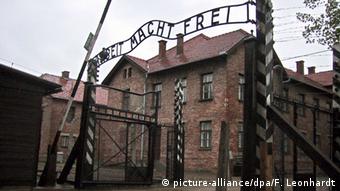
Auschwitz survivors, and witnesses against former SS-member Reinhold H., gave a press conference ahead of a new trial of the former death camp guard. They insisted that this trial represents an important new legal step.

Auschwitz-Überlebende Erna de Vries Justin Sonder Leon Schwarzbaum Pressekonferenz Detmold
Auschwitz survivor Justin Sonder speaks in Detmold on Wednesday

Auschwitz survivors and their lawyers held a press conference in the western German town of Detmold on Wednesday, on the eve of the next trial of a former guard at the notorious Nazi death camp. The 94-year-old, named in the German media only as Reinhold H., was ruled fit to stand trial in a new medical assessment ordered last week by the state court.

“This trial should have happened 40, 50 years ago,” said 90-year-old Justin Sonder, a German who survived Auschwitz in his youth. “But now it is not too late to show what once happened.”

The guard has been charged with 170,000 counts of accessory to murder for being stationed at the death camp from January 1943 to June 1944. He is alleged to have been a member of the 3rd SS Division Totenkopf (sometimes called the “Death’s Head Division” because of its skull-and-crossbone insignia), which was in charge of administering concentration camps.

Christoph Heubner, executive vice president of the Berlin-based International Auschwitz Committee, said this case marked an important new development after last July’s conviction in Lüneburg of Oskar Gröning, another former Auschwitz guard who was sentenced to four years in prison.
Oskar Gröning was sentenced to four years in prison last July
Deutschland Prozess Oskar Gröning in Lüneburg Urteil“A state prosecutor has for the first time explained in the indictment that the entire system in Auschwitz was a murder system,” Heubner told DW. “That murder not only took place through gas, but through starvation, through forced labor, through living conditions. And that is new, that it has been explained so clearly.”

Nor does Heubner believe that this trial will be the last of its kind. “I think the courts will continue to investigate as long as SS men are still alive – that is their legal duty,” he said.

The ‘Hungary Operation’

The prosecution argues that, as an Unterscharführer (junior squad leader), Reinhold H. would have been responsible for guarding transports of people entering the camp.

But a key part of the case against him is that he was at the death camp for what became known as the “Hungary Operation,” the three-month period from May to July 1944 when over 430,000 Hungarian Jews were deported to Auschwitz and over 300,000 were gassed on arrival.

Even by the standards of the Holocaust, it was an unprecedented acceleration in the rate of deaths. The operation was the first time the camp began working round the clock, and arguably the moment that Auschwitz acquired its iconic notoriety among all of the Third Reich’s concentration camps.

Concentrating on the Hungary Operation has become a prosecution tactic in the recent round of Holocaust trials. Gröning was also convicted – on 300,000 counts of accessory to murder – exclusively for his participation in the operation, even though he spent over two years stationed at Auschwitz.

This is partly down to the fact that it is easier, both logistically and legally, for the prosecution to isolate the Hungary Operation as a single crime – distinct from the enormity of the Holocaust, but still part of it and representing both the size of the crime and its impersonal, “industrialized” nature.

Legal turning point

Reinhold H.’s attorney, Johannes Salmen, told the AP news agency that his client acknowledges serving at the Auschwitz I part of the camp complex in Nazi-occupied Poland, but denies serving at Auschwitz II, the Birkenau section, where most of the 1.1 million victims were killed.

Around 300,000 people were murdered as part of the ‘Hungary Operation’

Auschwitz-WachmannProsecutor Andreas Brendel countered that this would not have exempted him from duty, especially during the acceleration. “We believe that these auxiliaries were used in particular during the so-called Hungarian action in support of Birkenau,” Brendel said.

The question that always plagues late Holocaust trials remains: why now, so late? How does punishing a man of over 90, whose role in the Holocaust was relatively minor, serve justice? The answer is that many believe the German justice system has failed to punish active participants in the Nazi genocide. The historian Andreas Eichmüller once counted only 49 convictions from the 6,500 SS officers who were stationed at Auschwitz and survived the war.

In part, this was largely down to the legal problem suggested above: under German law, participation in the Holocaust was not a crime, and defendants could only be convicted for a specific provable act of murder or torture. But the way the mass executions were carried out virtually absolved everyone involved of a specific prosecutable act – at least according to the interpretation of most post-war German state prosecutors. It was only with the conviction in 2011 of John Demjanjuk – a former guard at the Sobibor death camp – that this interpretation changed.

Heubner also insisted on the continued importance of Auschwitz trials – even in the face of arguments that Germany has raked over its Nazi history often enough. “The legal reappraisal of the history has not yet been finished – a social reappraisal is something very different,” he said. “This is also a description of a historical situation that shows how quickly a society can slip into the loss of freedom, the loss of human rights, and that’s why it’s very, very topical and politically charged.”


twoje uwagi, linki, wlasne artykuly, lub wiadomosci przeslij do: webmaster@reunion68.com


Stopping Bernie: Where are the anti-Semites when we need them?

Stopping Bernie: Where are the anti-Semites when we need them?

Jack Engelhard


Bernie is not harmless, he is dangerous, and for more reasons than one.

Seriously? Yes, seriously. After trouncing Hillary in New Hampshire, Bernie Sanders could go all the way – even to the White House.

Never thought I’d say that, but there it is, kids, and speaking of kids, 84 percent of the Youth Vote went to Bernie.

College kids love him, which makes no sense. Do they know he’s Jewish?

From the Campus Front Lines we have it that our universities are turning out a generation of anti-Semites, due to an infiltration, a plague, an infestation of brutes sent over from Arab lands… Yes, BDS, SJP or whatever else they call themselves to make life miserable for Jewish students.

So with that many of the non-Jewish (and some Jewish) young infected with the virus – how to explain their love for Bernie?

Or are we mistaken? It’s really not that bad for Jewish kids on campus. Oh but it is. It’s terrible. I’ve just met a few sophomores and seniors. We talked.

Later I will disclose some possible solutions we arrived at to combat the terror on campus, but meanwhile there’s Bernie.

They’re all in for Bernie despite everything. He’s Jewish but among anti-Semites it’s okay to be Jewish so long as you are not too Jewish.

Bernie is mostly anti-Israel, and that makes him cool. He boycotted Bibi’s address to Congress, is for splitting Israel in half and against supplying the Jewish State with needed weaponry. Did you hear? In his 50-minute New Hampshire victory speech he paused from politics for a personal touch.

He said that he was brought up by parents who came from Poland, period. So he was raised by Polish parents. Not Jewish. Necessarily.

Please notice that campus bullies never target Polish students. So Bernie left it at that and the kids kept cheering.

Do they know anything else about him? Well, he is not Hillary and between you and me, that could be his big secret. Nobody likes Hillary.

It is no secret however that he is a socialist, which makes him a Communist. I am still catching raves and flak from what I wrote about all this in a recent column. But I repeat that this country cannot afford another Democrat in the White House, neither Hillary nor Bernie.

Do they love Bernie because he appears to be a harmless old man? Socialists are never harmless, old or young.

Obama is young and look what he did to us.

Do they love Bernie because he intends give everything away for free, even college tuition?

Kids adore that kind of talk. Kids tend to be Liberal. Later they will be asked to pay 90 percent of their incomes for taxes. (Bernie says so.)

Meanwhile they are young, young and in love, in love with Bernie.

No, appearances to the country, Bernie is not harmless. Bernie is dangerous.

So are all those 1960s Radicals who aim to bring back some of that old time religion, Liberal Dogma, the hazards of which we covered in this thriller that foretold the damage being done to our young through professorial, political and cultural indoctrination. That is why the kids know nothing. They sure don’t know socialism.

People who love the idea of a Jewish President – do you know what you are asking? His first job will be to prove how un-Jewish he can be. Think Kissinger.

If you think Israel is in the doghouse now with President Obama, just wait for President Sanders.

When he makes a mistake, as Presidents always do, he won’t be a liberal anymore. He won’t be Polish. He will be a Jew.

If by chance he shows any sign of favoritism for the Jewish State, be prepared for anti-Semites to come storming out of the closet.

Better, I say, to have them show their true colors now, or better yet, disperse and disappear.

Rather now than later, when it will be too late.


Jack Engelhard
Jack Engelhard’s classic international bestselling novel Indecent Proposal, which later became a worldwide hit movie, has been republished to meet readers’ demands. His other major works include Compulsive: A Novel, his award-winning post-Holocaust Montreal memoir Escape from Mount Moriah, plus Slot Attendant: A Novel About A Novelist. His website: www.jackengelhard.com


twoje uwagi, linki, wlasne artykuly, lub wiadomosci przeslij do: webmaster@reunion68.com