Archive | 2016/02/25

Odzyskana mała synagoga

Odzyskana mała synagoga

Redakcja Chidusz


Krzesło Eliasza w małej synagodze we Wrocławiu /fot. Chidusz 2015

Gmina Żydowska we Wrocławiu i Fundacja Bente Kahan przy wsparciu finansowym Urzędu Miasta Wrocławia przeprowadziły generalny remont małej synagogi we Wrocławiu. Miejsce modlitwy wrocławskich Żydów odzyskało dawny, oryginalny blask i zostało ponownie otwarte 10 grudnia 2015 roku, w piąty wieczór chanukowy.

Przypadkowe odspojenie białej farby pokrywającej cały sufit małej synagogi we Wrocławiu ukazało fragment bogatego, secesyjnego zdobienia z początku XX wieku. To właśnie te pierwotne polichromie, wykonane w technice malarstwa olejnego na wapiennym tynku, przez lata ukryte pod warstwą białej farby emulsyjnej, wyznaczyły kierunek aranżacji wystroju wnętrza małej synagogi.

Secesyjne malarstwo na suficie

Szul powstał około 1901 roku. Na stan jego zachowania wpłynęły dramatyczne wydarzenia XX wieku, które dotykały społeczność żydowską Breslau a później – Wrocławia. Mała synagoga niejednokrotnie ulegała zniszczeniom na skutek pożarów, zalań, prowizorycznych i nieodpowiednich remontów. Choć zdobienia na suficie zachowały się tylko częściowo (znaczna część pól zabita była dyktą zamalowaną na biało), symetryczny i powtarzalny układ elementów, które przetrwały, w pełni pozwolił na zrekonstruowanie brakujących fragmentów tego secesyjnego malarstwa wykonanego techniką patronową z podmalowaniami ręcznymi.

W równie złym stanie, co dekoracje malarskie, były drewniane elementy wystroju wnętrza. W trakcie usuwania brązowej olejnicy, którą wtórnie pokryto wszystkie drewniane płaszczyzny, okazało się, że znaczna część drewna została tak zniszczona, że nie nadawała się do konserwacji i te części musiały zostać zrekonstruowane na wzór oryginału. Wszędzie tam, gdzie było to możliwe, zachowano na sklepieniu oryginalne drewno. W okolicach aron ha-kodesz pozostawiono znaleziony fragment pierwotnego, transparentnego wykończenia drewna, dopasowując do niego kolorystycznie resztę elementów wystroju. Odkryta część posłużyła do odtworzenia pięknego kolorytu stropu oraz do wyboru barwy drewna we wszystkich innych elementach – zarówno w przypadku mebli i parkietu, jak też drzwi wejściowych. Starano się przeprowadzić scalenie kolorystyczne elementów w taki sposób, by różnica między nowymi i starymi nie była widoczna.

W trakcie remontu okazało się, że poszczególne elementy zdobień sufitu nieco różnią się od siebie. Gdy ogląda się je z dołu, nie zauważa się różnic wielkości, a przez to drobnych różnic wzoru. Nie są one duże, ale na tyle istotne, by uznać, że obrazy na suficie były ręcznie malowane przez sprawnego artystę, który wykonał wiele elementów w bardzo podobny, prawie identyczny, sposób. Nie jest to więc w pełni malarstwo szablonowe, gdyż poszczególne elementy nie mają takiego samego formatu – wzór jest identyczny, ale wielkość trochę inna. Strop z tej epoki jest dużym unikatem na terenie Dolnego Śląska.

Wyposażenie wnętrza

Nie zachowały się żadne materiały archiwalne dokumentujące pierwotny wygląd szulu, dlatego możliwa była pewna dowolność zaprojektowania wystroju wnętrza. Wybór mebli pod względem stylu i kolorystyki podporządkowany został bardzo dekoracyjnej, secesyjnej ornamentyce stropu. Ponadto, ze względu na niewielkie rozmiary tej sali, projekt musiał pozostawić możliwie największą przestrzeń dla wielu osób, które przychodzą tu nie tylko na modlitwę, ale również na spotkania, podczas których część elementów religijnych nie jest wykorzystywana. Poza najbardziej typowymi elementami wystroju synagogi (jak aron ha-kodesz czy bima), należało umieścić tu małą bibliotekę.

Ze względu na brak oryginalnego wyposażenia ruchomego można było pójść dwiema drogami: albo wykonać nowe meble, albo znaleźć zabytkowe, pochodzące z początku XX wieku, które pasowałyby do stylu, w jakim ozdobiono strop. Po długich poszukiwaniach skompletowano zbiór secesyjnych mebli, a te, które musiały zostać na nowo zaprojektowane, otrzymały podobny detal snycerski – ważne było, aby zadbać o spójność wystroju.

Aron ha-kodesz

Czytaj dalej tu: Odzyskana mała synagoga


twoje uwagi, linki, wlasne artykuly, lub wiadomosci przeslij do: webmaster@reunion68.com


That Thousands of Nazis Fled There…

South American Archives Confirm That Thousands of Nazis Fled There after the World War II

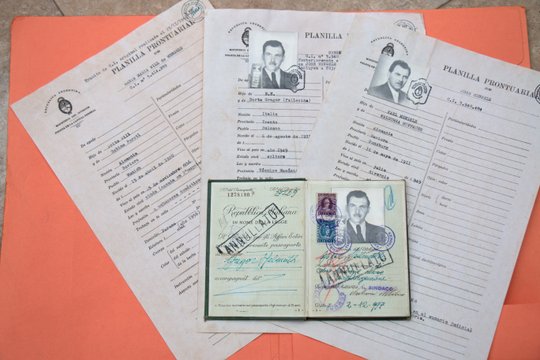
Papers used by Joseph Mengele

Recently-opened archives in some South American countries have shed new light on the extent of the wide-scale influx of Nazis into the Americas at the end of the Second World War. These refugees were seeking to escape from both punishment for their war crimes and from the ruins of the Third Reich – ruins which they themselves had brought about.

For a long time it has been known that many high-ranking members of the German Nazi party were helped to escape from Germany towards the end of the Second World War and also for a few years afterwards. Many were given refuge in the countries of South and Central America. Others were smuggled to the USA, where they found safe haven and set up new lives for themselves.

In some cases, the fugitives from justice were acting on their own initiative or with the help of small bands of sympathetic helpers. But in many other cases these movements were part of formal, organised smuggling programmes, set up by countries with ulterior motives.

For instance, the ambitious Operation Paperclip, which lasted from 1949 until 1990, was a clandestine mission established by the predecessor to the CIA and continued by them to help to bring between one and two thousand former Nazi military staff, scientists and engineers from post-war Germany to the USA. Their purpose was to work on espionage and counter-espionage against the Soviet Union and Warsaw Pact countries, and to bring their knowledge to bear on weapons development, most famously the refining and escalation of the US atomic weapons program.

Many other Nazis sought refuge in post-war Argentina, Paraguay, Brazil, Chile and other Latin American countries, as well as other regions such as the Middle East. Many of these countries were ruled as dictatorships or had fascist-leaning governments during the post-war decades.

Nazi minds who were able to offer attractive services to new hosts found themselves courted by governments. Argentina’s head of state, Juan Peron, for example, provided ODESSA with 10,000 blank passports to help ease the escape of SS officers from Europe. ODESSA was an organisation which had been established to help the SS after the Soviet Red Army began turning the tide of the Second World War and it became clear that Germany faced defeat. During this period, the Vatican also contributed false passports.

Although knowledge about the Latin American refugees has existed almost since the first escapes took place, the facts were always vague and often based on hearsay and sporadic reports. Estimates of totals numbers were always startlingly varied. The full extent of this influx was clarified in 2012 when secret files held in archives in Chile and Brazil were opened up for inspection by German investigators.

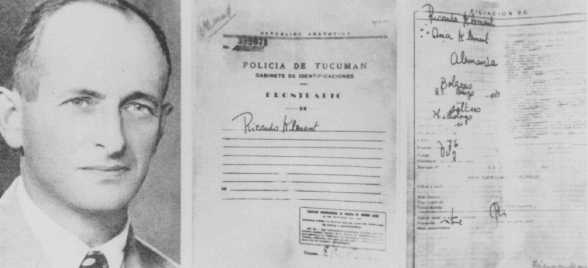
False identification papers used by Adolf Eichmann while he was living in Argentina under the assumed name Ricardo Klement. — The Jacob Rader Marcus Center of the American Jewish Archives

The documents provide evidence of more than 9,000 Nazi war criminals given refuge. This number includes not only Germans, but also Ukrainians, Croatians, western Europeans and others who collaborated with the Nazi regime. Out of this total around 2,000 headed for Brazil, up to 1,000 each for Chile, Uruguay and Paraguay, and the remaining 5,000 or so for Argentina.

Among those better-known fugitives are some famous names. Adolf Eichmann was an important force behind the “Final Solution” to exterminate the European Jews. Also among the refugees was the commandant of the Treblinka death camp, Franz Stangl. Another well-known name was the notorious Auschwitz doctor and torturer, Josef Mengele. Yet another was Walter Rauff, an SS man who had devised mobile gas chambers to improve the efficiency of the death-camp killing machine.


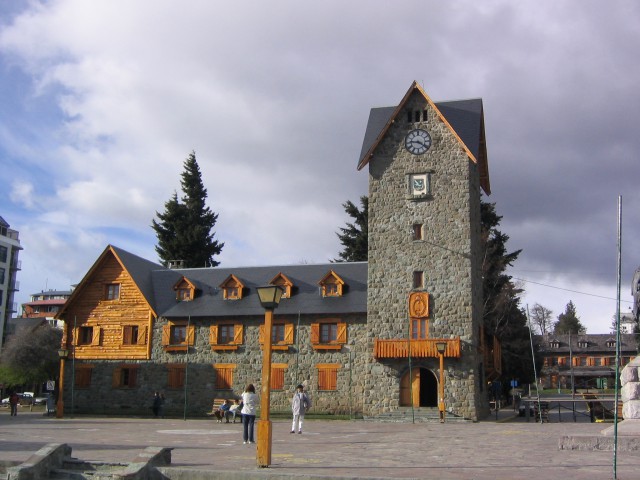
Bariloche Civic Centre (Wikipedia). In 1995, Bariloche made headlines in the international press when it became known as a haven for Nazi war criminals, such as the former SS Hauptsturmführer Erich Priebke. Priebke had been the director of the German School of Bariloche for many years.

Eichmann managed to live a new life in Argentina under an assumed name until the early 1960s, when he was kidnapped by the Israeli secret police, taken to Israel and hanged for war crimes. Mengele lived a secret life, despite occasional rumours leaking into the press, until his 1979 death in Argentina. Rauff escaped to Chile in 1950 and died there in 1984, the Mail Online reports.

One of those who was given access to the documents was a specialist in war crimes investigations, Kurt Schrimm. He claimed that this new source of information was one of the most fruitful they had discovered. Schrimm said it was unlikely that they would learn anything from any fugitives still alive, since any still surviving would be quite old and frail. He pointed out that they still feel obliged to check, nevertheless.

They found that many had traveled under passports of the International Red Cross. Schrimm and his helper, Uwe Steintz, believe that some fugitives later returned to Germany undetected. They also found that besides the fugitive war criminals many others with secrets to hide emigrated officially under assumed names. For example, some 20,000 Germans emigrated to Brazil during the nineteen-fifties.


twoje uwagi, linki, wlasne artykuly, lub wiadomosci przeslij do: webmaster@reunion68.com


BDS activist to represent Holocaust survivors at Austrian state event

BDS activist to represent Holocaust survivors at Austrian state event

JTA


Political activist and Holocaust survivor Hedy Epstein
(screen capture: YouTube/Missouri History Museum)

Political activist and Holocaust survivor Hedy Epstein (screen capture: YouTube/Missouri History Museum)Hedy Epstein has likened Israel to Nazi Germany and participated in attempts to break Israel’s blockade of the Gaza Strip

Astria invited Hedy Epstein, a Jewish pro-Palestinian activist whom the Anti-Defamation League criticized for demonizing Israel, to represent Holocaust survivors at a panel discussion about women during World War II.

In invitations sent out Friday by the office of the president of the Austrian parliament, Epstein, who has likened Israel to Nazi Germany, was described as a peace and human rights activist. She is the only Jewish guest slated to speak at the event, scheduled to take place March 8.

The ADL in 2005 listed statements made by Epstein, who was born in Germany and spent most of World War II in Britain, first among examples of anti-Israel campus activism that “would meet both the United States government’s and [Natan] Sharansky’s definitions of anti-Semitism.” The ADL statement was in response to a lecture given by Epstein in 2004 at Stanford University, in which she compared the Nazi treatment of Jews to Israeli treatment of Palestinians.

Epstein has participated in several actions to break Israel’s blockade of the Hamas-run Gaza Strip and has signed numerous petitions by the boycott, divestment and sanctions movement against Israel.

Born in Germany in 1924, she left the country in 1939 on a Kindertransport — the name for efforts to rescue European children of the era to the relative safety of Britain — where she spent the war years.


twoje uwagi, linki, wlasne artykuly, lub wiadomosci przeslij do: webmaster@reunion68.com