Archive | 2025/11/29

Ukraina: Złudna wizja pokoju

Bachmut podczas walk w kwietniu 2023.


Ukraina: Złudna wizja pokoju

Amir Taheri


Jak długo może potrwać wojna na Ukrainie?

To pytanie było przedmiotem dyskusji i debat podczas niedawnego spotkania w Paryżu, w którym uczestniczyli historycy i eksperci ds. strategii z różnych środowisk. Prawdziwa odpowiedź, której nie udzielono na tym spotkaniu, była w istocie kolejnym pytaniem: jak długi jest kawałek sznurka?

Obecna faza rozpoczęła się w lutym 2022 roku, kiedy to doszło do tego, co wyglądało na próbę aneksji całej Ukrainy przez Rosję. Było to jednak tylko następstwo wcześniejszej inwazji i okupacji Krymu w 2014 roku. Tamten epizod był z kolei kontynuacją operacji polityczno-wojskowej sprzed dwóch lat, której celem było zainstalowanie prorosyjskiego prezydenta na Ukrainie oraz wysłanie rosyjskich wojsk do Sewastopola, by zmusić Kijów do podpisania długoterminowej umowy dzierżawy bazy lotniczo-morskiej dla Rosji.

A to wszystko to jedynie najnowsza historia.

Ukraina przechodzi przez swoje próby i cierpienia zgodnie z wzorcem znanym z długiej historii europejskiej, naznaczonej konfliktami zbrojnymi, takimi jak wojna stuletnia czy wojna trzydziestoletnia. Na kontynencie rozdartym przez podziały religijne, sekciarskie, rasowe i dynastyczne wojna była regułą, a pokój wyjątkiem. Dopiero w XX wieku Europa zaczęła marzyć o wojnach stosunkowo krótkich.

Obecnie wszystko wskazuje na to, że wojna na Ukrainie może potrwać jeszcze wiele lat. Została już wpisana w ogólny schemat globalnej polityki – w tym sensie, że wszyscy bezpośrednio lub pośrednio zaangażowani zdołali zminimalizować straty dla własnych interesów, jednocześnie maksymalizując zyski, jakie mogą z niej czerpać. Mimo poważnych strat ludzkich i materialnych, główni uczestnicy konfliktu – Rosja i Ukraina – wydają się być dalecy od przekroczenia progu bólu, który zmusiłby którąkolwiek ze stron do wywieszenia białej flagi.

Rosja nie może wygrać tej wojny, ponieważ prezydent Władimir Putin nie jest mentalnie gotowy, by przejść na wyższy poziom zaangażowania i wysłać na front całą armię.

Trzymając się głównie wojny powietrznej, z masowym użyciem dronów, rosyjscy generałowie nie są w stanie zapewnić klasycznych trzech „C” wojny: – podbić, oczyścić, kontrolować. Nawet na 25 procentach terytorium Ukrainy, które Rosja już zajęła, żadnego z tych trzech celów nie osiągnięto w pełni.

Podobny los spotkał rosyjską „specjalną operację wojskową” w Syrii.

Tam również lata bombardowań zamieniły wiele syryjskich miast w gruzy, zabijając dziesiątki tysięcy cywilów, nie przynosząc jednak Putinowi nawet cienia zwycięstwa.

Jednocześnie Rosja nie może sobie pozwolić na przegranie tej wojny. Taka porażka mogłaby oznaczać koniec Putina i putinizmu.

Nie ma też większych szans, by Ukrainie niespodziewanie pomógł jakiś „zbawca”, który pozwoliłby Rosji wyjść z konfliktu z minimalną utratą twarzy, tak jak zrobił to Ahmad al-Sharaa w Syrii.

Pomimo wielokrotnie powtarzanych zapewnień prezydenta Wołodymyra Zełenskiego, Ukraina również nie znajduje się w pozycji, by pokonać Rosję albo odbić utracone terytoria.

Wszystko to razem sprawia, że można mówić o „prędkości przelotowej” tej dziwnej wojny, która – jak się wydaje – odpowiada wszystkim zainteresowanym. Stany Zjednoczone potwierdzają swoją pozycję jako jedynej „niezastąpionej potęgi”, zdolnej do zmiany zasad gry, kiedy i gdzie tylko zechce.

Chiny korzystają z rosyjskiej ropy i gazu po zaniżonych cenach, jednocześnie rozszerzając swoje wpływy w Azji Centralnej, korzystając z nieobecności historycznego rosyjskiego rywala.

Europejczycy również wykorzystują wojnę jako pretekst do rozpoczęcia masowej rozbudowy potencjału militarnego, podczas gdy Rosja dalej krwawi – zarówno dosłownie, jak i w przenośni. Jednym z sygnałów, że Unia Europejska może zakładać długotrwałość wojny, był list intencyjny podpisany w tym tygodniu przez Francję w sprawie dostarczenia Ukrainie 100 myśliwców Rafale. Ponieważ produkcja tych samolotów oraz szkolenie ukraińskich pilotów zajmie co najmniej trzy lata, jasne jest, że Paryż zakłada kontynuację wojny przynajmniej do 2029 roku.

Mimo ponurego obrazu, jaki się wyłania, rozmowy o pokoju – lub przynajmniej zakończeniu wojny – wcale nie zniknęły z agendy.

Według niektórych zazwyczaj wiarygodnych źródeł, USA – po odrzuceniu pomysłu spotkania prezydenta Donalda J. Trumpa z Putinem w Budapeszcie – pracują nad ramowym planem rozmów mających na celu wstrzymanie wojny. Co dokładnie kryje się za tym sformułowaniem, nie jest jasne.

Jeśli jednak uznać istnienie „metody Trumpa”, widocznej w kilku ostatnich przypadkach wygaszania konfliktów zbrojnych, to Stany Zjednoczone mogą dążyć do rozwiązania pośredniego między zawieszeniem broni – z definicji krótkotrwałym i ograniczonym czasowo – a pełnym, trwałym pokojem, który może okazać się trudny do osiągnięcia.

Takie „rozwiązanie” mogłoby zostać zaprezentowane jako rozejm – termin mający wystarczający ciężar historyczny i dyplomatyczny, by pozwolić stronom zachować twarz, zamrozić sytuację na froncie i dać czas na negocjacje w sprawie trwałego rozwiązania, bez presji konkretnego terminu.

Są przesłanki, by sądzić, że prezydent Turcji Recep Tayyip Erdoğan może odegrać rolę wstępnego mediatora w tym procesie. Najnowsze rozmowy Zełenskiego z Erdoğanem zdają się to potwierdzać, podobnie jak sygnały z Moskwy, gdzie Putin nie wprost, ale z wyraźną intencją, przyjął turecką inicjatywę – choćby tylko po to, by nie wyglądało, że ulega Trumpowi.

Wszystko to jednak może okazać się kolejną złudną wizją pokoju. Niemniej, USA mają co najmniej dwie istotne karty, które mogą zagrać, by doprowadzić do zmiany sytuacji.

Pierwszą jest dostarczenie Ukrainie pocisków manewrujących Tomahawk – informacja ta pojawiała się i znikała w serwisach informacyjnych niczym uśmiech kota z Cheshire.

Decyzja o wprowadzeniu pocisków Tomahawk mogłaby mieć podobny wpływ na przebieg wojny, co przekazanie rakiet Stinger mudżahedinom w Afganistanie w latach 80. Dzięki zasięgowi sięgającemu 2500 kilometrów, rakiety Tomahawk mogłyby zagrozić niemal całej „użytecznej” części Rosji, w tym Moskwie i Petersburgowi. (Z Kijowa do Moskwy jest zaledwie 762 kilometry.)

Drugą kartą, którą Trump mógłby zagrać, jest zignorowanie pięcioletniego przedłużenia układu o ograniczeniu zbrojeń strategicznych (SALT), przedłużonego przez prezydenta Joe Bidena – układu, który zakończył wyścig zbrojeń między USA a ZSRR, ratując ZSRR a potem Rosję przed dyplomatyczną kompromitacją i gospodarczą zapaścią.

W obecnym, niestabilnym stanie rosyjskiej gospodarki, nowy, intensywny wyścig zbrojeń mógłby być dla Putina ekstremalnie kosztowny, jeśli nie wręcz samobójczy.

Amerykańska propozycja rozejmu, czyli swego rodzaju „rybiego ogona” zamykającego obecny etap walk, mogłaby również skusić Putina z innego powodu: jego starego marzenia o rozdzieleniu Stanów Zjednoczonych i Unii Europejskiej – nawet w kwestii tak kluczowej jak bezpieczeństwo europejskie.

Ułuda? Być może. Ale taka, której nie należy całkowicie odrzucać.


Link do oryginału: https://www.gatestoneinstitute.org/22069/ukraine-the-peace-mirage 23 Gatestone Institute, listopada 2025

Amir Taheri – Pochodzący z Iranu dziennikarz amerykański, znany publicysta, którego artykuły publikowane są często w ”International Herald Tribune”, ”New York Times”, ”Washington Post”, komentuje w CNN, wielokrotnie  przeprowadzał wywiady z głowami państw (Nixon, Frod, Clinton, Gorbaczow, Sadat, Kohl i inni) jest również prezesem Gatestone Institute).


Zawartość publikowanych artykułów i materiałów nie reprezentuje poglądów ani opinii Reunion’68,
ani też webmastera Blogu Reunion’68, chyba ze jest to wyraźnie zaznaczone.
Twoje uwagi, linki, własne artykuły lub wiadomości prześlij na adres:
webmaster@reunion68.com

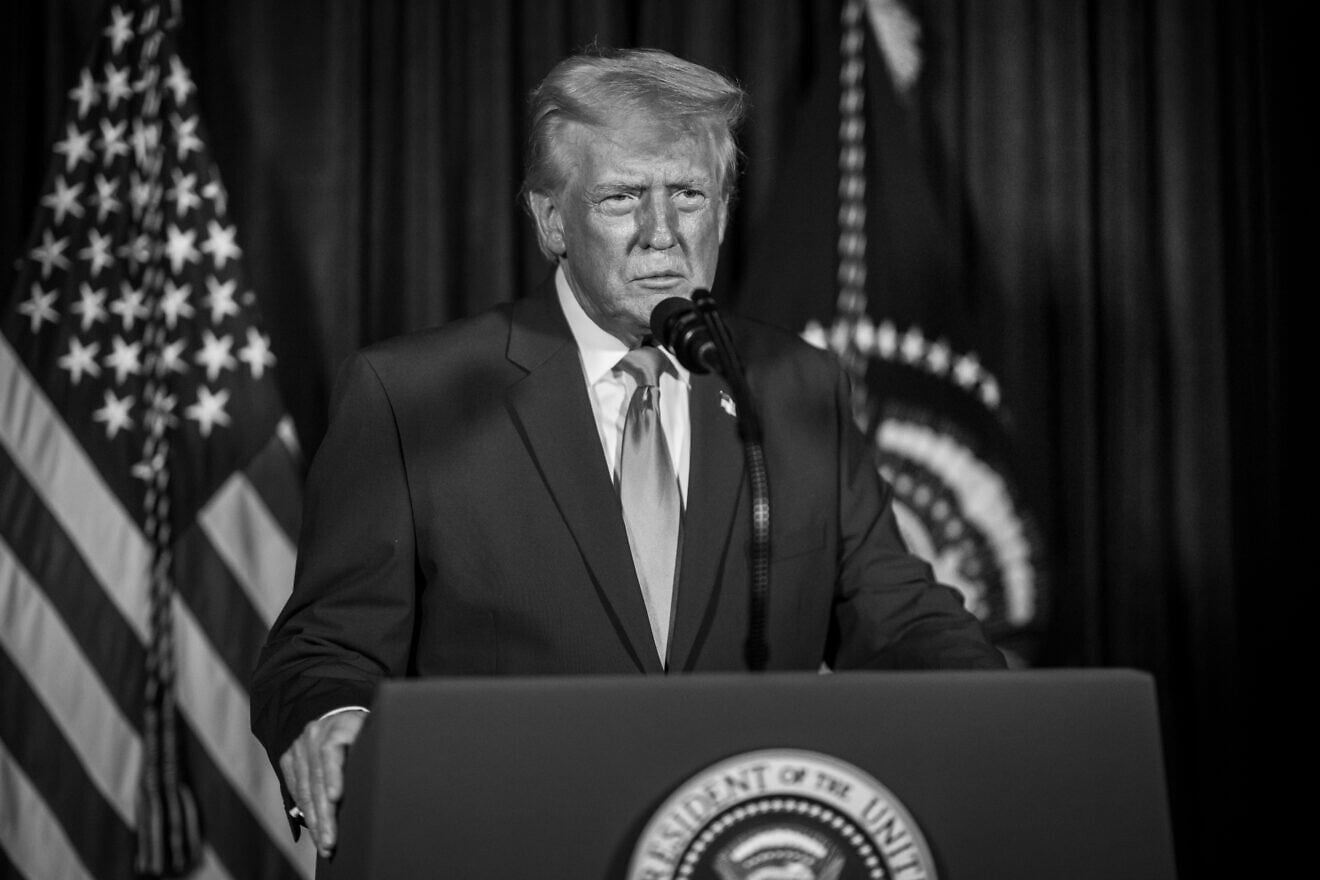

Trump to ‘permanently pause’ migration from ‘third world’ after shooting of National Guard in DC


Trump to ‘permanently pause’ migration from ‘third world’ after shooting of National Guard in DC

Andrew Bernard


“Somalian gangs are roving the streets looking for ‘prey’” in Minnesota, the president said

U.S. President Donald Trump addresses the nation on the shooting of two National Guard soldiers in Washington, D.C., from his residence in Mar-a-Lago in Palm Beach, Fla., Nov. 26, 2025. Credit: Daniel Torok/White House.

U.S. President Donald Trump announced shortly after midnight on Friday that he would “permanently pause migration from all third-world countries,” after an Afghan immigrant allegedly shot and killed a member of the West Virginia National Guard near the White House.

Trump wrote the message as a “Thanksgiving salutation,” before launching into criticism of the “stupid” Americans, who have allowed the country to be “divided, disrupted, carved up, murdered, beaten, mugged and laughed at” over immigration policy, including former president Joe Biden.

“I will permanently pause migration from all third world countries to allow the U.S. system to fully recover, terminate all of the millions of Biden illegal admissions, including those signed by sleepy Joe Biden’s autopen, and remove anyone who is not a net asset to the United States, or is incapable of loving our country, end all federal benefits and subsidies to noncitizens of our country, denaturalize migrants who undermine domestic tranquility and deport any foreign national, who is a public charge, security risk or non-compatible with Western civilization,” Trump wrote.

Rahmanullah Lakanwal, an Afghan national, was arrested on Wednesday for allegedly shooting Spc. Sarah Beckstrom, 20, and Staff Sgt. Andrew Wolfe, 24, near Farragut Square Park, just north of the White House. Beckstrom died of her wounds on Thursday, and Wolfe reportedly remains in critical condition.

Lakanwal entered the United States in 2021 as part of the Biden administration’s “Operation Allies Welcome,” a resettlement program for Afghans who had served with U.S. forces. Before Afghanistan fell to the Taliban, Lakanwal served with an Afghan counterterrorism unit that worked closely with the CIA, The New York Times reported.

It’s not clear which countries will face new immigration restrictions following the announcement. The U.S. Citizenship and Immigration Services announced on Wednesday that it was halting all requests from Afghan nationals pending further review and issued new guidance for negative factors to be considered for requests from 19 “high-risk countries” that Trump previously scrutinized in an executive order.

Those countries include many of the world’s conflict hotspots, including Afghanistan, the Republic of the Congo, Chad, Libya, Yemen, Sudan and Somalia.

JNS sought comment from the White House and U.S. State Department about what countries were included in Trump’s “third world” announcement on Friday.

In addition to criticizing Biden, much of Trump’s message focused on Minnesota, where he claimed “Somalian gangs are roving the streets looking for ‘prey’” under the governance of Gov. Tim Walz, a Democrat, and Rep. Ilhan Omar (D-Minn.).

“The seriously retarded governor of Minnesota, Tim Walz, does nothing, either through fear, incompetence or both, while the worst ‘congressman/woman’ in our country, Ilhan Omar, always wrapped in her swaddling hijab, and who probably came into the U.S.A. illegally in that you are not allowed to marry your brother, does nothing but hatefully complain about our country, its Constitution and how ‘badly’ she is treated,” Trump wrote.

He added that “her place of origin is a decadent, backward and crime-ridden nation, which is essentially not even a country for lack of government, military, police, schools, etc.” (A City Journal investigation suggested that Minnesota tax dollars helped fund the Somali terror group al-Shabab.)

Omar has long faced questions about her previous marriage to Ahmed Nur Said Elmi, who shares a surname with her father. Whether they have any familial relationship is unknown, but Omar has denied that Elmi is her brother.

Although Trump said that his migration pause would apply to “all third-world countries,” he reiterated, on Friday, his claim that white South Africans face a “genocide,” for which he created an asylum program in February.

“They are killing white people and randomly allowing their farms to be taken from them,” Trump wrote. “South Africa has demonstrated to the world they are not a country worthy of membership anywhere, and we are going to stop all payments and subsidies to them, effective immediately.”


Zawartość publikowanych artykułów i materiałów nie reprezentuje poglądów ani opinii Reunion’68,
ani też webmastera Blogu Reunion’68, chyba ze jest to wyraźnie zaznaczone.
Twoje uwagi, linki, własne artykuły lub wiadomości prześlij na adres:
webmaster@reunion68.com


Crypto’s Role in Iran’s Global Terrorism Exposed by New Lawsuit Against Binance


Crypto’s Role in Iran’s Global Terrorism Exposed by New Lawsuit Against Binance

David Swindle


The logo of cryptocurrency exchange Binance. Illustration: Reuters/Dado Ruvic

Cryptocurrency has come under increasing scrutiny for its alleged role in subverting the United States’ sanctions against Iranian state-sponsored terrorism, with the world’s top platform receiving an unwanted spotlight this week.

On Monday, lawyers in North Dakota sued Binance, the world’s largest cryptocurrency exchange, and its CEO, Changpeng Zhao, alleging the company had facilitated more than $1 billion in funding to designated terrorist groups backed by the Islamic regime in Iran. The US federal lawsuit was filed on behalf of victims of Hamas’s Oct. 7, 2023, invasion of and massacre across southern Israel.

The suit represents the latest instance of cryptocurrency allegedly playing a role in Iran’s efforts to destroy the Jewish state. Leaders of Iran and its network of terrorist groups named in the complaint, including Hamas, Hezbollah, and Palestinian Islamic Jihad (PIJ), routinely declare their goal of wiping Israel off the map.

Israel has previously clashed with Binance in its counter-terrorism efforts. In May 2023, the Jewish state seized nearly 200 accounts on the platform linked to Islamist groups, including ISIS. In November 2022, researchers at Nobitex said that since 2018, Binance had processed $7.8 billion through Iran-linked accounts.

This week’s suit adds further evidence of the recurring link between Iranian terrorism and cryptocurrency, identifying the high profit potential for those willing to attempt to dodge US sanctions against terror financing.

Binance has declined to discuss the lawsuit but told Reuters that “we comply fully with internationally recognized sanctions laws.”

Jonathan Missner, the attorney who represents the Oct. 7 victims and their families named as plaintiffs in the suit, said that Binance’s alleged facilitating of payments to terror groups “was not a compliance” but rather “a business model.”

“Our investigation shows that Binance built systems designed to evade oversight, using its off-chain network and weak controls to move enormous sums for sanctioned groups,” he said in a statement.

The lawsuit states that “by knowingly moving and concealing the movement of hundreds of millions of dollars for Hamas, the IRGC [Iran’s Islamic Revolutionary Guard Corps], Hezbollah, and PIJ, Defendants Binance Holdings Limited, Changpeng Zhao, and Guangying ‘Heina’ Chen provided pervasive and systemic assistance to these terrorist organizations.”

Chen is described in the suit as a co-founder of Binance and “de facto CFO.” The lawsuit charges that Zhao and Chen “materially contributed to the Oct. 7 attacks and to subsequent terrorist attacks perpetrated by Hamas, Hezbollah, and PIJ.”

One of the plaintiffs named in the suit is Eyal Balva, whose son Omer died in combat following the Oct. 7 atrocities while serving in the Israel Defense Forces. “Binance’s platform moved the money that helped fund the violence that destroyed our family,” he said.

Zhao and Binance — the world’s largest crypto trading platform with $300 billion in daily trades and more than 280 million users — have previously faced penalties for criminality. As part of a 2023 settlement agreement with the US Treasury Department’s Financial Crimes Enforcement Network, Binance paid $4.3 billion in fines and restitution. Zhao was previously convicted of money laundering and served four months imprisonment. US President Donald Trump pardoned Zhao, with analysts noting the decision came following a sizable investment by Binance into the Trump family Crypto exchange platform World Liberty Financial.

The lawsuit also notes a money laundering scheme involving transferring gold from Venezuela to Iran to overcome American sanctions, and that Binance “pitched itself to terrorist organizations, narcotics traffickers, and tax evaders as beyond the reach of any single country’s laws or regulations.”

On Wednesday, Iran’s Foreign Minister Abbas Araghchi put out a statement condemning the possibility of potential US military action against Venezuela, labeling the Trump administration’s posture a “bullying approach.”

The filing against Binance comes in a year in which Australian authorities have highlighted the alleged role of cryptocurrency in directing antisemitic hate crimes in Melbourne and Sydney, prompting the expulsion of Iran’s ambassador in August.

Australian Security Intelligence Organization (Asio) chief Mike Burgess said that his team had found connections “between the alleged crimes and the commanders in Iran’s Islamic Revolutionary Guard Corps, the IRGC.”

He added, “They’re just using cut-outs, including people who are criminals and members of organized crime gangs to do their bidding or direct their bidding.”

Cryptocurrency has long functioned as a tool of Iran to evade US sanctions. The high energy costs from the so-called “mining” of cryptocurrency — powerful computers must run complex programs in order to generate additional tokens for trading — has put a strain on Iran’s electrical system. Mohammad Allahdad, Iran’s deputy director of power generation, said that the business practice “represents around 5 percent of total electricity consumption” and “it accounts for up to 20 percent of the current power deficit.”

Allahdad also warned that the heat from crypto mining devices was “intense” and could cause fires. “We’ve had multiple reports from fire departments about fires linked to mining rigs, some of which spread to neighboring homes,” he noted.

Now is potentially the worst time for fires in Iran, given a persistent devastating drought and ongoing government mismanagement of the water system. The situation has reached the point that Iran’s president said last week that the country had “no choice” but to evacuate and move the capital Tehran.

“The truth is, we have no choice left — relocating the capital is now a necessity,” Iranian President Masoud Pezeshkian said in a speech.

The US State Department recently noted that Iran has provided Lebanese Hezbollah with more than $100 million each month this year. Critics of the regime have pointed out that funds spent in the war effort to destroy Israel could have gone toward improving infrastructure to better support the civilian population. Analysts at the Center for Strategic and International Studies noted that one-third of the water supply to Tehran is lost through leaks and theft.


Zawartość publikowanych artykułów i materiałów nie reprezentuje poglądów ani opinii Reunion’68,
ani też webmastera Blogu Reunion’68, chyba ze jest to wyraźnie zaznaczone.
Twoje uwagi, linki, własne artykuły lub wiadomości prześlij na adres:
webmaster@reunion68.com