Archive | 2025/11/25

Palestyńscy terroryści grożą atakami na Międzynarodowe Siły Stabilizacyjne

Hamas, Palestyński Islamski Dżihad (PIJ) oraz inne palestyńskie ugrupowania terrorystyczne odrzuciły rezolucję Rady Bezpieczeństwa ONZ nr 2803, która wita z zadowoleniem powołanie „Rady Pokoju” oraz tymczasowych „Międzynarodowych Sił Stabilizacyjnych” w Strefie Gazy. Oświadczenie PIJ zawierało bezpośrednie groźby pod adresem proponowanych międzynarodowych sił. Na zdjęciu: terroryści Hamasu stoją obok pojazdu Międzynarodowego Czerwonego Krzyża (ICRC) w Gazie, 2 listopada 2025 r. (Zdjęcie: Zrzut z ekranu wideo.


Palestyńscy terroryści grożą atakami na Międzynarodowe Siły Stabilizacyjne

Khaled Abu Toameh


Hamas, PIJ i inne palestyńskie ugrupowania terrorystyczne odrzuciły wspieraną przez USA rezolucję nr 2803 Rady Bezpieczeństwa ONZ, przyjętą 17 listopada, która zakłada powołanie „Rady Pokoju” i tymczasowych „Międzynarodowych Sił Stabilizacyjnych” w Strefie Gazy. Rezolucja opiera się na 20-punktowym planie pokojowym prezydenta USA Donalda J. Trumpa, mającym na celu zakończenie wojny w Strefie Gazy, która wybuchła w odpowiedzi na inwazję Hamasu na Izrael z 7 października 2023 roku.

Tego dnia terroryści Hamasu i ich zwolennicy zamordowali 1200 obywateli Izraela i cudzoziemców oraz ranili tysiące innych. 251 osób zostało uprowadzonych do Strefy Gazy, gdzie nadal przetrzymywane są szczątki trojga zakładników – dwóch Izraelczyków i jednego obywatela Tajlandii.

Hamas twierdzi, że zgodził się jedynie na pierwszy etap planu Trumpa, który zakłada zakończenie wojny i uwolnienie wszystkich zakładników – żywych i zmarłych – w ciągu 72 godzin. Miało to miejsce 9 października 2025 roku; od tego czasu minęły już tygodnie.

Ostatnio liderzy Hamasu stwierdzili, że nigdy nie zgodzili się na kolejne etapy planu, które wymagają od zbrojnych ugrupowań złożenia broni oraz akceptacji rozmieszczenia sił międzynarodowych i powołania tymczasowego międzynarodowego organu zarządzającego Strefą Gazy.

Odrzucając rezolucję Rady Bezpieczeństwa ONZ nr 2803, palestyńskie ugrupowania terrorystyczne dają jasno do zrozumienia, że nie zamierzają się rozbrajać ani pozwolić międzynarodowym postaciom, takim jak Trump czy były premier Wielkiej Brytanii Tony Blair, na odgrywanie jakiejkolwiek roli w zarządzaniu Strefą Gazy.

Jedynym powodem, dla którego ugrupowania terrorystyczne zgodziły się na pierwszy etap planu Trumpa, było zakończenie wojny i utrzymanie przez nie kontroli nad Strefą Gazy.

Odrzucenie rezolucji przez ugrupowania terrorystyczne stanowi bezpośrednie wyzwanie nie tylko wobec administracji Trumpa, ale także wobec szeregu krajów arabskich i muzułmańskich, w tym Egiptu, Arabii Saudyjskiej, Turcji, Kataru, Zjednoczonych Emiratów Arabskich i Jordanii, jak również wobec Autonomii Palestyńskiej, która poparła sponsorowaną przez USA rezolucję. Czas pokaże, jak administracja Trumpa oraz państwa arabskie i islamskie odpowiedzą na nieustępliwość grup terrorystycznych.

W przeciwieństwie do administracji USA, Hamas i inne ugrupowania terrorystyczne nie postrzegają propozycji Trumpa jako planu pokojowego. Traktują go raczej jako kolejne tymczasowe zawieszenie broni z Izraelem.

Głównym powodem sprzeciwu tych grup wobec obecności sił międzynarodowych lub międzynarodowego organu zarządzającego w Strefie Gazy jest wyraźna obawa, że taka koalicja przeszkodzi im w prowadzeniu dżihadu przeciwko Izraelowi. Masakra z 7 października była dla nich kolejnym etapem świętej wojny mającej na celu zniszczenie Izraela i ustanowienie państwa islamistycznego.

W oświadczeniu wydanym w ubiegłym roku przez grupę uczonych muzułmańskich czytamy:

„Współczesny dżihad przybiera wiele form, umożliwiając muzułmanom wypełnianie obowiązku religijnego na różne sposoby. Obejmuje to zbrojny dżihad i jego rozszerzanie tam, gdzie wróg planuje swoje działania. Należy uprzedzać wroga na terenach, gdzie zamierza się rozszerzać, i zaskakiwać go, zanim podejmie inicjatywę. Dżihad obejmuje także wsparcie mudżahedinów [bojowników dżihadu] pieniędzmi, bronią i wszystkim, czego potrzebują w swoim błogosławionym dżihadzie; jak również opiekę nad rodzinami mudżahedinów, męczenników, więźniów i potrzebujących.”

Co zatem powiedziały Hamas i inne ugrupowania terrorystyczne na temat rezolucji ONZ?

„Rezolucja nie odpowiada politycznym i humanitarnym żądaniom oraz prawom naszego narodu palestyńskiego” – ogłosił Hamas w oświadczeniu. – „Rezolucja narzuca mechanizm międzynarodowej kurateli nad Strefą Gazy, co jest nie do przyjęcia dla naszego narodu i frakcji.”

Odnosząc się do klauzuli o demilitaryzacji Strefy Gazy, Hamas dodał:

„Opór wobec [izraelskiej] okupacji wszelkimi środkami jest prawem gwarantowanym przez prawo międzynarodowe i konwencje. Każda dyskusja na temat uzbrojenia musi pozostać sprawą wewnętrzną i narodową.”

Palestyński Islamski Dżihad (PIJ), kolejne ugrupowanie terrorystyczne w Strefie Gazy, odpowiedział na rezolucję:

„Odrzucamy rezolucję przyjętą przez Radę Bezpieczeństwa ONZ, ponieważ stanowi ona międzynarodowy kuratelę nad Strefą Gazy, co wszystkie komponenty naszego narodu i frakcji odrzucają. Nasz naród ma prawo do oporu wobec [izraelskiej] okupacji wszystkimi legalnymi środkami – prawo to jest gwarantowane przez prawo międzynarodowe, a broń ruchu oporu jest gwarancją tego prawa. Każde przypisanie siłom międzynarodowym zadań obejmujących rozbrojenie ruchu oporu przekształca je z neutralnej strony w uczestnika realizacji agendy okupanta.”

Ostatnia część oświadczenia PIJ to w istocie bezpośrednia groźba ataków terrorystycznych na członków Międzynarodowych Sił Stabilizacyjnych w Strefie Gazy.

Fayez Abu Shamala, propalestyński akademik z Gazy, wyraził się jeszcze bardziej dosadnie w kwestii atakowania sił międzynarodowych:

„Z mojego punktu widzenia, bojownicy palestyńskiego ruchu oporu w Gazie potraktują amerykańskie siły stabilizacyjne tak, jak afgańscy mudżahedini potraktowali siły USA w 2001 roku, jak iraccy powstańcy potraktowali amerykańskich najeźdźców w 2003 roku, i jak ruch oporu potraktował ambasadę USA w Libanie w 1984 roku. Siły stabilizacyjne zostaną zaatakowane przez [palestyńskich] powstańców.”

Palestyńskie ugrupowania terrorystyczne wydają się niestety zdeterminowane, by zniweczyć plan pokojowy Trumpa i doprowadzić do dalszej śmierci i zniszczenia wśród mieszkańców Strefy Gazy.


Link do oryginału: https://www.gatestoneinstitute.org/22067/terrorists-threaten-international-stabilization-force

Gatestone Institute, 20 listopada 2025

Khaled Abu Toameh – urodzony w 1963 r. w Tulkarem na Zachodnim Brzegu, arabski dziennikarz, któremu wielokrotnie grożono śmiercią. Publikował między innymi w “The Jerusalem Post”, “Wall Street Journal”, “Sunday Times”, “U.S. News”, “World Report”, “World Tribune”, “Daily Express” i palestyńskim dzienniku “Al-Fajr”. Od 1989 roku jest współpracownikiem i konsultantem NBC News. (Mieszka w Izraelu.)


Zawartość publikowanych artykułów i materiałów nie reprezentuje poglądów ani opinii Reunion’68,
ani też webmastera Blogu Reunion’68, chyba ze jest to wyraźnie zaznaczone.
Twoje uwagi, linki, własne artykuły lub wiadomości prześlij na adres:
webmaster@reunion68.com

Defending the Judeo-Christian tradition 60 years after ‘Nostra Aetate’


Defending the Judeo-Christian tradition 60 years after ‘Nostra Aetate’

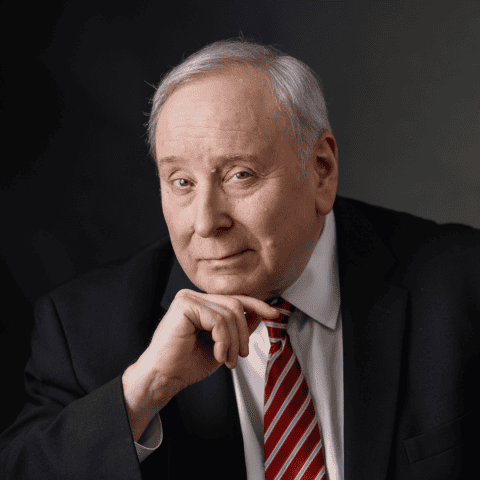
onathan S. Tobin


Tucker Carlson, Nick Fuentes and their enablers aren’t really arguing about foreign policy or “gatekeeping.” Their focus is on splitting Jews from their Christian allies.

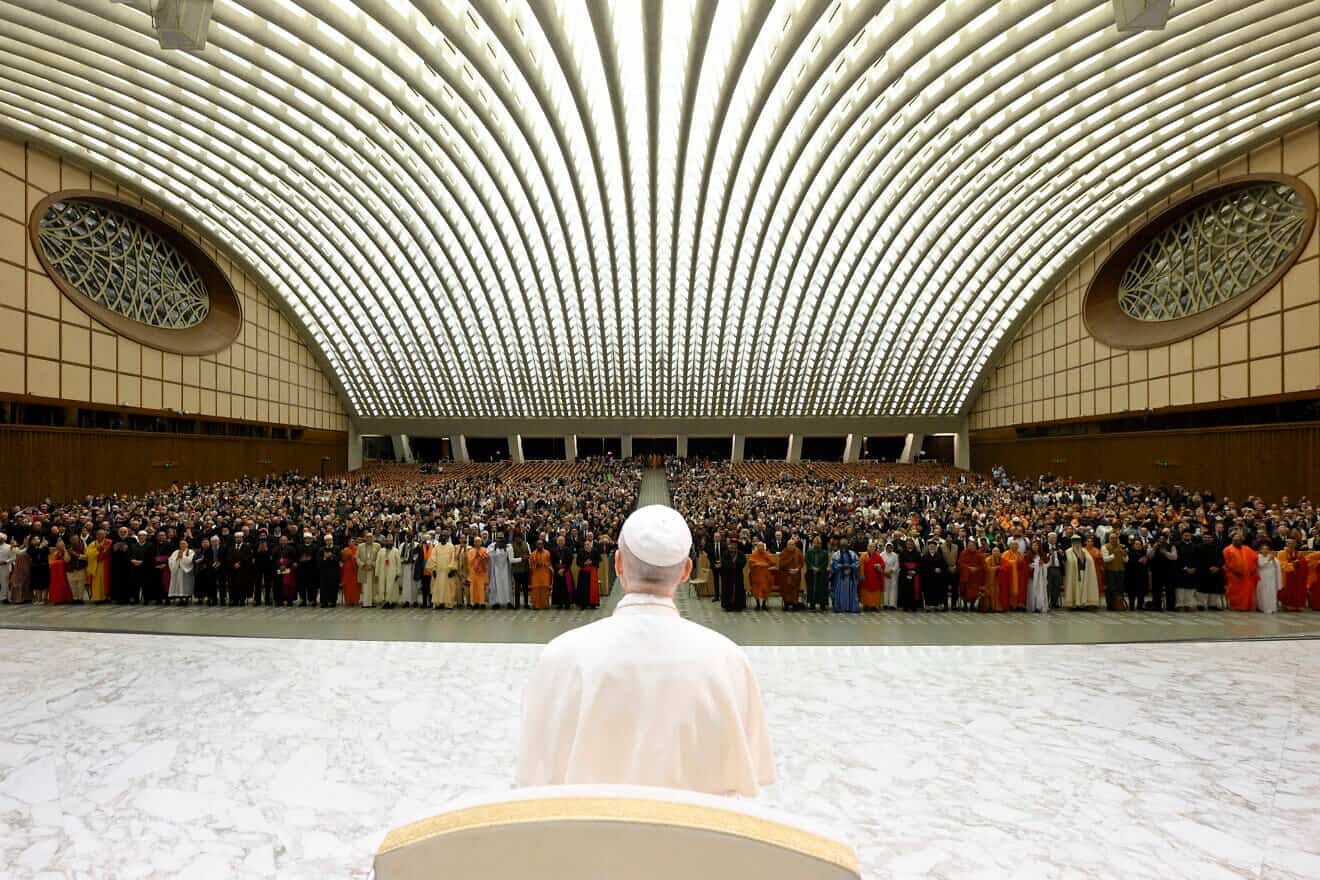
Pope Leo XIV presides at “Walking Together in Hope,” a celebration of 60 years of “Nostra Aetate,” the Second Vatican Council’s Declaration on Interreligious Dialogue at Paul VI Hall on Oct. 28, 2025 in Vatican City, Vatican. Photo by Simone Risoluti, Vatican Media via Vatican Pool/Getty Images.

At a time when antisemitism is surging across the globe, it’s unsurprising that the anniversary of the publication of a crucial document that sought to end many centuries of Christian discrimination and persecution of Jews passed largely without notice in the general media. Nostra Aetate (Latin for “In Our Time”) or the “Declaration on the Relation of the Church with Non-Christian Religions” was promulgated by the Second Vatican Council under the authority of Pope Paul VI on Oct. 28, 1965.

For the first time in the history of the Catholic Church, its central governing authority had issued a definitive statement about relations between its adherents and the Jewish people. It sought to change it from one of perennial antagonism to one of understanding and fellowship. Most specifically, it rejected the age-old accusation that Jews bore collective guilt for the death of Jesus and affirmed the spiritual bond between Christianity and Judaism. In a single stroke, the Church went from being an institution that had long been a bulwark of antisemitism to its avowed opponent. It sought to create the foundation not merely for a new age of interfaith dialogue but also for undermining the kind of mass support for Jew-hatred that had made the Holocaust possible only two decades beforehand.

More relevant than ever

In 2025, however, Nostra Aetate is more than just a glorious historical achievement that deserves to be remembered and celebrated. Sadly, it is as relevant today as it was in 1965 because—though it seemed to have suffered a decisive and perhaps fatal blow 60 years ago—antisemitism isn’t merely on the rise. It has become normalized in the very countries where it was thought to be dying out at the time of the document’s publication.

Equally important, the institution that took this important stand now finds itself in a morally compromised position. At the same time, it is publicly opposing hate against Jews, while also helping fuel it through often unfair and even outrageous stands about the ongoing war being waged against Israel by those who seek its destruction and the genocide of the Jews.


Jonathan S. Tobin is editor-in-chief of the Jewish News Syndicate, a senior contributor for The Federalist, a columnist for Newsweek and a contributor to many other publications. He covers the American political scene, foreign policy, the U.S.-Israel relationship, Middle East diplomacy, the Jewish world and the arts. He hosts the JNS “Think Twice” podcast, both the weekly video program and the “Jonathan Tobin Daily” program, which are available on all major audio platforms and YouTube. Previously, he was executive editor, then senior online editor and chief political blogger, for Commentary magazine. Before that, he was editor-in-chief of The Jewish Exponent in Philadelphia and editor of the Connecticut Jewish Ledger. He has won more than 60 awards for commentary, art criticism and other writing. He appears regularly on television, commenting on politics and foreign policy. Born in New York City, he studied history at Columbia University.


Zawartość publikowanych artykułów i materiałów nie reprezentuje poglądów ani opinii Reunion’68,
ani też webmastera Blogu Reunion’68, chyba ze jest to wyraźnie zaznaczone.
Twoje uwagi, linki, własne artykuły lub wiadomości prześlij na adres:
webmaster@reunion68.com


Jewish Band Reacts to UK Music Hall Admitting ‘Mistake’ to Cancel Gig After Pressure From Anti-Israel Activists


Jewish Band Reacts to UK Music Hall Admitting ‘Mistake’ to Cancel Gig After Pressure From Anti-Israel Activists

Shiryn Ghermezian


Demonstrators hold Israeli and British flags outside the Law Courts, during a march against antisemitism, after an increase in the UK, during a temporary truce between the Palestinian Islamist terrorists Hamas and Israel, in London, Britain, Nov. 26, 2023. Photo: REUTERS/Susannah Ireland

The British band Oi Va Voi said on Wednesday it welcomed an apology from the music hall Strange Brew in the United Kingdom in which the venue admitted it “made a mistake” in canceling the band’s gig following pressure from activist groups.

The modern folk klezmer band from London, which is comprised of British Jews and non-Jews, said it also welcomed how the venue in Bristol “accepted that it treated Oi Va Voi differently due to our Jewish heritage” when it made the abrupt decision to cancel their show on May 21 with Israeli singer Zohara as a guest performer. Oi Va Voi added that it believes the “intimidation” by activist groups who pressured the venue to cancel the concert “would never be tolerated against any other minority, either in the music industry or elsewhere. Anti-Jewish racism is racism, and racism is injustice, wherever it comes from.”

Strange Brew explained this week that it made a “last-minute decision” to cancel the May 21 show due to “complaints” from activist groups, including criticism of the cover art on Zohara’s 2024 solo album “Welcoming The Golden Age.” The album cover features the Israeli musician naked and holding onto a wheelbarrow full of watermelons while standing in a field of watermelons. In May, Strange Brew said in the now-deleted Instagram post, cited by BristolLive, that activist groups claimed the artwork contained “politically loaded symbolism related to the people of Palestine.” The watermelon has become a symbol of Palestinian solidarity and resistance since it shares the same colors as the Palestinian flag.

Now, months later, Strange Brew apologized for canceling the May 21 show and said it has “resolved the situation amicably” with Oi Va Voi.

“We recognize that Oi Va Voi was likely only subjected to this level of scrutiny, and Zohara’s album artwork interpreted negatively, because they are a Jewish band performing with an Israeli singer,” the venue said in an Instagram post on Wednesday. “Oi Va Voi are musicians, not activists. They have no political affiliations and, as far as we are aware, have never made any political statements, be it in their music or otherwise. We are an inclusive venue, and it was not in line with our values to exclude Oi Va Voi and Zohara from performing on the basis of conjecture by another group about their views.”

The venue added that in light of the incident, it has enforced “compulsory antisemitism training for all our senior management” and made a donation to the Community Security Trust (CST), a British charity that aims to protect British Jews from terrorism and antisemitism. Strange Brew also urged other music venues to “not hold Jewish artists, wherever they may be from, to a higher standard by demanding they account for the actions of others or let the current conflict [in the Middle East] effectively exclude Jewish acts from our venues.”

“Jewish people have greatly enriched the UK’s music and arts scenes, helping shape its sounds and stories,” the venue said. “Losing this vital source of creativity would be a real loss for the country.”

Oi Va Voi acknowledged Strange Brew’s donation to the CST and commitment to enforce antisemitism training in the band’s statement on Wednesday. It called complaints from activist groups about the band, its music, and Zohara’s album artwork “untrue and misguided claims.”

“The only reason we received a level of scrutiny that would lead to such false accusations is because of our heritage and the nationality of one of our performers,” the group stated. The band then expressed disappointment in “the lack of solidarity” from fellow musicians and the “deafening” silence from the “wider music industry” after their gig was canceled

“The readiness of venues, promoters, and festivals to cave in to demands that exclude Jewish artists, and the lack of attention from the music press when this does happen, has contributed to an environment which has allowed anti-Jewish racism in Britain to persist largely unchallenged,” Oi Va Voi wrote. “This episode has had an immense personal and emotional impact on us. It has also led to financial loss, reputational damage and a barrage of hate, the like of which we had never experienced before.”

Immediately after the May 21 concert was abruptly canceled, Oi Va Voi responded to the move by saying that criticism about the band from activists and claims about the political intentions of Zohara’s album artwork are both “untrue” and “misguided.”

“Anyone who knows Oi Va Voi knows that we sing songs which are socially conscious, humanitarian, and speak to audiences across divides,” the band said at the time. “We are a non-political band who plays to bring people together, not to polarize them. And we are proud of it.”

In her own statement released in May, Zohara defended her album cover and said, “This discussion is secondary to the only thing that truly matters: ending the starvation in Gaza, bringing all the hostages home, stopping Israel’s bombardments.”

She explained that the image of her “gathering fruit in a field” was not meant to have any political implications, and in fact, she “didn’t know” originally that watermelons were a symbol of Palestinian solidarity. She added that after learning about the connection, her artwork feels more “meaningful” to her because of her own Moroccan heritage and how “for many years,” the Moroccan culture “was silenced where I grew up.”

“Boycotting artists over imagined narratives doesn’t serve justice,” she said in conclusion. “It silences the very people working to create better futures.”


Zawartość publikowanych artykułów i materiałów nie reprezentuje poglądów ani opinii Reunion’68,
ani też webmastera Blogu Reunion’68, chyba ze jest to wyraźnie zaznaczone.
Twoje uwagi, linki, własne artykuły lub wiadomości prześlij na adres:
webmaster@reunion68.com