Archive | 2025/11/30

Ankieta, której boi się francuska inteligencja

A French police officer stands guard in front of a synagogue in Sarcelles, a suburb of Paris, on October 11, 2023. Geoffroy Van Der Hasselt/AFP via Getty Images

Ankieta, której boi się francuska inteligencja


Anna Grabowska


We Francji wszystko zaczyna się od sceny, bądź obrazu, które powinny wywoływać moralne oburzenie, a tymczasem stały się szarą codziennością. Przed szkołą żydowską stoi radiowóz. Obok – barierki, czasem żołnierz lub policjant z bronią. W środku dzieci mają lekcje matematyki, historii, literatury. Na zewnątrz państwo próbuje zablokować to, czego społeczeństwo nie potrafi już kontrolować – nienawiść, która wymknęła się spod fasady republikańskich i wyperfumowanych sloganów. Widok ten nie jest ani środkiem ostrożności, ani świętem czujności państwa. To dowód porażki. Bo jeśli szkoła musi wyglądać jak placówka dyplomatyczna w Kabulu, to nie jest zwykła ostrożność, to kapitulacja przed rzeczywistością, którą Francja woli przemilczeć. To wszystko odbywa się w kraju, który lubi o sobie mówić, że jest latarnią praw człowieka. Tymczasem ta latarnia świeci wybiórczo, oświetla deklaracje polityków, a pogrąża w cieniu fakty stojące tuż pod ich drzwiami. Jednym z tych faktów jest policja, która musi zabezpieczać szkoły żydowskie, bo inaczej mogłoby dojść do tragedii. Wszyscy wiedzą, że to konieczność. Nikt nie udaje, że to normalne.

Właśnie w tym momencie Ministerstwo Szkolnictwa Wyższego postanawia zrobić coś, co w normalnym kraju byłoby oczywistością – zapytać uniwersytety o poziom antysemityzmu. IFOP przygotowuje kwestionariusz, czterdzieści cztery pytania, które miały ujawnić skalę uprzedzeń, lęków, nadużyć, mowy nienawiści. Miało być prosto, zobaczyć i zmierzyć rzeczywistość, na którą brakuje odwagi by dostrzec ją gołym okiem. I wtedy wybuchła panika. Nie u skrajnych aktywistów, nie na marginesie. Wybuchła na uniwersytetach – tych samych, które od lat deklarują, że ich etosem jest “odwaga intelektualna” i “szczerość debaty”. Środowisko, które powinno być pierwsze na barykadach w obronie prawdy, dostało ataku moralnej histerii na widok ankiety. Nagle wszyscy mówią jednym chórem: to “inwigilacja i zamach na wolność akademicką”, to “sondaż polityczny”. France Universités odmówiło jej przekazania. Związki zawodowe wzywają do bojkotu. Pojawiają się dramatyczne apele o “naruszenie neutralności”. A przecież najbardziej krzyczą ci, którzy od miesięcy powtarzają, że antysemityzm nie jest problemem.

Dlaczego się aż tak boją? Bo boją się prawdy. Bo wiedzą, że test, który miał odsłonić rzeczywistość, stał się zagrożeniem nie dla wolności, lecz dla pozorów.

Uniwersytety nie boją się metodologii. One boją się wyniku. Bo wynik byłby katastrofalny. SPCJ i CRIF alarmują od miesięcy: od 7 października liczba aktów antysemityzmu we Francji wystrzeliła – o ponad 1 600 incydentów w ciągu roku. Najwięcej od dekad. W szkołach laickich prawie połowa incydentów dotyczy Żydów, choć stanowią mniej niż jeden procent populacji. W przestrzeni publicznej dochodzi do pobić, obelg, zastraszeń, gróźb, a w jednym z najcięższych przypadków – do gwałtu motywowanego nienawiścią. A w tym samym czasie uniwersytety, te same, które pouczają świat o “prawach mniejszości”, bronią się przed samym pomysłem, że ktoś mógłby zmierzyć ich własny wkład w tę nienawiść. To nie jest przypadek. To jest europejska tradycja. Kontynuacja wielowiekowej elegancji, z jaką kontynent racjonalizował nienawiść do Żydów. Europa od wieków wypracowała subtelną sztukę nazywania antysemityzmu “kulturą”, “religią”, “dyskursem”. Voltaire pisał o Żydach jako “najpodlejszym i najbardziej chciwym narodzie”. Proudhon chciał ich “deportować albo zgładzić”. Maurras marzył o Europie “bez ani jednego Żyda”. Heidegger oskarżał ich o “rachunkową machinację nowoczesności”. Picasso, tak, nawet on, w okupowanym Paryżu rzucał: “Żydzi są jak trawa – mnożą się wszędzie”. To nie są marginalni głupcy. To są świętości europejskiej kultury. Nikt im nie zarzucał “braku neutralności”. Ich nienawiść była elegancko opakowana, traktowana jak ozdobny motyw, część kulturowego pejzażu.

A gdy Bernanos pisał, że “Hitler zhańbił antysemityzm”, brzmiało to tak, jakby mówił o pięknej, starej tradycji, którą dopiero nazizm zepsuł. Europejska mentalność w pigułce: nienawiść była “dopuszczalna”, dopóki pozostawała salonowa. Dopóki nie zamieniła się w obóz śmierci. Dopóki można było nią błyszczeć w literackich frazach.

Dzisiaj widzę dokładnie ten sam mechanizm, tylko w nowej dekoracji. Nikt oficjalnie nie powie: “Żydzi są podli”. Zamiast tego mówi się: “Izrael jest kolonizatorem”. Nikt nie powie: “nienawidzę Żydów”. Zamiast tego mówi się: “walczę z syjonizmem”. To jest ta sama nienawiść, tylko przefiltrowana przez akademicką poprawność. Ta sama przemoc, opakowana w słowo “solidarność”. Dokładnie ta sama tradycja, ubrana w nowe hasła.

W tym czasie dzieci wracają z zajęć sportowych, z kina, z transportu publicznego i słyszą, że są “brudnymi Żydami”. Dwunastoletnią dziewczynkę w Courbevoie gwałcą nieletni, policja potwierdza motyw antysemicki. W Lyonie pobity zostaje czternastolatek, bo “wygląda żydowsko”. Rodziny zdejmują z framug mezuzy, bo boją się, że ich drzwi staną się obiektem ataku. W Val-de-Marne zerwano mezuzy z kilku mieszkań i zdewastowano całe piętro. Patrick Zachmann fotografuje puste framugi po mezuzach – rany na ścianach, ślady strachu. To jest prawdziwa twarz problemu. Nie abstrakcyjne definicje, nie akademickie analizy, nie wielkie słowa z debat telewizyjnych. Prawda stoi na chodniku: framuga bez mezuzy, radiowóz przed szkołą, pobite dziecko. To jest rzeczywistość, którą uniwersytety próbują zasłonić własnym lękiem. Laickość nie chroni przed nienawiścią. Reguluje symbole. Nienawiści symbole nie są potrzebne. Wystarczy twarz, nazwisko, akcent, podejrzenie. We współczesnej Francji nie trzeba nosić gwiazdy Dawida, by stać się celem. Wystarczy, że ktoś pomyśli: “on wygląda jak Żyd”.

I tu koło się domyka: uniwersytety nie chcą ankiety, ponieważ wiedzą, że nie są niewinne. Wiedzą, że ich własne środowisko stało się przestrzenią, w której antysemityzm uchodzi za “polityczną postawę”. Wiedzą, że prawda pociągnęłaby ich do odpowiedzialności. I wreszcie – wiedzą, że musieliby przestać udawać.

Dlatego zamiast stanąć po stronie ofiar, stają po stronie własnego komfortu. Dlatego wolą krzyczeć o “zagrożeniu dla wolności”, niż przyznać, że ich milczenie ma swoją cenę. To właśnie jest sedno: nie metodologiczne spory, nie neutralność. I żadna troska o prywatność. Tylko strach przed lustrem. Europa od wieków ma z nim problem. Zawsze łatwiej było jej wskazać Żyda jako winnego, niż spojrzeć na siebie. I dziś jest dokładnie tak samo.

Bo jeśli państwo musi chronić żydowskie dzieci karabinami, a uniwersytety muszą chronić siebie przed prawdą, to tylko jedna strona obnaża rzeczywistość. I nie są to uniwersytety.


Źródła:

https://www.crif.org/…/crif-rapport-annuel-du-spcj-les

https://www.spcj.org/…/chiffres-de-l-antis%C3%A9mitisme

https://www.senat.fr/questions/base/2025/qSEQ250203097.html

https://www.ifop.com/…/analyse-radiographie

https://www.lepoint.fr/…/l-antisemitisme-en-france-une

https://www.lemonde.fr/…/inside-france-s-jewish

https://www.rfi.fr/…/20240415-france-ups-security-at

https://www.lemonde.fr/…/antisemitisme-des-actes

https://www.middleeasteye.net/live-blog/live-blog-update/french-university-union-calls-withdrawal-biased-antisemitism-survey?fid=550417&;nid=430463&topic=Israel%27s%20genocide%20in%20Gaza

https://jewishjournal.com/…/neighbor-of-paris-synagogue

https://revues.droz.org/…/download/RHP_2.4_505-522/pdf


Anna Grabowska 
– urodzona i mieszkająca we Francji wspaniała syjonistka z solidnymi polskimi i żydowskimi korzeniami. Autorka udzieliła pozwolenia na publikację niektórych wpisów z jej Facebooka w „Listach z naszego sadu”.


Zawartość publikowanych artykułów i materiałów nie reprezentuje poglądów ani opinii Reunion’68,
ani też webmastera Blogu Reunion’68, chyba ze jest to wyraźnie zaznaczone.
Twoje uwagi, linki, własne artykuły lub wiadomości prześlij na adres:
webmaster@reunion68.com


Israeli president: Move to rename Dublin’s Herzog Park is ‘disgraceful’


Israeli president: Move to rename Dublin’s Herzog Park is ‘disgraceful’

JNS Staff


A Jewish leader called the city council “full-on Nazi” determined to “erase Jewish/Irish history” amid reports the new name may be “Free Palestine.”

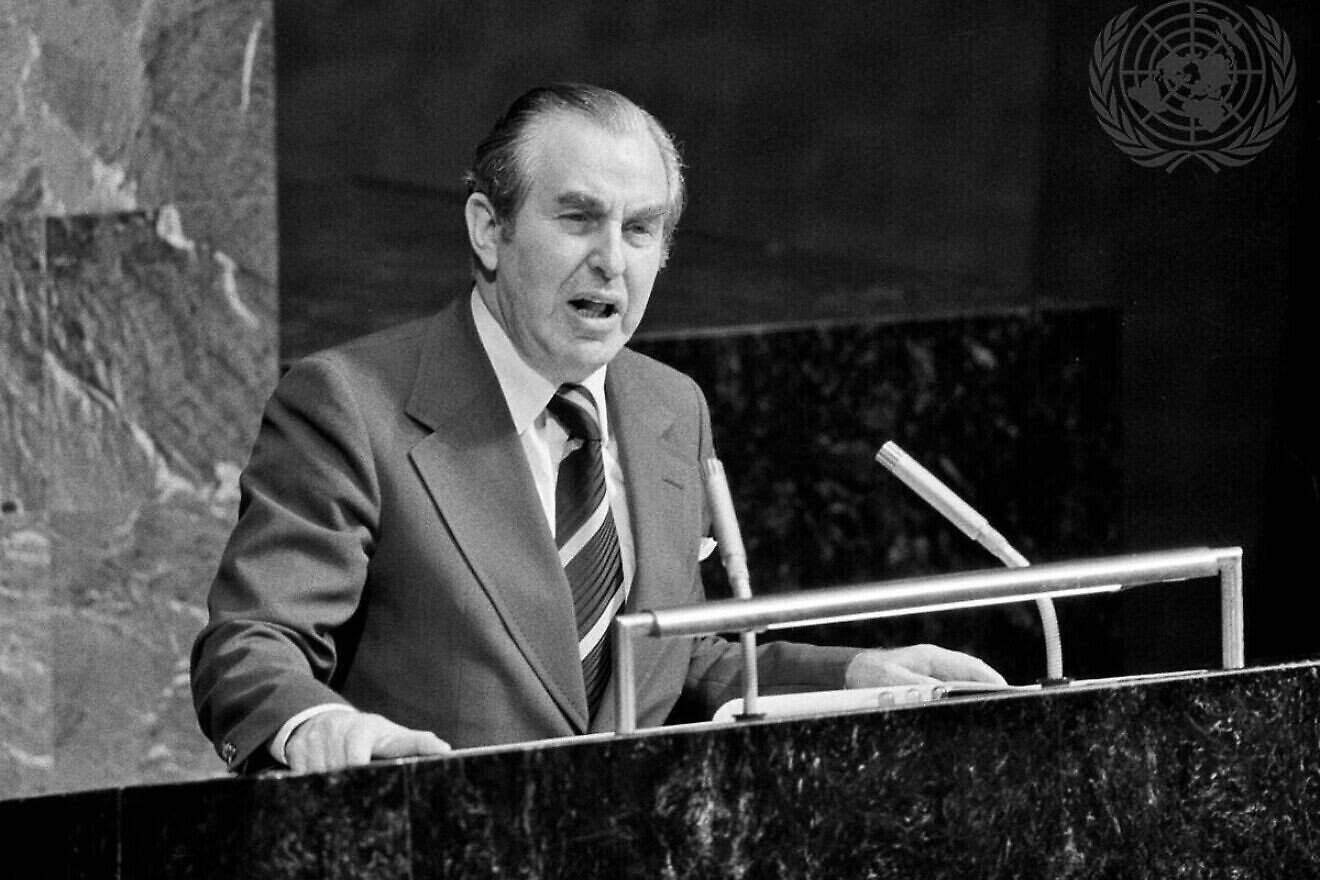
Israeli Ambassador to the United Nations Chaim Herzog addresses the U.N. General Assembly on the day it passed a resolution saying Zionism is racism. Nov. 10, 1975. Credit: U.N. Photo/Michos Tzovaras.

If Dublin renames Herzog Park, named after Israel’s sixth president, Chaim Herzog, it would be “a shameful and disgraceful move,” Isaac Herzog, the Jewish state’s current head of state, said on Saturday night.

Chaim Herzog (1918-97) was Isaac’s father.

“We are following with concern the reports from Ireland regarding the intention to harm the legacy of the sixth President of the State of Israel, the late Chaim Herzog, as well as harming the unique expression of the historical connection between the Irish and Jewish peoples,” Isaac Herzog said in a statement.

“Beyond being an Israeli leader, Chaim Herzog was also a hero of the campaign to liberate Europe from the Nazis [as an officer in the British Army] and a figure who dedicated his life to establishing the values of freedom, tolerance, the pursuit of peace, and the fight against antisemitism,” Isaac Herzog continued.

Rabbi Isaac HaLevi Herzog (1888-1959), Chaim’s father, served as the first chief rabbi of the Irish Free State—as well as the first Ashkenazi  chief rabbi of the State of Israel—“and left a significant mark on the life of the Irish nation in those days,” the president went on to say.

Naming the park, located in the city’s suburb of Rathgar, in honor of Chaim Herzog in 1995 “expressed appreciation for his legacy and the deep friendship between the Irish and Jewish peoples,” the Israeli president noted.

He lamented the deterioration in relations between Ireland and the Jewish state in recent years, adding that he hopes for their “recovery.

The Dublin City Council is convening on Monday to deliberate a proposal to remove the park’s existing name and to replace it.

According to Irish outlet The Journal, Labour Party councilor Fiona Connelly made a motion in December 2024 regarding the name of the park, which was adopted by the city council’s South East Area Committee.

Two separate petitions called on the committee to adopt the names “Hind Rajab Park,” after a girl allegedly killed by the Israel Defense Forces in Gaza during Israel’s war against Hamas in 2024, and “Free Palestine Park.”

Israeli Foreign Minister Gideon Sa’ar posted on X a formal document of the Dublin City Council discussing the matter, saying that this incident demonstrates the “accurate and just” decision that he made in December 2024 to close the Israeli embassy in Ireland shortly after he assumed office.

“Dublin has become the capital of antisemitism in the world. The Irish antisemitic and anti-Israeli obsession is sickening,” Israel’s top diplomat wrote.

Unlike the park name, “What cannot be removed is the disgrace of the Irish antisemitic and anti-Israeli obsession,” he added.

Former Irish Justice Minister Alan Shatter accused the council of going “full-on Nazi” with the proposal.

“A committee of the Council on 24th November 2025 determined to rename the Park which is adjacent to Ireland’s only Jewish Primary and Secondary School,” the prominent figure in Ireland’s Jewish community tweeted.

“It seems some members of the Council are determined to make Dublin an inhospitable and hostile place for Dublin’s Jewish Community and Jewish children attending their school in Rathgar. The full council should reject this egregious antisemitic committee decision,” he added.

Chaim Herzog was born in Belfast and spent his early childhood in Dublin. His father was “affectionately known as the ‘Sinn Féin Rabbi’” during his time as the chief rabbi of the country, current Chief Rabbi Yoni Wieder told The Irish Times.

The “Jewish story in Ireland deserves to be preserved, not whitewashed or erased,” Wieder added.

The Sinn Féin party was founded in 1905 by Arthur Griffith. Many of its founding members took part in the Irish War of Independence in 1919-21.

Trump Says Airspace Above and Around Venezuela Should Be Considered Closed


Trump Says Airspace Above and Around Venezuela Should Be Considered Closed

Reuters and Algemeiner Staff


A drone view shows a fishing boat anchored in the Gulf of Paria, and the coast of Venezuela in the back, in Cedros, Trinidad and Tobago, November 17, 2025. REUTERS/Marco Bello

US President Donald Trump said on Saturday the airspace above and surrounding Venezuela should be considered “closed in its entirety,” but gave no further details as Washington ramps up pressure on President Nicolas Maduro’s government.

“To all Airlines, Pilots, Drug Dealers, and Human Traffickers, please consider THE AIRSPACE ABOVE AND SURROUNDING VENEZUELA TO BE CLOSED IN ITS ENTIRETY,” Trump said in a Truth Social post.

US officials contacted by Reuters were surprised by Trump’s announcement and unaware of any ongoing US military operations to enforce a closure of Venezuelan airspace. The Pentagon did not respond to requests for comment and the White House did not provide any further explanation.

Venezuela‘s communications ministry, which handles all press inquiries for the government, did not immediately reply to a request for comment on Trump’s post.

MASSIVE MILITARY BUILDUP IN CARIBBEAN

David Deptula, a retired lieutenant general who commanded a no-fly zone over northern Iraq in 1998 and 1999, said Trump’s announcement raises more questions than it answers. Imposing a no-fly zone over Venezuela could require significant resources and planning, depending on the goals of the airspace closure, he said.

“The devil’s in the details,” Deptula said.

The Trump administration has been weighing Venezuela-related options to combat what it has portrayed as Maduro’s role in supplying illegal drugs that have killed Americans. The socialist Venezuelan president has denied having any links to the illegal drug trade.

Reuters has reported that options under US consideration included attempting to overthrow Maduro, and that the US military is poised for a new phase of operations after a massive military buildup in the Caribbean and nearly three months of strikes on suspected drug boats off Venezuela‘s coast. Trump has also authorized covert CIA operations in the South American country.

Maduro, in power since 2013, has contended that Trump is seeking to oust him and that Venezuelan citizens and the military will resist any such attempt.

Trump told military service members earlier this week that the US would “very soon” begin land operations to stop suspected Venezuelan drug traffickers.

The streets of Caracas were largely quiet on Saturday morning, though some people braved rain to go shopping.

Maduro and high-ranking officials in his government, some combination of whom appear almost daily on state television, have decried US imperialism in their recent comments, but do not single out Trump by name, as the Venezuelan government may be trying to de-escalate tensions, according to security and diplomatic sources. US Secretary of State Marco Rubio had previously been the focus of Venezuelan government ire, but even references to him have decreased in recent weeks.

The US boat bombings have led to stepped-up surveillance by authorities in the remote northeastern state of Sucre, with increased patrols by security agencies and ruling-party supporters stoking fear among locals, four residents and one recent visitor said.

GPS signals in Venezuela have also been affected in recent weeks amid the US buildup.

Trump’s announcement on Venezuela‘s airspace followed a warning last week from the US Federal Aviation Administration that major airlines faced a “potentially hazardous situation” when flying over Venezuela due to a “worsening security situation and heightened military activity in or around” the country.

Venezuela revoked operating rights for six major international airlines that had suspended flights to the country after the FAA warning.


Zawartość publikowanych artykułów i materiałów nie reprezentuje poglądów ani opinii Reunion’68,
ani też webmastera Blogu Reunion’68, chyba ze jest to wyraźnie zaznaczone.
Twoje uwagi, linki, własne artykuły lub wiadomości prześlij na adres:
webmaster@reunion68.com