Archive | 2025/11/16

Nie wyciągnęliśmy lekcji z historii

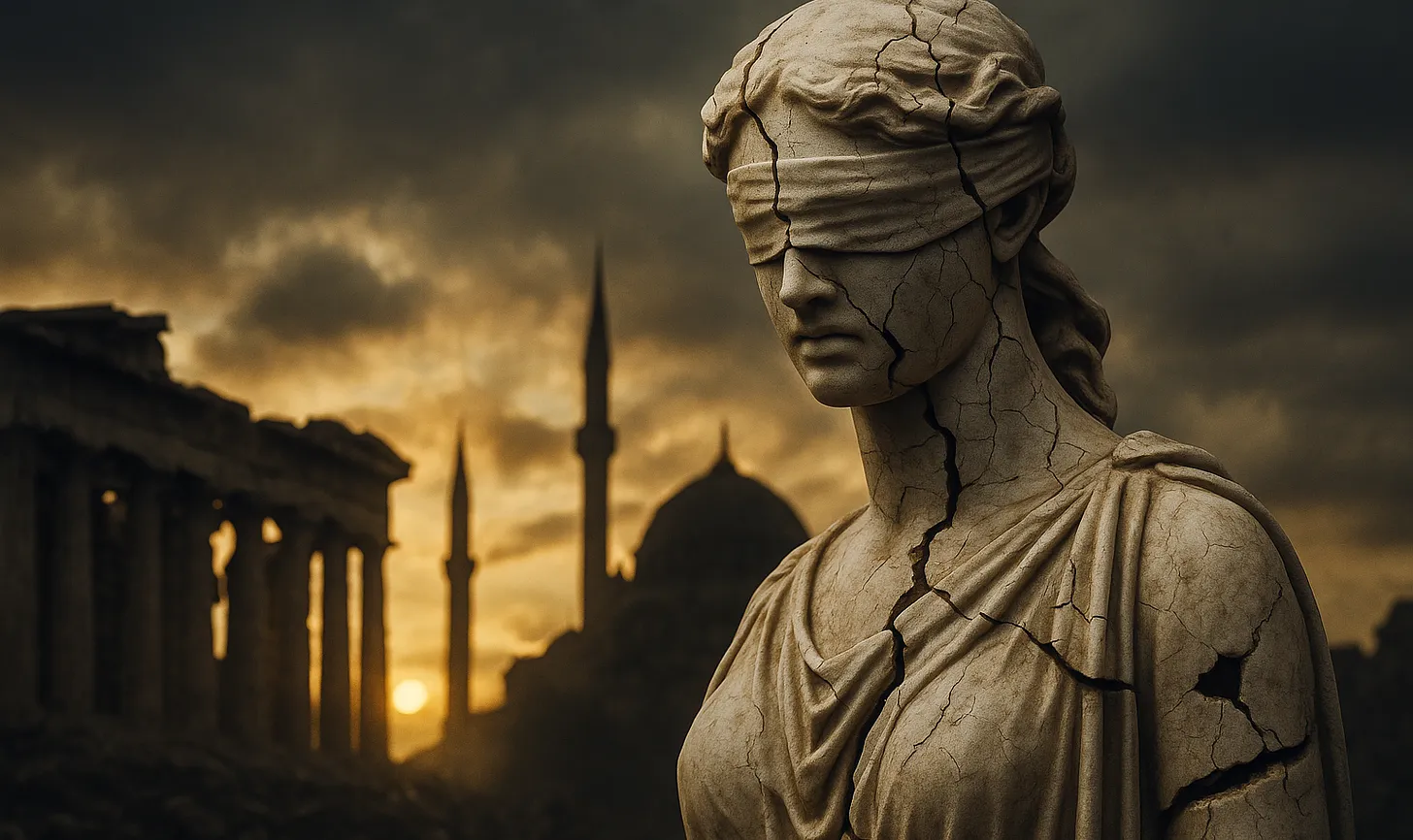
Obraz wygenerowany przez AI w celach ilustracyjnych.


Nie wyciągnęliśmy lekcji z historii

Lucy Tabrizi


Od Rzeszy przez Czerwoną Gwiazdę po Zielony Sztandar: wieczny powrót tyranii podszytej cnotą.

Wszyscy dorastaliśmy, zadając sobie pytanie: „Jak mogli do tego dopuścić?” Getta. Żółte gwiazdy. Obozy. Milczenie. Widzieliśmy ziarnisty materiał filmowy, puste twarze za drutem kolczastym i uspokajaliśmy się myślą, że my postąpilibyśmy lepiej. Ukrylibyśmy Anne Frank. Odmówilibyśmy salutowania.

Przez lata wierzyłam, że przekonanie gwarantuje cnotę. Długo zajęło mi zrozumienie, że dobre intencje nie gwarantują niczego, a poczucie moralnej słuszności może być swoją własną formą ślepoty.

Wierzyłam też, że postęp podąża prostą linią, że łuk moralny pnie się ku sprawiedliwości. Ale cywilizacje wznoszą się i upadają, a pokój, którego doświadczaliśmy, był jedynie pauzą między burzami. Dekady po II wojnie światowej nie były dowodem na oświecenie, lecz przerwą wymuszoną wyczerpaniem. Tyrania i antysemityzm to nie odstępstwa od historii, ale powracające jej rozdziały. Dryfujemy ponownie ku normie, a ci, którzy najgłośniej mówią o prawach człowieka, prowadzą nas w przepaść.

Gdy patrzę na moich przyjaciół i byłych towarzyszy z ruchów aktywistycznych, widzę, jak historia odtwarza się na naszych oczach, choć większość tego nie dostrzega. Wierzą, że przeszłość jest już zamknięta, że barbarzyństwo zdarza się gdzie indziej, innym ludziom, w innych czasach.

Żyjemy w tym, co Ryszard Legutko nazwał „demokracjami komfortu” – społeczeństwach tak bezpiecznych i dostatnich, że zapominamy, jak krucha jest wolność. Żyjemy w najbardziej wolnej i tolerancyjnej epoce w dziejach, a mimo to aż roi się w niej od ludzi, którzy gardzą cywilizacją, która im to umożliwiła, i wykorzystują jej przywileje, by „wyzwolić” innych spod jej wpływu. Jak zauważyła Ayaan Hirsi Ali: „Dorastaliście w wolności, więc możecie na nią pluć, bo nie wiecie, co znaczy jej nie mieć.”

Oderwani od prawdziwego ucisku, wymyślamy nowe tyranie, z którymi trzeba walczyć, albo projektujemy naszą wściekłość na odległe konflikty – często całkowicie je opacznie rozumiejąc. Komfort usypia nasze mechanizmy obronne i czyni nas podatnymi na manipulację; mylimy odczucia z myśleniem, moralizujemy to, co łechce nasze ego. Zbyt wiele wolności rodzi niepokój. Zaczynamy tęsknić za granicami, porządkiem i znaczeniem. Gdy nie znajdujemy ich w wierze czy tradycji, budujemy je z ideologii. Te same doktryny powracają, obiecując czystość i odkupienie, a my znów im ulegamy, przekonani, że tym razem będzie inaczej.

Wmawiamy sobie, że wyciągnęliśmy lekcje z przeszłości, ale to nieprawda. Zmory przeszłości rzadko wracają w tej samej formie. Przychodzą przebrane za krucjaty moralne, przekonane, że walczą z faszyzmem, choć go powielają.

W historii każda doktryna utopijna – religijna czy świecka – podążała tym samym fatalnym tokiem rozumowania: że czystość może zbawić świat poprzez zniszczenie. Każda zaczyna się od marzenia o odnowie, a kończy uczynieniem z okrucieństwa cnoty. Naziści wierzyli, że ratują cywilizację. Komuniści, że wyzwalają robotnika. Stalin – niegdyś postrzegany jako świecki bohater równości – przekształcił rewolucję w jeden z największych mechanizmów represji w historii i zapoczątkował współczesny antysyjonizm.

Gdy krzywda zostaje uświęcona, nie ma już granic. Jak pisał Aldous Huxley: „Możliwość niszczenia z czystym sumieniem, możliwość złego postępowania i nazywania go ‘słusznym oburzeniem’ – to szczyt luksusu psychicznego, najsłodszy z moralnych przysmaków.”

Tak właśnie wydarzył się XX wiek: Żydzi mordowani w imię cywilizacji, „wrogowie klasowi” zagłodzeni na śmierć w gułagach, ukraińscy chłopi umierający z głodu podczas Hołodomoru, chińscy wieśniacy bici na śmierć podczas Rewolucji Kulturalnej – wszyscy oczyszczeni w imię postępu. Dzisiejsi krzyżowcy moralni twierdzą, że ratują świat przed „nienawiścią”, kierując się tym samym wewnętrznym impulsem, który przekształca idealizm w licencję na krzywdzenie.

W ciągu ostatnich dwóch lat oglądaliśmy tłumy na ulicach Zachodu pod sztandarem „Palestyny”, wzywające do globalnej intifady. Za tym widowiskiem kryją się miliony cichych zdrad: rozpadające się relacje, porzucone przyjaźnie – wszystko przez wojnę, którą większość zna jedynie z memów i wiralnych nagrań. Antysemityzm działa na społeczeństwa jak obłęd. Niszczy je powoli, poprzez zwykłe akty tchórzostwa powielane w milionach – każdy popełniony w imię dobra. Największą sztuczką zła jest to, że sprawia, iż wydaje się ono odwagą moralną.

Jeśli spojrzymy na historię upadku imperiów, znajdujemy się we wczesnej fazie rozkładu. Przemoc i nawet próby zabójstw nie są już postrzegane jako wyjątki, lecz oklaskiwane jako „sprawiedliwość”. Oklaski, które następują potem, pokazują, jak głęboko rozprzestrzeniła się choroba w społeczeństwach, które kiedyś były tolerancyjne. Rosnący apetyt na zemstę sugeruje, że zamykamy się wewnętrznie, plemię przeciw plemieniu, tracąc zdolność porozumienia się w ramach dawnych zasad demokracji.

W całej Europie atakowane są synagogi i żydowskie przedsiębiorstwa, szkoły otrzymują groźby. W kolejnych miastach staje się normą, że Żydzi są nękani lub atakowani na ulicy tylko dlatego, że wyglądają jak Żydzi – i to im każe się „dla bezpieczeństwa” zostać w domu, nie tłumom, które im grożą. Rządy głoszą tolerancję, a jednocześnie wybierają ugodę zamiast działania, nadzorując spiralę upadku, której nie chcą powstrzymać. Ta sama gorączka, która kiedyś podpaliła świat, znów narasta – i tym razem nie możemy się tłumaczyć niewiedzą ani niewinnością. Wiemy, dokąd prowadzi ta droga.

Najniebezpieczniejsi ludzie każdej epoki to ci, którzy są przekonani, że walczą o dobro. Gdy ogarnia ich moralna pewność, jednostki znikają, pozostają tylko kategorie i wrogowie. Eksperyment więzienny Stanforda pokazał, jak niewiele potrzeba, by przyzwoici ludzie stali się okrutni, gdy moralność ustępuje posłuszeństwu. Większość nie pragnie nienawiści; pragnie przynależności i dreszczu cnoty. Gdy kultura zaczyna mylić okrucieństwo ze współczuciem, upadek następuje błyskawicznie.

Historia pokazuje, że tłum niemal nigdy nie ma racji. Oklaskiwał palenie heretyków, popierał segregację, odwracał wzrok, gdy Żydów zapędzano do gett. Naziści nie zdobyli władzy dlatego, że wszyscy byli źli, ale dlatego, że wszyscy chcieli przynależeć – a zwykli nauczyciele, dziennikarze i artyści wmawiali sobie, że bronią uciśnionych. Nie byli potworami – i to jest najbardziej przerażające.

Dziesięć lat temu przeczytałam Zwykłych ludzi Christophera Browninga – relację o niemieckich policjantach w średnim wieku, nie fanatykach, nie ideologach, ale sklepikarzach i ojcach, którzy stali się masowymi mordercami. Powiedziano im, że mogą się wycofać. Prawie nikt tego nie zrobił. Przerażającym wnioskiem nie było to, że naziści byli wyjątkowo źli, lecz że nie byli tacy jak my.

Gdy widzę ludzi udostępniających propagandę, usprawiedliwiających mordy i wzywających do „oporu” przeciwko samemu istnieniu Żydów, widzę tę samą moralną gorączkę, która raz po raz zatruwa ludzkość.

Antysemityzm nie jest tylko kolejnym uprzedzeniem. To najstarsza nienawiść świata, nieustannie mutująca, by przetrwać, adaptująca się do każdej ideologii, która ją żywi. Naziści ubrali ją w nauki rasowe, komuniści – w walkę klas, islamiści – w religię, a współczesny Zachód – w język „dekolonizacji” i „praw człowieka”. Każdy twierdzi, że jego wersja jest inna. Żadna nie jest. A historia pokazuje, że wszędzie tam, gdzie antysemityzm zapuszcza korzenie, zatruwa i ostatecznie niszczy cywilizację, która go przyjęła.

Jak pisałam wcześniej, to nie poglądy prawicowe czy lewicowe przewidują antysemityzm, ale skłonność do myślenia spiskowego. Teraz patrzę na przyjaciół i rodzinę – tych samych ludzi, którzy kiedyś udostępniali petycje o prawa zwierząt i hasła antyrasistowskie – jak publikują teorie o „żydowskim DNA” napędzającym mordowanie dzieci, że Izrael zainscenizował ataki 7 października, że Żydzi potajemnie kontrolują media i globalne finanse. Wierzą, że odkryli mroczną prawdę o Żydach. Tak samo wierzyli naziści. Tak samo Sowieci.

Tak właśnie historia się powtarza. Każdy, kto wierzy, że Żydzi są nienawidzeni, bo istnieje Izrael, nie rozumie historii. Izrael istnieje dlatego, że Żydów nienawidzono – bo wieki wygnania, pogromów i ludobójstwa uczyniły z państwa nie przywilej, lecz konieczność. Odwrócenie tej prawdy to obwinianie przetrwania za prześladowanie – ten sam moralny wykręt, który zawsze podtrzymywał antysemityzm.

Wielu wciąż wierzy, że konflikt w Gazie dotyczy ziemi czy granic, ale muzułmański antysemityzm nigdy nie dotyczył terytorium — chodzi o samo istnienie Żydów. Dla tych, którzy głoszą dżihad, Izrael jest pierwszy, a za nim Europa i Ameryka Północna. Wojna przeciwko państwu żydowskiemu to jedynie akt otwarcia szerszej wojny przeciwko kulturze i porządkowi moralnemu, które je wspierają.

Myślisz, że to nowe? Nie. Od VII wieku muzułmańskie imperia przetoczyły się przez Afrykę Północną i Hiszpanię, rozciągając się od Atlantyku po Indie. Perscy zaratusztrianie, koptyjscy chrześcijanie, Asyryjczycy, Kurdowie, Jezydzi, Berberowie i niezliczone inne społeczności zostały podporządkowane lub zniszczone. Wiele z tych starożytnych wspólnot przetrwało tylko w szczątkowej formie.

Uznanie tej historii nie jest potępieniem muzułmanów, lecz uznaniem, że opresyjne odłamy islamizmu, które dziś widzimy w Teheranie, Gazie i innych miejscach, są odrodzeniem dawnych tradycji imperialnych. Tragiczne jest to, że ich pierwszymi ofiarami są miliony muzułmanów. Spośród około 250 tysięcy ofiar ataków terrorystycznych w ciągu ostatnich czterech dekad, większość stanowili muzułmanie. Kiedy przywołujemy hasła „rasizmu” czy „islamofobii”, by uciszyć krytykę, porzucamy tych ludzi i wzmacniamy ich oprawców.

Przez wieki Europa stawiała opór dzięki wierze i przekonaniu, że jej cywilizacja jest warta obrony. Dziś ta wiara zanikła. Europa, pogrążona w poczuciu winy za swoją kolonialną przeszłość, zapomina o znacznie starszej historii imperializmu islamu. Spłaszcza złożone realia do jednej opowieści moralnej, w której muzułmanie są wiecznymi ofiarami zachodniej potęgi. W swojej gorliwości pokutnej przestaje odróżniać tych, którzy szukają schronienia, od ideologii, które dążą do dominacji.

Pod sztandarami tolerancji, różnorodności i inkluzywności Europa otworzyła drzwi ruchom, które gardzą jej wolnościami. Gdyby te grupy jedynie budowały meczety do modlitwy, niewielu by się sprzeciwiało. Ale znaczna część tej ekspansji realizuje polityczny i ideologiczny program podboju. Pieniądze z Zatoki finansują ośrodki religijne i uniwersytety szerzące ideologię islamistyczną, a nie duchowość — czyniąc z tolerancji narzędzie wpływu. Bractwo Muzułmańskie, zakazane w Egipcie, Arabii Saudyjskiej, Zjednoczonych Emiratach Arabskich i Rosji, rozwija się na wolnym Zachodzie, zakorzeniając się w instytucjach, lobbując u decydentów i oklaskiwane przez postępowców, którzy mylą je z różnorodnością. Kiedyś Europa walczyła o zachowanie swojej cywilizacji. Dziś ją demontuje w imię cnoty.

Kontynent, który niegdyś opierał się podbojowi, dziś go subsydiuje, upierając się, że wszystkie kultury są równe — nawet te, które wzywają do jego zniszczenia. Marks nazwał religię opium dla ludu; dziś świecka Europa uczyniła relatywizm swoim narkotykiem z wyboru.

Choć ideologie zewnętrzne stanowią realne zagrożenie, najgłębsze niebezpieczeństwo dla cywilizacji Zachodu pochodzi z jej wnętrza: społeczeństwo nie obroni tego, w co już nie wierzy.

Ten wzorzec nie zakończył się wraz z upadkiem Rzeszy czy Związku Radzieckiego. Znalazł nowe organizmy żywicielskie i pozostawał uśpiony przez dekady. Związek Radziecki Stalina przekształcił antysemityzm w „antysyjonizm” i eksportował go poprzez propagandę do Europy Wschodniej i na Bliski Wschód. Ideologia rozprzestrzeniła się wśród arabskich reżimów i ruchów rewolucyjnych, zmieniając słowa, lecz nie intencje.

Zachód zbudowano na pamięci o tym, co się dzieje, gdy dobrzy ludzie milczą. Ci, którzy by się sprzeciwili w latach trzydziestych, sprzeciwiają się teraz — ale jest ich znacznie mniej, niż kiedyś sądziłam. Lubimy myśleć o sobie jako o istotach racjonalnych, które uczą się na historii, ale tak nie jest. Jesteśmy istotami wiary i lęku, podatnymi na spiski i mity, wiecznie dzielącymi świat na dobro i zło. Cokolwiek robisz teraz — ignorujesz rosnący antysemityzm, obwiniasz Żydów za wojnę toczącą się daleko stąd, negujesz lub minimalizujesz wydarzenia z 7 października, czy powielasz stare slogany o żydowskiej potędze — dokładnie to samo zrobiłbyś wtedy.

Zamiast z przerażeniem patrzeć, jak najciemniejsze rozdziały historii się powtarzają, powinniśmy zapytać, dlaczego zawsze tak się dzieje. Odpowiedź jest prosta: ludzie są zaprogramowani do oddawania czci. Gdy autentyczna wiara upada, jej miejsce zajmują fałszywe religie.

Jako długoletnia ateistka i obrończyni wartości świeckich, nigdy nie spodziewałam się, że znajdę się w tym miejscu — uznając, że to, co kiedyś uważałam za zabobon, mogło być jedynym, co trzymało nas razem. Mój logiczny umysł prowadził mnie, czasem niechętnie, ku transcendencji. Bo jeśli nie mamy czegoś wyższego niż my sami, zaczynamy czcić samych siebie: nasze uczucia, naszą politykę, nasze plemiona.

Jesteśmy społeczeństwem, które nie jest już spajane przez nic większego niż jednostka. Zapomnieliśmy o naszych korzeniach, naszej historii i zasadach, które kiedyś nadawały naszej cywilizacji sens. Głosimy prawa człowieka, zapominając, że idea indywidualnej wartości narodziła się z chrześcijańskiego przekonania, że każda jednostka nosi w sobie boską wartość. Odcięci od przeszłości dryfujemy ku plemienności i chaosowi.

Każda ideologia staje się rodzajem religii, z własnymi męczennikami, heretykami i przykazaniami. To nie wiara nas deprawuje, lecz utrata pokory, która powinna jej towarzyszyć.

W miejsce odkupienia domagamy się czystości; w miejsce łaski — kary. Skutek zawsze jest ten sam: prawość bez umiaru.

Dlatego ten wzorzec się powtarza. Nie dlatego, że zapomnieliśmy religię, ale dlatego, że nie potrafimy od niej uciec. Dopóki nie przypomnimy sobie, co nas niegdyś łączyło i dlaczego warto było tego bronić, historia będzie się powtarzać. Następnym razem — z bronią jądrową i sztuczną inteligencją — możemy już nie mieć szansy zacząć od nowa.


Link do oryginału: https://lucytabrizi.substack.com/p/we-havent-learned-the-lessons-of

Lucy Tabrizi o swoim pisarstwie: “Piszę najczęściej o antysemityzmie i problemach zachodniej cywilizacji.” Jej Substack: https://lucytabrizi.substack.com


Zawartość publikowanych artykułów i materiałów nie reprezentuje poglądów ani opinii Reunion’68,
ani też webmastera Blogu Reunion’68, chyba ze jest to wyraźnie zaznaczone.
Twoje uwagi, linki, własne artykuły lub wiadomości prześlij na adres:
webmaster@reunion68.com


Confirmation of Polish citizenship


Confirmation of Polish citizenship

Żydowski Instytut Historyczny


urzad_mazowiecki.jpg [79.50 KB]

Mazowiecki Provincial Office, Warsaw

This article was written as a result of interviews with Ms Agata Ewertyńska, Deputy Director of the Department for Foreigners of the Mazovian Voivodeship Office in Warsaw and Mr Mateusz Sora, Director of the Department of Citizenship and Repatriation of the Ministry of Internal Affairs.

Applications for the confirmation of the status of Polish citizenship are lodged with the relevant local Voivode whereas applications for reinstatement of Polish citizenship are lodged with the Minister for Internal Affairs. As part of the process of confirmation of Polish citizenship, the applicants must show their ancestors were Polish citizens and that no event took place in the lives of the applicants or their ancestors indicating loss of citizenship.

In the past, Polish citizenship regulations were more restrictive and, generally speaking, countries around the world preferred to limit the number of people with dual citizenship. In Poland, after independence was regained, pursuant to the 1920 Act on Citizenship of the State of Poland, people’s citizenship could be lost without their knowledge.

.

Potwierdzenie_wymeldowania.jpg [52.52 KB]
Confirmation of re-registration, Lublin 1935. In 1930s registration at residencial address was equivalent to b citizenship.

The current regulations applicable in Poland, commencing with the 1951 Act, allow for dual citizenship. Polish citizenship is acquired through one’s parents – this is regulated by the so-called law of blood (ius sanguinis). Therefore, it is important to determine whether one of the applicant’s parents was a Polish citizen. Additionally, the so-called law of soil(ius soli)applies, as per the first Citizenship Act of 1920, followed by the Acts of 1941, 1962 and 2009. In all of these, the law of soil applies as supportive legislation in relation to children that were abandoned, lost and found or whose citizenship was undetermined. In most cases, people applying to the Polish authorities who wish to confirm their Polish citizenship need in fact to establish in the first instance whether their parents or grandparents were Polish citizens.

Is completing the application form the first step in applying through your office?

The Mazovian Voivodeship Office has set up a special information unit for people wishing to verify their Polish citizenship status. Our officers provide instructions on where to start: where the documents can be found, what is involved in the procedure, what are the obligations of the applicant and how the Office can assist its clients. Enquiries can be made over the phone or in person. We can also help with filling in the forms. Languages we assist in are Polish, English and Russian.

.

punkt_inf.JPG [391.29 KB]Information Center in the Mazowiecki Provincial Office, 3/5 Bankowy Sq, entrance F

Earlier, you mentioned “checking” if one of the ancestors was a citizen, does it mean that part of the responsibility for verifying one’s citizenship status lies with your Office?

No. The current Act and its legal interpretation mean that most of the documentation is to be submitted by the person wanting to verify their citizenship status.

From the point of view of people who are going through the process of verifying their citizenship and after a year of the new Act being in force, what would you say are the key differences in comparison to the previous legal system?

The applicants are required to lodge documentation confirming their Polish citizenship. It’s a legal obligation and applies to all documents that can confirm their Polish citizenship status. And although their Polish citizenship might have been lost pursuant to various Acts, for us to assess their case, it is important to determine whether the person was born before or after their mother or father lost his or her citizenship.
.swiad_mor.jpg [309.57 KB]

Good Conduct Certificate of Masza Brykman, evidence of her unpunishability in the past 5 years

Family archives of the Jewish Genealogy at the JHI
What type of documents are not accepted by your office as evidence?Every document can be a hint, indicator or source of information. Unless it is a forgery. Often, applicants don’t even realise that the documents confirming their parents’ or grandparents’ Polish citizenship are already in their possession, because the documents do not contain explicit notes on Polish citizenship. However, other details can indicate indirectly that a person was a Polish citizen. This is why applicants should submit all available documentation on their parents or grandparents. Sometimes, documentation and information on other family members, for example documents of siblings of the grandparents, prove to be very useful.

If the applicant does not have proof of citizenship but does have the proof of loss of citizenship and a birth certificate dating prior to that event, is it the same as having confirmation of citizenship?

In these circumstances, we assess whether the evidence is sufficient. If the person is able to show significant difficulties, we can then request research to be carried out in the national archives via official channels. The applicant must, however, show their inability to find the documents on their own – which is also a new element introduced by the Act. Of course, it could be that the person is for some reason unable to acquire the documentation. Then the burden of initiating the research will rest with our Office. So the process prior to the implementation of the 2009 Act, whereby the applicant would submit the passport details and the office would „blindly” start looking for documents no longer exists. Any applicant claiming that his or her father or mother, grandfather or great grandfather or all of them were Polish citizens, must provide documentation to prove it.

karta_wezwania.jpg [115.33 KB]

Request of Hersz Gelbart, appealing for his wife Rywka and son Abram to join him in Brazil, where he lived and worked.

Family archives of the Jewish Genealogy at the JHI

What is the process of verifying that a person did not renounce or lose their Polish citizenship? Or is it assumed?

If the autobiography or other documents indicate loss of citizenship, for example that the applicant’s father immigrated to Israel before 1951 and became an Israeli citizen, it is assumed – as a result of compulsory military service there – that he served in Israeli army and, as a consequence, lost his Polish citizenship. In such cases, the applicant must prove the assumption unfounded by providing appropriate documentation to show that the father did not lose his citizenship after all because, for example, he did not serve in the Israeli army.

Army service in foreign states meant loss of Polish citizenship until 19.01.1951. People who were conscripted into a foreign army in a foreign state lost their Polish citizenship. World War II was an exception.

If there is no evidence to indicate loss of citizenship, I understand that it is assumed that the event did not occur?

That’s exactly right. However, just one word on a document can indicate such an eventuality and we are required to check if it concerns the period of time during which loss of citizenship may have occurred. Sometimes, this information may come from a consul. Pursuant to the 1920 Act, just joining the military service without the permission of the Polish authorities was sufficient, and people who did not apply for a Polish passport at a later stage, did not realise their citizenship was lost. Similar rules applied to holding a public office in a foreign state. In such cases, the loss of citizenship occurred automatically.

And what about rabbis?

In Poland, rabbis were considered civil registry officers until 1946 and received a salary. So if someone was a rabbi, as a government official, they had to have Polish citizenship and therefore his children were automatically Polish citizens.

I understand, however that since the law does not work retrospectively, the issue is not so much whether the person was a rabbi but whether this information reached the Polish authorities of the day and as a consequence, the person lost his Polish citizenship?

No. It’s not that rule. In 1951, the loss of citizenship occurred automatically, in other words, the moment that an event took place, for example by someone accepting public office in a foreign state. There was no decision issued as such and it didn’t matter if the Polish authorities knew about it or not. Nevertheless, this information was often entered into residential registers where it can be currently found. The Polish consul — if he or she knew about it – would then have the ability to pass this information on and if we can confirm that the information did reach Poland at the time, this in effect proves loss of citizenship.

How often would this type of information get to Poland?

Almost every time.

karta_rzem.jpg [215.59 KB]

Craftsman ID of Herszko Gelbert, Polish citizen issued in1930.

Family archives of the Jewish Genealogy at the JHI

Did these documents mostly survive?

It depends on the region; in some areas, documents survived the war. Generally speaking, approximately 70% of residential registers remain intact.

In your opinion, is the loss of citizenship by the applicant or the applicant’s ancestor exactly the same as never actually having citizenship?

From the legal view point, a person who lost their citizenship can apply to have it reinstated. If the person’s ancestors had Polish citizenship and lost it, they can use this circumstance to apply for Polish citizenship.

Does your office check documents in registers such as PRADZIAD, ELA, etc.?

Yes, we do use them. However, less so nowadays, since the onus of submitting documents has been transferred onto the applicant. We frequently advise applicants, however, where the relevant information and documents might most likely be located. Our role is mostly to verify the information supplied – even if, according to the applicant, it is not indicated at all whether loss of citizenship occurred.

How does your office view people who left Poland during, or just following World War I, when they were not able to be included in the process of receiving their citizenship in the Republic of Poland?

Legal precedent in these matters is already established. The names of people who immigrated before 1920, when the Act was adopted, were entered in the permanent residents register. If their names can be found in the registers – also depending on where they left to – they can claim citizenship. So for example, in the United States, people could advise the consul they were of Polish origins and could acquire Polish citizenship. The law of soil was in force in Poland specifically so that the status of people who immigrated earlier or who, due to the changes in borders found themselves outside of Poland could be regulated. In this case, the entries in the permanent resident registers are the basis of the assessment. The applicant must also prove that he or she did not acquire foreign citizenship. At the time, the law allowed only one citizenship.

If the person left the Polish territories before independence was announced, or shortly thereafter, but without any proof of citizenship, the descendent of the person can claim his or her rights in a variety of ways, depending on the area of partition concerned. In the case of the Russian partitioned territories – and here we need to distinguish between the Polish Principality and the Russian Empire – the state registers would have to be found, namely to include city dwellers, noblemen, etc. In those cases, we are talking about a relic of the feudal system in the territories partitioned by Russia. The agreement between Poland and USSR required the USSR to return these documents, amongst others, to Poland, but it happened in very few cases only. We know, for example, that the city of Grodno has a very good archive, and it does provide information locally, charging very high fees.

Co jeśli potrzebujemy potwierdzić, że doszło do zmiany nazwiska podczas emigracji, albo niedokładnie zapisano datę urodzenia? 

W takiej sytuacji to wnioskodawca musi nam uprawdopodobnić wszelkimi możliwymi środkami, że chodzi o tę samą osobę. Oceniamy każdy przypadek osobno i nie ma sytuacji z góry wykluczających, tylko dlatego, że w dokumentach np. amerykańskich funkcjonuje inne imię i nazwisko. Nie mamy wiedzy kompletnej, więc korzystamy z instytucji, które się w tym specjalizują; występowaliśmy też w takich sprawach o pomoc do Żydowskiego Instytutu Historycznego.

karty_ocal.jpg [118.09 KB]

Survivor registration card of the Central Committee of Jews in Poland

The JHI Archive

What does the law say about people who left Poland as a result of the 1968 events?

This issue has been quite clear for some time now – these people have not lost their Polish citizenship. The problem is that they have rejections dating back several years in relation to their confirmation of citizenship. You cannot assess the same thing twice, so the applicants cannot apply for the confirmation of their citizenship again. They can, however, appeal the previous decision and overturn it.

How can access to permanent resident register be obtained?

The registers can be found in local branches of the National Archives. Some of them have been indexed. We consult the database of the National Archives where the relevant registers from cities and villages are held. If no other citizenship is shown in the registers, the person residing in those areas was most likely a Polish citizen. We then assess whether the loss of citizenship occurred and, of course, the applicant must show his or her relationship to the person in question. The cases of people originating from West Ukraine are different. They have to apply for documents from the archives themselves or provide a certificate confirming the records did not survive. There are, however, other documents: very well preserved voting registers, the Beyond the Bug River Archives or civil registry office records. Even if permanent resident registers of the population did not survive, vital records from the town or village may indicate permanent residence of the ancestor and other family members there, and this assists in proving the applicant’s ancestry.

What was the condition of being registered in the permanent resident register? Would people have to spend a specific number of years in an area?

The authorities at the time had to confirm that a person was a permanent resident. We don’t know, whether there have been cases of people who were not in the registers who did consider themselves permanent residents. In those documents, the head of the family is listed, date of birth, often the occupation and other notes, for example, that the family moved from another town.

Sometimes, people immigrating out of Poland did not have a passport but other documents survived, such as certificates of good conduct, issued by people who received Polish passports for immigration purposes, medical certificates, ship passenger lists. These types of documents should also be submitted. The Central Army Archives could also be helpful in many cases because people who served in the army were Polish citizens. The Archives have a relevant catalogue, but, to be able to find details, you need to indicate the army unit. Only the officers’ details are catalogued alphabetically.

Is it possible, let’s say for an extra payment, to find someone in the army archives using a different index, when we’re looking for a private or non-commissioned officer and the unit they served in is unknown?

We’re afraid not, as this is simply how the catalogues are indexed by the Central Army Archives. We often apply just with the name. The workers at the Archives are sometimes able to find the person by, for example, a person’s uniform, which shows the unit (colour of the band on the hat, platoon insignia) or the place where the platoon was stationed. Sometimes, we might receive a reply that the person’s details cannot be found due to the above reasons, but the applicants get invited to view the records individually at the viewing room.

Do the applicants apply themselves to you or VO or via lawyers?

As a rule, it is better when applicants are represented by professional agent in these kinds of matters, although it must be said that not all representatives take due care in managing their clients’ cases and it leads to delays.

The regulations contained in the Administrative Procedure Code require persons residing in overseas to nominate an authorised representative to collect correspondence in Poland. In the past, the process in some cases would take years, because the correspondence would remain uncollected. This is why these rules were introduced a few years ago.

In our procedures, similarly to civil procedures, the burden of proof lies with the applicants themselves.

When is the final decision made?

Voivode decisions are declaratory in nature and are issued pursuant to the evidence gathered. It means that the decision can change if new information or documentation is found.

And what happens if we need to confirm that a name change took place overseas or the date of birth has been recorded incorrectly?

In those cases, the applicant must provide evidence with all available resources that this concerns one and the same person. Each case is assessed individually and there are no situations where the applicant is excluded in advance just because a different name appears, for example, in a US document. Our knowledge isn’t complete so we do use other specialist institutions; we have asked for assistance from Jewish Historical Institute in these matters.


Mazovia Province Office — Department of Foreigners

ul. Długa 5, 00–263 Warszawa

tel. 22 695 65 75

wsc@mazowieckie.pl

Ministery of Interior — Citizenship and Repatriation Office

ul. Stefana Batorego 5, 02–591 Warszawa
22 601–74–25; 22 601–74–26

obywatelstwo@msw.gov.pl

paszport_rabina.jpg [122.89 KB]

Polish passport of Rabbi Majer Bekerman with his family

The JHI Archive


Translation by Eva Hussain, Polaron European Solutions (www.polaron.com.au)


Zawartość publikowanych artykułów i materiałów nie reprezentuje poglądów ani opinii Reunion’68,
ani też webmastera Blogu Reunion’68, chyba ze jest to wyraźnie zaznaczone.
Twoje uwagi, linki, własne artykuły lub wiadomości prześlij na adres:
webmaster@reunion68.com


outh African President Says ‘Boycotts Never Really Work’ Despite BDS Support


outh African President Says ‘Boycotts Never Really Work’ Despite BDS Support

Ailin Vilches Arguello


South Africa’s President Cyril Ramaphosa attends the 20th East Asia Summit (EAS), as part of the 47th ASEAN Summit in Kuala Lumpur, Malaysia, Oct. 27, 2025. Photo: REUTERS/Hasnoor Hussain

South African President Cyril Ramaphosa insisted that “boycott politics doesn’t work” following the Trump administration’s announced absence from a summit in his country later this month — despite his ruling party’s ongoing support for the boycott, divestment, and sanctions (BDS) movement against Israel.

On Wednesday, Ramaphosa urged US President Donald Trump to reconsider his decision to boycott the G20 Leaders’ Summit, scheduled for Nov. 22-23 in Johannesburg, northeastern South Africa.

Ramaphosa criticized Washington for “giving up the very important role that they should be playing as the biggest economy in the world” in its decision to skip the summit — the first to be held in Africa.

“It is unfortunate that the United States has decided not to attend the G20. All I can say in my experience in politics is that boycotts never really work. They have a very contradictory effect,” the South African leader told reporters outside parliament in Cape Town.

Trump, who has previously accused the South African government of human rights abuses against white minorities — including land seizures and killings — called the decision to host the G20 summit in the country a “total disgrace.”

“No US government official will attend [the summit] as long as these human rights abuses continue,” he wrote in a post on Truth Social. 

However, the South African government has strongly rejected any claims of genocide, saying such accusations are “widely discredited and unsupported by reliable evidence.”

Ramaphosa reaffirmed that the summit will proceed as scheduled, regardless of Washington’s absence.

“The G20 will go on. All other heads of state will be here, and in the end, we will take fundamental decisions. And their absence is their loss,” he said.

“The US needs to think again whether boycott politics actually works, because in my experience, it doesn’t work. It’s better to be inside the tent rather than being outside the tent,” he continued. 

Despite such claims, Ramaphosa’s ruling African National Congress (ANC) party has officially endorsed the BDS campaign against Israel for years.

The BDS movement seeks to isolate the Jewish state internationally as a step toward its eventual elimination. Leaders of the campaign have repeatedly stated their goal is to destroy the world’s only Jewish state.

In 2012, the ANC announced its full backing of the BDS movement, urging “all South Africans to support the programs and campaigns of the Palestinian civil society which seek to put pressure on Israel to engage with the Palestinian people to reach a just solution.”

Following Ramaphosa’s comments this week, it remains unclear why he continues to back anti-Israel boycotts if he believes they don’t work.

Since the start of the war in Gaza, the South African government has been one of Israel’s fiercest critics, actively confronting the Jewish state on the international stage.

Beyond its open hostility toward Israel, South Africa has actively supported Hamas, hosting officials from the Palestinian terrorist group and expressing solidarity with their “cause.”

In one instance, Ramaphosa led a crowd at an election rally in a chant of “From the river to the sea, Palestine shall be free” — a popular slogan among anti-Israel activists that has been widely interpreted as a genocidal call for the destruction of the Jewish state, which is located between the Jordan River and the Mediterranean Sea.

Since December 2023, South Africa has also been pursuing its case before the International Court of Justice accusing Israel of committing “state-led genocide” in its defensive war against Hamas in Gaza.

Israeli leaders have condemned the case as an “obscene exploitation” of the Genocide Convention, noting that the Jewish state is targeting terrorists who use civilians as human shields in its military campaign.


Zawartość publikowanych artykułów i materiałów nie reprezentuje poglądów ani opinii Reunion’68,
ani też webmastera Blogu Reunion’68, chyba ze jest to wyraźnie zaznaczone.
Twoje uwagi, linki, własne artykuły lub wiadomości prześlij na adres:
webmaster@reunion68.com
