
Asking the wrong questions about antisemitism


Asking the wrong questions about antisemitism

Jonathan S. Tobin


As the arts world legitimizes bias against Israel in the post-Oct. 7 world, a hit play about author Roald Dahl’s Jew-hatred explores the intersection of culture and prejudice.
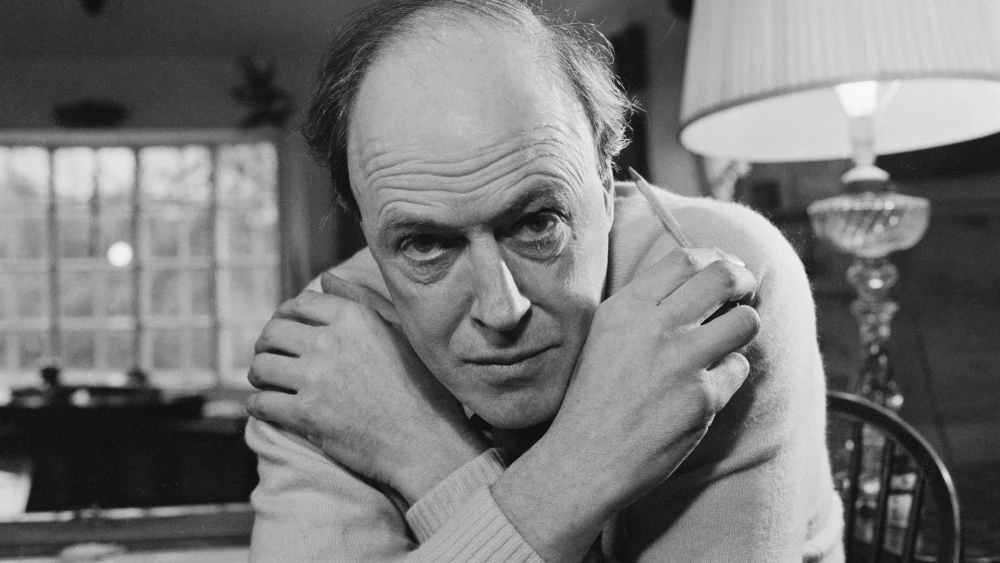
British novelist Roald Dahl (1916-1990) at home in the United Kingdom, Dec. 10, 1971. Photo by Ronald Dumont/Daily Express/Getty Images.

If only every person who hates Jews were as open about their biases as author Roald Dahl (1916-1990). The famed children’s writer, who earned literary immortality with books such as Charlie and the Chocolate Factory, Matilda, James and the Giant Peach, The Fantastic Mr. Fox and The BFG, was widely acclaimed as one of the 20th century’s greatest storytellers, as well as among its best-selling authors. A cultural icon in his own time, his fame has continued decades after his death. So, too, has his notoriety; he was also an unabashed and self-identified antisemite.

That aspect of his life story is given a thorough examination in the hit play “Giant” by British playwright Mark Rosenblatt, which recently opened on Broadway at New York’s Music Box Theater after an award-winning run on London’s West End.

Ripped from the headlines

Antisemitism has been surging throughout the West since the Hamas-led Palestinian Arab terror attacks on Israel on Oct. 7, 2023. It has only grown during the two-and-a-half years since then as the Jewish state has been waging war on those terrorists, their Hezbollah allies and their Iranian sponsors. That has made the play’s topic even more relevant, as those flocking to sold-out performances to see actor John Lithgow’s brilliant star turn as Dahl are asked to absorb more than two hours of the title character’s mix of charm, wit and monstrous bile. Audience members walk away contemplating the difficult dilemma that his behavior posed for those who profited from publishing his books or lived with him. Indeed, with Israel being blasted for bombing Gaza, Iran and Lebanon—just as was true more than 40 years ago, when the events of the drama unfolded, and Israel was in the world’s crosshairs—it could be said to be ripped from the headlines.

“Giant” presents the truth about the author in a way that leaves no wiggle room about acknowledging the depths of his hatred. We can wonder what caused a man who was responsible for so much work that was as life-affirming as it was delightful to go down that dark road. And we can also puzzle over the questions about how to separate a decent person’s disgust with his views from how they feel about his books and whether they can think about them the same way once they witness his antisemitism.

Even as the play basks in generally well-earned praise from critics as well as audiences, its topicality is deceptive. For all of the skills of the playwright, director and cast, it doesn’t offer much that is of use in navigating a world in which many of Dahl’s horrible ideas about Israel and Jews, which were considered beyond the pale in his lifetime (these days, no longer considered disqualifying), have been mainstreamed. They have become not merely commonplace, but are now a fashionable orthodoxy whose adherents dominate the worlds of academia and culture while also gaining an increasingly secure foothold in politics.

Respectable antisemitism

The trouble is that, unlike Dahl, most of those who are currently spreading hatred of Jews in academia, popular culture and politics are doing so while also claiming to oppose such prejudice. They are, they insist, just “criticizing” the Israeli government and its leaders, calling into question their right to self-defense.

But peel away that veneer, and the real issue becomes transparent: their battle is against the existence of Israel itself. While seeking to legitimize the war to eliminate the one Jewish state on the planet and oppose efforts to strip its enemies of the means to achieve that vile goal (such as the Iranian nuclear program), they tell us that they like Jews and wish to defend them—or, at least, the “good” ones who condemn Israel, rather than the “bad” pro-Israel or Zionist ones.

Even as they float conspiracy theories that could have been lifted out of The Protocols of the Elders of Zion, popular podcasters on the right, like Tucker Carlson, and those on the left, like Hasan Piker, deny that they are antisemites. New York City Mayor Zohran Mamdani, whose entire career has revolved around his obsession with destroying Israel and stigmatizing its Jewish supporters, does so while attending Passover seders that conveniently leave out any message of the essential element of Jewish identity relating to the land of Israel.

But not so Dahl. He was ahead of his time in terms of a popular figure taking up the cause of Jew-hatred. That marked him as an outlier in polite society during his lifetime. Meanwhile, much of what he believed is now so prevalent that it is a surprise when one encounters a famous writer or artist who resists the demand to virtue-signal their animus for Israel.

Escaping cancellation

Dahl made clear his hatred for the State of Israel—and all Jews, for that matter—in 1983, when he wrote a review praising a book about the 1982 Lebanon War and again in an equally infamous interview with The New Statesman magazine. In an essay published in the Literary Review, he didn’t just engage in one-sided and unfair criticisms of Israel’s part in that conflict; he also vented his belief that the Jewish state and its supporters were analogous to the Nazis. Indeed, he aimed his poison pen at a broad array of targets in such a way as to blame Jews everywhere for the supposed crimes of Israel, not the least of which was its creation.

For this, he was widely criticized. Still, despite his own conviction that Jews ruthlessly silenced and punished their opponents, he didn’t suffer much, if at all, for exposing his bigotry so brazenly. His books continue to sell briskly—with many having been made into movies—and he was never accorded the pariah status that one might otherwise think would be given to someone who utters such vile language and holds such hateful views. The worst of the repercussions was that he was denied a knighthood from the British government and offered a lesser honor instead, which he refused. Nor did Tom Maschler, the Jewish publisher who had championed his work and considered him a friend—himself a child survivor of the Holocaust—disavow him.

In 2020, some 30 years after his death, his family and the Roald Dahl Story Company that controls the rights to his work issued an apology for his antisemitism. The admission was prompted by a belief that amid the ex-post facto cancellations of many famous figures for past sins of racism, real or otherwise, amid the moral panic that swept the West after the death of George Floyd in Minneapolis, Dahl’s legacy might also suffer.

But they were wrong to think that the mobs toppling statues during the Black Lives Matter summer of 2020 were interested in punishing Jew-hatred or wanted retrospective atonement for it. And in the wake of Oct. 7, Dahl’s anti-Israel diatribes don’t seem as shocking as they did back in the 1980s.

The author’s reaction to the 1982 First Lebanon War, in which Israeli forces sought to push the terrorists of the Palestine Liberation Organization out of their strongholds in Southern Lebanon and Beirut, was, after all, a preview for the fighting now going on with Hezbollah. Until then, the PLO operated as a state within a state, using Lebanon as a base from which it could launch both deadly terrorist raids and missile attacks on Israel, as Hezbollah terrorists also did.

Lebanon in 1982 was the moment when the tiny, embattled and besieged Jewish state started being viewed as the “Goliath” of the Middle East while the Palestinians, who stubbornly refused to make peace with the Jews, were dubbed the new “David.”

The screed was, in equal turns, ignorant about the Jews, Israel and the Middle East conflict. But Dahl’s controversial essay didn’t just engage in the usual bashing of the Israeli government and its efforts to fend off terrorist opponents. He saw the creation of the Jewish state as illegitimate and wrong. He wrote that the Jews were sympathetic when they were the victims of the Nazis, but had become a race of “barbarous murderers.”

He raged at their temerity for acting in the same way any sovereign state would behave when placed in a similar situation. He viewed any Jew who would not join him in supporting Israel’s destruction as being equally guilty. Dahl’s boundless sympathy for Palestinian and Lebanese killed or injured in the war against Israel was rooted in complete indifference to Israeli victims of Arab terrorism.

As respected historian Paul Johnson wrote at the time in The Spectator, it was “the most disgraceful item to appear in a respectable British publication for a very long time.”

Antisemitic hypocrisy

Some 43 years after its publication, what ought to strike the reader is how similar much of it is to so much contemporary “criticism” of Israel. Indeed, how different is it from contemporary attacks on Israel published in “respectable” publications in Britain or the United States about Jerusalem’s efforts to ensure that Hamas, and its Hezbollah and Iranian allies, can’t perpetrate another Oct. 7? The writers who denounce Israel’s existence in The New York Times or The Guardian are perhaps more cautious about also venting age-old tropes of antisemitism. But the podcast conspiracy-mongers on both left and right who speak to far larger audiences are not.

In “Giant,” a fictional character—a Jewish woman who works for Dahl’s American publisher—is assigned the task of pushing back at the author. She is a “good” “progressive” Jew who sees Israel as flawed and agrees with its government’s detractors. But she does point out that Israel didn’t behave any differently than Britain did when it was attacked in World War II.

The mention of the fire-bombing of Dresden is also telling. It was an arguably defensible military raid in the context of a total war against Adolf Hitler’s Germany, albeit one that resulted in indiscriminate slaughter that was far worse than anything Israel has ever done. Had someone actually said that to Dahl, it might have stung a man who was a decorated pilot in the Royal Air Force during the Second World War, and thus a hypocrite for saying that only “barbarous” Jews and Nazis behave in this manner. More of that would have made the analogy between Dahl’s rants and today’s “criticism” of Israel even more obvious.

But Dahl’s real sin in the play is for merging his loathing of Israel with his equally venomous animus toward all Jews.

The version of Maschler depicted in the play is eager to downplay his friend’s indiscreet signaling of his prejudices and allow them both to get on with the business of publishing books and making money. He also wants nothing to do with Israel or the struggles of the Jews, even as his pal Roald goads him, like the playground bullies the publisher encountered as a child. He believes that Dahl’s brilliance justifies any effort to make the controversy go away with minimal gestures of contrition that the author doesn’t want to make.

The play’s Maschler is the sort of Jew whose complaint about the post-Oct. 7 wave of antisemitism is that it leaves so little room for those who just want to get on with their lives, without being drawn into the drama of Israel-related hate. Like the American sales rep, he may even agree with some of Dahl’s Israel-bashing, even if it goes too far for their taste. But the author’s pathological need to bully and demean Jews is too great to accommodate them.

It is only in the play’s final scenes, when Lithgow acts out the actual transcript of Dahl’s New Statesman interview, that the full portrait of his character is revealed. Having indulged in the crudest of stereotyping and claiming that Hitler was likely justified in thinking ill of the Jews, he owns the label of antisemite. That leaves neither the audience nor those in Dahl’s life with the ability to deny that he is anything other than a hate-monger.

It may be, as some critics have noted of Lithgow’s performance, that Dahl was a Shakespearean character who is a mix of good and evil that epitomizes the complexity of the human condition. As I wrote at the time of his family’s apology, his antisemitism shouldn’t mean that we ought to cancel his books. Great art has nothing to do with good character. That is something that is proved over and over again in the examination of the lives of great musicians, painters, and, yes, the authors of beloved children’s books.

A distinction without a difference

Dahl was also living proof that once you remove the thin veneer of justifiable concern about any misdeed that Israelis are supposed to have committed, the gap between anti-Zionism and antisemitism is revealed to be a distinction without a difference. And that is why so much of the commentary about this play and antisemitism in general is still asking the wrong questions about the subject.

Some 78 years after the birth of the modern-day State of Israel, we should no longer be trying to draw distinctions that will allow Israel-bashers to avoid being tagged as what they really are: antisemites. Instead, we should be noticing the painfully obvious similarities that unite all anti-Zionists, whether they are as uncivil as Dahl or not.

Those who cheer for or rationalize attacks and violence, including the largest mass slaughter of Jews since the Holocaust that took place on Oct. 7, as well as deny Israelis the right to defend themselves against those who pledge its repeat, are on the same level as Dahl.

Are students or college professors who chant for Jewish genocide (“From the river to the sea”) or terrorism against Jews wherever they live (“Globalize the intifada”) really idealists who should be accorded the respect that sophisticated theater-goers are forced to retrospectively deny to a nasty old man who thinks the Jews deserved the Holocaust?

Is the contemporary journalist or politician who traffics in blood libels about Israelis committing a mythical “genocide” someone to agree to disagree with? Is that akin to how we are expected to react to an open neo-Nazi who does so in a less dignified manner?

The real lesson to be drawn from “Giant” isn’t the answer to the age-old debate about what to think about good art created by bad people. Nor is it a guide about how to behave when a favorite childhood author turns out to be a rotten bigot.

It is this: Those who embrace the cause of Israel’s destruction and the genocide of half of the world’s Jewish population that goes with that belief don’t deserve the benefit of the doubt when it comes to evaluating their character. Some may act in a less repugnant manner than Dahl and pretend to oppose antisemitism even as they support it, as is the case with the mayor of New York. Others are less civil or arguably even crazier, as might be said of some anti-Israel podcasters. But they are all part of the same evil cause. And they all deserve the same opprobrium a decent society should accord to antisemites like Roald Dahl.

Jonathan S. Tobin is editor-in-chief of the Jewish News Syndicate, a senior contributor for The Federalist, a columnist for Newsweek and a contributor to many other publications. He covers the American political scene, foreign policy, the U.S.-Israel relationship, Middle East diplomacy, the Jewish world and the arts. He hosts the JNS “Think Twice” podcast, both the weekly video program and the “Jonathan Tobin Daily” program, which are available on all major audio platforms and YouTube. Previously, he was executive editor, then senior online editor and chief political blogger, for Commentary magazine. Before that, he was editor-in-chief of The Jewish Exponent in Philadelphia and editor of the Connecticut Jewish Ledger. He has won more than 60 awards for commentary, art criticism and other writing. He appears regularly on television, commenting on politics and foreign policy. Born in New York City, he studied history at Columbia University.


Zawartość publikowanych artykułów i materiałów nie reprezentuje poglądów ani opinii Reunion’68,
ani też webmastera Blogu Reunion’68, chyba ze jest to wyraźnie zaznaczone.
Twoje uwagi, linki, własne artykuły lub wiadomości prześlij na adres:
webmaster@reunion68.com


America’s Real ‘Special Relationship’ When the Pageantry Is Stripped Away


America’s Real ‘Special Relationship’ When the Pageantry Is Stripped Away

Jonathan Sacerdoti


US soldiers stand next to a Patriot anti-missile battery (not seen) west of Jerusalem, Oct. 23, 2012. Photo: REUTERS/Ronen Zvulun

King Charles came to Washington this week to renew an old claim: that Britain remains America’s closest friend, joined by history, language, culture, and long alliance. There is truth in that. The ties are real. Yet the visit also exposed a tension no amount of ceremony could quite conceal. Beneath the pageantry, the handshakes, and the polished invocations of shared destiny, the old “special relationship” seemed less like a settled fact than a British hope. For today, America’s most “special” ally is surely Israel. Who says so? Britain’s own ambassador to the United States, caught in a leaked recording only weeks before the king arrived.

The royal visit was intended to mark 250 years of American independence, an anniversary born from rupture, and was tasked with displaying friendship between two nations whose elected leaders plainly have little warmth for one another.

For decades, the phrase “special relationship” has been used as a kind of Anglo-American incense, waved over every disagreement until the room smelled less of conflict. US President Donald Trump has battered British Prime Minister Keir Starmer for months, leaving the relationship between Washington and London looking bruised, transactional, even contemptuous. The royal visit was supposed to place something older and grander above that. And it nearly worked.

But Britain’s ambassador to Washington, Christian Turner, said the quiet part aloud.

The Financial Times obtained a leaked recording of Turner speaking to British students, in which he called the phrase “special relationship” nostalgic and backward-looking. But there was, he said, one country that could probably claim such a relationship with the United States: Israel. The Foreign Office insisted his remarks were informal and did not represent official policy, but the damage was done.

Turner’s point was awkward because it was true. The United States still values Britain. The historic and cultural ties remain deep. But a special relationship requires more than shared history and flags in matching colors. It requires instinctive trust in moments of danger. Under Starmer, that trust has more than frayed — it is in shreds.

Trump has been quite frank about his anger. He attacked Starmer over Britain’s hesitancy during the US-Israeli campaign against Iran, saying the prime minister was “not Winston Churchill” and criticizing the delay over the US use of its own Diego Garcia base in British territory. Britain initially withheld access to the strategic base for offensive operations.

Trump has also mocked Starmer’s caution, complaining that Britain was no longer what it had been, and treating the prime minister less as an indispensable ally than as a nervous functionary who cannot decide which way to face.

The contrast with Israel is stark. Trump recently praised Israel as a “GREAT Ally” on social media, calling the Jewish state “Courageous, Bold, Loyal, and Smart” and adding it “fights hard” and knows how to win.

US Secretary of War Pete Hegseth has been even sharper. In an official Pentagon briefing just three weeks ago, he thanked Israel for being a “brave, capable, and willing ally,” saying the “rest of our so-called allies saw what real capabilities look like” and should “take some notes.”

Britain gets nostalgia. Israel gets admiration.

Trump’s contempt for Starmer is mirrored back home, where the latter’s popularity has collapsed. YouGov’s March polling put him on a net favorability rating of minus 48, with 70 percent of Britons viewing him unfavorably. In April the same poll showed a similarly cringeworthy net favorability rating of minus 48, with 69 percent of the nation seeing the Labour leader negatively.

The public has watched a prime minister who promised seriousness lurch from one retreat to another: winter fuel payments, farming inheritance tax, digital ID, the two-child benefit cap, tax promises, the Muslim pedophilia rape-gangs inquiry, the Chagos deal … He appears like a man constantly dragged by events he failed to understand.

Even on the day of the king’s address to the US Congress, Starmer narrowly escaped a dangerous Commons vote over the Peter Mandelson affair — his disastrously chosen, Jeffrey Epstein-linked previous choice for US ambassador. Parliament rejected a Conservative motion to refer him to the Privileges Committee only after Labour MPs were instructed to vote against it. While the king spoke in Washington of continuity and alliance, the prime minister survived in London only by party discipline, whipping, and arithmetic.

Trump, for his part, played the royal moment beautifully. His White House speech was warm, even lavish. He called Charles “a very elegant man,” praised Britain’s ancient contribution to American liberty, invoked Runnymede, Churchill, Roosevelt, and yes, the special relationship. The president spoke of the two countries as heirs to a shared civilizational inheritance.

King Charles then took the same project to Congress, his speech masterfully wrapping political argument in historical courtesy. He joked about Parliament taking a hostage when the monarch visits Westminster, praised American democracy, Magna Carta, the Bill of Rights, and the Atlantic partnership. He was visiting, he said, in an era “more volatile and more dangerous” than the world his mother addressed in 1991.

This was royal diplomacy, but it was politics all the same. The king spoke under the protection of reverence. Americans treat the British monarch as a figure of ceremony, curiosity and continuity, almost outside the normal reach of partisan argument. That gave him room to press on the places where Britain differs from Trump’s America: Ukraine, NATO, climate, the global order, the Middle East, the language of shared democratic restraint.

Trump likes royalty. He respected the late queen. He was polite to her son, King Charles. But courtesy is not conversion. A historic royal speech in Congress cannot make an ailing prime minister look strong. A successful state visit cannot make Britain seem reliable if we are led by a prime minister who keeps failing the test when decisions arrive.

The ambassador’s leak cut through the bunting. Britain came to Washington trying to prove it was still America’s closest ally. Its own man in Washington had already suggested otherwise. Israel fights beside America. Britain explains itself to America. That is the difference, and everyone can see it.

The king’s visit brought out military bands and inspections: soldiers in dress uniforms — a spectacular display of ceremonial closeness. Speechwriters crafted their finest flourishes to describe historic ties, cultural affection, and family bonds across the Atlantic. But it was Britain’s most important diplomat, not our prime minister or even our king, who told the truth. His words were embarrassing not because they were shocking, but because he simply said what we already knew.

Just as President Trump and Secretary Hegseth have been saying for weeks, the real military display to demonstrate a truly special relationship was not on show on the South Lawn of the White House, but in the skies, the seas, and on the ground in the Middle East: Israeli and American brothers in arms, fighting barbarism and evil, bound by a common enemy, common goals, and common values. They are fighting for Israel, for America, for the West, and the entire civilized world. That is what a special relationship looks like when the pageantry is stripped away.


Jonathan Sacerdoti, a writer and broadcaster, is now a contributor to The Algemeiner.


Zawartość publikowanych artykułów i materiałów nie reprezentuje poglądów ani opinii Reunion’68,
ani też webmastera Blogu Reunion’68, chyba ze jest to wyraźnie zaznaczone.
Twoje uwagi, linki, własne artykuły lub wiadomości prześlij na adres:
webmaster@reunion68.com


„Twoi żydowscy dziadkowie zagłosowaliby na Zohrana”


„Twoi żydowscy dziadkowie zagłosowaliby na Zohrana”

Jill


O zawłaszczaniu postępowej kultury żydowskiej przez antysemitów

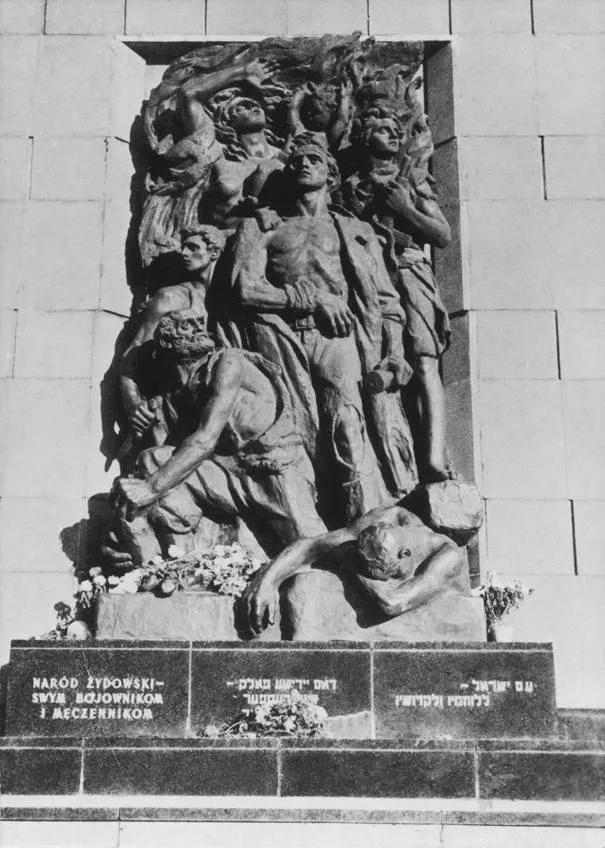
Pomnik bohaterów powstania w getcie warszawskim autorstwa rzeźbiarza Nathana Rapaporta. Monument wzniesiono na terenie zniszczonego getta. Jego kopia znajduje się w Yad Vashem w Jerozolimie.

Pisałam już wcześniej o antysemickiej publikacji Mehdiego Hasana, kiedy to we właściwy dla niego sposób przywołał rodzinę Bibasów w służbie swojej podłej agendy. Nie planowałam robić tego ponownie, po prostu dlatego, że nie chcę dostarczać temu żałosnemu oportuniście kolejnych kliknięć czy polubień. Ale ponieważ tym razem dotyczy to mojej własnej rodziny, czuję, że muszę się odnieść:

Zeteo
@zeteo_news
„Twoi [żydowscy] dziadkowie zagłosowaliby na Zohrana. Twoi dziadkowie prawdopodobnie byli socjalistami, bo tym właśnie była większość Żydów z Europy Wschodniej w Nowym Jorku na przełomie wieków.”

@mollycrabapple rozmawia z @simonerzim o historii żydowskiego socjalizmu w Nowym Jorku.
18:06 · 24 kwietnia 2026 · 86,1 tys. Wyświetleń

Mamy tu Simone Zimmerman, która wystąpiła w żałosnym antyizraelskim filmie, który już zrecenzowałam, żebyście nie musieli go oglądać, oraz Molly Crabapple, autorkę książki Here Where We Live Is Our Country: The Story of the Jewish Bund. Nie będę twierdzić, że ją przeczytałam (bo nie przeczytałam), jednak na podstawie tego, co o niej widziałam (tj. zapowiedzi na Amazonie i blurbu Naomi Klein wychwalającego jej wspaniałość), sądzę, że jej ogólna teza brzmi: dobrzy Żydzi nie muszą być syjonistami, bo bundowcy nimi nie byli.

Od czasów studiów sporo czasu poświęciłam myśleniu o bundowcach. Po pierwsze, miałam profesora, który urodził się w getcie warszawskim, a jego ojciec — lider tego ruchu — zginął w powstaniu w getcie. Gdy w 2022 roku odwiedziłam Polskę, znalazłam w Warszawie lśniący pomnik poświęcony jego pamięci. Po drugie, jestem prawnuczką rosyjskiego socjalisty mówiącego w jidysz, który wyemigrował do Stanów Zjednoczonych na początku XX wieku. Nie był on bundowcem per se (ani też antysyjonistą), ale należał do tej samej ogólnej kategorii demograficznej. Ta historia zdecydowanie zasługuje na badanie i dyskusję, ale musi to być robione we właściwym kontekście historycznym.

Antysyjonizm Bundu z początku XX wieku był w istocie aktem oporu — wobec nazistów i innych nazistopodobnych bytów, a nie wobec innych Żydów. Ich antysyjonizm wynikał z przekonania, że mają pełne prawo żyć w Europie Wschodniej i zachować kulturę oraz język jidysz, tak jak ich rodziny czyniły to przez setki lat. Była to piękna idea — ale po niemal całkowitej zagładzie podczas Holokaustu okazała się całkowicie nieskuteczna. W okresie świetności Bundu Polska miała drugą co do wielkości populację żydowską na świecie (pierwsze miejsce zajmował Nowy Jork) — ponad 3 miliony. Prawie osiemdziesiąt lat po powstaniu państwa żydowskiego pozostało tam zaledwie kilka tysięcy. Polska reprezentuje to, co zostało utracone. Izrael reprezentuje to, co zostało zyskane.

Bundowcy i ich rodziny doświadczali autentycznych trudów życia w sztetlu — pogromów, biedy, surowych zim. Ich przywódcy, podobnie jak przywódcy syjonistyczni w okresie przedpaństwowym i w pierwszych latach istnienia Izraela, byli również niezwykle ofiarni. Nie dołączali do tego ruchu dla sławy czy bogactwa. W przypadku mojego socjalistycznego pradziadka było to proste: był Żydem, który dorastał w cieniu Imperium Rosyjskiego. W tamtych czasach albo było się za carem, albo nie. On nie był — i podjął decyzję o emigracji z tego przeklętego terytorium trzy dekady przed dojściem nazistów do władzy. Przenieśmy się o pokolenie dalej, do bundowców, którzy stanęli na pierwszej linii frontu przeciwko silnie uzbrojonemu najeźdźcy, wiedząc, że najpewniej nie wygrają. Może gdyby mieli lepszą broń… ale to dygresja.

Zrównywanie moich socjalistycznych przodków z Zohranem Mamdanim i jego zwolennikami jest nie tylko błędne, ale i obraźliwe. Zohran może się określać jako socjalista, ale wszystko, co robi, wskazuje na to, że jest po prostu bogatym dzieciakiem popierającym przemoc wobec Żydów. Myślę, że mogę mówić w imieniu moich własnych dziadków, gdy powiem, że by go nie poparli. Mogliby poprzeć Berniego Sandersa w czasie, gdy ja to zrobiłam, ale to było niemal dekadę temu i zbyt wiele się zmieniło. Moi przodkowie nie byli głupi. Rozpoznawali wroga, gdy go widzieli. Gdyby nie, nie pisałabym teraz tych słów po angielsku, siedząc na kanapie w Stanach Zjednoczonych.

Oto pytanie istotne dla tego tematu, którego Mehdi i jego żydowscy goście nie podejmą, ale ja tak: dlaczego 7 października Hamas celowo zaatakował mieszkańców kibuców — społeczności będących być może jedynym udanym przejawem socjalizmu w naszej współczesnej epoce? Dlaczego nie uderzono w osadników albo entuzjastów Bibiego? Według tych oportunistów z Zeteo socjalizm i „postępowe” zasady mają stanowić tarczę przeciw nienawiści do Żydów. Szkoda, że w praktyce to nie zadziałało (ani w 1939 roku, ani w 2023) w społecznościach żydowskich, które opierały całe swoje istnienie na tych ideach.

W kibucu Nir Oz, jednej ze społeczności w rejonie przygranicznym Gazy zmasakrowanych w ten Czarny Szabat, jeden z izraelskich ratowników przydzielonych do zajmowania się ciałami przeglądał tablicę ogłoszeń, brnąc przez zniszczenia. Widniała na niej ulotka: „dołącz do nas w Jerozolimie, aby protestować przeciwko Netanjahu i nielegalnej okupacji Zachodniego Brzegu przez rząd”. Planowana data wydarzenia? 7 października 2023 roku, godz. 18:00.

Nie trzeba dodawać, że tam nie dotarli.


Link do oryginału:

The Liberal Jew
“Your Jewish Grandparents Would Have Voted For Zohran”
I have written on Mehdi Hasan’s antisemitic publication before, when he inappropriately brought up the Bibas family in the service of his vile agenda. I didn’t plan to do so again, simply because I do not wish to give this pathetic grifter more clicks or likes. But since this one involves my own family, I fee…

Zawartość publikowanych artykułów i materiałów nie reprezentuje poglądów ani opinii Reunion’68,
ani też webmastera Blogu Reunion’68, chyba ze jest to wyraźnie zaznaczone.
Twoje uwagi, linki, własne artykuły lub wiadomości prześlij na adres:
webmaster@reunion68.com


What do the Democrats want from Israel?


What do the Democrats want from Israel?

Jonathan S. Tobin


Senate Democrats haven’t turned on the Jewish state because the Netanyahu government is reckless. It’s because they fear a party base of deluded antisemites.

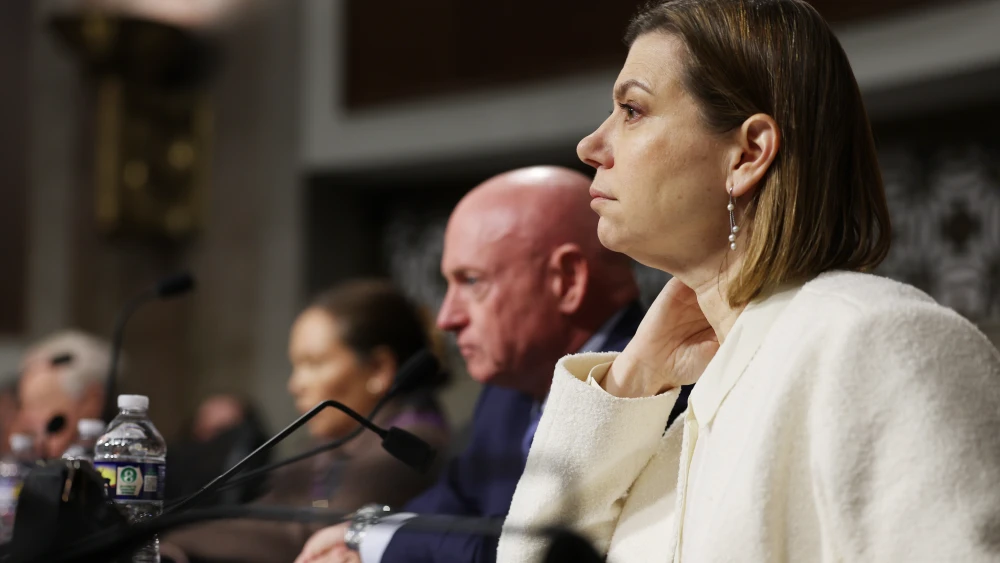
Sens. Elissa Slotkin (D-Mich.) and Mark Kelly (D-Ariz.) look on during a hearing with the Senate Armed Services Committee at the Dirksen Senate Office Building in Washington, D.C., on March 12, 2026. Photo by Anna Moneymaker/Getty Images.

The headline published by the far-left outlet The Intercept was spot on, even if most of the information in its article was slanted or downright false. In declaring that, “The Dam Breaks: Democratic Senators Overwhelmingly Reject Arms Sales to Israel,” the rabidly anti-Israel publication said nothing less than the truth. In the last year, the last vestiges of pro-Israel sentiment in the Democratic Party have more or less collapsed.

In the vote held on April 15, 40 of 47 Democratic members of the U.S. Senate voted in favor of one or two of the proposals put forward by Sen. Bernie Sanders (I-Vt.) to stop the sale of bulldozers and 1,000-pound bombs to the Jewish state. That this happened in the midst of an existential war that Israel is fighting against Iran, as well as its Hamas and Hezbollah terrorist auxiliaries, is shocking in and of itself. But the dramatic rise in the number of votes against giving Jerusalem the weapons it needs to deal with these enemies is what is most telling.

Pro-Israel Democrats are now the outliers

In 2024, when 19 Senate Democrats got behind a similar move by Sanders to “Block the Bombs” that were being used by Israel to attack Hamas and Hezbollah terrorists, that was rightly considered a breakthrough for what was once thought to be a marginal element in their caucus. A year later, in 2025, a then-record 25 Democratic senators joined the Vermont Socialist in seeking to embargo arms to Israel. Now, by getting 40 of his colleagues to join with him, a clear message was sent to the last of the pro-Israel holdouts.

Just a very few years ago, those Democrats who wanted to sunder the alliance with the Jewish state in this manner could be characterized as outliers who represented a marginal faction of the party. Today, pro-Israel Democrats are the ones who must be considered out of touch with not just their fellow senators but with the party base that keeps them in office.

New York Times article claimed that the major factor in flipping the totals on arms sales to Israel was the unpopularity of the joint war the United States has been fighting with the Jewish state against Iran. That’s certainly an important part of this debate. Still, the partisan motivations of those who think, as Times columnist Thomas L. Friedman does, that defeating President Donald Trump has become more important than opposing the world’s leading state sponsor of terrorism is not the sole or even the most important determining factor in deciding how Democrats are going to vote.

What matters most is what party activists and grassroots Democratic voters think about Israel. And as poll after poll has shown, they oppose Israel and favor their terrorist enemies (65% to 17%) by almost as overwhelming a majority as Republicans back Israel (70% to 13%) over the Palestinians.

It’s Hasan Piker’s party now

Indeed, liberal writer Jonathan Chait was not far off the mark when he wrote in The Atlantic of the fear that Democratic officeholders have of a party base that has fallen under the spell of anti-Israel hatemongers like podcaster Hasan Piker.

Republicans may have their own problem with a similar antisemitic set, including Tucker Carlson, Candace Owens, Alex Jones and enablers like Megyn Kelly. But Democrats who don’t wish to bend the knee to their intersectional left-wing base are in a very different position than the GOP. The leader of the Republicans—Trump—had no problem kicking them out of the party and his MAGA movement for the offense of opposing the war on Iran and alliance with Israel. He did so not only because he isn’t the type to take orders from someone like Carlson, who is more of a Mar-a-Lago court jester than a policy adviser. He could do so with impunity, secure in the knowledge that whatever inroads the Israel-bashers and Jew-haters have made among young voters, the overwhelming majority of his supporters approve of his stances.

Senate Democrats, most of whom came into office pledging their undying support for the Jewish state, don’t have that luxury. Indeed, as Chait writes, they are on the verge of losing their party to the likes of Piker, as well as the academic, pop-culture and media elites who, as we’ve learned from their pushback against calls to isolate someone who hates America as well as Israel and the Jews, largely agree with him.

Chait’s proposed solution to the problem is to follow the path of the 40 Senate Democrats who are now on record backing a proposal that would disarm Israel in the middle of a war. He says they have choices. One is to abandon Israel and hold onto office. The other is to stick to the principles that got most of them elected in the first place—and be defeated in a future primary by an Israel-hating and antisemitic Democratic Socialist who will steer the party toward the hard left. It also means a Democratic Party in which members of the left-wing congressional “Squad” that includes Reps. Alexandria Ocasio-Cortez (D-N.Y.), Rashida Tlaib (D-Mich.), Ilhan Omar (D-Minn.), along with fellow Marxist New York City Mayor Zohran Mamdani, are no longer on the margins but in control.

They know he’s right because, as he put it, they can all read polls. And so, they are shifting their principles to accommodate the new ideological alignment toward people for whom one Jewish state on the planet is one too many. And if that means leaving Israel without the weapons and means to defend itself against its genocidal regional foes, that’s just too bad.

Were the Democrats who changed their votes in the last year to get in sync with the new fashionable antisemitic wing of their party—such as Sens. Cory Booker (D-N.J.), Maria Cantwell (D-Wash.), Ruben Gallego (D-N.J.), Mark Kelly (D-Ariz.), Jon Ossoff (D-Ga.) Elissa Slotkin (D-Mich.) and Ron Wyden (D-Ore.)—to admit to this, it would be disgraceful enough. But what’s truly awful about their stand is the disingenuous defenses of their position. They claim that they still support Israel, but think its democratically elected government led by Prime Minister Benjamin Netanyahu has engaged in reckless and needlessly brutal behavior by waging war on Iran, in addition to its terrorist allies in Gaza and Lebanon.

Missing from their hypocritical speeches is any mention of what they really expect from an Israeli government. Even Chait, who also claims to be a “liberal Zionist” disenchanted with Netanyahu but not Israel itself, had to acknowledge that the Jewish state has no current peace partner. At some point, even those who are willfully ignorant about events in the Middle East have to take notice of the fact that Palestinian Arabs don’t want a two-state solution, which liberal Americans still seem to think is the only answer to the conflict. Unlike them, the overwhelming majority of Israelis have decided to accept that Palestinians are saying “no” to any outcome other than the destruction of the Jewish state and the genocide of its people.

The atrocities in southern Israel on Oct. 7, 2023, helped cement that viewpoint.

Israelis won’t commit suicide

Do Democrats really expect Israel, whether led by Netanyahu or any possible alternative that might defeat him later this year in the coming elections, to share their delusions after everything that has happened in the 33 years since the Oslo Accords? Do they think Israeli citizens will commit suicide to retain the world’s goodwill? Even those who will vote against Netanyahu understand that the terrorist attacks that took place on Oct. 7 were just a trailer for what the Palestinians want to do to the rest of the Jewish state.

The Piker wing of the Democrats knows this, too. The difference is that they support Israel’s extinction and think that the Jewish genocide this would entail is merely the just deserts that all “white” oppressors and settler-colonialists deserve.

The “moderates” who once made up the pro-Israel wing of the Democratic Party, but are now voting with the Israel-haters, may not want this. But they value their seats and the ability to move among their base without being accused of being supportive of the mythical genocide Israel is supposedly carrying out against Gazans more than they do the alliance with Jerusalem, let alone Jewish survival.

The party base isn’t aware that the “genocide” and “apartheid” blood libels aimed at Israel are all rooted in recycled Soviet propaganda and other myths validated by toxic “anti-racist” ideologies. Those whose knowledge is limited to what they see on their TikTok feeds or podcasts hosted by Piker—and his moral equivalents on the right—may not know they are being lied to. But the Senate Democrats who are pandering to their prejudices and appalling ignorance do.

Perhaps they can live with it because, as Chait notes, Israel isn’t going to allow itself to be destroyed, regardless of what the Democrats do, even if they retake Congress and the White House in the coming years. Truth be told, it is in the Jewish state’s interests, as Netanyahu himself has said, to eventually wean itself from U.S. military aid, even if doing so now, after more than two and a half years of continuous war, would be disastrous. Still, that aid is almost all spent on buying U.S. materials and constitutes as much of an assistance package to American arms manufacturers as it does to Jerusalem.

A deal with the devil

But Chait and other like-minded pundits, such as Friedman or Ezra Klein at the Times, are wrong if they believe that abandoning Israel in this manner will save the moderates who still claim to care about the Jewish state. By giving in to the hard left in this manner, they are, as The Intercept noted, allowing the dam that held their extremists in check to burst.

Like all such deluges, support for Israel isn’t the only position once held by Democrats that will be swept away. In its wake will come not only the normalization and acceptance of antisemitism, as is already manifested by the liberal media’s swooning over Piker. It will also involve adoption of the rest of the far left’s agenda, including open borders, a “Defund the Police” attitude toward crime and public safety, and AOC- and Mamdani-style Marxist economic measures.

Democrats aren’t wrong to think they are set up to make real gains this year because of both the usual anti-incumbent spirit of a midterm election, but also because of the setbacks faced by the Trump administration—many of them economic. And they believe turning on Israel will only further accelerate a shift in voter sentiment toward them. Yet the sort of thinking that animates the people they are appeasing isn’t limited to hatred for Israel and tolerance for Jew-hatred. It will inevitably lead to general radicalization that is deeply unpopular and will sink them far quicker than a principled stand in support of the Jewish state would. As the ominous saying goes: “First, they come for the Jews … .”

Confronting and refuting the antisemitic base of the Democratic Party won’t be easy for politicians who are, like most of their congressional colleagues on both sides of the aisle, more interested in power than principle. But they should realize that making concessions to their base’s anti-Israel prejudices won’t purchase their acquiescence on other issues. Those Democrats who are betraying Jerusalem now aren’t buying themselves time or space to further consolidate their hold on their party. Instead, they are making a deal with the devil from which there is no escape clause to enable them to hold onto their seats—or what’s left of their principles.


Jonathan S. Tobin is editor-in-chief of the Jewish News Syndicate, a senior contributor for The Federalist, a columnist for Newsweek and a contributor to many other publications. He covers the American political scene, foreign policy, the U.S.-Israel relationship, Middle East diplomacy, the Jewish world and the arts. He hosts the JNS “Think Twice” podcast, both the weekly video program and the “Jonathan Tobin Daily” program, which are available on all major audio platforms and YouTube. Previously, he was executive editor, then senior online editor and chief political blogger, for Commentary magazine. Before that, he was editor-in-chief of The Jewish Exponent in Philadelphia and editor of the Connecticut Jewish Ledger. He has won more than 60 awards for commentary, art criticism and other writing. He appears regularly on television, commenting on politics and foreign policy. Born in New York City, he studied history at Columbia University.


Zawartość publikowanych artykułów i materiałów nie reprezentuje poglądów ani opinii Reunion’68,
ani też webmastera Blogu Reunion’68, chyba ze jest to wyraźnie zaznaczone.
Twoje uwagi, linki, własne artykuły lub wiadomości prześlij na adres:
webmaster@reunion68.com

Israel Condemns Venice Biennale Jury Decision to Ban Israeli Artist From Winning Top Awards


Israel Condemns Venice Biennale Jury Decision to Ban Israeli Artist From Winning Top Awards

Shiryn Ghermezian


Israel’s Foreign Minister Gideon Saar attends a press conference with the Danish Foreign Minister (not pictured) in Jerusalem, Sept. 7, 2025. Photo: Ritzau Scanpix/Ida Marie Odgaard/via REUTERS

Israel’s Foreign Ministry has denounced the International Jury of the 61st Venice Biennale after its five members announced last week that they will not consider awarding top prizes to an artist from Israel.

In a released statement, the Venice Biennale’s jurors said they will exclude from consideration for the Golden and Silver Lion awards artists from “those countries whose leaders are currently charged with crimes against humanity by the International Criminal Court (ICC),” which applies to both Israel and Russia in relation to the wars in Gaza and Ukraine, respectively.

Belu-Simion Fainaru is the artist representing Israel at the Venice Biennale this year with his installation “Rose of Nothingness.” Fainaru’s artwork will address topics such as Jewish mysticism, memory, and poetry. The artist – who was born in Bucharest, Romania, and now resides in the northern Israeli port city of Haifa — won the Israel Prize in Design and Interdisciplinary Art last year. A University of Haifa alumnus, he represented Romania at the 2019 Venice Biennale.

Israel’s Foreign Ministry said in a post on X that the jury’s decision to “boycott” Fainaru is “a contamination of the art world.”

“The political jury has transformed the Biennale from an open artistic space of free, boundless ideas into a spectacle of false, anti-Israeli political indoctrination,” the ministry added.

Fainaru believes that the jury’s decision has “created a hostile and degrading environment” and that he is being discriminated against based on his national origin, he said in an email last week cited by Artnet.

“The Biennale has publicly stated that it rejects any form of cultural censorship and confirmed participation of all countries recognized by Italy, including Israel, Russia, and Iran,” he added. “I must mention that other states with serious violations are not excluded. This statement is the violation of essential equality condition based on legally unstable and arbitrary basis.”

“Unfortunately, the Biennale may end up being less about the art on display and more about the turbulent world surrounding it,” he also wrote in an Instagram post on Sunday. “But we are still making art and believe in dialogue. We look forward to hosting you at our pavilion.”

The ICC issued arrest warrants in 2024 for Israeli Prime Minister Benjamin Netanyahu and his former defense chief Yoav Gallant for alleged war crimes and crimes against humanity in the Gaza Strip. The Jewish state has strongly denied the allegations, with officials saying the Israeli military has gone to unprecedented lengths to try and avoid civilian casualties, despite Hamas’s widely acknowledged strategy of embedding its terrorists within Gaza’s civilian population. Israel launched its military campaign against Hamas after the terrorist group’s invasion of and massacre across southern Israel on Oct. 7, 2023.

This year’s Venice Biennale will be open to the public from May 9-Nov. 22, and the awards ceremony will take place in Venice on May 9. The Golden Lion awards are given to the best artist in the main exhibition and to the best national pavilion, and the Silver Lion is awarded to a promising young artist. The winners will be selected among 110 participants.

This is the first year that Russia has been allowed to reopen its pavilion at the Venice Biennale since 2022. The ICC currently has an active arrest warrant against Russian President Vladimir Putin for war crimes against children in Ukraine.

Zoe Butt, Elvira Dyangani Ose, Marta Kuzma, Giovanna Zapperi, and Solange Farkas are the jurors for the Venice Biennale this year. Explaining their decision to exclude Israel and Russia from the event’s top prizes, the jury said they feel “a responsibility towards the historical role of the Biennale as a platform that connects art to the urgencies of its time.”

“We acknowledge the complex relationship between artistic practice and nation-state representation that provides a central structure for the Venice Biennale, particularly the way this relation binds artists’ work with the actions of the state they represent,” they added. The jury also said their decision was inspired by a statement made by the late Koyo Kouoh, who curated the Biennale’s main exhibition this year, titled “In Minor Keys.” Kouoh had said: “In refusing the spectacle of horror, the time has come to listen to the minor keys, to tune in sotto voce to the whispers, to the lower frequencies; to find the oases, the islands, where the dignity of all living beings is safeguarded.”

Following the statement from the jury, the European Union’s foreign policy chief Kaja Kallas announced that the bloc will withdraw $2.3 million in funding from the international art event for allowing Russia to participate. “While Russia bombs museums, destroys churches, and seeks to erase Ukrainian culture, it should not be allowed to exhibit its own,” Kallas said, as reported by Politico. “Russia’s return to the Venice Biennale is morally wrong, and the EU intends to cut its funding.”

Finland announced last week that its political leaders will not participate in the Venice Biennale this year because of Russia’s participation, and Latvia’s Culture Minister Agnese Lāce said she will boycott the event’s opening on May 9 if Russia is included.


Zawartość publikowanych artykułów i materiałów nie reprezentuje poglądów ani opinii Reunion’68,
ani też webmastera Blogu Reunion’68, chyba ze jest to wyraźnie zaznaczone.
Twoje uwagi, linki, własne artykuły lub wiadomości prześlij na adres:
webmaster@reunion68.com