Archives

First TV Series About Benjamin Netanyahu, ‘Bibi,’ to Be Penned by Emmy-Winning Writer

First TV Series About Benjamin Netanyahu, ‘Bibi,’ to Be Penned by Emmy-Winning Writer

Shiryn Ghermezian


Israeli Prime Minister Benjamin Netanyahu stands next to his wife Sara as he waves to supporters following the announcement of exit polls in Israel’s election at his Likud party headquarters in Tel Aviv, Israel, March 3, 2020. Photo: REUTERS/Amir Cohen.

Two-time Emmy Award-winning screenwriter Kirk Ellis has been signed by the global production and distribution company Fremantle to write the screenplay for the new TV series “Bibi,” based on the political and personal life of Israeli Prime Minister Benjamin Netanyahu.

Ellis, also a Writers Guild Award and Humanitas Prize winner, is best known for adapting for HBO David McCullough’s biography John Adams, which won a record-breaking 13 Emmy Awards in a single year. His many other credits include “Anne Frank: The Whole Story” for ABC, which he received an Emmy nomination for.

“Bibi” will be the first TV series about the life of Israel’s longest-serving prime minister, who has been in office since 2009.

The show is being produced by the Tel Aviv-based TV production company Abot Hameiri, most popularly known for producing the Israeli series “Shtisel.” It will be based on Israeli journalist Ben Caspit’s best-selling biography The Netanyahu Years.

“Benjamin Netanyahu is one of the most complex figures in modern history,” said Ellis. “His is a life lived on a Shakespearean scale. Ben Caspit’s insightful reporting demonstrates how private life always shapes public affairs, and there’s no shortage of conflict — or opinions — when it comes to Benjamin Netanyahu. I’m thrilled and honored to be working with Guy and the entire Abot Hameiri team to bring this story to life.”

Abot Hameiri stated that “Bibi” would be “an epic political story with a very big philosophical and psychological undertone,” adding, “At the same time, it will be a scandalous family melodrama that explores how the personal can become political, and vice versa.”

Guy Hameiri, co-founder of Abot Hameiri, said, “the series is the biggest IP we can deliver out of Israel today to the world, and with Kirk’s esteemed catalogue of work, particularly in exploring the lives of high-profile figures, it makes him a perfect addition to this series looking at one of the most influential figures in modern geo-politics.”


Zawartość publikowanych artykułów i materiałów nie reprezentuje poglądów ani opinii Reunion’68,
ani też webmastera Blogu Reunion’68, chyba ze jest to wyraźnie zaznaczone.
Twoje uwagi, linki, własne artykuły lub wiadomości prześlij na adres:
webmaster@reunion68.com


Letters to the Editor June 3, 2020: George Floyd and Iyad al-Halak

Letters to the Editor June 3, 2020: George Floyd and Iyad al-Halak

LETTERS TO THE EDITOR


Readers of The Jerusalem Post have their say.

Letters / (photo credit: PIXABAY)

Two recent incidents in the United States and Israel show disturbing similarities.

YIGAL HOROWITZ
Beersheba

It’s a steal?
Regarding “Mandatory social distancing: The greatest theft of all time” (June 2), I am greatly disturbed by your decision to give a platform to the three economics/ business professors who labeled social distancing a “theft.” Wasn’t their ad hominem attack on public health scientists (“supercilious and myopic infectious disease experts”) a clue that this was a non-science based, disinformation article from an extremist political viewpoint?
The price of coronavirus disinformation is high. To spread this politically motivated, non-scientific propaganda during a serious public health crisis is beyond the pale of fair comment and free speech; it is the height of irresponsibility.

BURTON FRANCIS
Jerusalem

It takes the combined wisdom of three senior professors to conclude that social distancing, which saved millions of lives during the current pandemic, is “the greatest theft of all time.” Their next study will probably show that since a person’s medical costs are disproportionately higher during the last year of his life, we must do something to prevent this theft of kupat holim funds.

For genuine theft, we should look at the working conditions of these professors, who receive a full salary for a maximum of eight hours of lecturing per week.

DR. SAMUEL DERSHOWITZ
Jerusalem

It is unfortunate that the three economists describe mandatory social distancing as “theft.” A thief steals for personal gain. This is not the case with the government’s policy concerning corona. It would have been sufficient to castigate the government as “negligent” or even “grossly negligent.” I do not believe there was criminal intent, as the word “theft” implies. I also feel that they are unnecessarily rude about infectious disease experts. One should also recognize that the government’s massive program has been effective in managing the epidemic from an epidemiological standpoint.

The government’s approach to the pandemic has been restricted to strategic planning, with a complete absence of tactical planning. Effective tactical planning might have permitted phased closures and avoided a universal shutdown. Tactical planning depends on information – and I believe that information is contained in the records of general practitioners (family physicians), every one of whom has the information on her/his desktop. However, to use this information one needs continuous monitoring. This is possible and can be done automatically while at the same time preserving our patients’ privacy.

Bearing in mind that large sums are spent on relatively uncommon causes of illness, it would be worthwhile to find the money to develop an ongoing program to anticipate and contain future major public health problems.

DR. ALBERT JACOB
Beersheba

Clear as mud
I agree with much of the opinion expressed in “For annexation to work, it needs clarity and preparedness” (May 31), but I am a bit confused about its characterization of Samaria Council chairman Yossi Dagan and of Mahmoud Abbas’s Palestinian Authority.

Dagan is portrayed as a person adamantly opposed to any attempt to solve the ongoing conflict between Israel and the Palestinians. Yet, three weeks ago, he hosted a group of Muslims at a combined Iftar/Lag BaOmer dinner. The guests included Israeli Arabs and Palestinians who said they welcomed the plan for extending Israeli sovereignty to parts of Area C and also looked forward to reaping the economic benefits proposed by the Trump peace plan.

Conversely, the article’s writer feels that the Palestinian Authority has shown itself to be against violence. Yet another article in the same issue details the pay-for-slay program and the PA’s encouragement of seeking “martyrdom” by murdering Jews.

Preparation for applying Israeli civilian governance to parts of Area C requires clarification of who is seeking peace and who is not. It would also help to inform those who advise against Israel’s taking “unilateral” action that the PA leaders’ automatic rejection of any and all movements toward peace is a prime example of “unilateralism.”

TOBY F. BLOCK
Atlanta, GA

Is the “two-state solution” really a solution for the Israeli-Palestinian conflict?

In the last Palestinian elections held 14 years ago, Hamas won 74 of the 132 seats available. By a clear majority, the Palestinian people rejected Fatah in favor of Hamas. Today the West is largely in agreement that Hamas is a terrorist organization, and both Israel and the US refuse to deal directly with Hamas.

If a Palestinian state is declared, there will need to be elections. The reason that no Palestinian elections have been held for 14 years is clear: Hamas will win and take over the state. So the “two-state solution” that the West is promoting will lead to a state controlled by an organization that the West considers a terrorist organization and will not talk to. What could be more absurd? Is this really a solution? Strike One.

Any agreement that the Palestinian state will be demilitarized is laughable. Not only will the Palestinians arm themselves, they will also enter into agreements with other countries. Iran will jump at the opportunity. Israel will have Iranian troops looking directly at Ben-Gurion Airport and stationed outside Jerusalem. Is this really a solution? Strike two.
There are approximately two million Palestinian “refugees” and descendants living in Syria, Lebanon and Jordan. Once a Palestinian state is declared, it seems likely that they will be ordered to go to it. Unemployment will skyrocket and chaos will result. Imagine the consequences of a million unemployed people marching to the Israeli security fence on the West Bank and demanding a “right of return.” Strike three – you’re out.

Only when countries genuinely abandon their intention to destroy their neighbors is peace possible. The Palestinians need to end their maximalist demands and abandon their so-called “inalienable right of return.” They have to abandon terrorism. Without this, the “two-state solution” is really an oxymoron.

When Abbas holds up four maps indicating smaller and smaller areas for a Palestinian state, he is showing the world the legacy of Palestinian rejection of all past “two-state” solutions. The consequences of another rejection are clear. The Palestinian State in the next map will be even smaller. It’s time for the Palestinians to face reality and abandon the failed policies of the past. Until then, the West to stop supporting an unworkable “two-state solution.”

NEVILLE BERMAN
Ra’anana

Under the heading “Annexation vexation” (June 1), five letters support annexing parts of Judea and Samaria. While the letters make some good points, it is important to consider the potential negative effects of such an annexation.

These include making a resolution of the Israeli/Palestinian conflict even harder, if not impossible; ending the long-running successful cooperation between PA security forces and the IDF to curtail Hamas and other terrorist groups; making terrorism and another Intifada more likely; weakening relations between Israel and many other nations, including the European Union, which has threatened a very negative reaction to annexation; undermining current peace agreements with Jordan and Egypt; lessening support for Israel among American Jews; and widening divisions between Israel and US Democratic politicians.

There is widespread opposition to annexation, including from Commanders for Israel’s Security’ (CIS), which includes “the overwhelming majority of retired IDF generals and their Mossad, Shin Bet (Security Agency) and police equivalents;” most American Jews; almost all US Democratic politicians, including Joe Biden; and a strong majority of world leaders.
This is an especially bad time for annexation, as it is urgent that nations work together to combat the coronavirus pandemic and the potential climate catastrophe that climate experts are increasingly warning about.
Annexation is a terrible option for Israel.

RICHARD H. SCHWARTZ, PH.D.
Professor Emeritus, College of Staten Island

Regarding “Imam jailed for smuggling charity funds to Hamas” (June 1), the imam received a one-year jail sentence for smuggling $3,000 to the Hamas terrorists who control Gaza.

I’m not questioning the justice of the punishment, since assisting the enemy is a severe crime that must be punished. I just figure that if the punishment for smuggling $3,000 of charity funds is one year in jail, the sentence for those facilitating the transfer of $480 million of Qatar charity funds to Gaza would be 160,000 years.
Not to worry – I’m sure whoever was responsible for the transfer of the funds will have one third of his sentence commuted for good behavior!

SAMMY HIRSCHMAN
Karnei Shomron

Masked intentions
Regarding “PM: Lockdown will return if coronavirus guidelines ignored” (May 31), it was disheartening to read about the spike in coronavirus cases and especially closing down a school.

The Health Ministry is concerned about “disregard for the rules” (wear a mask, good hygiene, and maintain two meters apart, yet in supermarkets and stores, many people wear masks as chin straps and some cashiers don’t have masks at all. Many students and teachers aren’t wearing masks.
If the Health Ministry is serious about enforcing the rules, I suggest that they make the storeowners responsible for ensuring that their staff and customers wear masks covering both their mouth and nose. Anyone violating the rules should be required to leave the store. Health inspectors should visit the stores. If they notice people not wearing their masks properly, they should photograph them and then issue a citation to the store. A first citation is a warning. A second citation will require the store to close for 10 days, with a notice posted on the entry door to inform the public that “This store did not comply with the coronavirus rules.”

After the first store in the neighborhood is shut down for 10 days, the other storeowners will insist that their staff and customers comply. This policy will also impress upon the public the seriousness of the situation.
With no enforcement and such complacency, it’s no surprise that so many tested positive. The public needs to realize the pandemic isn’t over!

BARBARA FEINBERG
Jerusalem

Missionary TV position
I was taken aback by Ellen W. Horowitz’s article, “How did missionary TV come to Israel,” (May 31), just by the sheer lack of trust it affords Israeli people to make their own choices and come to their own conclusions.
There is little room in this article for Jews who may think differently, choose to adopt an alternative viewpoint or not fall in lock step with what is deemed to be the only way Jews can and should think. Quotes which prove my point: “this new-old challenge to our faith,” “we Jews march to a different drummer and have different values,” “Jewish people living here are certainly entitled to ensure religious continuity,” “this is an ‘every Jew’ moment,” and finally, “spiritual distancing from our very zealous Christian friends is in order at this time.”

As an independent Jewish Israeli thinker, I’d like to believe that I have the ability to discern a threat to my existence and the existence of my people and my country. I’d also like to think that I have the right and privilege to turn on a TV channel or, likewise, turn it off. I do not relinquish my right to view content of any kind, allowing someone else to make the determination for me of what is dangerous or immoral. So my message to Horowitz is – thanks, but no thanks. I am old enough, smart enough and aware of Jewish history enough to know how to make my own decisions and not feel intimidated by evangelicals who may have a different viewpoint.

I highly suggest that you respect the Israeli people enough to let them make their own choices and not need you as a filter of what is sanctioned worthy for Jews.

CHAVA STEIN
Jerusalem

Regarding “God TV says threat of closure of Shelanu ‘religious discrimination” (June 2), the history of modern Christian missionary activities in Israel goes back to the early 19th century, when under the aegis of the British consulate in then-Ottoman-governed Jerusalem, numerous missionary activities directed at the Jews were incorporated into educational and charitable institutions. Their success in converting Jews is attested to by the records of parents and rabbis in trying to extricate their children from conversion.

Missionary activities became so rampant that they were repudiated by no less a personage than Queen Victoria herself, who rebuked those seeking to bring Christianity on the inhabitants of the land.
It is therefore appropriate to examine the motives and methodology of this new TV channel.

MARION REISS
Beit Shemesh

Here comes the bribe
I read with interest the letters under the subheading “Innocent until proven guilty?” (June 1). I agree with that sentiment.
However, I was perplexed by the assumption that “media bribery” could not possibly be a crime.

If it is shown that Bezeq, in particular its owner, monetarily benefited by a change in regulations in exchange for and control over news coverage, is this not bribery?

BARRY LYNN
Efrat


Zawartość publikowanych artykułów i materiałów nie reprezentuje poglądów ani opinii Reunion’68,
ani też webmastera Blogu Reunion’68, chyba ze jest to wyraźnie zaznaczone.
Twoje uwagi, linki, własne artykuły lub wiadomości prześlij na adres:
webmaster@reunion68.com


Israel negotiates with Saudi Arabia control over Jerusalem’s Temple Mount

Israel negotiates with Saudi Arabia control over Jerusalem’s Temple Mount

TV7 Israel News


1) An apparent exponential rise of newly confirmed coronavirus cases throughout the state of Israel is consequently boosting prospects of a change in Jerusalem’s policy vis-à-vis its efforts to combat the spread of the contagion.

2) A report reveals that since December of 2019, secret meetings have been held between Israel and Saudi Arabia over the latter’s potential engagement in Administrative control of Jerusalem’s Temple Mount.

3) After months in which the Temple Mount was closed to worshippers and visitors, the antient compound – where both biblical Temples were once situated – has been reopened for Muslim worshipers, under strict corona-related guidelines of social distancing and protective gear.


Zawartość publikowanych artykułów i materiałów nie reprezentuje poglądów ani opinii Reunion’68,
ani też webmastera Blogu Reunion’68, chyba ze jest to wyraźnie zaznaczone.
Twoje uwagi, linki, własne artykuły lub wiadomości prześlij na adres:
webmaster@reunion68.com


Jerozolima 1948-1967- 2020

Jerozolima 1948-1967- 2020

Gerald Steinberg
Tłumaczenie: Andrzej Koraszewski


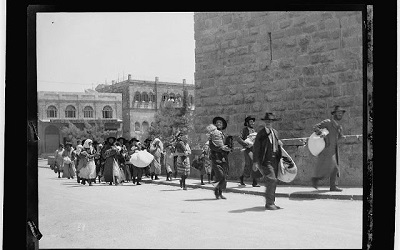
Żydzi uciekający z Dzielnicy Żydowskiej po arabskim pogromie w 1929 roku (Library of Congress)

Okropne lata, kiedy Jordania miała kontrolę nad Jerozolimą, kiedy Żydom zabraniano dostępu do ich świętych miejsc, są najlepszym dowodem na to, że wspólna administracja jest utopią.   

Dla mnie, mieszkańca Jerozolimy, to jak bardzo nowożytna historia naszego miasta jest maltretowana, zniekształcana i podrabiana przez dziennikarzy, zagranicznych polityków i dyplomatów oraz różnych niedbających o fakty badaczy, jest ciągłym źródłem frustracji, szczególnie w okolicach Dnia Jerozolimy.

W kółko powtarza się nam, że „Wschodnia Jerozolima” oraz „Stare Miasto” zostały zabrane Jordanii przez Izrael w 1967 roku. Oczywiście bez wspomnienia wszystkiego co działo się w tym mieście w latach między 1948 a 1967 rokiem. Poza Izraelem fałszywa narracja pokazująca  Palestyńczyków wyłącznie jako ofiary, a Izrael jako „okupanta” całkowicie wyparła prawdziwą historię i propaganda zastąpiła rzeczywistość.

Trwający wpływ jordańskiej okupacji z lat 1948-1967 jest kluczowy dla zrozumienia powszechnej odmowy akceptacji wspaniałych pokojowych pomysłów ponownego podziału miasta, obejmujących miraże „wspólnej administracji” i umiędzynarodowienia. Tego rodzaju kreatywna polityka może brzmieć dobrze dla ucha, jednak historia jordańskiej okupacji przypomina nam, że w praktyce, takie wizje prowadziłyby do powrotu okropnych praktyk.

Żydzi mieszkali w Jerozolimie zawsze i przed rokiem 1948 od wielu dziesiątków lat stanowili w tym mieście większość mieszkańców. Niszczenie i etniczna czystka starożytnej Dzielnicy Żydowskiej Starego Miasta zaczęło się wraz z rezolucją ONZ o podziale z 27 listopada 1947 roku. Siły arabskie zablokowały drogę z Tel Awiwu do Jerozolimy i izraelskie wysiłki przerwania tej blokady nie powiodły się, powodując ogromne straty w ludziach. Posiłki nie mogły dotrzeć i 28 maja 1948 armia jordańska (znana jako „Legion Arabski”) zdobyła Dzielnicę Żydowską.

Jordański dowódca, Abdallah el-Tal, chwalił się, że “Operacje zaplanowanej destrukcji rozpoczęły się… Zaledwie w cztery dni po naszym wejściu do Jerozolimy Żydowska Dzielnica Jerozolimy została cmentarzyskiem.” (Disaster of Palestine, Cairo 1959) Wszyscy żydowscy mieszkańcy zostali wygnani – czystka etniczna była całkowita. Żydom zabroniono dostępu do Wzgórza Świątynnego, zburzonego przez Rzymian w 70 roku naszej ery oraz do Zachodniej Ściany, która ocalała. (To były i są najświętsze miejsca dla wyznawców judaizmu).

Już po upadku Dzielnicy Żydowskiej zwycięzcy prowadzili systematyczną desekrację liczących 3000 tysiące lat pozostałości żydowskiej Jerozolimy. 57 starych synagog, bibliotek, i ośrodków studiów religijnych zostalo zdewastowanych, a 12 zburzono z premedytacją. Te, które pozostały, zostały zmienione w stajnie dla kóz, owiec i osłów. Prośby skierowane do ONZ i do międzynarodowej społeczności, aby zatrzymać zniszczenia i ogłosić Stare Miasto ”miastem otwartym” pozostały bez odpowiedzi.

Co więcej, tysiące nagrobków ze starożytnego cmentarza na Górze Oliwnej wykorzystano do budowy chodników i dróg oraz jako materiał budowlany w koszarach jordańskiej armii. Po wojnie 1967 roku Izraelczycy, którzy weszli na teren cmentarza na Górze Oliwnej, zobaczyli zniszczone groby, roztrzaskane kamienie nagrobne, dowiedzieli się ”że jordańscy żołnierze i lokalni mieszkańcy zabierali kamienie nagrobne do budowy”. Nagrobki były rozbijane lub w całości używane do budowy przystanków autobusowych, schodów itp. Wiele grobów było otwartych, ludzkie kości były rozrzucone. Część cmentarza zmieniono na parking, przecinała go asfaltowa droga. U szczytu cmentarza zbudowano hotel Intercontinental. Sadar Khalil, wyznaczony przez rząd jordańswki jako oficjalny opiekun cmentarza, zbudował na nim swój dom, używając do budowy zrabowane kamienie nagrobne.

W 1967, natychmiast po wojnie, opublikowano wiele zdjęć, żydowskich kamieni nagrobnych na terenie jordańskich koszar, takich jak El Azariya, w palestyńskiej dzielnicy, gdzie zrobiono z nich ścieżki, schody i chodniki.

Po zakończeniu wojny 1948 roku zaczęły się nogocjacje i przedstawiciele Izraela kładli nacisk na sprawę dostępu do Żydowskiej Jerozolimy. Artykuł VIII izraelsko-jordańskiego Porozumienia o Zawieszeniu Broni, podpisanego 3 kwietnia 1949 roku, wzywał do ustanowienia Specjalnego Komitetu, “składającego się z dwóch przedstawicieli każdej strony w celu sformułowania uzgodnionych planów” w tym ”swobodnego dostępu do miejsc świetych i instytucji kulturalnych  oraz korzystania z cmentarza na Górze Oliwnej”.

Przedstawiciele stron i międzynarodowi mediatorzy solennie zadeklarowali, ”że jest możliwość, iż drogi do Świętych Miejsce będą otwarte, tak aby Żydzi mogli dotrzeć do Ściany Płaczu jeszcze podczas najbliższego Pesach. Problem dostępu do Świętych Miejsc pozostawiono do rozwiązania lokalnym władzom wojskowym i wydawało się,  że ”jest dostatecznie dużo dobrej woli po obu stronach, aby było to możliwe”. Nic takiego się nie stało, ta klauzula nigdy nie była respektowana.

Nadal składano obietnice, Glubb Pasha, brytyjski dowodca Legionu Arabskiego, zapowiadał, że ”arabska i żydowska populacja Jerozolimy będą w odrębnych  miastach z ’wolnym handlem i wymianą między nimi’. Arabowie będą gotowi, by pozwolić Żydom na dostęp do ich świętych miejsc, a szczególnie do Ściany Płaczu, znajdującej się obecnie w kontrolowanym przez Arabów Starym Mieście”. Aczkolwiek było wiele dyskusji na ten temat i skarg ze strony Izraela, strona jordańska nigdy nie  dotrzymała umów, a ONZ nie uchwaliła żadnej rezolucji potępiającej takie traktowanie żydowskich miejsc świętych.

W 1954 roku delegacja brytyjska poprosiła generała Vagna Bennike, dowódcę oddziałów pokojowych ONZ, aby przekazał prośbę o zezwolenie niewielkiej grupie Żydów (głównie obywateli amerykańskich i brytyjskich) ”na przejście na Stare Miasto, aby mogli się pomodlić przy Zachodniej Ścianie”. Podobne prośby były składane do przedstawicieli USA. W odpowiedzi na jedną z takich próśb amerykański Sekretarz Stanu, Henry A. Byroade, odpowiedział, że z powodu ”niefortunnych napięć” między Izraelem a Jordanią ”nie można wypracować praktycznych rozwiązań”.

W 1956, generał E. L. M. Burns, dowódca nadzorujących zawieszenie broni sił pokojowych ONZ, został również poproszony o podjęcie z Jordańczykami i ich brytyskimi mentorami sprawy pogwałceń Artykułu VIII – swobodnego dostępu do Zachodniej Ściany na Starym Mieście. Organizacja Narodów Zjednoczonych odmówiła pomocy w tej sprawie, ignorując dyskryminację i pogwałcenia Umowy o Zawieszeniu Broni. Mimo że prowadzono nadal dyskusję o umiędzynarodowieniu Jerozolimy, nie wspomniano nawet o odmowie dostępu do żydowskich Miejsc Świętych.

Równiez Watykan odmówił interwencji w sprawie pozwolenia Żydom na odwiedzanie ich świętych miejsc. Na forum ONZ, ambasador Izraela Abba Eban podkreślał, że chociaż chrześcijańskie i muzułmańskie miejsca święte w Jerozolimie są dostępne, ”Zachodnia Ściana, najświętsze sanktuarium judaizmu i najstarsze miejsce święte w Jerozolimie, mimo solennych obietnic i zapewnień, ma zamknięty dostęp dla wiernych”.  W Knesecie izraelscy politycy mówili, że ”ten odrażający fakt  nie szokuje świata, tak bardzo zatopionego w materializmie, że niebawem nie będzie miejsca dla żadnej świętej idei.” Zdarzało się, że Żydzi byli łapani i zatrzymywani, kiedy próbowali przekroczyć dzielącą miasto linię demarkacyjną, żeby dotrzeć do Zachodniej Ściany i tam się pomodlić.

Każdego roku w święto Tisza b’Av i podczas trzech świąt pielgrzymek, izraelska prasa i politycy oraz przywódcy religijni przypominali fakt, że Artykuł VIII Porozumienia jest systematycznie łamany i wzywali izraelski rząd „by okazał większą aktywność w tej sprawie”. Raz za razem różne grupy ponawiały apele do ONZ i do Stanów Zjednoczonych oraz do pozostałych „wielkich mocarstw” by podjęto interwencję i zmuszono Jordanię  do respektowania zobowiązań podpisanych w Porozumieniu i pozwoliły religijnym Żydom na dostęp do Zachodniej  Ściany – najbardziej świętego  miejsca w żydowskiej religii.

Minęły 53 lata od czasu kiedy Izraelska Armia Obronna zakończyła oblężenie i połączyła Jerozolimę z jej starożytnym dziedzictwem oraz kiedy zaczęto odbudowę budynków zniszczonych i zbezczeszczonych podczas jordańskiej okupacji. Dla nas Dzień Jerozolimy jest przypomnieniem o konieczności uczenia historii tego miasta  i pilnowania, aby propagandowe kampanie i zmyślone narracje  nie odniosły triumfu.


Gerald Steinberg  – Urodzony w Wielkiej Brytanii, studiował fizykę i równolegle historię Bliskiego Wschodu, ma doktoraty z fizyki i z teorii zarządzania, jest profesorem nauk politycznych na Bar Ilan University. Założyciel NGO Monitor, instytutu śledzącego działalność międzynarodowych NGO na Bliskim Wschodzie.


Zawartość publikowanych artykułów i materiałów nie reprezentuje poglądów ani opinii Reunion’68,
ani też webmastera Blogu Reunion’68, chyba ze jest to wyraźnie zaznaczone.
Twoje uwagi, linki, własne artykuły lub wiadomości prześlij na adres:
webmaster@reunion68.com


Netanyahu is running scared

Netanyahu is running scared

EHUD OLMERT


None of the ministers, members of Knesset or partners I had during my years in politics, were part of my decision to resign from my role as prime minister.
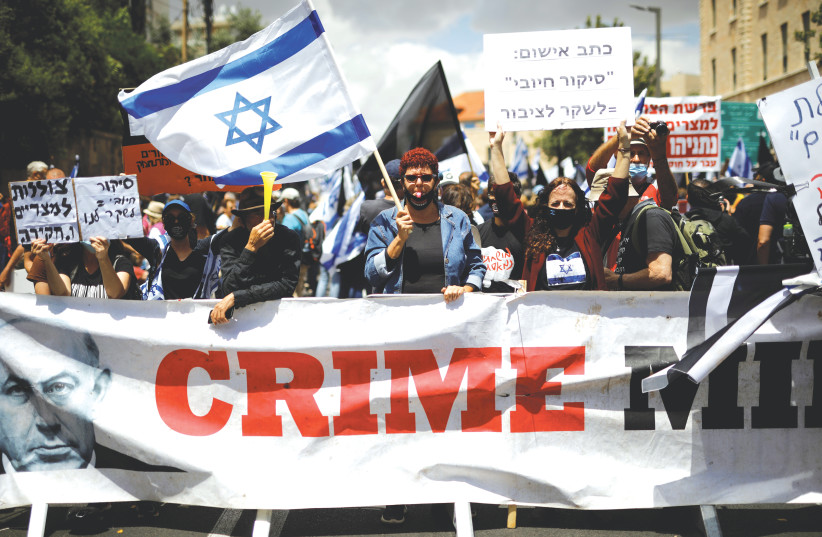
A PROTEST against Prime Minister Benjamin Netanyahu in Jerusalem. / (photo credit: REUTERS)

The picture of a mask-free Prime Minister Benjamin Netanyahu standing behind the speaker’s podium, surrounded by leading cabinet ministers who are all donning masks, is surprisingly similar to the picture of Al Capone as he stands surrounded by his associates, assistants and mercenaries just before his trial is about to begin. Of course, this resemblance is misleading as Netanyahu is no Al Capone and his band of ministers is not a group of violent mercenaries who were connected with an organized crime boss like Al Capone.

But the resemblance of the two images is uncanny. It was something about the combination of incitement, victimization, accusations, threats and intimidation that was so dominant in Netanyahu’s appearance before the opening of his trial this week inside the Jerusalem District Court, next to the Ministry of Justice.

I was asked: Could I feel what was going through his mind or what Netanyahu was feeling in those moments before he strode into the Jerusalem courtroom? And in particular, did I have an inkling what he was feeling when the court clerk announced the entry of the judges and Netanyahu stood next to the defendant’s chair, so close (maybe too close for comfort?) to Noni Mozes and Shaul Elovitch and showed respect to the judges who would determine his fate in the near future.

I can’t answer this question, for I am not Netanyahu. There’s no similarity between us at all. Indeed, I, too, had my time in court, and I admit it was not pleasant or easy. I stood up respectfully when the judges entered, offering them my respect. With the help of my attorneys, I attempted to present to the court and the public my arguments, answers and positions regarding my complex web of activity I engaged in over many years in the roles of minister, mayor of Jerusalem and prime minister.

There was not one moment that brought me pleasure or nachas or a feeling of satisfaction during any of those many long days I spent in that very same courtroom in the Jerusalem District Court. I did experience one moment of relief when the verdict was read out acquitting me of the main charges, which were the main focus of the public and media attention. Naturally, there was much discussion of the investigations during the period preceding the trial, including my resignation from the post of prime minister, of course.

One would imagine that I experienced moments of pain, discomfort, uneasiness and intense anger directed at the former state prosecutors (Eran Shender, Moshe Lador, Shai Nitzan), some of the police investigators, former attorney general Manny Mazuz, a few print and electronic journalists who were not too kind to me, and did not, in my opinion, display the correct amount of tolerance and restraint that I expected and for which I had longed.

Of course, there were also public figures, politicians, ministers, members of Knesset and other people I came across whose reactions, conduct, criticism and judgment of me seemed unfair, hasty and baseless.

AS I detailed in my book that I wrote many years after I’d served as prime minister, after my trial was over, and after I finished serving the time I’d been given – contrary to allegations – none of the ministers, members of Knesset or partners I had during my years in politics, were part of my decision to resign from my role as prime minister.

I resigned from a position that I loved so much in order to deal with the wave that threatened to drown me. I renounced the protection the status as prime minister could offer me. Surely, there were many people who yearned for me to resign, some of whom even said so publicly. But, under no circumstances did anyone have the ability or the will to bring about my resignation or to topple the government that would, no doubt, have led to a political crisis the results of which would be impossible to predict.

I took this step that was in complete contradiction to what I knew was true – that I had not failed and that I was not guilty of what had been attributed to me. I deliberated and consulted with my family members, who provided me with emotional support and worried together with me, which was so very important to me.

In the end, it was clear to me that it was not a formal question. The problem wasn’t how flexible the law can be to allow a prime minister to continue to fulfill his role. The crucial question is: What is the public and moral significance of a prime minister continuing to function as prime minister, while at the same time, fighting to keep his personal and political lives intact? This is very much a conflict of interest.

How can we maintain a feeling of national solidarity in fateful matters that require decision-making of the most sensitive matters of state, which sometimes involve danger for individuals and perhaps even large numbers? When this behavior is accompanied by a feeling that, perhaps, the decisions might be affected, not by matter-of-fact, sober responsible national interest, but heaven forbid, by an effort to strengthen the status of a prime minister in his fight for survival. How can one maintain proper and correct governance in such a troubled reality?

This is not an objective question. It’s impossible to measure these feelings with exact figures. At the end of the day, it’s a conscientious, moral decision that no one can make unless one has been in this specific situation: the prime minister.

In my case, the decision was mine to make, and I did not reach this decision easily or happily. I did not make my decision following threats made by the defense minister, warnings from the foreign minister, pressure from newspaper articles or TV broadcasts. Neither did I belittle my role in the mistakes I made. The decisive reasoning behind my decision was the feeling that if I try to postpone making a decision, in the end I might find myself in a position similar to the one we’re currently experiencing.

WHAT’S CURRENTLY happening is the inevitable result of the prime minister’s decision to do everything, without a moment’s rest, with no restriction or restraint, in order to remain in power. As a result, the country has been dragged into holding three elections, which created an atmosphere of direct, almost violent, threat, initially on the prime minister’s political opponents, and later on the gatekeepers, the police chief, the prosecutor’s office and in the end, when left with no choice, on the judges, too.

When a defendant does this – any defendant – it is naturally and somewhat indifferently accepted, even if uncomfortably. When the defendant is a civil servant, the rules of game are different.

For many years now, I’ve felt rage and anger burning inside of me directed toward some of the people who were responsible for making the decisions that I knew were wrong and harmful for me. I’ve harbored this anger inside of me during the entire time I served as prime minister. I knew that the use of my position, authority and power that came from my position, might be understood in a such a way as to cause a schism within the public and within the state, as well.

I waited many years until giving expression to some of these experiences, which I finally did in an autobiographical book that I published in March 2018, nine years after I left the position of prime minister.

All of this is the exact opposite of what’s taking place at the present time. Netanyahu is behaving like an elephant in a china shop. He walks around like a cowboy with two loaded pistols, and shoots in all directions, not caring that innocent bystanders are getting caught in the crossfire.

When a prime minister stands in a courtroom and declares that the chief of police and the attorney general, who he himself appointed, set him up, and then proceeds to declare them as enemies of the state, he is inciting, causing division and disputes, and threatening the basis of the solidarity that anchors and maintains the social stability of the State of Israel.

The prime minister is not trying to defend himself in court. What he’s trying to do is make sure that his political power, combined with the rebellion against the police, the prosecutor’s office and the courts, will eventually lead to the collapse of all of these institutions, without which the country will fall apart and anarchy will take over our lives. He is not the first leader of a democratic country willing to endanger its citizens’ democratic way of life in order to protect himself and his family’s personal interests. He’s just Israel’s first prime minister to do this.

The conduct of the prime minister, the argumentative language, the threats on the “left-wing court” and on his political opponents, puts the Israeli public to a serious test. We are so proud that Israel, as Ehud Barak said when he was prime minister, is a “villa in a jungle.” In other words, we are the only democracy in a crowded region made up of undemocratic countries. These past few months have brought us closer – at a dizzying speed – to a reality that is different from anything Israel has ever before experienced.

WE’VE SURVIVED periods of internal conflict within our public institutions. We got through a period in which our prime minister – who declared the establishment of the State of Israel – also declared an unbearable political boycott of the Herut and Maki political parties. We’ve experienced election campaigns that were saturated with negative emotions that sometimes bordered on violence. The climax was the assassination of Israel’s former prime minister Yitzhak Rabin, who paid with his life for the efforts he made to advance a peace agreement with the Palestinians, even in the face of incitement that spread like wildfire and in the end led to his murder.

Netanyahu himself made a significant contribution to the incitement that led in the end to that terrible tragedy. It probably never occurred to him, though, that such a tragic could result from the parades in which people carried pictures of Rabin wearing an SS uniform, or a coffin on their shoulders as they protested loudly against the government and its leader while he was the main speaker at these rallies.

Netanyahu must have learned a lesson from what happened; the incitement for which he was responsible in the past and in the present is the main cause of the current situation, which could also end in tragedy.

The targets this time around are the prosecutor’s office and the courts. It’s okay to express your disapproval of the way certain people are handling affairs. I, too, have done so in the past, although only as a private citizen, and never when I was prime minister. Everyone makes mistakes – none of us is perfect – and we all sometimes misunderstand the various components of the complicated governmental structure and the person who stands at its head.

It’s permissible for the prime minister and the ministers and members of Knesset who support him to think that certain people have made a mistake, but to incite against them is unacceptable. To send the senior ministers who are under his authority to say that the attorney general is a crook, is tantamount to declaring war on democracy, which is the base our country’s existence depends upon.

What Netanyahu did, and for what he’s being tried, will be decided in the court. Until that moment, he must be presumed innocent.
What Netanyahu, his family and the group of servants that he keeps around him are doing outside of the court are crimes that are potentially worse than the crimes with which he’s being charged inside the Jerusalem courthouse.
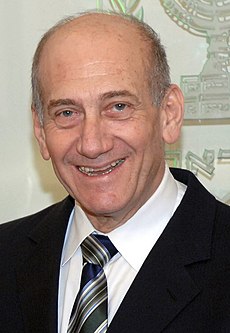

The writer was the 12th prime minister of Israel.


Zawartość publikowanych artykułów i materiałów nie reprezentuje poglądów ani opinii Reunion’68,
ani też webmastera Blogu Reunion’68, chyba ze jest to wyraźnie zaznaczone.
Twoje uwagi, linki, własne artykuły lub wiadomości prześlij na adres:
webmaster@reunion68.com