Archive | 2016/06/10

Pełna edycja Archiwum Ringelbluma w CBJ

Żydowski Instytut HistorycznyPełna edycja Archiwum Ringelbluma w CBJ

Centralna Biblioteka Judaistyczna


Wszystkie wydane do tej pory tomy można przeglądać on-line.

Relacja z obozu zagłady w Treblince. Jej autorem jest prawdopodobnie Jakub Rabinowicz, który uciekł z Treblinki i wrócił do getta warszawskiego w II poł. 1942 r. / Żydowski Instytut Historyczny Relacja z obozu zagłady w Treblince. Jej autorem jest prawdopodobnie Jakub Rabinowicz, który uciekł z Treblinki i wrócił do getta warszawskiego w II poł. 1942 r. / Żydowski Instytut Historyczny

Jest nam niezwykle miło poinformować, że wszystkie wydane do tej pory drukiem tomy Archiwum Ringelbluma są już dostępne nioedpłatnie w internecie. Można je przeglądać na stronie Centralnej Biblioteki Judaistycznej, wszechstronnej bazy żydowskich materiałów ikonograficznych i tekstowych pochodzących z zasobów archiwalnych, muzealnych i bibliotecznych Żydowskiego Instytutu Historycznego.

Najcenniejszą kolekcją znajdującą się w zbiorach ŻIH jest właśnie zbiór dokumentów składający się na Podziemne Archiwum Getta Warszawskiego, tzw. Archiwum Ringelbluma.

Archiwum powstało z inicjatywy i było kierowane przez Emanuela Ringelbluma w ramach konspiracyjnej organizacji działającej pod kryptonimem Oneg Szabat (Radość Szabatu). Gromadziła ona dokumenty urzędowe, osobiste, materiały związane z życiem gospodarczym, społecznym i kulturalnym oraz działalnością zawodową i konspiracyjną (w tym także prasę podziemną) ludności żydowskiej na terenie Generalnego Gubernatorstwa. Działająca od jesieni 1940 roku grupa stałych współpracowników (m.in Hersz Wasser, Eliasz Gutkowski, Szmul Bresław), ściśle związanych z życiem politycznym getta i konspiracją, finansowana przez Joint, inicjowała i przeprowadzała plany badawcze, zbierała relacje, opracowywała zgromadzone informacje i wydawała je w postaci biuletynów przeznaczonych dla władz Polski Podziemnej i dla zagranicy. Materiały Archiwum Ringelbluma, uzyskiwane w znacznym stopniu technikami socjologicznymi, tworzą dwa zasadnicze cykle tematyczno-chronologiczne. Pierwszy to zapis skutków wyniszczających działań niemieckich, drugi – opis zagłady Żydów w Polsce oraz przygotowań do walki zbrojnej. Zarejestrowane fakty są jedynym zbiorem pozwalającym na wielostronne odtworzenie dziejów życia żydowskiego pod okupacją na ziemiach polskich. W czasie przeprowadzanej przez Niemców latem 1942 roku Wielkiej Akcji materiały Archiwum Ringelbluma ukryto, najprawdopodobniej w trzech częściach, na trenie getta. Po wojnie odnaleziono dwie z nich.

Badacze Żydowskiego Instytutu Historycznego pracują nad opracowaniem kolejnych tomów Archiwum Ringelbluma i wydaniem ich w formie książkowej. Dotychczas ukazało się już 25 tomów. Jeden z nich, tom 13., dostępny jest w Centralnej Bibliotece Judaistycznej wraz ze skanami wykorzystanych w nim oryginalnych dokumentów. Wkrótce podobne skany zostaną dołączone również do innych tomów.

Zapraszamy do lektury tomów pełnej edycji Archiwum Ringelbluma za pośrednictwem Centralnej Biblioteki Judaistycznej.

Projekt współfinansowany ze środków Fundacji Dawida Berga.


Pełna Edycja Archiwum Ringelbluma

Podziemne Archiwum Getta Warszawskiego (Archiwum Ringelbluma) — utworzone jesienią 1940 r. dzięki inicjatywie dr. Emanuela Ringelbluma i przy udziale stworzonej przez niego konspiracyjnej organizacji „Oneg Szabat” — jest jednym z najważniejszych świadectw o zagładzie Żydów polskich, a przewodnikiem po nim jest Inwentarz. Nie jest to jednak typowy inwentarz archiwalny, ale raczej katalog dokumentów tworzących tę niezwykłą kolekcję historyczną złożoną z dwóch części. Pierwsza została ukryta na terenie getta warszawskiego (w piwnicach szkoły Borochowa przy ul. Nowolipki 68) na przełomie lipca…


twoje uwagi, linki, wlasne artykuly, lub wiadomosci przeslij do: webmaster@reunion68.com



Egyptian journalist condemns Tel Aviv terror

Egyptian journalist condemns Tel Aviv terror: ‘What’s heroic about shooting people?’

Maayan Groisman


Print EditionEgyptian presidential candidate Bothaina Kamel.(Photo by: Wikimedia Commons)

Egyptian journalist and former presidential candidate Bothaina Kamel condemned the Tel Aviv shooting at the Sarona complex on Wednesday.

Egyptian journalist and former presidential candidate Bothaina Kamel condemned the Tel Aviv shooting at the Sarona complex on Wednesday, saying “What’s heroic about entering a restaurant and shooting people who are dining there?”

The series of tweets, translated by MEMRI (Middle East Media Research Institute), criticized those in the Arab world who praised the attack on social media.

Kamel’s tweets sparked outrage on Twitter among Arab speaking Twitter users, who claimed that the attack against Israeli civilians was in response to Israel’s policies of “occupation”, “expelling of people from their homeland” and “starving of men, woman and children.”

Kamel replied that while those were indeed “great crimes,” she added that “responding to one crime with another does not mean that the [one who responded] did not perpetrate a crime.”

“Sadly, the weapons mafia is leading the world, and mankind is paying the price. There is no choice but to end this cycle of evil,” she wrote in a final tweet.

Kamel’s response comes in stark contrast to other responses within the Arabic social media community who were quick to praise the terror attack.

Palestinians expressed their joy on social media, where they created the hashtags “#Carlo Bullet,” after the name of the improvised submachine gun used in the attack, and “#Operation Ramadan” to laud the horrendous terror shooting.

Another popular hashtag on Palestinian social media networks was “#We broke the fast killing them,” referring to the fact that the two gunmen broke their Ramadan fast in the restaurant where they later shot people.

Following the shooting, Salma al-Jamal, a Palestinian news anchor working at Al-Jazeera TV, wrote on her Twitter page: “The Ramadan operation that took place today is the best answer to stories we have been hearing about ‘peace process’ that some people are trying in vain to revive.”

Still, not all reactions from the Arab world praised the attacks. Dahham al-Enazi, a member of the Saudi Journalists Association, also condemned the shooting in a series of remarks on his Twitter page.

“The Tel Aviv attack is terror and thuggery. Our solidarity and support for the Palestinian people does not mean that we accept the killing of innocents and civilians. We would like to extend our condolences to the families of the victims,” Enazi said.

“I will keep saying that killing civilians and innocents in the streets as happened in the Tel Aviv attack is terror. Even if it happened in the streets of Tehran or Isfahan it would be terror,” he concluded.


twoje uwagi, linki, wlasne artykuly, lub wiadomosci przeslij do: webmaster@reunion68.com


A history of the disappearing Western Wall & its slow reapearence

LogoA history of the disappearing Western Wall & its slow reapearence

Israel Hayom


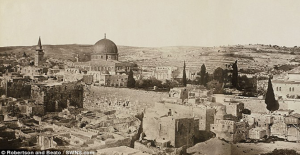
Western Wall and Dome of the Rock - Photo: Bonfils/SWNS.comWestern Wall and Dome of the Rock – Photo: Bonfils/SWNS.com

The Western Wall plaza was cleared after the liberation of Jerusalem almost 50 years ago, allowing the Jewish people to view their sacred site freely. But still, much of the Wall is hidden under Arab houses. “Those houses were built up against the Western Wall a few hundred years ago with the express intention of hiding it… Sewage drains empty directly onto the stones of the Western Wall. What other people would allow such a thing?” remarked PM Menachem Begin.

The secret of the disappearing Wall

On June 8, 1967, while IDF paratroopers were clearing out the last pockets of resistance in the alleys of the Old City, Israel’s first Prime Minister, David Ben-Gurion, came to the Western Wall passageway, accompanied by Jerusalem Mayor Teddy Kollek and head of the Israel Nature and Parks Authority Yaakov Yanai. The old leader, who by then had been out of office for four years, laid his head on the Western Wall and wept bitterly. After he calmed down, he ordered one of his bodyguards to remove the sign reading “Al-Buraq,” the Muslim name for the Western Wall, and then turned to Yanai: “Aren’t you ashamed? Look — toilets next to the Western Wall.”

Prime Minister David Ben-Gurion and Jerusalem Mayor Teddy Kollek at the Western Wall in 1967 – Photo Collection of Rabbi Yosef Shechter

Yanai defended himself,saying, “We only got here yesterday.” But Ben-Gurion insisted, “Nevertheless, this is intolerable.” Yanai went up to Kollek and told him about his exchange with Ben-Gurion. “We need to clean the place up. We need to get the Wall in shape,” he said. Kollek promised he’d take care of it. “I’ll talk to the army,” he said.

Ben-Gurion, and the hundreds of thousands of Israelis who would visit the Western Wall only days later on the Shavuot holiday, were standing in front of their people’s most important historical site for the first time in two decades.

For 19 years, until Jerusalem was liberated, the Wall was “imprisoned.” When the War of Independence ended in 1949, Jordan controlled the eastern part of Jerusalem, including the Temple Mount and the Western Wall. As part of the cease-fire agreement, the Hashemite kingdom promised to allow Jews to visit the Wall, but never allowed it in practice. Nor did it address the sewage and stink that the residents of the Mughrabi Quarter left at the Wall. Years earlier, during the British Mandate and the Ottoman Empire, the Muslim residents of that neighborhood had made the lives of Jews who came to pray at the Wall a misery, intentionally sullying it with human and animal feces. Frequently, they even demanded that the Jews pay a tax of sorts (using the threat of violence) for the right to pray at the Western Wall.

The “status quo” declared by the British at the site added more problems. Jews were forbidden to set up benches or a barrier dividing it into men’s and women’s sections; the number of Torah scrolls allowed on site was limited; and blowing a shofar there to mark the end of Yom Kippur was prohibited. The status quo even allowed animals to be herded past it.

The liberation of Jerusalem in the 1967 Six-Day War provided a unique opportunity to change the reality. If ever the phrase “historic justice” meant anything, it was perfectly distilled right then at the foot of the Western Wall and the Temple Mount. Israel threw itself energetically into righting the wrongs and was determined to turn the narrow Western Wall alley into a site suitable for public prayer. A group of enthusiastic veteran contractors enlisted to complete the mission. Journalist Uzi Benziman documented the atmosphere in those days. Eitan Ben Moshe, the chief engineering officer for the IDF’s Central Command, instructed the contractors to “clear this filth away.” They asked for orders in writing. Ben Moshe scribbled instructions, and the contractors began to work. At first, they used shovels and hammers to knock down the toilet facilities, but a few hours later, bulldozers and trucks arrived and began razing the area.

“With deafening noise, the bulldozers moved slowly toward the Mughrabi neighborhood in front of the Western Wall, their jaws open wide and their steel teeth chewing up the little houses that crowded up against each other. … They retreated a bit and then struck again,” is how the writer Yehuda Haezrachi described what happened.

“Alleys were eradicated … clouds of dust rose up around, and in front of them was revealed a wide square as broad as the valley; and the Western Wall also came into sight in the clouds of dust, not from close up, as it had come into sight until now, but from far away, from everywhere, from every part of the giant new square.”

Overnight, on June 10, 1967, the work was completed. The 108 families who had lived in the Mughrabi Quarter were removed. By sunrise, the little neighborhood that had been stuck onto the Western Wall was in ruins. Now, instead of a small prayer plaza that measured 28 by 3.4 meters (92 by 11 feet) and could barely accommodate a few hundred people, a new plaza had been prepared for thousands. The length of the section of the Western Wall designated for prayer had been extended by 60 meters (197 feet). Most of the new prayer area extended 40 meters (130 feet) west and another huge plaza higher up was designated as a site for demonstrations and for swearing-in ceremonies for IDF soldiers.

It felt as though relief and light had finally arrived at the Wall, as one era ended and a new one in the history of the Wall began, but not everyone believed the work was done. Now, 49 years after the reunification of Jerusalem, that the entire length of Western Wall has been exposed, including its underground tunnels, a massive dispute is emerging from the pages of history: There were those who believed then that the removal of the Mughrabi Quarter was the end of it. That it was enough. But there were others who planned to enact Mughrabi-style evacuations along other, lesser known, parts of the Wall, in order to expose them as well.

‘Only out of fear of the nations of the world’

With the benefit of nearly 50 years of perspective, this debate that we know so little about teaches us that we must have missed something. We thought we knew almost everything about the Western Wall, that famous place, the most researched and visited place in Israel. But it turns out that we know very little. Surprising as it might sound, the visible Wall is not complete. Hundreds of meters of it are missing. Underground, in the Western Wall tunnels, the entire 488-meter (1,601-foot) length of the Wall is exposed. But above ground, for hundreds of meters north of the prayer plaza, the Western Wall disappears.

In this 1967 photo, Rabbi Shlomo Goren carries the Torah scroll as he holds the first Jewish prayer session at the Western Wall since 1948 – Photo Benny Ron

read more: A history of the disappearing Western Wall & its slow reapearence


twoje uwagi, linki, wlasne artykuly, lub wiadomosci przeslij do: webmaster@reunion68.com