Archive | December 2016

75. rocznica pierwszego transportu Ofiar do obozu zagłady w Chełmnie nad Nerem (Kulmhof)

75. rocznica pierwszego transportu Ofiar do niemieckiego nazistowskiego obozu zagłady w Chełmnie nad Nerem (Kulmhof)
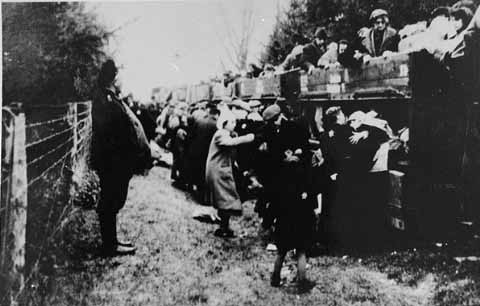
Bildresultat för kulmhof extermination campKulmhof extermination camp

( 8 grudnia   odbyła się )

  • – Inauguracja obchodów 75. rocznicy Aktion Reinhardt i Zagłady Żydów Polskich dokonanej przez niemiecką III Rzeszę.
  • Organizatorzy obchodów:
  • Ministerstwo Kultury i Dziedzictwa Narodowego oraz Muzeum Martyrologiczne w Żabikowie, pod którego opieką znajduje się Miejsce Pamięci w Chełmnie nad Nerem.


PROGRAM UROCZYSTOŚCI

8 grudnia 2016 roku

09:00

Symboliczny początek upamiętnienia Ofiar na Stacji Radegast
(Oddział Muzeum Tradycji Niepodległościowych w Łodzi)

12:00

  • Początek uroczystości w Lesie Rzuchowskim
  • Oficjalne przemówienia.
  • Przejście na polanę grobów masowych.
  • Modlitwy
  • Złożenie hołdu Ofiarom.

Kulmhof (Chełmno nad Nerem) to pierwszy w historii niemiecki obóz zagłady, miejsce szczególne w tragicznych dziejach Holokaustu. Zbrodniczą działalność rozpoczął jeszcze przed Konferencją w Wannsee (styczeń 1942), gdzie luminarze III Rzeszy podjęli formalną decyzję o tzw. ostatecznym rozwiązaniu kwestii żydowskiej. W procesie mordowania na skalę przemysłową pełnił rolę quasi-laboratorium, w którym testowano metody jak najskuteczniejszego zabijania. Był to także najdłużej funkcjonujący niemiecki obóz natychmiastowego uśmiercania i jedyny, który zamknięto (kwiecień 1943) i ponownie uruchomiono w marcu następnego roku. W odróżnieniu od innych miejsc zagłady ofiary gazowano tu nie w komorach stacjonarnych, ale w ciężarówkach. Szacuje się, że w Kulmhof zamordowano łącznie ok. 200 tys. kobiet, dzieci i mężczyzn – w zdecydowanej większości Żydów, a także 4 300 Romów, prawdopodobnie grupę czeskich dzieci i kilkudziesięciu jeńców radzieckich. W obozie życie straciła nieustalona liczba Polaków, w tym zakonnice i księża przywiezieni do Kulmhof z domów starców i przytułków z Włocławka.


twoje uwagi, linki, wlasne artykuly, lub wiadomosci przeslij do: webmaster@reunion68.com


UK adopts official anti-Semitism definition as attacks rise

Sky News logoUK adopts official anti-Semitism definition as attacks rise

Jason Farrell,  Senior Political Correspondent


Culprits are getting away with anti-Semitic behaviour “because the term is ill defined”, says the Prime Minister.

Jewish men walk along the street in the Stamford Hill area of LondonThe PM says it is ‘disgusting’ that ant-Semitic views were found in British politics / Jewish men walk along the street in the Stamford Hill area of London

Theresa May has said the UK is adopting an international formal definition of anti-Semitism in an effort to tackle hatred against Jewish people.

The Prime Minster said culprits were getting away with anti-Semitic behaviour or language “because the term is ill defined”.

Mrs May, speaking in London at an event held by the Conservative Friends of Israel, described the move as a “ground-breaking step” in the fight to tackle rising anti-Jewish attacks.

The Prime Minister said: “It is unacceptable that there is anti-Semitism in this country.

“It is even worse that incidents are reportedly on the rise. As a Government we are making a real difference and adopting this measure is a ground-breaking step.

“It means there will be one definition of anti-Semitism – in essence, language or behaviour that displays hatred towards Jews because they are Jews and anyone guilty of that will be called out on it.”

The Government is adopting a charity’s analysis of what constitutes abuse.

The International Holocaust Remembrance Alliance’s (IHRA) is an intergovernmental organisation backed by 31 countries. It agreed a definition earlier this year and it hopes will become widely adopted globally.

Prime Minister Theresa MayPrime Minister Theresa May / Mrs May says anyone guilty of anti-Semitism will be ‘called out’

It states: “Anti-Semitism is a certain perception of Jews, which may be expressed as hatred toward Jews. Rhetorical and physical manifestations of anti-Semitism are directed toward Jewish or non-Jewish individuals and/or their property, toward Jewish community institutions and religious facilities.”

Mrs May also praised Israel for guaranteeing the rights of “people of all religions, races and sexualities” and said the Jewish state wanted to “enable everyone to flourish”.

The Labour Party has also been hit by accusations it has failed to tackle anti-Semitism within its ranks.

A spokesman for the Labour leader said he agreed with the IHRA definition.

He said: “Jeremy Corbyn and the Labour party share the view that language or behaviour that displays hatred towards Jews is anti-Semitism, and is as repugnant and unacceptable as any other form of racism.”

He added: “Jeremy has consistently spoken out against all forms of anti-Semitism and condemned all anti-Semitic abuse, and set up the Charkrabarti inquiry into anti-Semitism and other forms of racism.”


twoje uwagi, linki, wlasne artykuly, lub wiadomosci przeslij do: webmaster@reunion68.com



Nagroda im. Juliana Tuwima 2016 dla prof. Michała Głowińskiego

Nagroda im. Juliana Tuwima 2016 dla prof. Michała Głowińskiego

Dariusz Pawłowski


Nagroda im. Juliana Tuwima 2016 dla prof. Michała Głowińskiego [ZDJĘCIA]Nagroda im. Juliana Tuwima 2016 dla prof. Michała Głowińskiego ©Krzysztof Szymczak

Łódzką Nagrodę Literacką im. Juliana Tuwima otrzymał prof. Michał Głowiński. Gala wręczenia wyróżnienia odbyła się w niedzielę, 11 grudnia, w Teatrze Nowym.

Prof. Michał Głowiński, pisarz, teoretyk literatury, autor podręczników dla studentów polonistyki, prozy wspomnieniowej i esejów, odebrał w niedzielę w Teatrze Nowym im. Kazimierza Dejmka tegoroczną Łódzką Nagrodę Literacką im. Juliana Tuwima. Wyróżnieniu towarzyszą 50 tys. zł i statuetka autorstwa Zofii Lisiewicz.

Jury – w składzie: Jarosław Mikołajewski, Eugeniusz Tkaczyszyn-Dycki, Magdalena Rabizo-Birek, Iwona Smolka, prof. Krystyna Pietrych, sekretarz Maciej Robert – doceniło twórczość laureata m.in. za „standardy nie tylko literackie, również etyczne” oraz „zaangażowanie w sprawy świata”. Laudację wygłosiła prof. Krystyna Pietrych, kierownik Interdyscyplinarnego Centrum Badań Humanistycznych Uniwersytetu Łódzkiego.

Prof. Michał Głowiński zwrócił zaś uwagę, że jego pierwszym doświadczeniem literackim był wiersz właśnie Juliana Tuwima. Dodał, że gdy teraz dostaje nagrodę imienia poety stanowi to w jego życiu „piękną ramę”. Michał Głowiński jest autorem m.in. książek „Carska filiżanka”, „Nowomowa po polsku”, „Mowa w stanie oblężenia”, „Kręgi obcości”. Do Nagrody im. J. Tuwima nominowani byli również Henryk Grynberg, Jerzy Kronhold, Jacek Łukasiewicz, Piotr Matywiecki, Małgorzata Szejnert, Bohdan Zadura. W poprzednich latach laureatami wyróżnienia byli Magdalena Tulli, Hanna Krall i Jarosław Marek Rymkiewicz.


Życiorys
Jest jednym z dzieci uratowanych z warszawskiego getta przez zespół Ireny Sendlerowej[3]. Został umieszczony w zakładzie opiekuńczym Zgromadzenia Sióstr Służebniczek Najświętszej Marii Panny w Turkowicach[4].

Studiował polonistykę na Uniwersytecie Warszawskim, gdzie w 1955 uzyskał stopień magistra. Debiutował w 1954 recenzją o Manfredzie Adolfa Rudnickiego opublikowaną w “Życiu Literackim“. W latach 1955–1958 pracował jako stypendysta w Katedrze Teorii Literatury pod kierunkiem prof. Kazimierza Budzyka. Równocześnie rozwijał działalność krytyczną, recenzując głównie tomy poezji m.in. w “Życiu Literackim” i “Twórczości“. Od 1958 w Instytucie Badań Literackich PAN. Habilitowany w 1967 na podstawie rozprawy pt. “Cykl studiów z historii i teorii polskiej powieści”. W 1978 został członkiem-założycielem Towarzystwa Kursów Naukowych. W 1986 został profesorem zwyczajnym. Od 1990 przewodniczy Radzie Naukowej Instytutu. Jest członkiem Towarzystwa Naukowego Warszawskiego oraz Stowarzyszenia Pisarzy Polskich.

W 2010 ukazała się powieść autobiograficzna Michała Głowińskiego pt. Kręgi obcości, w której ujawnił swoją homoseksualną orientację[5][6].


twoje uwagi, linki, wlasne artykuly, lub wiadomosci przeslij do: webmaster@reunion68.com



Stephen King attacks Bob Dylan’s Nobel prize knockers

Stephen King attacks Bob Dylan’s Nobel prize knockers

Danuta Kean


Guitar-playing horror legend speaks out against literary authors such as Gary Shteyngart and Irvine Welsh who have scorned the singer’s award

 Stephen King. ‘I’ve got news for you, Gary Shteyngart’ … Stephen King. Photograph: Kenzo Tribouillard/AFP/Getty Images

Stephen King has come to the defence of Bob Dylan’s Nobel prize for literature, accusing those who oppose the award of sour grapes.

According to King, no other musician has had such an impact on popular culture or remained so influential for so long as Dylan. In an interview with Rolling Stone, the horror writer defended the songwriter against his detractors, particularly the authors who had rubbished Dylan’s win: “People complaining about his Nobel either don’t understand or it’s just a plain old case of sour grapes.”

Levelling his gaze directly at novelist Gary Shteyngart, he added: “I’ve seen several literary writers who have turned their noses up at the Dylan thing, like Gary Shteyngart. Well, I’ve got news for you, Gary – There are a lot of deserving writers who have never gotten the Nobel prize. And Gary Shteyngart will probably be one of them.”

When the news of the award broke, Shteyngart tweeted: “I totally get the Nobel committee. Reading books is hard.” He was not alone in the literary world; a legion of authors were disappointed with the decision, including Hari Kunzru and Irvine Welsh, the latter writing that Dylan’s win was “ill-conceived nostalgia award” bestowed by “senile, gibbering hippies”. Chocolat author Joanne Harris tweeted: “Is this the first time that a back catalogue of song lyrics has been judged eligible for a literary prize?”

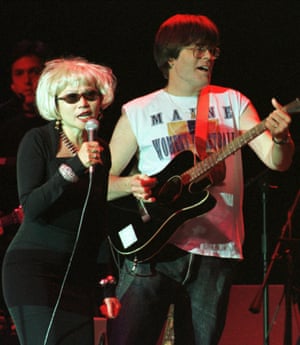
Axe man Stephen King (left) playing alongside Amy Tan in the Rock Bottom Remainders in 1998. Axe man Stephen King playing alongside Amy Tan in the Rock Bottom Remainders in 1998. Photograph: Michael C York/AP

King said the musician, whose laureateship was announced in October, had “opened the door for a lot of people”. “I would argue that without Dylan, Paul Simon maybe ends up in the Brill Building, writing songs like Hey Schoolgirl like he did in the beginning,” he told the magazine.

Though King – who has himself been a singer and guitarist in the writers’ band Rock Bottom Remainders – admitted he had never met the Blowin’ in the Wind writer, he said his friend John Mellencamp had told him Dylan wouldn’t even turn up at the dentist when he had a toothache. “He said that Bob was at his house once and he was complaining about a toothache. I guess he doesn’t go to the doctor or anything. He said, ‘Man, John, I got this terrible toothache. It’s killing me.’ John said, ‘Well, I’ve got some Advil.’ And Bob gave him this long look and said, ‘You trying to get me hooked?’”

Dylan has seemed as embarrassed by the accolade as some of his detractors. After the announcement, the Nobel committee was unable to contact him to invite him to the award ceremony in Sweden on 10 December. He finally emerged to say thank you at the end of October after Per Wästberg, a member of the Swedish Academy, told Swedish TV that Dylan’s attitude had been “impolite and arrogant”.

He broke his silence with a call to the academy’s permanent secretary, Sara Danius, to say: “I appreciate the honour so much. The news about the Nobel prize left me speechless.” But though grateful, he said he was unable to make the ceremony and sent a speech to be read out by a member of the academy, after singer Patti Smith performs a specially arranged version of the singer’s 1963 track A Hard Rain’s a-Gonna Fall.

King said that Dylan’s writing had influenced him from the moment he heard it at the age of 14, while in the back of a car on the way home from a movie. “There was a guy on WBZ radio out of Boston … he played Subterranean Homesick Blues. Hearing it was like being electrified. It was like this pressurised dump of lyrics and images.”

His love of the singer has filtered down three generations of the King family, he added: “My kids listen to Dylan, and so do my grandkids. That’s three generations. That’s real longevity and quality. Most people in pop music are like moths around a bug light; they circle for a while and then there’s a bright flash and they’re gone. Not Dylan.”


twoje uwagi, linki, wlasne artykuly, lub wiadomosci przeslij do: webmaster@reunion68.com



The Sound of Silence (Original Version from 1964)

The Sound of Silence (Original Version from 1964

reptileman117


Hello darkness, my old friend
I’ve come to talk with you again
Because a vision softly creeping
Left its seeds while I was sleeping
And the vision that was planted in my brain
Still remains
Within the sound of silence

In restless dreams I walked alone
Narrow streets of cobblestone
‘Neath the halo of a street lamp
I turned my collar to the cold and damp
When my eyes were stabbed by the flash of a neon light
That split the night
And touched the sound of silence

And in the naked light I saw
Ten thousand people maybe more
People talking without speaking
People hearing without listening
People writing songs that voices never shared
No one dared
Disturb the sound of silence

“Fools,” said I, “you do not know
Silence like a cancer grows
Hear my words that I might teach you
Take my arms that I might reach you”
But my words like silent raindrops fell
And echoed in the wells of silence

And the people bowed and prayed
To the neon god they made
And the sign flashed out its warning
In the words that it was forming
And the sign said “The words of the prophets are written on the subway walls
And tenement halls
And whispered in the sound of silence”

This is the original version from 1964 from the album “Wednesday Morning, 3 AM.” Just Simon’s guitar and the vocals. The famous version was released in 1966. After “Wednesday Morning, 3 AM” flopped, they split up. Without either their knowledge, electric guitars and drums were added and that version of The Sound of Silence became very popular, reaching #1 on the charts in America on New Years Day, 1966. Because of this, Simon and Garfunkel teamed up again and created three more studio albums, one of which one a Grammy award for album of the year and song of the year (Bridge Over Troubled Water).


twoje uwagi, linki, wlasne artykuly, lub wiadomosci przeslij do: webmaster@reunion68.com