Archive | 2016/12/02

DYMITRA LICHACZOWA I LESZKA KOŁAKOWSKIEGO NAUKI JAK ŻYĆ (SZKIC)

Studio OpiniiDYMITRA LICHACZOWA I LESZKA KOŁAKOWSKIEGO NAUKI JAK ŻYĆ (SZKIC)

Andrzej de Lazari


lifeKo z nas nie szuka odpowiedzi na pytania: Jak żyć? Co jest w życiu ważne? Czym jest szczęście? Czym jest dobro, prawda, piękno?

W swych poszukiwaniach odwołujemy się rzecz jasna do autorytetów. Ludzie wiary mają z tym mniej problemów – odpowiedzi znajdują w przykazaniach, „danych im” przez Boga, w którego istnienie wierzą. Trudniej niedowiarkom. Ci poszukują porady u intelektualistów, którzy odważyli się sformułować świeckie przykazania dobrego życia. Uczynili to m.in. Dymitr Lichaczow i Leszek Kołakowski. Zobaczmy, co nam radzą ci dwaj myśliciele z kultur, wydawałoby się dzisiaj, bardzo sobie dalekich.

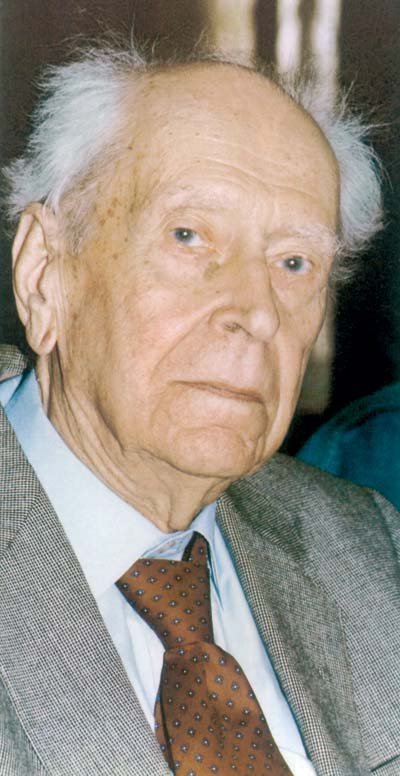
Zacznijmy od Dymitra Lichaczowa. Bez wątpienia był nie tylko uczonym, ale również świeckim „starcem-nauczycielem” na miarę Lwa Tołstoja i Aleksandra Sołżenicyna. Uczył jak żyć i co jest w życiu ważne. I nadal naucza – młodzież i dorosłych! Moralne przykazania Dymitra Lichaczowa znajdziemy w Internecie w tysiącach linków dla rosyjskich szkół państwowych i parafialnych oraz w poradnikach jak żyć. Lichaczow stworzył dwa „zestawy” przykazań – jeden dla swojego środowiska, czyli dla rosyjskiej inteligencji, drugi dla dzieci i młodzieży


Zob. np.

ЧИТАЯ Д.С.ЛИХАЧЕВА: СЕМЬ УРОКОВ ИЗ ЖИЗНИ И КНИГ АКАДЕМИКА ДМИТРИЯ СЕРГЕЕВИЧА ЛИХАЧЕВА
ЧИТАЯ Д.С.ЛИХАЧЕВА. Семь уроков из жизни и книг академика Дмитрия Сергеевича Лихачева: Учебно-методическое пособие для учителей и учащихся гимназий, лицеев и средних школ / Православная Гимназия во имя Преподобного Сергия Радонежского. Новосибирск: Издательство НИПКиПРО, 2006. К 100-летию со дня рождения Д.С.Лихачева Рекомендовано экспертным советом НИПКиПРО для преподавателей, учителей и обучающихся лицеев, гимназий, общеобразовательных школ, образовательных учреждений системы дополнительного образования, системы профессионального образования Предисловие Урок 1.

PIERWSZY „ZESTAW” JEST DEKALOGIEM:

Nie zabijaj i nie rozpoczynaj wojen.
Nie myśl o swym narodzie jako o wrogu innych narodów.
Nie kradnij i nie przywłaszczaj sobie pracy brata swego.
Nie szukaj w nauce jedynie prawdy i nie korzystaj z niej dla zła lub korzyści.
Szanuj myśli i uczucia braci swych.
Czcij rodziców i prarodziców, i wszystko, co stworzyli, zachowaj i szanuj.
Czcij przyrodę jako matkę swą i pomocnicę.
Niechaj praca i myśli twe będą pracą i myślami wolnego twórcy, a nie niewolnika.
Niechaj żyje wszystko, co żyje, myśli się to, co się myśli.
Niechaj będzie wolnym wszystko, gdyż wszystko rodzi się wolnym[i].

czytaj dalej tu: DYMITRA LICHACZOWA I LESZKA KOŁAKOWSKIEGO NAUKI JAK ŻYĆ (SZKIC)


twoje uwagi, linki, wlasne artykuly, lub wiadomosci przeslij do: webmaster@reunion68.com


DID CASTRO EXCUSE ANTI-SEMITISM? SHOCKING DETAILS!

DID CASTRO EXCUSE ANTI-SEMITISM? SHOCKING DETAILS!

SETH J. FRANTZMAN


Fidel Castro was often praised for not being anti-Semitic. He had a “deep understanding” of the history of the Jewish people Benjamin Netanyahu once said. He told an inteviewer in 2010 that as a boy he had heard fellow Cubans blame “the Jews” for “killing God.”He condemned Iranian President Mahmoud Ahmadinejad and noted “Over 2,000 years they were subjected to terrible persecution and then to the pogroms.”

Most Jews fled Cuba when Castro came to power, dwindling from 15,000 to around 1,500 by 2014. One Castro entered the Soviet orbit the official anti-Zionist and anti-Israel line became common in Cuba, but most writers argue it did not flow over into anti-semitism. Only one anti-semitic incident, stone throwing at a synagoguge during the 1973 war, was recorded in decades. The AJC says that “the Castro brothers have not engaged in anti-semitism.” However, “despite shunning anti-Semitism and allowing hundreds of Cuban Jews to make Aliyah, the Castro brothers have consistently opposed Israel and its policies.”

“Still, Jews here could get kosher meat, a fact many here point to as a sign of the absence of anti-Semitism in Cuba,” claimed the JTA in 1996. The article claimed that the “revival” of Jewish religious worship stemmed in “part from a 1991 law passed by the Cuban National Assembly that allows Cubans to be members of the Communist Party and to participate in religious associations.” In 1999 a JTA article noted that 400 Jews had been allowed to immigrate to Israel. State Department spokesman James Rubin welcomed “The fact that members of the Jewish community have been allowed to immigrate to Israel is a step forward in Cuba’s overall religious freedom policy.”

Wait a sec, wasn’t Cuba free from anti-semitism? Castro was “reluctant to publicize special treatment arranged for the Cuban Jewish community,” the 1999 piece claimed.

The reality is revealed in an interesting report was revealed regarding an episode in 1994 in which Rabbi Yisrael Meir Lau attempted to get Castro to allow kosher meat into Cuba. An Israeli diplomat named Joel Barromi told Haaaretz writer Adi Schwartz in a 2006 interview surprising details. The Cuban leader had initially rejected Lau’s request to bring in kosher meat. “I told you that I am fighting against the phenomenon of anti-Semitism in my country…do you want to make my people anti-Semitic,” Castro asked. “We have the practice of allocating 150 grams of bread a day, but the Jews in Cuba would have meat? [The people] will have a horrible hatred for them, envy them tremendously and loot their homes if under such conditions you see to import kosher meat for the Jews, you yourself create the anti-Semitism that I have been stopping.”

This is the example of supposedly stopping anti-semitism, to threaten Jews that if they should want to eat kosher meat that they would “create” anti-semitism. Castro was at first admitting that he had starved his country by putting it on bread rations, but surely Cubans eat some meat. So why would some meat for Jewish people “make” them anti-Semitic? One wonders whether “envy” for Muslims eating Halal would create the same excuse for Islamophobia just because Muslims celebrate Eid by eating a sheep? According to articles the same Cuba that feared meat would force people to be anti-semitic, was welcoming to Halal food.

The real truth was that Castro wanted to sell himself as being the lone figure that could prevent anti-semitism, much like many other leaders who claim they are “friends” of the Jewish minority by “preventing” anti-semitism. But the reality of any society is that anti-Semitism shouldn’t need to be prevented. When there are only 1,500 Jews among 11 million people, why would there be any anti-Semitism? Can anyone imagine a leader claiming that if people of color ate meat that therefore racism would be acceptable? Of course not.

recomended by:
Leon Rozenbaum

Because of the low expectations for Cuba, the fact of there not being visible anti-semitism was somehow given as a badge and award for Castro, when the reality is any world leader should be expected to condemn anti-semitism. Why was Castro heralded for simply admitting the Holocaust happened?

The reality in Cuba was that Jews were deeply suppressed, unable to practice their religion for decades, denied kosher meat, and kept from immigrating and impoverished. The theory that these restrictions happened to other communities doesn’t make the treatment of Jews acceptable. The existence of racism against one group, doesn’t make it ok for another.

The reality is that Castro should not have been rewarded for threatening anti-semitism upon a tiny minority, and he should have been condemned for driving Cuba’s Jewish community and the rest of its people into penury.


twoje uwagi, linki, wlasne artykuly, lub wiadomosci przeslij do: webmaster@reunion68.com


Arab Youth Admits He Made Up Attack Story

Arab Youth Admits He Made Up Attack Story

David Israel


An Arab youth who had reported being attacked by a group of Jews who caused him moderate injuries before fleeing Monday night, admitted to police interrogators that he made up the whole thing and that his injuries were the result of an accidental fall. The young man was taken for treatment at Hadassah Medical Center at Ein Kerem and will be prosecuted for providing false information to police.


“Hate Spaces”: American Colleges and Their Jewish Students

By: Lori Lowenthal Marcus

Hatred of pro-Israel Jews on campuses is the subject of the new film, “Hate Spaces.”
Photo Credit: screen capture from “Hate Spaces”

There is a brand-new documentary that focuses on the relationship between American universities and their Jewish students, particularly those who support Israel. The movie is called “Hate Spaces” and that gives you an idea of how those Jewish students are treated.

Of course the name is a play on the current ridiculous yet widespread notion that American college students need “safe spaces” – sometimes equipped with crayons or puppies or soft pillows – from any ideas that might make them even a teensy bit uncomfortable.

This film is a must-see. “Hate Spaces” is so chock-full of important facts, details and examples that it could easily provide the basis for a full semester course, yet it has been masterfully edited down to a mere 110 minutes long.

Another reason why this film is so useful is that it interweaves current examples and interviews with a historic progression of the problem on American campuses.

Writer, producer and director Avi Goldwasser discussed the film with the JewishPress.com on Monday evening. He explained that he and his colleagues at Americans for Peace and Tolerance have “been observing the increased hostility toward Jewish students on campus for the past decade.” Goldwasser and his colleague Charles Jacobs produced the 2004 film “Columbia Unbecoming,” which they thought “would be a wake up call for the Jewish community and the people of New York,” Goldwasser continued.

Although the 2004 film was shocking in terms of how blatant was the animus towards Israel, it did not bring the hoped-for change. Even sadder is that things have only gotten much worse since then.

“Most people do not realize how the hostility is being institutionalized, made fashionable by a combination of forces including radical faculty, radical student organizations, and an enabling university administration. While many anti-Jewish incidents and the BDS campaign are reported by the media, few are willing to connect the dots and report on the underlying ideology and extremist organizations that are inciting the hostility.”

And connect the dots is exactly what “Hate Spaces” does. Awareness slowly dawns on the viewer as what appeared to be merely a series of ugly campus incidents is woven together. That weave reveals the comprehensive pathology undergirding the movement which is ultimately seeking to completely delegitimize Jewish identification with American Jews and the Jewish State, and which gets a pass from most university administrators.

A quote in the film from the Facebook page of Marissa Rubin, a Temple University student, pretty much sums it up: “I am tired of anti-Semitism being a completely normal occurrence, and people standing idly by because, as long as they are only going after Jews, nobody cares.”

“Hate Spaces” very effectively breaks down the issue of gross indifference towards American Jews on campus into manageable segments, such as “Tenured Hatred,” “Intersectionality,” “Privileged Hatred,” and “Failed Leadership.” There is plenty of blame to be apportioned and Goldwasser and his colleagues make strong cases for each portion.

The film also plumbs the progressive elitist drive which is married to the more raw Jew-hatred that melds to marginalize Jews on campuses. It uncovers the funding sources, the historical backgrounds and the interconnectedness of the villains.

Perhaps most pointed is the film’s criticism of the faculty and college administrators who, to be charitable, are manipulated by the dark forces in ways similar – although a billion dollars of donations does thicken the plot – to the impressionable students. The weak-kneed prog-elites are exposed as seeking acceptance and accolades for their progressive values which are completely inverted when it comes to the Jewish minority and the tiny Jewish State.

Many of those who have been diligently slogging away against the world of campus anti-Semitism are used to great effect in “Hate Spaces.” There are informed and enlightening snippets of interviews with such luminaries as the journalists and authors Melanie Phillips and Caroline Glick, along with Cornell University professor and founding blogger at Legal Insurrection William Jacobson, the Wall Street Journal’s Bret Stephens, Alan Dershowitz, the Brandeis Center’s Kenneth Marcus, ZOA’s Sue Tuchman, Jonathan Schanzer, Richard Landes and the ubiquitous Chloé Simone Valdary. Strong, important, concise points are made by each of them.

When he spoke to the Jewish Press, Goldwasser echoed a leitmotif of the film, one pressed especially by Melanie Phillips on camera. Truth has been distorted or even abandoned on college campuses, where “ideology and narrative trump truth.” For that reason Goldwasser is hoping that the film will “energize the public to demand that our leaders in the community and on campus live up to their stated values. What is happening on campus is contrary to American values, to values of decency.”

And every reader of this review will have the chance to be energized. You need to see the film, then you need to act. For those in the New York area, the premiere will take place this Wednesday, Nov. 30, at Symphonyspace.


twoje uwagi, linki, wlasne artykuly, lub wiadomosci przeslij do: webmaster@reunion68.com