Archive | 2017/05/21

Prawa mniejszości [Parsza Be-har i Be-chukotaj]

Prawa mniejszości [Parsza Be-har i Be-chukotaj]

RABIN JONATHAN SACKS
Tłumaczenie: Jolanta Różyło © CHIDUSZ 2017
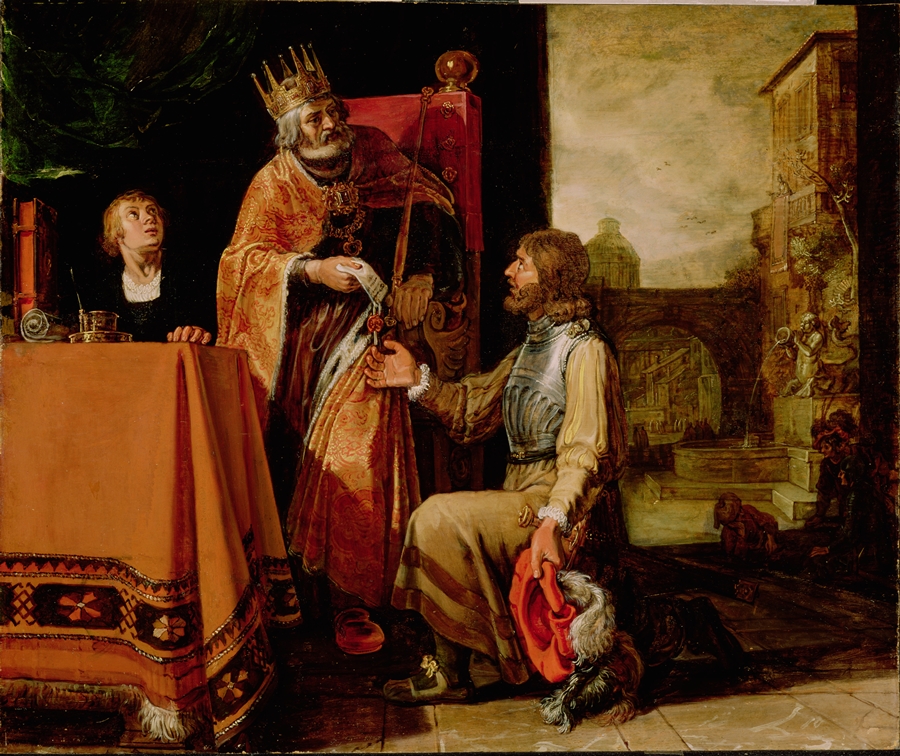

Król Dawid i Uriasz Hetyta na obrazie holenderskiego malarza Pietera Lastmana

Tora, w jednym ze swych najbardziej uderzających przekazów, podkreśla, jak ważne jest miłowanie obcego (hebr. ger), przy jednoczesnym zachowaniu wobec niego czujności:

„Cudzoziemca nie uciskaj; wszak wyście świadomi stanu duszy cudzoziemca, bo cudzoziemcami byliście w ziemi Micraim” (Szemot 29:9). „Albowiem Wiekuisty, Bóg wasz, jest to Bóg bogów, i Pan panów, Bóg wielki, potężny i wspaniały, który nie zważa na osoby, ani bierze datku; Który wymierza sprawiedliwość sierocie i wdowie, a miłuje cudzoziemca, dając mu chleb i odzież; Miłujcież tedy i wy cudzoziemca; boście cudzoziemcami byli w ziemi Micraim” (Dwarim 10:17-19).

Rabini zauważyli, że Tora tylko raz mówi o nakazie darzenia miłością swego sąsiada, za to trzydzieści sześć razy wspomina o miłości do obcego (Bawa Mecija 59b).

Kim właściwie jest obcy? Na pewno mowa tu o kimś, kto nie urodził się Żydem. Może są to rdzenni mieszkańcy Kanaanu, a może „różnoplemienny lud”, który wyruszył wraz z Izraelitami z Egiptu? A może to ktoś, kto przybył do Ziemi Izraela w poszukiwaniu bezpieczeństwa i środków do życia? Kimkolwiek by nie był, to, jak Izraelici traktują obcych, ma ogromne znaczenie. Takiego nastawienia mieli nauczyć się, sami cierpiąc wygnanie i ucisk jako cudzoziemcy w Egipcie. Krzywd, których tam doświadczyli, nie powinni zatem zadawać innym.

Zdaniem mędrców słowo ger mogło oznaczać dwie rzeczy. Pierwsze znaczenie to ger cedek – konwertyta na judaizm, który zaakceptował jego wszystkie zobowiązania i nakazy. Inne to ger toszaw, „osiadły”, który nie przyjął religii Izraelitów, ale żyje pośród nich. W parszy Be-har tak napisano o prawach takich osób: „Gdyby podupadł brat twój, a zachwiała się dłoń jego przy tobie, podeprzyj go, czy to przychodzień, czy osiadły, niechaj żyje przy tobie” (Wa-jikra 25:35).

Innymi słowy, obowiązkiem jest wspieranie i utrzymywanie obcego. Nie tylko ma on (lub ona) przywilej zamieszkiwania w Ziemi Świętej, ale również pełne prawo korzystania z jej dobrodziejstw. Zwróćmy uwagę, że to starożytne prawo obowiązywało długo przed tym, zanim rabini sformułowali zasadę „dróg pokoju” (darchej szalom), zobowiązującą Żydów do troski i dobroczynności również na rzecz nie-Żydów.

Kim dla mędrców był więc ger toszaw? W Talmudzie odnajdujemy trzy opinie. Rabin Meir twierdzi, że był to każdy, kto świadomie zdecydował się nie dopuszczać bałwochwalstwa. Według innej opinii – każdy, kto zdecydował się przestrzegać Siedmiu Praw Noego. Trzecia, a zarazem najbardziej rygorystyczna opinia uznaje za ger toszaw tego, kto podejmuje się przestrzegania wszystkich przykazań Tory, oprócz jednego – zakazu spożywania mięsa niepochodzącego z uboju rytualnego (Awoda Zara 64b). Prawo uznaje więc opinię mędrców: ger toszaw to każdy nie-Żyd zamieszkujący Ziemię Izraela, który przyjmuje prawa noachickie, obowiązujące wszystkich.

Prawa dotyczące gerim toszawim są więc najwcześniejszą formą praw mniejszości. Rambam twierdzi, że Żydzi w Izraelu zobowiązani są do ustanawiania sądów dla obcych (osiadłych na ich ziemi), aby mogli oni rozwiązywać spory między sobą lub spory z Żydami, zgodnie z prawami noachickimi. I dodaje: „Każdy [Żyd] powinien traktować osiadłego obcego z takim samym szacunkiem, miłością i dobrocią jak innego Żyda” (Hilchot Melachim 10:12).

Różnica między tym starożytnym prawem a późniejszymi „drogami pokoju” jest taka, że te drugie dotyczą wszystkich nie-Żydów, niezależnie od ich stosunku do praktyk religijnych. Pochodzą z czasów, gdy Żydzi stanowili mniejszość w nieżydowskim i niemonoteistycznym środowisku. „Drogi pokoju” są zasadniczo prawami nowoczesnego, wieloetnicznego społeczeństwa, w którym dba się o relacje między jego członkami i obywatelskie zaangażowanie. Ger toszaw jest głębszą ideą. Nie jest zwyczajną praktyką dyktowaną pragmatycznymi przesłankami, ale zasadą religijną. Według tego, co zapisane zostało w Torze, nie trzeba być Żydem w żydowskim społeczeństwie i kraju, aby cieszyć się większością praw obywatelskich, wystarczy postępować w sposób etyczny.

Pewna historia biblijna obrazuje to niezwykle wymownie. Król Dawid zakochał się i dopuścił stosunku z Batszebą, żoną Uriasza Hetyty o statusie ger toszaw. Batszeba zaszła w ciążę. W tym czasie Uriasz był poza domem, służąc w armii Izraela. Dawid obawiał się, że kiedy Uriasz powróci z wojny i zobaczy, że żona spodziewa się dziecka, domyśli się jej przewinienia. Uriasz odkryłby wtedy, że winny jest również król. Dawid postanawia więc sprowadzić żołnierza do domu. Robi to pod pretekstem dowiedzenia się o sytuacji na froncie. Nakazuje Uriaszowi pójść do domu i spać z żoną, aby po jego powrocie nie było wątpliwości, że to on jest ojcem dziecka. Plan króla zawodzi. Oto jak toczy się historia:
Prenumerata

„Posłał tedy Dawid do Joaba: Przyszlij mi Uryę Chittejczyka! Wyprawił zatem Joab Uryę do Dawida. Gdy tedy przybył doń Urya, wywiadował się Dawid o powodzeniu Joaba i o powodzeniu ludu i o powodzeniu wojennem. Poczem rzekł Dawid do Uryi: Zstąp do domu twojego a umyj nogi swoje! A gdy wyszedł Urya z pałacu królewskiego, niesiono za nim dar królewski. Urya wszakże położył się u wejścia pałacu, przy wszystkich innych sługach pana swojego, a nie zstąpił do domu swego. Gdy tedy doniesiono Dawidowi: Nie zstąpił Urya do domu swego, zapytał się Dawid Uryi: Wszak z drogi przybywasz – czemu nie zstępujesz do domu swojego? I odpowiedział Urya Dawidowi: Arka i Izrael, i Juda przebywają w namiotach, pan też mój Joab i słudzy pana mojego obozują na otwartem polu – ja zaś miałbym pójść do domu mojego i obcować z żoną moją? Żyw ty i żywa dusza twoja, że czegoś podobnego nie uczynię!” (II Księga Samuela 11:6-11).

Postać Uriasza, całkowicie oddanego Żydom (mimo faktu, że nie był jednym z nich), zestawiona jest z postacią Króla Dawida, który, nie dość, że nie wyrusza na front, to jeszcze dopuszcza się stosunku z żoną jednego z żołnierzy. Sam fakt, że Tanach opowiada historię, w której nie-Żyd wykazuje się tak moralnym zachowaniem, a Dawid, największy król Izraela, występuje jako grzesznik, mówi nam wiele o moralności judaizmu.

Szanowanie praw mniejszości to najlepszy test na działanie wolnego i sprawiedliwego społeczeństwa. Od czasów Mojżesza prawa te były centralną częścią wizji społeczności, jaką Bóg chce, abyśmy tworzyli w Ziemi Izraela. Niezwykle ważne zatem jest, żebyśmy również współcześnie je szanowali.


twoje uwagi, linki, wlasne artykuly, lub wiadomosci przeslij do: webmaster@reunion68.com



Long-Hidden Details Reveal Cruelty of 1972 Munich Attackers

Long-Hidden Details Reveal Cruelty of 1972 Munich Attackers

SAM BORDEN


A Munich synagogue held the coffins of the victims of the attacks at the 1972 Olympics. Terrorists representing a branch of the Palestine Liberation Organization breached apartments housing Israeli athletes. Credit Associated Press

In September 1992, two Israeli widows went to the home of their lawyer. When the women arrived, the lawyer told them that he had received some photographs during his recent trip to Munich but that he did not think they should view them. When they insisted, he urged them to let him call a doctor who could be present when they did.

Ilana Romano and Ankie Spitzer, whose husbands were among the Israeli athletes held hostage and killed by Palestinian terrorists at the 1972 Olympics in Munich, rejected that request, too. They looked at the pictures that for decades they had been told did not exist, and then agreed never to discuss them publicly.

The attack at the Olympic Village stands as one of sports’ most horrifying episodes. The eight terrorists, representing a branch of the Palestine Liberation Organization, breached the apartments where the Israeli athletes were staying before dawn on Sept. 5, 1972. That began an international nightmare that lasted more than 20 hours and ended with a disastrous failed rescue attempt.

The treatment of the hostages has long been a subject of speculation, but a more vivid — and disturbing — account of the attack is emerging. For the first time, Ms. Romano, Ms. Spitzer and other victims’ family members are choosing to speak openly about documentation previously unknown to the public in an effort to get their loved ones the recognition they believe is deserved.

Among the most jarring details are these: The Israeli Olympic team members were beaten and, in at least one case, castrated.

“What they did is that they cut off his genitals through his underwear and abused him,” Ms. Romano said of her husband, Yossef. Her voice rose.

Ankie Spitzer, the widow of the fencing coach Andre Spitzer, at the Olympic Village in 1972. She said she and family members of the other victims learned the details of how the victims were treated only 20 years after the attack. Credit Associated Press

“Can you imagine the nine others sitting around tied up?” she continued, speaking in Hebrew through a translator. “They watched this.”

Ms. Romano and Ms. Spitzer, whose husband, Andre, was a fencing coach at the Munich Games and died in the attack, first described the extent of the cruelty during an interview for the coming film “Munich 1972 & Beyond,” a documentary that chronicles the long fight by families of the victims to gain public and official acknowledgment for their loved ones. The film is expected to be released early next year.

In subsequent interviews with The New York Times, Ms. Spitzer explained that she and the family members of the other victims only learned the details of how the victims were treated 20 years after the tragedy, when German authorities released hundreds of pages of reports they previously denied existed.

Ms. Spitzer said that she and Ms. Romano, as representatives of the group of family members, first saw the documents on that Saturday night in 1992. One of Ms. Romano’s daughters was to be married just three days later, but Ms. Romano never considered delaying the viewing; she had been waiting for so long.

The photographs were “as bad I could have imagined,” Ms. Romano said. (The New York Times reviewed the photographs but has chosen not to publish them because of their graphic nature.)

Mr. Romano, a champion weight lifter, was shot when he tried to overpower the terrorists early in the attack. He was then left to die in front of the other hostages and castrated. Other hostages were beaten and sustained serious injuries, including broken bones, Ms. Spitzer said. Mr. Romano and another hostage died in the Olympic Village; the other nine were killed during a failed rescue attempt after they were moved with their captors to a nearby airport.

Ilana Romano, left, the widow of the weight lifter Yossef Romano, with Spitzer in 2012. Credit Jack Guez/Agence France-Presse — Getty Images

It was not clear if the mutilation of Mr. Romano occurred before or after he died, Ms. Spitzer said, though Ms. Romano said she believed it happened afterward.

“The terrorists always claimed that they didn’t come to murder anyone — they only wanted to free their friends from prison in Israel,” Ms. Spitzer said. “They said it was only because of the botched-up rescue operation at the airport that they killed the rest of the hostages, but it’s not true. They came to hurt people. They came to kill.”

For much of the past two decades, Ms. Spitzer, Ms. Romano and Pinchas Zeltzer, the lawyer, mostly kept the grisly details to themselves, though at least one prominent report about the images surfaced. When Ms. Romano returned home that first night, she told her daughters the pictures were “difficult” but said they should not ask her more about them. Her daughters agreed.
At various points over the next 20 years, Ms. Romano said, she did make occasional references to the mutilation of her husband, but she always kept the photographs of the episode hidden.

According to Ms. Spitzer, confusion about what had happened to the victims existed from the beginning. The bodies of the victims were identified by family or friends in Munich — Ms. Romano said an uncle of her husband identified his corpse but was shown only his face — and, as per Jewish law, burials were held almost immediately after the bodies were flown back to Israel.

Since much of the attention from Israeli officials after the attacks focused on security breaches and mistakes by German and Olympic officials that had allowed the terrorists to strike, consideration of the plight of the dead victims had been a priority only to their families.

Israeli and Olympics flags in 2002 near a plaque in honor of the members of the Israeli Olympic team killed during the 1972 Munich Olympics. Credit Enric Marti/Associated Press

“We asked for more details, but we were told, over and over, there was nothing,” Ms. Spitzer said.

In 1992, after doing an interview with a German television station regarding the 20th anniversary of the attack in which she expressed frustration about not knowing exactly what happened to her husband and his teammates, Ms. Spitzer was contacted by a man who said he worked for a German government agency with access to reams of records about the attack.

Initially, Ms. Spitzer said, the man, who remained anonymous, sent her about 80 pages of police reports and other documents. With those documents, Mr. Zeltzer, the lawyer, and Ms. Spitzer pressured the German government into releasing the rest of the file, which included the photographs.

After receiving the file, the victims’ families sued the German government, the Bavarian regional government and the city of Munich for a “deficient security concept” and the “serious mistakes” that doomed the rescue mission, according to the complaint. The suit was ultimately dismissed because of statute-of-limitations regulations.

Nonetheless, the families have largely focused their efforts on ensuring a place for remembrance of their loved ones in the fabric of the Olympic movement. After decades of lobbying, the victims’ families were heartened when the International Olympic Committee, led by a new president, Thomas Bach, agreed this year to help finance a permanent memorial in Munich. There are also plans to remember the Munich victims at the 2016 Summer Games in Rio de Janeiro.

At the moment, the victims will be included in a moment of remembrance for all athletes who have died at the Olympics; Ms. Spitzer and Ms. Romano continue to press for the Israeli athletes from Munich to be remembered apart from athletes who died in competition, arguing that their deaths were the result of unprecedented evil.

“The moment I saw the photos, it was very painful,” Ms. Romano said. “I remembered until that day Yossef as a young man with a big smile. I remembered his dimples until that moment.”

She hesitated. “At that moment, it erased the entire Yossi that I knew,” she said.


twoje uwagi, linki, wlasne artykuly, lub wiadomosci przeslij do: webmaster@reunion68.com


Evidence of World War I battle found in Israel

Evidence of World War I battle found in Israel

Chris Ciacci


Some of the bullets, cartridges and shell fragments found at the site. (Credit: Clara Amit, Israel Antiquities Authority)

Students of the Melach Ha-Aretz preparatory program who were part of an archaeological dig found rifle cartridges and shell fragments from World War I in an Israeli city.

The discoveries, made between Rosh Ha-ʽAyin and the Afek Industrial Park, were from the British and Ottoman armies. The first discovery came from a member of the Melach Ha-Aretz pre-military preparatory program, who was part of the dig.

“Yitzhak Kalontarov approached me curiously with an artifact in his hand,” Yossi Elisha, director of the excavation on behalf of the Israel Antiquities Authority, said in a press release. “I was surprised to discover that it was a rifle cartridge, and I was even more surprised when it turned out to be a World War I cartridge. As archaeologists, we expect to discover ancient finds from hundreds and thousands of years ago, whereas here we have a relatively ‘young’ one hundred year old artifact, but we were all drawn to the fascinating story of the battle.”

In addition, the dig uncovered a variety of military items, as well as two military outposts used by the Ottoman army. Part of a British army cap insignia was discovered at one of the outposts, along with bullets and cartridges from the Ottoman army.

Elisha added that the findings provide “evidence of one of the major battles that was fought in Palestine between the British forces and the Turkish forces during the First World War.”

Historians have noted the Battle of Megiddo took place near the site, which occured on Sept. 19, 1918.

The Ottoman Empire was part of the Central Powers in World War I, along with Germany, Bulgaria and Austria-Hungary. It is responsible for attacking Russia’s Black Sea in late October 1914, with Russia declaring war on the Empire just a few days later. It was defeated in 1918 and the Ottoman Empire was ultimately dissolved in 1921.


twoje uwagi, linki, wlasne artykuly, lub wiadomosci przeslij do: webmaster@reunion68.com