Archive | 2026/04/09

Izraelski prawnik: Netanjahu i Trump nie poprzestaną na łamaniu prawa międzynarodowego

15 marca 2026, izraelski żołnierz po służbie na plaży w Tel Avivie. (Fot. REUTERS/Tyrone Siu)


Izraelski prawnik: Netanjahu i Trump nie poprzestaną na łamaniu prawa międzynarodowego

Michael Sfard


https://en.wikipedia.org/wiki/Michael_Sfard

Michael Sfard (Hebrewמיכאל ספרד; born 1972) is an Israeli lawyer and political activist specializing in international human rights law and the laws of war. He has served as counsel in various cases on these topics in Israel. Sfard has represented a variety of Israeli and Palestinian human rights and peace organizations, movements and activists at the Israeli Supreme Court.[1][2]

Sfard is the grandchild of Holocaust survivor Zygmunt Bauman.[4] His parents had been expelled from Poland for their involvement in the University of Warsaw student uprisings against the Communist Government in 1968.[5][6][7] When he was five, his family moved to an apartment building in Ma’alot Dafna that was home to many journalists.[3][8]

Sfard completed a law degree (LLB) at Hebrew University of Jerusalem.[9]


Michael Sfard: Nie było bezpośredniego zagrożenia ze strony Iranu, a Teheran proponował ustępstwa. Ta wojna nie może być uznana za defensywną według żadnej uznanej definicji.

W Izraelu nie ma już prawdziwych redakcji. Gazety, portale, telewizje przejęła grupa wojowników, którzy uwielbiają wszystko, co pachnie mundurem Israel Defence Forces lub amerykańskim, odurzają się zapachem prochu strzelniczego i wykazują niemal erotyczny entuzjazm wobec działań sił powietrznych.

Nic dziwnego, że podczas setek godzin transmisji, paneli, debat i analiz wojny z Iranem, żaden spośród dziennikarzy, komentatorów i ekspertów – niemal samych mężczyzn – nie zadał prostego pytania: Czy ta wojna jest legalna?

Na całym świecie to pytanie jest często zadawane. Omawiają je czołowi eksperci od prawa wojennego i międzynarodowego, ponieważ globalna opinia publiczna chce i musi wiedzieć, co prawo mówi o użyciu tak ogromnej siły i setkach, jeśli nie tysiącach, ofiar śmiertelnych.

Na całym świecie, ale nie w Izraelu. U nas, jak się okazuje, podstawowe pytanie o tę wojnę nie interesuje producentów wiadomości.

A może interesuje i właśnie dlatego wolą go unikać. Bo niepokojąca odpowiedź brzmi: wśród czołowych międzynarodowych specjalistów panuje rzadki konsensus – że wojna z Iranem jest nielegalna.

Istnieją zasady określające, kiedy wolno rozpocząć wojnę, a napisano je krwią. Dużą ilością krwi. Prawa regulujące użycie siły ukształtowały się wskutek tysięcy lat okrucieństw wynikających z niezliczonych konfliktów, a zwłaszcza po dwóch wojnach światowych, które spustoszyły wszystkie kontynenty i pochłonęły dziesiątki milionów ludzi.

Karta ONZ, opracowana w czerwcu 1945 roku, zawierała rewolucyjny, jak na swoje czasy, zakaz użycia siły w stosunkach międzynarodowych.  Społeczność międzynarodowa pod przywództwem państw zwycięskiej koalicji pozostawiła dwa wyjątki:

    • zastosowanie siły sprawiedliwej w przypadkach zatwierdzonych przez Radę Bezpieczeństwa ONZ, która zatem wyraża – biorąc poprawkę na zaistniałe, a wynikające z gry interesów mocarstw, wypaczenia czy niesprawiedliwości – szeroki konsensus narodów świata;
    • oraz użycie siły spełniające definicję samoobrony.

Wśród prawników do dziś toczy się zażarta debata, czy samoobrona dotyczy wyłącznie odpowiedzi na atak na państwo atakowane, czy też obejmuje “antycypacyjne samoobrony”, czyli uderzenie mające zapobiec czyjejś nadchodzącej agresji militarnej.

Moim zdaniem w erze nuklearnej trudno zaakceptować, że trzeba czekać na atak, zanim zacznie się bronić – bo gdy już atak nastąpi, nie będzie czego ani czym się bronić. Z drugiej strony, rozszerzenie definicji obrony o wojnę prewencyjną stwarza wielkie zagrożenie. Każdy agresor będzie twierdził, że on tylko zapobiega atakowi na siebie – i wrócimy do świata, w którym w praktyce nie ma ograniczeń na użycie siły.

1945, amerykański plakat rządowy promujący ideę ONZ domena publiczna

Dlatego, aby atak prewencyjny kwalifikował się jako samoobrona, musi opierać się na mocnych dowodach potwierdzających zdolność i zamiar ataku drugiej strony – oraz na braku alternatyw mogących mu zapobiec.

Izrael i Stany Zjednoczone rozpoczęły wojnę bez uzyskania zgody Rady Bezpieczeństwa ONZ lub znaczącej koalicji państw. Taka koalicja nie uczyniłaby ich wojny legalną, ale przynajmniej zwiększyłaby jej legitymację polityczną.

A czy można postrzegać tę wojnę jako akt samoobrony Izraela?

Iran chce zniszczyć Izrael. Jego przywódcy deklarują to od lat. Organizują lub wspierają grupy terrorystyczne w regionie i na całym świecie. Osiągnęli postępy w budowie broni jądrowej. Ale czy to, czego Iran chce, wystarczy, by zgodnie z prawem rozpocząć z nim wojnę?

Pytanie dotyczy nie tylko jego woli, ale również tego, co zamierzał i co był zdolny osiągnąć w najbliższym czasie.

Przypomnijmy, że zaledwie osiem miesięcy temu prezydent Donald Trump chwalił się, że irański program nuklearny został “zniszczony”. Premier Benjamin Netanjahu powiedział, że osiągnięto historyczne zwycięstwo, które “przetrwa pokolenia”, a egzystencjalne zagrożenie dla Izraela zostało usunięte. Jednocześnie Iran niedawno był gotów zawrzeć porozumienie: rezygnuje z rozwoju broni jądrowej, zachowując prawo do wzbogacania uranu w ograniczonym stopniu.

To sugeruje, że w przeddzień wojny nie było bezpośredniego zagrożenia ze strony Iranu. Co więcej, każda próba przedstawienia tej wojny jako defensywnej kompromituje się w obliczu retoryki agresorów, którzy nie ukrywają, że ich celem była zmiana reżimu w Iranie.

W związku z tym ta wojna nie może być uznana za defensywną według żadnej uznanej definicji.

Od kilku lat świat dąży do powrotu do wielowiekowej darwinowskiej rzeczywistości politycznej i militarnej sprzed dwóch wojen światowych, która doprowadziła do największych okrucieństw ludzkości i do której ludzkość przysięgła nigdy nie wrócić.

Fakt, że w Islamskiej Republice Iranu rządzi zły reżim, opresyjna fundamentalistyczna dyktatura, której upadku powinien pragnąć każdy humanista, jest nieistotny. Prowadzenie wojny, która nie spełnia definicji samoobrony i nie została zatwierdzona przez Radę Bezpieczeństwa ONZ, jest równoznaczne z uznaniem, że nie ma żadnych zasad.

Wszystko będzie dozwolone – bo każdy, autokrata, dyktator czy tyran fundamentalista też, może powiedzieć, że kieruje się swoimi zasadami i oceną. Jeśli Trump i Netanjahu mogą zaatakować inny kraj, to Putin też ma prawo – przecież ma swoje argumenty – podobnie jak irańscy przywódcy. I tak oficjalnie zastąpiliśmy rządy prawa rządami broni.

Z funkcjonowaniem instytucji międzynarodowych od lat jest poważny problem. Ich osiągnięcia w radzeniu sobie z okrutnymi reżimami takimi jak irański, które uciskają obywateli, tworzą komórki terrorystyczne i pielęgnują obsesję na punkcie zniszczenia kraju, z którym nawet nie dzielą granicy, są znikome. Cynizm polityki międzynarodowej, stawianie interesów ponad wartości oraz system weta, który paraliżuje Radę Bezpieczeństwa ONZ i uniemożliwia jej utrzymanie pokoju i bezpieczeństwa na świecie, wskazują na potrzebę głębokiej reformy instytucji mających nas chronić.

Jednak Trump i Netanjahu nie próbują naprawiać wad porządku światowego, by chronić wartości, które miał promować.

Otwarcie dążą do całkowitego rozbicia prawa międzynarodowego.

Przedstawiają nam świat diametralnie różny od tego, jaki wyobrażali sobie twórcy Karty ONZ i jakiego chcą ci, którzy opowiadają się za reformą ONZ: mroczny i brutalny świat przypominający epickie serie fantasy, coś na kształt stechnicyzowanego średniowiecza, w którym siła militarna i okrucieństwo są legalnymi, ba, podstawowymi narzędziami do osiągania celów w stosunkach międzynarodowych.

Przykład tuż sprzed ataku na Iran: gdy Trump powrócił do Białego Domu na drugą kadencję, wspólnie z Netanjahu przekształcił pomysł wyrzucenia dwóch milionów mieszkańców ze Strefy Gazy, czyli czystki etnicznej, a więc zbrodni przeciwko ludzkości – niegdyś szeptany tylko na najbardziej rasistowskim i mesjańskim marginesie izraelskiej polityki – w oficjalny plan. Na tyle poważny, że zaczęto przygotowywać operacyjne szczegóły realizacji.

Oprócz wrogości wobec prawa międzynarodowego Trumpa i Netanjahu łączy jeszcze jedno. Obie firmy – bo tym w istocie są – z determinacją rozkręcają procesy, które odbierają demokratyczne cechy rządom swoich krajów. Osłabiają lub rozbijają instytucjonalnych strażników, mianują niekompetentnych lojalistów na wrażliwe stanowiska, przeprowadzają nieustanne ataki na środowisko akademickie, media, kulturę i wymiar sprawiedliwości, uprawomocniają korupcję oraz wyzwalają przemoc polityczną. Dużo korupcji i dużo przemocy.

Przez dwa stulecia w Stanach Zjednoczonych i przez dekady w Izraelu skrupulatne wysiłki zbudowały systemy administracyjne i kultury rządzenia, które mimo wad, wypaczeń, naturalnych ludzkich ambicji i słabości, opierają się na podziale władz, na społeczeństwie obywatelskim kontrolującym rządy, na niezależnym i profesjonalnym sądownictwie oraz na gwarancjach wolności głosu dla opozycji.

Binjamin Netanjahu Fot. REUTERS/Ronen Zvulun

Dziś te wszystkie instytucje, spisane w kodeksach lub oparte na umowie społecznej zasady, stały się celem politycznego i prawnego ostrzału Trumpa i Netanjahu. Ci dwaj jednocześnie podważają prawo międzynarodowe, atakują ideę konstytucjonalizmu i demontują liberalną demokrację. Co w sumie nie powinno dziwić: skoro liberalna demokracja i powojenny porządek międzynarodowy oparty na zasadach były ze sobą powiązane, to i zamiana demokracji w wydmuszkę i erozja prawa międzynarodowego idą w parze.

Benjamin Netanjahu stoi u siebie w kraju przed sądem pod wieloma zarzutami korupcji, jest poszukiwany przez Międzynarodowy Trybunał Karny za zbrodnie wojenne i przeciwko ludzkości w Gazie, ale nic z tego go nie powstrzymuje. Przeciwnie, raczej skłania do kolejnych kroków. Ucieka do przodu, przesuwając kolejne granice.

Od trzech dekad odmawia wolności i samostanowienia milionom Palestyńczyków oraz kieruje Izrael ku autorytaryzmowi, motywowany nie lepszą czy gorszą ideologią, lecz by zapewnić sobie przetrwanie polityczne. To samo czyni teraz, gdy przedstawia wojnę z Iranem jako kampanię na rzecz wolności narodu irańskiego i praw człowieka.

Po hebrajsku nazywa się to hipokryzją. W jidysz nazywa się to “chutzpah”.


[ webmaster: Czy to tylko mnie sie wydaje? ze emigracja 1968 do ktorej sam naleze w wypadku Izraela dziala jak V-kolumna ]


redagował Marek Markowski 

Michael Sfard – urodzony w 1972 r., prawnik, specjalizuje się w prawach człowieka i prawie wojennym. Wnuk Zygmunta Baumana. Był sanitariuszem w armii izraelskiej, a powołany jako rezerwista odmówił służby na Terytoriach Okupowanych i siedział w więzieniu. Autor książki “Okupacja od środka: Podróż do korzeni konstytucyjnego zamachu stanu”.

Michael Sfard
Michael Sfard  – ur. w 1972 r., prawnik, specjalizuje się w prawach człowieka i prawie wojennym. Wnuk Zygmunta Baumana. Był sanitariuszem w armii izraelskiej, a powołany jako rezerwista odmówił służby na Terytoriach Okupowanych i siedział w więzieniu.

Zawartość publikowanych artykułów i materiałów nie reprezentuje poglądów ani opinii Reunion’68,
ani też webmastera Blogu Reunion’68, chyba ze jest to wyraźnie zaznaczone.
Twoje uwagi, linki, własne artykuły lub wiadomości prześlij na adres:
webmaster@reunion68.com

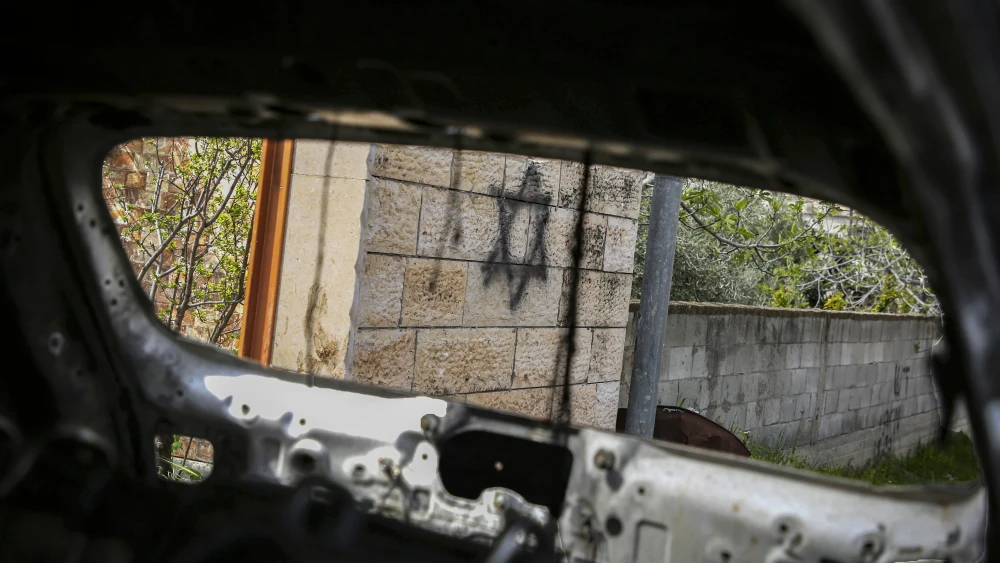

Why is the media obsessed with violent Israelis?


Why is the media obsessed with violent Israelis?

Jonathan S. Tobin


The purpose of a false narrative about rampaging “settlers” and a new death-penalty law is not just to smear Israelis. It’s to distract attention from Palestinian terror.

Damage to a car set on fire by Jews in the Arab village of Deir al-Hatab, east of Nablus, on March 23, 2026. Photo by Nasser Ishtayeh/Flash90.

The images from the Knesset shocked many around the world. When Israeli Minister of Security Itamar Ben-Gvir popped a bottle of champagne to celebrate the passage of a law imposing the death penalty on terrorists whose goal is to destroy the State of Israel, he was widely condemned for demonstrating execrable taste, for which he was admonished by Knesset Speaker Amir Ohana. Indeed, the blowback against the 62-47 vote in favor of the measure in its final readings went beyond disgust with the always-controversial Ben-Gvir. The law itself was widely denounced as an act of discrimination against Palestinian Arabs, who were, critics claimed, being singled out for punishment.

The international outrage about the so-called “racist” death penalty law is part of a familiar narrative about Israel that has become normalized in mainstream media coverage of the Jewish state in recent years. It fits in with the torrent of stories about an alleged epidemic of “settler” violence targeting innocent Palestinians and the ongoing effort to depict the war against Hamas in Gaza as a nonstop war crime if not an outright “genocide.”

A claim of moral equivalence

Taken together, such coverage paints a dismal picture of the political culture of a country dominated by right-wingers. It applies to all those who support the government of Prime Minister Benjamin Netanyahu, but, in particular, those like Ben-Gvir, who are identified as settlers in Judea and Samaria. They are seen as not merely callous about the taking of life, but also as somehow the moral equivalent to terrorists and morally inferior to ordinary Palestinians.

In doing so, a press that is inherently hostile to the Jewish state can dismiss the arguments about the danger posed not just to Israel but to the West in general from Arab and Islamist terrorism. After all, if Israelis are racists eager to hang Palestinians and complicit in a wave of violence seeking to terrorize their Arab neighbors, then why should Americans or anyone else, for that matter, support the Jewish state?

The “genocide” blood libels about the war against Hamas have worked their way into mainstream discourse, rather than being dismissed as just another antisemitic attempt to delegitimize Israel. Claims that the capital punishment law is racist as well as barbaric, and that settlers are engaged in pogroms tolerated by the Netanyahu government, are just as dangerous.

Unlike the campaign to delegitimize a war against terrorists in Gaza that the overwhelming majority of Israelis support, many Israelis oppose the death penalty and take a dim view of the residents of Judea and Samaria for a variety of reasons. And even if they refute the “genocide” lies because they know them to be false, the Israeli left and even some centrists are all too ready to go along with the assertions that a government in which Ben-Gvir has an important cabinet post is dominated by extremists who have no place in government, let alone passing laws that offend their sensibilities and alienate the international community.

Demonizing the ‘settlers’

A considerable portion of the Israeli electorate also views settlers as religious fanatics who are an obstacle to peace, even while acknowledging that no Palestinian peace partner exists. They are willing to believe that some of those living across the so-called Green Line are likely guilty of everything that the Palestinians and their cheerleaders in the press and non-governmental organization allies say they’ve done. And that, in turn, generates a wave of criticism from liberal American Jews, who are easily persuaded to condemn what they see as Israeli wrongdoers betraying ideas about Jewish ethics and morality.

If the death-penalty law really was as racist as its critics claim—and if the reality of life in the “West Bank” really was one of routine Jewish violence in which Palestinians were living in fear—then those making these assertions might have a leg to stand on. The truth is that whatever one feels about the death penalty and how it might be implemented, the new Israeli law is not racist. It is a reasonable, if debatable, attempt to deal with a real problem.

At the same time, the narrative about “settler violence” isn’t merely false but also a bizarre inversion of reality. It is the Jews who live in the territories who are the victims of a daily tsunami of often murderous Palestinian violence. Indeed, most of the incidents in which such residents are supposedly engaged in thuggish behavior are either acts of self-defense against Arab attacks or Palestinian information operations designed to falsely claim ownership over land to which they have no right.

And yet, the Palestinian terror campaign being waged against Jews living in the territories is ignored by both the secular and Jewish media. Jewish groups, including some that are otherwise supportive of Israel, blindly accept the claims of biased observers like the U.N. Office for the Coordination of Humanitarian Affairs (OCHA) or far-left-wing Jewish groups like B’Tselem, which are the sources for most of the allegations of settler violence.

As Liel Leibovitz wrote in Tablet“Why They Lie About Jewish Terrorists,” and Gadi Taub detailed in “The Settler Violence Myth,” the assertions that thuggish extremist Jews have been allowed by the Israeli government to run riot in Judea and Samaria are simply false.

Not every claim of Jewish misconduct against Palestinians is necessarily untrue. Supporters of Israel don’t have to apologize for the fact that a few people out of a Jewish population of several hundred thousand residents of the territories might be guilty of illegal behavior. But as Leibovitz and Taub make clear, the assertions that the settlers are engaged in an indiscriminate and unprovoked campaign of violence against Arabs is out and out wrong.

An epidemic of Palestinian terror

Breaking down the incidents cited as definitive proof of misconduct, the assumptions about settler violence are easily exploded. Most of these alleged crimes turn out to be the opposite of what is often asserted. Rather than Jews seeking to intimidate Arabs, most recorded instances of Jewish violence turn out to be cases of the so-called settlers defending themselves against rock-throwing or worse. The same is true for contentions that Jews are stealing Palestinian land, uprooting olive orchards of long standing and using force to pressure Arabs to flee their homes.

As Leibovitz points out, “In 2024, there were more than 6,300 Palestinian terror attacks against Jews in Judea and Samaria, leading to 27 murdered Israelis and more than 300 wounded. The deadly trend continued last year, too, with 5,051 attacks by Palestinians, during which 24 Israelis were murdered and 400 wounded. Those included 458 attacks with Molotov cocktails, 655 attempts to blind drivers with laser pointers, 286 explosive charges and 19 terrorist shooting assaults.”

Compare that to OCHA’s claims that 1,400 incidents of settler violence occurred in 2024 and 1,700 such crimes occurred in 2025.

Even if OCHA’s data is to be believed, when lining up the two sets of numbers, the story comes across very differently than the headlines in outlets like The New York TimesThe GuardianPBS or even the liberal Times of Israel about a troubling rise in Jewish gangsterism in Judea and Samaria.

But the point is, no one should believe claims put forth by the United Nations about Jews behaving badly in the territories any more than they should accept the world body’s skewed accusations about Israeli actions in Gaza or any other topic concerning the Jewish state. Taking a deep dive into these statistics, as Leibovitz and Taub have done, shows a thinly veiled effort to gin up a scandal for which there is little or no evidence.

The Jews residing in the territories which form the heart of the ancient Jewish homeland are living in a state of virtual siege, and rather than being encouraged or enabled in violence by the government in Jerusalem or the Israel Defense Forces, many living in these communities feel they are not given adequate protection. That is why a small minority of them sometimes engage in actions that are either misconstrued as “Jewish terrorism” or are, in fact, cases of illegal retaliation against those who are trying to make their lives hell.

But rather than condoning wrongdoing, the IDF seeks to stop them and arrest Jewish perpetrators. That stands in stark contrast to the policy of the Palestinian Authority, which rewards terrorism against Jews with salaries and/or pensions for those who commit such crimes, as well as to their families. In Israeli society, those accused of misbehavior against Arabs are pariahs and derided as extremists. Palestinians who shed Jewish blood are treated as heroes.

An Israeli conundrum

And that is also the context in which the new death-penalty law should be understood. Rather than being considered as nothing more than evidence of Jewish lust for violence or even revenge, it is an attempt to solve a serious problem for which Israel’s critics have no solution.

In just the last decade, there have been several thousand incidents of Palestinian terrorism against Israelis. Even if you treat the Oct. 7 attacks—the largest mass slaughter of Jews since the Holocaust—as a singular event, the total of every other such event in which hundreds of Jews were murdered and thousands maimed and wounded amounts to several thousand.

Yet each time a Palestinian Arab commits an act of cold-blooded murder, he or she can be confident that sooner or later, they will avoid punishment. That’s because they know that Hamas and other terror groups are always seeking to kidnap Israelis in an effort to force Jerusalem to free terrorists in exchange for ransoming them. Even those who have committed the most bestial of crimes, including those that occurred on Oct. 7, when the slaughter was particularly depraved and involved what American legal scholars call “aggravating factors” in death-penalty cases such as rape, torture and kidnapping, have been let loose. They return to their homes or go into comfortable exiles, acclaimed as heroes and paid generous sums as a reward for their terrorism. Applying the death penalty to those who committed such despicable crimes may be controversial but it would certainly be justice.

The death penalty exists in Israel, but to date, only one person—Nazi war criminal Adolf Eichmann—has been executed in the Jewish state. Many in Israel, as is true elsewhere, oppose capital punishment in principle. Even Jewish religious law, which allows for the death penalty, places rigorous limits on its application.

But as long as terrorists who commit murder are given, at best, life sentences for their crimes, that sets up a situation not only in which they will eventually be freed, but also a situation in which Palestinians are incentivized to kidnap Jews. And that is exactly what happened on Oct. 7.

Many Israelis believe that the only solution is to execute the terrorists before they can be freed in hostage exchanges.

Will that deter terrorism? That is far from clear, especially since many of those who murder Israelis are motivated by thoughts of martyrdom in the jihad against the Jews.

Nor is it likely that Israel’s liberal-dominated Supreme Court will allow the death-penalty law to be implemented, though, as in many of their other egregious interventions and power grabs, their assertion of a right to overrule the legislation is entirely unsupported by law and inherently anti-democratic.

Still, creating a legal mechanism that removes one major incentive for murders of Jews is not racist. It is simply an attempt to find a way to avoid a cycle of violence in which terrorism is rewarded.

Nevertheless, the argument that this law is more evidence of Israeli barbarism is absurd. While many democratic countries have outlawed the death penalty, the practice is far from rare around the world. In the United States, where some states allow the death penalty and others do not, fewer than two dozen murderers are executed on an annual basis. But executions for a variety of crimes (including for sexual preferences and behavior that is defended as a basic human right in the West) are widespread in Arab and Muslim countries, including in Palestinian-controlled territory, as well as elsewhere in the Third World. China executes thousands of people every year for an unspecified series of offenses against its tyrannical regime, as well as keeps approximately a million prisoners in the laogai, Beijing’s own modern version of the Soviet “gulag archipelago.”

Seen in that context, Israel’s efforts to deter a wave of terrorist murders against its citizens ought not to be considered an outrage or even controversial.

An ideological agenda

So, why are mainstream and even liberal Jewish news outlets treating the death-penalty law, as well as the often distorted if not outright false reports about an epidemic of “settler violence,” as a major issue? And why are they doing this while also refusing to cover the far larger incidence of Palestinian and Islamist terrorism against Israelis in Judea and Samaria?

The answer is simple. It’s part of the general ideological assault on Israel and Jewish rights that has its roots in Soviet disinformation. It has been amplified and weaponized by woke ideological advocates of toxic ideas like critical race theory, intersectionality and settler-colonialism that treat Israelis and Jews as “white” oppressors of Palestinian “people of color.” In this formulation, the former are always in the wrong, no matter what they do, and the latter are always the victims, regardless of their commitment to terrorist violence in their genocidal war against the Jewish state.

Seen in that light, people of good faith and conscience ought not to be duped into believing this false narrative about Israeli violence and moral equivalence to Palestinian crimes. It’s not just based on out-of-context reasoning and unreliable statistics. The claims about the death penalty and the settlers are rooted in antisemitic tropes and false arguments. To lend them credibility isn’t an example of principle, whether on the part of Jews or others. It’s evidence of either bad judgment or bad faith.


Jonathan S. Tobin is editor-in-chief of the Jewish News Syndicate, a senior contributor for The Federalist, a columnist for Newsweek and a contributor to many other publications. He covers the American political scene, foreign policy, the U.S.-Israel relationship, Middle East diplomacy, the Jewish world and the arts. He hosts the JNS “Think Twice” podcast, both the weekly video program and the “Jonathan Tobin Daily” program, which are available on all major audio platforms and YouTube. Previously, he was executive editor, then senior online editor and chief political blogger, for Commentary magazine. Before that, he was editor-in-chief of The Jewish Exponent in Philadelphia and editor of the Connecticut Jewish Ledger. He has won more than 60 awards for commentary, art criticism and other writing. He appears regularly on television, commenting on politics and foreign policy. Born in New York City, he studied history at Columbia University.


Zawartość publikowanych artykułów i materiałów nie reprezentuje poglądów ani opinii Reunion’68,
ani też webmastera Blogu Reunion’68, chyba ze jest to wyraźnie zaznaczone.
Twoje uwagi, linki, własne artykuły lub wiadomości prześlij na adres:
webmaster@reunion68.com


ADL Releases ‘Leaderboard’ Ranking Popular Video Games and Their Efforts to Combat Antisemitism


ADL Releases ‘Leaderboard’ Ranking Popular Video Games and Their Efforts to Combat Antisemitism

Shiryn Ghermezian


“Fortnite,” a game accessed by over 25 million users a day, being played on a mobile phone. Photo: Public Domain

The Anti-Defamation League (ADL) released on Wednesday an Online Gaming Leaderboard that ranks popular video games on how effectively their policies and in-game safety features curb antisemitism, hatred, and extremism in their online multiplayer games.

The video games were ranked based on their “advanced,” “moderate,” or “limited” protections. The assessment was made using criteria, assembled by the ADL, that examine policies to prevent antisemitism and hate (40 percent of the score) and in-game tooling to prevent antisemitism and hate (60 percent of the score).

Fortnite was rated the best at implementing safeguards to combat antisemitism, following by Call of Duty, Minecraft, Grand Theft Auto Online, Roblox, Madden NFL, Valorent, Clash Royale, Counter-Strike 2, and PUBG: Battlegrounds.

The ADL said it has conducted the first-ever detailed public evaluation of video games and how their safety measures address the issues of antisemitism, hate, and extremism in online gaming environments. The Entertainment Software Rating Board (ESRB) provides age and content guidance but does not assess what video game companies are doing to keep players safe from hate and harassment during their online gaming experience.

The Online Gaming Leaderboard was co-produced by the ADL Center for Technology and Society (CTS) and the Ratings and Assessments Institute (RAI). The former, in partnership with gaming analytics firm NewZoo, surveyed hate, harassment, and extremism in online games in the US from 2019 to 2023 and those findings provided “the foundation for the evaluation,” according to the ADL.

“When a parent wants to know if an online game is safe for their child, there has been no one-stop shop to understand how a particular game approaches online safety,” said Daniel Kelley, senior director of CTS. “This leaderboard addresses that critical gap by offering the most comprehensive evaluation of safety measures in online multiplayer games to date, with a focus on how companies manage antisemitism and extremism.”

“Without strong safeguards, these platforms can become breeding grounds for harassment and hateful activity that harms players directly, normalizes hateful ideologies and damages trust,” added Jonathan Greenblatt, chief executive officer of the ADL. “This leaderboard provides the transparency that parents, gamers, and the industry need to understand where companies are succeeding and where urgent improvements are necessary.”

The ADL said it privately shared its findings with each gaming company before publicly releasing the Online Gaming Leaderboard on Wednesday. Some companies “engaged with ADL to clarify issues or make improvements to their policies and tooling, while others did not respond.” The ADL also developed a Best Practices Guide for gaming companies that provides strategies for how they can better combat antisemitism and hate.


Zawartość publikowanych artykułów i materiałów nie reprezentuje poglądów ani opinii Reunion’68,
ani też webmastera Blogu Reunion’68, chyba ze jest to wyraźnie zaznaczone.
Twoje uwagi, linki, własne artykuły lub wiadomości prześlij na adres:
webmaster@reunion68.com