
Archive | 2026/04/06

Ana Kasparian i osobliwy przypadek ormiańskiego antysemityzmu

Ana Kasparian, jak na ironię pozuje jako Ormiański szczęśliwy kupiec. Źródło: Know Your Meme


Ana Kasparian i osobliwy przypadek ormiańskiego antysemityzmu

Ben Koan


Gdy mniejszości pośredniczące nienawidzą innych mniejszości pośredniczących

Ana Kasparian, współprowadząca internetowy program informacyjny The Young Turks, jest córką ormiańskich imigrantów.¹ Dorastała, mówiąc po ormiańsku, a jej pradziadkowie ze strony ojca przeżyli ludobójstwo Ormian z lat 1915–1917 zorganizowane przez… Młodoturków. (Tak, nazwa programu przysparza jej problemów wśród innych Ormian.) Anahit Misak Kasparian wygłaszała także tyrady w rodzaju: „Goje się, kurwa, budzą”, „Myślicie, że jesteście narodem wybranym przez Boga, podczas gdy zachowujecie się jak absolutne demony” oraz że „Izrael jest zły, ludobójczy i zniszczył nasz kraj”. (Nie sprecyzowała, czy chodziło jej o Armenię, czy Amerykę.) Kasparian jest mało wnikliwa jako komentatorka polityczna i mało interesująca jako człowiek, więc zwykle bym o niej nie pisał. Jednak sam fakt istnienia ormiańskiego antysemity (a nie jest jedynym takim przypadkiem) brzmi intrygująco. Jeśli bowiem jakikolwiek naród zbiorowo przypomina Żydów, to z pewnością Ormianie. Co zatem osobliwy przypadek ormiańskiego antysemityzmu może nam powiedzieć o antysemityzmie w ogóle?

Ormianie i Żydzi — starożytni ocaleni

Zarówno Ormianie, jak i Żydzi to niewielkie, starożytne narody zakorzenione w szeroko pojętym Bliskim Wschodzie. Najwcześniejsze znane wystąpienie nazwy „Izrael” znajduje się na steli Merenptaha, egipskim dokumencie datowanym na około 1208 r. p.n.e.² „Armenia” pojawia się po raz pierwszy w inskrypcji z Behistunu, sporządzonej z polecenia perskiego cesarza Dariusza około 520 r. p.n.e., choć etnogeneza Ormian miała miejsce wcześniej. Jeśli spojrzeć na mapę Imperium Rzymskiego w jego szczytowym okresie (117 r. n.e.), zobaczymy wiele nazw miejsc, które nie odpowiadają już istniejącym narodom, jak Kapadocja, Cyrenajka czy Panonia. Judea i Armenia jednak przetrwały w rozpoznawalnej formie — mimo wieków wygnania, prześladowań i ludobójstw — choć dziś istnieje tylko około 16 milionów Żydów i 11 milionów Ormian.³

Kluczowe dla przetrwania obu grup było ścisłe powiązanie etniczności z religią. Judaizm jest etniczną religią Żydów, zaś ormiańskie chrześcijaństwo apostolskie stanowi narodową wiarę Ormian. W 301 r. Armenia stała się pierwszym państwem, które przyjęło chrześcijaństwo jako religię państwową. W przeciwieństwie do misyjnych odłamów chrześcijaństwa, Kościół ormiański służył przede wszystkim zachowaniu języka, kultury, historii i tożsamości narodu. Ormianie, podobnie jak Żydzi, byli historycznie endogamiczni, zniechęcając do małżeństw nawet z innymi chrześcijanami (choć dziś diaspora częściej zawiera małżeństwa mieszane⁴). Co ciekawe, w języku ormiańskim istnieje nawet odpowiednik słowa „goj”: „odar”.

Zarówno Ormianie, jak i Żydzi na przestrzeni wieków tracili i odzyskiwali swoją suwerenność polityczną. Zjednoczone Królestwo Izraela, idealizowane w Biblii hebrajskiej, datuje się zazwyczaj na około 1000 r. p.n.e. Po jego podziale na rywalizujące państwa Królestwo Izraela upadło pod naporem Asyryjczyków w 722 r. p.n.e., a Królestwo Judy zostało podbite przez Babilończyków w 586 r. p.n.e. Powstanie Machabeuszy przywróciło żydowską niepodległość spod panowania greckich Seleucydów w II wieku p.n.e., choć od 63 r. p.n.e. Judea stała się państwem klienckim Rzymu, a następnie jego prowincją. Po wcześniejszych powstaniach przeciwko Rzymowi, żydowskie wystąpienie podczas wojny bizantyjsko–sasanidzkiej (602–628 n.e.) było ostatnią, krótkotrwałą próbą żydowskiego samorządu w Ziemi Świętej aż do powstania współczesnego Izraela w 1948 r.

Ormianie osiągnęli największy zasięg terytorialny za panowania Tigranesa Wielkiego w I wieku p.n.e., po czym okresowo tracili suwerenność na rzecz Rzymian i Persów. Królestwo Armenii rządzone przez Arsacydów ostatecznie upadło w V wieku n.e. w wyniku podziału między te imperia, a nowe państwa ormiańskie pojawiały się w latach 885–1375. Ormiańska suwerenność polityczna zanikła ponownie w późnym średniowieczu i została przywrócona dopiero w XX wieku — najpierw na krótko po I wojnie światowej, a następnie trwale wraz z uzyskaniem niepodległości przez Armenię w 1991 r.

Utrata państwowości wiązała się w obu przypadkach z rozproszeniem demograficznym. W przypadku Żydów kluczowe były wygnania, powstania przeciwko Rzymowi i ich konsekwencje, które przekształciły judaizm w religię diasporyczną. Dziś około połowa Żydów mieszka w Izraelu, podczas gdy tylko jedna trzecia Ormian żyje w Armenii.

Ormianie przez długi czas pozostawali skupieni na Wyżynie Armeńskiej, ale stworzyli również szeroką diasporę handlową. Deportacje, wojny i ludobójstwo doprowadziły do ogromnych zmian demograficznych. Współczesna Armenia, podobnie jak Izrael, umożliwia powrót diasporze.

Mniejszości pośredniczące

Ormianie i Żydzi — podobnie jak Chińczycy w Azji Południowo-Wschodniej czy Hindusi w Afryce Wschodniej — często funkcjonowali jako tzw. mniejszości pośredniczące: handlowcy, kredytodawcy, usługodawcy. Tworzyli wartość gospodarczą, ale jednocześnie budzili niechęć większości, co prowadziło do prześladowań.

Te same stereotypy — „pasożyt”, „wyzyskiwacz”, „zamknięta grupa” — pojawiały się wobec takich społeczności. Jak zauważa Thomas Sowell, cechy sprzyjające przetrwaniu (pracowitość, oszczędność, długoterminowe planowanie) często prowadziły do sukcesu — a ten z kolei do jeszcze większej wrogości.

Dlaczego nie „Wieczny Ormianin”?

Kluczowa różnica polega na tym, że Ormianie nie zajmują negatywnej roli w świętych tekstach religii globalnej. Antysemityzm ma głębokie korzenie teologiczne w chrześcijaństwie, które później zostały „zsekularyzowane” w formie nienawiści rasowej. To nadało mu uniwersalny, niemal metafizyczny charakter.

Antyormianizm był natomiast zjawiskiem bardziej lokalnym (Turcja, Kaukaz). Ormianie nie są też przedstawiani jako globalni „spiskowcy” odpowiedzialni za całe zło świata — w przeciwieństwie do stereotypów antyżydowskich.

Istotne jest także rozmieszczenie diaspory: Żydzi byli licznie obecni w Europie w okresie narodzin nowoczesności, co uczyniło ich łatwym kozłem ofiarnym dla ideologii takich jak kapitalizm czy socjalizm. Ich widoczność społeczna po emancypacji tylko to wzmocniła.

Syjonizm i napięcia

Syjonizm był w dużej mierze odpowiedzią na europejski antysemityzm, ale jego realizacja zbiegła się z nowymi konfliktami politycznymi i religijnymi. W przeciwieństwie do Armenii, Izrael znalazł się w centrum świata arabskiego i islamskiego, co nadało konfliktowi wymiar globalny.

Ludzie są tylko ludźmi

Mimo licznych podobieństw relacje ormiańsko-żydowskie nie zawsze były dobre. Istniały zarówno przykłady solidarności, jak i napięć — historycznych i współczesnych, często wynikających z geopolityki.

Badania pokazują również obecność uprzedzeń: np. w 2018 r. 32% Ormian nie chciałoby zaakceptować Żydów jako współobywateli — najwyższy wynik w regionie.

Ostatecznie wniosek jest prosty: ludzie są zdolni zarówno do empatii, jak i do uprzedzeń — nawet wobec tych, którzy są do nich bardzo podobni. Przypadek ormiańskiego antysemityzmu jest tylko jednym z przykładów tej ogólnie ludzkiej sprzeczności.


Link do oryginału:

The Thousand-Year View
Ana Kasparian and the Curious Case of Armenian Antisemitism
“The ewe had bright eyes, rather like glass grapes. There was something human about her—something Jewish, Armenian, mysterious, indifferent, unintelligent. . . . Oh God, how desperately mankind needs to atone, to beg for forgiveness. …
Read more

The Thousand-Year View, 27 marca 2026


Zawartość publikowanych artykułów i materiałów nie reprezentuje poglądów ani opinii Reunion’68,
ani też webmastera Blogu Reunion’68, chyba ze jest to wyraźnie zaznaczone.
Twoje uwagi, linki, własne artykuły lub wiadomości prześlij na adres:
webmaster@reunion68.com

Finish the Job: Leaving Iran’s Regime in Place Guarantees Endless Regional Instability


Finish the Job: Leaving Iran’s Regime in Place Guarantees Endless Regional Instability

Majid Rafizadeh


  • This is precisely the moment when the greatest strategic mistake could be made: stopping halfway while leaving “moderate” extremists still in place.
  • If left intact, the regime will almost certainly, at some point — after the Trump administration’s term ends — accelerate its most ambitious and dangerous projects, most notably its pursuit of nuclear weapons along with ballistic missiles to deliver them.
  • Now, faced with intensified pressure and internal fragility, the regime has, as usual, apparently signaled a willingness to negotiate. It may even agree to sweeping terms – say “yes” to anything — not because of any positive transformation but as a tactic for survival.
  • A ceasefire deal now would not resolve the underlying problem — it would freeze it in place temporarily while allowing the regime to recover. Once stabilized, it would resume its activities — with the same less-than-neighborly objectives.
  • Any agreement with this regime, or what is left of it, will almost certainly end up undoing the very gains that the US and Israel have achieved.
  • The choice, therefore, is between finishing what has been started or once again facing the same reality just around the bend.

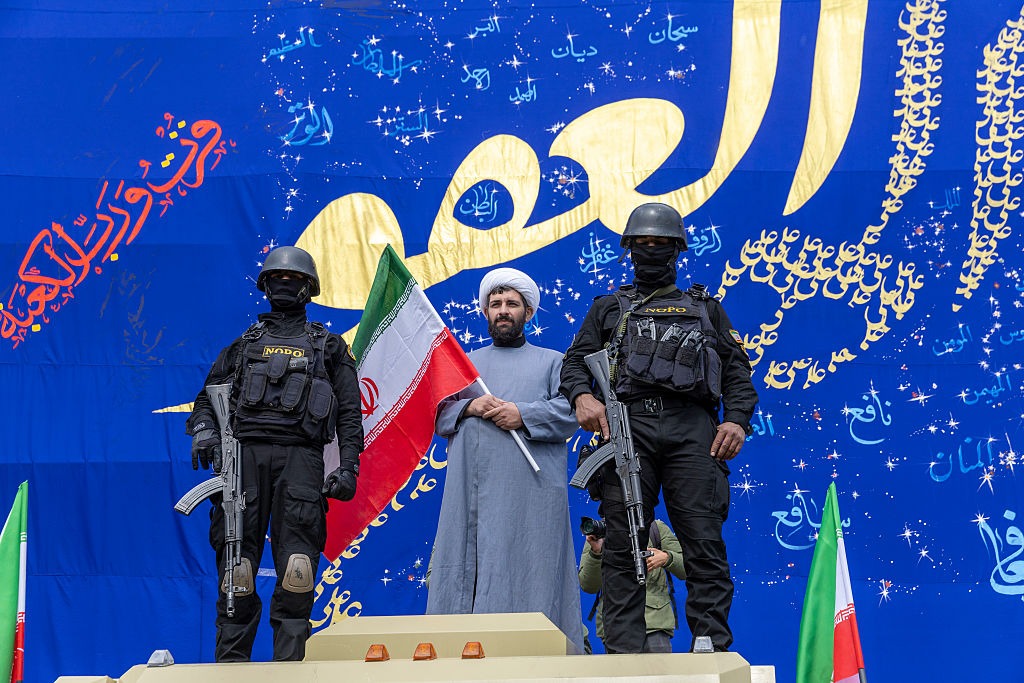
This is the moment when the United States and Israel could make greatest strategic mistake in the Iran war: stopping halfway while leaving “moderate” extremists still in place. Pictured: Policemen flank a cleric atop an armored vehicle, at a public funeral for militiamen of the Islamic Revolutionary Guard Corps (IRGC) in Tehran on March 11, 2026. (Photo by Majid Saeedi/Getty Images)

Only two countries, the United States and Israel, have finally confronted a regime, the Islamic Republic of Iran, which, for nearly half a century, has held the world hostage and destabilized an entire region, all while brutally tormenting its own people.

Iran’s ruling system has built its identity on ideology — an expansionist doctrine rooted in “exporting the revolution,” undermining and attacking sovereign states, and financing terrorist proxies. From Hezbollah in Lebanon, to Hamas in Gaza, to the Houthis in Yemen, to the Popular Mobilization Forces in Iraq, to terrorist cells in Latin America, the regime has poured billions into non-state actors that perpetuate cycles of violence, weaken governments, and terrorize civilians. At home, it has maintained power through repression, torture, censorship and force.

In recent weeks, however, despite a media landscape that often appears critical — or at times echoing narratives favorable to Tehran — the reality on the ground suggests that actual progress has been made in degrading the regime’s military capabilities and its hold on power.

In addition to having buried Iran’s three major nuclear facilities last June in less than two weeks, significant blows now include eliminating Iran’s air forcenavyweapons manufacturing infrastructure and many of its missile launchers. For years, Iran invested heavily in asymmetric maritime warfare — fast attack craft, mines, and unconventional tactics designed to disrupt shipping lanes and threaten global oil and gas flows. Reports and assessments indicate that key elements of this infrastructure have been permanently put out of operation– and will not be rebuilt overnight.

It was a capacity that took generations to construct.

This is precisely the moment when the greatest strategic mistake could be made: stopping halfway while leaving “moderate” extremists still in place.

The Iranian regime is, at its core, ideological, and not a conventional actor that recalibrates and retreats when pressured. When wounded, it recalculates, regroups, and seeks continuance. If left intact, the regime will almost certainly, at some point — after the Trump administration’s term ends — accelerate its most ambitious and dangerous projects, most notably its pursuit of nuclear weapons along with ballistic missiles to deliver them.

From Tehran’s perspective, the goal is clear. If conventional capabilities are degraded, then nuclear deterrence becomes not just desirable, but essential. A premature agreement would give the regime exactly what it needs: time to rebuild, adapt, and double down.

Under the 2015 JCPOA “nuclear deal” negotiated by the Obama administration, Iran accepted delaying its nuclear weapons breakout until 2025 in exchange for sanctions relief. Rather than fundamentally altering its behavior, the regime used the breathing room to expand its regional influence, enrich more uranium, build thousands of ballistic missiles, fund its proxies, murder Americans, attempt to assassinate then presidential candidate Donald J. Trump, and, on October 7, 2023, use its Hamas proxy to invade Israel. In that part of the world, agreements with “infidels” can be considered tactical delays, not strategic transformations.

Now, faced with intensified pressure and internal fragility, the regime has, as usual, apparently signaled a willingness to negotiate. It may even agree to sweeping terms – say “yes” to anything — not because of any positive transformation but as a tactic for survival.

Domestically, Iran’s regime faces deep unpopularity. Recent anti-regime protests, economic hardship, and political repression have eroded its legitimacy. Israeli and US strikes have eliminated key personnel and capabilities. In such a position, it is likely to agree to almost anything if it ensures its own survival.

A ceasefire deal now would not resolve the underlying problem — it would freeze it in place temporarily while allowing the regime to recover. Once stabilized, it would resume its activities — with the same less-than-neighborly objectives.

Meanwhile, its network of allies — states such as Russia, North Korea and China — will provide avenues for technological support, economic lifelines and strategic coordination—as they already have been doing during the conflict.

There is also undoubtedly the calculation in Tehran that it can outlast President Trump ‘s strong leadership. The regime may assume that political cycles will be less assertive, creating opportunities to reset the board on more favorable terms.

The events of October 7, 2023, carried out by Hamas with Iran’s planning and backing – and the Iranian regime’s slaughtering more than 30,000 of its own unarmed citizens in just two days in January — serve as a reminder of what is at stake. These are the downstream consequences of a system that funds, trains, and arms groups that are committed to violence and terrorism. Without addressing the source, the cycle will continue.

If a ceasefire agreement is signed, Iran’s regime will recover. When it does, it is likely to come back more determined than ever to advance its nuclear weapons program, especially when Trump is no longer in office.

While extraordinary progress has been made in weakening key components of Iran’s regime, the temptation to shift toward accommodation needs to be avoided at all costs. Any agreement with this regime, or what is left of it, will almost certainly end up undoing the very gains that the US and Israel have achieved.

The choice, therefore, is between finishing what has been started or once again facing the same reality just around the bend.


Dr. Majid Rafizadeh, is a political scientist, Harvard-educated analyst, and board member of Harvard International Review. He has authored several books on the US foreign policy. He can be reached at dr.rafizadeh@post.harvard.edu


Zawartość publikowanych artykułów i materiałów nie reprezentuje poglądów ani opinii Reunion’68,
ani też webmastera Blogu Reunion’68, chyba ze jest to wyraźnie zaznaczone.
Twoje uwagi, linki, własne artykuły lub wiadomości prześlij na adres:
webmaster@reunion68.com


Newest Members of the IDF’s Ultra-Orthodox Hasmonean Brigade Get Their Berets


Newest Members of the IDF’s Ultra-Orthodox Hasmonean Brigade Get Their Berets

Shiryn Ghermezian


Illustrative: Members of the Hasmonean Brigade during their beret ceremony at the Western Wall on Aug. 6, 2024. Photo: Screenshot

The third set of soldiers in the Hasmonean Brigade, the Israel Defense Force’s first ultra-Orthodox brigade, completed eight months of training earlier this month and received their dark blue berets at the end of a beret march of approximately 40 kilometers, according to the Israeli news outlet Walla.

The troops will join the regular forces of the Hasmonean Brigade, which was established in 2024 and has participated in military operations in Syria, the West Bank, the Gaza Strip, and southern Lebanon. Members of the brigade live an ultra-Orthodox lifestyle, and their blue berets reportedly symbolize the sky. The brigade is named after the Hasmonean Jewish dynasty that ruled Judea, and liberated Jerusalem and the Temple from oppressive Greek rule.

In February, members of the Hasmonean Brigade’s Yonatan Battalion completed its first-ever battalion-level exercise in the Golan Heights area, “marking the conclusion of the battalion’s operational certification process and its preparation for operational activity,” according to the military. During the exercise, the soldiers were trained in combat in open terrain, targeted operations, and urban warfare scenarios. It took place mere weeks after the start of the Israel-Iran war, also known as Operation Roaring Lion.

“You can be ultra-Orthodox and be a combat soldier – you are making history,” Commander of the Ground Forces, Major General Nadav Lotan, said at the time. “The Hasmonean Brigade continues to establish itself as a combat brigade within the ground forces. This exercise, along with the establishment of the battalions, marks another significant step forward. I am proud of you – the brigade’s troops and commanders. You operate at a high operational standard while preserving your unique identity.”


Zawartość publikowanych artykułów i materiałów nie reprezentuje poglądów ani opinii Reunion’68,
ani też webmastera Blogu Reunion’68, chyba ze jest to wyraźnie zaznaczone.
Twoje uwagi, linki, własne artykuły lub wiadomości prześlij na adres:
webmaster@reunion68.com