Archive | 2026/04/03

„Wygnanie Judasza” – dawny obrzęd wielkanocny, który zanikł w XX wieku

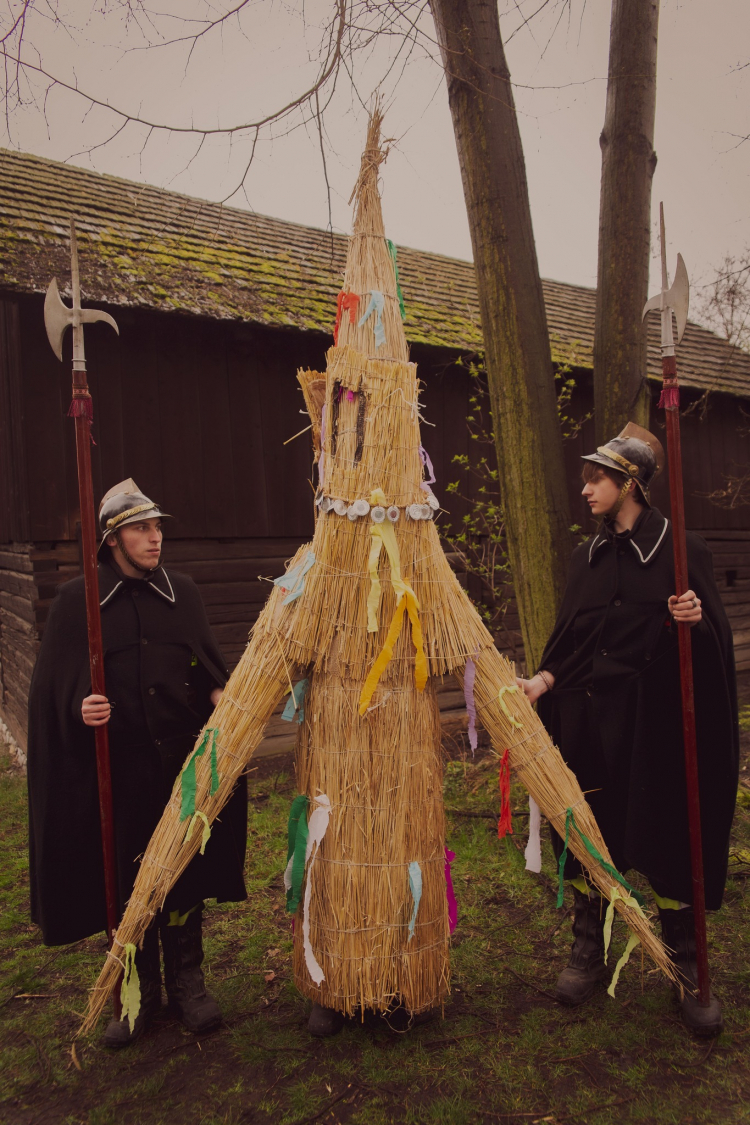
Na zdjęciu Ochotnicza Straż Pożarna ze Skoczowa. /Muzeum “Górnośląski Park Etnograficzny w Chorzowie”/facebook


„Wygnanie Judasza” – dawny obrzęd wielkanocny, który zanikł w XX wieku

szb/ dki/


Niegdyś popularny w wielu regionach Europy wielkanocny obrzęd symbolicznego „wygnania Judasza” dziś przetrwał jedynie w przekazach i rekonstrukcjach folklorystycznych. Ten widowiskowy zwyczaj był jednym z wyrazistych elementów ludowej obrzędowości pasyjnej jeszcze na początku XX wieku.


Zwyczaj był szeroko rozpowszechniony w Europie Środkowej i Południowej – m.in. na terenach dzisiejszych Czech, Słowacji, Polski, Węgier, a także w krajach niemieckojęzycznych oraz na Półwyspie Iberyjskim i Bałkanach. W zależności od regionu obrzęd nazywano „wygnaniem Judasza”, „paleniem Judasza” czy „sądem nad Judaszem” i przyjmował on różne formy, jednak jego istotą było symboliczne ukaranie jednego z apostołów – biblijnego zdrajcy.

W Polsce „wygnanie Judasza” było szczególnie popularne w Małopolsce, na Podhalu, Sądecczyźnie, Śląsku Cieszyńskim oraz w niektórych częściach Podkarpacia i Wielkopolski. Obrzęd odbywał się zazwyczaj w Wielki Czwartek lub Wielki Piątek i angażował głównie dzieci i młodzież. Polegał na przygotowaniu kukły ze słomy i starych ubrań, którą – w zależności od regionu – obnoszono po wsi, bito kijami, wleczono, zrzucano z kościelnej wieży, a na końcu wieszano, palono lub topiono.

Jak podkreślała w swoich badaniach etnografka Urszula Janicka-Krzywda, człowiek w tradycyjnych kulturach funkcjonował w rytmie cykli przyrody i wydarzeń granicznych, a obrzędy – zwłaszcza w okresie przełomów – miały na celu zapewnienie ładu, ochronę i pozyskanie przychylności sił wyższych. W tym kontekście ogień i woda pełniły funkcję oczyszczającą, a palenie kukły symbolizującej zło wpisywało się w szerszy, przedchrześcijański model rytuałów wiosennych.

Badaczka wskazywała, że wielkotygodniowe palenie Judasza było jednym z takich obrzędów oczyszczających, praktykowanych w Polsce południowej jeszcze do XX wieku. Obrzęd łączył elementy religijne i ludowe – kukła była niszczona jako symbol zdrady i zła, ale jednocześnie wpisywała się w szerszy schemat rytuałów związanych z przejściem zimy w wiosnę.

Jak odnotowywali etnografowie, w XIX wieku zwyczaj ten miał bardzo rozbudowaną formę i był szeroko opisywany w literaturze pamiętnikarskiej i ludoznawczej. Kronikarz polskich tradycji Zygmunt Gloger opisywał procesję z kukłą Judasza, jej symboliczne „sądy”, bicie, obwożenie po wsi, a następnie palenie lub topienie. Podobne relacje pozostawili m.in. Łukasz Gołębiowski oraz Oskar Kolberg, którzy dokumentowali jego powszechność w Polsce południowej.

W niektórych regionach obrzęd przybierał jeszcze bardziej dramatyczną formę – kukłę zrzucano z wieży kościelnej, wieszano, wleczono przez wieś, a następnie palono i wrzucano do wody. Opisy tego typu praktyk pozostawił również Jędrzej Kitowicz, który wskazywał na ich dawne zakorzenienie w tradycji ludowej.

Obrzęd zaczął zanikać w pierwszej połowie XX wieku. W Polsce najdłużej przetrwał – do lat 50. XX wieku – na Podbeskidziu oraz w okolicach Krakowa i Myślenic. Przyczyną zaniku były m.in. przemiany społeczne, urbanizacja oraz odchodzenie od tradycyjnej kultury wiejskiej. Istotne znaczenie miała również zmieniająca się wrażliwość społeczna oraz krytyka brutalnych form obrzędu. Badacze zwracają także uwagę, że w niektórych przypadkach zwyczaj nabierał wydźwięku antysemickiego, co w XX wieku – w kontekście tragicznych doświadczeń historycznych i zmiany postaw społecznych – spotkało się z jednoznaczną krytyką.

Dziś „wygnanie Judasza” przetrwało głównie jako element opracowań naukowych i rekonstrukcji folklorystycznych, pozostając świadectwem dawnych wyobrażeń o cykliczności świata, rytuałach przejścia oraz ludowym rozumieniu symboliki Wielkiego Tygodnia.

Przypomnieniem tego typu dawnych praktyk stało się odtworzenie w 2019 r. w Wielki Piątek w Pruchniku tzw. „sądu nad Judaszem”, podczas którego kukła symbolizująca zdrajcę została poddana biciu, obcięto jej głowę, a następnie spalono ją i wrzucono do rzeki. Wydarzenie wywołało szeroką debatę publiczną oraz interwencję naczelnego rabina Polski Michaela Schudricha i przedstawicieli Konferencji Episkopatu Polski, którzy jednoznacznie odnieśli się do sprawy, wskazując na jej antysemicki wydźwięk.(PAP)


Zawartość publikowanych artykułów i materiałów nie reprezentuje poglądów ani opinii Reunion’68,
ani też webmastera Blogu Reunion’68, chyba ze jest to wyraźnie zaznaczone.
Twoje uwagi, linki, własne artykuły lub wiadomości prześlij na adres:
webmaster@reunion68.com



Editor’s Notes: This Passover, Israeli children deserve a future that’s more than sirens


Editor’s Notes: This Passover, Israeli children deserve a future that’s more than sirens

ZVIKA KLEIN


Singer Maya Bouskilla and Mor Krigel, the young boy who wrote the UAV song – which became viral amongst Israeli children. / (photo credit: OR GEFEN/MAARIV)

A funny song has been bouncing around Israel these past weeks, the kind children grab onto before adults have figured out whether to laugh or cry.

My six-year-old daughter loves it. She sings it happily, over and over, with the determination children bring to anything catchy. But the song is about Iranian drones in the sky. That is what I cannot shake. The song is a child’s tune, a viral joke, and it contains the language of war.

What’s that up there in the sky, not a bird and not a plane?

It’s an unmanned aerial vehicle, it’s an unmanned aerial vehicle, it’s a drone.

It’s a drone, boom, boom, boom.
.

.

My children – they are one reason I am writing this.

One day, I want you to know what these years looked like from where your mother and I stood. I want you to know what parents were carrying while you were busy doing the things children are meant to do, singing, arguing, leaving crumbs everywhere, asking for snacks, asking impossible questions at inconvenient moments, and somehow keeping the house alive.

In recent weeks, Israelis have been sharing stories online that exemplify what we are all experiencing. A newborn already taken to shelter several times in her first days of life. A toddler excited by the possibility of a siren. A child who knows how to get to the safe room alone in the middle of the night. People react so strongly to these stories because they no longer sound rare.

Israeli childhood has been knocked off course for years now. First came COVID, with closures, screens, isolation, and school life thinned out into something improvised.

Then came the October 7, 2023, mega-atrocity by Hamas, and the long war that followed, with reserve duty, grief, fear, displacement, and the national shock that still has not lifted. Then, this past June, a 12-day direct war with Iran.

Now another round with Iran. For younger children, especially, there barely has been enough quiet in between for ordinary life to settle into place.

And still, these children are full of life. Anyone living here sees it every day. They are noisy, funny, impatient, resilient, exasperating. They still fight over nonsense, obsess over songs, leave a room wrecked in minutes, and drag tired adults back into the practical business of living. That is real too. But it would be dishonest to stop there.

Our teenagers have had some of their adolescence taken from them. High school is supposed to be uneven in familiar ways: friends, boredom, sports, exams, awkwardness, first loves, the slow work of becoming yourself. Many Israeli teenagers got that in pieces. First, the pandemic broke up their school years. Then war did. Some barely had a normal high school experience at all.

Younger children take things in by feel. They read the house. They pick up on half-heard conversations, on the way adults go quiet when a phone lights up, and on how fast everyone starts moving when an alert comes in. They may not understand the whole story, but they know when the room has changed.

One of the hardest parts of these years has been the split life of parenthood. You still have to work. You still have to answer messages, meet deadlines, write, edit, teach, manage, shop, cook, and keep the day moving. At the same time, you are following the news, checking alerts, watching your children’s faces, and making sure they do not learn too much from yours. You are getting them into shelter when necessary. You are also trying to keep fear from taking over the house.

With all due respect to my own parents’ generation, and I mean that sincerely, the old comparisons do not fully capture this. The Gulf War was frightening, but it was short. The First and Second Intifadas were brutal and formative. What Israeli families are dealing with now has lasted longer and gone deeper into domestic life. It has reached school calendars, sleep, work calls, homework, kitchen tables, WhatsApp groups, and the private rhythm of childhood.

That is why Passover is so important this year. It comes after Purim, the holiday of masks, reversals, noise, and a world turned upside down. This year, Purim stopped feeling playful very quickly. The region underwent a significant transformation. So did the hatred directed at us. Many Israelis have spent the weeks following Purim perceiving the country with a more objective perspective.

Children: The reason for Israel’s strength

Then comes Passover, which asks something else of us. After fear, what do we hand our children?

Passover has always put children at the center. We sat them down at the table and told them that slavery, bitterness, and danger were real and that these were not the last words. That is why the story continues.

My children, there is a reason parents in Israel keep pushing forward through all this. There is a reason soldiers serve, families absorb the strain, and homes try to remain homes when the country is tense and fragile. I mean something simple when I say that we are fighting for your future. We are trying to secure a life in which Jewish children can grow up with dignity and safety, in a country able to defend them, and in homes where the sounds of childhood are not shaped mainly by sirens and interruption.

The late Rabbi Jonathan Sacks once wrote that “to defend a country you need an army. But to defend a civilization, you need schools. You need education as the conversation between the generations.” That line has helped me stay focused throughout this war.

Israel needs strength, and it needs to win. But strength is there to protect something: the inner life of its homes, the confidence of its children, and the chain that links one generation to the next. Around the Seder table, that chain becomes visible. We are trying to make sure our children inherit more than fear.

That is why the domestic scene is so important right now. Parents are making dinner, cleaning for Passover, answering questions they cannot fully answer, hurrying children into shelter, and then trying to bring the day back to a normal shape. They are protecting bodies, yes. They are also protecting tone, routine, proportion, and a child’s sense that home is still home.

Will all this be worth it? It must be genuine, not just something people say when they are exhausted. Such beliefs must be true for the children growing up today. The point has to be a country steadier than the one that raised them. It has to be school years that hold together. A home where a song can stay a song. A childhood remembered for more than sirens.

That is why I keep coming back to that tune my daughter sings. It is funny. Our children are humming along. We, the adults, hear everything underneath.

In the end, the question is not whether our children will remember that these were dangerous years. Of course they will, in one form or another.

The deeper question is what else they will remember alongside the danger. Whether they will remember adults who were ruled by fear or adults who carried fear and still built a home. Whether they will inherit a Jewish story reduced to siege or one still capable of transmitting dignity, proportion, and hope.

That, for me, is the force of Passover this year. We are deciding, in real time, what kind of inner inheritance this generation will receive.


Zawartość publikowanych artykułów i materiałów nie reprezentuje poglądów ani opinii Reunion’68,
ani też webmastera Blogu Reunion’68, chyba ze jest to wyraźnie zaznaczone.
Twoje uwagi, linki, własne artykuły lub wiadomości prześlij na adres:
webmaster@reunion68.com


Israel’s Former Eurovision Contestant Eden Golan Says She Still Has Anxiety, ‘Recurring Nightmares’ of Being Killed


Israel’s Former Eurovision Contestant Eden Golan Says She Still Has Anxiety, ‘Recurring Nightmares’ of Being Killed

Shiryn Ghermezian


Eden Golan, Israel’s representative at the Eurovision Song Contest, reacts during a press conference following the official unveiling of Israel’s song submission, in Tel Aviv, Israel, March 10, 2024. Photo: REUTERS/Carlos Garcia Rawlins

Eden Golan, who represented Israel in the 2024 Eurovision Song Contest, talked in a new interview about still experiencing anxiety, fear, and nightmares of threats against her life two years after the competition ended.

“I’m always afraid. I look in every direction like a security guard,” the 22-year-old Israeli singer said in an interview published on Friday in the “7 Nights” supplement of Yedioth Ahronoth. “I’ve had recurring anxiety since Eurovision: I walk into a place, a restaurant, or a show, and someone shoots me from behind. I have recurring nightmares of people chasing me and killing me. But I’m learning to live with it. No one will silence me anymore.”

Golan told Yedioth Ahronoth that she also still faces antisemitism almost everywhere she goes.

“Quite a few of my performances abroad had protests,” she explained. “In Switzerland they threw red paint at the entrance to the venue, supposedly to say the blood is on our hands. There was one protest with signs against [Israeli Prime Minister] Bibi [Netanyahu] and against me. After all the threats I received, there’s definitely fear for my life, but what could be worse than what I went through at Eurovision?”

Golan participated in the 2024 Eurovision in Malmo, Sweden, with the song “Hurricane” and finished in fifth place. The song was originally titled “October Rain,” but the name and its original lyrics were disqualified by the European Broadcasting Union (EBU), which organizes the Eurovision competition, for being too political since it referenced the deadly Oct. 7, 2023, Hamas terrorist attack in southern Israel.

Golan made it to the top five of the competition even after being booed on stage by anti-Israel audience members, facing death threats, and having a Eurovision jury member refuse to give her points because of his personal feelings against Israel’s military actions during its war against Hamas in Gaza.

Golan has also said she had to conceal her identity outside her hotel room in Malmo during the Eurovision contest because of the threats she received from anti-Israel activists, who were angry about the Jewish state’s participation in the international competition. At the time, the deputy director general of the EBU condemned the harassment that participating singers had experienced.

Noam Bettan is Israel’s representative in the 2026 Eurovision Song Contest, which will take place in Vienna, Austria, in May. He is competing with a trilingual song titled “Michelle.”


Zawartość publikowanych artykułów i materiałów nie reprezentuje poglądów ani opinii Reunion’68,
ani też webmastera Blogu Reunion’68, chyba ze jest to wyraźnie zaznaczone.
Twoje uwagi, linki, własne artykuły lub wiadomości prześlij na adres:
webmaster@reunion68.com